Analyzing Food Labels
 Call Kai
 Learn
Learn Practice Test
 Spaced Repetition
 Match
Match Flashcards
 Knowt Play
1/49

There's no tags or description
Looks like no tags are added yet.
Name | Mastery | Learn | Test | Matching | Spaced | Call with Kai |
|---|
No analytics yet
Send a link to your students to track their progress
50 Terms
What is the role of the AAFCO regarding animal food?
AAFCO provides nutritional standards for animal food production, labeling, distribution, and sale in the U.S., but it is not a government regulatory agency and does not approve pet foods.
What is the primary mission of the WSAVA?
To advance the health and welfare of companion animals and create standardized guidelines for veterinary care, including nutrition and pet food label interpretation.
What are the primary responsibilities of the FDA in pet food regulation?
Protecting health and safety by enforcing recalls, conducting food safety inspections, monitoring contamination, and regulating prescription diets.
Which agency regulates advertising and marketing claims on pet food labels?
The Federal Trade Commission (FTC).
What role does the USDA play in pet food regulation?
It plays a minor role, primarily monitoring grain grading standards, food safety, animal health, and the organic certification program.
What are the three mandatory components of the Principal Display Panel (PDP) on a pet food label?
1. Brand and Product Name, 2. Name of the species the food is intended for, 3. Net quantity statement.
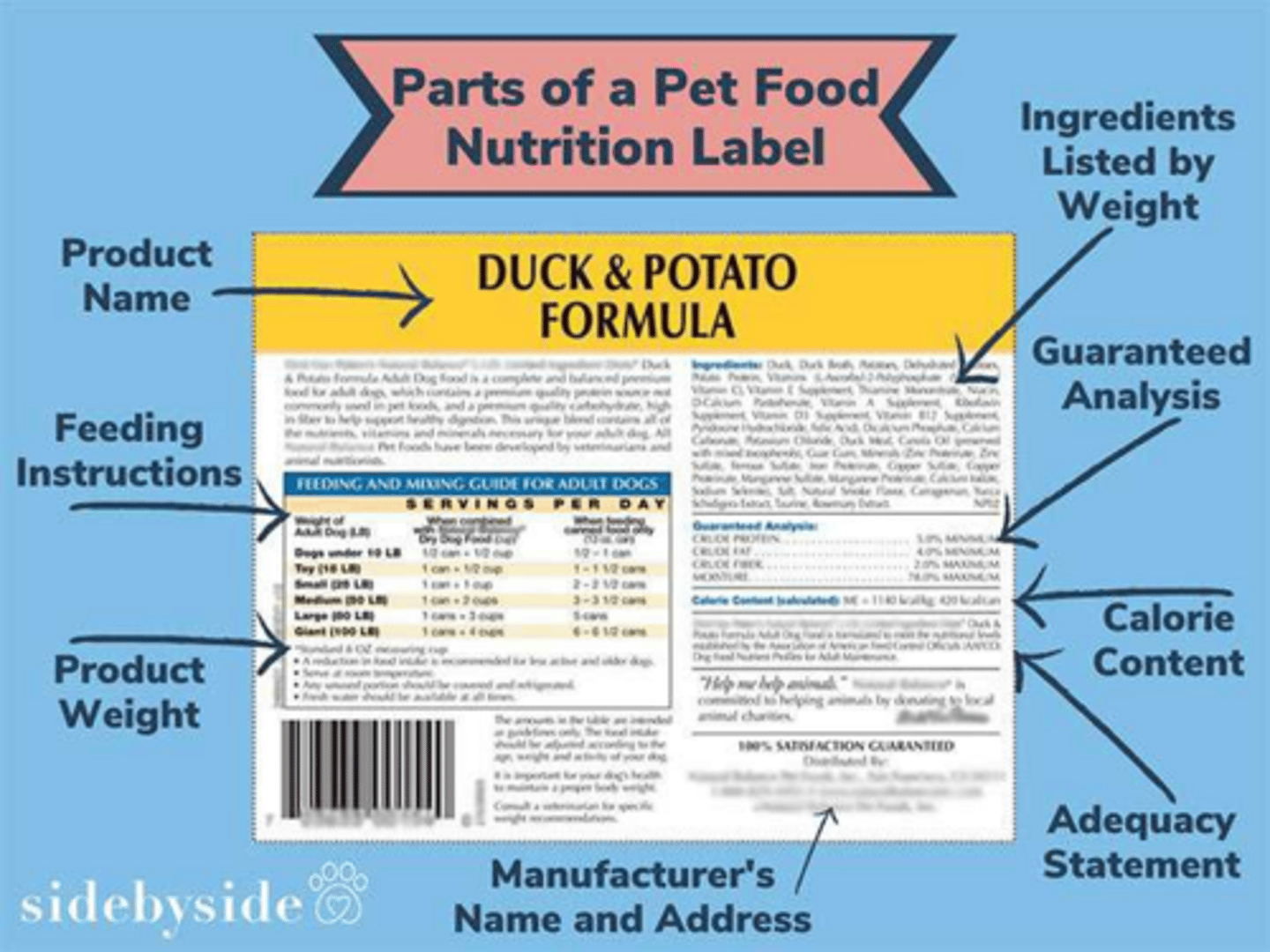
What does the '95% Rule' mean for a pet food product name?
If a product is named after an ingredient (e.g., 'Beef'), that ingredient must comprise at least 95% of the total product weight (excluding water) or at least 70% of the total product weight.
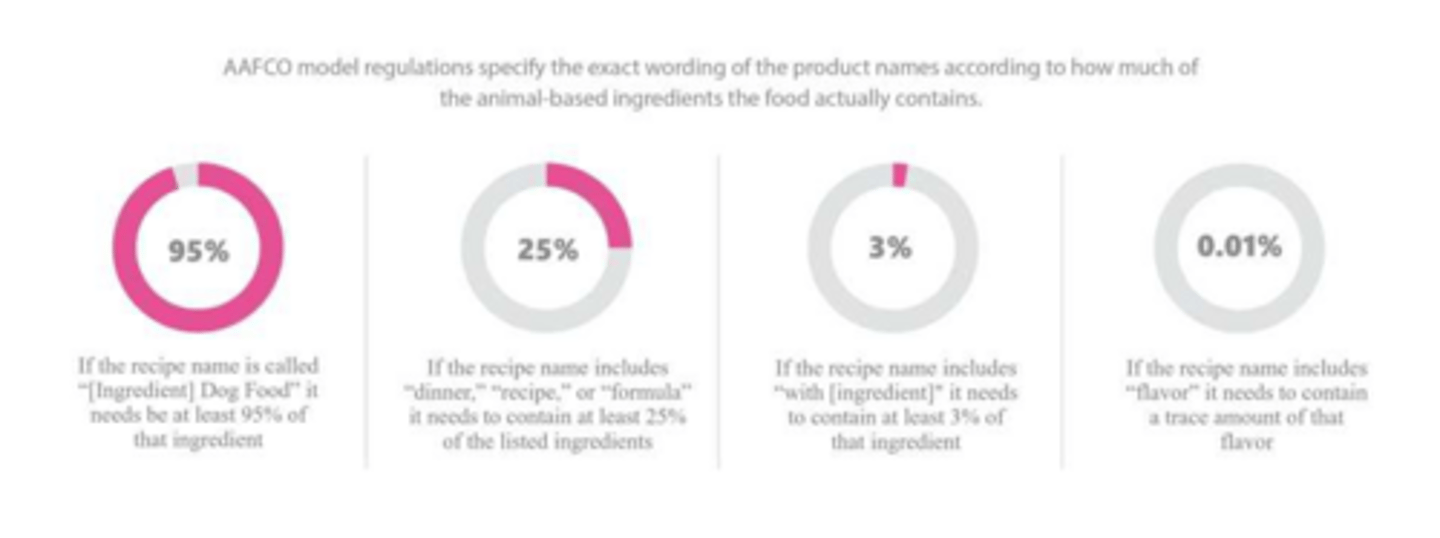
What does the '25% Rule' (or 'Dinner' rule) imply for a pet food product name?
The named ingredient must make up at least 25% of the total product weight (excluding water) and less than 95% of the total product weight.
How much of an ingredient must be present to satisfy the 'With' rule?
At least 3% of the total product must be made with the ingredient listed.
What is the 'Flavor' rule in pet food labeling?
The ingredient listed as a flavor must be present in a sufficient amount to provide taste, which is typically less than 3%.
How must net weight be displayed on a pet food label?
It must be placed on the lower third of the Principal Display Panel and include both imperial (pound/ounce) and metric units.
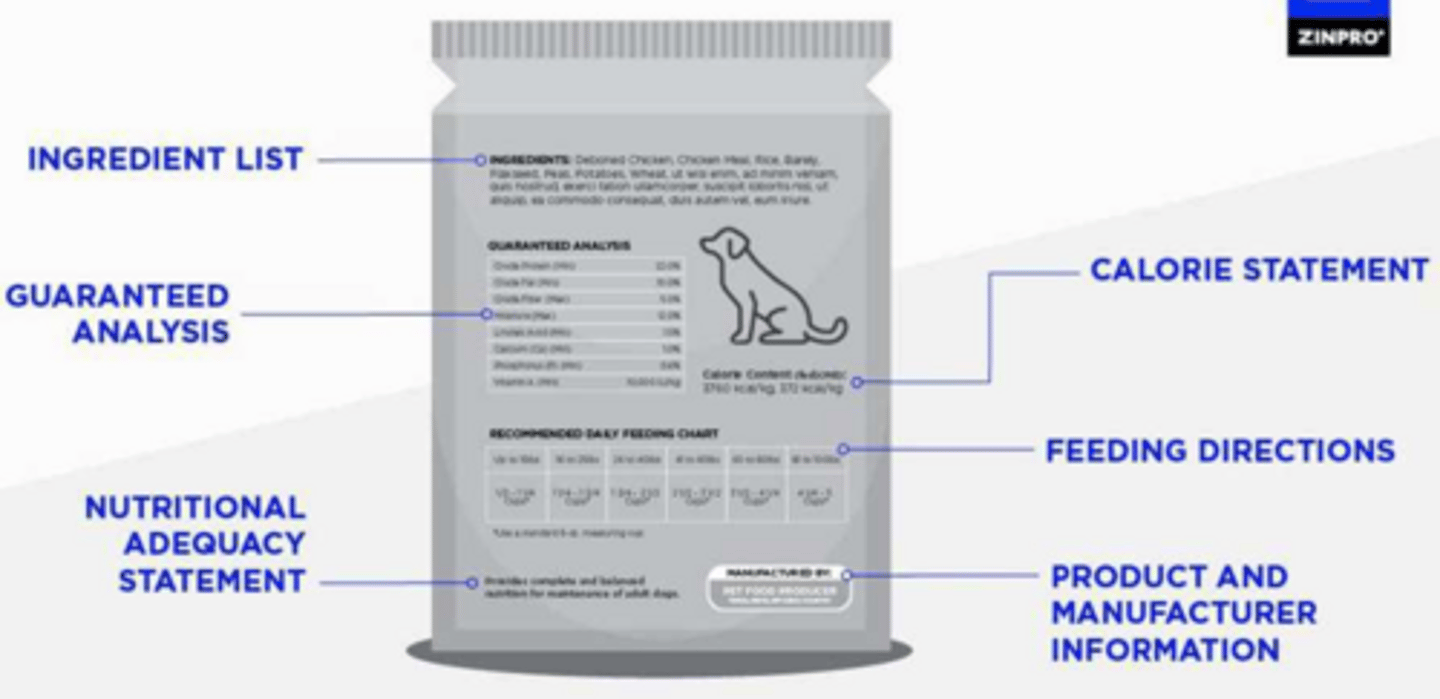
How are ingredients listed on a pet food label?
They are listed in descending order based on weight on an 'as formulated' basis.
What is the difference between 'Complete' and 'Balanced' nutrition?
Complete means the product contains all essential nutrients required; Balanced means those nutrients are present in the correct ratios.
What are the four categories of life stages for AAFCO nutritional adequacy statements?
Gestation/Lactation, Growth, Maintenance, and All life stages.
What is the 'Gold Standard' for validating a nutritional adequacy claim?
Animal feeding tests using AAFCO procedures.
What does it mean if a label says a product is 'formulated to meet' AAFCO nutrient profiles?
It means the food was designed to meet established nutritional levels without undergoing actual feeding trials, which is a less expensive and faster process.
Why is 'ingredient splitting' a concern on pet food labels?
Similar ingredients (e.g., different types of corn) may be split to appear lower on the ingredient list, potentially masking the total amount of that ingredient.
What must appear on the label if a drug is used in the feed?
The word 'MEDICATED' must appear below the product name, along with a statement explaining the purpose of the medication.
Is the manufacturer's name on a label always the same as the brand name?
No, the manufacturer (or distributor) responsible for the product may be a different company than the brand name.
What is the purpose of the Guaranteed Analysis on a pet food label?
It provides a guarantee of the nutrient levels in the food, which the ingredient list does not provide.
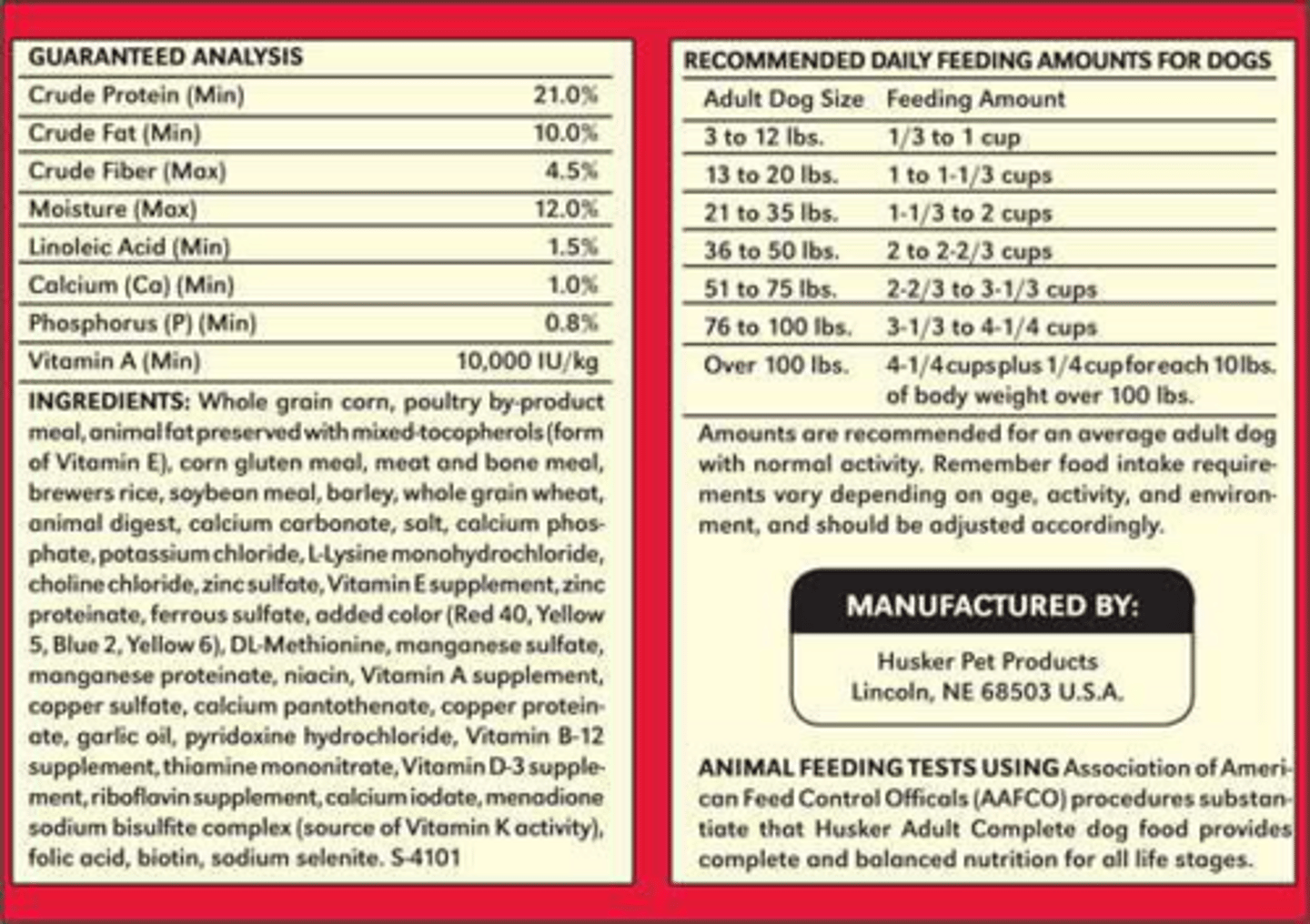
Does the ingredient list indicate the nutritional quality of the food?
No, the ingredient list is not a nutritional guarantee; it only lists ingredients by weight, which can be misleading if high-moisture ingredients like fresh meat are included.
What is the difference between 'Chicken' and 'Chicken meal' on an ingredient list?
They differ in protein content and quality, with 'meal' typically being a more concentrated source of protein.
Where is the Information Panel located on a pet food package?
On the side or back of the bag or can.
What does the FTC regulate regarding 'Made in the USA' claims?
It regulates the marketing practices and advertising claims, including the validity of 'Made in the USA' labels on pet food.
What is the purpose of the caloric content statement on a pet food label?
It provides the energy density of the food, expressed in kcal ME/KG and per cup or can.
What is the primary restriction on the amount of treats or snacks in an animal's diet?
Treats and snacks should not make up more than 10% of the total diet.
What must be stated on the principal display panel of a product intended as a snack or treat?
The label must explicitly state 'snack' or 'treat'.
Are chews, bones, and toys subject to the same registration and labeling requirements as standard animal food?
No, they are generally exempt unless the manufacturer makes specific claims about intended use or nutritional value.
What is the definition of a dietary supplement in animal nutrition?
A substance added to food to make the diet complete and balanced, also known as a dietary nutrient (e.g., vitamins, minerals, fats).
How do therapeutic supplements differ from standard dietary supplements?
Therapeutic supplements (nutraceuticals) are taken orally to prevent or treat disease and contain larger amounts of specific ingredients than required for daily maintenance.
What are the four components typically listed in a Guaranteed Analysis?
Minimum crude protein, minimum crude fat, maximum crude fiber, and maximum moisture.
When is the moisture content legally required to be listed on an animal food label?
Only when the water content exceeds 14%.
Does the Guaranteed Analysis represent the actual nutrient content of the food?
No, it represents the legal minimum or maximum levels, not the exact or average amounts.
What does the term 'crude' mean in the context of a Guaranteed Analysis?
It refers to the total amount of a nutrient present, without accounting for its quality or digestibility.
What is 'Ash' in animal feed analysis?
It is the measurement of total residual mineral content remaining after the food is burned at high temperatures.
How is crude protein estimated in feed analysis?
It is determined by multiplying the total nitrogen content of the feed by a specific factor.
What is Metabolizable Energy (ME)?
It is the total energy in feed minus the losses in feces, urine, and combustible gases; it is also known as available energy.
How is calorie content typically expressed on animal food labels?
It is expressed as Metabolizable Energy (ME) in units such as kcal/kg, kcal/cup, or kcal/can.
What is the difference between Guaranteed Analysis and Typical Analysis?
Guaranteed Analysis provides the legal minimum/maximum levels on a label, while Typical Analysis provides the actual average nutrient content (often found online or through the manufacturer).
What is Total Digestible Nutrients (TDN)?
A standard evaluation for livestock feed representing the sum of digestible fiber, protein, fat, and carbohydrate components.
What is the purpose of the 'Intended Use' statement on updated AAFCO labels?
It is listed on the lower third of the principal display panel to help consumers identify the intended life stage and purpose of the food.
What are the new requirements for ingredient statements under updated AAFCO guidelines?
All ingredients must be in the same font size, style, and color; specific protein sources must be named (e.g., 'chicken liver' instead of 'meat by-products'); and common names for vitamins/minerals must be used.
What does the '95% rule' generally refer to in animal food labeling?
It is a naming rule based on the percentage of a specific ingredient in the product.
What does the 'Statement of Nutritional Adequacy' indicate on a label?
It states whether the food is complete and balanced and specifies the life stage it is intended for (e.g., growth, maintenance, or all life stages).
What information does the 'Manufacturer Information' section provide?
It identifies the company responsible for the product and provides their contact information.
Why are NRC feed composition tables used?
They provide a base feed analysis to save time and cost when determining the nutritional value of feed ingredients.
Are feeding guidelines on labels universal for all animals?
No, they are general guidelines and do not apply to every individual animal; they are based on age, weight, and activity level.
What is the primary role of AAFCO in the animal food industry?
AAFCO plays a major role in regulating and setting standards for animal food labels and nutritional profiles.
How is crude fiber defined in feed analysis?
It is a measurement of the indigestible plant matter in the feed.
What is the significance of the 'as fed' basis in Guaranteed Analysis?
It means the nutrient values are reported based on the food as it is packaged, rather than on a 'dry matter' basis.