microbiology lab final practicum
 Call Kai
 Learn
Learn Practice Test
 Spaced Repetition
 Match
Match Flashcards
 Knowt Play
1/46

There's no tags or description
Looks like no tags are added yet.
Name | Mastery | Learn | Test | Matching | Spaced | Call with Kai |
|---|
No analytics yet
Send a link to your students to track their progress
47 Terms
1. List the various used of crystal violet?
Simple stain and gram stain
2. List the various uses of methylene blue?
Acid fast stain
3. List the various uses of safranin?
Gram stain and endospore stain
4. List the various uses of malachite green?
Endospore stain
5. What is a mordant?
A chemical agent used to fix primary stain
6. When is a mordant used?
Used after primary stain, before decolorizing or counterstaining
7. List the reagents for the gram stain.
Crystal violet, gram's iodine, decolorizer, safranin
8. List the reagents for the endospore stain.
malachite green, water, safranin
9. List the reagents for the acid
fast stain - carbon fuchsin, heat, alcohol, methylene blue
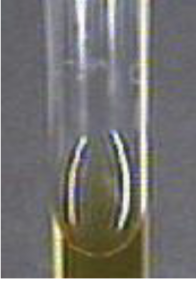
10. What type of broth is this?
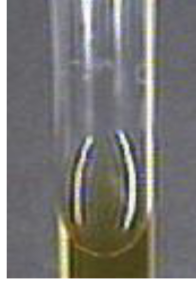
11. Is it differential, selective, both or neither?
differential
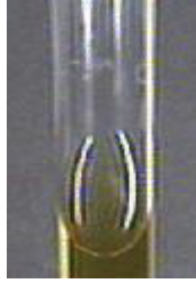
12. What is it used for?
Differentiate bacteria species
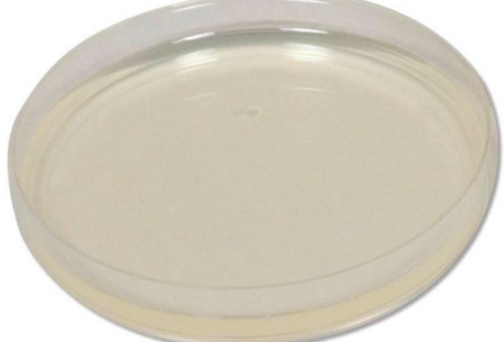
13. What type of medium is this?
Trypticase soy agar plate
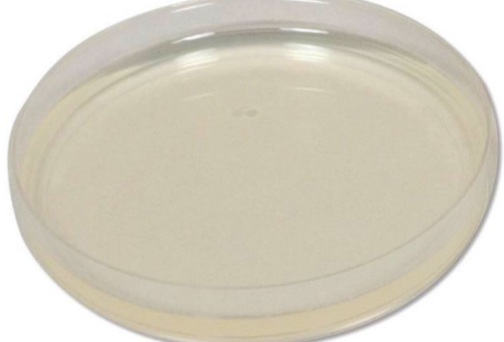
14. Is trypticase soy agar plate differential, selective, both, or neither?
Neither
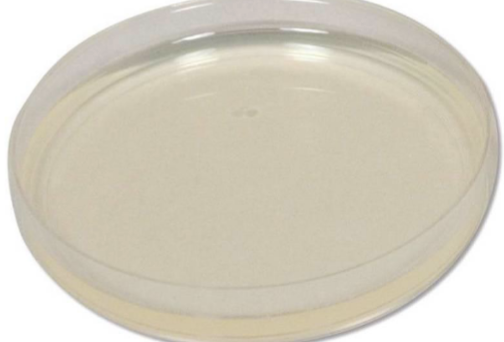
15. What is trypticase soy agar plate used for?
streaking plate to isolate colonies
16. Define colony?
cluster of microorganisms on nutrient surface
17. What is a clone?
genetically identical microorganism
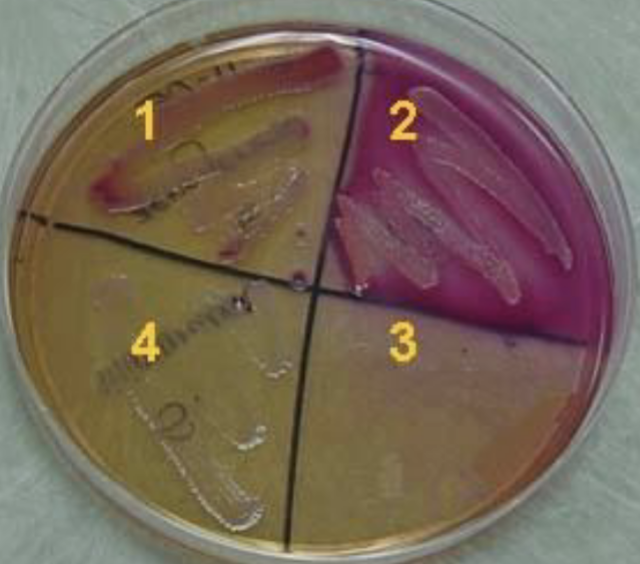
18. What is the name of this medium?
MacConkey agar MAC
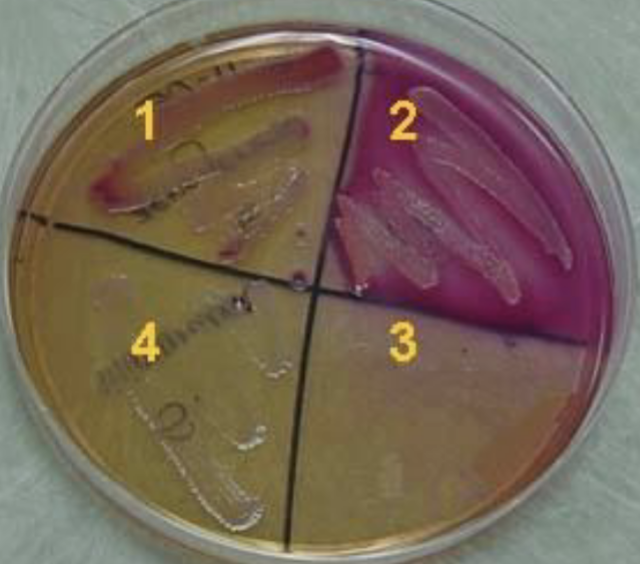
19. Is this medium differential, selective, or both?
Both
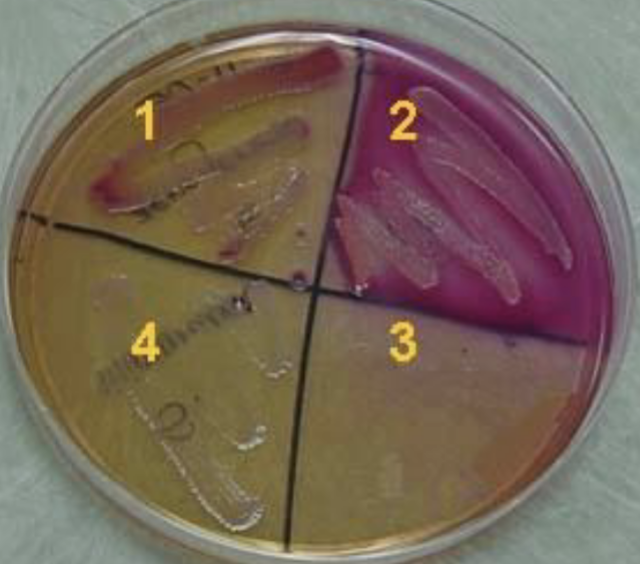
20. Lis the result for each of the four quadrants?
1: lactose + coliform 2: lactose + coliform 3: gram + 4: noncoliform
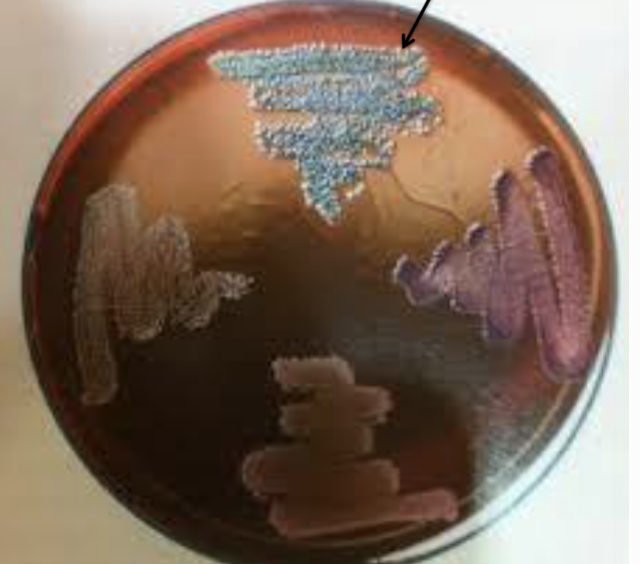
21. What is the name of this medium?
eosin and methylene blue dye EMB
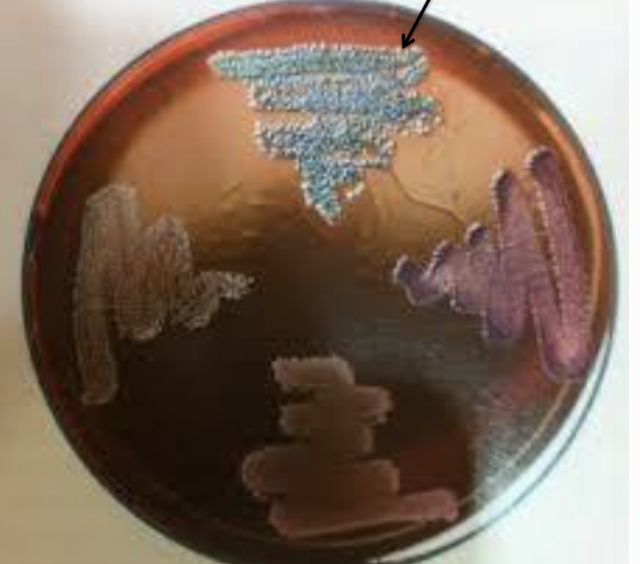
22. Is this medium differential, selective, or both?
Both
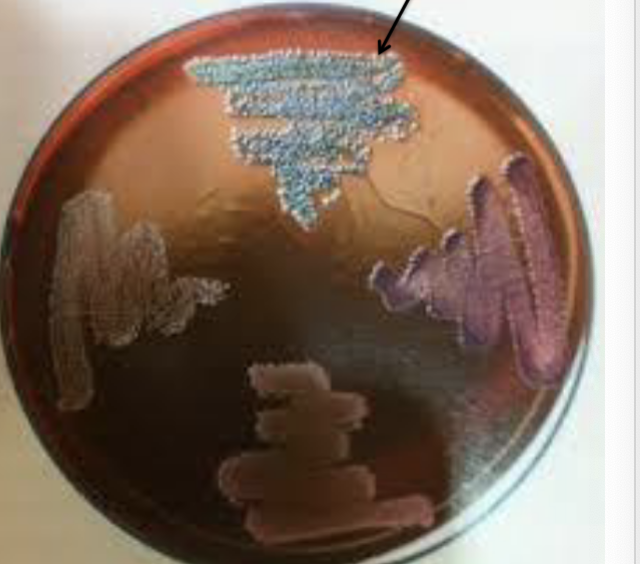
23. List the result for each of the four quadrants.
top: lactose + left: lactose - bottom: lactose - right: lactose -
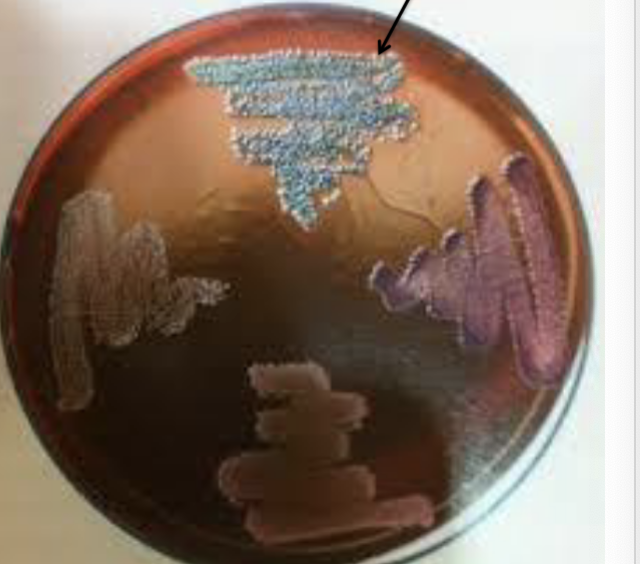
24. Interpret the result for each of the four quadrants.
top: gram -, probable coliform, left: colorless, noncoliform, bottom: colorless, noncoliform, right: pink possible coliform
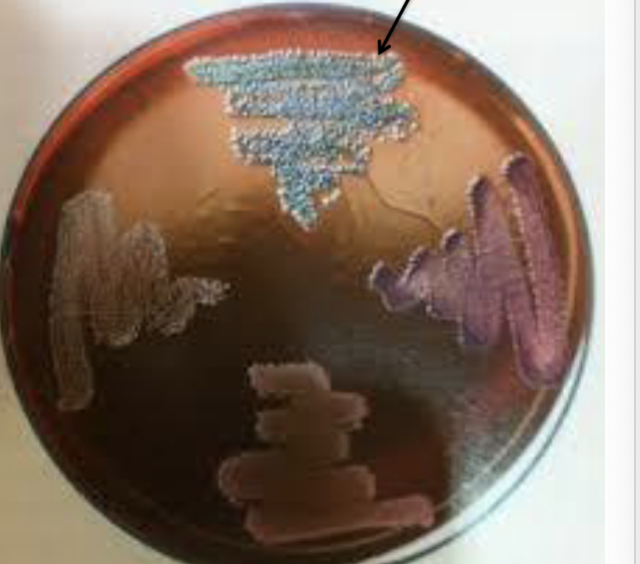
25. What is the genus and species of a bacterium that would give the result indicated by the arrow?
Escherichia coli
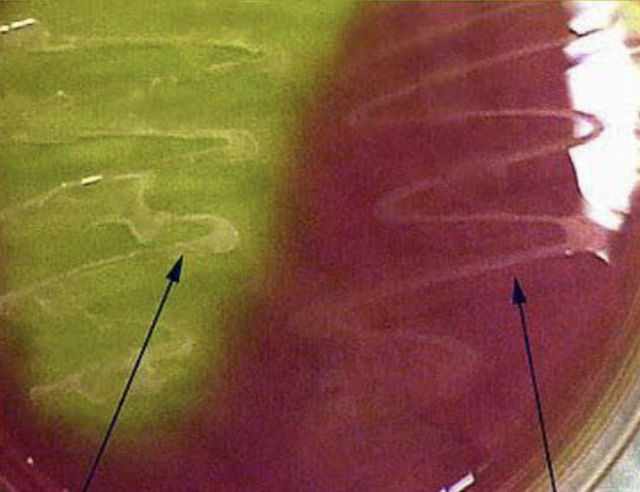
26. What is the name of this medium?
mannitol salt agar
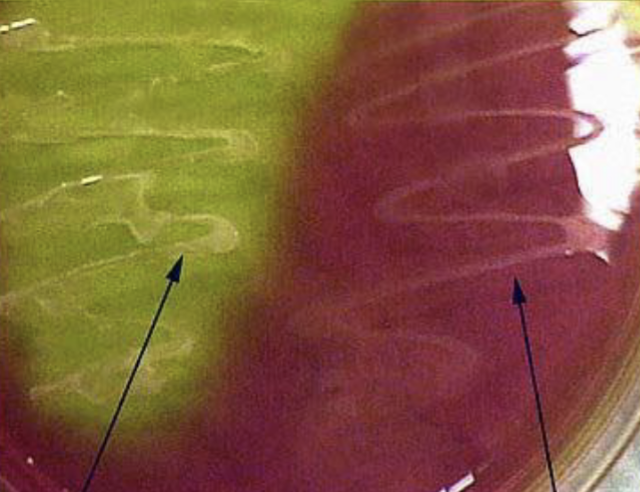
27. Is this medium differential, selective, or both?
both
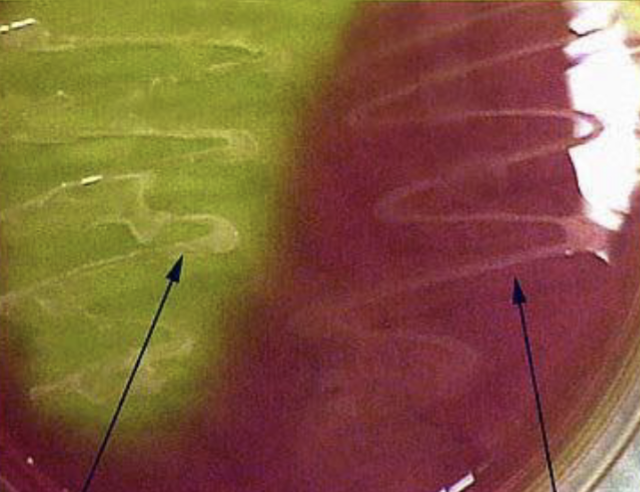
28. List the results for the two bacteria growing on the plate.
Left: yellow halo right: no halo
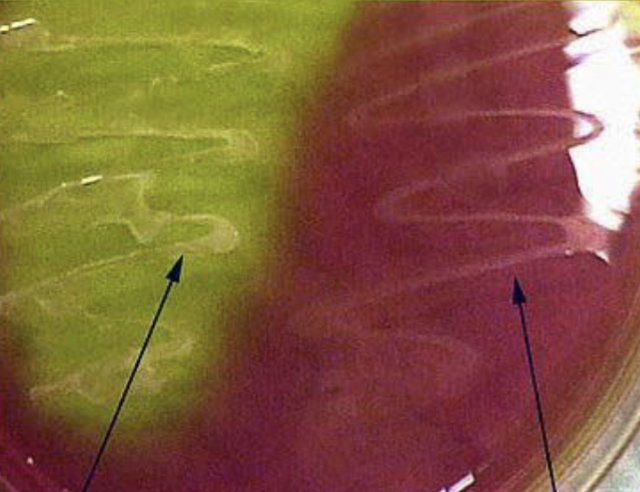
29. Interpret the results for both bacteria.
left: ferments mannitol, right: does not ferment mannitol
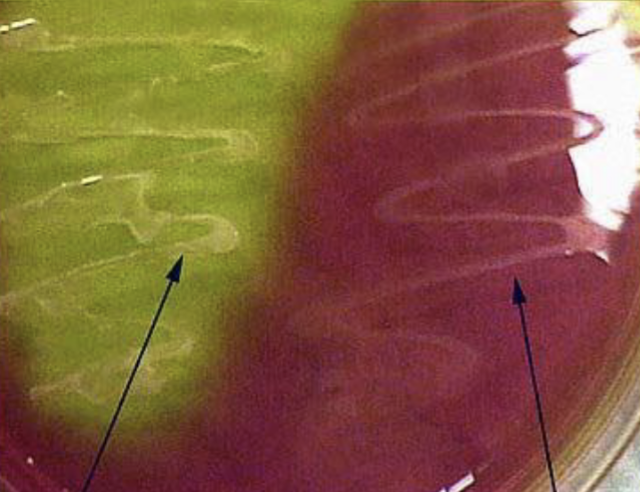
30. List the name of 1 bacterium that will produce a yellow halo:
Staphylococcus Aureus

31. What is the name of this medium?
blood agar

32. Is this medium differential, selective, or both?
differentiate
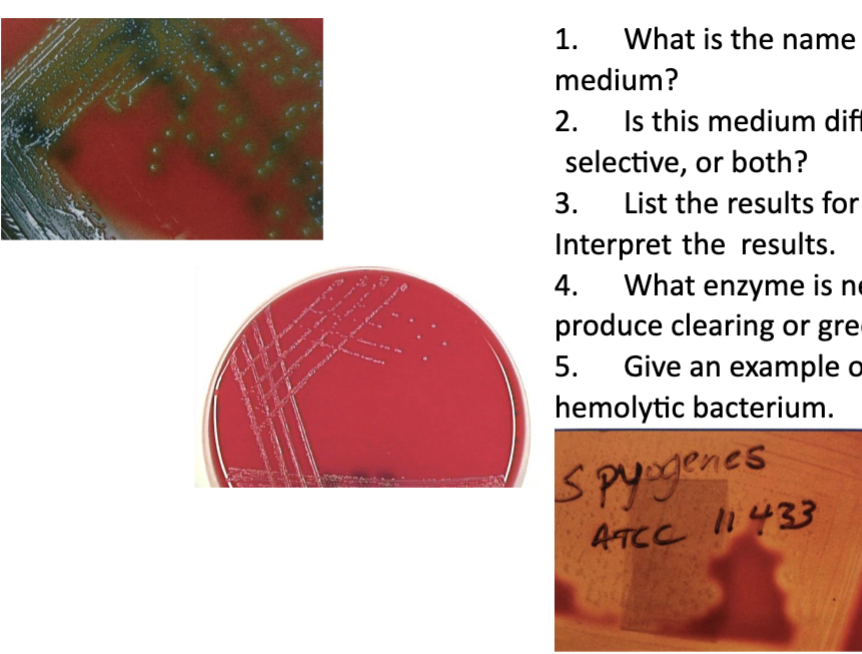
33. List the results for all three plates.
green: alpha hemolysis, left: clearing around, beta hemolysis, middle: no change
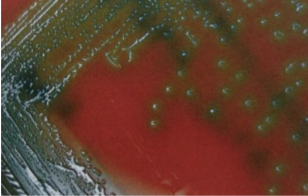
34. What enzyme is needed to produce clearing or greening?
clearing or greening hemolysin exoenzyme
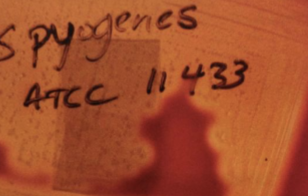
35. Give an example of a beta hemolytic bacterium.
Escherichia coli
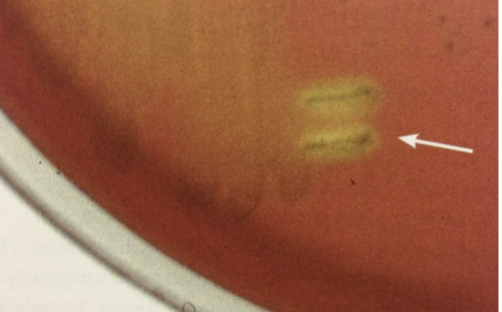
36. What type of medium is this?
Mannitol Salt agar MSA
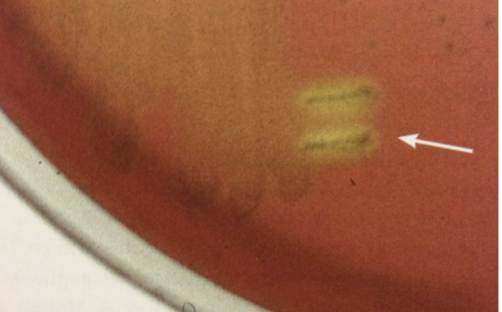
37. List the result.
MSA positive
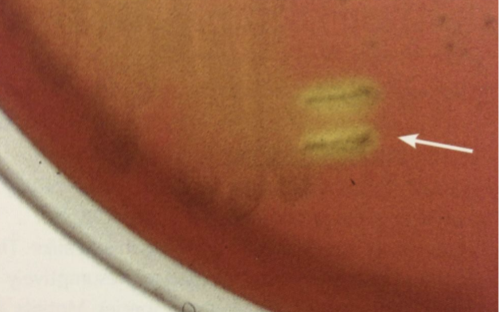
38. Interpret the result.
ferments mannitol, produce acid likely S. Aureus
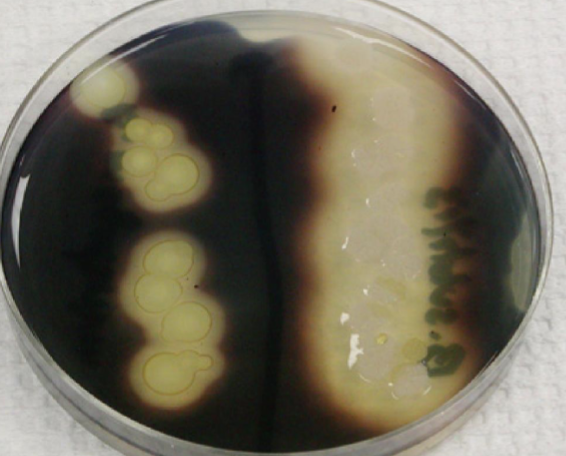
39. What is the name of this medium?
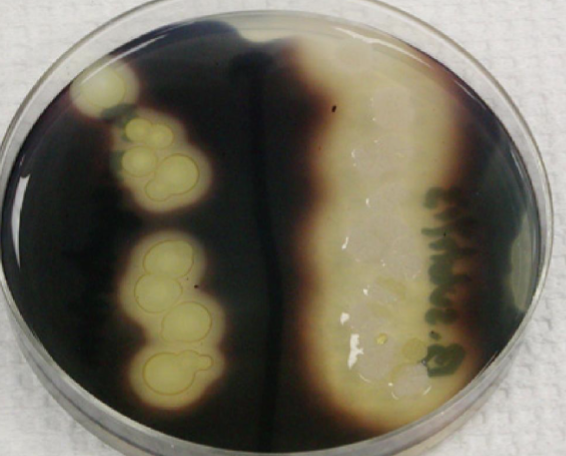
starch hydrolysis test
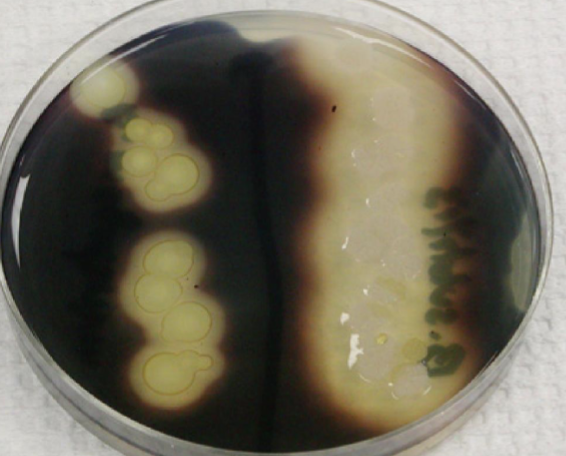
40. Is this medium differential, selective, or both?
differential
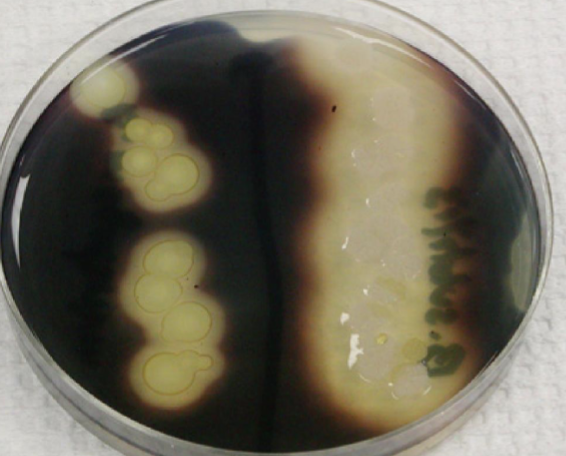
41. List the result.
starch positive
42. Interpret the result.
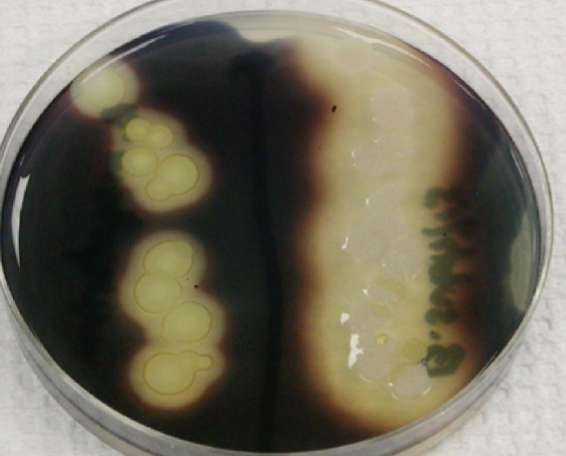
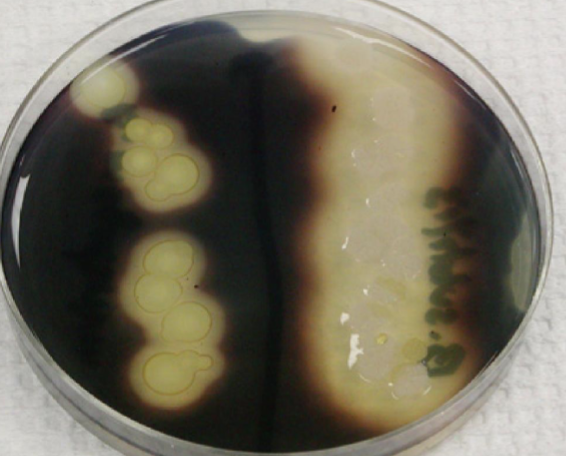
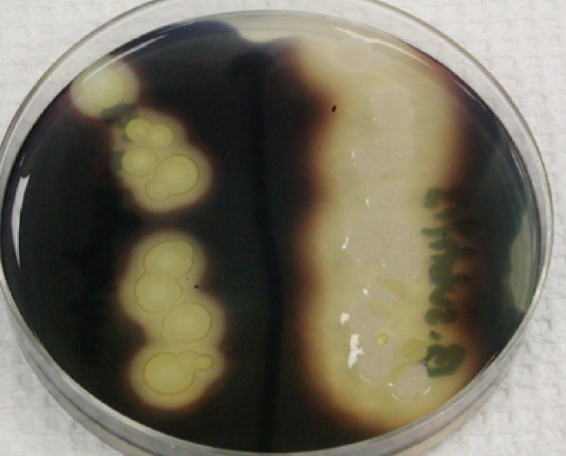
clear halo around growth after iodine added means amylase is produced
43. What reagent is added.
gram iodine
44. When is the reagent added?
after incubation
45. What does the reagent detect?
detects presence of starch or if bacteria hydrolyzed reagent.
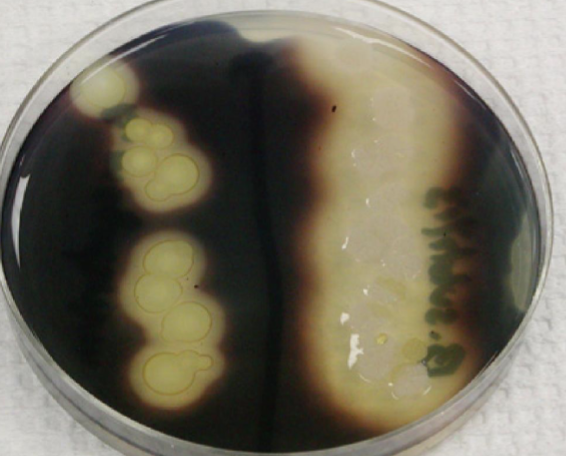
46. Explain the difference between a positive and negative hydrolysis test.
positive: starch present and negative starch is not present.
47. What enzyme is made by bacteria to break down starch?
amylase