Microeconomics, Chapter 4: Elasticity, + taxation
 Call Kai
 Learn
Learn Practice Test
 Spaced Repetition
 Match
Match Flashcards
 Knowt Play
1/32

Earn XP
Description and Tags
Name | Mastery | Learn | Test | Matching | Spaced | Call with Kai |
|---|
No analytics yet
Send a link to your students to track their progress
33 Terms
Elasticity
Sensibility analysis
Price elasticity of demand
How much does quantity demanded change due to a price change?
elastic
sensitive to price change
inelastic
not sensitive to price change
Formula:
change in % Gd / change in % price
(change in Qd / Average Qd) / (change in p / average p)
Elastic demand
Sensitive to price change
n>1 (larger than one)
%change in Qd > %change in P
narrowly defined products
expensive items
Inelastic
not sensitive to price change
n<1 (smaller than one)
%change in P > %change in Qd
necessities
absolute change
final price - initial price
by how many units did the variable change?
Relative Change
compare change in different contexts
compare change in different initial values
% change
what determines elasticity of demand?
short and long run
short run = inelastic
long run = elastic
importance in consumer budget
more portion of budget = inelastic
less portion of budget = elastic
availability of substitutes
more substitutes = elastic
less substitutes = inelastic
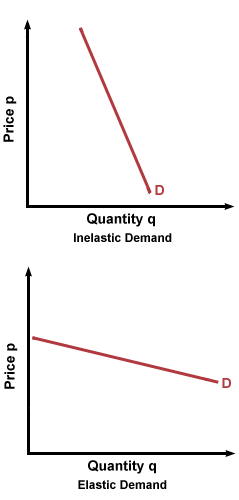
inelastic demand graph
steeper
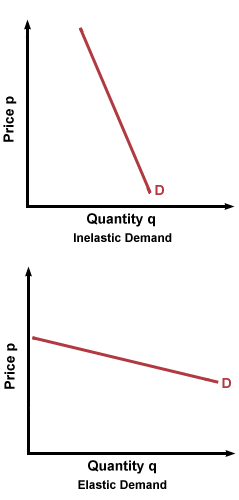
elastic demand graph
flatter
is elasticity constant along a linear demand curve?
no, it is changing.
the further down the curve, the lower the elasticity
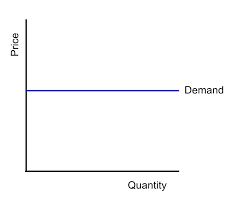
perfectly elastic demand
n = INFINITY
%change in Qd > %change in P
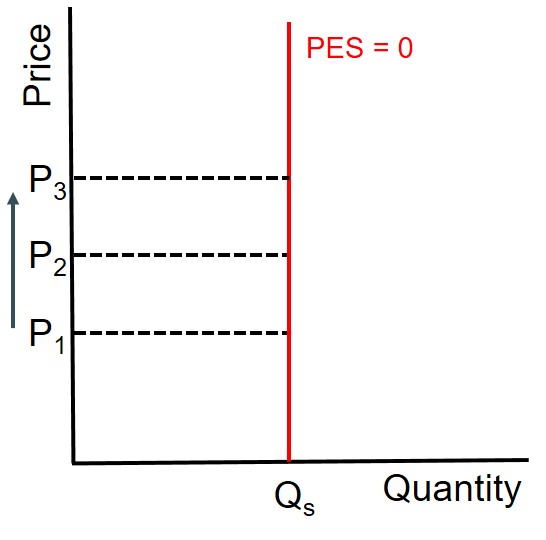
perfectly inelastic demand
n = 0
%change in Qd < %change in P
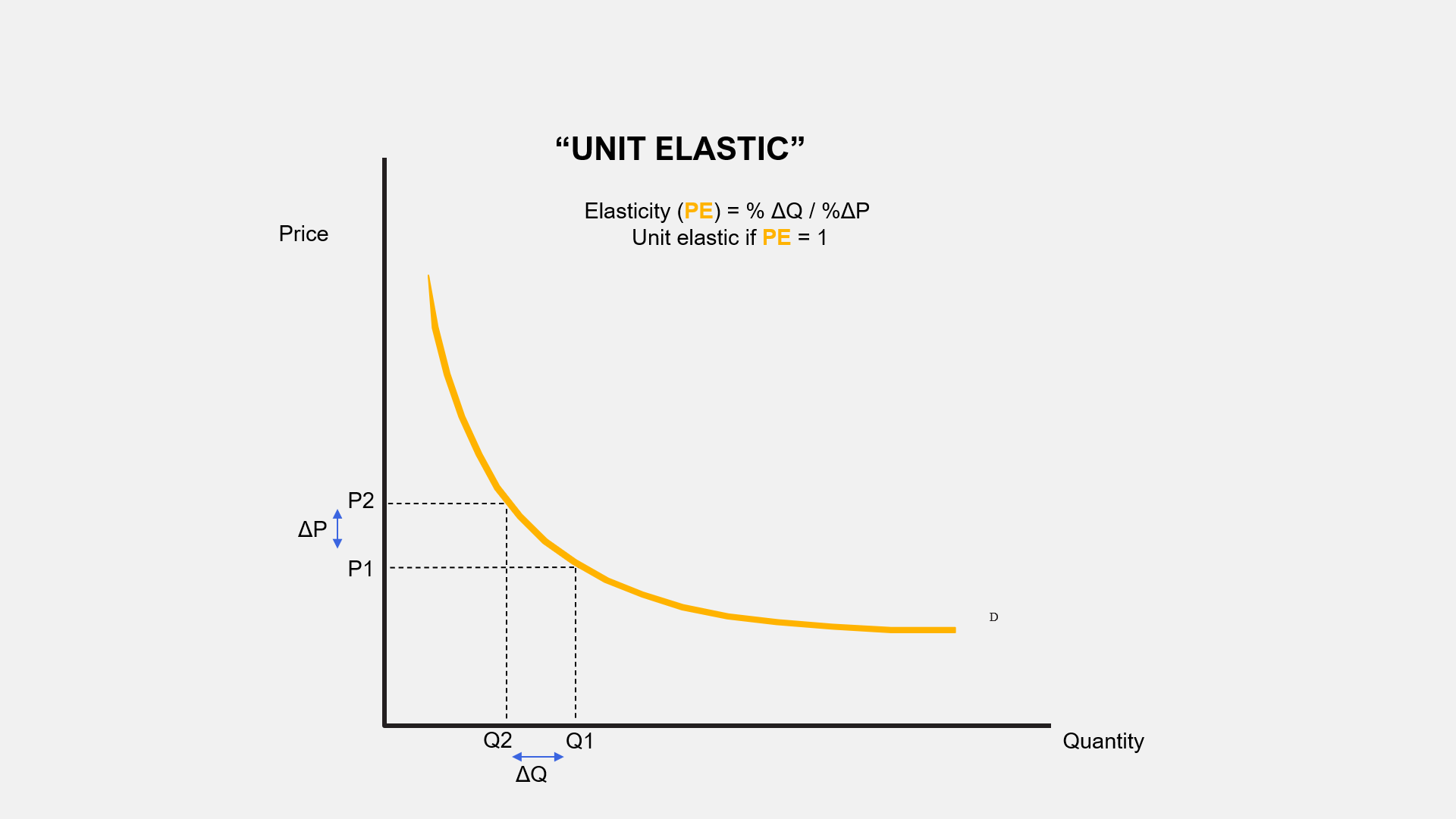
unit elastic
n = 1
%change in Qd = %change in P
price elasticity of supply
sensitivity of supply to price shocks
determinants of elasticity of supply
ease of substitution
decrease in price of one item → how easy is it to shift production away from that item?
short run vs. long run
long run = elastic
short run = inelastic
excise taxes
tax on a particular product, shared between consumer and producer depending on elasticity
Tax incidence
measure of WHO IS PAYING THE TAX - consumer or producer?
how to determine the price of a tax from the graph
NOT space between equilibrium
SPACE BETWEEN SUPPLY CURVE 1 AND EQUILIBRIUM OF SUPPLY CURVE TWO ON THE Y AXIS
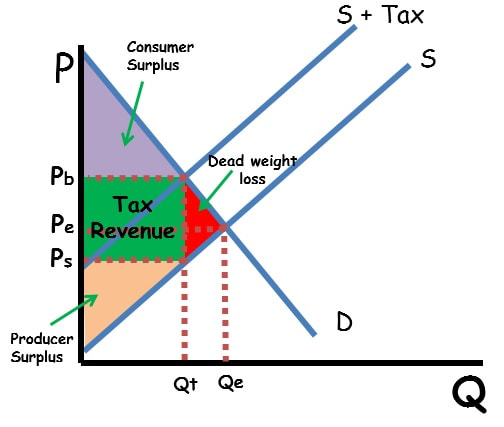
dead weight loss
the surplus lost from implementing a excise tax
DECREASE IN TOTAL SURPLUS
DECREASE IN TOTAL EFFICIENCY
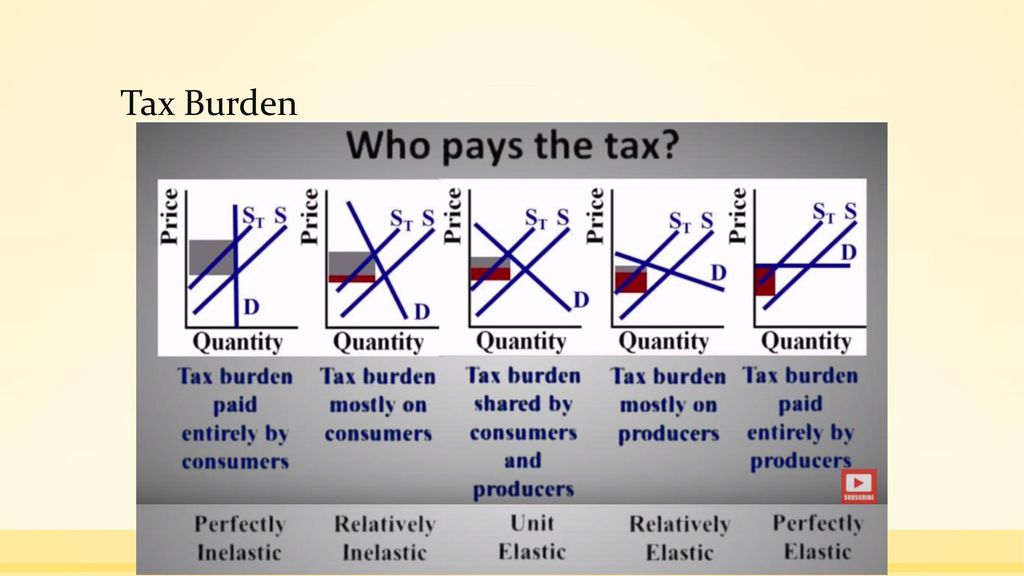
Who pays the tax depending on elasticity?
Unit elastic : tax shared equally
perfectly inelastic: consumer pays
perfectly elastic : producer pays
tax = difference between which prices?
difference between consumer and producer prices = tax
is new equilibrium quantity exchanged more or less compared to without tax?
tax = quantity exchanged is less in new equilibrium
total expenditure
The sum of the price paid for one or more products or services multiplied by the amount of each item purchased.
expenditure depends on elasticity of demand
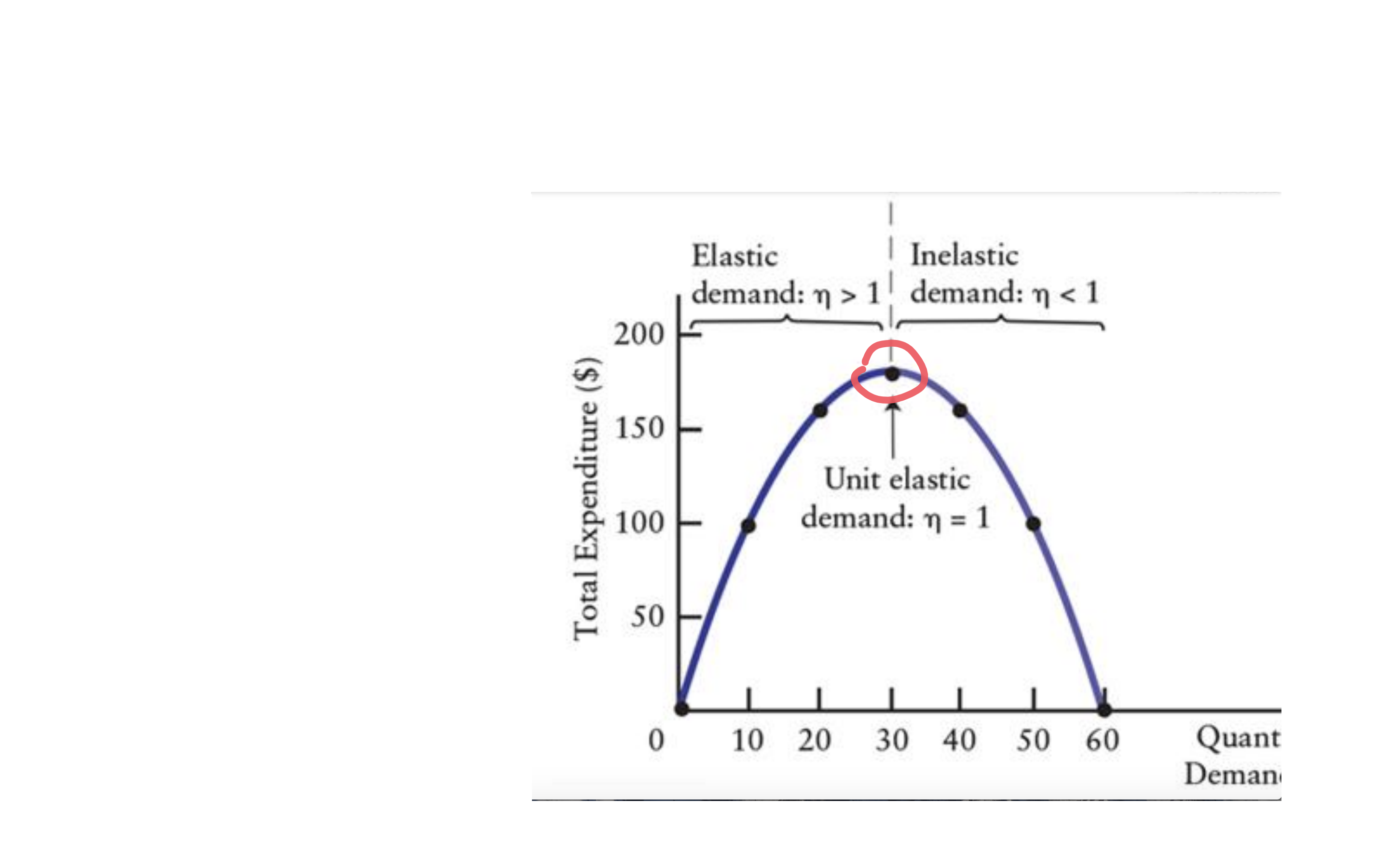
where is highest expenditure in terms of elasticity?
Unit elastic
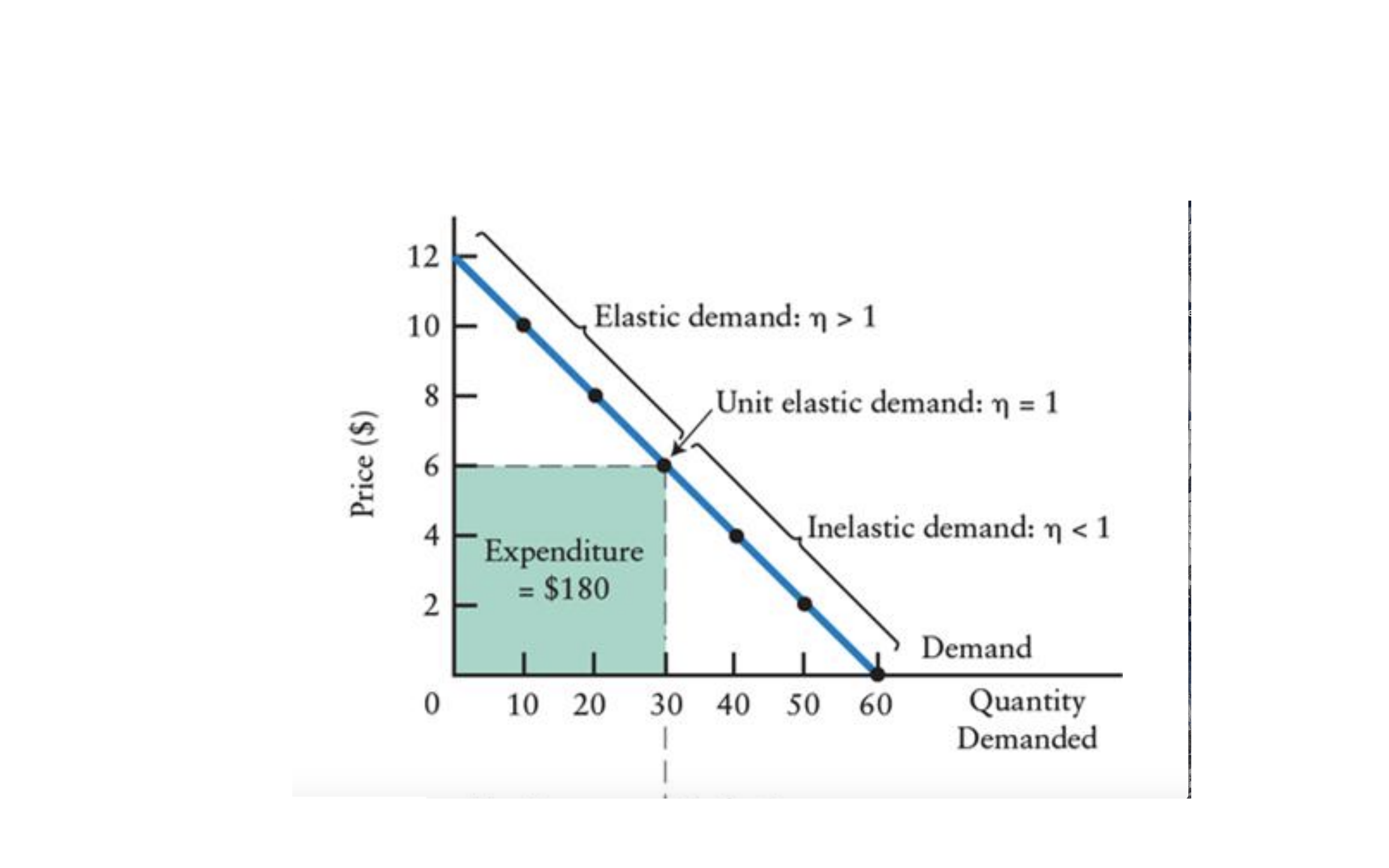
total expenditure in terms of elastic demand
higher price = lower total expenditure
lower price = higher total expenditure
inverse relationship between total expenditure and price for ELASTIC demand
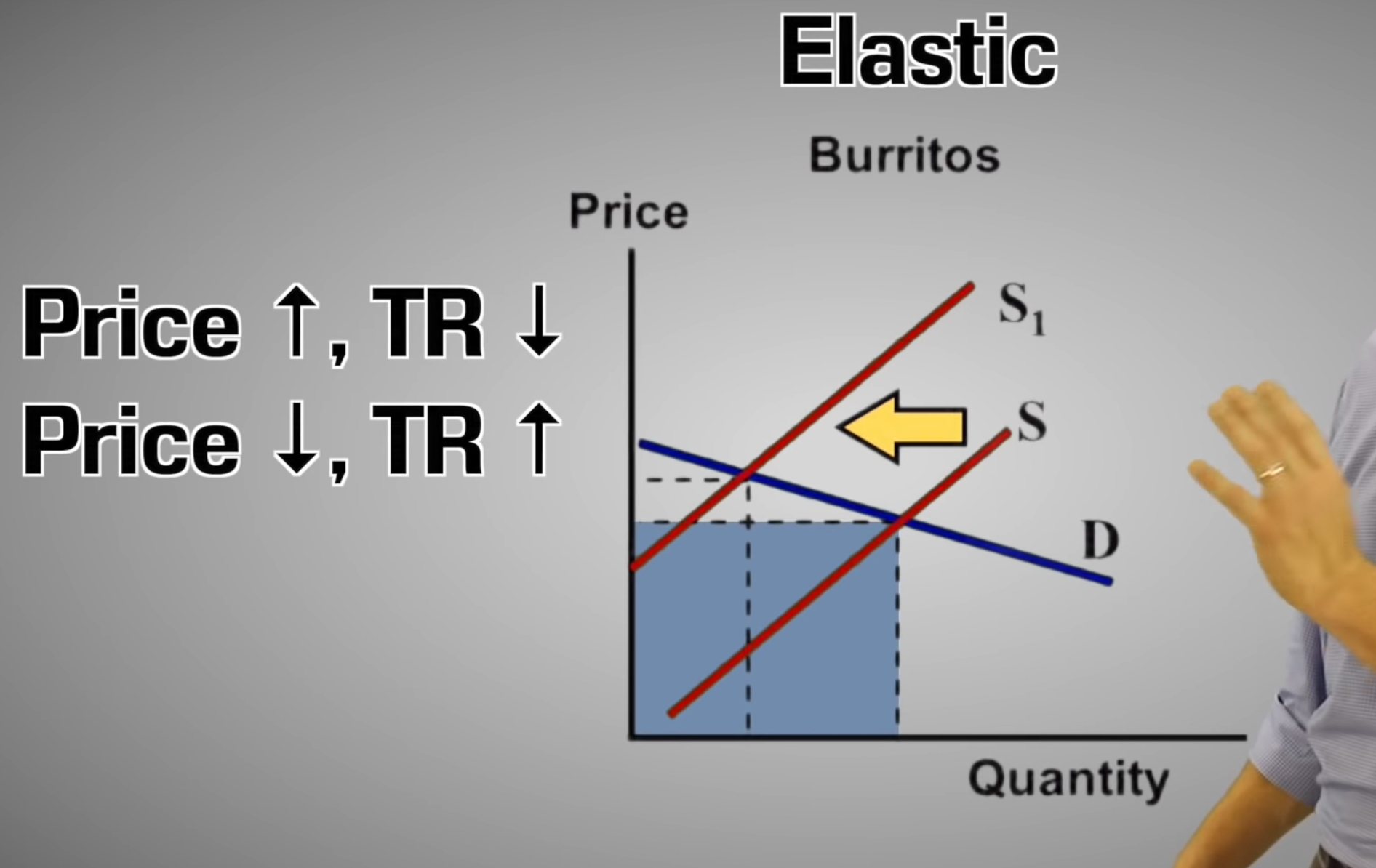
total expenditure in terms of inelastic demand
higher price = higher expenditure
lower price = lower expenditure
positive relationship between total expenditure and inelastic demand
Income elasticity of demand
ny = (%change in Qd) / (%change in income)
necessities versus luxuries (+)
normal and inferior goods (+), (-)
normal goods
positive income elasticity
increase in income = increase in demand
the more necessary an item the lower its income elasticity
luxuries
elastic ny>1 (bigger than one)
necessities
inelastic - ny<1 (smaller than one)
inferior goods
negative income elasticity
the higher the income, the decrease in demand
mr noodles! - the more income i have, i’m buying way better pasta then mr noodles
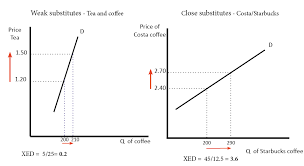
Cross elasticity of demand
responsiveness of Qd to the price of a DIFFERENT product
(%change in Qd of good X) / (%change in Qd of good Y) = nxy
complimentary versus substitutes
higher elasticity = higher competition
higher cross elasticity of demand = ______ competition
higher competition (cause of substitutes)
substitute goods in cross elasticity of demand
(-) cross elasticity
increase price of gas = decrease demand of cars
more competition
complimentary goods in cross elasticity of demand
(+) cross elasticity
increase price of cars = increase demand in public transport