L8 - Emerging and re-emerging vector borne and zoonotic diseases
 Call Kai
 Learn
Learn Practice Test
 Spaced Repetition
 Match
Match Flashcards
 Knowt Play
1/38

There's no tags or description
Looks like no tags are added yet.
Name | Mastery | Learn | Test | Matching | Spaced | Call with Kai |
|---|
No analytics yet
Send a link to your students to track their progress
39 Terms
triple threat
human activities (MOH)
environmental deterioration (NEA/PUB)
proximity to animals (SFA/NPARKS)
human - enironment interaction diseases
Legionella
Meliodosis
Helminths
Cholera
Human - animal interaction diseases
Influenza
Nipah
Ebola
Food-Borne
MERS
Environment - human - animal interaction diseases
Dengue
Zika
Malaria
Chikungunya
Yellow Fever
Families of RNA viruses (positive sense)
Togaviridae - alphavirus genus (Chikungunya)
Flaviviridae (dengue, zika, yellow fever, japanese encephalitis)
Coronaviridae - Betacoronavirus genus (SARS, MERS)
retroviridae
Picornaviridae
Families of RNA viruses (negative sense)
Paramyxoviridae - Henipavirus genus (Nipah)
Filoviridae - Ebolavirus genus (Ebola)
Rhabdoviridae
Orthomyxoviridae
Bunyavitidae
Reoviridae
Host
An animal or plant in or upon which a parasite lives
Vector
An animal that transmits parasitic microorganisms and the diseases they cause from one host to another
Reservoirs
animate or inanimate sources which normally harbour disease-causing organisms and thus serve as potential sources of disease outbreaks
Flavivirus vectors
dengue - Aedes aegypti and albopictus
zika - Aedes aegypti and albopictus
yellow fever - Aedes aegypti
japanese encephalitis - culex species
west nile - culex species
tick borne encephalitis - ticks
Alphavirus vectors
Chikungunya - Aedes aegypti and albopictus
ross river - Aedes vigilax, aedes camptorhynchus and culex annulirostris
western equine encephalitis - culex species
Dengue and chikungunya transmission cycle
get bit
2-14 days intrinsic incubation
around 7 days fever - viremia
get bit again
7 days extrinsic incubation (in mosquito)
mosquito can transmit disease now :(
dengue and chikungunya origin
sylvatic cycle and urban cycle mixed
starts in forest
sylvatic cycle is just mosquitoes and forest
mosquito transfers ot human (Ae. africanus)
human transmits to urban mosquitos (Aedes aegypti and albopictus)
urban cycle begins
Dengue
single stranded RNA
flavivirus genus
4 stereotypes - evolved from sylvatic viruses that then transmitted to urban cycles
japanese enchephalitis and west nile virus transmission cycle
mosquito vectors (culex spp)
animals (birds for both, pigs also form JEV)
incidental hosts - humans
dead end virus
dengue global situation
increasing cases
increasing frequency of outbreaks and bigger magnitude
20-40 thousand deaths per year
economic burden dengue
singapore - 2000-2009 estimates $0.85-1.15 billion
41%-58% direct medical and non-medical cost and indirect costs such as loss in work productivity and reduction of household services
the rest in vector control
cambodia - each case typically $30-105
67% of households incurred average debt of $25
food per household per week - $9.5
mosquito environment
Aedes aegypti - built environment (urban)
Aedes albopictus - greenery and forest
Global trends that impact dengue
increas in urbanization - megacities
increased human density
migration and change in demographic
improved travel efficiency
urban populations
60% of global populations expected to live in cities by 2030
urban population increased from 220 million to 732 million between 1900-1950
in 2030 4.9 billion people are expected to be urban dwellers
where will most urban growth occur?
Asia pacific (predicted)
travel out of asia pacific region
2.8 billion journeys today - grow to 6.1 billion by 2034.
half will touch asia pacific region in 2034, up from 40% today
how has global distribution of dengue stereotypes changed?
1970 - only SE had all 4 stereotypes, rest of world only had DEN1 and 2
2009 - more countries have dengue and all 4 stereotypes are found almost everywhere except middle east. (i think - map was not clear)
climate change and vector diseases
VBD’s expand geographical range
shift towards higher elevation - due to general warming temps
reduce high over-wintering mortality of vectors - declining number of cool days
increasing length of transmission season
increasing trend of epidemic potential
more extreme precipitation
diminishing snow and glacier covers - higher temps
2 strategies for disease control
replacement - etablish dominant wolbachia-aedes population that is resistant to infection
suppression - reduce mosquito population to a level that inhibits disease transmission
project wolbachia stats
430,000 households
35% of households in singapore by 2024
gravitrap success
more than 9-% reduction of aedes aegypti across 5 years
levels of analysis for wolbachia project
township
individual - risk to individuals
which disease reduction approach did NEA choose and why
Suppression
targets mosquito population, doesnt rely on wolbachia
involves releasing male mosquitos - they dont bite yay
consistent w singapores public messaging on vigilance regarding mosquito breeding
release of male mosquitos can be halted at any time - leaves no ecological footprint. replacement can follow if needed
chikungunya virus genotype
single stranded RNA
Genus: alphavirus
1 stereotype, 3 lineages
evolved from sylvatic viruses
7-20 years between pandemics
found in west and central eastern Africa and SE asia
chikungunya pandemic 2004-2010
A226V mutation allowed adaptation to Ae. albopictus and also shortened exctrionsic incubation period
moved from kenya to india, sri lanka, maldives, seychelles, reunion island etc.. then thailand, cambodia, malaysia, sg, indonesia
Bat borne viruses
Ebola virus
Nipah
SARS
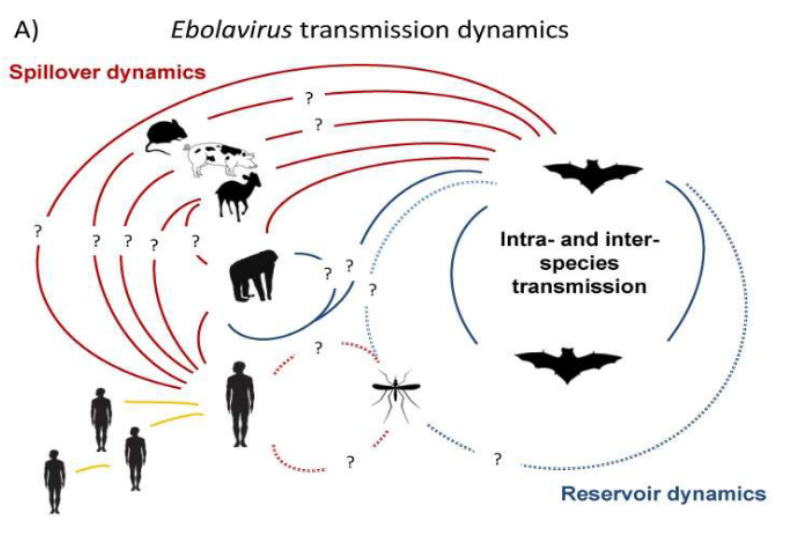
ebola tranmission dynamics
spillover from other animals, then intra and inter species transmission in bats.
Nipah
started in fruit bats
transferred to pigs
through close contact w infected pigs it spread to humans
Nipah virus bangladesh
date palm sap contaminated w bat excretions - started outbreak in 2011
modes of transmission - Nipah
3 modes:
contaminated date palm sap
spillover to another animal (i.e. horses) then human contact with this intermediary leads to infection
pigs - rapid transmission between pigs - asymptomatic facilitating spread
Coronaviruses - SARS
Singapore 2003
spread to most of asia, north america and europe
casualties of SARS
Number of cases reported
Between November 2002 and July 2003, a total of 8,096
cases were reported globally. In Singapore, 238 people
were infected.
Number of lives claimed
Sars killed 774 people worldwide, including China (349
deaths), Hong Kong (299 deaths), Canada (43 deaths),
Taiwan (37 deaths) and Singapore (33 deaths)
Bats - SARS and MERS
Bats transmitted to camels like 30 years ago
this then transferred to humans who spread it to populations
rare to have direct transfer from palm civets infected by bats to humans