E138 Locomotion
 Call Kai
 Learn
Learn Practice Test
 Spaced Repetition
 Match
Match Flashcards
 Knowt Play
1/36

There's no tags or description
Looks like no tags are added yet.
Name | Mastery | Learn | Test | Matching | Spaced | Call with Kai |
|---|
No analytics yet
Send a link to your students to track their progress
37 Terms
ex of facultative parthenogens
some varanid lizards
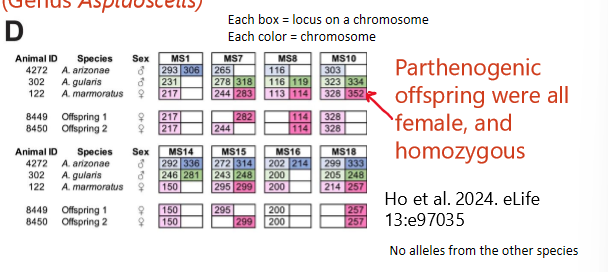
what does lab data of whiptail lizards indicate about parthenogens
parthenogenic offspring were all female and homozygous
no alleles from the other species
each box = locus on a chromosome
each color = chromosome
what does lab data of wild-caught sawfish indicate about parthenogens
some individuals were likely the result of parthenogenesis
high homozygosity
consequences of homozygosity on conservation
high homozygosity = low genetic diversity and high mortality
results in weird phenotypes
breeding plans assume sexual reproduction
ex of obligate parthenogens
whiptail lizards
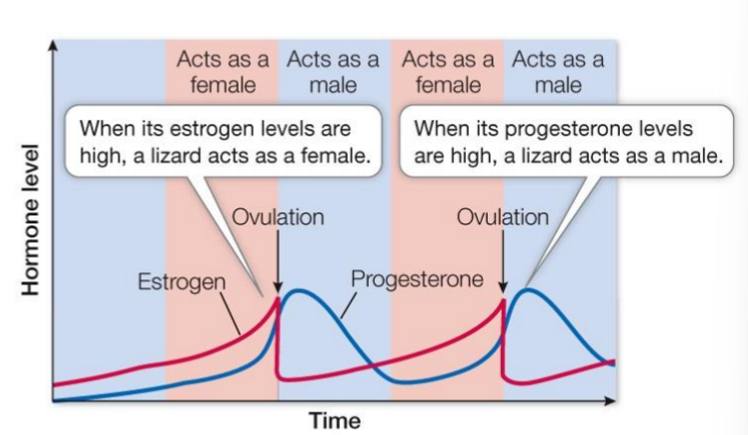
whiptail lizard reproduction
female lizard acting as a female
high estradiol
female lizard acting as a male (stimulates ovary growth)
hits ovulation → crash in estradiol → rise of progesterone = acting as a male
cyclic
hormones drive this reproduction
how do obligate parthenogens avoid the homozygosity problem
they are triploids
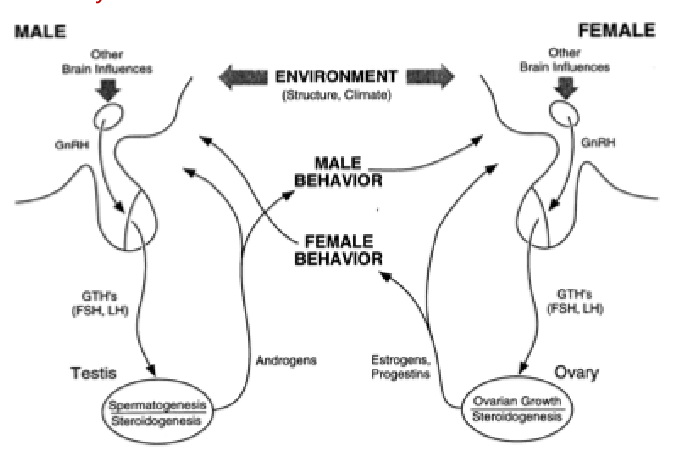
they are great model for studying what influences sexaul behaviors (genetics, hormones, neural, environment, toxins) and how they evolved
cost of transport
energy consumed to transport one unit of body mass over one unit of distance at a particular speed
cot equation
COT = (L O2/kg/hr) / (km/hr)
what impacts COT
energy efficiency, environment, morphology, behavior
results in energy allocation trade-off and consequences
individual differences in cot
fitness, selection gradient, growth
group function in cot
cohesion, assortment, gene flow, population
species differences in cot
community, food web, conservation
cot varies by … and …
mode and size
most inefficient way to move
running (for most)
cheapest mode of transport
swimming
flying and cot
intermediate between swim (least) and run (most)
size and cot
smaller size = more expensive to move around
reason why swimming has such a low cot for some species
buoyancy
swim bladder
lipids
moving through water or air
reduced air pressure based on the shape of fins or wings
diverse feathers = big feathers for soearing
fish head movement and swim speed
inverse relationship
fastest when the head stays stable, but moves their body
why do we care about cot and movements
bio-inspired robotics
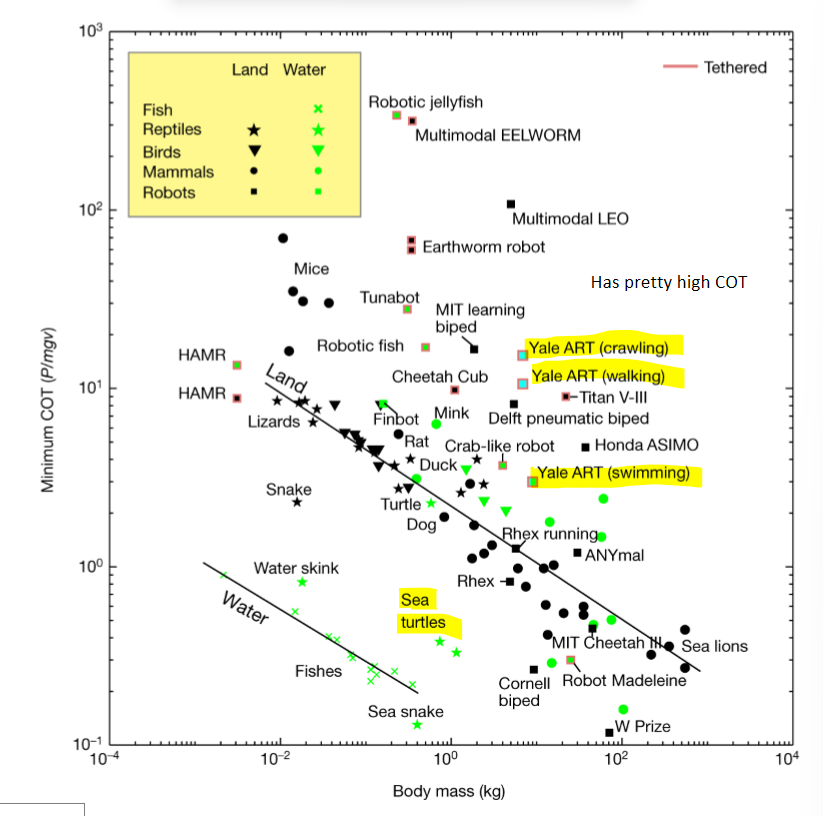
cot of robots
the tutle robot has greater COT for crawling, walking, and swimming in comp to an actual turtle
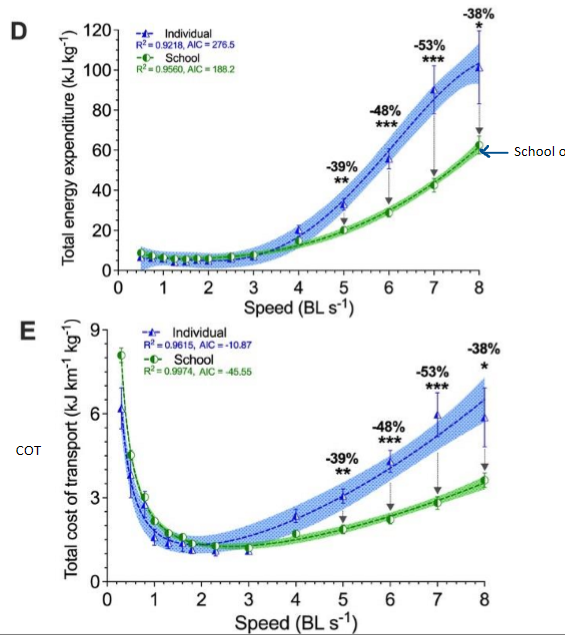
how does cot change when swimming a school
school of fish have a lower cot than swimming by themselves
drafting
supracoracoideus contraction
produces the wing upstroke in flying
pectoralis contraction
producs the downstoke in flying
flying cot
parabolic relationship between speed and mechanical power
lowest energy use = bottom of the parabola
best for distance = greater speed with relatively low energy use
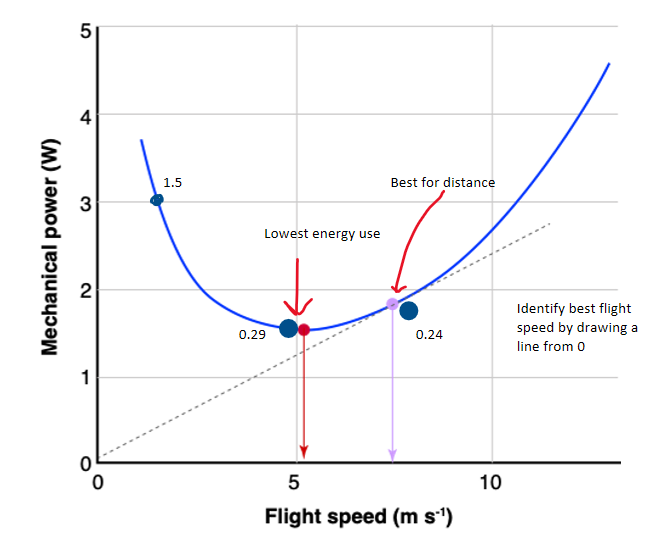
how to identify the best flight speed
draw a line from 0 through the bottom of the parabola
does all flight cost the same amount of energy
no
hummingbirds hover = most expensive
thermal soaring
ride on top of the thermals (warm air rising)
terrestrial locomotion
least efficient
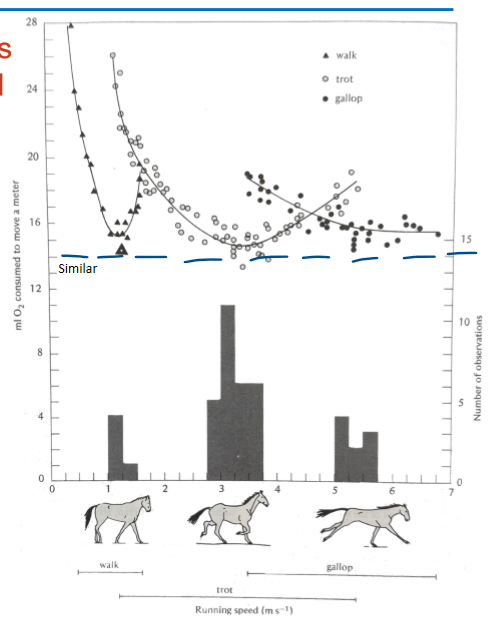
COT varies with speed and gait
VO2 and speed relationship
VO2 increases linearly with speed
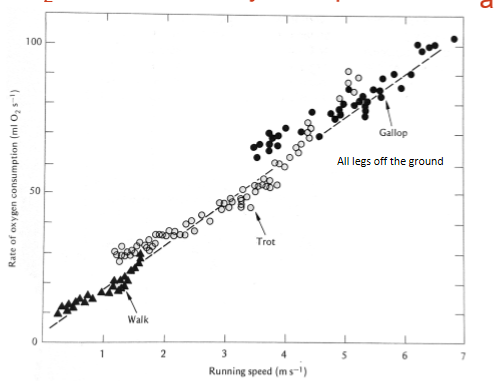
gallop
legs off the ground
speed and gait
lowest cot is similar between walk and trot in horses
hopping
in a 5kg quadruped, the O2 consumption increases linearly with speed
in a 5 kg wallaby, the O2 consumption increases then plateaus with speed
moving without legs
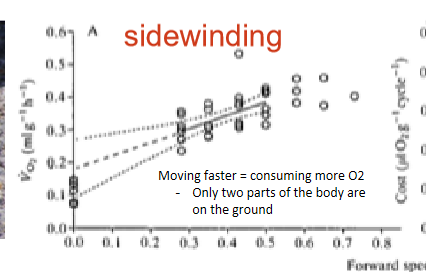
sidewinding
move faster = consuming more O2
only 2 parts of the body are on the ground