Small Animal Oncology- Feline Lymphoma
 Call Kai
 Learn
Learn Practice Test
 Spaced Repetition
 Match
Match Flashcards
 Knowt Play
1/36

There's no tags or description
Looks like no tags are added yet.
Name | Mastery | Learn | Test | Matching | Spaced | Call with Kai |
|---|
No analytics yet
Send a link to your students to track their progress
37 Terms
What type of tumour is feline lymphoma?
Malignant
Feline Lymphoma
Lymphoma is a lymphoid malignancy
originates from solid organs e.g. lymph nodes, liver and spleen
Lymphoma most commonly diagnosed neoplasm in cats
~30% of all feline tumours
Origin of lymphocytes
Pluripotent stem cell divides into more specialised progenitor cells that give rise to lymphoid, myeloid and erythroid linages
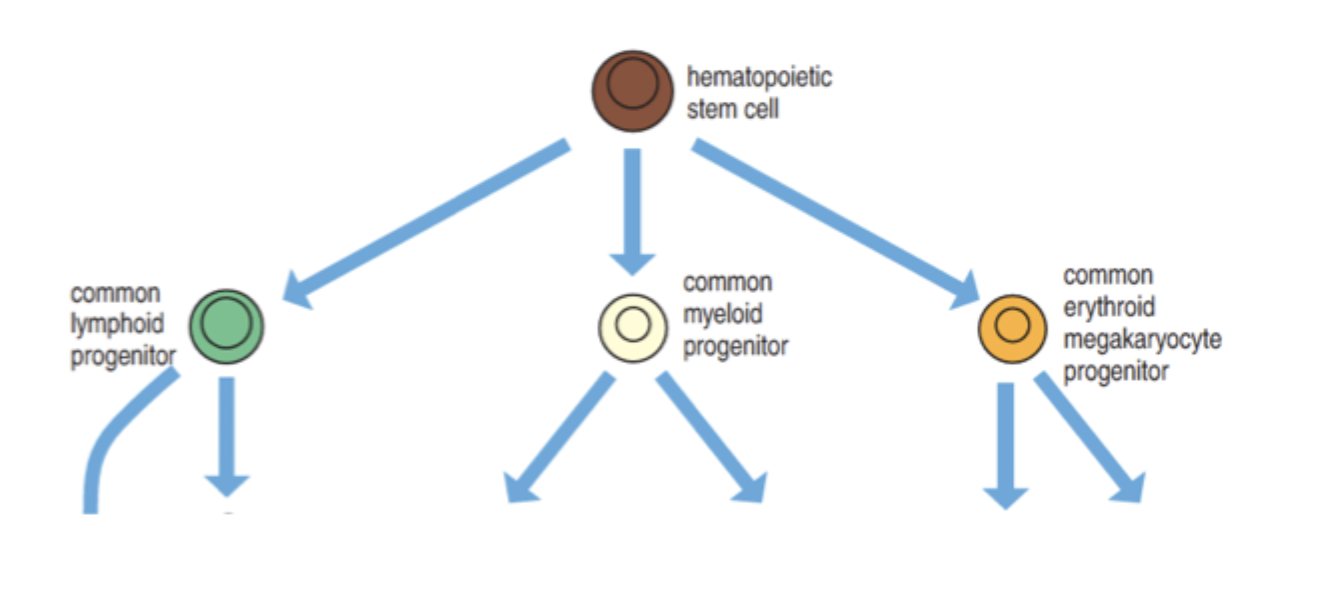
Lymphoid linage
Lymphoid progenitors → B cells, T cells and NK cells
Activation (by infection) B cells → plasma cells and T wells → effector cells
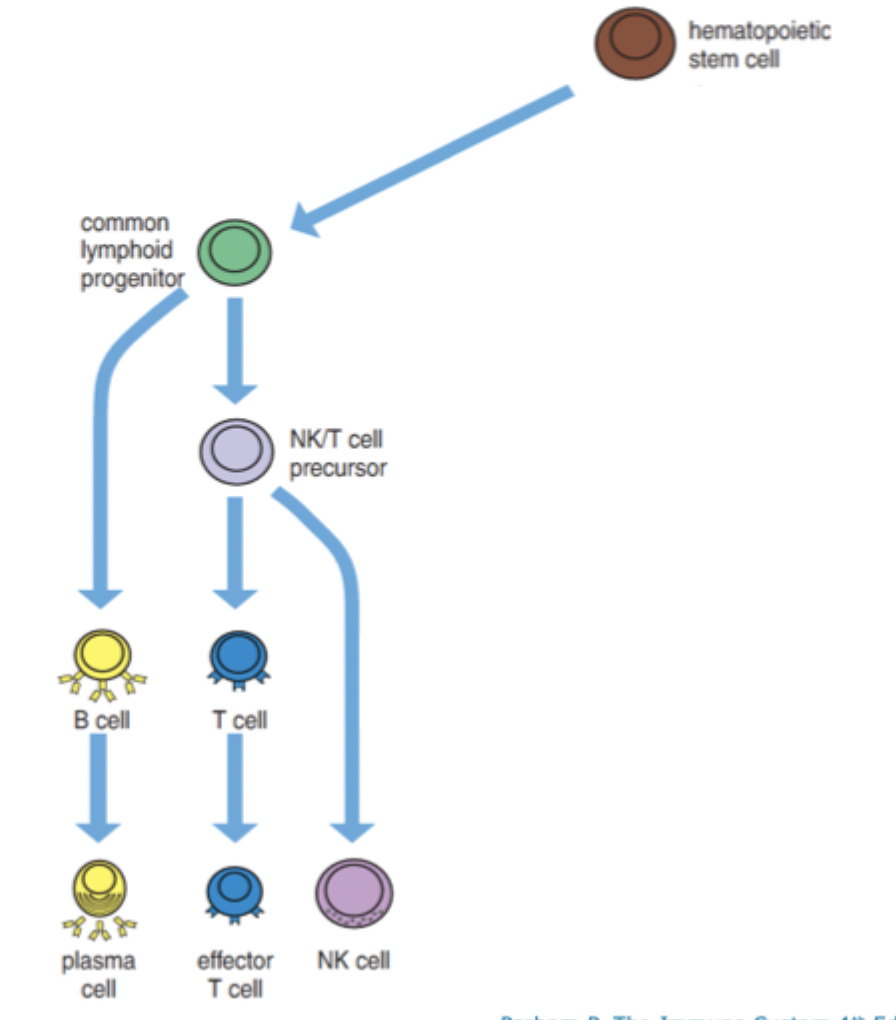
Lymphocytes- origin
Lymphoid cells are predominantly found in lymphoid tissues
primary (sites of T and B cell maturation): bone marrow and thymus
secondary (sites where mature lymphocytes can be stimulated to respond to pathogens): e.g. lymph nodes, spleen and mucosal surface or respiratory, gastrointestinal and urogenital tract
Types of Lymphocytes
Natural Killer (NK) cells
B lymphocytes (B cells)
T lymphocytes (T cells)
Function of NK cells
Kill virus-infected cells and secrete cytokines to inhibit viral replication
Part of innate immune response
Function of B cells
Express cell surface immunoglobulins
Can be activated to become plasma cells- secrete immunoglobulins
Part of the adaptive immune response
Function of T cells
Express cell surface T cell receptors
Part of the adaptive immune response
Subdivided into 2 types of cytotoxic T cells (kill infected cells) and B cells (secrete cytokines)
Feline Lymphoma
Recent shift in presence and signalment in the developed world due to FeLV vaccination
Biomodal age of presentation
2 peaks, the first at ~2 years old (often FeLV positive) and the second 10-12 years old (FeLV negative)
Interaction between Lymphoma and FeLV?
FeLV (feline leukaemia virus) infection increases the risk of lymphoma 60-fold
What is FeLV?
FeLV is a gammaretrovirus that infects Felidae
FeLV transmission
Transmission is via prolonged intimate contact such as biting, licking, grooming and shared bowls
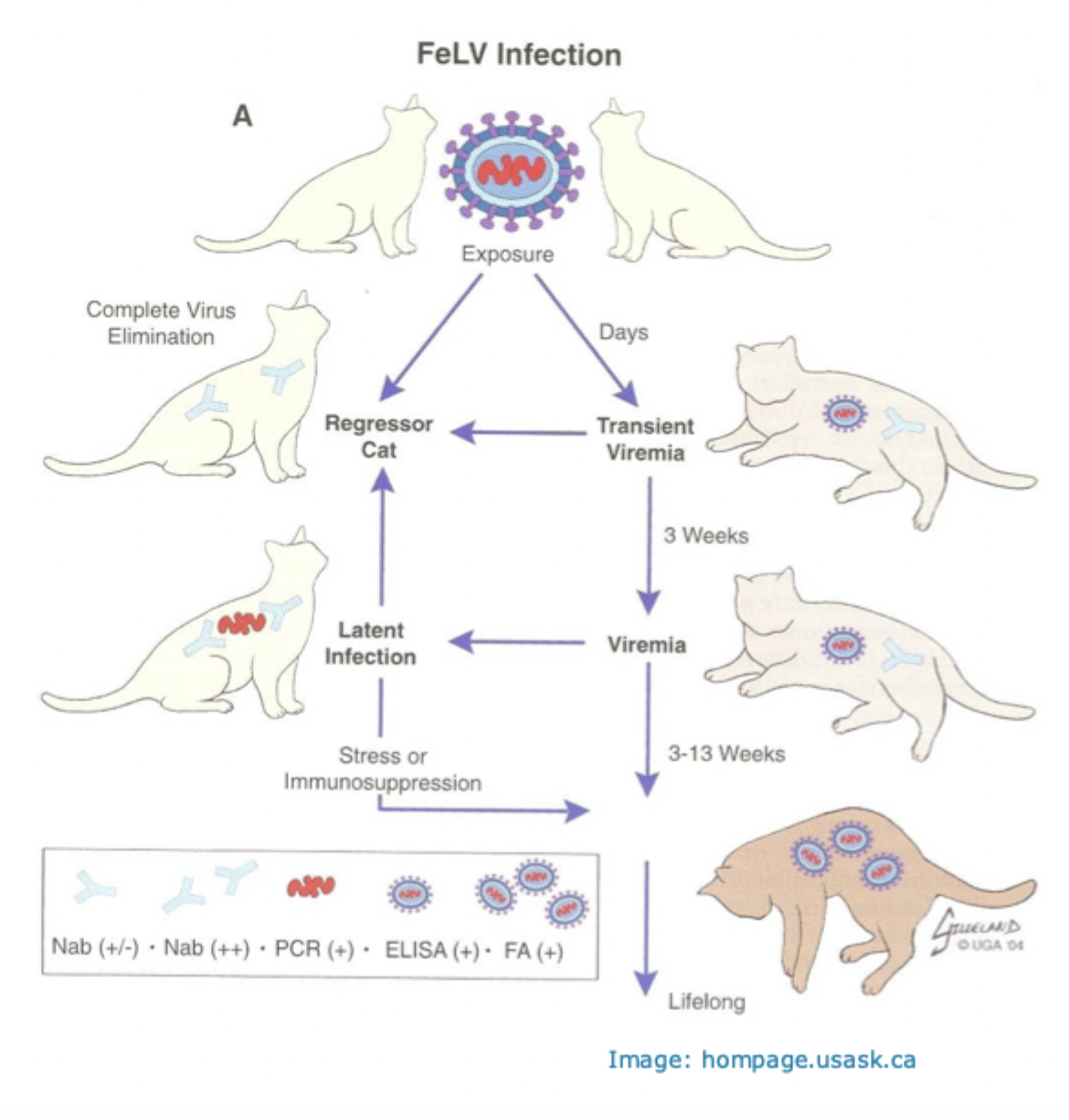
Types of FeLV infection
Progressive infection
Latent infection
Regressive infection
FeLV progressive infection
1/3 develop progressive infections
High viral loads
Excrete virus in saliva
Succumb to FeLV related disorders
anaemia, immunosuppression
FeLV latent infection
Viral antigens detectable
Can become progressive or regressive
FeLV Regressive infection
Neutralising antibodies
Pose minimal transmission risk
1-10% of infected cats
Reactivation possible
What tissue does FeLV target?
lymphoid tissue
intestine
bone marrow
What type is FeLV?
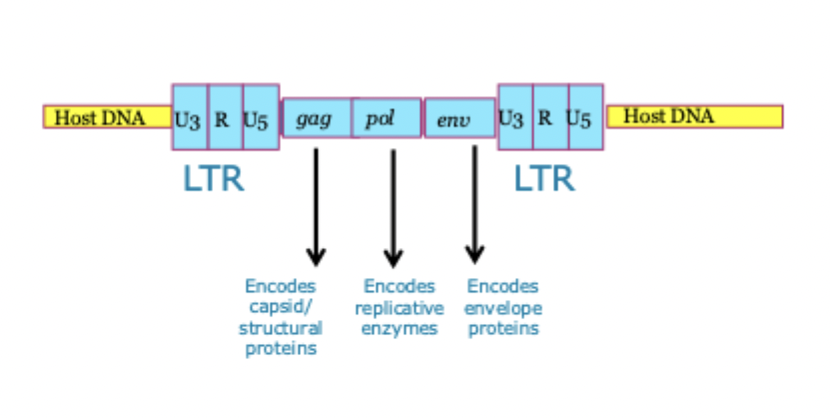
Single-stranded RNA genome
Provirus- DNA copy of genome integrated into the host genome
Provirus template for new iron production
FeLV- Cellular transformation
LTRs
flank the viral genes
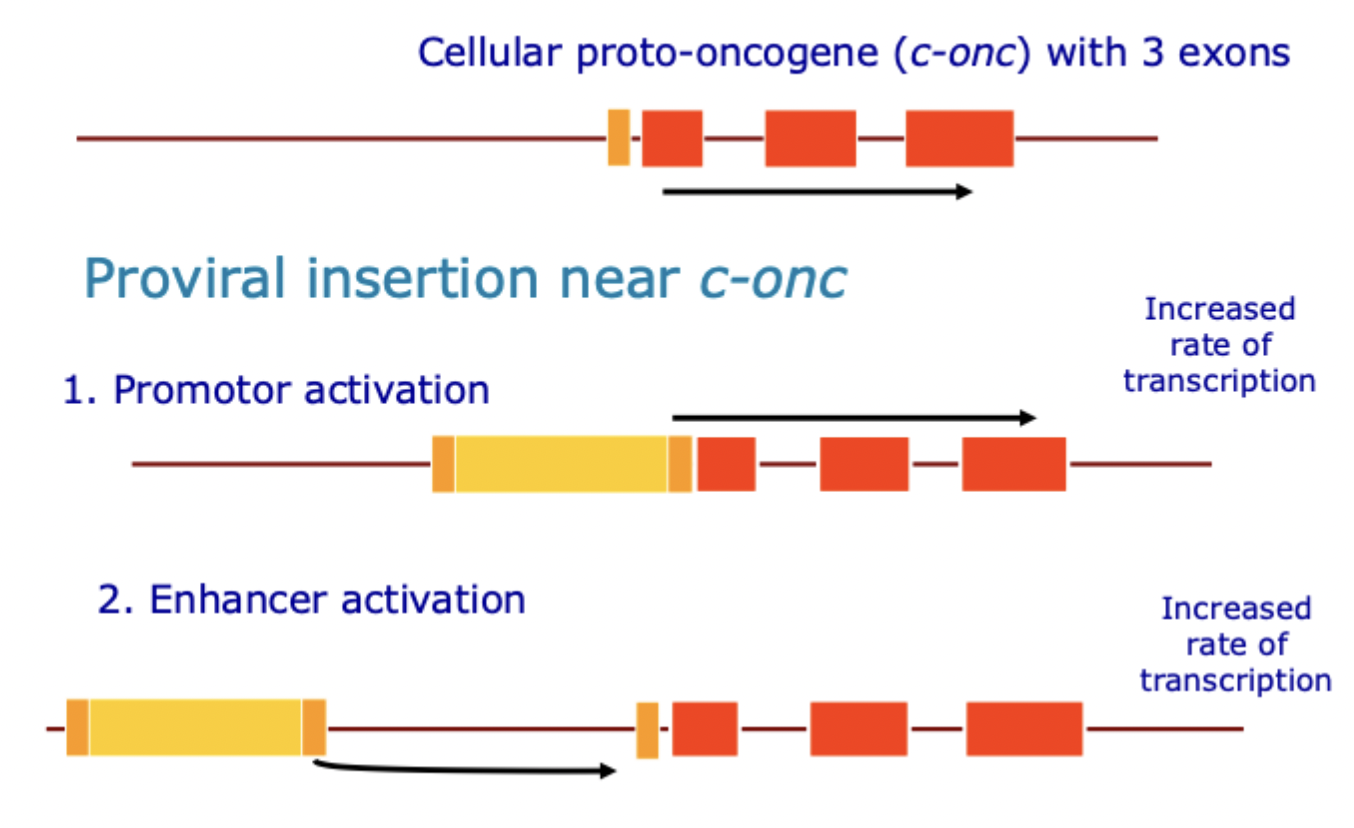
contain promotor and enhancer
control viral gene transcription
Oncogenes
Most cellular proto-oncogenes are normal components of growth factor signalling pathways
But… increased activity leads to increased cell growth
This can occur due to mutations in cellular proto oncogene (cellular oncogene- c-onc)
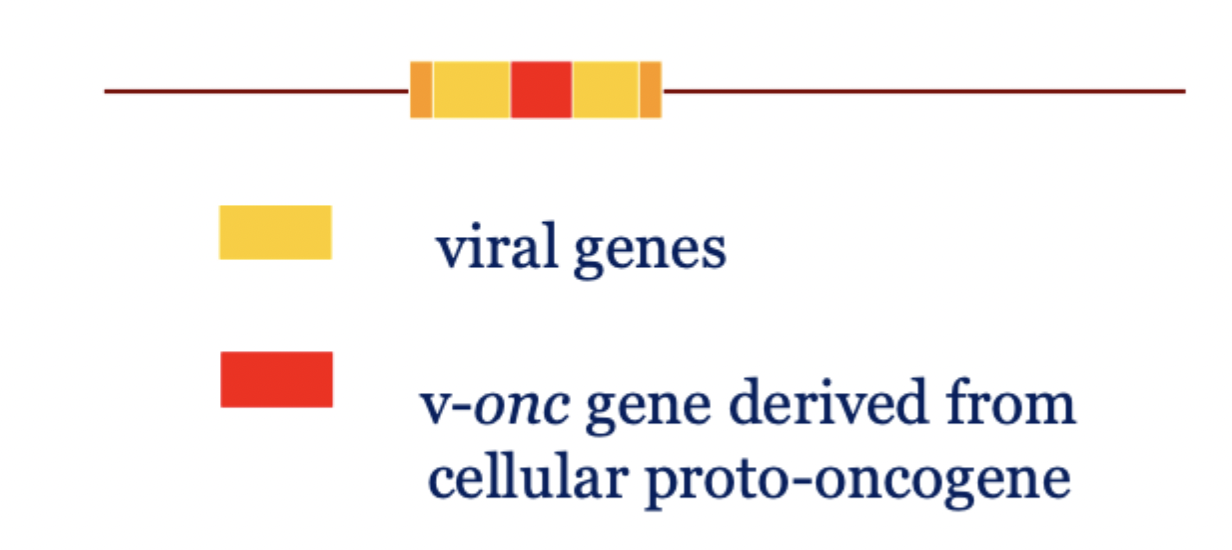
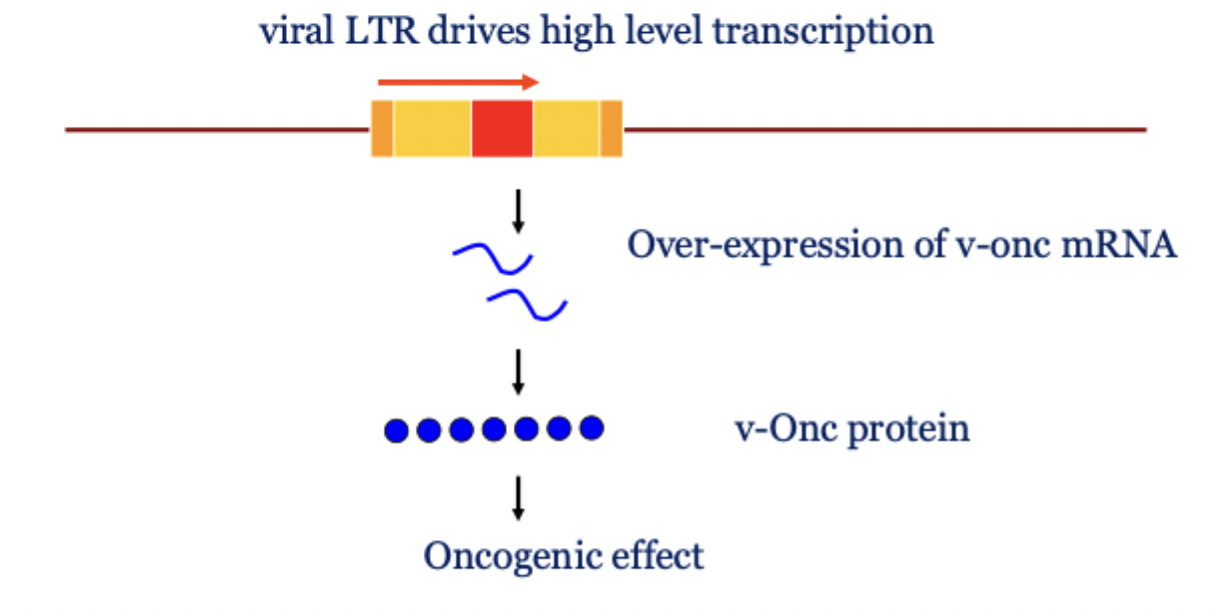
Viral transduction can result in overproduction of protein homologous to cellular oncogene (v-onc)
Viral insertion can also up regulate production of a cellular oncogene
FeLV- cellular transformation
Interplay between viral variants and cellular genes
Gained survival advantage- step towards transformation
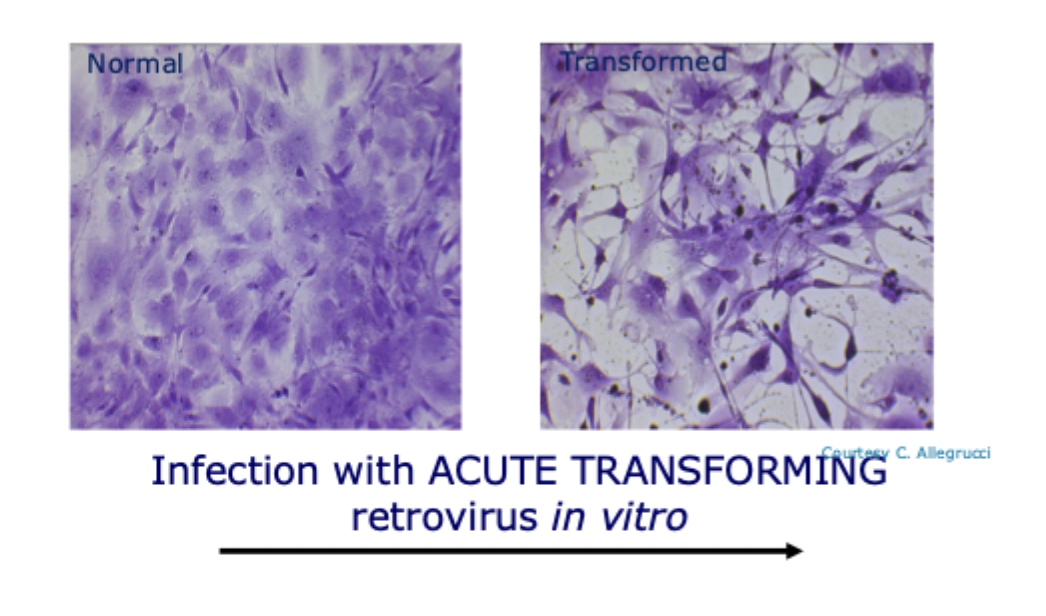
Insertational Activation
Transduction 1
Infection of a new cell by virus which already carries a transducer cellular oncogene
Transduction 2
Infection of a new cell by a recombinant retrovirus carrying a transduced cellular onc gene (v-onc)
Insertion vs transduction
Insertion
virus is replication competent
process of oncogenesis slower
main mechanism of oncogenesis for feline leukaemia
Transduction
in most cases acquiring a cellular oncogene results in loss of essential retroviral genes- therefore virus is “defective” and requires “help” in order to replicate
such defective viruses are generally not transmitted to a new host - i.e. they arise de novo in each infection
Mechanisms of retroviral oncogenesis
Oncogene capture and transduction
Insertional activation
Insertion leading to truncation
Insertion leading to gene inactivation
Other mechanisms
viral proteins can disregulate normal cellular metabolism and lead to tumour formation
Impact of the FeLV Vaccine
Introduction of FeLV vaccine
decline if FeLV infection incidence
increased incidence of feline lymphoma
Increased incidence of gastrointestinal lymphoma
Change in age of presentation
previously underreported
other factors
FeLV diagnosis
History
anorexia, weight loss, lethargy, polyuria/ polydipsia
Clinical exam
Viral status
Cytological/ histological
Blood counts/ bone marrow aspirates
Common complications of lymphoma
Anaemia
Thrombocytopenia (platelet deficiency)
White blood cell abnormalities
Hypergammaglobulinaemia
Cytology
Presence of lymphoid cells (50-100% of nucleated cells)
Cell size and mitotic activity
Staging
Offers little prognostic information for an individual but is a way or recording the disease
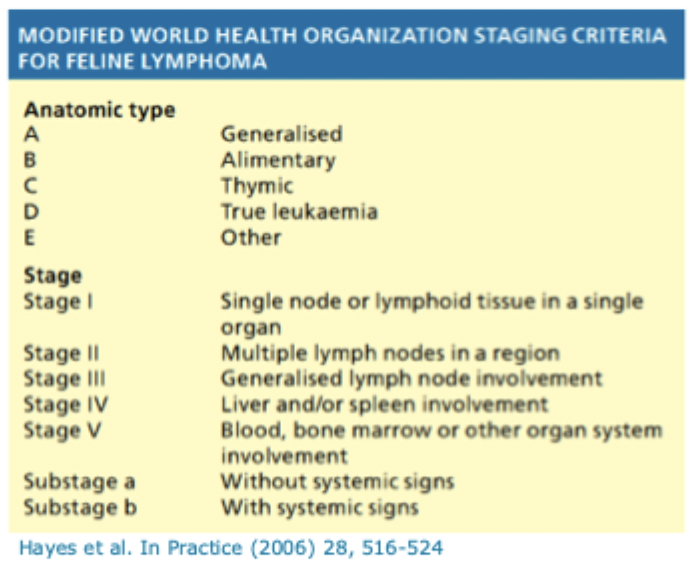
Prognostic factors
No markers that predict lymphoma occurrence or recurrence in cats
Factors indicating a favourable prognosis in cats:
Early presentation
Complete initial response to treatment
Clinically well patient (substage a)
Treatment modalities
Lymphoma is a systemic disease
Chemotherapy
Surgery and radiotherapy can be considered in some cases
Chemotherapy multi-modal vs single agent
COP
Cyclophosphamide (alkylating agent)
Vincristine (vinca alkaloid)
Prednsiolone (corticosteriod)
CHOP
plus doxorubicin (anthracycline)
Single agent
Doxorubicin
Advantages of chemotherapy
Treats systemic disease (radiation and surgery can be used in absence of systemic disease)
Cats suffer with less side effects (gastrointestinal toxicity)
Disadvantage of chemotherapy
Cats are less responsive than dogs and other species
Multi-drug resistance (failure at first treatment and failure of subsequent treatments)