Adhesive Partial-Coverage Ceramic Restorations
 Call Kai
 Learn
Learn Practice Test
 Spaced Repetition
 Match
Match Flashcards
 Knowt Play
1/45

There's no tags or description
Looks like no tags are added yet.
Name | Mastery | Learn | Test | Matching | Spaced | Call with Kai |
|---|
No analytics yet
Send a link to your students to track their progress
46 Terms
What are some examples of adhesive partial-cvoerage ceramic restorations?
Ceramic veneers
Ceramic inlays / onlays
Ceramic resin-bonded bridge
What are ceramic veneers?
A thin bonded ceramic restorations that restores the facial, incisal and part of the proximal surfaces of teeth requeing esthetic restoration
Which tooth surface is not worked on regarding ceramic veneers
Lingual
The success of veneers is determined by what 3 stages?
Pre-operative phase
Operative phase
Post-operative phase
The pre-operative phase includes
Proper treatment planning
Proper selection of ceramics
The operative phase includes:
Proper preparation of teeth
Proper selection of the materials
Methods of cementation
The post-operative phase includes:
Proper finishing and polishing of the restorations
Proper planning for the continued maintenance of the restorations
What are the 4 indications for veneers?
Modify tooth color
Modify tooth shape / length
Close diastema
Correct mild misaligned teeth
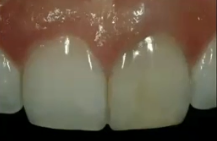
What are some reasons why you’d want to modify the tooth color?
Fix endodontically treated teeth
Tetracycline discolored teeth
Enhance existing tooth color
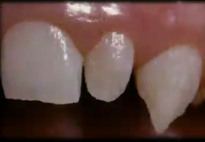
What are some reasons why a patient would want to modify their rooth shape or length?
Congenital malformation - peg laterla
Fractured teeth
Tooth wear
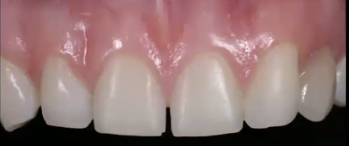
What are some reasons why you’d want to close the diastema?
To fix the contour
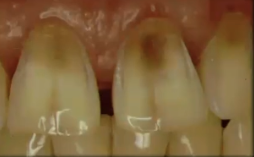
What are some contraindications for veneers?
Pronounced enamel defects
Severe malformations
Severe malalignment
Poor oral hygiene
What are the two components of an esthetic analysis?
Gingival display at smile
Tooth display at rest
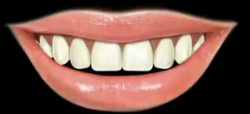
What is gingival display?
How much of your gums show compared to your upper lip
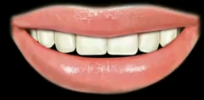
A low smile line is when you smile and you don’t see any gums. What % of your anterior teeth are shown?
Displays less than 75% of anterior teeth
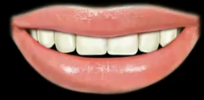
How common is a low smile line?
Seen in about 20.5% of the population
An average smile reveals 75% to 100% of anterior teeth and interproximal gingival only. How common is an average smile?
Seen in 68.94% of the population
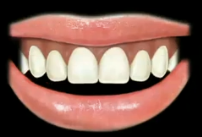
A high smile line is present in 10.57% of the population. What does it reveal?
A continuous band of gingiva and the total cervico-incisal length of the maxillary anterior teeth
Pressable ceramics include
Leucite reinforced glass (IPS Empress)
Lithium disilicate glass (IPS e.max Press)
Milled ceramics include
Leucite reinforced glass (IPS Empress CAD)
Lithium disilicate glass (IPS e.max CAD)
What are the 3 main ways dental ceramics are fabricated?
Feldspathic → layered (hand-built)
Pressable → heat + pressed into mold
Milled → CAD/CAM (cut from block)
Two techniques used for feldspathic porcelain?
Platinum foil technique
Refractory die technique
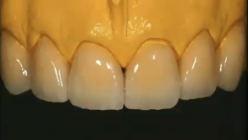
Advantages of feldspathic porcelain?
Highly translucent
Highly esthetic
Minimal tooth prep needed
Long term clinical history
Disadvantage of feldspathic porcelain?
Very weak → low flexural strength (110-150 MPa)
technique sensitive
Time consuming
Shrinkage / fit
Difficult to mask heavy discolored teeth
The clinical success rate for feldspathic porcelain has grown from 1998 to 2002 by what?
93 —> 98%
IPS Empress has a fracture strength of 200 MPa. What is it made of?
Leucite reinforced class
IPS e.max has a flexural strength of 300-500 MPa fracture strength. What is it made of?
Lithium disilicate glass
What are some benefits to using IPS e.max (lithium disilicate)?
Improve physical properties
Improve translucency
What are some advantages of pressable ceramics?
Less technique sensitive
Acceptable esthetics
Firm fit
High flexural strength
What are some disadvantages to pressable ceramics?
Monolithic color
Layered feldspathic porcelain often required
What is the difference between the clinical survival rates of pressable ceramics vs. feldspathic porcelain?
They are relatively the same
Clinical complications are significantly associated with a larger amount of
Exposed dentin; meaning its not about your material, it is about your prep and treatment planning
When bonded to enamel, porcelain veneers have a very
High clinical success rate
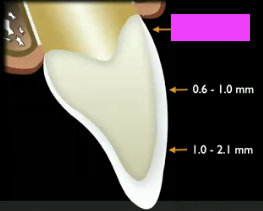
How much enamel do you have apically?
0.3-0.5mm
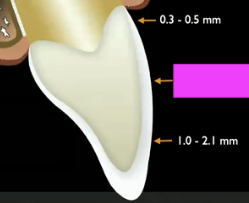
How much enamel do you have in the middle 1/3 of the tooth?
0.6 - 1.0mm
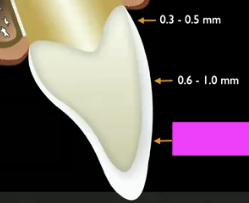
How much enamel do you have incisally?
1.0mm - 2.1mm
What are some advantages of a supragingival finish line?
Establish distinct and visible finish line
Reduce the risk of dentin exposure
Eliminate the chances of gingival injury
Likelihood to obtain a good quality impression
Facilitate bonding procedure
Convenience to maintain good OH
What is a disadvantage of a supragingival finish line?
Tooth / restoration interface might be visible
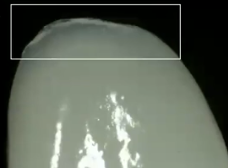
What is the contact lens effect
Very thin, highly translucent veneer (usually feldspathic) that allows the underlying tooth color to show through and influence the final appearance
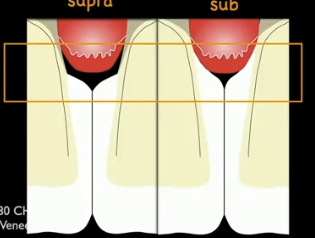
What are some indications for subgingival finish lines?
Major tooth color change
Create smooth emergence profile while closing diastema
If a patient has an existing Class III composite, how should you prep the interproximal for a veneer?
Extend the prep through
What are the 3 indications for extending the interproximal preparation through the contact area?
Major tooth color change
Existing interproximal restorations
Closing a diastema
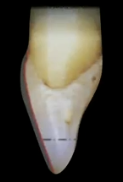
What kind of incisal reduction is this
No incisal reduction
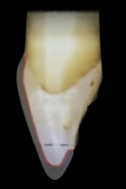
What kind of incisal reduction is this
Palatal chamfer
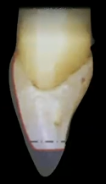
What kind of incisal reduction is this
Butt joint
Which incisal preparation is best?
Ceramic veneers have shown no relation between survival rates due to incisal preparation design