Glycolysis, Anaerobic Respiration, Cori cycle, Gluconeogenesis
 Call Kai
 Learn
Learn Practice Test
 Spaced Repetition
 Match
Match Flashcards
 Knowt Play
1/12

There's no tags or description
Looks like no tags are added yet.
Name | Mastery | Learn | Test | Matching | Spaced | Call with Kai |
|---|
No analytics yet
Send a link to your students to track their progress
13 Terms
Where does glycolysis occur?
Cytosol
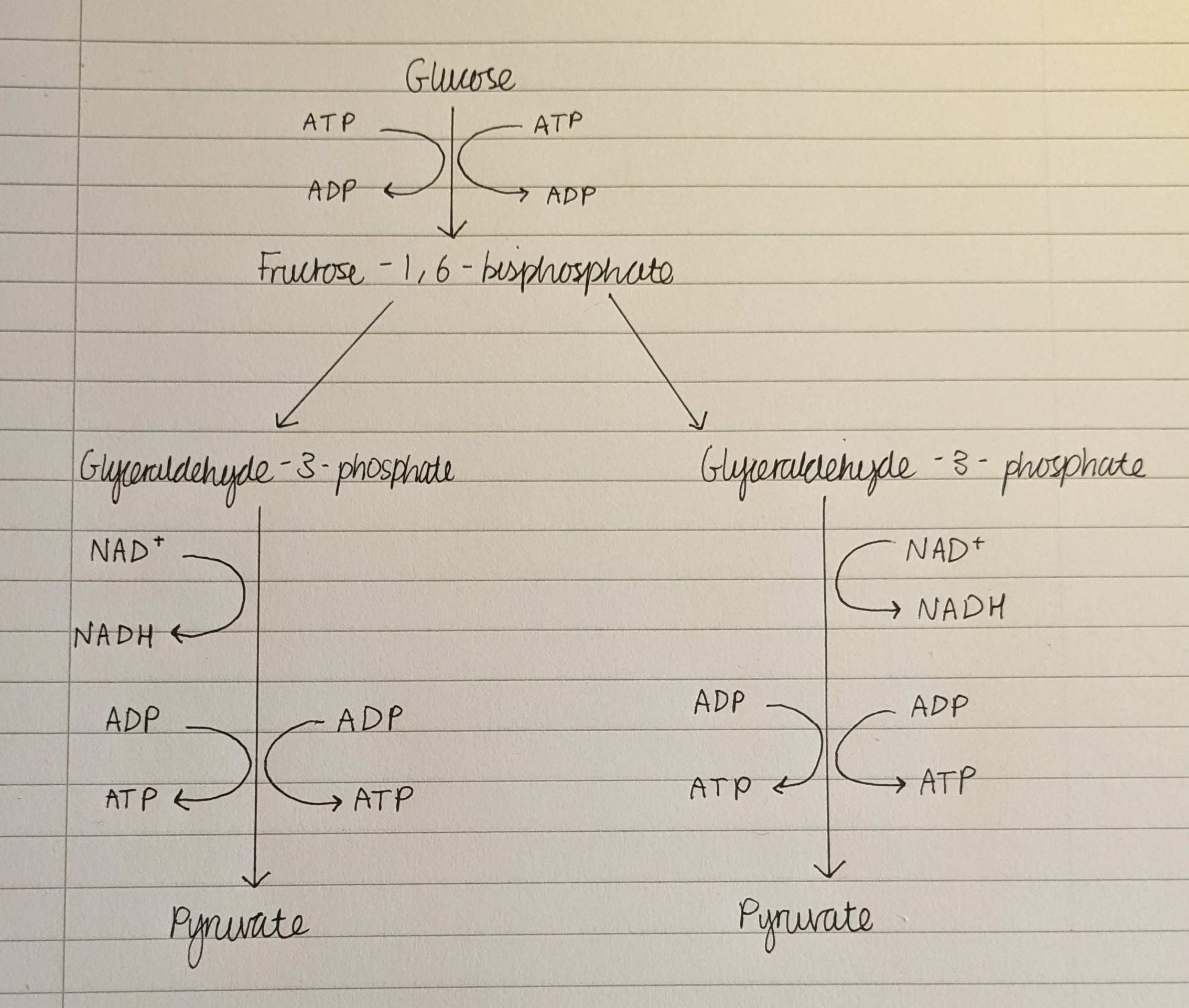
Outline the whole process of “Glycolysis”
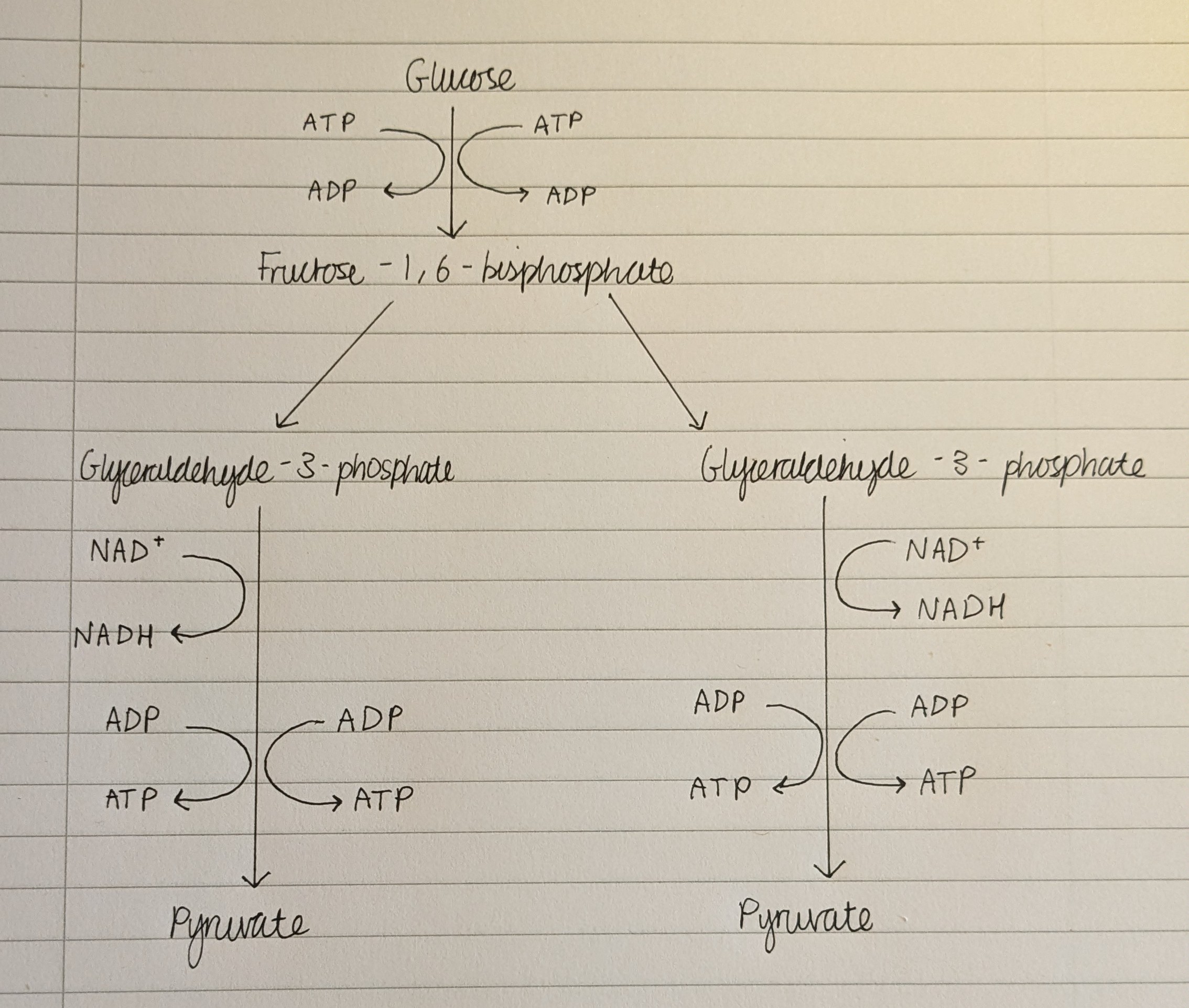
What is the net result of glycolysis?
4x ATP
2x NADH
Does glycolysis occur in anaerobic respiration?
Yes
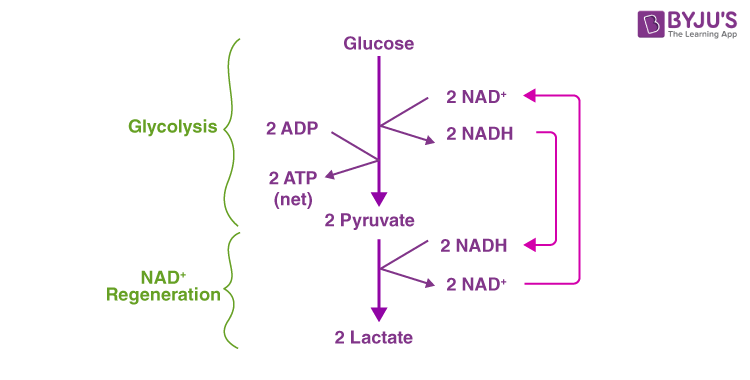
Glycolysis requires 2x NAD+ to work. In anaerobic respiration, how is NAD+ regenerated?
Pyruvate is reduced to S-lactate and NADH is oxidised to NAD+
What happens to S-lactate when oxygen is available again?
When oxygen is available again, S-lactate is reoxidized to pyruvate using NAD+
What is the Cori cycle?
The Cori cycle is the process where S-lactate produced in muscles during anaerobic respiration is transported to the liver, converted back into glucose, and then returned to the muscles for reuse.
Outline the Cori cycle
S-lactate is transported in the blood, from muscle to the liver
In the liver, lactate dehydrogenase converts S-lactate to pyruvate
Pyruvate is converted to glucose via gluconeogenesis
How much ATP is required in the Cori cycle?
6x ATP per glucose molecule
What does gluconeogenesis mean?
Forming a glucose
Where does gluconeogenesis mainly occur?
Liver
How many pyruvates are needed to form a glucose molecule in gluconeogenesis?
2x pyruvates
What is the process of gluconeogenesis?
Pyruvate is converted to oxaloacetate in the mitochondria using ATP and CO2
Oxaloacetate is transported to the cytosol and converted into phosphoenolpyruvate
Phosphoenolpyruvate is converted to glyceraldehyde-3-phosphate using 2x ATP and 1x NADH
Glyceraldehyde-3-phosphate → Fructose-1,6-bisphosphate
Fructose-1,6-bisphosphate is converted to glucose using the enzyme phosphatase