U 3 I-clicker and Quiz Questions
 Call Kai
 Learn
Learn Practice Test
 Spaced Repetition
 Match
Match Flashcards
 Knowt Play
1/388

There's no tags or description
Looks like no tags are added yet.
Name | Mastery | Learn | Test | Matching | Spaced | Call with Kai |
|---|
No analytics yet
Send a link to your students to track their progress
389 Terms
In table 18.1 who is most likely protected from the disease, as observed by the test results over time
Patient C
Patient D
Patient B
Patient A
patient D
The patient has vesicles and scabs over her forehead. Microscopic examination of skin scrapings shows gram-positive cocci in grape-like clusters. The etiology is
Microsporum.
Staphylococcus aureus.
Candida.
Pseudomonas aeruginosa
Sarcoptes.
Staphylococcus aureus.
What is the most efficient and cost-effective way to control infectious diseases?
active immunization by vaccination
autoimmunization
variolation
immune testing
passive immunotherapy using immunoglobulins
active immunization by vaccination
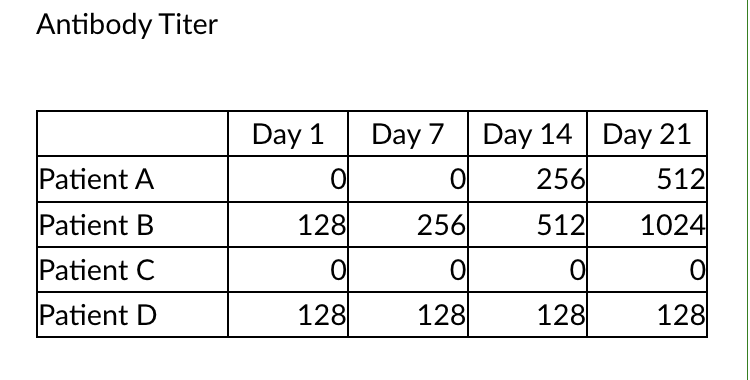
If the table continued on to another week of testing, what is the one outcome below that you might NOT expect to see for Patient B at Day 28?
antibody titer leveling off
a drop to zero antibody titer
antibody titer continuing to rise
antibody titer starting to decrease slightly
a drop to zero antibody titer
The antibodies found almost entirely and only on the surface of B cells (not secreted from them), and which always exist as monomers, are
IgA
IgM
IgE
IgD
IgG
IgD
Mannose sugar occurs on the surface of some bacteria and fungi and can trigger the
release of NETs by neutrophils.
classical pathway of complement activation.
lectin pathway of complement activation.
release of cytotoxins by NK cells.
release of histamines by basophils.
lectin pathway of complement activation.
Sebum contains ________ which contributes to creating an inhospitable environment on the surface of the body.
lysozyme
salts
bile
acids
collagens
acids
Which of the following is a subcutaneous mycosis?
erysipelas
athlete’s foot
tinea capitis
Buruli ulcer
Sporotrichosis
Sporotrichosis
A 17-year-old boy has pus-flled cysts on his face and upper back. Microscopic examination reveal gram-positive rods. This infection is caused by
[Hint: teenage years are characterized by hormonal functions]
Acanthamoeba
Propionibacterium acnes
Streptococcus pyogenes
Herpes simplex virus
Staphylococcus aureus
Propionibacterium acnes
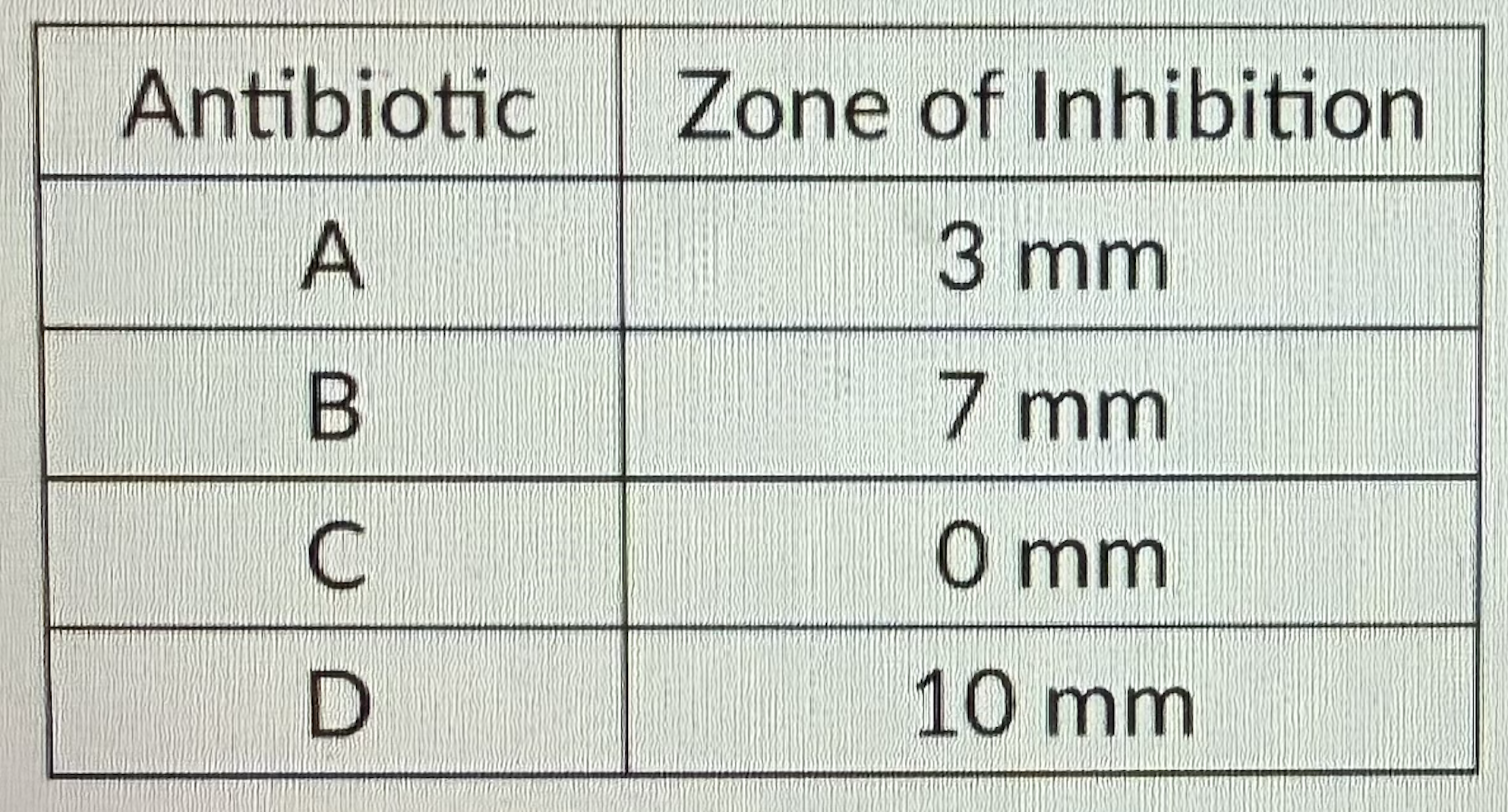
The following results were obtained from a disk-diffusion test for microbial suseptibility to antibiotics. Staphlyococcus aureus was the test organism
In Table 20.2, the antibiotics that exhibited bactericidal action was
C
A
D
B
The answer cannot be determined based on the information provided
The answer cannot be determined based on the information provided
The response observed in type IV hypersensitivies result from the action of
T cells and phagocytes
inflammatory chemicals
autoantibodies
IgG and complement
IgE antibodies and mast cells
T cells and phagocytes
Graft-versus-host disease will most likely be a complication of a (n)
Rh incompatibility between mother and fetus
corneal transplant
skin graft
bone marrow transplant
blood transfusion
bone marrow transplant
The rise in herd immunity against a population can be directly attributed to
improved handwashing
antibiotic resistant microorganisms
increased use of antibiotics
none
vaccinations
vaccinations
which of the following is NOT a verified exception in the use of Koch's postulates
some pathogens can cause several disease conditions
some diseases have poorly defined etiologies
some human diseases have no other known animal host
some diseases are not caused by microbes
some diseases are noncommunicable
some diseases are noncommunicable
In table 18.1, who showed seroconversion during these observations
Patient B
Patient A
Patient C
Patient D
Patient A
The most frequently used portal of entry for pathogens is the
mucous membranes of the respiratory tract
skin
mucous membranes of the gastrointestinal tract
all of these portals equally
parenteral route
mucous membranes of the gastrointestinal tract
Which of the following are NOT lymphocytes?
helper T cells
NK cells
cytotoxic T cells
B cells
M cells
M cells
Commensalism is best described as a(n)
relationship in which a microorganism causes disease
source of contamination
relationship between two organisms where both members benefit
relationship between two organisms where only one member benefits and the other is unharmed
unsuccessful invasion due to the presence of preexisting microbes
relationship between two organisms where only one member benefits and the other is unharmed
Biological transmission differs from mechanical transmission in that biological transmission
involves fomites
involves reproduction of a pathogen in an arthropod vector prior to transmission
works only with noncommunicable diseases
requires direct contact
occurs when a pathogen is carried on the feet of an insect
involves reproduction of a pathogen in an arthropod vector prior to transmission
A reservoir is
any microorganism that causes disease
an environment that is free of microbes
a source of microbial contamination
a condition in which organisms remain in the body for a short time
a source of microbes for laboratory testing
a source of microbial contamination
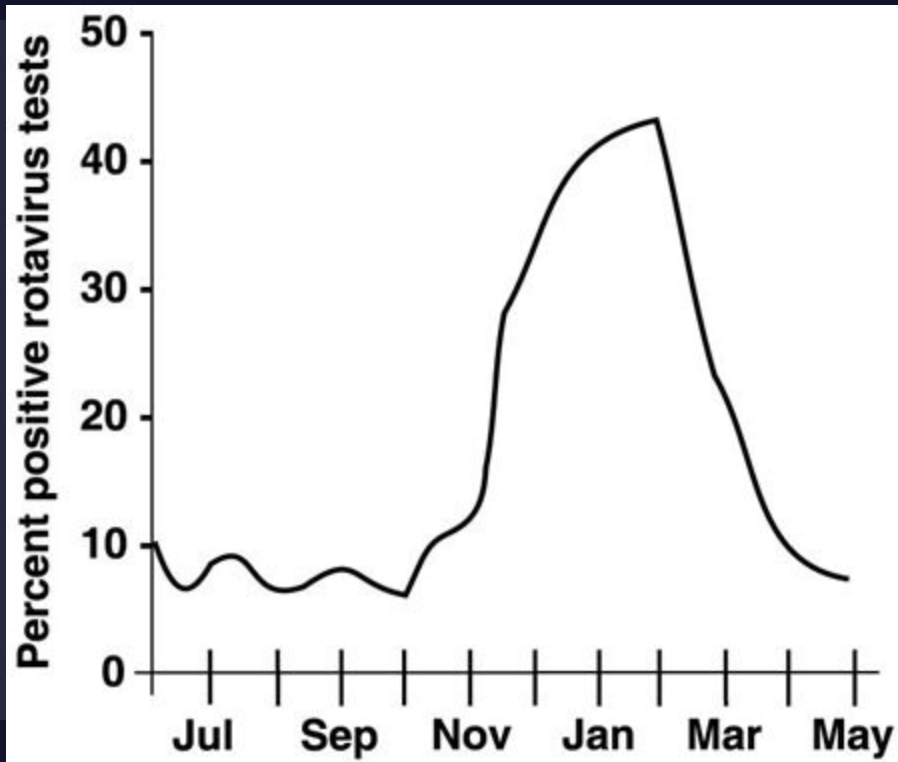
In Figure 14.2, which one of the following choices has the highest morbidity rate?
July
December
October
November
December
The ID50 is
the dose that will cause an infection in 50 perfect of the test population
the dose that will kill 50 percent of the test population
a measure of pathogenicity
the dose that will kill some of the test population
the dose that will cause an infection in some of the test population
the dose that will cause an infection in 50 perfect of the test population
All of the following are examples of entry via the parenteral route EXCEPT
injection
surgery
hair follicle
skin cut
bite
hair follicle
The function of the "ciliary escalator" is to
propel inhaled dust and microorganisms away from the mouth, toward the lower respiratory tract.
remove microorganisms from the lower respiratory tract.
remove microorganisms from the gastrointestinal tract.
trap microorganisms in mucus in the upper respiratory tract.
trap inhaled dust and microorganisms in mucus and propel it away from the lower respiratory tract.
trap inhaled dust and microorganisms in mucus and propel it away from the lower respiratory tract.
Which of the following is the best definition of "microbial antagonism"?
the ability of microbiota to mutate into pathogens
the presence of normal microbiota that can become pathogens under certain conditions
the presence of pathogens on the surface of the skin, which will invade the body through abrasions
the presence of normal microbiota that protect the body by competing with pathogens in a variety of ways to prevent pathogens from invading the body
the presence of resident bacteria on the surface of the body and in cavities that connect to the surface
the presence of normal microbiota that protect the body by competing with pathogens in a variety of ways to prevent pathogens from invading the body
Which of the following cells increase in number during an infection with parasitic worms?
basophils
neutrophils
lymphocytes
macrophages
eosinophil
eosinophil
Innate immunity
is slower than adaptive immunity in responding to pathogens
involves a memory component
is nonspecific and present at birth
provides increased susceptibility to disease
involves T cells and B cells
is nonspecific and present at birth
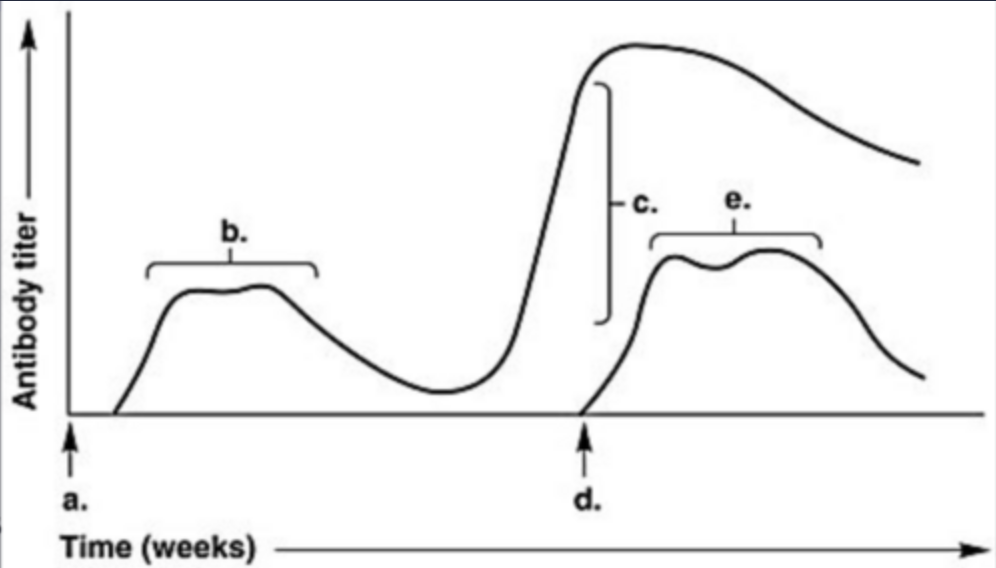
In Figure 17.1, which letter on the graph indicates the highest antibody titer during the patient's response to a second and distinct/different antigen?
c
a
d
b
e
e
The antibodies that typically bind to large parasites are
IgM
IgE
IgA
IgD
IgG
IgE
Which of the following is NOT a characteristic of B cells?
they recognize antigens associated with MHC I
they are responsible for the memory response
they originate in bone marrow
they have antibodies on their surfaces
they are responsible for antibody formation
they recognize antigens associated with MHC I
Large antibodies that agglutinate antigens are
IgG
IgM
IgA
IgE
IgD
IgM
Which of the following statements regarding ELISAs is TRUE?
they require large amounts of serum
they can be used to detect antibody or antigen
they involve the use of membrane filters
they are not quantitative
the antibody label is a fluorescent molecule
they can be used to detect antibody or antigen
The bacterium Staphylococcus aureus is commonly found in the nasal cavity of healthy people. If inhaled into the lungs, however, it may cause pneumonia. Staphylococcus aureus is best described as
a parasite
a mutualist symbionc partner
both resident microbiota and opportunistic pathogen
resident microbiota
transient microbiota
both resident microbiota and opportunistic pathogen.
A person is exposed to rotten wood with fungal growth and develops blastomycosis. No one taking care of him/her becomes ill.
Blastomycosis is an example of a _____ disease.
subacute
noncommunicable
latent
chronic
contagious
noncommunicable
Symptoms of intense inflammation and shock occur in some gram-positive bacterial infections due to
erythrogenic toxin
membrane-disrupting toxins
A-B toxins
superantigens
lipid A
superantigens
Superantigens produce intense immune responses by stimulating lymphocytes to produce
exotoxins
leukocidins
interferons
cytokines
endotoxins
cytokines
A pathogen is best described as
a source of microbial contamination.
a microorganism that remains with the person throughout life.
any microorganism that causes disease.
an organism that remains in the body for a short time.
a microorganism that may cause a disease under certain circumstances.
any microorganism that causes disease.
Which of the following is an effect of opsonization?
cytolysis
increased margination of phagocytes
increased diapedesis of phagocytes
increased adherence of phagocytes to microorganisms
inflammation
increased adherence of phagocytes to microorganisms
Macrophages arise from which of the following?
eosinophils
monocytes
neutrophils
basophils
lymphocytes
monocytes
A vaccine against HIV proteins made by a genetically-engineered vaccinia virus that has infected a eukaryotic cell line is a(n)
conjugated vaccine.
toxoid vaccine.
inactivated whole-agent vaccine.
nucleic acid vaccine.
subunit vaccine
subunit vaccine
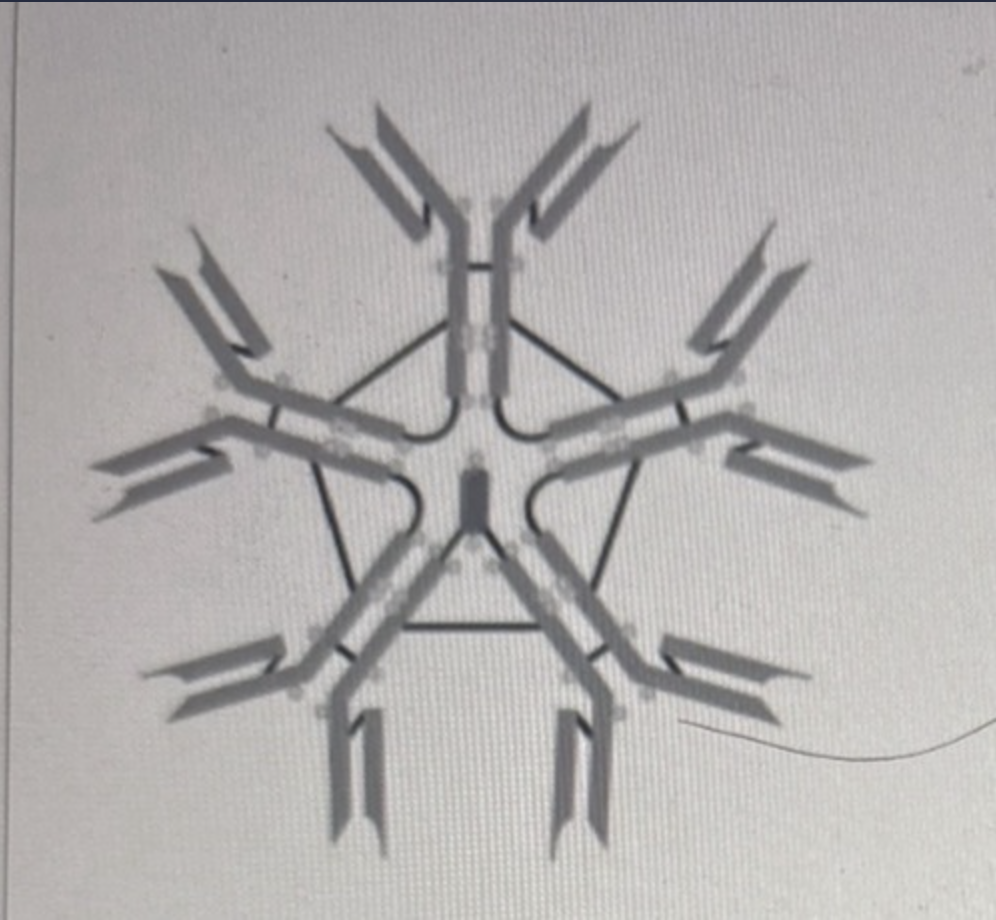
The type of immunoglobulin illustrated in Figure 16.1 is
IgE
lgA
IgG
IgD
IgM
IgM
Which of the following is NOT a characteristic of B-cells?
They originate in bone marrow.
They recognize antigens associated with MHC I.
They have antibodies on their surfaces.
They are responsible for antibody formation.
They are responsible for the memory response.
They recognize antigens associated with MHC I.
What is the result when a dendritic cell phagocytizes a microbe and processes it?
display of epitope-MHC I complexes on the surface of the cell
suppression of the immune response to the microbe
display of microbial epitope-MHC II complexes on the cell surface
activation of the dendritic cell to become a plasma cell
display of microbial fragments with CD8 glycoproteins
display of microbial epitope-MHC II complexes on the cell surface
What antibacterial chemical is present in tear fluid?
interferon
complement
lysozyme
antibodies
defensins
lysozyme
Which of the following best describes IgM antibodies?
They are the most common type of antibody in the blood during the initial stages of an immune response.
They can cross the placenta to provide passive immunity.
They are the antibody class found in body secretions.
They interact with phagocytes and NK cells.
They cause basophils and eosinophils to degranulate.
They are the most common type of antibody in the blood during the initial stages of an immune response.
The antimicrobial effects of AMPs include all of the following EXCEPT
inhibition of phagocytosis.
lysis of bacterial cells.
inhibition of cell wall synthesis.
destruction of nucleic acids.
pore formation in bacterial membranes.
inhibition of phagocytosis.
The condition known as microbial antagonism may be defined as
an unsuccessful microbial invasion due to the presence of preexisting microbes
a relationship between two organisms where one member harms the other
a relationship between two organisms where both members benefit
a relationship between two organisms where only one member benefits
microorganisms that remain with a person throughout life
an unsuccessful microbial invasion due to the presence of preexisting microbes
Which of the following statements about healthcare-associated infections is FALSE
they may be caused by normal microbiota
they may be caused by drug-resistant bacteria
they may be caused by opportunists
the patient was infected before hospitalizations
they occur in compromised patients
the patient was infected before hospitalizations
The ability of some microbes, such as Trypanosoma or Giardia alter their surface molecules and evade destruction by the host's antibodies is called
lysogenic conversion
cytopathic effect
antigenic variation
virulence
cytocidal effect
antigenic variation
Antibiotics can lead to septic shock if used to treat
helminth infestations
protozoan infections
gram-positive bacterial infections
gram-negative bacterial infections
gram-negative bacterial infections
Endotoxins are
A-B toxins
associated with gram positive bacteria
molecules that bind nerve cells
part of the gram negative cell wall
excreted from the cells
part of the gram negative cell wall
The lectin pathway for complement action is initiated by
lectins of the microbe
mannose on the surface of microbes
gram-negative cell walls
gram-positive cell walls
mannose on host membranes
mannose on the surface of microbes
TLRs attach to all of the following EXECPT
AMPs
PAMPs
LPS
peptidoglycan
flagellin
AMPs
Which of the following leukocytes are called "agranulocytes" because of the absence of granules in their cytoplasm revealed by basic or acid dyes
eosinophils
both basophils and eosinophils
neutrophils
basophils
lymphocytes
lymphocytes
Lysozyme and the antibiotic penicillin have similar mechanisms of action in that they both cause damage to the bacterial
ribosomes
DNA
cell wall
cell membrane
capsule
cell wall
What type of immunity results from vaccination
artificially acquired active immunity
artificially acquired passive immunity
naturally acquired active immunity
naturally acquired passive immunity
artificially acquired active immunity
The importance of M cells concerns
ability to migrate along the intestinal tract
having microvilli to facilitate antigen capture
facilitation of contact between antigens in the intestinal tract and the immune system
presentation of epitopes in MHC II molecules
preventing damage to adaptive immune system cells
facilitation of contact between antigens in the intestinal tract and the immune system
Cytokines released by Th1 cells
convert B cells to T cells
directly kill parasite
activate CD8+ cells to CTLs
convert Th2 cells to Th1 cells
convert Th1 cells to Th2 cells
activate CD8+ cells to CTLs
ADCC is a process that is most effective in destroying
extracellular viruses
bacterial pathogens
prions
eukaryotic pathogens
bacterial toxins
eukaryotic pathogens
The most prevalent antibody class in the blood is
IgD
IgM
lgE
IgA
IgG
IgG
Isolated and purified hepatitis B virus surface antigen can be used in a
subunit vaccine
attenuated whole-agent vaccine
conjugated vaccine
inactivated whole-agent vaccine
toxiod vaccine
subunit vaccine
A patient shows the presence of antibodies against diphtheria toxin. Which of the following statements is FALSE
the patient may have the disease
the patient was near someone who had the disease
the patient may have been vaccinated
a recent transfusion may have passively introduced the antibodies
the patient may have had the disease and has recovered
the patient was near someone who had the disease
Fomites are:
Living organisms that directly infect a host
Inanimate objects involved in the indirect contact transmission of pathogens
Airborne droplets that spread through coughing or sneezing
Microorganisms that only spread through direct physical contact
Inanimate objects involved in the indirect contact transmission of pathogens
During a six-month period, 239 cases of pneumonia occurred in a town of 300 people. A clinical case was defined as fever 39°C lasting >2 days with three or more symptoms (i.e., chills, sweats, severe headache, cough, aching muscles/joints, fatigue, or feeling ill). A laboratory-confirmed case was defined as a positive result for antibodies against Coxiella burnetii. Before the outbreak, 2000 sheep were kept northwest of the town. Of the 20 sheep tested from the flock, 15 were positive for C. burnetii antibodies. Wind blew from the northwest, and rainfall was 0.5 cm compared with 7 to 10 cm during each of the previous three years.
The method of transmission of the disease in situation 14.1 was:
Direct contact transmission
Vector-borne transmission
Airborne transmission
Vehicle transmission
Vehicle transmission
The condition called parasitism is characterized as a(n)
Relationship where both organisms benefit
Relationship between two organisms where one member harms the other
Relationship where neither organism is affected
Relationship where one organism benefits and the other is unaffected
Relationship between two organisms where one member harms the other
Patients developed inflammation a few hours following eye surgery. Instruments and solutions were sterile, and the Limulus assay was positive. the patient's inflammation was due to:
endotoxin
exotoxin
antibodies
vaccination
endotoxin
Cytopathic effects are changes in host cells due to
Bacterial infections
Viral infections
Fungal infections
Parasitic infections
Viral infections
all of the following are iron-binding proteins in humans EXCEPT
transferrin
lactoferrin
ferritin
hemoglobin
siderophorin
siderophorin
TLRs are:
Antibodies that directly destroy pathogens
Phagocyte receptors that detect PAMPs
Enzymes that break down bacterial cell walls
Cytokines that regulate inflammation
Phagocyte receptors that detect PAMPs
which of the following statements is TRUE
complement increases after immunization
all of the complement proteins are constantly active in serum
factors B, D, and P cause cytolysis
there are at least thirty complement proteins
complement activity is antigen specific
there are at least thirty complement proteins
Microbial molecules detected by phagocytes are called:
Antibodies
Cytokines
PAMPs
Antigens
PAMPs
Which cell becomes a macrophage when leaving the bloodstream?
Neutrophil
Lymphocyte
Monocyte
Basophil
Monocyte
which of the following is the best definition of epitope
specific regions on antigens that interact with perforins
specific regions on antigens that interact with antibodies
specific regions on antigens that interact with haptens
specific regions on antigens that interact with T cell receptors
specific regions on antigens that interact with MHC class molecules
specific regions on antigens that interact with antibodies
which of the following statements about T lymphocytes is FALSE
T lymphocytes directly attack cells and produce the cell-mediated response
there are three types of T lymphocytes
T lymphocyte has TCRs that recognize antigen only if it is bound to MHC
T lymphocytes produce antibody molecules
T lymphocytes are called such because they mature in the thymus
T lymphocytes produce antibody molecules
Class II MHC are found on:
All nucleated cells
Red blood cells
Professional antigen-presenting cells
Only infected cells
Professional antigen-presenting cells
The specificity of an antibody is due to:
The constant region of the heavy chains
The variable portions of the heavy and light chains
The Fc region of the antibody
The presence of complement proteins
The variable portions of the heavy and light chains
which of the following bacterial components would most likely result in B cell stimulation by T-independent antigen:
Flagella
Capsule
Ribosomes
DNA
Capsule
which of the following is NOT an advantage of live attenuated vaccine agents?
the elicit lifelong immunity
they require few or no boosted immunization
they stimulate by cel-mediated and humoral immune response
the immune response generated by the vaccine closely mimics a real infection
they occasionally revert to virulent forms
they occasionally revert to virulent forms
which of the following statements regarding ELISAs is TRUE
they can be used to detect antibody or antigen
they involve the use of membrane filters
they require large amounts of serum
the antibody label is a fluorescent molecule
they are nor quantitative
they can be used to detect antibody or antigen
A healthcare-associated infection (traditionally known as a nosocomial infection) is
always caused by medical personnel
acquired during the course of hospitalization
always caused by pathogenic bacteria
always present, but is inapparent at the time of hospitalization
only a result of surgery
acquired during the course of hospitalization
Which of the following is the CORRECT sequence of a disease process
prodromal period, convalescence, incubation, illness, decline
convalescence, incubation, prodromal period, illness, decline
incubation, convalescence, prodromal period, illness, decline
incubation, prodromal period, illness, decline, convalescence
illness, convalescence, incubation, prodromal period, decline
incubation, prodromal period, illness, decline, convalescence
Lysogenic bacteriophages contribute to bacterial virulence because bacteriophages
kill human cells
give new gene sequences to the host bacteria
kill the bacteria, causing release of endotoxins
carry plasmids
produce toxins
give new gene sequences to the host bacteria
Activation of C3a results in
increased blood vessel permeability
cell lysis
acute inflammation
opsonization
attraction of phagocytes
acute inflammation
Which of the following statements is TRUE?
Beta interferon attacks invading viruses
Alpha interferon promotes phagocytosis
Alpha interferon acts against specific viruses
All three types of interferons have the same effect on the body
Gamma interferon causes bactericidal activity by macrophages
Gamma interferon causes bactericidal activity by macrophages
Which of the following is the best definition of antigen?
a protein that combines with antibodies
a chemical that combines with antibodies something foreign in the body
a pathogen
a chemical that elicits an antibody response and can combine with these antibodies
a chemical that elicits an antibody response and can combine with these antibodies
Which of the following cells is NOT an APC?
dentritic cells
mature B cells
None of the answers is correct; all of these are APCs
natural killer cells
macrophages
natural killer cells
The antibodies found in mucus, saliva, and tears are
IgG
IgD
IgE
IgM
IgA
IgA
Which of the following destroys virus-infected cells?
TH
CTL
B cells
Treg
dendritic cells
CTL
Which of the following statements about natural killer cells is FALSE?
They are stimulated by an antigen
They destroy virus-infected cells
They destroy cells lacking MHC I
They destroy tumor cells
None of the answers are correct; all of these statements are true
They are stimulated by an antigen
A reaction between antibody and particulate antigen is called a(n)
neutralization reaction
complement fixation
precipitation reaction
agglutination reaction
immunofluorescence
agglutination reaction
Dead Bordetella pertussis can be used in a(n)
inactivated whole-agent vaccine
subunit vaccine
attenuated whole-agent vaccine
toxoid vaccine
conjugated vaccine
inactivated whole-agent vaccine
Biological transmission differs from mechanical transmission in that biological transmission
works only with noncommunicable diseases.
occurs when a pathogen is carried on the feet of an insect.
requires direct contact.involves fomites.
involves reproduction of a pathogen in an arthropod vector prior to transmission
involves reproduction of a pathogen in an arthropod vector prior to transmission
Symptoms of disease differ from signs of disease in that symptoms
always occur as part of a syndrome.
are changes observed by the physician.
are changes felt by the patient.
are specific for a particular disease.
are changes felt by the patient.
If a prodromal period exists for a certain disease, it should occur right prior to
convalescence
decline
incubation
illness
illness
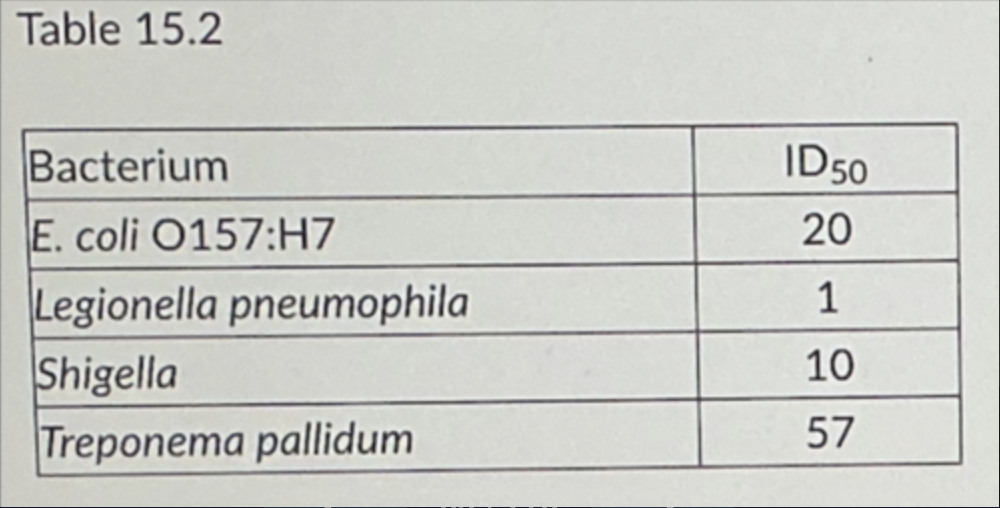
Table 15.2 Which organism in Table 15.2 most easily causes an infection?
Shigella
Treponema pallidum
The answer cannot be determined based on the information provided.
Legionella pneumophila
E. coli 0157:H7
Legionella pneumophila
The complement protein cascade is the same for the classical pathway, alternative pathway, and lectin pathway after the point in the cascade where the activation of __ takes place.
C2
C1
C5
C6
C3
C3
Which of the following statements is TRUE?
All of the complement proteins are constantly active in serum.
Complement increases after immunization.
Complement activity is antigen-specific.
There are at least thirty complement proteins.
Factors B, D, and P cause cytolysis.
There are at least thirty complement proteins.
Which of the following is found normally in serum?
interferon
histamine
TLRs
leukocytosis-promoting factor
complement
complement
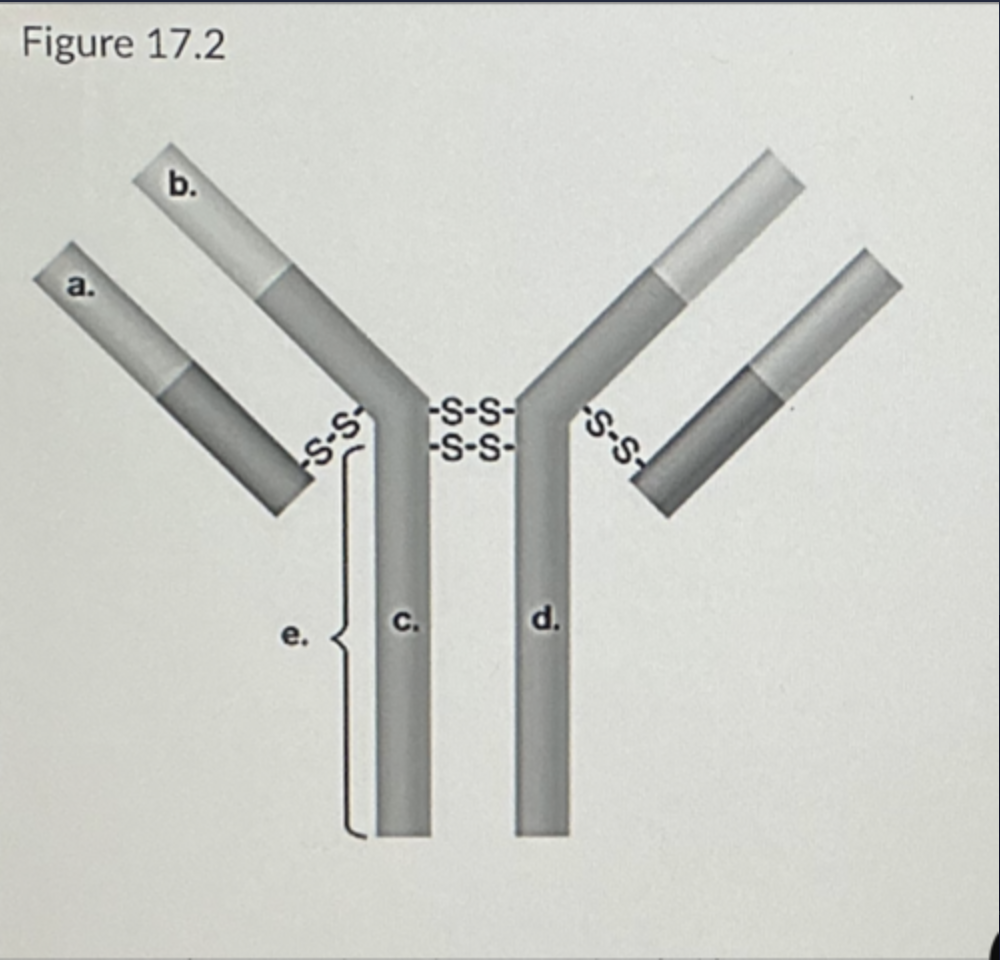
In Figure 17.2, which areas represent antigen-binding sites?
c and d
a and c
a and b
b and c
b and d
a and b
A new virus is discovered that causes cells to lyse. Which of the following types of assay would be useful for diagnosing infection with this virus?
agglutination
viral neutralization
complement fixation test
both agglutination and complement fixation tests
viral hemagglutination
viral neutralization