Chapter 39: Respiratory System
 Call Kai
 Learn
Learn Practice Test
 Spaced Repetition
 Match
Match Flashcards
 Knowt Play
1/32

There's no tags or description
Looks like no tags are added yet.
Name | Mastery | Learn | Test | Matching | Spaced | Call with Kai |
|---|
No analytics yet
Send a link to your students to track their progress
33 Terms
What is the primary physiological purpose of gas exchange in animals?
To obtain sufficient oxygen for cellular respiration and to dispose of excess carbon dioxide.
Where does gas diffusion occur?
Respiratory-based epithelial cells, also known as types 1 cells
Type 2 cells
Produce surfactin
Alveoli
Air pockets at the end of a respiratory tract
What physical process drives gas exchange between alveoli and blood?
Passive diffusion, driven by concentration differences of O2 and CO2.
Fick's Law of Diffusion
Governs the rate of diffusion between two regions
What are the four variables in Fick's Law of Diffusion that determine the rate of diffusion (R)?
Diffusion constant (D), surface area (A), pressure difference (Dp), and distance (d).
What are three evolutionary ways to optimize the rate of diffusion (R) in animals?
Increase surface area (A), decrease distance (d), and increase concentration difference (Dp).
How do amphibians respire?
They respire across their skin as well as through their lungs.
What is the function of the operculum in fish?
It acts as a gill cover that helps move water through the gills.
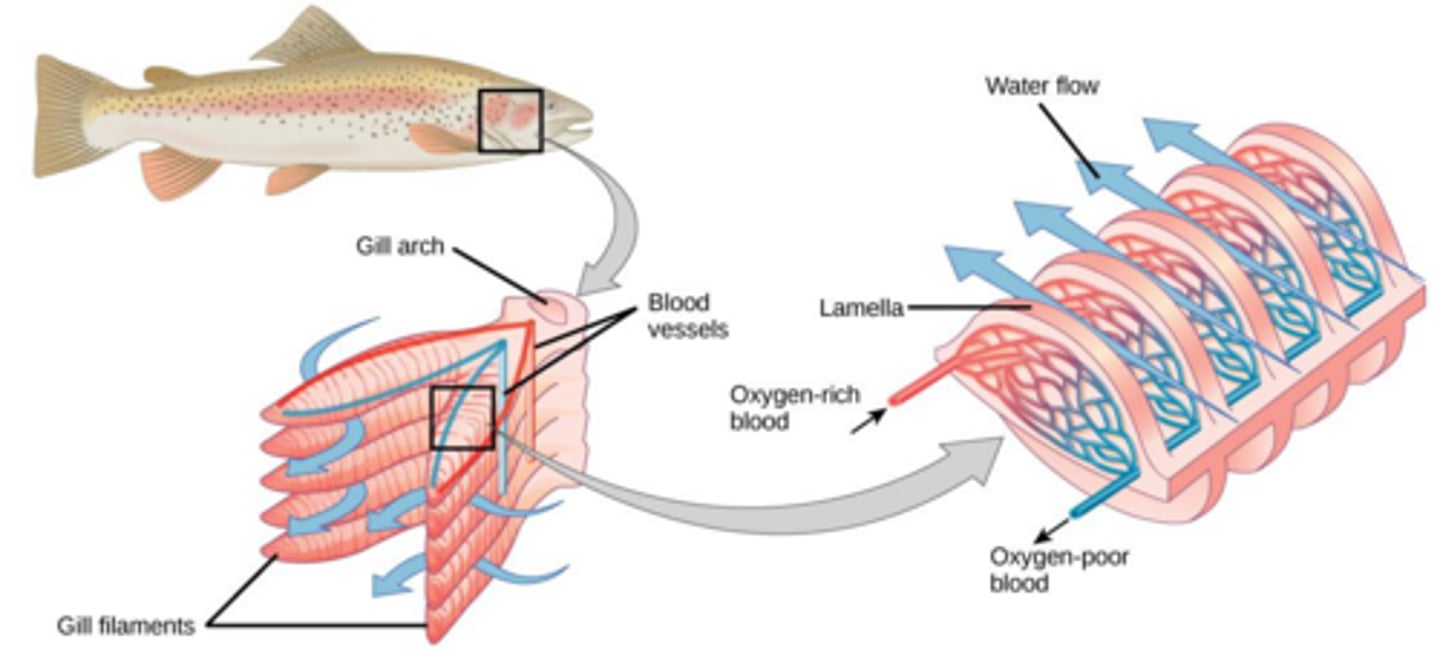
How do lungs minimize evaporation in terrestrial animals?
By moving air through a branched tubular passage and covering the tissue with mucus.
Partial pressure of a gas
The pressure contributed by a specific gas to the total atmospheric pressure.
Why do climbers on Mount Everest often use supplemental oxygen?
While the percentage of oxygen remains the same as at sea level, the total atmospheric pressure is lower, resulting in a lower partial pressure of oxygen.
What is the unique characteristic of bird lungs compared to mammal lungs?
They exhibit unidirectional airflow.
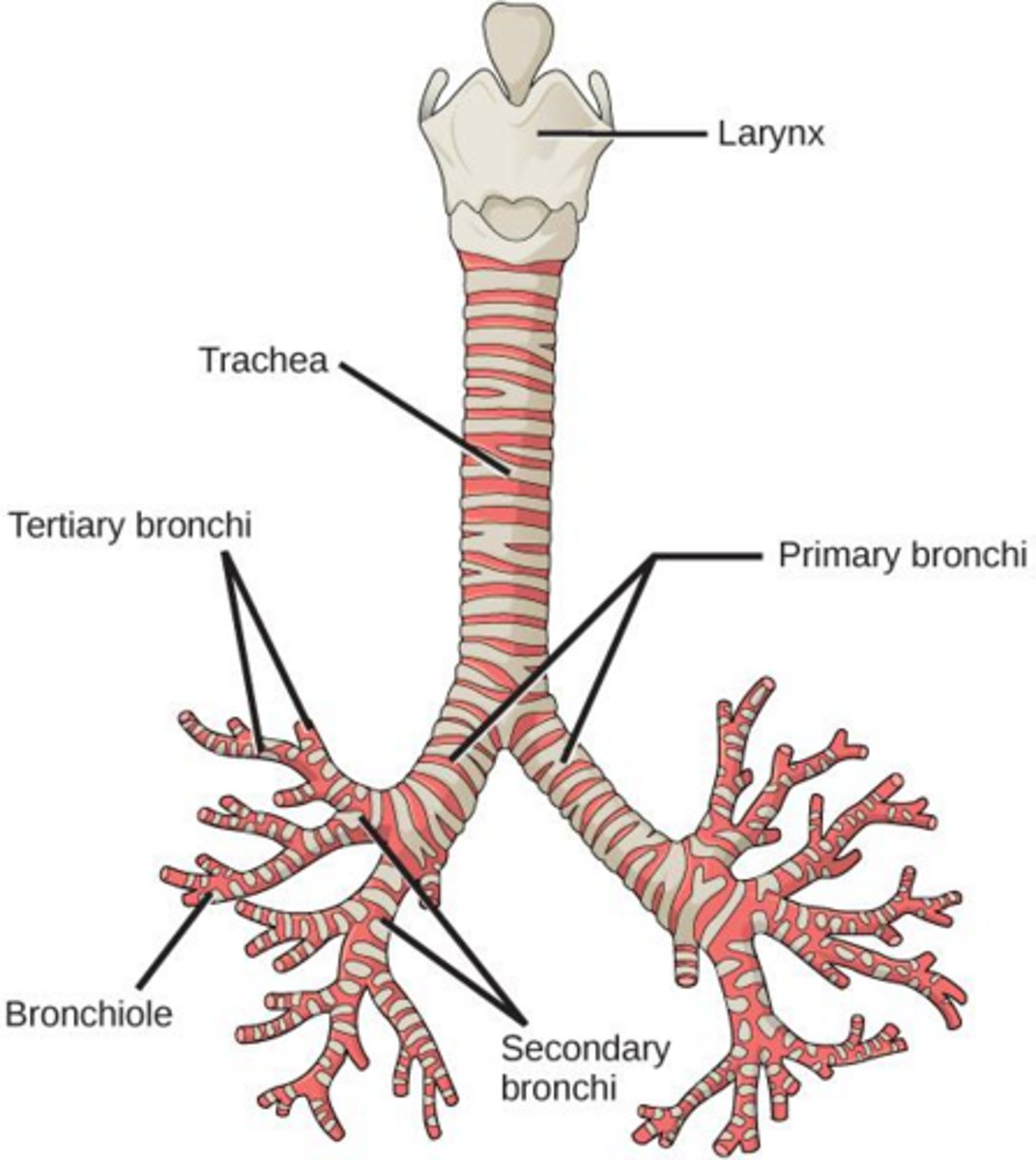
What is the pathway of inhaled air in the human respiratory system?
Larynx, glottis, trachea, bronchi, bronchioles, and finally the alveoli.
External intercostal muscles
Contraction of this expands the ribcage to increase thoracic volume during inhalation.
Diaphragm
Contraction of this expands the volume of the thorax and lungs during inhalation.
Tidal volume
The volume of air moving in and out of the lungs in a person at rest.
Vital capacity
The maximum amount of air that can be expired after a forceful inspiration.
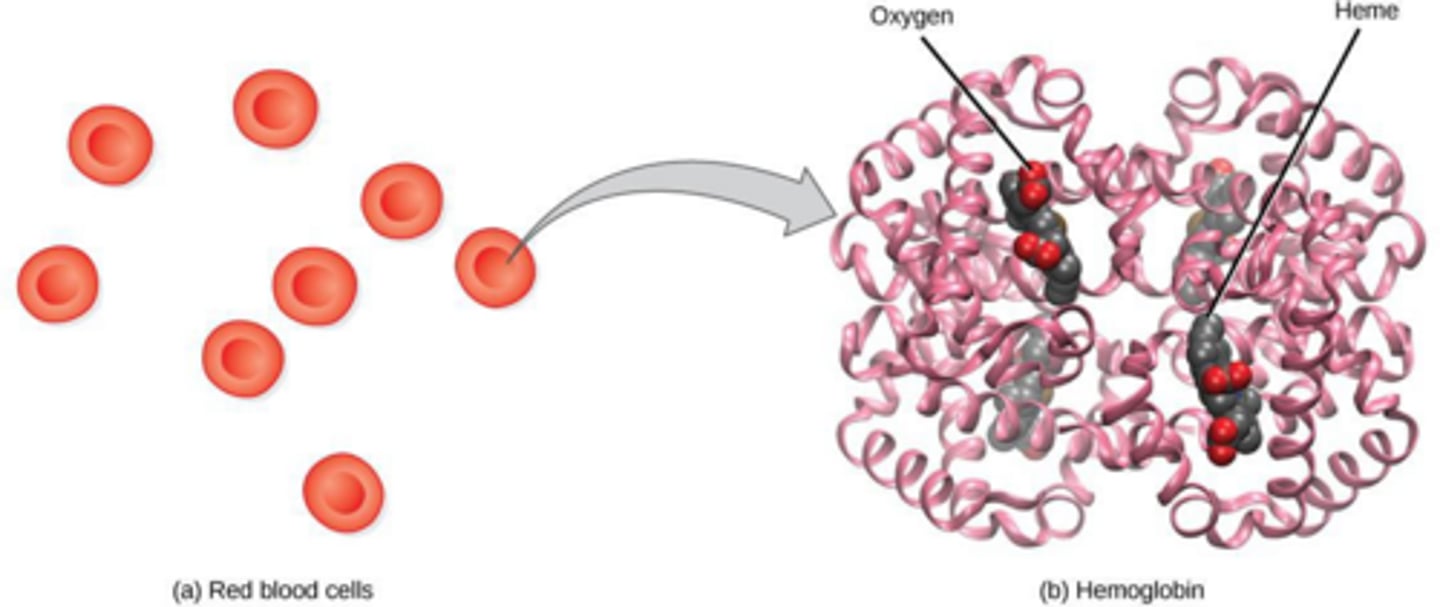
What is the structure of hemoglobin?
It consists of four polypeptide chains (two alpha and two beta), each associated with a heme group containing a central iron atom that binds O2.
Bohr shift
The effect where increased CO2 and lower pH reduce hemoglobin's affinity for O2, facilitating oxygen unloading in tissues.
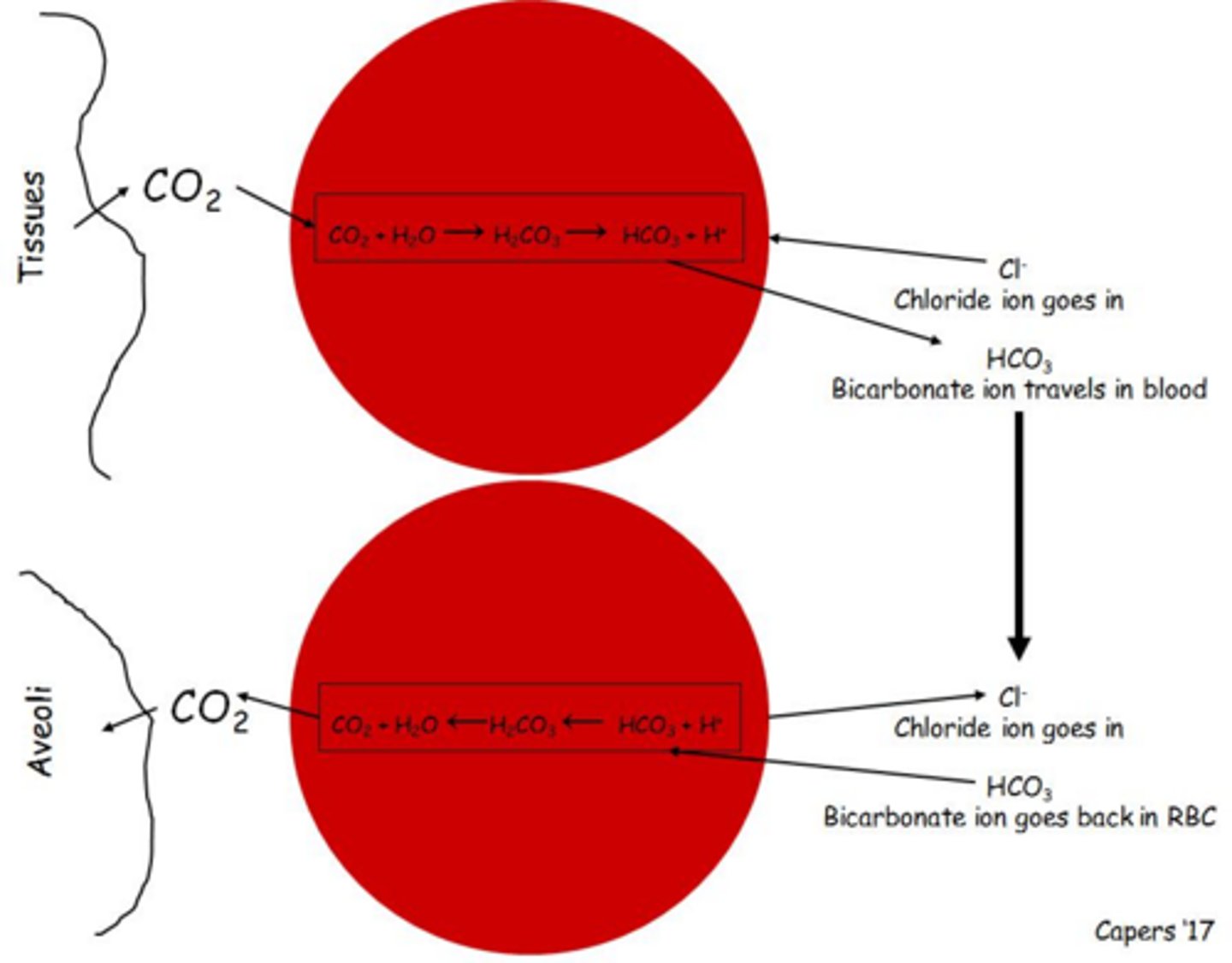
How is carbon dioxide primarily transported in the blood?
72% diffuses into red blood cells and becomes bicarbonate, 20% binds to hemoglobin, and 8% dissolves in plasma.
What triggers an increase in the rate of breathing?
A rise in blood PCO2, which lowers blood pH and stimulates chemosensitive neurons in the aortic and carotid bodies.
Chemoreceptors
Regulate changes in pH and other chemicals in the body
Hypoventilation
Insufficient breathing, blood has abnormally high PCO2
Hyperventilation
Excessive breathing, blood has abnormally low PCO2
What are central chemoreceptors sensitive to?
Changes in the pH of the cerebrospinal fluid (CSF).
Chronic obstructive pulmonary disease (COPD)
Any disorder that obstructs airflow on a long-term basis.
Asthma attack
Allergens trigger the release of histamine, causing intense constriction of the bronchi.
What happens to the lungs in emphysema?
Alveolar walls break down, resulting in larger but fewer alveoli and reduced lung elasticity.
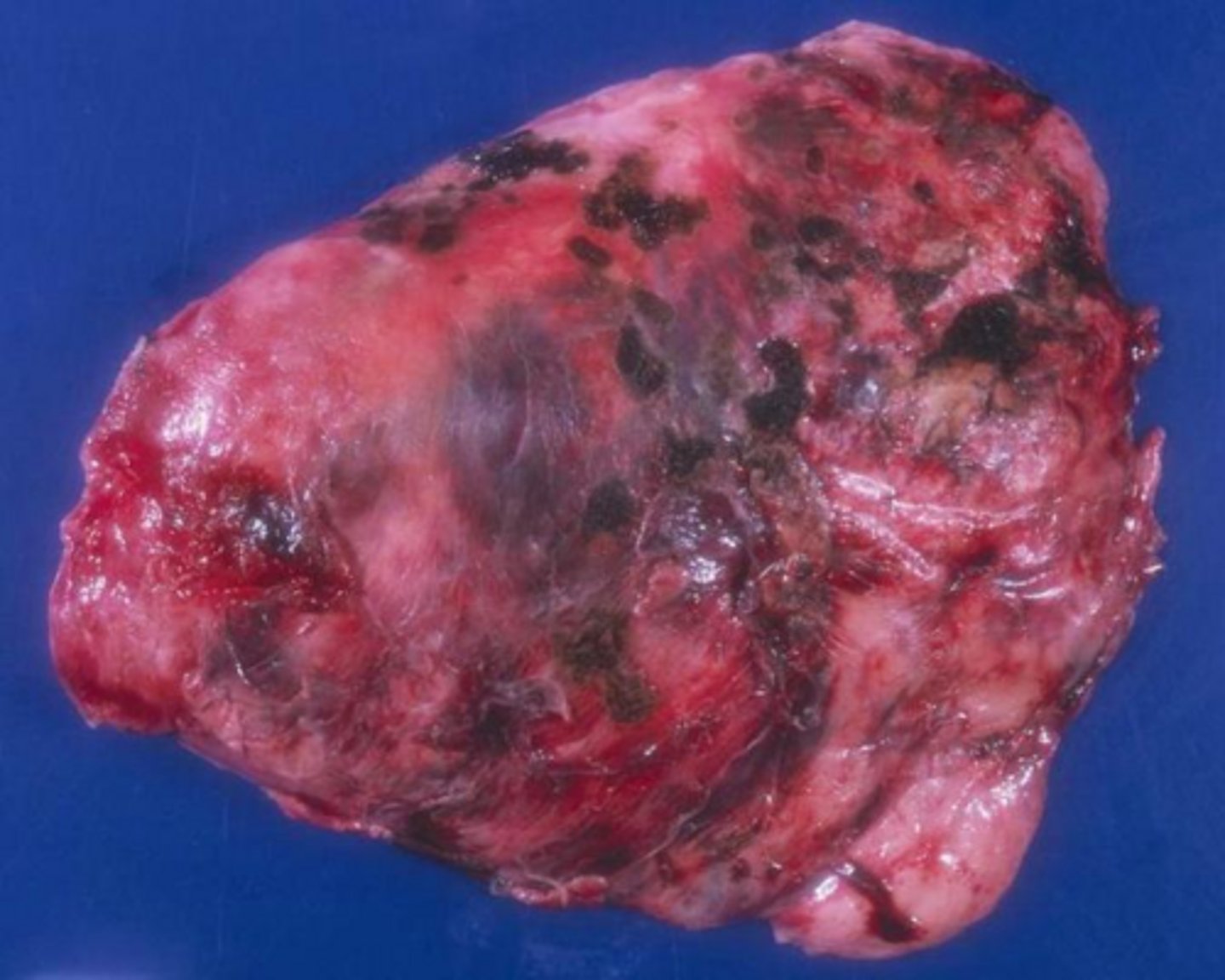
Cigarette smoking
The primary cause of emphysema and lung cancer
Why is the prognosis for metastasized lung cancer typically poor?
It spreads so rapidly that it has usually invaded other organs by the time it is diagnosed.
Anthracitic pigment
Dust cells eat the walls of your lungs and essentially live there, creating this.