HAN 200 CHAPTER 8
 Call Kai
 Learn
Learn Practice Test
 Spaced Repetition
 Match
Match Flashcards
 Knowt Play
1/100

There's no tags or description
Looks like no tags are added yet.
Name | Mastery | Learn | Test | Matching | Spaced | Call with Kai |
|---|
No analytics yet
Send a link to your students to track their progress
101 Terms
Skeletal system
Composed of bones, cartilages, joints, and ligaments
Axial (major part of skeletal system)
• Skull
- Cranium and facial bones
• Vertebral column
- Cervical, thoracic, lumbar, sacrum, coccyx
• Thoracic cage
Appendicular (major part of skeletal system)
limbs
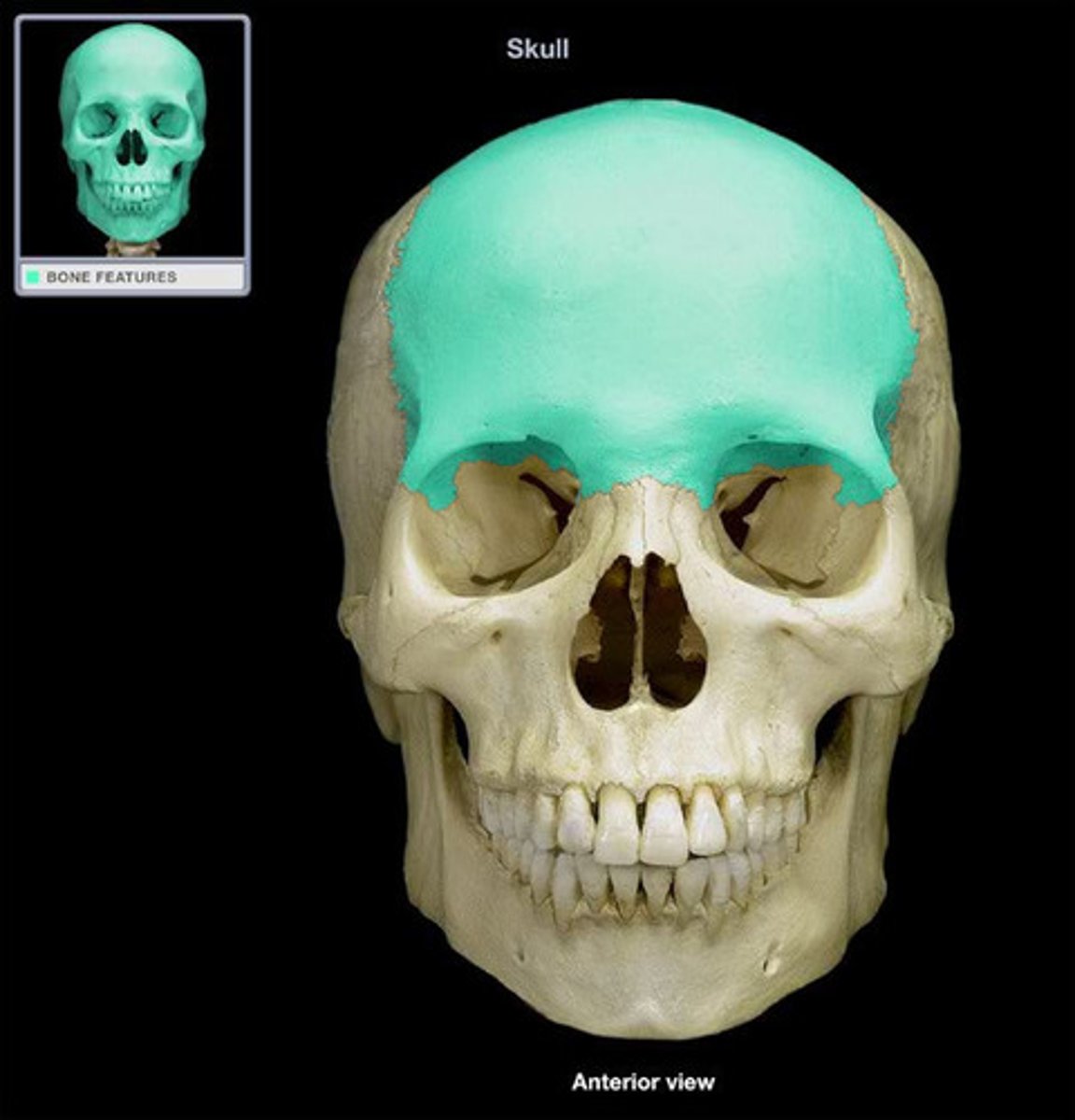
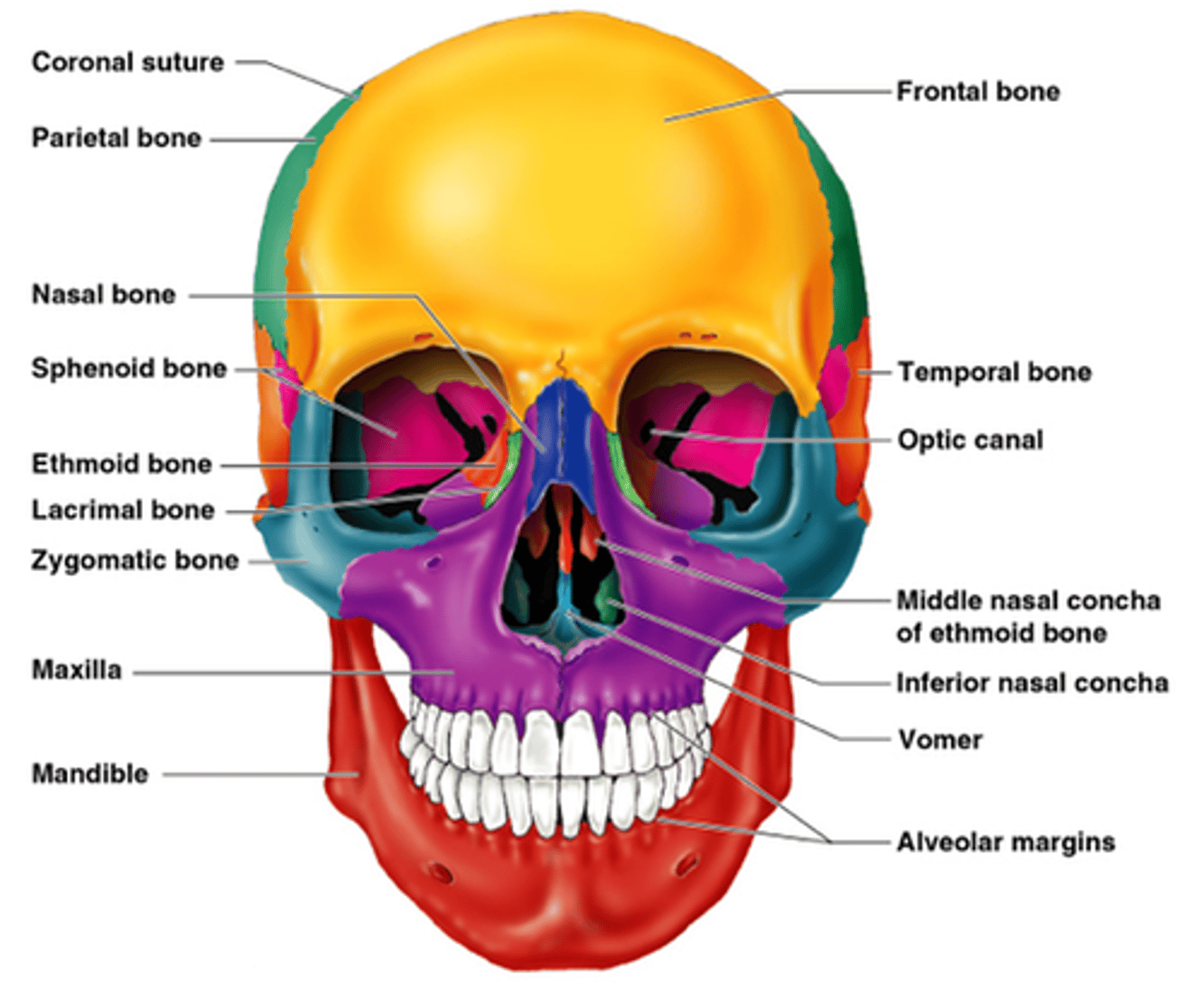
Frontal Bone (forehead)
• Anterior portion of cranium
• Most of anterior cranial fossa
• Superior wall of orbits
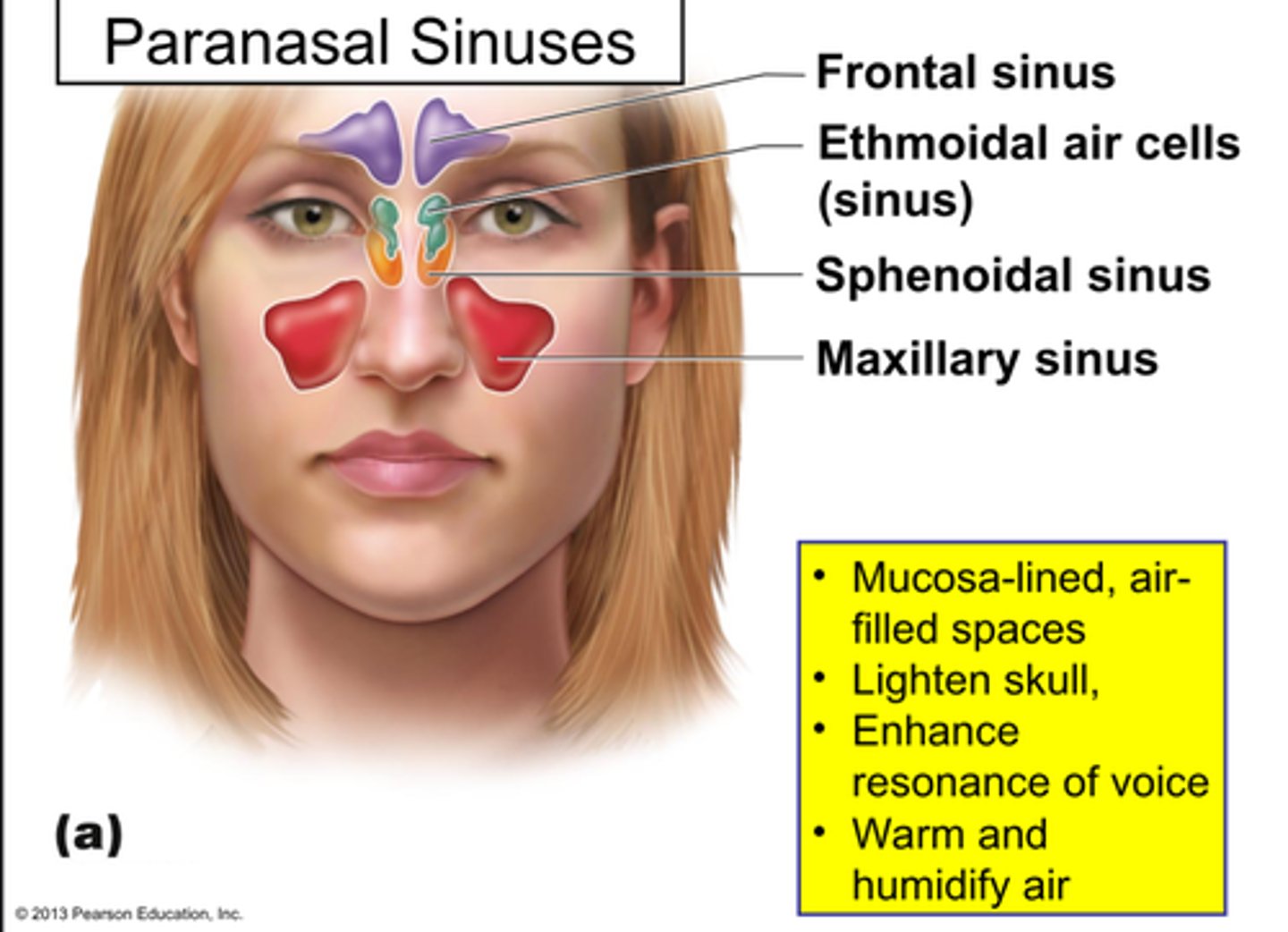
• Contains air-filled frontal sinus
• Articulates with parietal bones by coronal suture
bones of cranium
lambdoid structure
facial bones
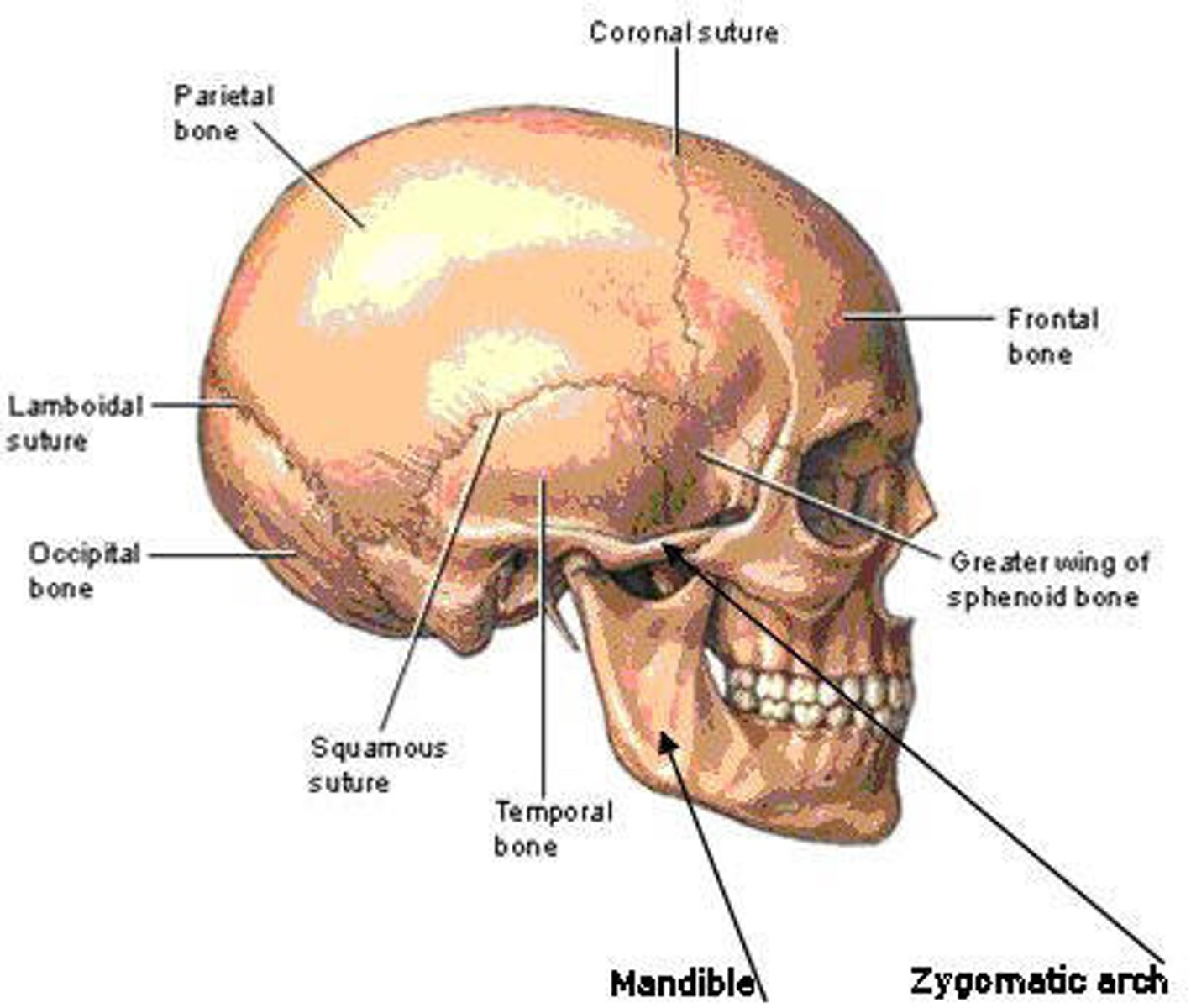
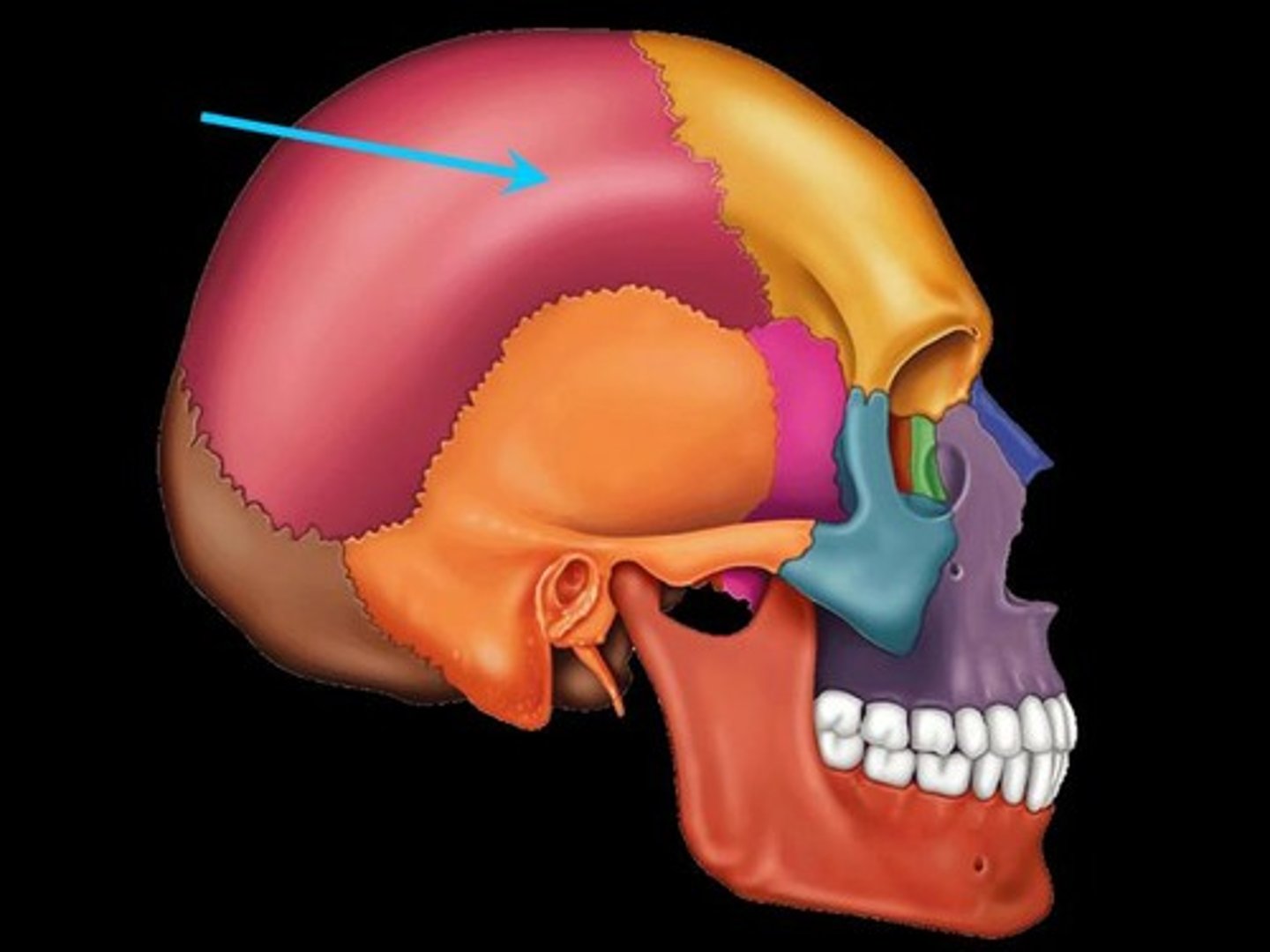
Parietal
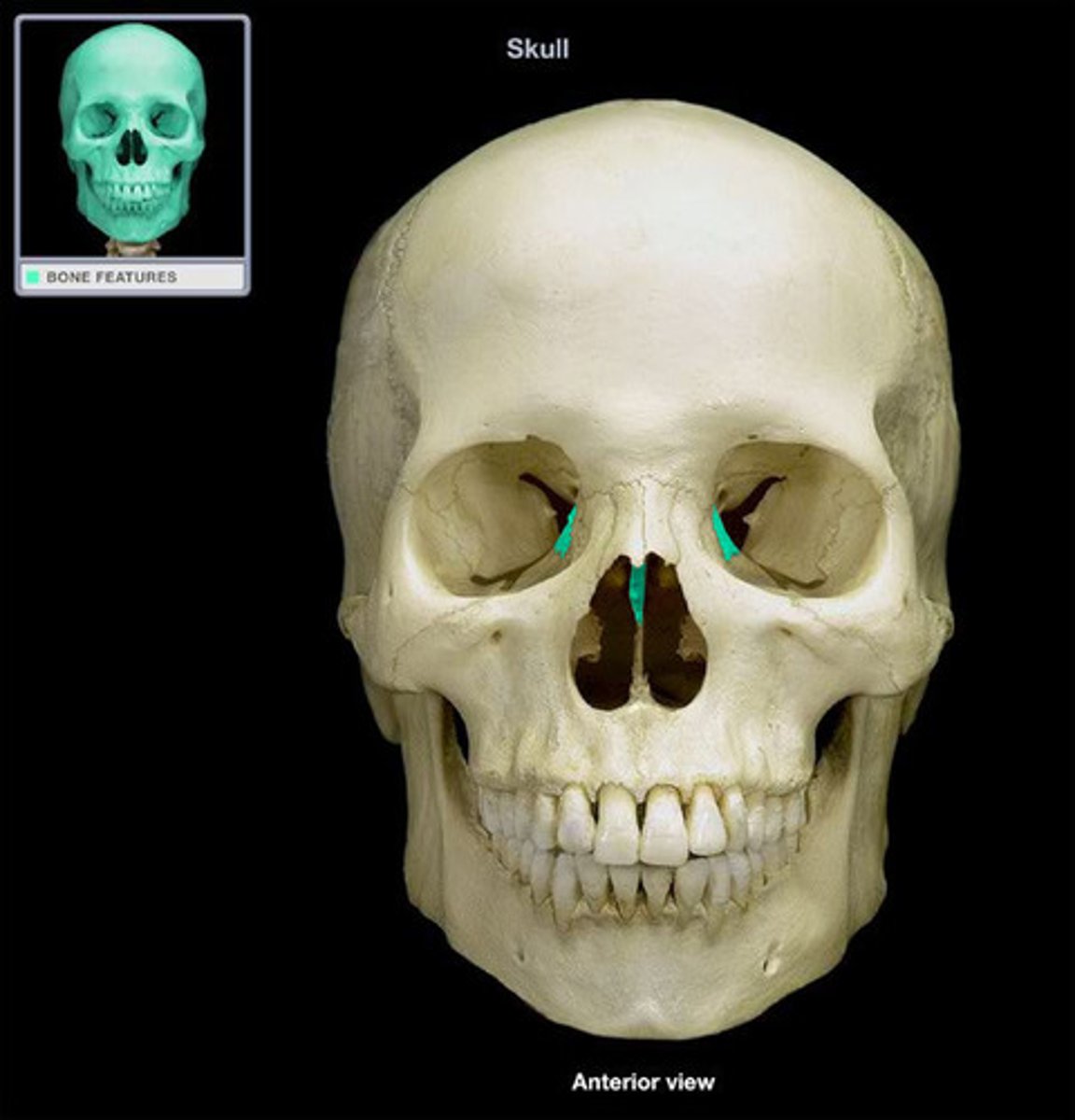
Ethmoid
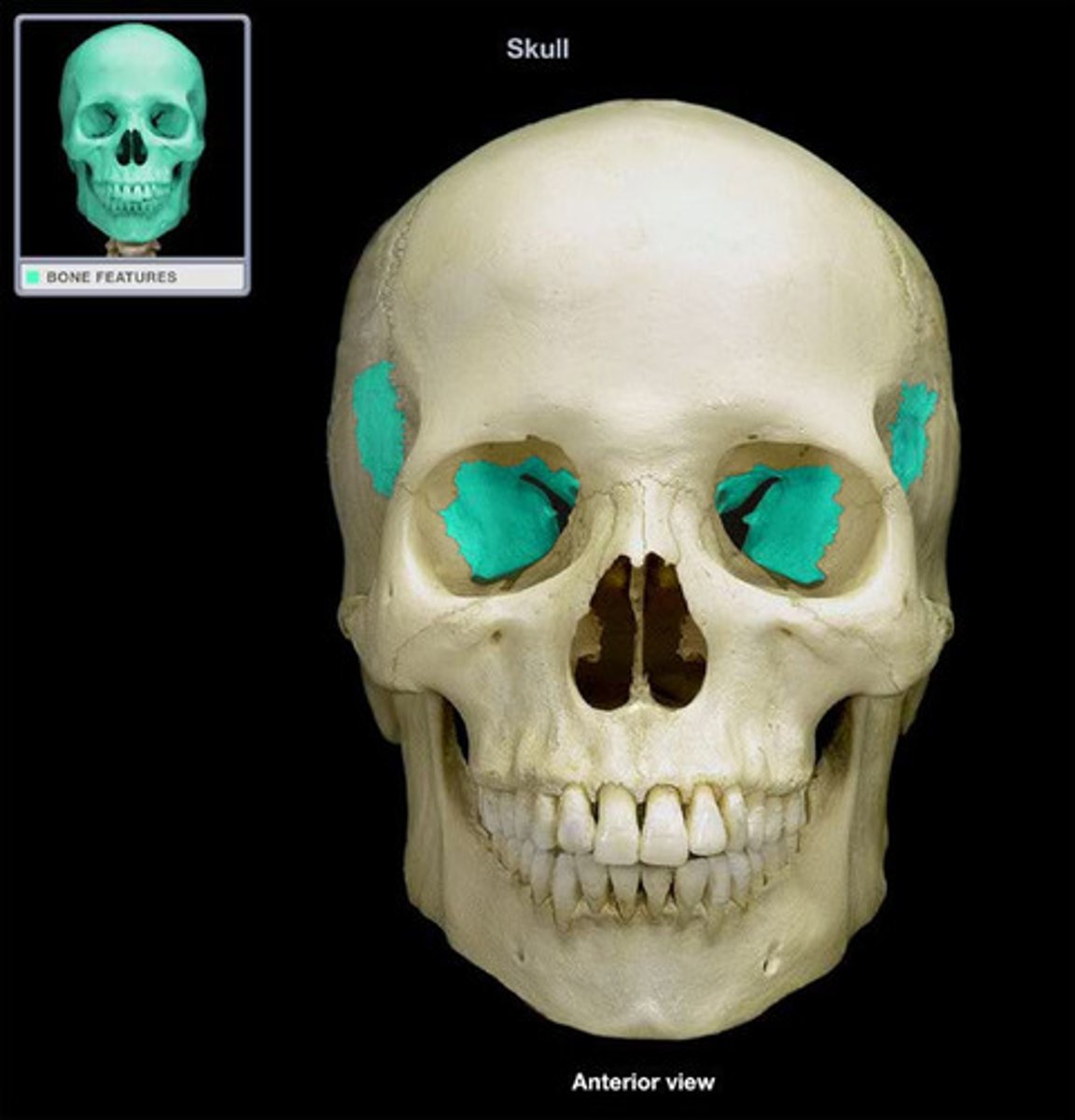
Sphenoid
Temporal
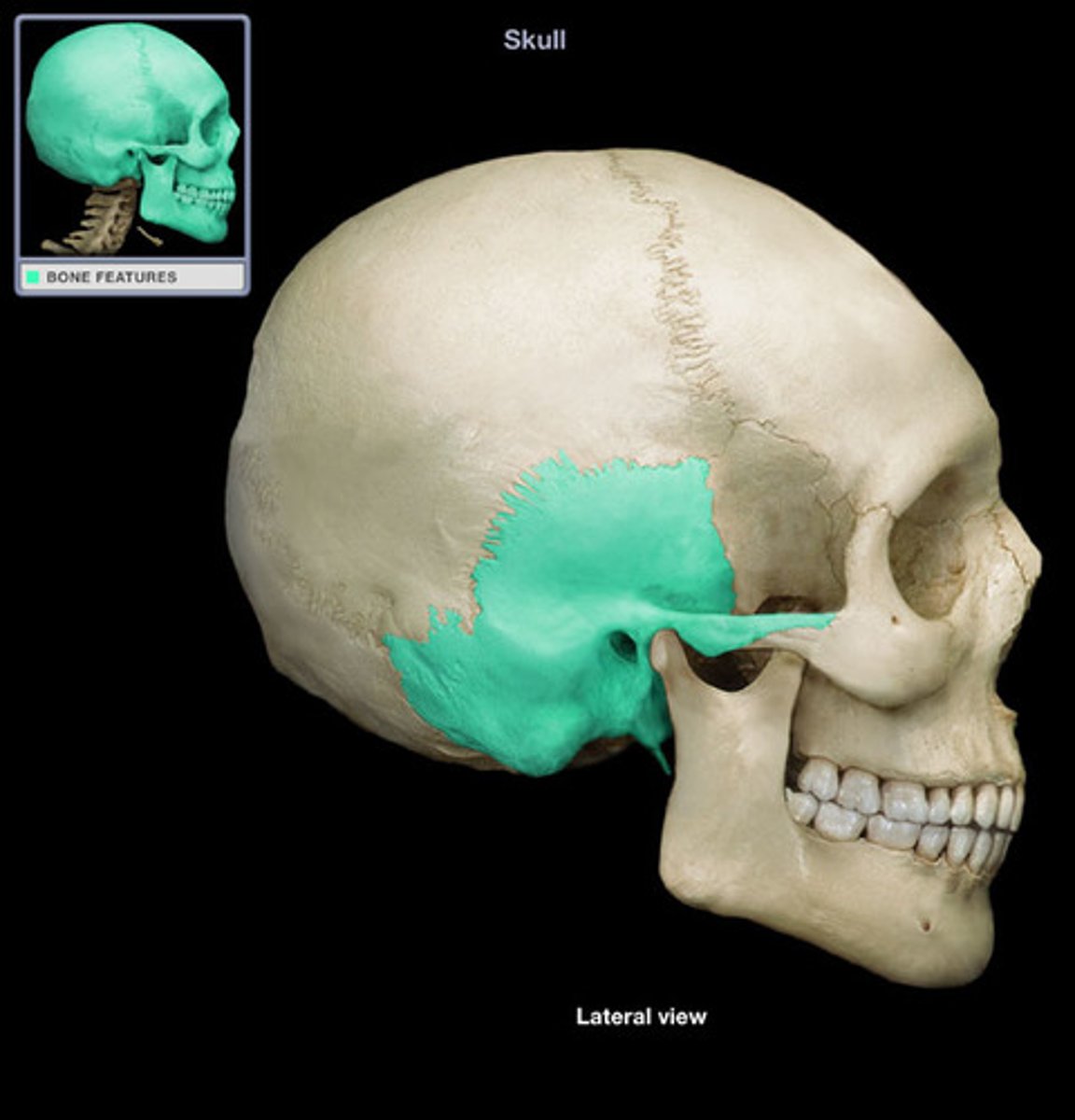
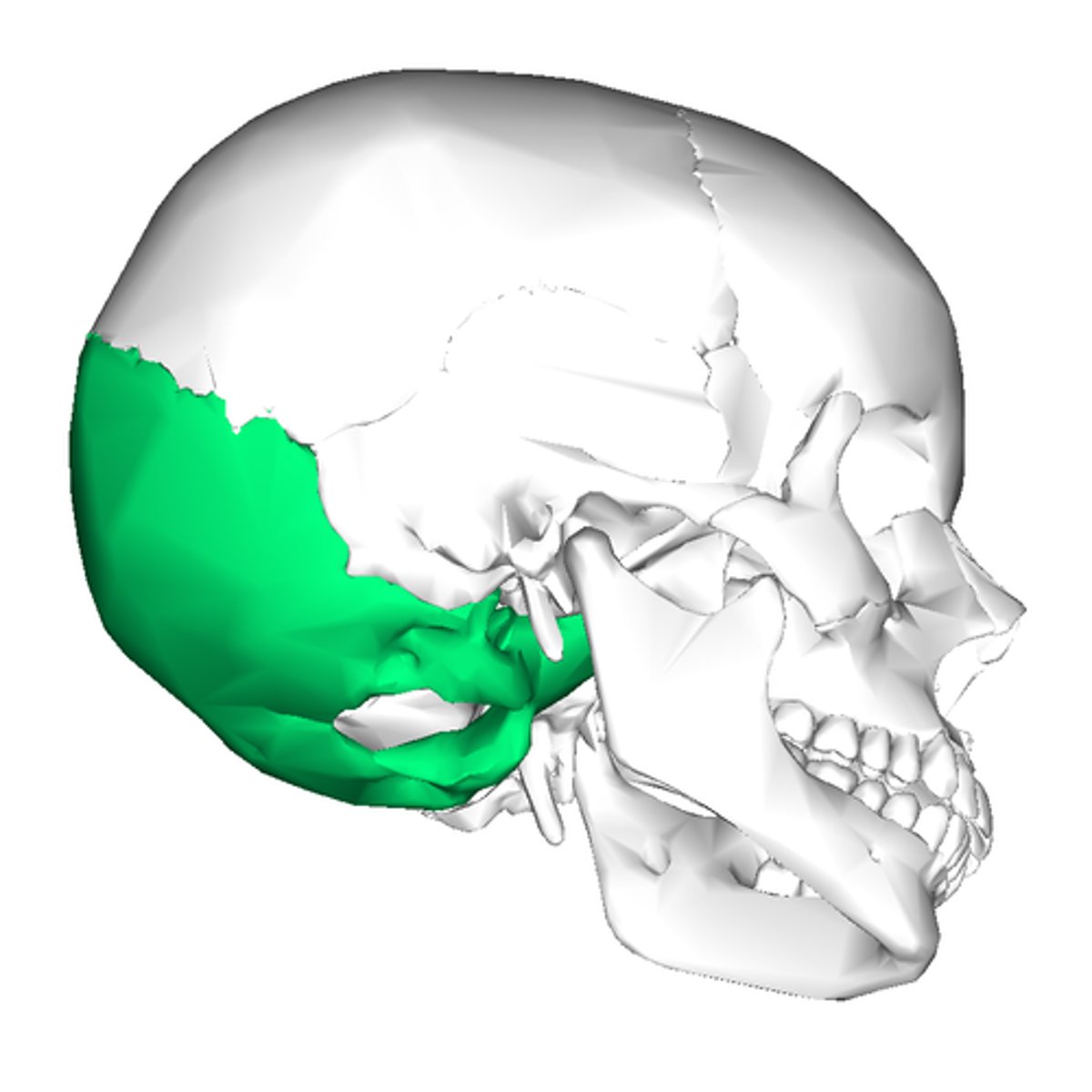
occupital
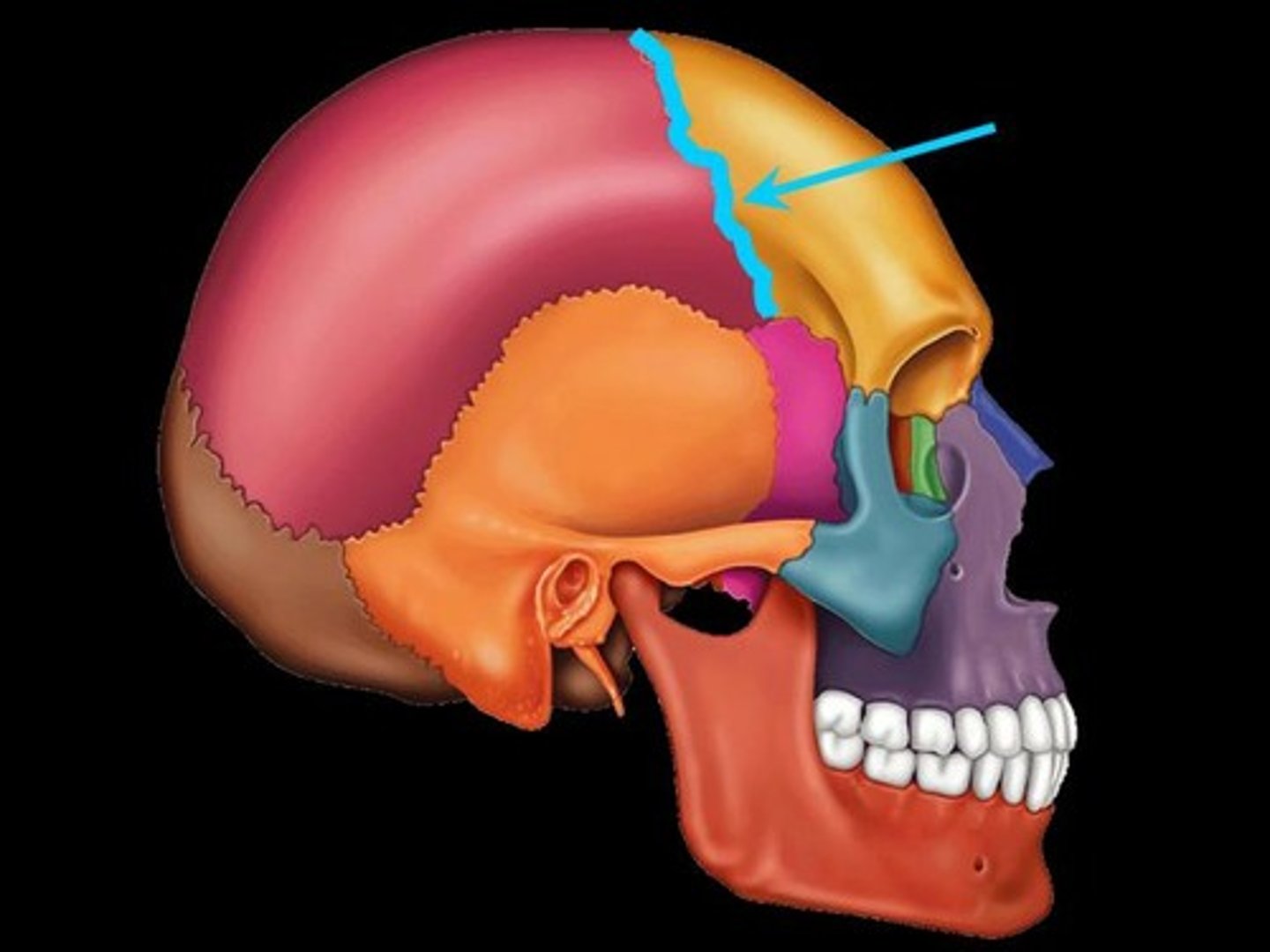
Coronal structure
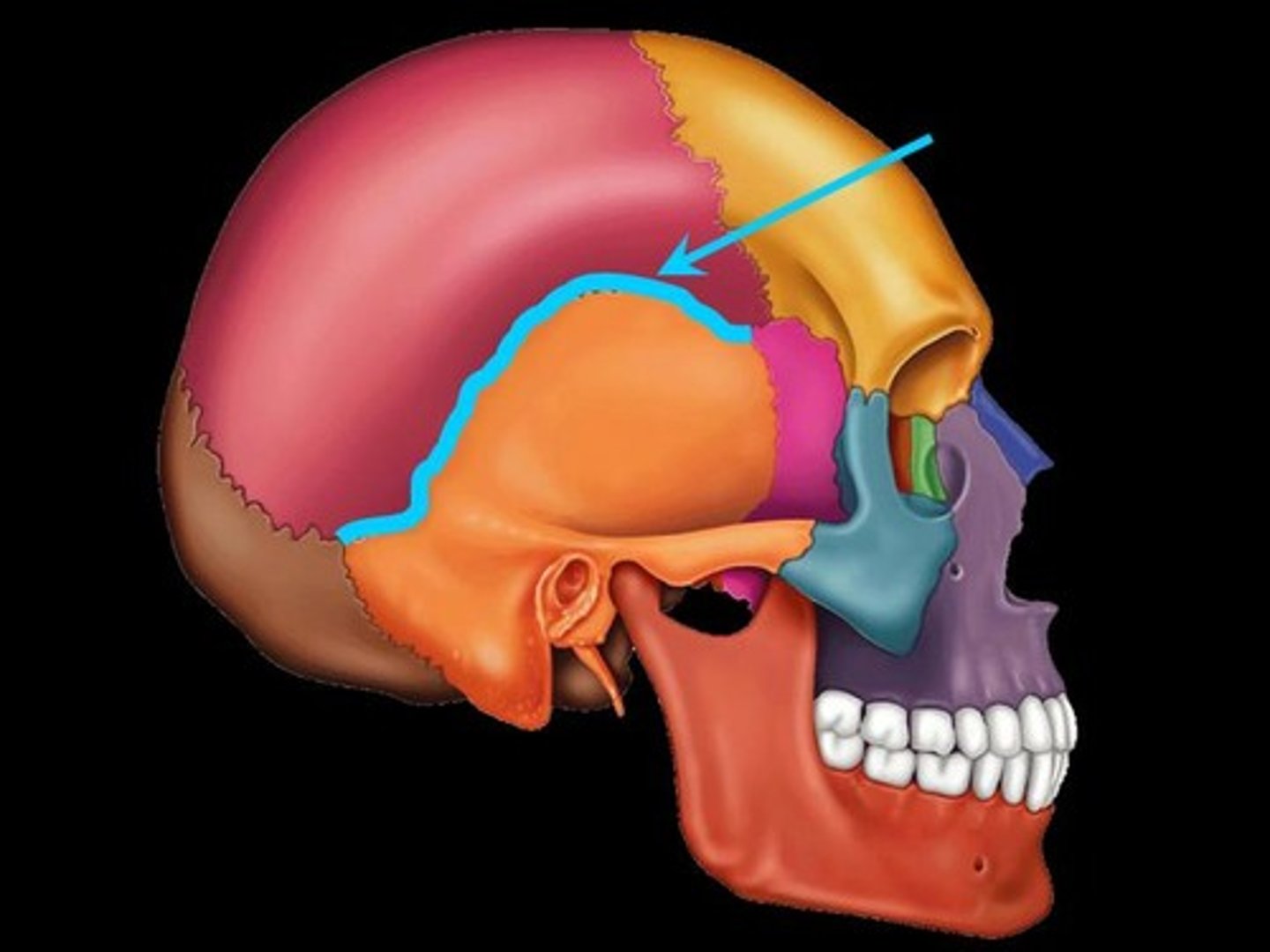
squamous structure
Ethmoid bone
forms part of the posterior portion of the nose, the orbit, and the floor of the cranium
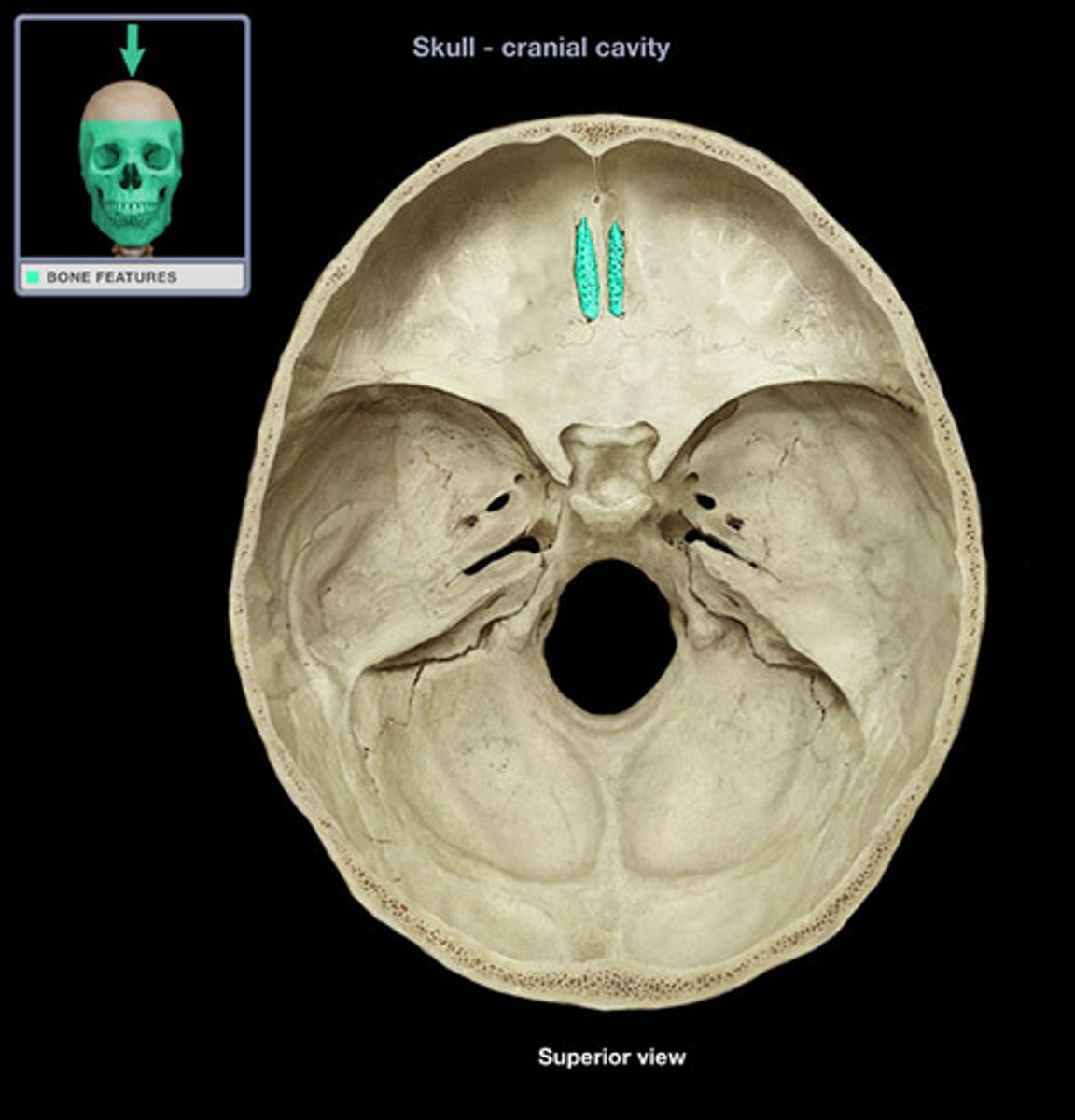
Sphenoid bone
- forms part of the base of the skull and parts of the floor and sides of the orbit
- Complex, bat-shapedbone
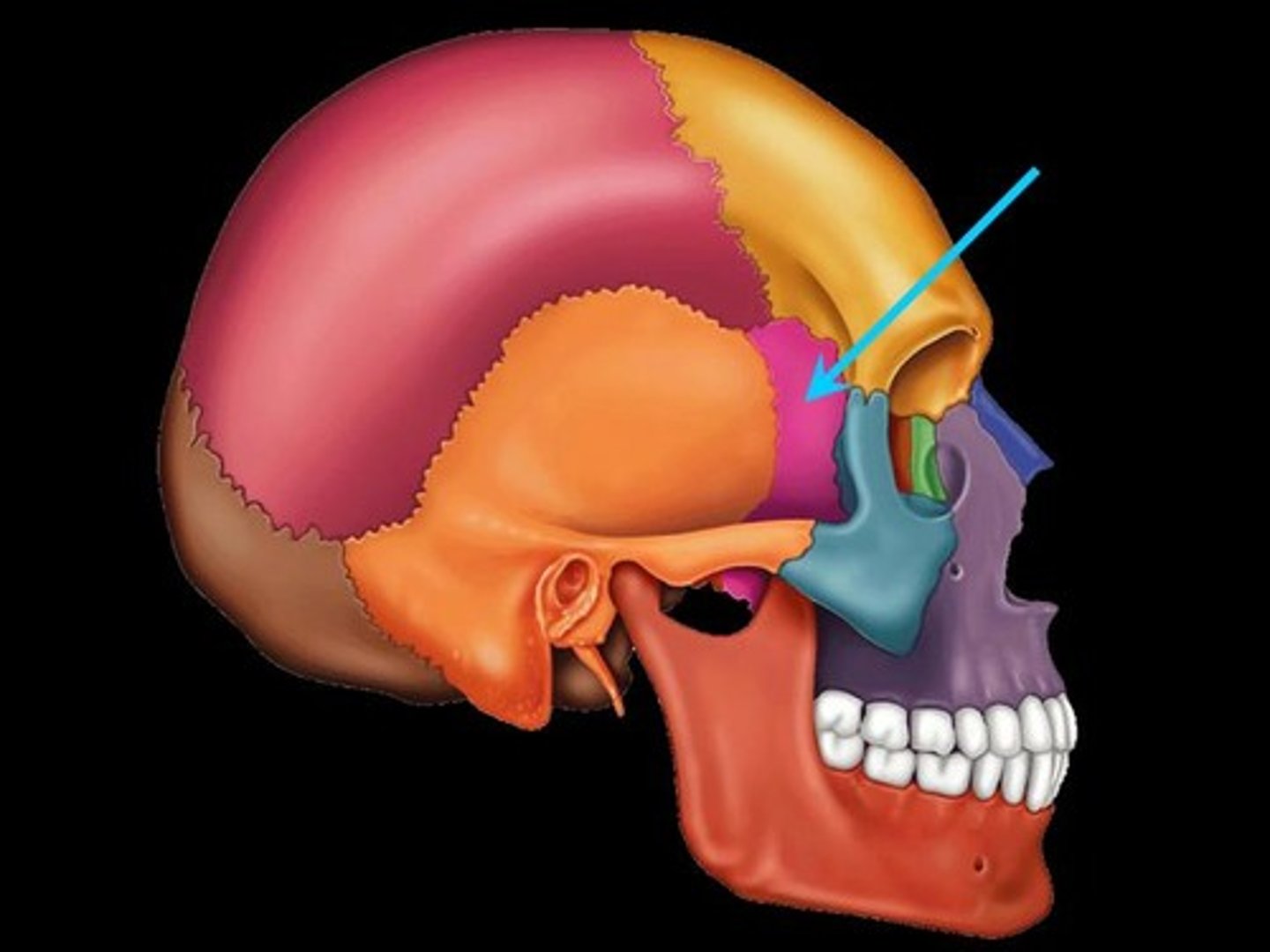
Coronal suture
between parietal bones and frontal bone
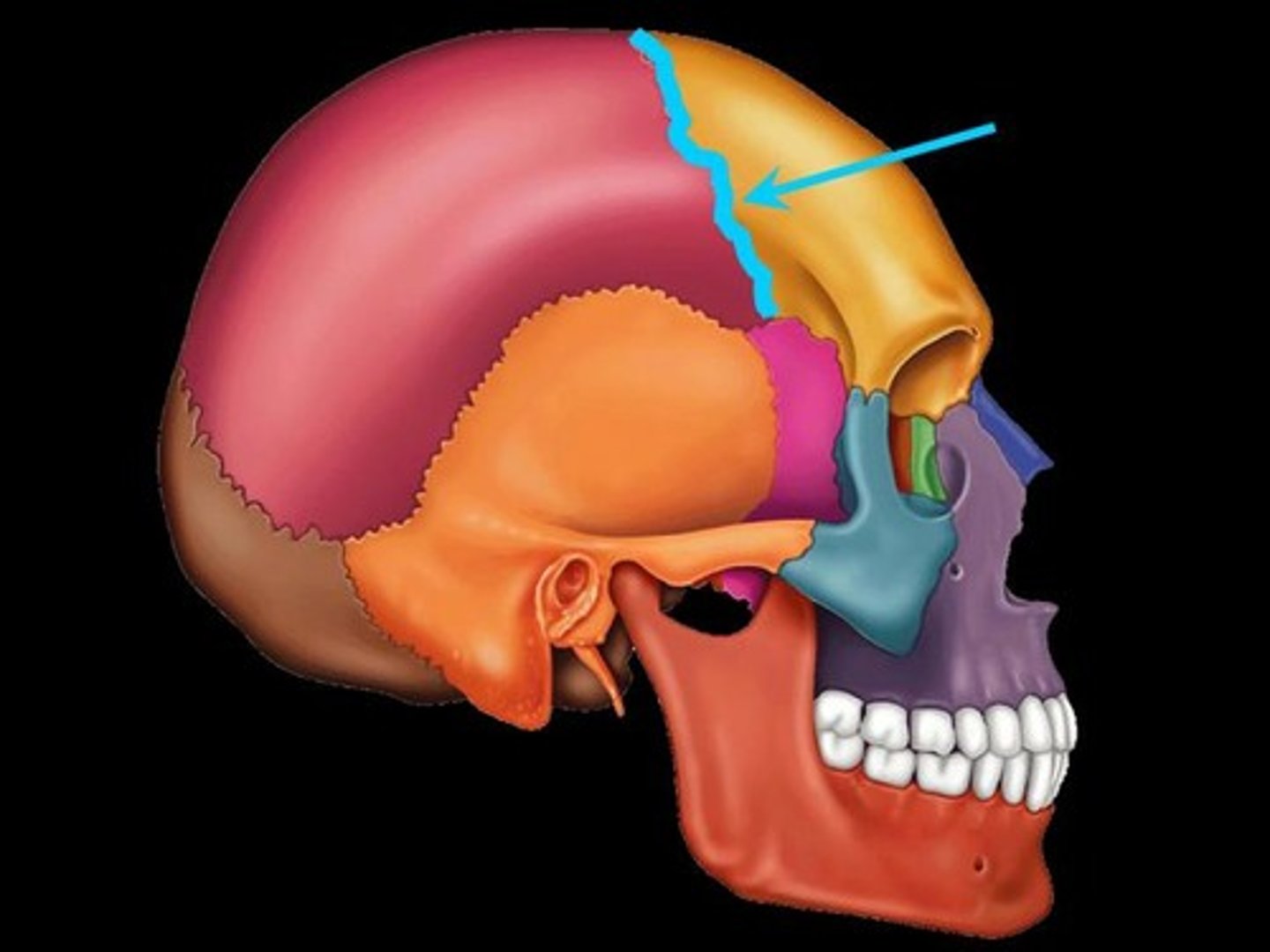
Sagittal suture
between right and left parietal bones
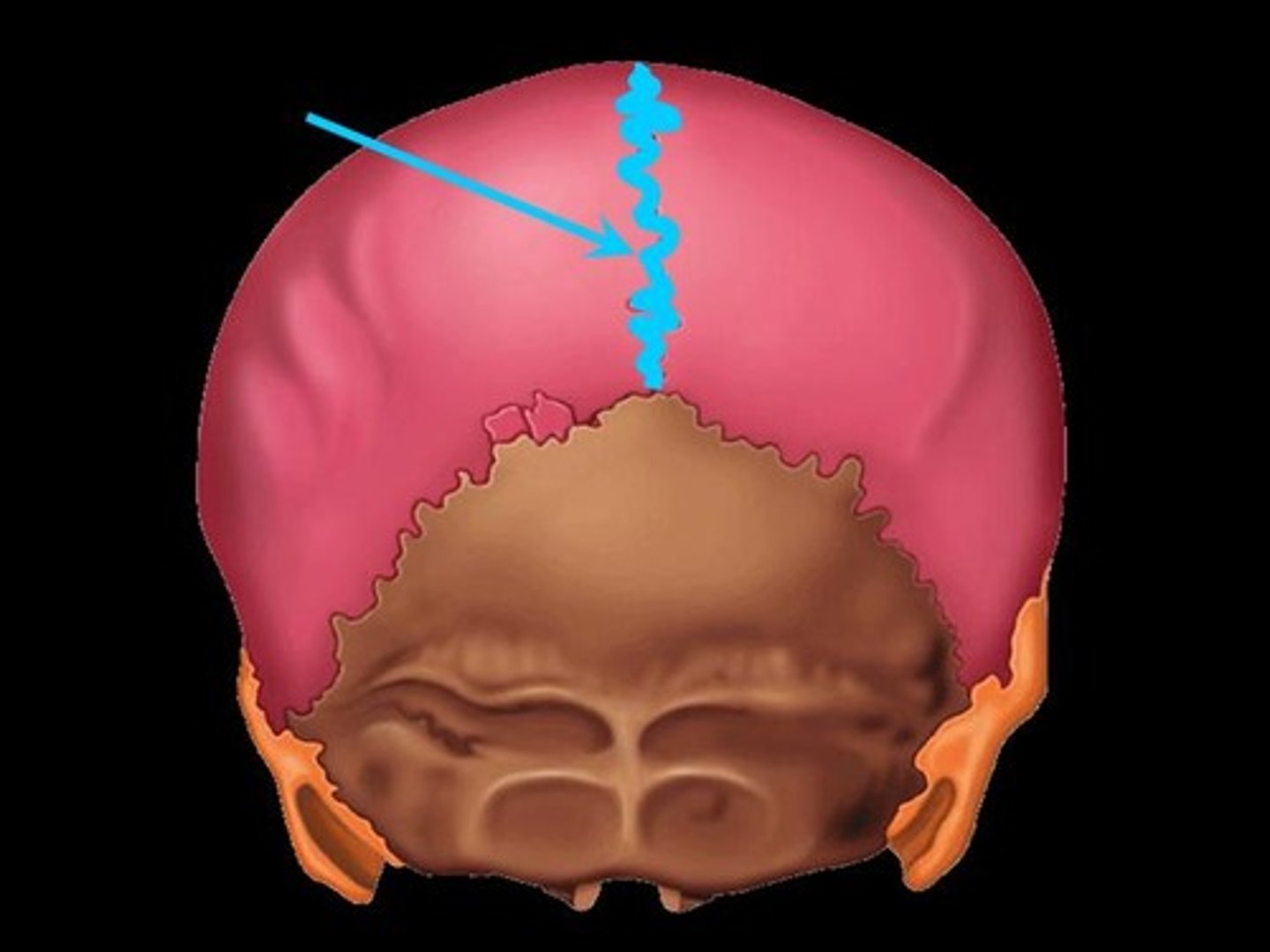
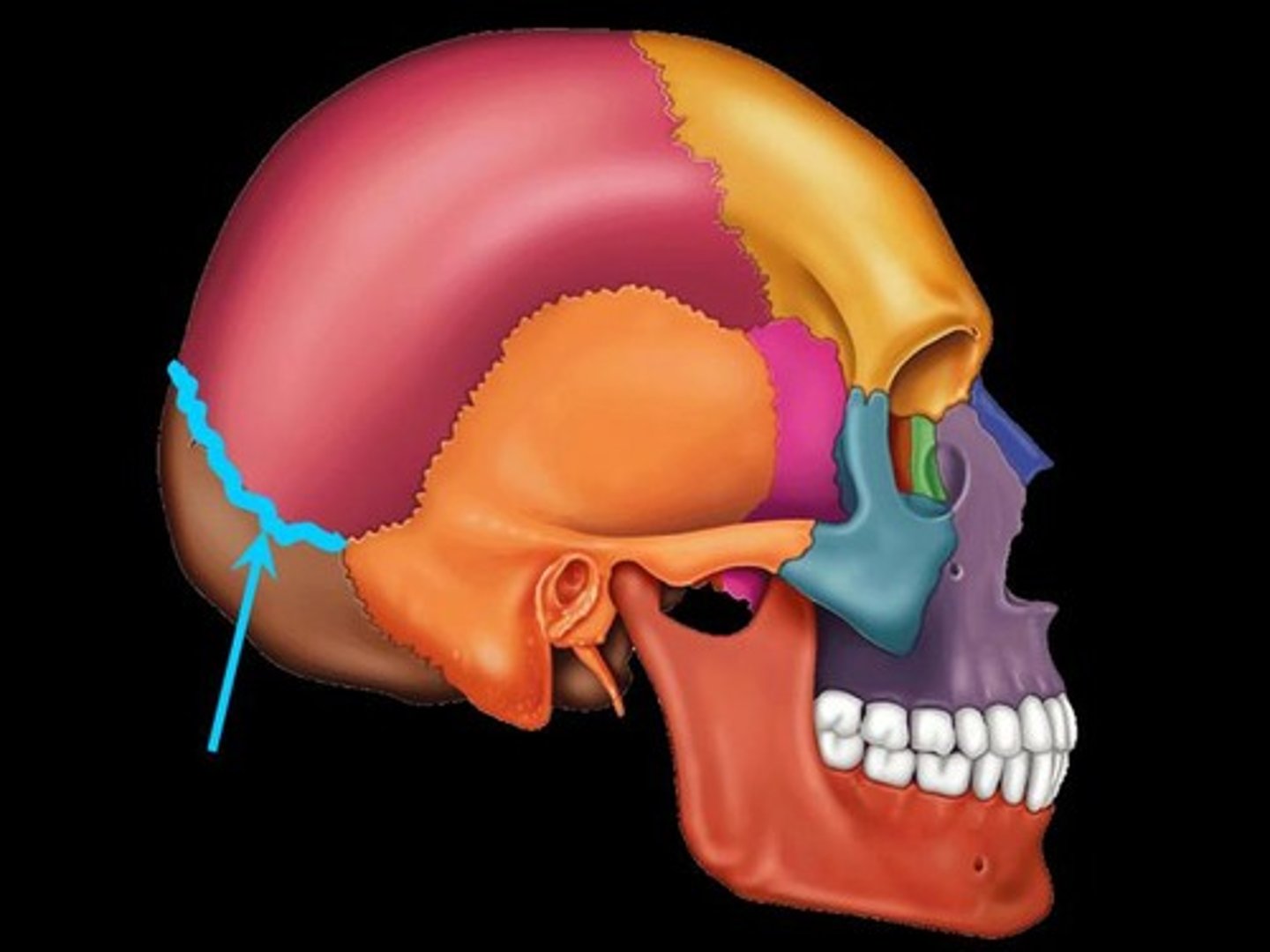
Lamboid structure
between parietal bones and occipital bone
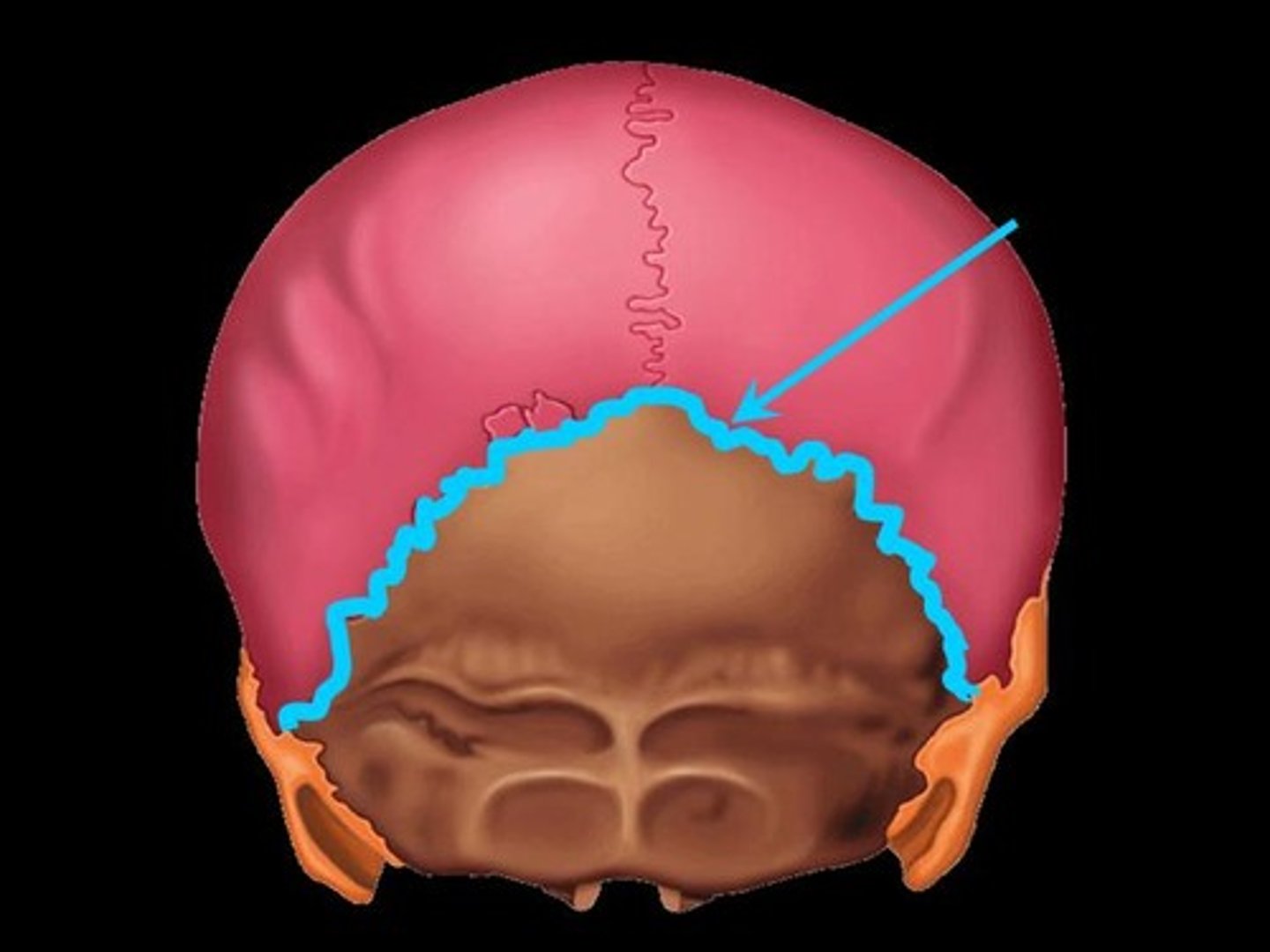
squamous (squamosal) suture
between parietal and temporal bones on each side of skull
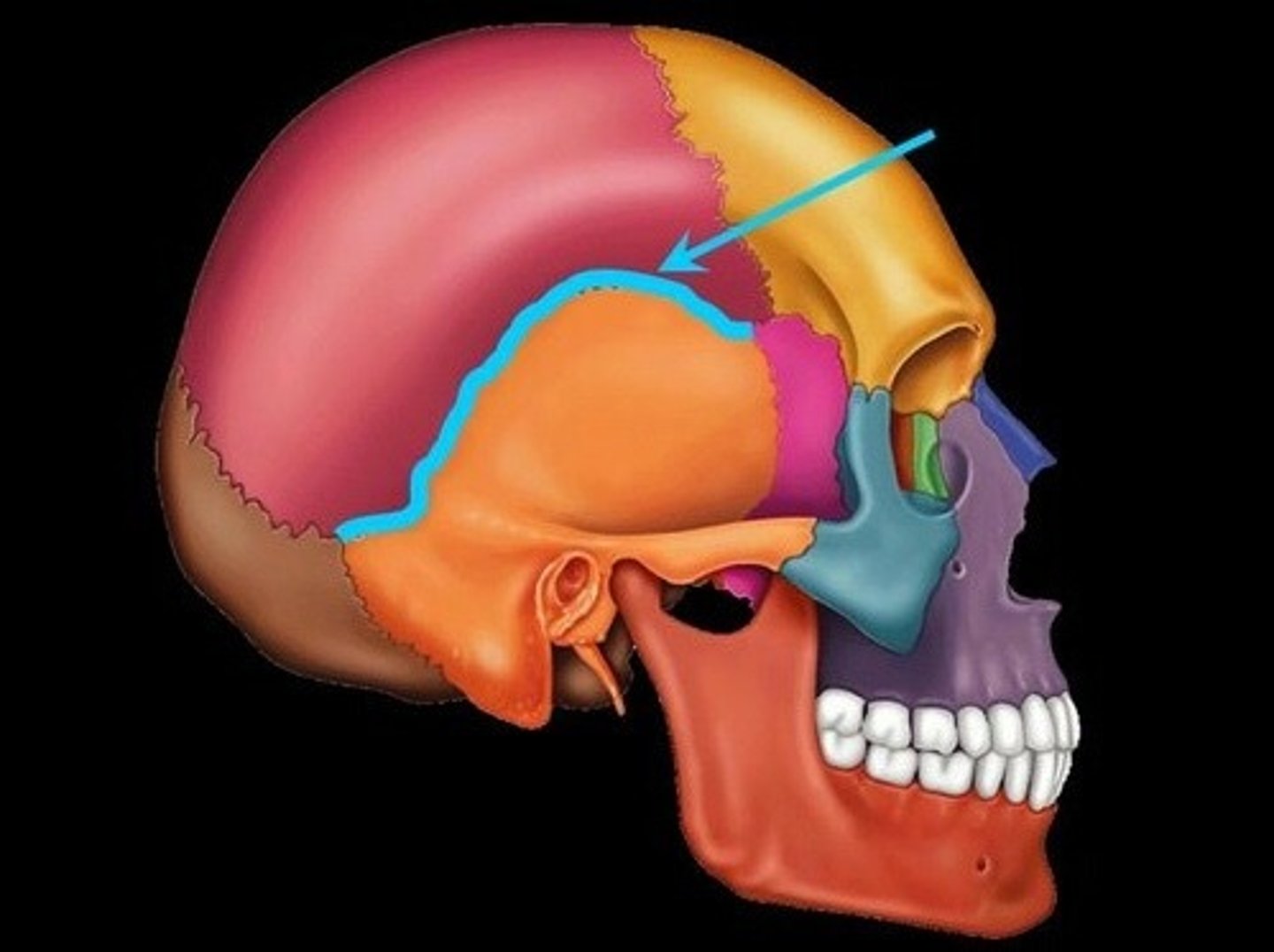
Occipital Bone
• Most of skull's posterior wall and posterior cranial fossa
• Articulates with 1st vertebra
• Sites of attachment for ligamentum nuchae and many neck and back muscles
Arnold-Chiari Malformation
Cerebellar tonsillar herniation
Temporal Bones
- Squamous - zygomatic
- Tympanic -outer ear
- Mastoid - anchor for neck MM
- Petrous - inner/middle ear
Inferolateral aspects of skull and parts of cranial floor (complicated shape)
squamous
zygomatic
Tympanic
outer ear
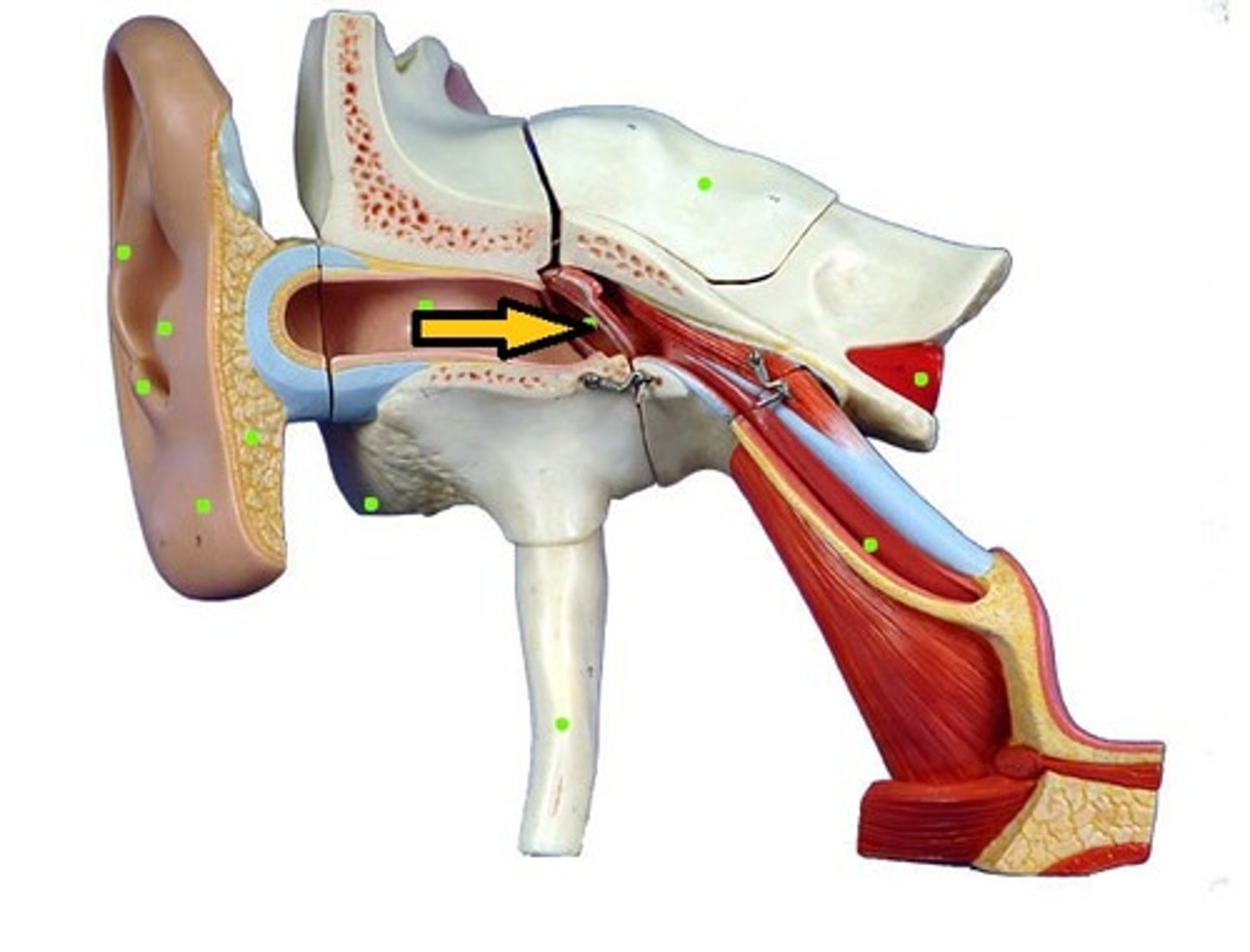
Mastoid
anchor for neck MM
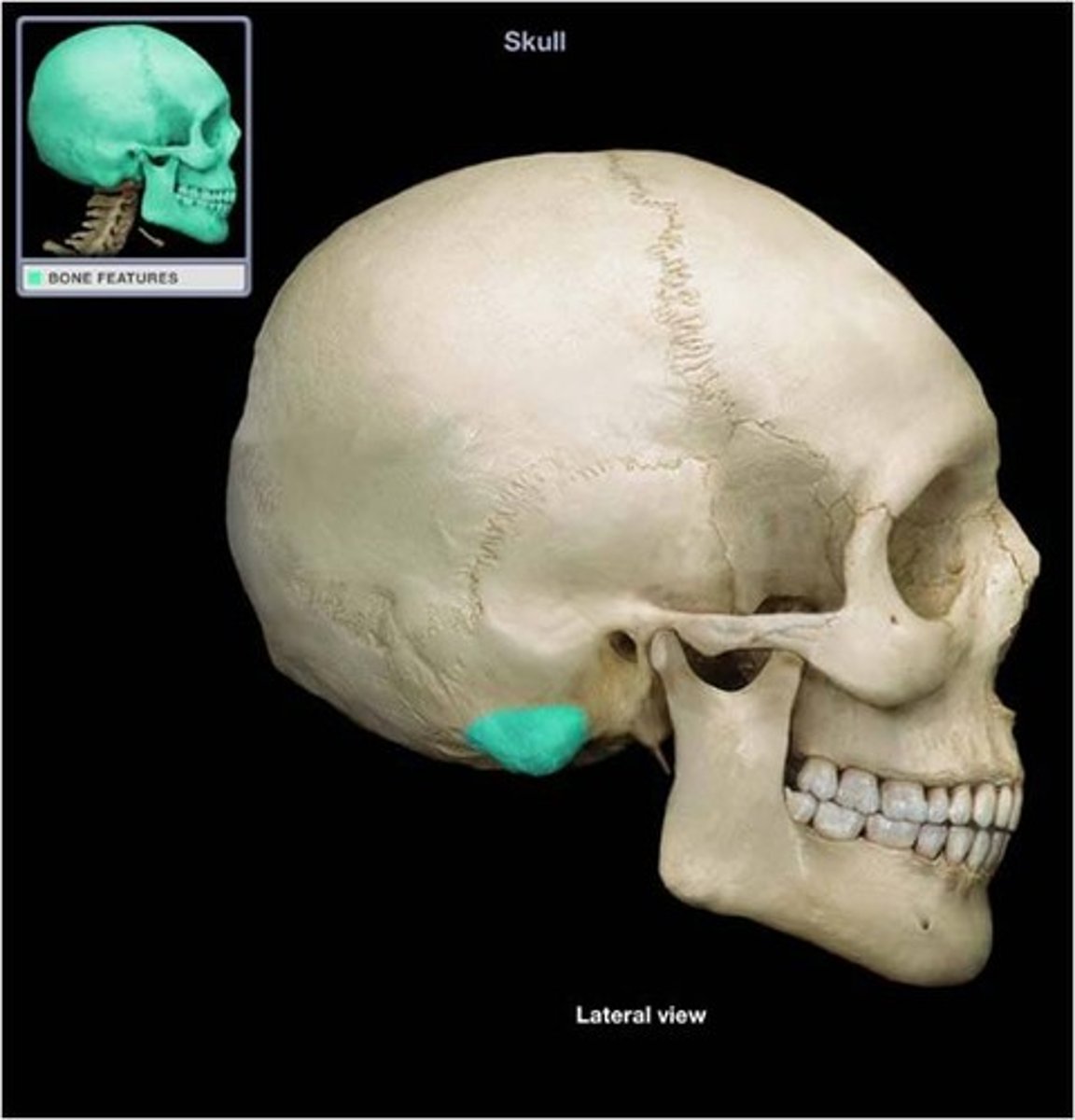
Petrous
inner/middle ear
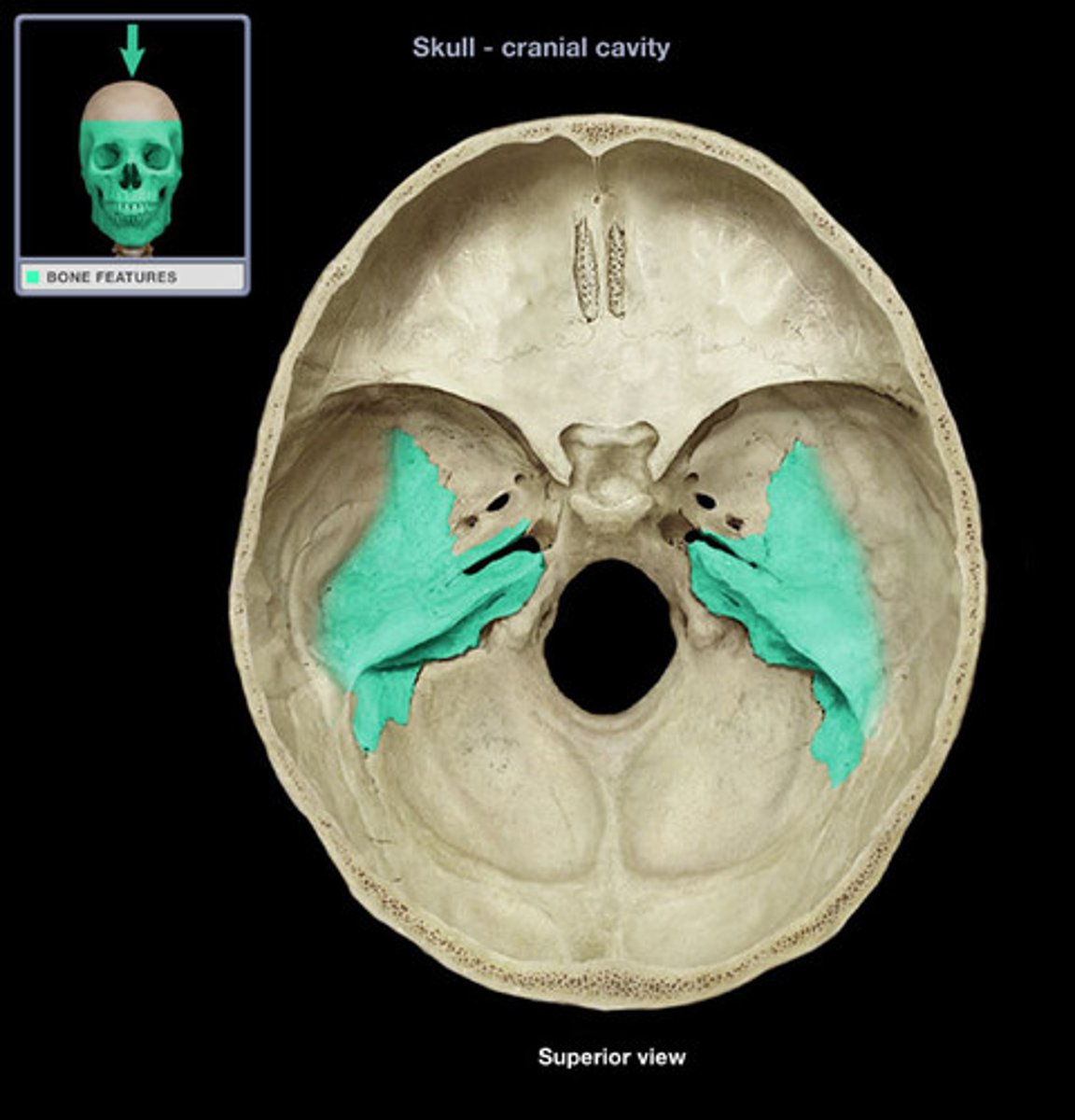
Keystone bone
- Articulates with all other cranial bones
• Contain maxillary sinuses
• Largest of paranasal sinuses
Three pairs of processes
- Greater wings
- Lesser wings
- Pterygoid processes
This skull bone is posterior to the frontal bone and connected via the coronal suture
parietal
This bone contains four major areas:squamous, tympanic, mastoid, and petrous.It is the ______ bone
temporal
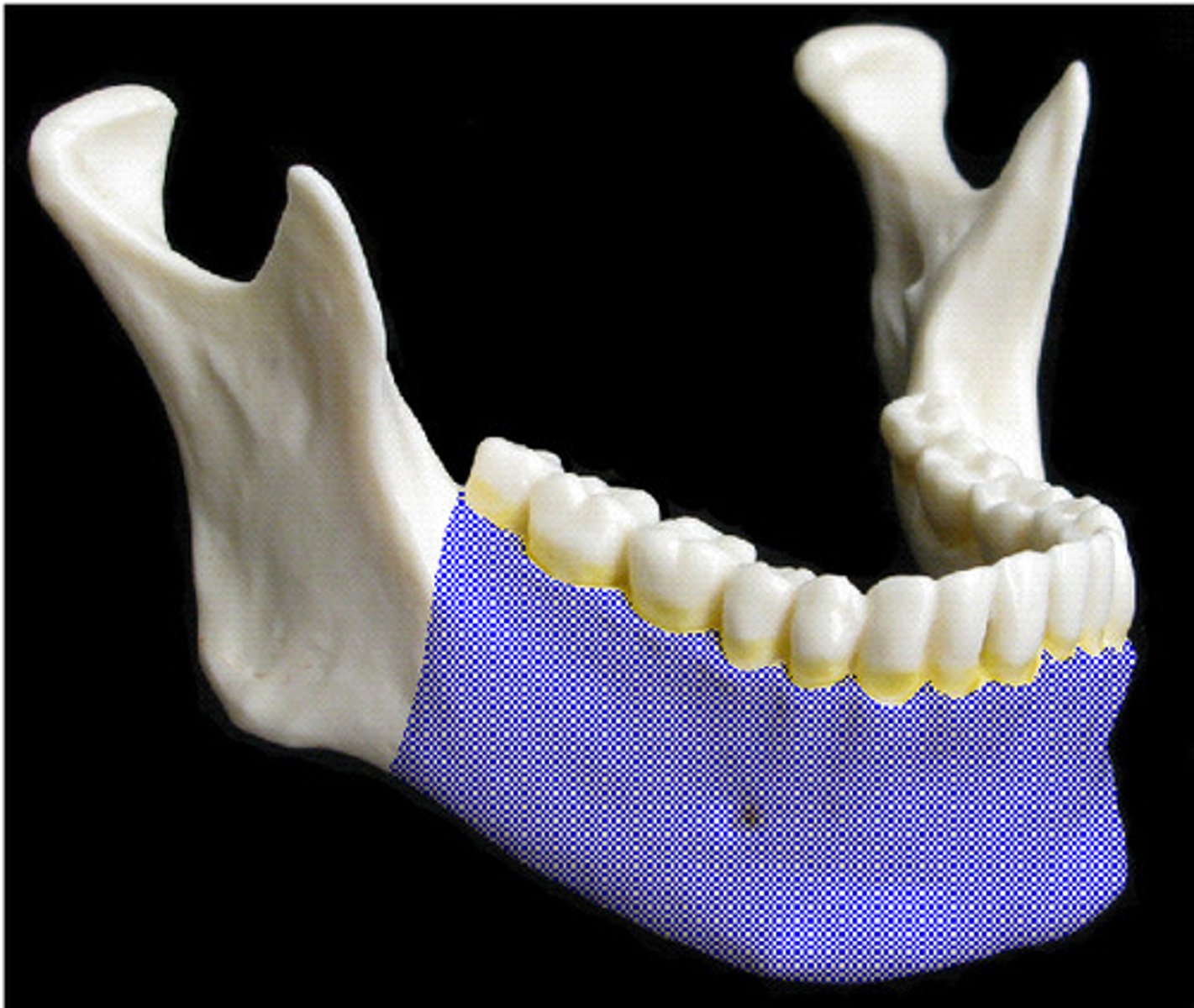
Mandible
• Lower jaw, U-shaped
• Largest, strongest bone of face
• Body and 2 Rami
• Temporomandibular joint (TMJ)
- Only freely movable joint in skull
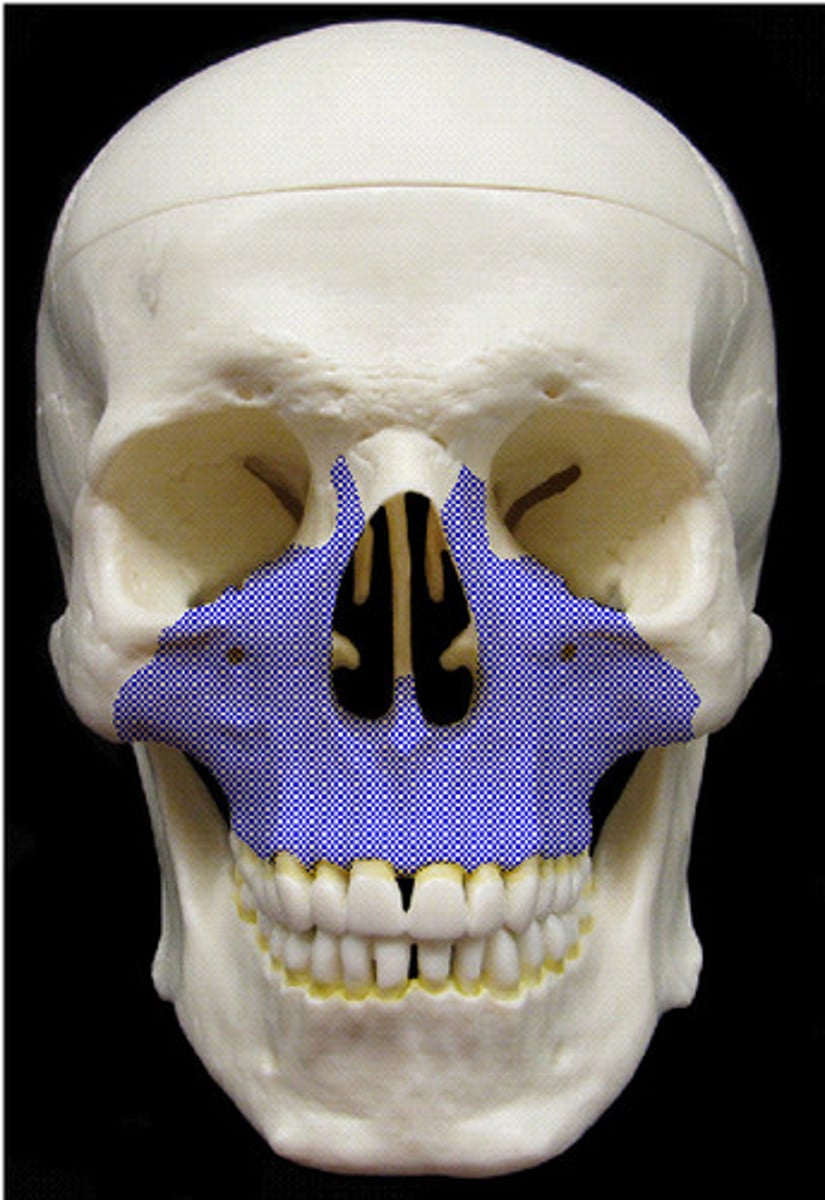
Maxillary Bones
form most of the upper jaw
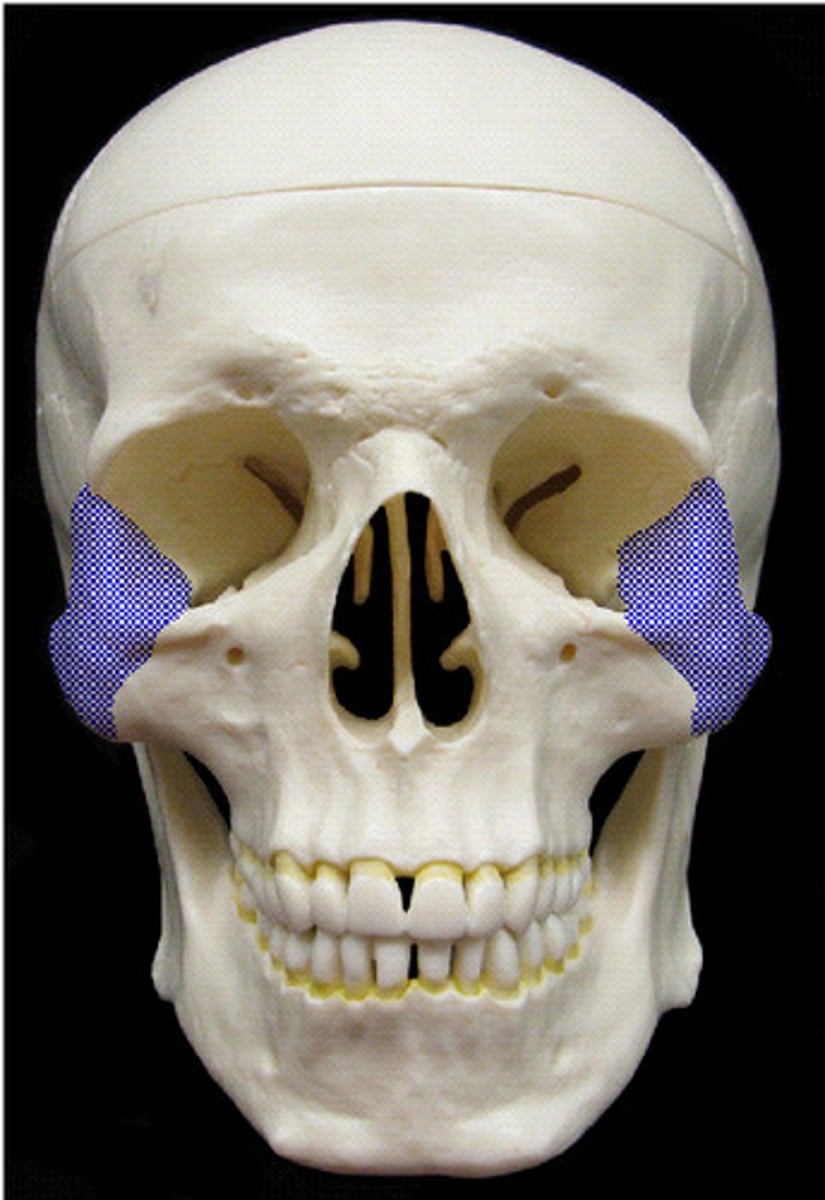
Zygomatic Bones
Cheekbones, inferolateral margins of orbits
Nasal bones
Form bridge of nose
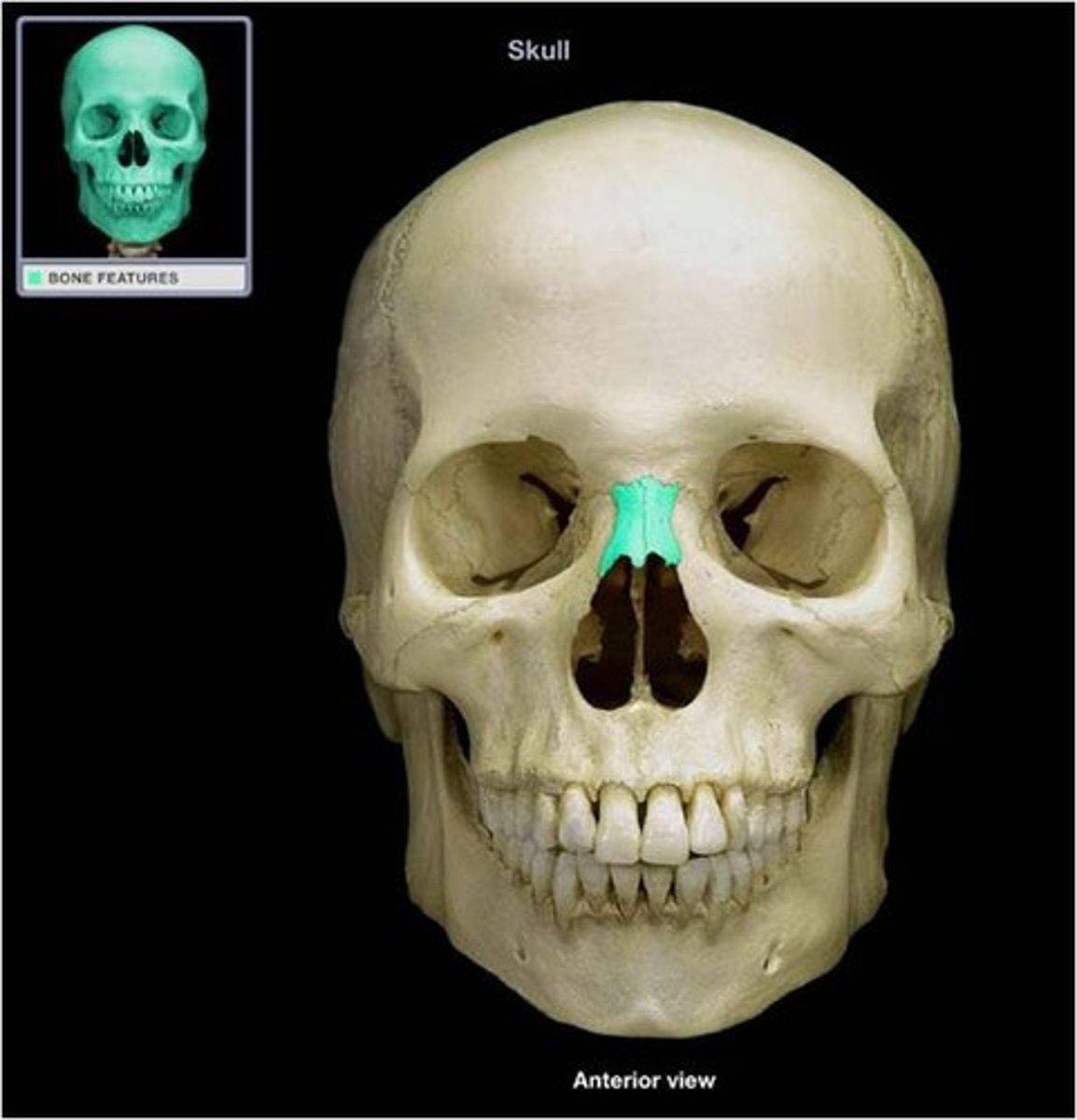
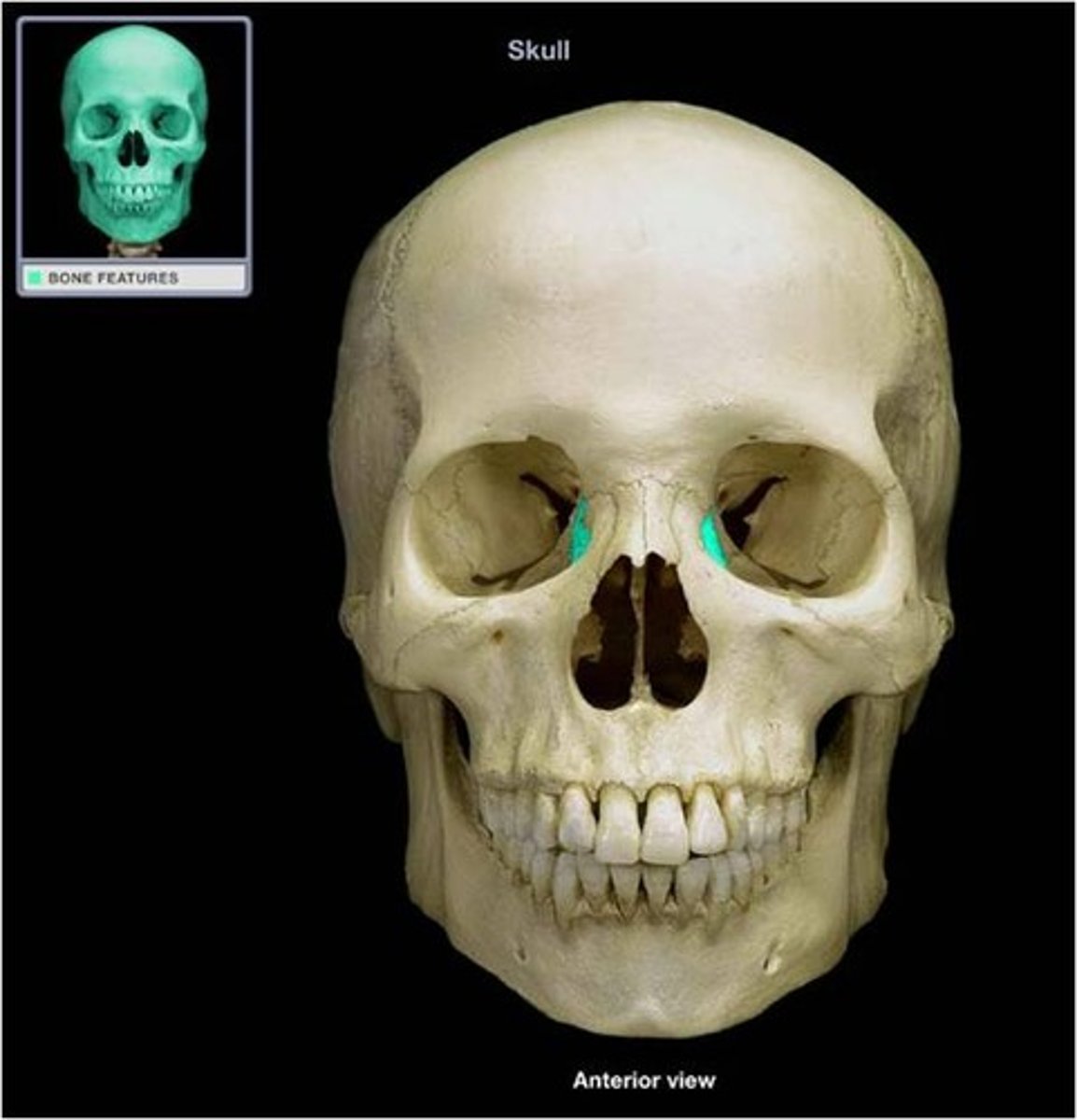
Lacrimal bones
- In medial walls of orbits
- Lacrimal fossa houses
lacrimal sac
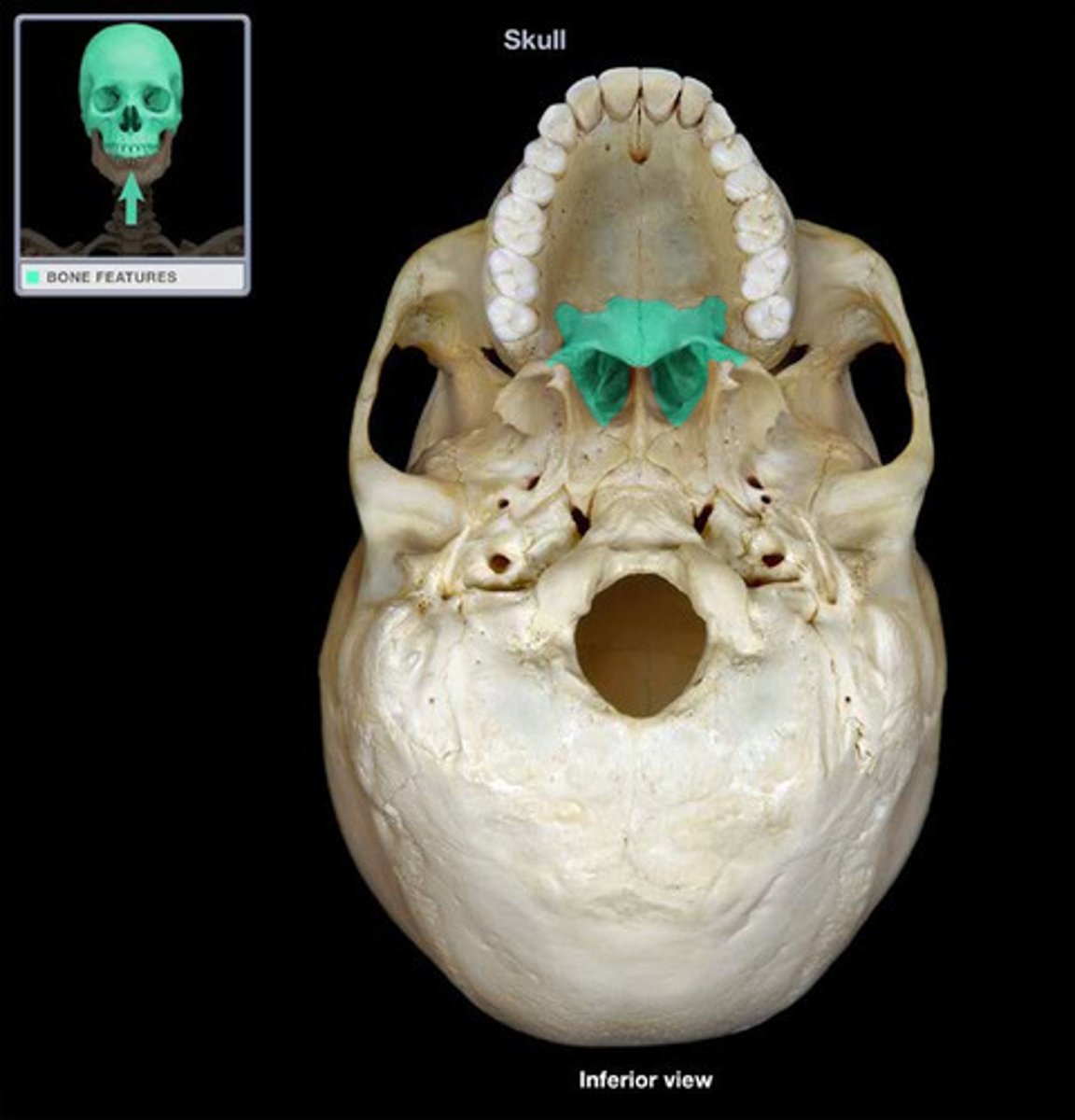
Palatine bones
- Posterior one-third of hard palate
- Posterolateral walls of the nasal cavity
- Small part of the orbits
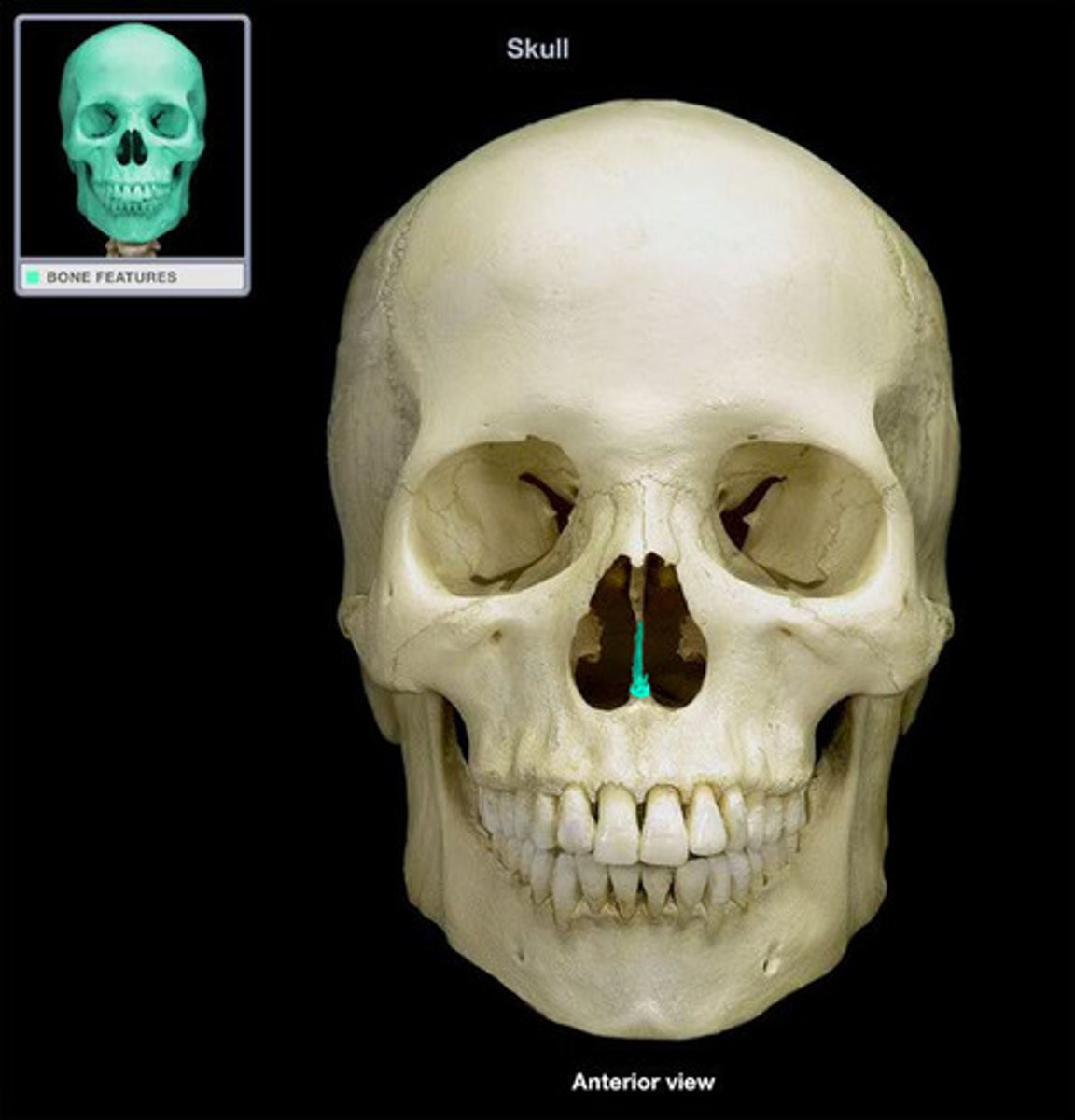
Vomer
- Plow shaped
- Inferior part of nasal septum
Orbits
• Cavities that encase eyes and lacrimal glands
• Sites of attachment for eye muscles
• Formed by parts of seven bones
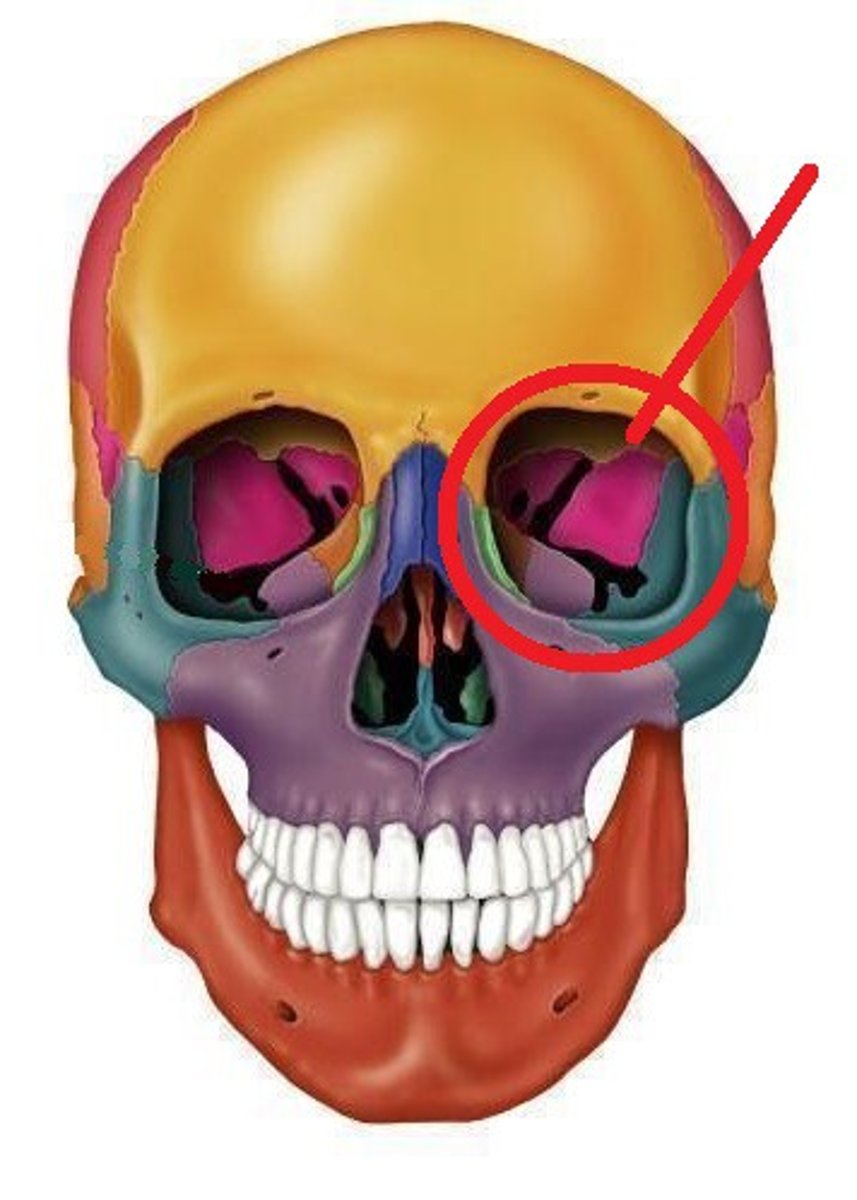
nasal cavity
Roof, lateral walls, and floor formed by parts of four bones
what bones form the nasal cavity?
maxilla, nasal conchae, ethmoid, vomer
Nasal septum of bone and hyaline cartilage
Perpendicular plate of ethmoid
Vomer
Anterior septal cartilage
The scientific name for the cheekbone is the
zygomatic bone
Paranasal sinsues
one of the air cavities in the bones near the nose
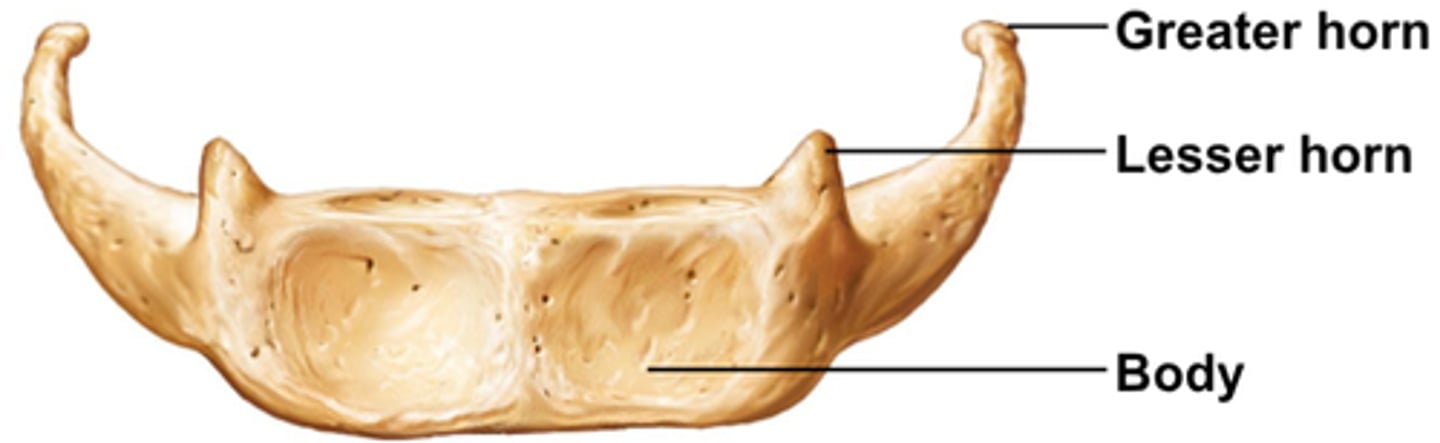
hyoid bone
U-shaped bone at the base of the tongue that supports the tongue and its muscles.
Site of attachment for muscles of swallowing and speech
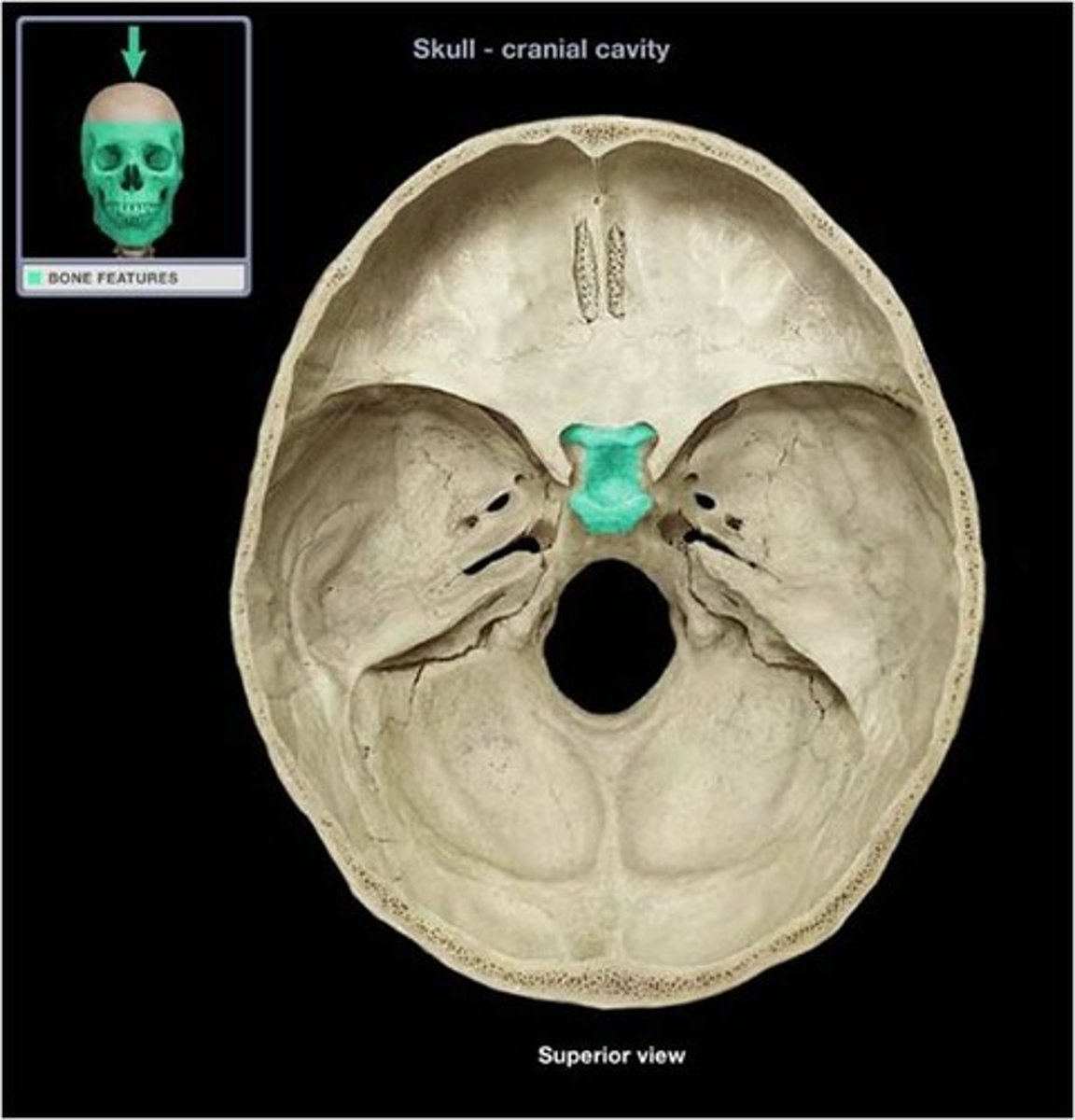
Which of the following structures serves as a "seat" of the endocrine system by supporting the pituitary gland?
• Pterygoid process
• Greater wings of the sphenoid bone
• Lesser wings of the sphenoid bone
• Sella turcica
Sella turcica
Which of the following bones does not articulate directly with any other bone in the skeleton?
• Mandible
• Zygomatic
• Hyoid
• Maxilla
hyoid bone
Vertebral column
Transmits weight of trunk to lower limbs
Surrounds and protects spinal cord
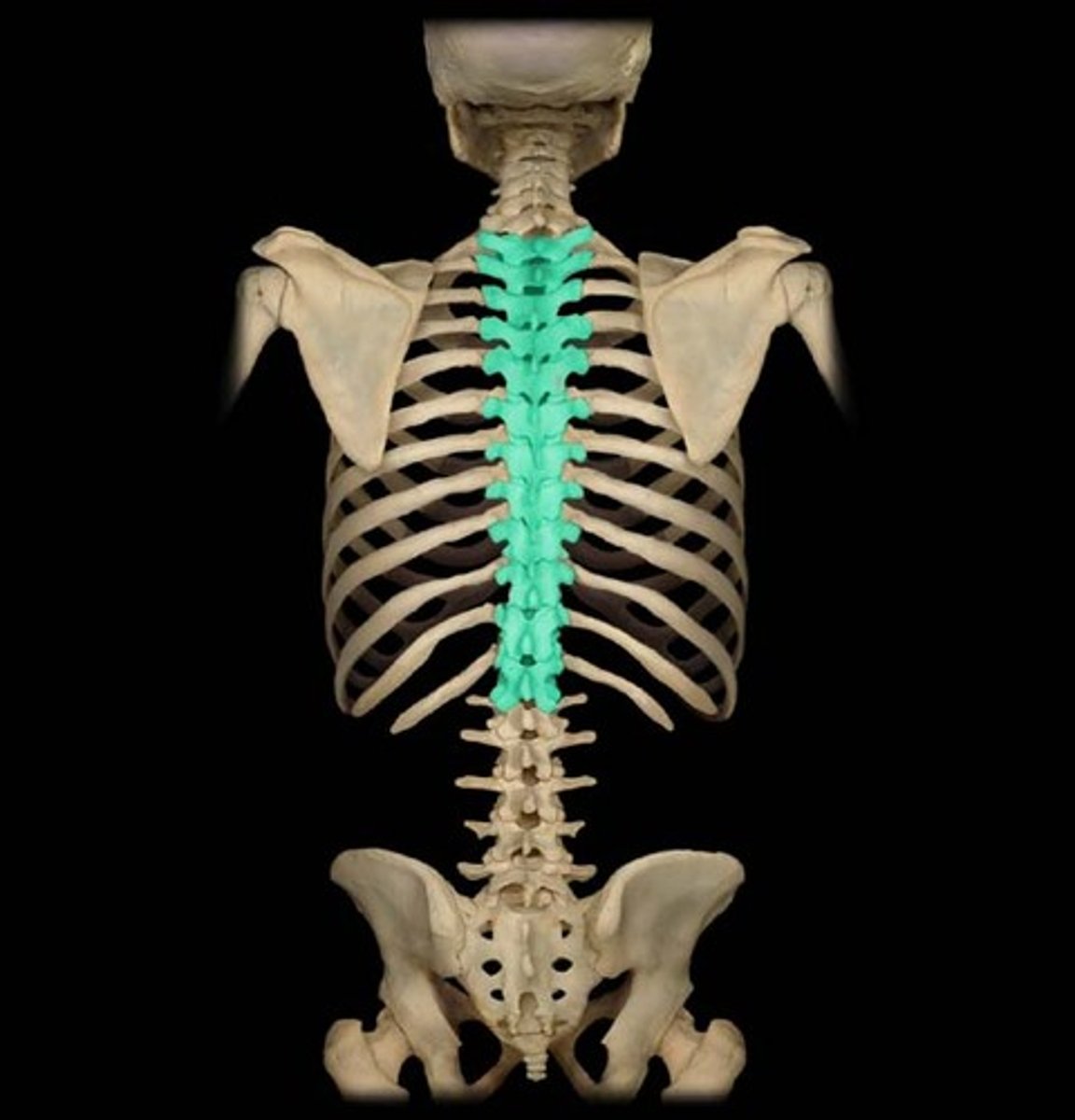
What is the flexible curved structure containing 26 irregular
bones (vertebrae) in five major regions?
Vertebral column
- Cervical vertebrae (7)—vertebrae of neck
- Thoracic vertebrae (12)—vertebrae of thoracic cage
- Lumbar vertebrae (5)—vertebrae of lower back
- Sacrum—bone inferior to lumbar vertebrae
- Coccyx—terminus of vertebral column
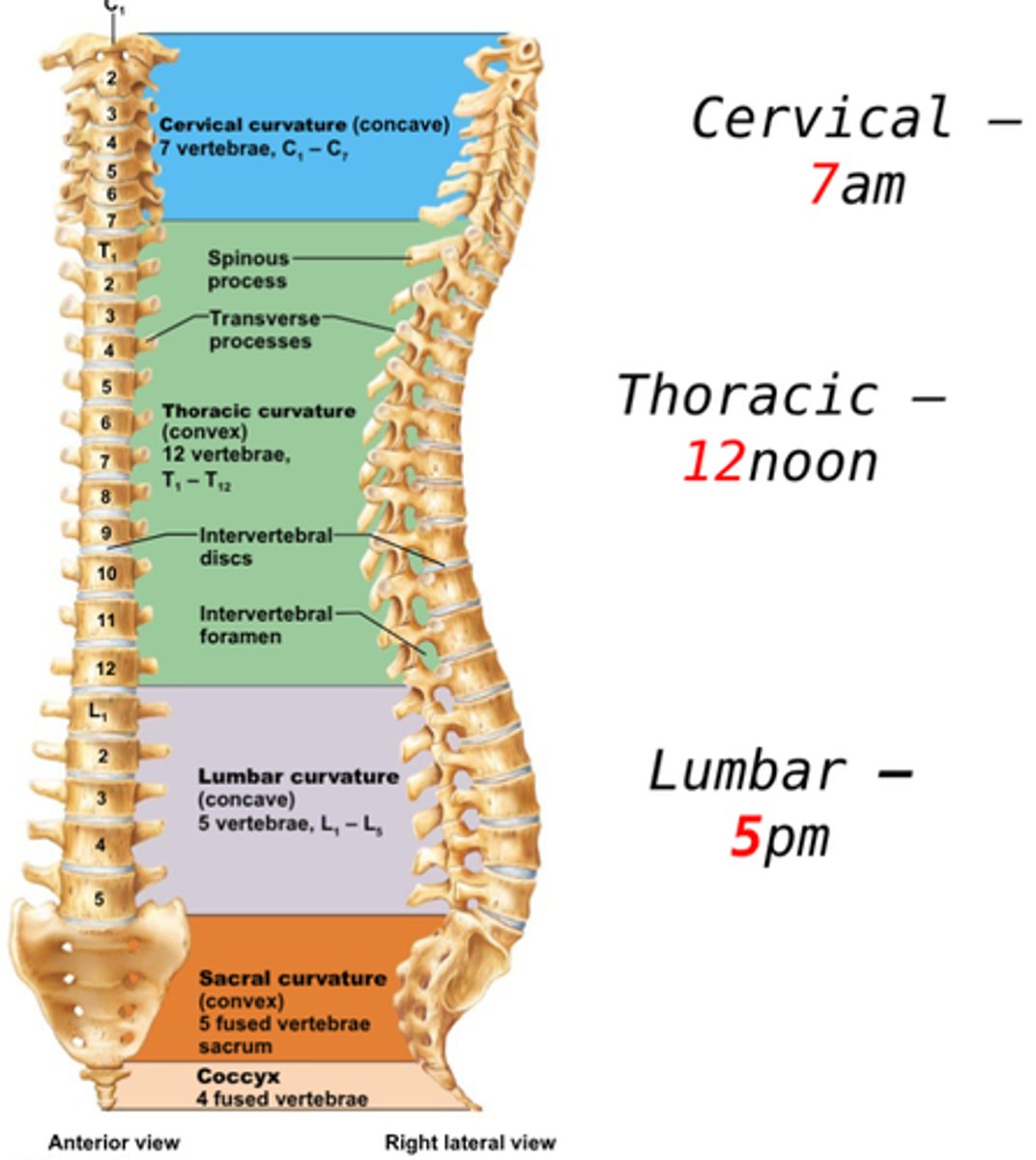
what do cervical and lumbar curvatures do?
Concave posteriorly
what do thoracic and sacral curvatures do?
Convex posteriorly
curvatures
increase resilience and flexibility of spine
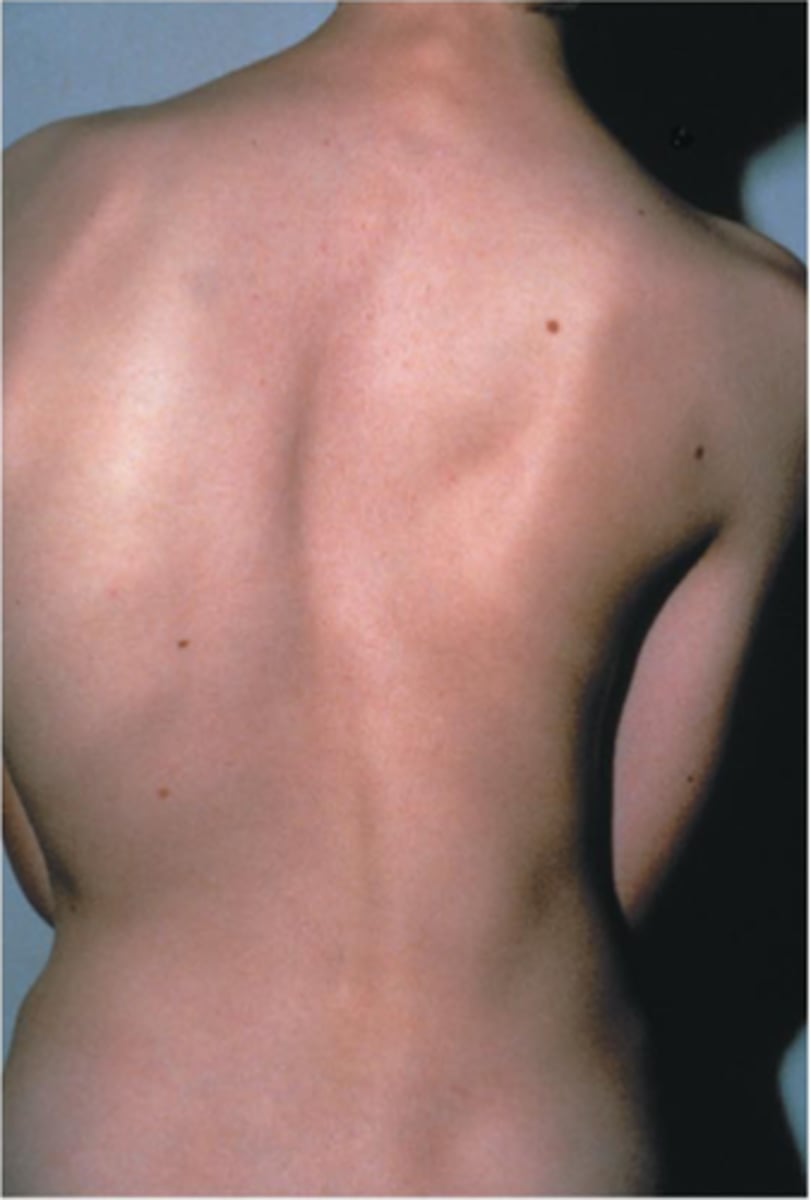
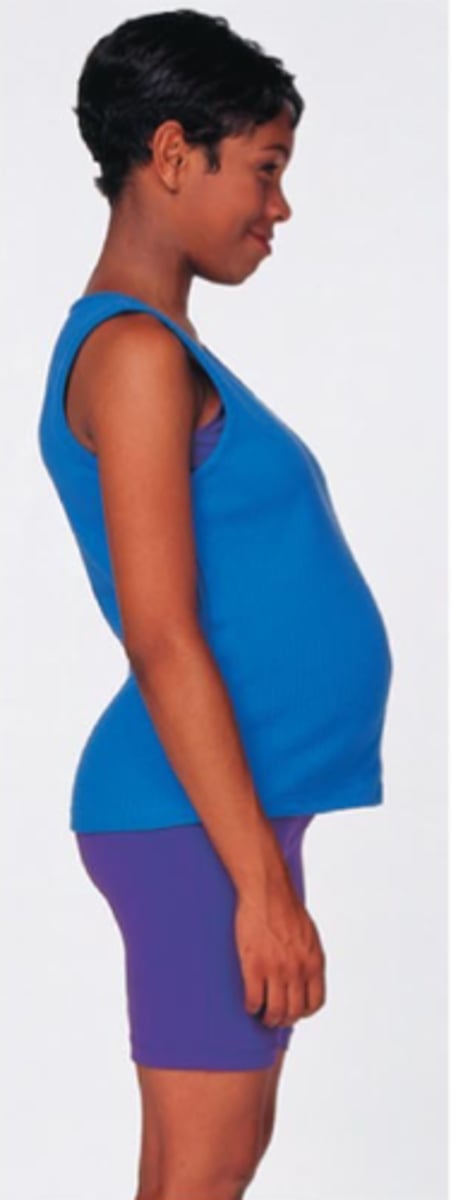
Scoliosis
abnormal lateral curve
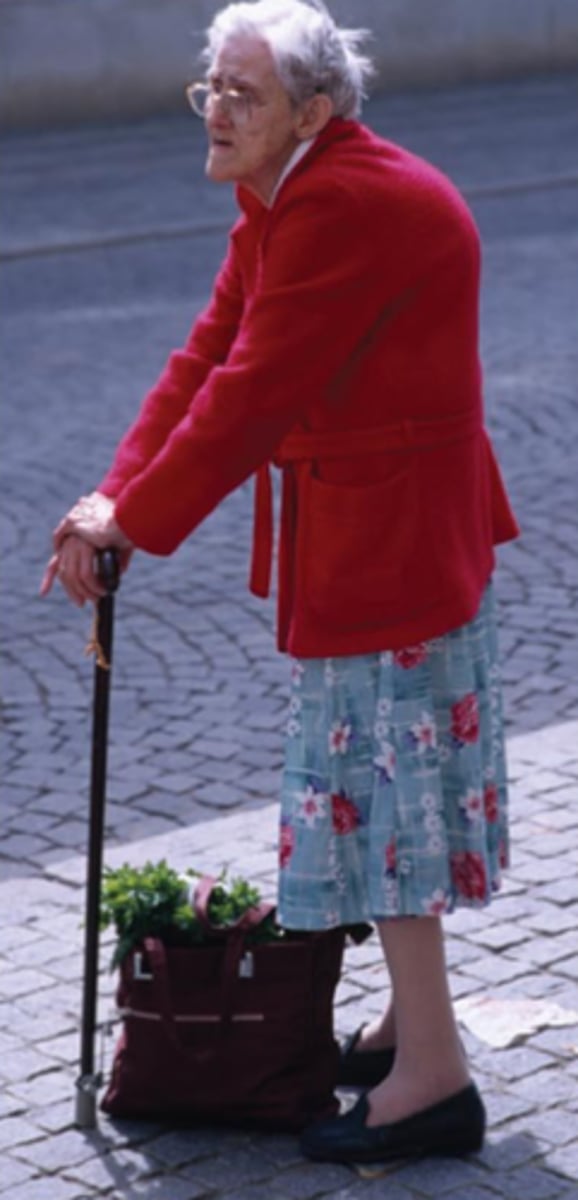
Kyphosis (hunchback)
exaggerated thoracic curvature
Lordosis (swayback)
accentuated lumbar curvature
Ligaments
- From neck to sacrum
- Anterior - stronger prevents hyperextension
- Posterior - narrow and weak, prevents extreme
forward flexion
Ligamentum flavum
Connects adjacent vertebrae
Short ligaments
Connect each vertebra to those above and below
Intervertebral Discs
Cushion-like pad composed of two parts
nucleus pulposus of intervertebral disc
• Inner gelatinous nucleus
• Gives disc its elasticity and compressibility
anulus fibrosus of intervertebral disc
• Outer collar composed of collagen and fibrocartilage
• Limits expansion of nucleus pulposus
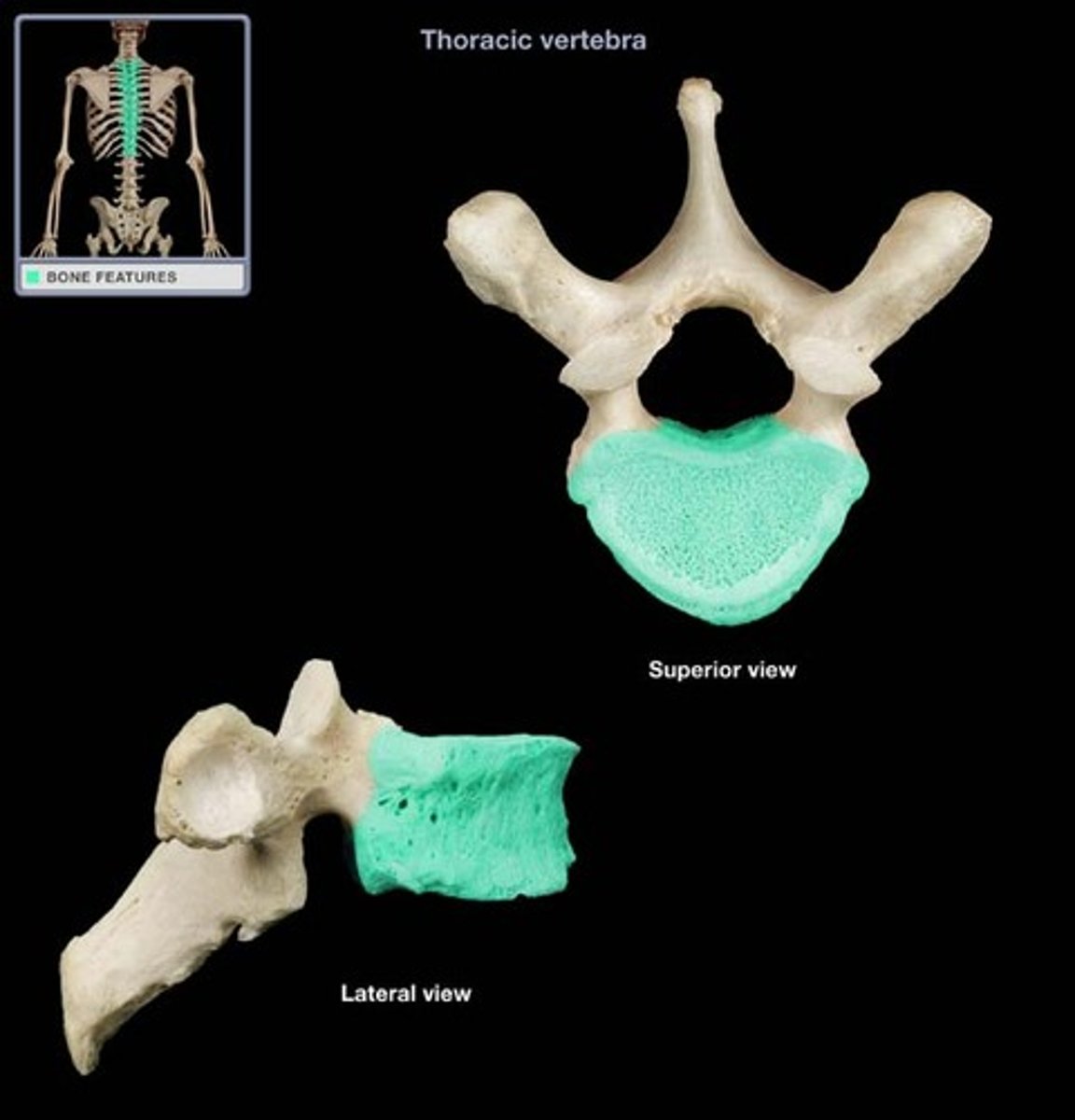
Body or centrum
Anterior weight-bearing region
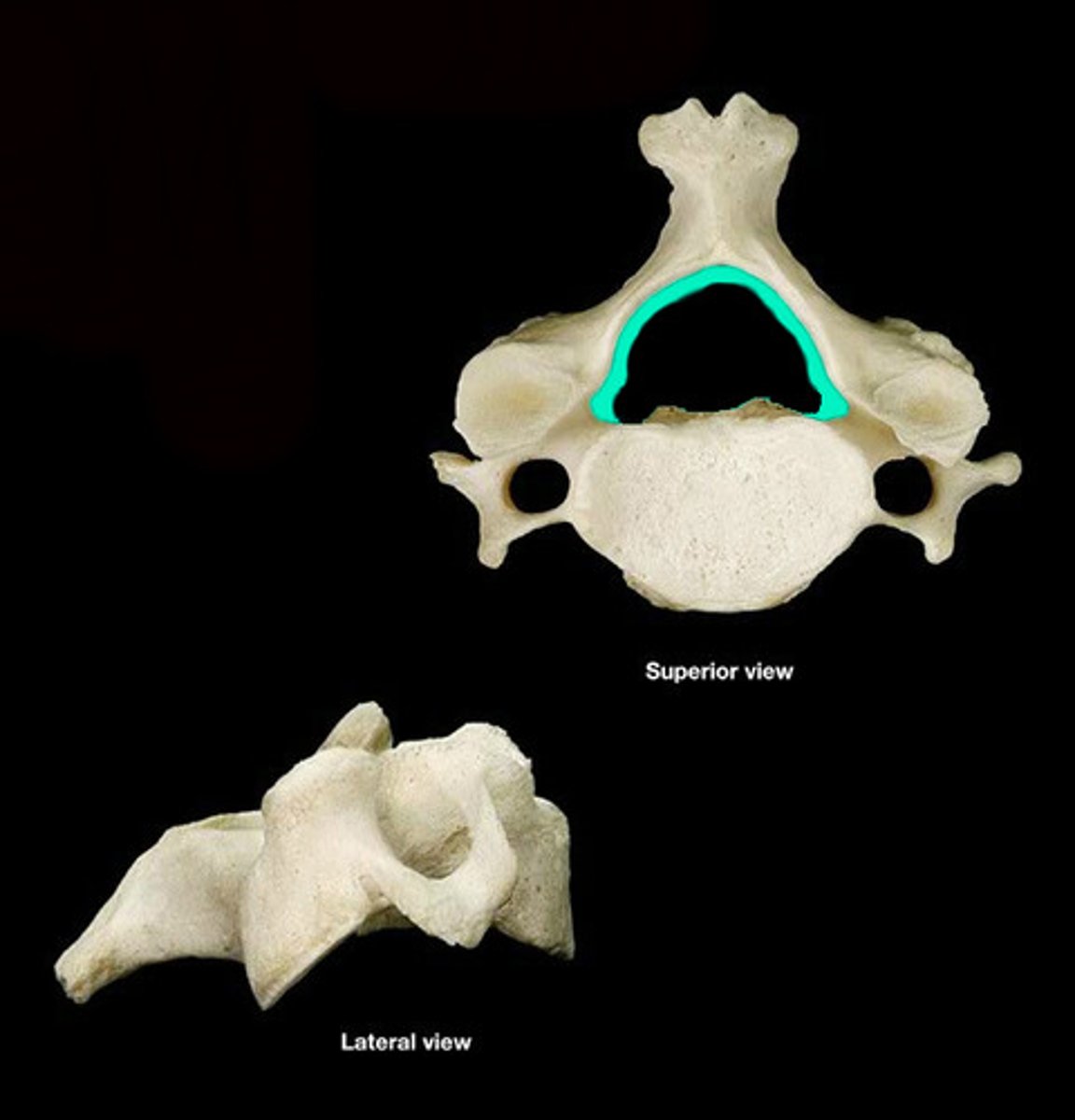
Vertebral arch
Composed of pedicles and laminae that, along with centrum, enclose vertebral foramen
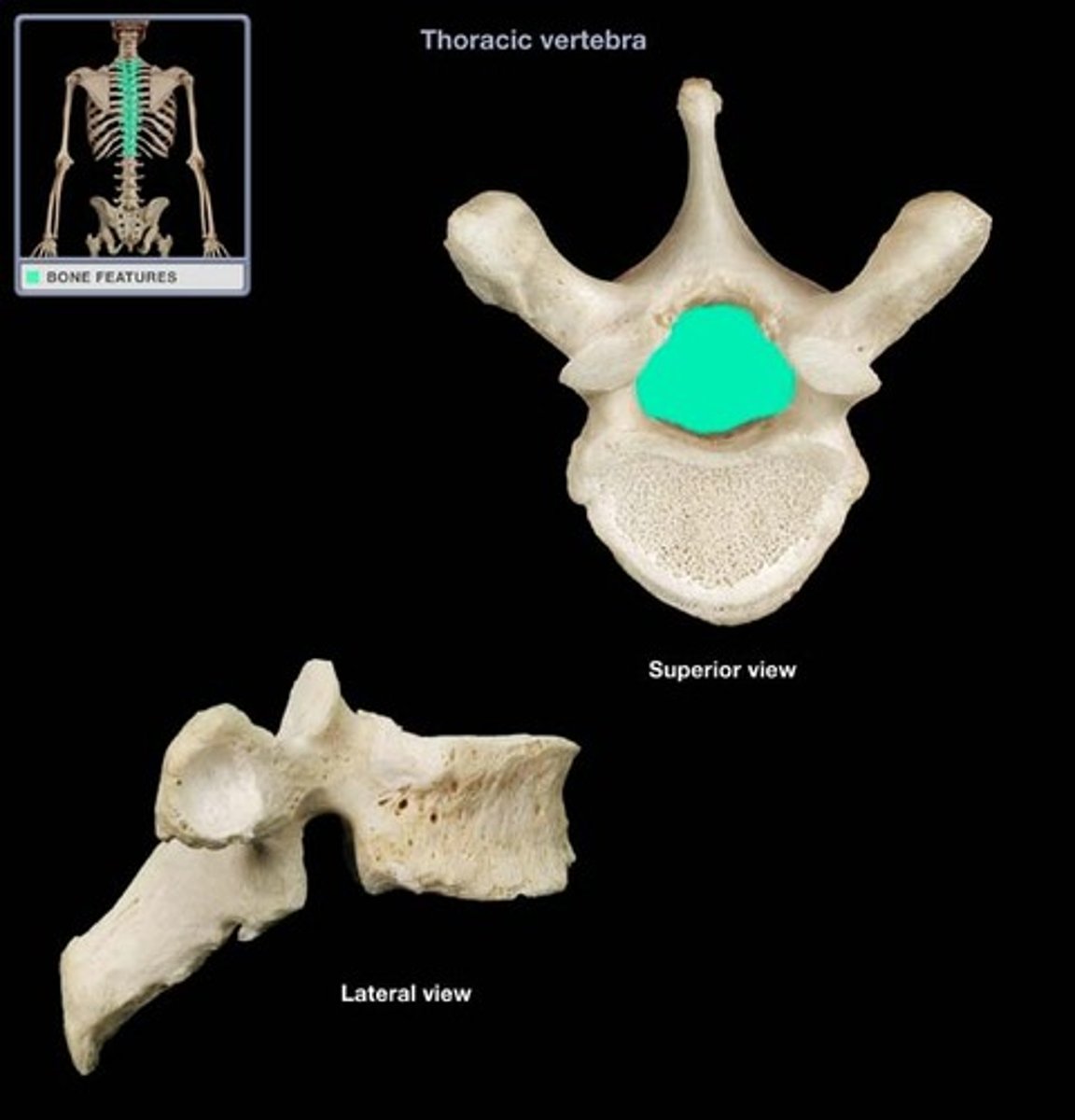
vertebral foramina
Together make up vertebral canal for spinal cord
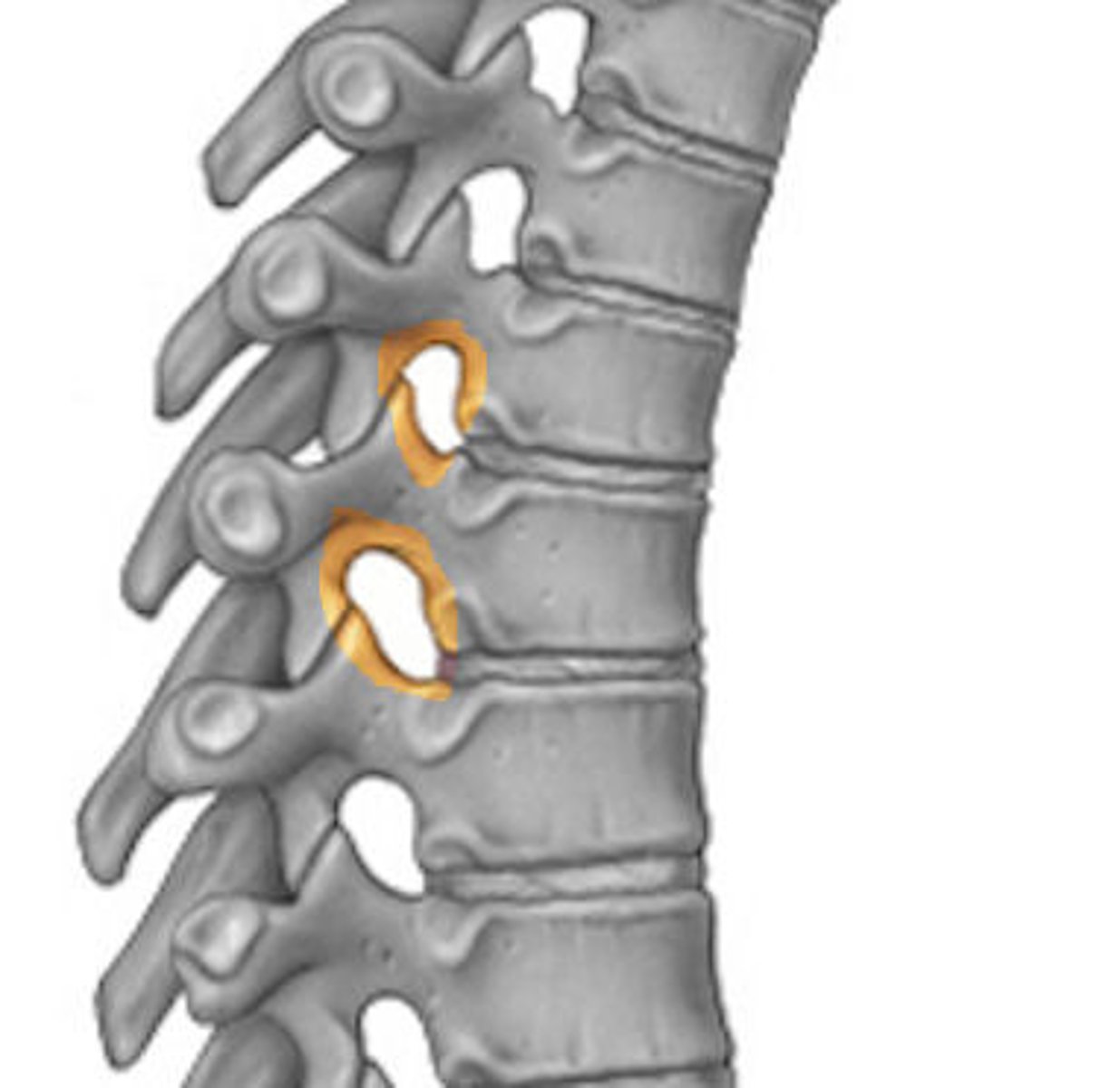
Intervertebral foramina
Lateral openings between adjacent vertebrae for spinal nerves
The primary functions of the vertebral column include ______.
• conducting nervous impulses from the brain
• protection of the spinal cord
• transmission of weight from the trunk to the lower limbs
• both b and c
both b and c
What is the primary function of the intervertebral foramina?
For exit of spinal nerves from the spinal cord
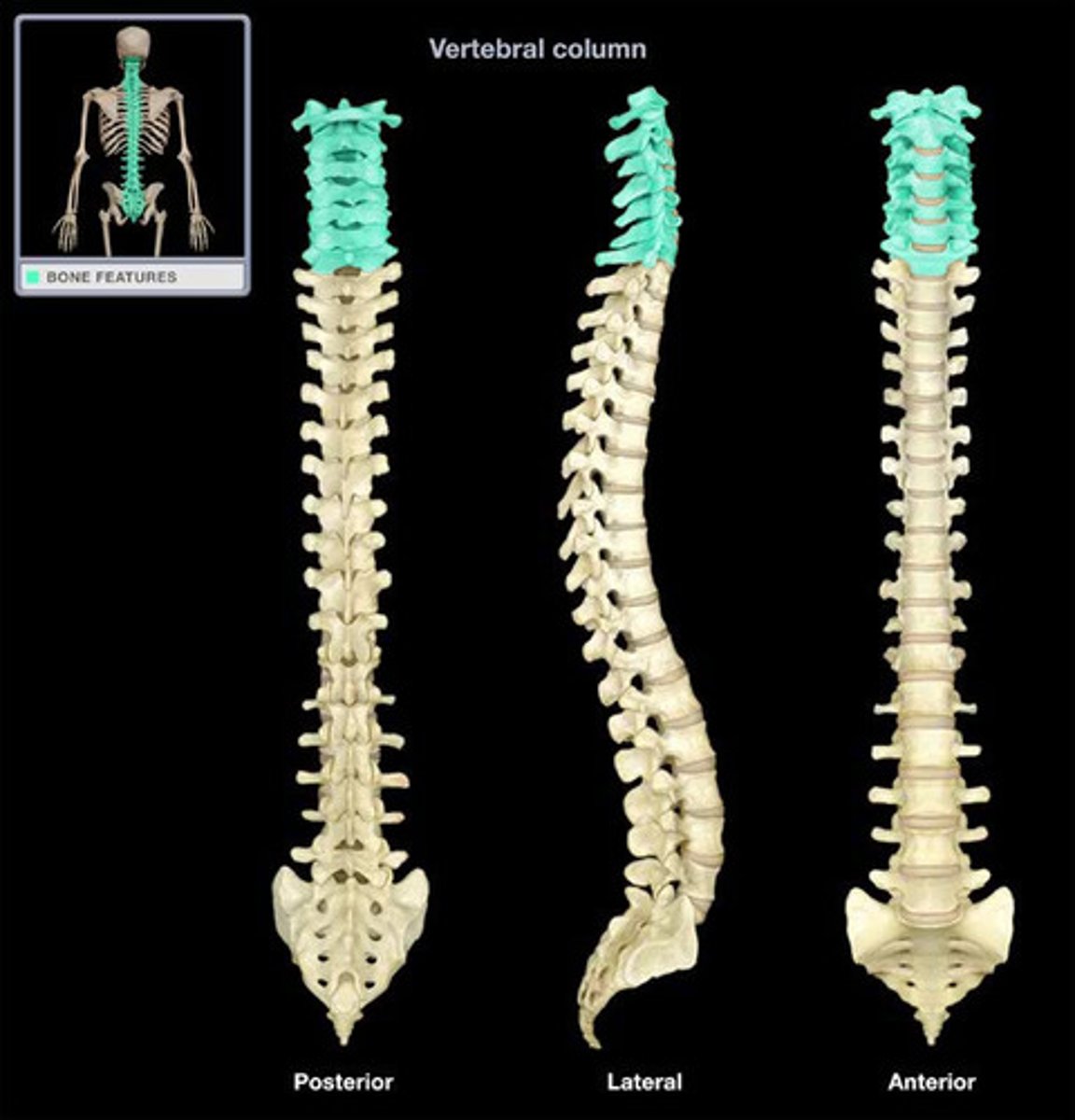
Cervical (C1-C7)
- short spinous process (bifid)
- transverse foramen in transverse processes
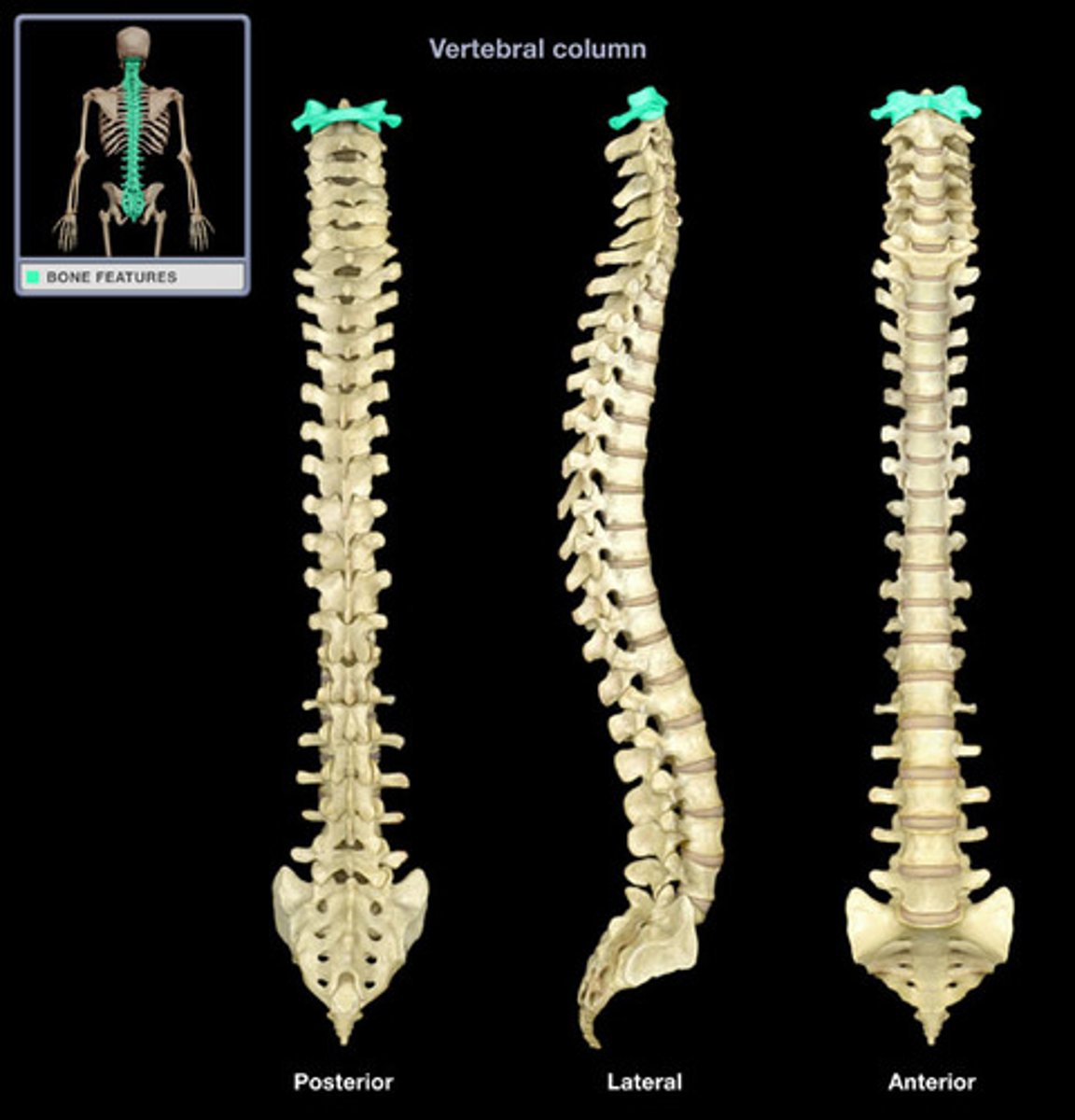
C1
atlas
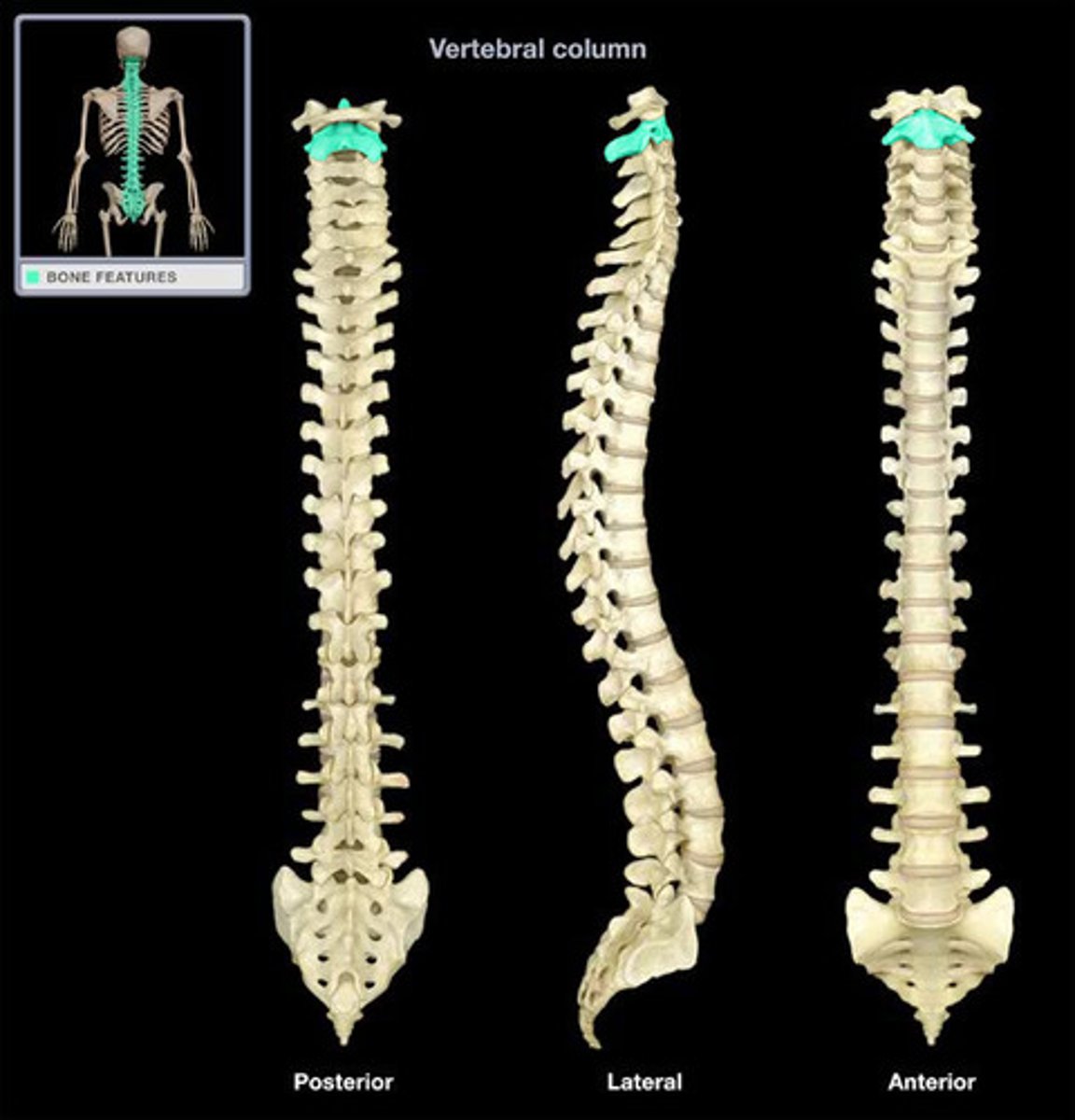
C2
axis
Thoracic (T1-T12)
- long, downward-pointing spinous processes
- articulate with ribs in posterior
- Location of articular facets allows rotation of this area of spine
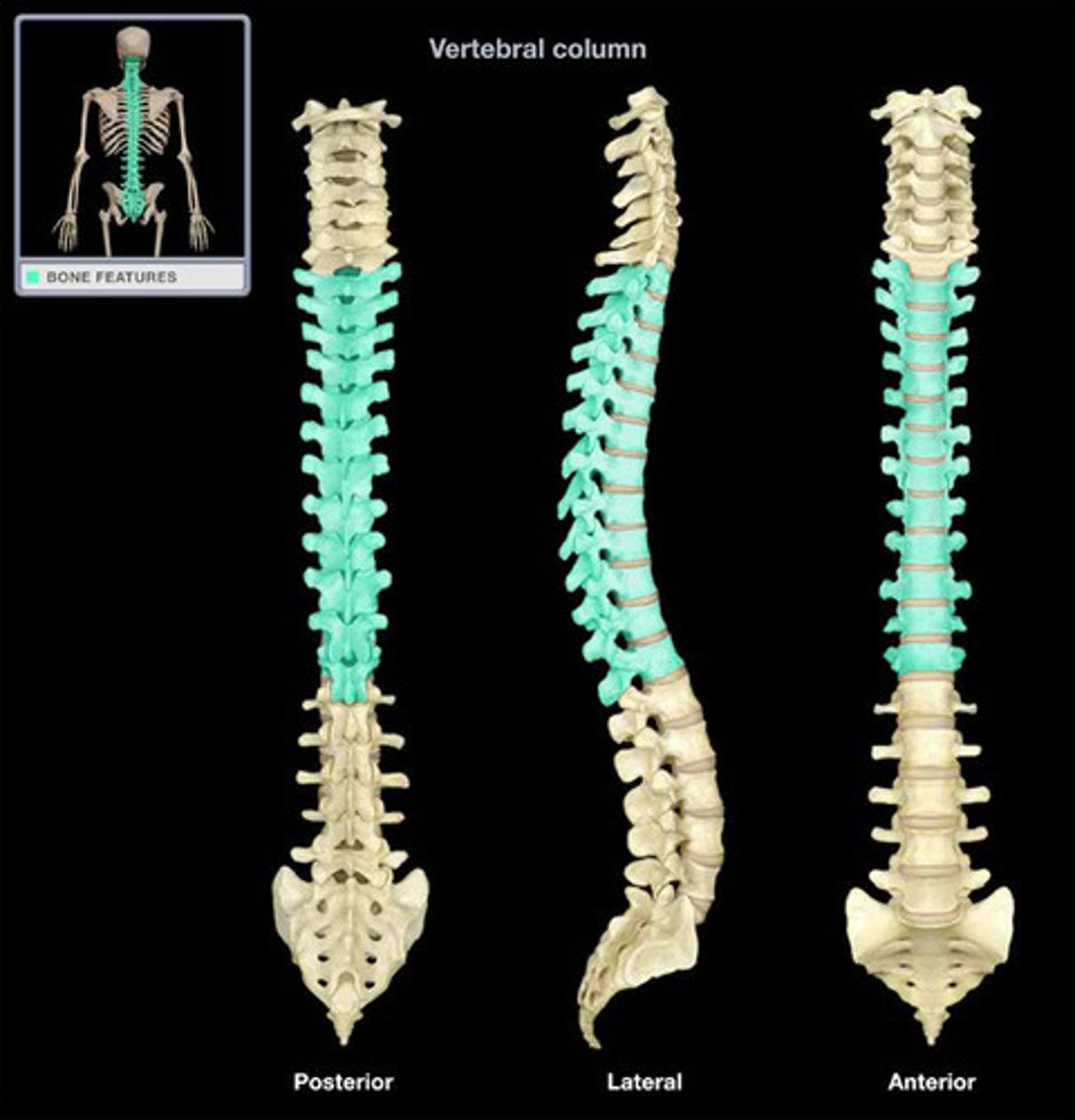
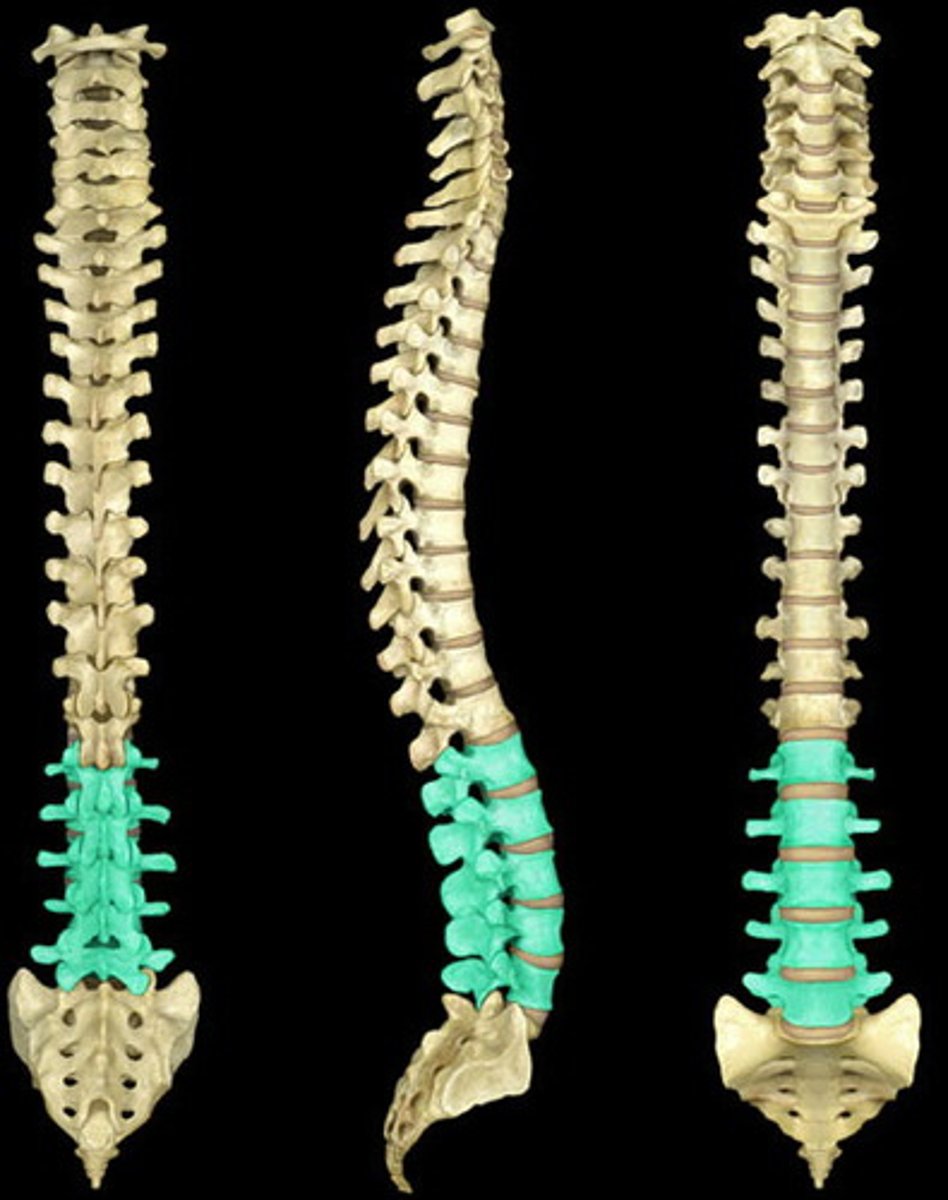
Lumbar (L1-L5)
- short, hatchet-shaped spinous processes
- very large bodies
- receives most stress
- Orientation of articular facets locks lumbar vertebrae together to prevent rotation
Atlas function
- Articulate with occipital condyles
- carries the skull
- Movement for "yes"
Axis function
- Movement for "No"
- No intervertebral disc between atlas and axis
Sacrum
5 fused vertebrae (S1-S5)
- Forms posterior wall of pelvis, completes the ring
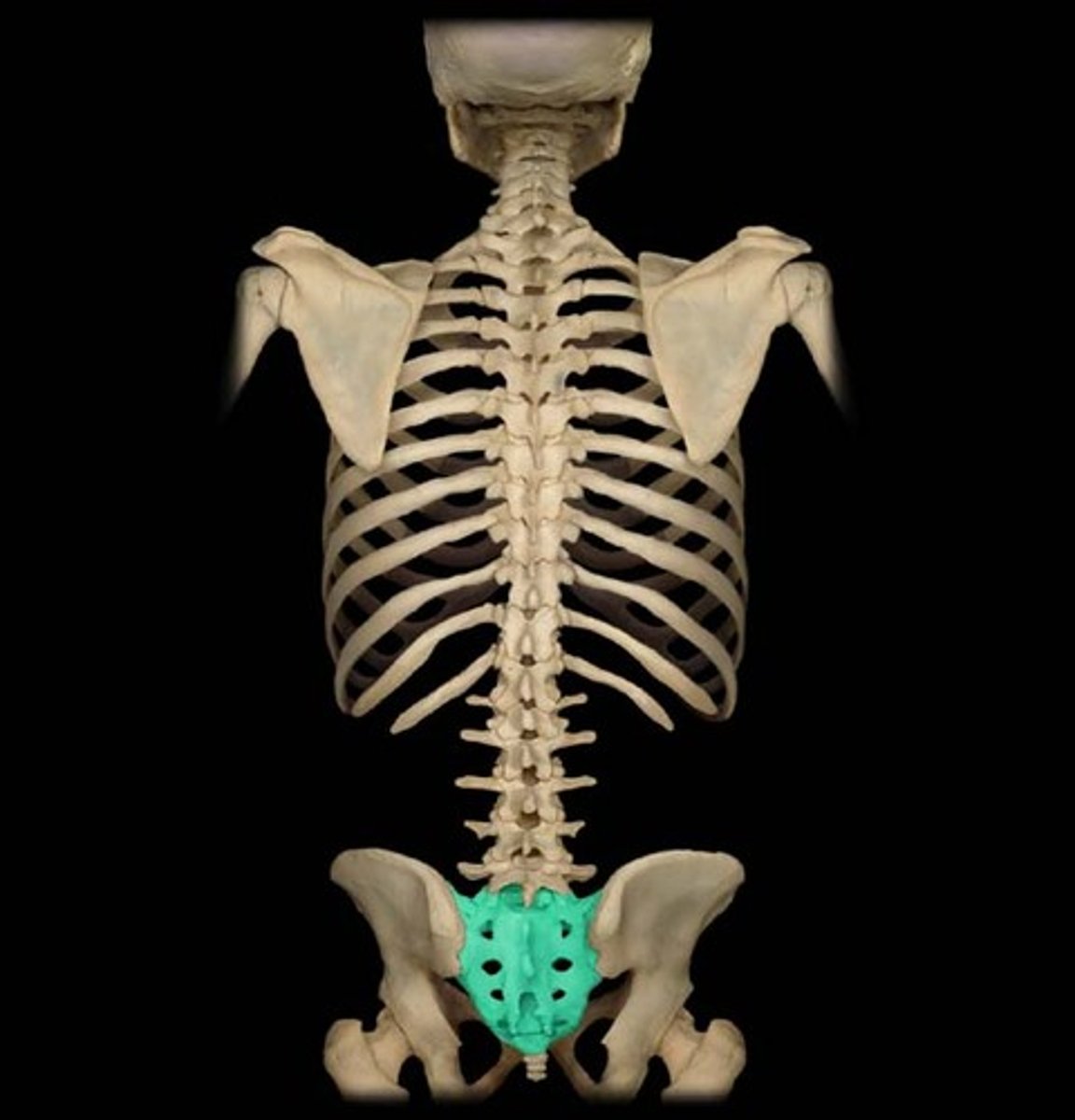
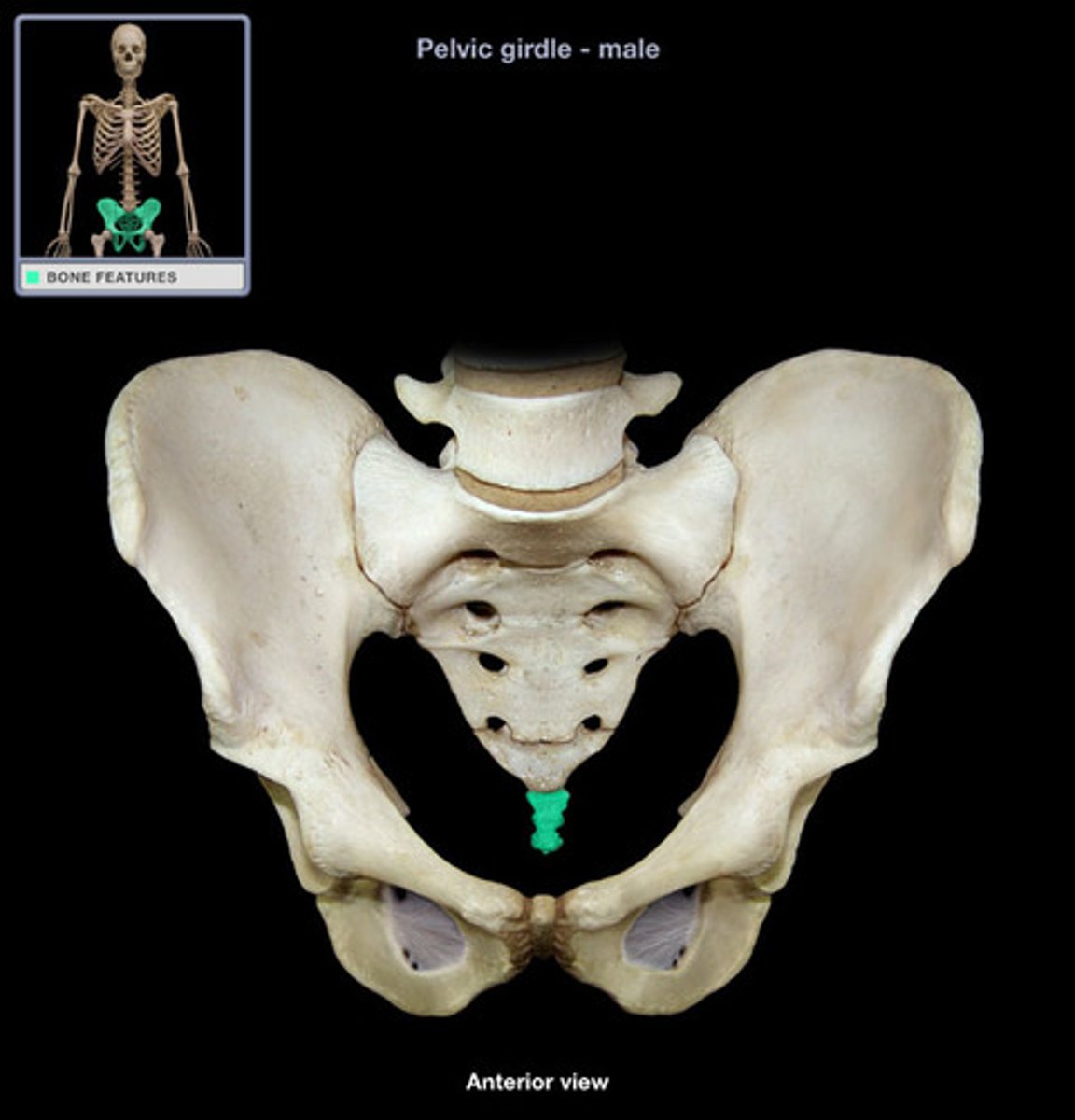
Coccyx
- Tailbone
- 3-5 fused vertebrae
Cervical vertebrae can be uniquely identified by the presence of ______
transverse foramina
The ______ move(s) while nodding "yes," while the ______ stabilize(s) movement
while shaking your head "no."
• axis; atlas
• atlas; axis
• occipital condyles; dens
• dens; occipital condyles
atlis; axis
This group of vertebrae is the only group that articulates with the ribs
Thoracic
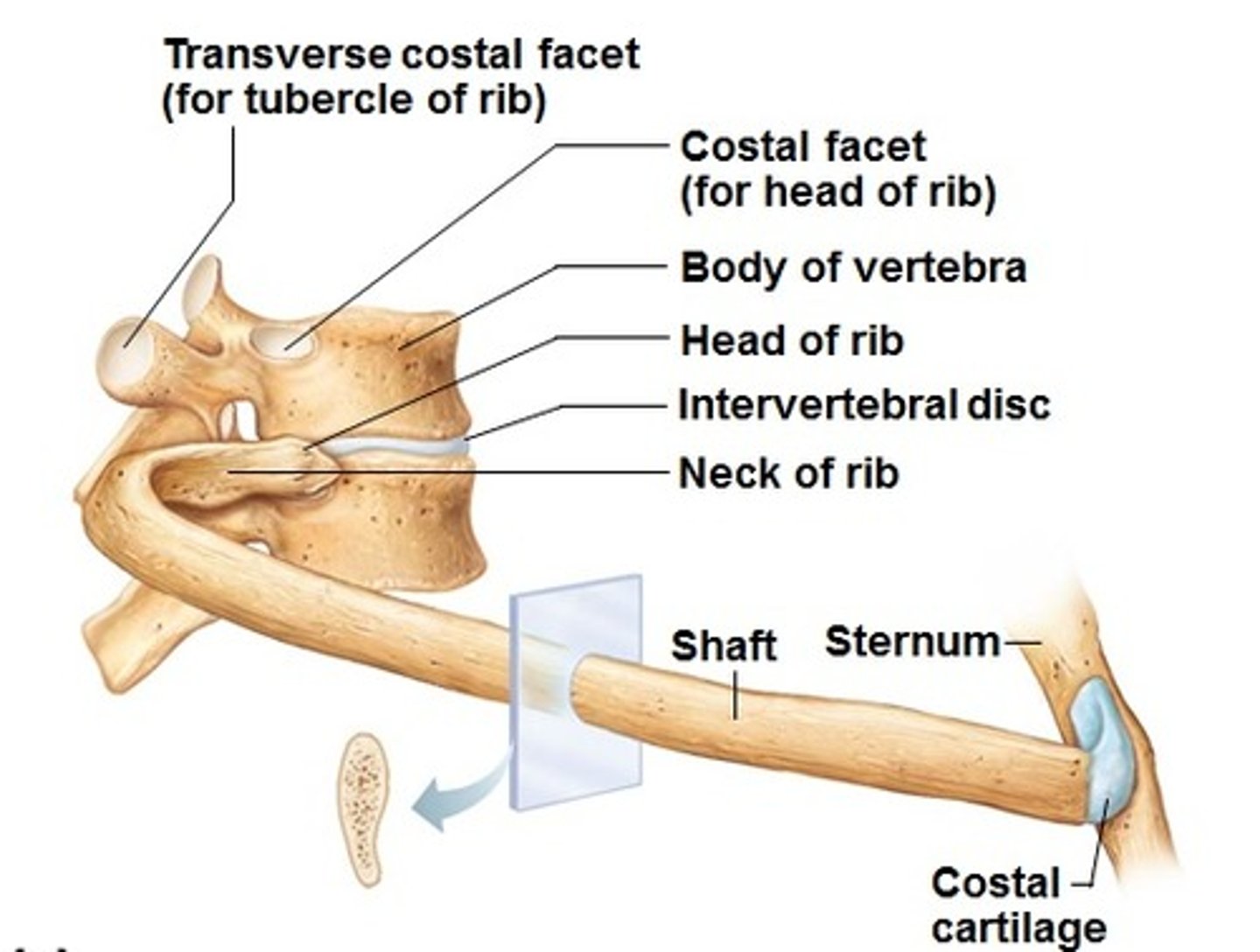
Ribs and Their Attachments
All attach posteriorly to bodies and transverse processes of thoracic vertebrae
Pairs 1 through 7
True ribs - attach directly to sternum via costal cartilage
Pairs 8 through 12
False ribs
Pairs 8-10
Attach indirectly by joining cartilage of rib above
Pairs 11-12 also called floating ribs
No attachment to sternum
Rib structure
Pectoral (shoulder) girdle
clavicle and scapula
Pelvic (hip) girdle
ilium, ischium, pubis
the upper limb
30 bones form skeletal framework of each upper limb
Arm
Humerus
Forearm
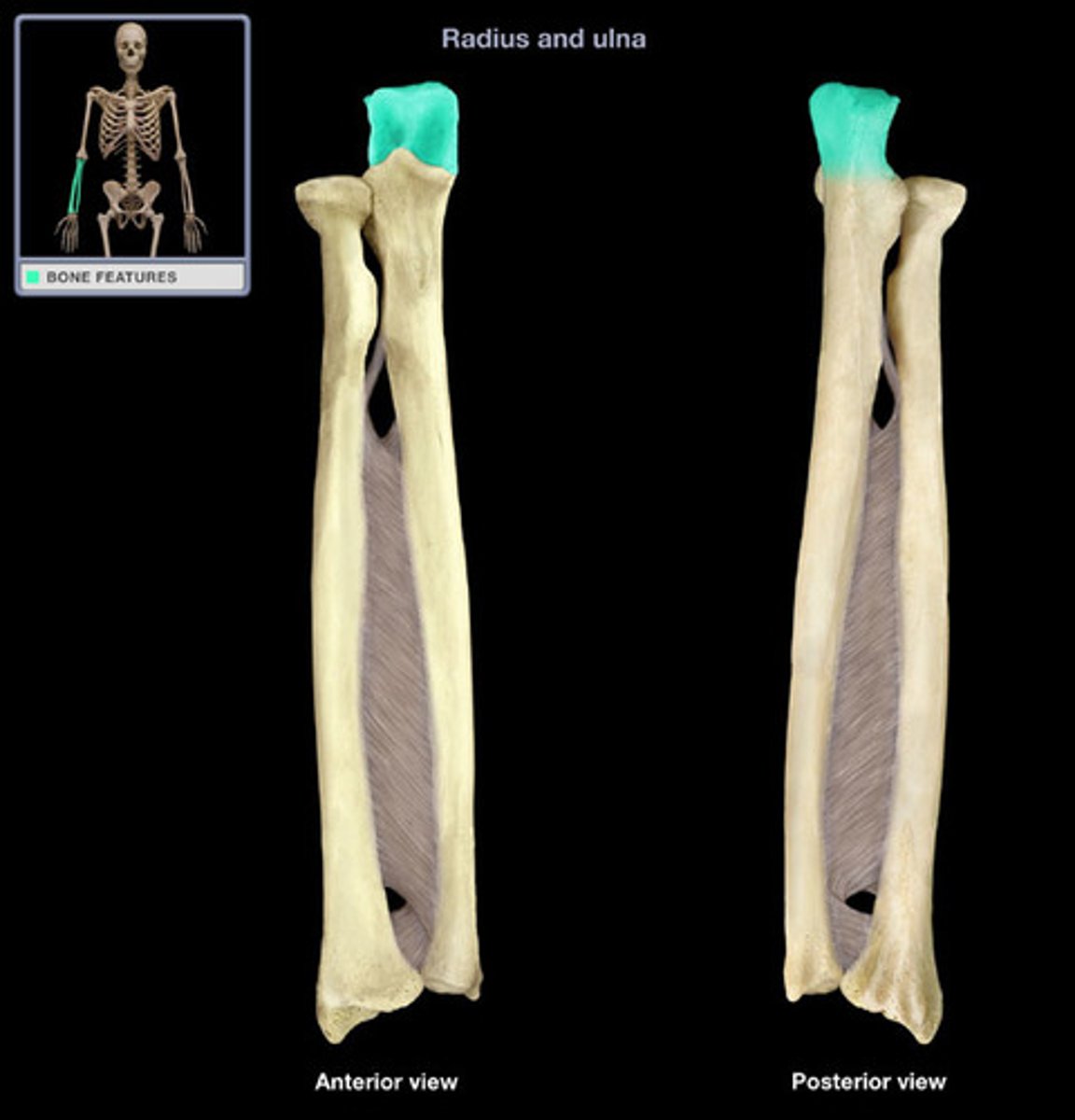
Radius and ulna
Hand
• 8 carpal bones in the wrist
• 5 metacarpal bones in the palm
• 14 phalanges in the fingers
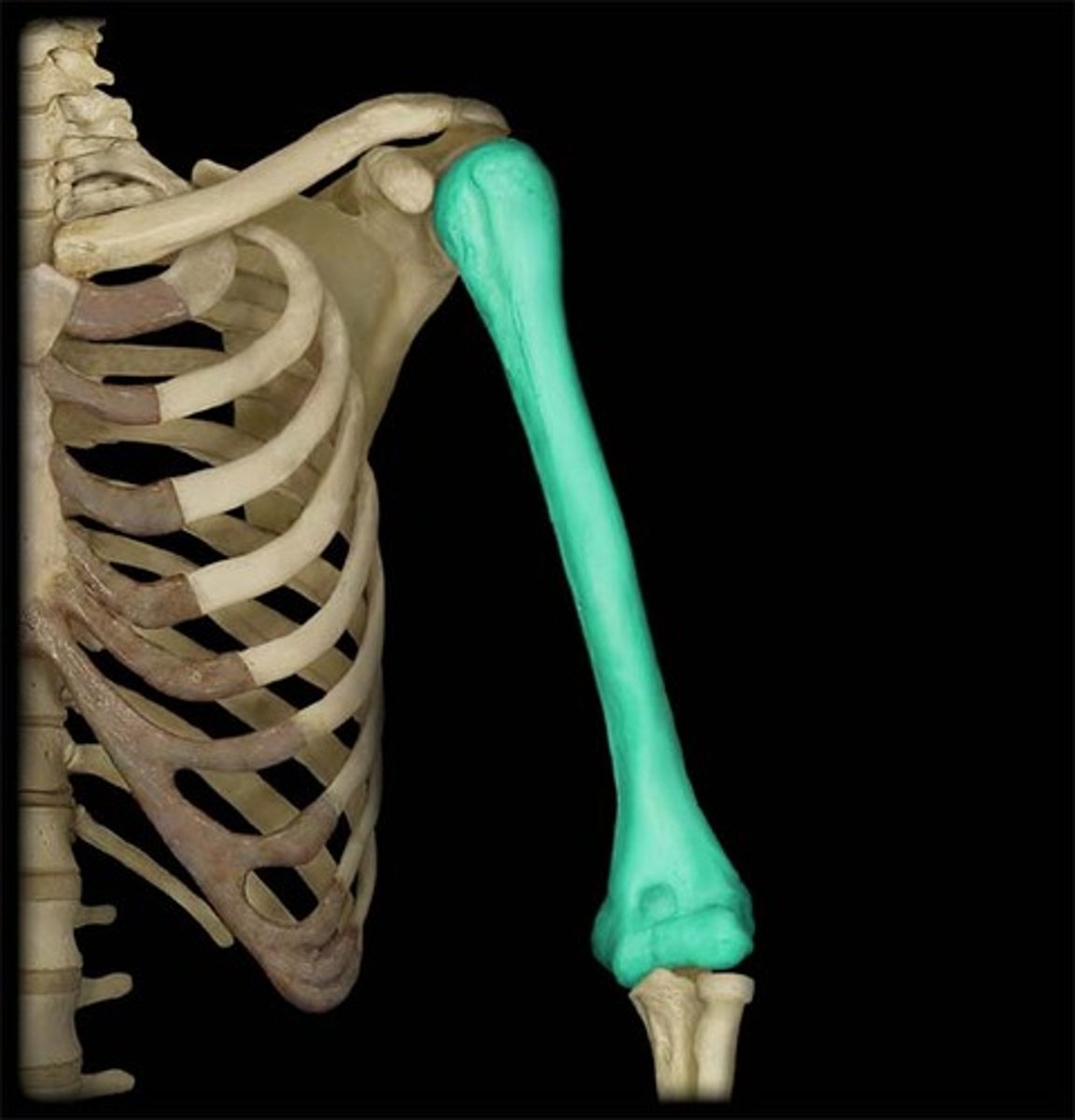
Humerus
• Articulates superiorly with glenoid cavity of scapula
• Articulates inferiorly with radius and ulna
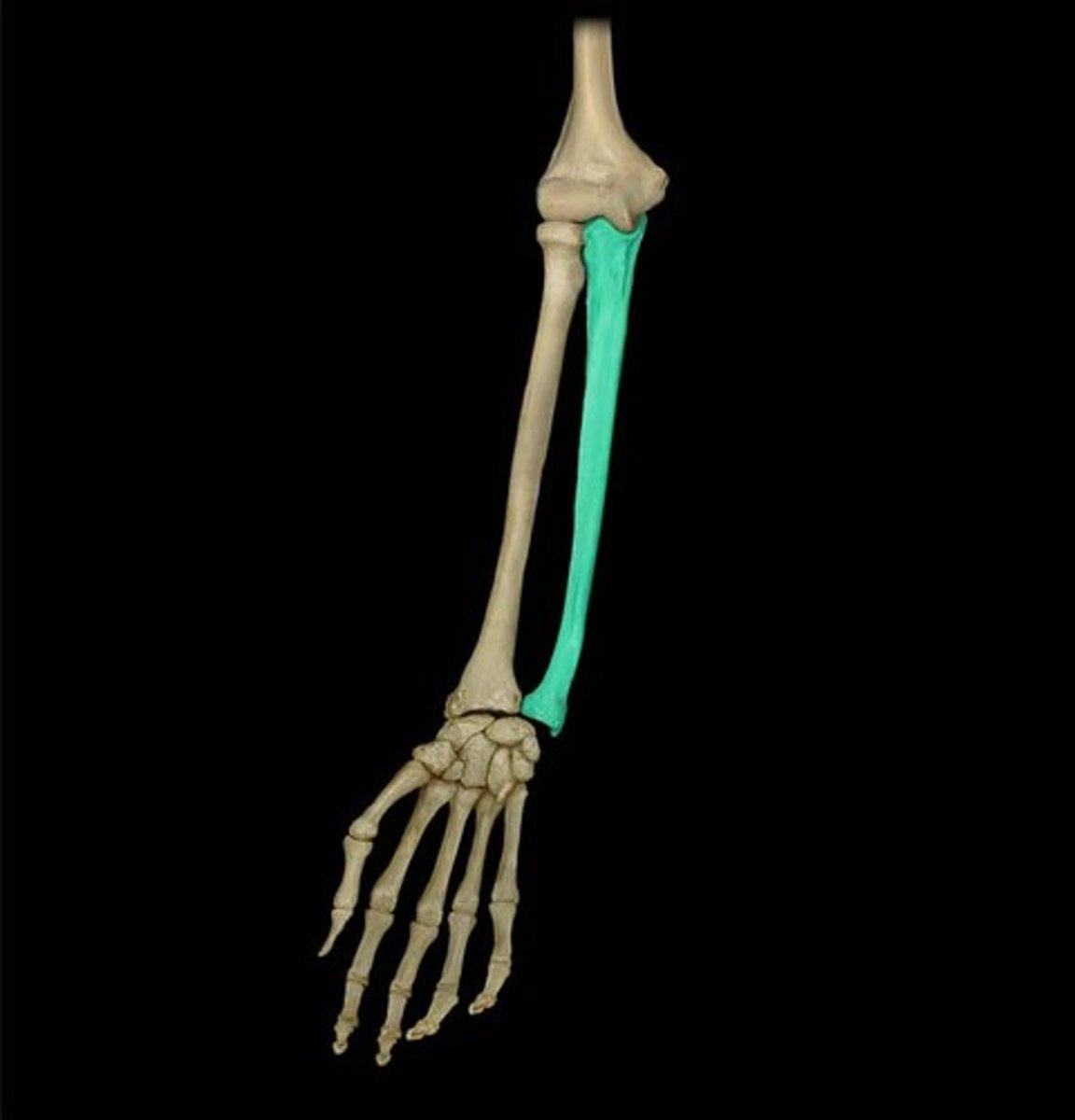
Ulna
- Medial bone in forearm
- Forms major portion of elbow jt with humerus
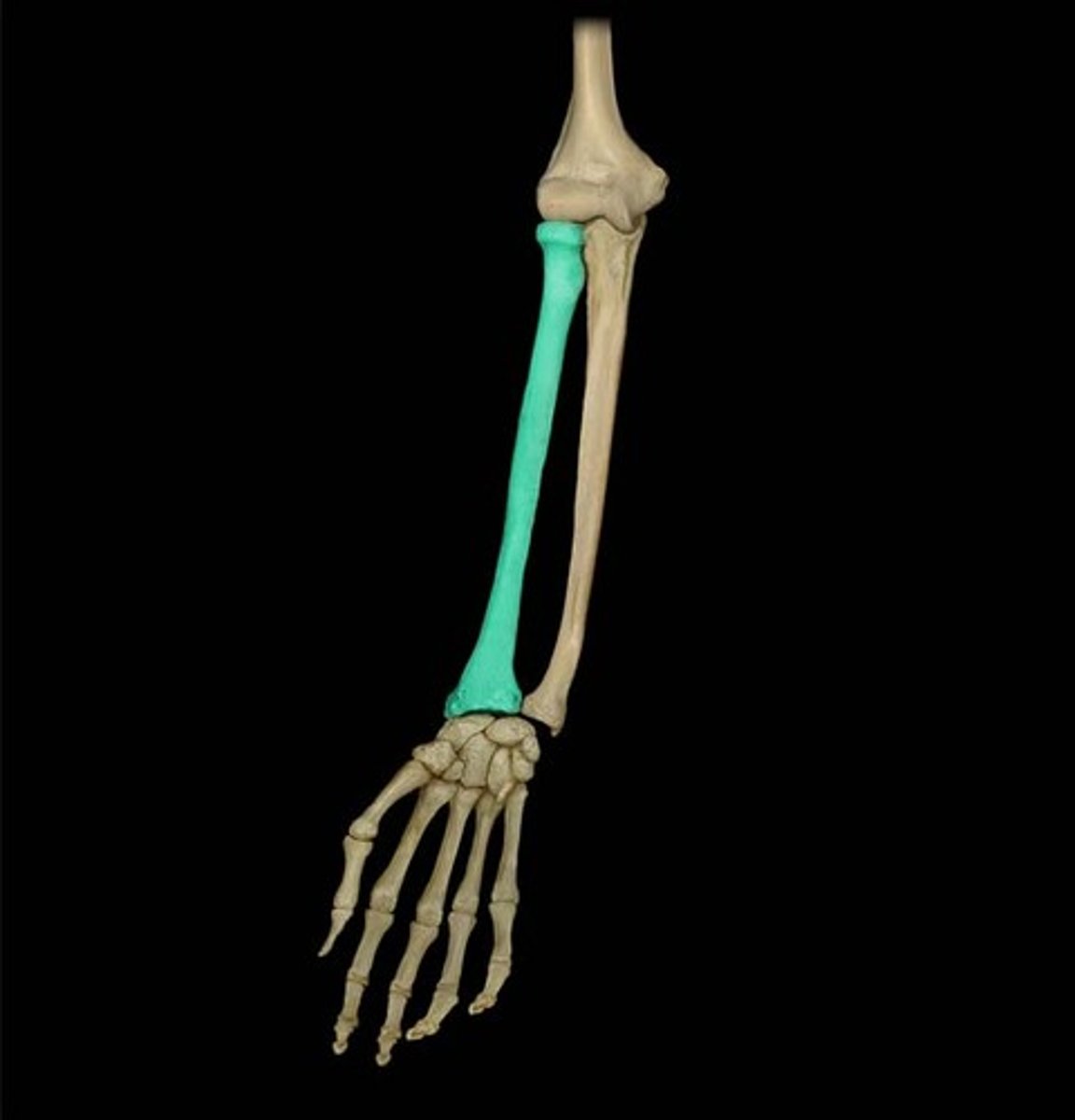
Radius
- Lateral bone in forearm
- Forms major portion of wrist jt
- Head articulates with capitulum of humerus and radial notch of ulna
Carpus (Wrist)
- Eight bones in two rows
proximal row of carpals
lateral to medial
- Scaphoid, lunate, triquetrum, and pisiform
Distal row
lateral to medial
- Trapezium, trapezoid, capitate, and hamate
Metacarpus
bones of the palm of the hand
Phalanges
bones of the fingers and toes
Children are often told to keep this process off the table while eating
Olecranon