Major Amino Acids + MCAT Biochem: Amino Acids + Proteins
 View linked note
 Call Kai
 Learn
Learn Practice Test
 Spaced Repetition
 Match
Match Flashcards
 Knowt Play
1/76

There's no tags or description
Looks like no tags are added yet.
Name | Mastery | Learn | Test | Matching | Spaced | Call with Kai |
|---|
No analytics yet
Send a link to your students to track their progress
77 Terms
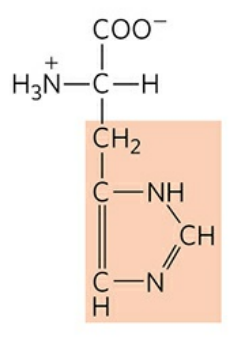
Histidine: structure, pKa
Abbreviation: His, H
pKa of R group: 6.0
will exist as either protonated or deprotonated at physiological pH given how close it is (pH = 7.4)
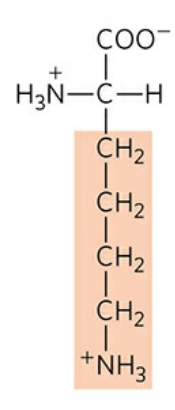
Lysine: stucture, pKa
Abbreviation: Lys, K
pKa of R group: 10.5
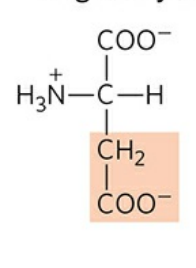
Aspartic Acid/ Aspartate: Structure, pKa
Abbreviation: Asp, D
pKa of R group: 3.9
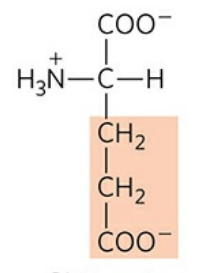
Glutamic Acid/ Glutamate
Abbreviation: Glu, E
polar (hydrophilic) amino acid
pKa of R group: 4.1
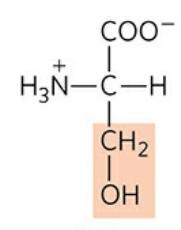
Serine
Abbreviations: Ser, S
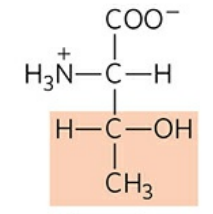
Threonine
Abbreviation: Thr, T
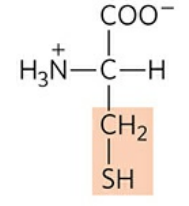
Cysteine
pKa of R group: 8.4
Abbreviation: Cys, C
only amino acid in R configuration (others in S-configuration)
Extracellular space is oxidizing, favoring formation of disulfide bridges
Intracellular space is reducing, favoring cysteines
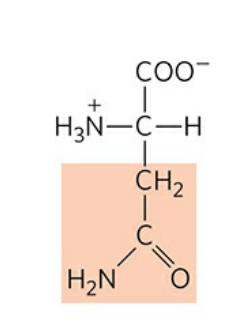
Asparagine
Abbreviation: Asn, N
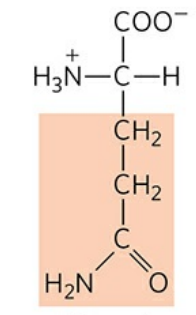
Glutamine
Abbreviation: Gln, Q
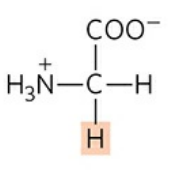
Glycine
Abbreviations: Gly, G
One of the alpha helix breakers since it has two Hs, making it not optically active
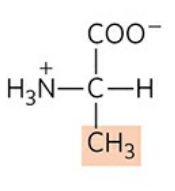
Alanine
Abbreviation: Ala, A
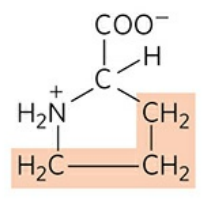
Proline
Abbreviations: Pro, P
One of two amino acid to be “alpha helix breakers“ due to flexible structure, inhibiting bond formation
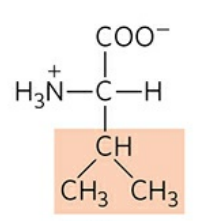
Valine
Abbreviation: Val, V
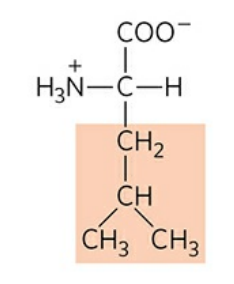
Leucine
Abbreviation: Leu, L
Hydrophobic (Nonpolar)
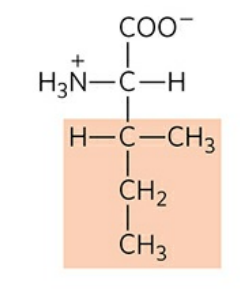
Isoleucine
Abbreviation: Ile, I
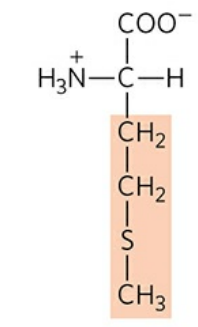
Methionine
Abbreviation: Met, M
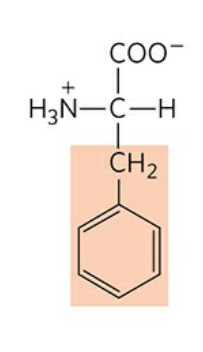
Phenylalanine
Abbreviation: Phe, F
Nonpolar, aromatic
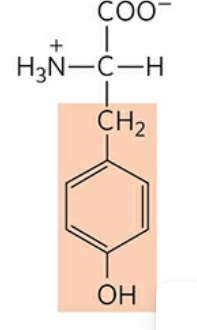
Tyrosine
Abbreviation: Tyr, Y
pKa of R group: 10.5
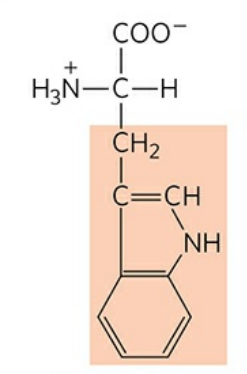
Tryptophan
Abbreviation: Trp, W
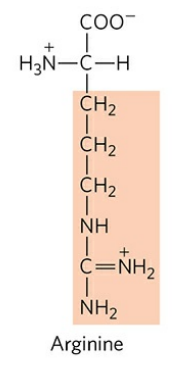
Arginine: structure, pKa
Abbreviation: Arg, R
pKa of R group: 12.5
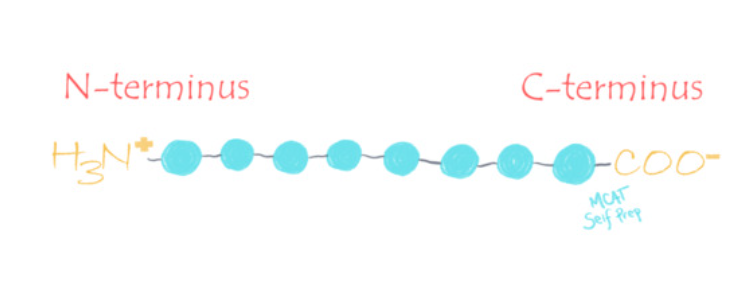
N-terminus vs C terminus
The N-terminus includes the first amino acid of a protein, which has a free amino group at this end of the polypeptide chain. This is made first.
The C-terminus includes the final amino acid of a protein, and is therefore where synthesis of a polypeptide ends. There is a free carboxyl group at this end of the polypeptide chain.
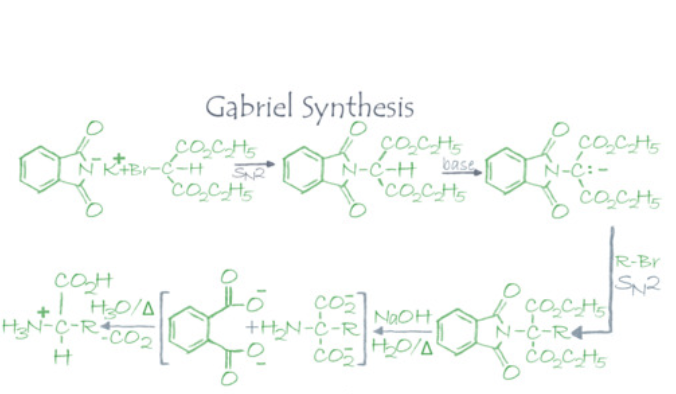
Gabriel Synthesis
The gabriel synthesis starts with N-pthalamidomalonic ester "Thad", which protects both the amine group and carboxylic acid. The alpha-carbon will be alkylated, hydrolyzed, and then heated for a decarboxylation.
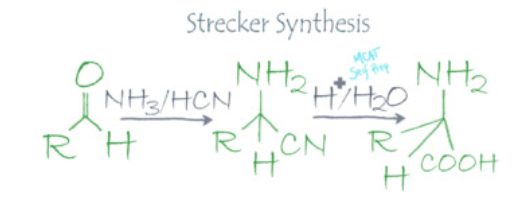
Strecker Synthesis
The strecker synthesis is much more simple and efficient. It starts with ammonia, KCN, and an aldehyde/ketone. The aldehyde/ketone and ammonia will react to form an imine, which in acid with KCN will form a nitrile, and hydrolysis in acid will yield the alpha-amino-acid.
What is most likely to occur if a patient with HIV is administered a medicinal drug that deactivates the enzyme reverse transcriptase?
Rate of survival would increase.
Would increase because HIV spreads using reverse transcriptase, so blocking it would prevent the spread.
How to calculate the pI of a Neutral R group
the pI is the average of the carboxylic acid group and amino group pKa values.
How to calculate the pI of an Acidic R group
the pI is the average of the carboxylic acid group and side chain pKa values.
How to calculate the pI of a Basic R group
the pI is the average of the amino group and side chain pKa values.
Peptide bonds are broken via
hydrolysis reactions
Peptide bonds are formed via
condensation reactions
Acidic polar amino acids have what group
Carboxyl group
Residue
Single amino acid in a polypeptide chain because some of the molecules of the amino acid are lost in the condensation reaction to form peptide bonds, leaving a "residue" behind.
Conformational protein
active and properly folded protein
When will the amino acid be fully protonated?
At a low pH, the amino acid will be fully protonated with a positive net charge.
When will the amino acid be fully deprotonated?
At a high pH, the amino acid will be fully deprotonated with a negative net charge.
Benefit of linear polymer structure
The linear polymer structure of DNA, RNA, and protein helps to transfer and preserve the encoding of information during transcription and translation.
Which of the following terms best describes the amino acids that are coded for in the human genetic code?
Proteinogenic Amino Acids
Zwitterions
When a compound has two ions of opposite charges
2 < pH < 9
Peptide bond
A bond formed between two amino acids through a condensation reaction.
Reverse transcriptase
converts RNA to DNA
RNA viruses
viruses that have genetic information encoded as RNA, not DNA
Can be used directly by host cell machinery like it was mRNA
Or can be converted into a complementary strand
Like COVID-19
ncRNA
can directly be used to perform tasks for the cell
rRNA and tRNA are both examples, and they help contribute to translation of messenger RNA into proteins
Examples of DNA modification
DNA methylation and histone modification
alpha carbon
carbon adjacent to a carbonyl group (not the carbon actually bonded to the oxygen)
Proteolytic cleavage:
cleavage of amino acids and normally has high specificity
Chirality
refers to optical activity (if active, it would result in the carbon rotating towards any present light)
Isoelectric point
pH where the acid will be neutral (no charge)
pKa
: when the amino acid is equally protonated and deprotonated
Alkyl amino acids
Glycine
Alanine
Valine
Leucine
Isoleucine
Proline
Methionine
Aromatic, nonpolar amino acids
Tryptophan
Phenylalanine
Neutral, polar amino acid
Serine
Threonine
Cysteine
Glutamine
Asparagine
Tyrosine
Basic amino acid
Lysine
Arginine
Histadine
Acidic amino acid
Glutamate
Aspartate
Hydrophobic effect
hydrophobic compounds pack together to form circles in polar compounds
Also means that water molecules try to maximize hydrogen bonding surrouding the hydrophobic cells (THEY DON’T FORM SOLVATION LAYERS)
Hydrophobic side chain
more CHs means that the compound is more hydrophobic and electronegative
Ionizable amino acids
Glutamate
Aspartate
Histidine
Cysteine
Lysine, Tyrosine, Arginine
Primary structure of proteins
sequence of amino acid chain linked by peptide bonds
Secondary structure of proteins
close (backbone) interactions between the different parts of the amino acid chain
Based on hydrogen bonds
Uses alpha helices and beta-pleated sheet
Tertiary Structure of proteins
higher order protein folding (overall 3D structure)
Based on distant interactions in the polypeptide
Hydrophobic interactions
Disulfide bridge interactions
Van der Waals interactions
hydrophobic effect driving the structure through long distance interactions on distant amino acids
Quaternary structure of proteins
based on interactions between polypeptides
using bonds
Hydrophobic interactions
Disulfide bridge interactions
Van der Waals interactions
Hydrogen bond donor and acceptor on the peptide bond
Hydrogen bond donor: N-H
Hydrogen bond acceptor: C=O
London dispersion forces
(Van der Waals interactions): interactions between instantaneous dipole interactions
Disulfide bridges
intramolecular reaction of covalent bonds between two adjacent cysteine groups on separate parts of the chain
Fibrous protein:
structural protein containing long fibers
Like collagen, keratin
Globular protein:
forms circular structure through polypeptides
DNA polymerase is an example
How to break a protein’s structure
Temperature change
pH change
Addition of chemicals
enzyme
Heat change on different types of protein structure
you destroy all layers except the primary structure
pH change on different types of protein tructure
: destroy tertiary and quaternary structure since they are based on H+ ions
Addition of chemicals on types of protein structure
denature secondary, tertiary, and quaternary structure
Addition of enzymes on types of protein structure
break down individual primary structure to make proteins we need
Gabriel Synthesis

pH is lower than 7.4. What amino acids wouldn’t be protonated?
The amino acids were pIs that are substantially lower than 7.4, like Glutamic Acid (pI=3.0)
At a pH roughly equal to 7, an amino acid will have
a carboxylate (deprotonated carbyoxlyic acid) along with a positively charged amino group
Beta turns
found on the surface of proteins and consist of amino acids
Hydrogen bond
intermolecular bond that forms between compound with carbonyls and groups like -NH,-SH, or -OH
Alpha helix
hydrogen bond every 4 carbons that result in a twisting helix shape that helps to form the secondary structure
Beta pleated sheets
portions of the amino acid strand that are attracted to each other do to hydrogen bonding, which allows them to stack together and aggregate
formed at least 4 carbons away