CDH Exam 2: Epidemiological Methods
 Call Kai
 Learn
Learn Practice Test
 Spaced Repetition
 Match
Match Flashcards
 Knowt Play
1/63

There's no tags or description
Looks like no tags are added yet.
Name | Mastery | Learn | Test | Matching | Spaced | Call with Kai |
|---|
No analytics yet
Send a link to your students to track their progress
64 Terms
Who developed the oral hygiene index and what was its purpose
developed by Greene and Vermillion in 1960 to assess the oral cleanliness of a person
What indices make up the OHI (2)
debris index (DI) - measures soft deposits
calculus index (CI) - measures calculus
What is the procedure for OHI (3)
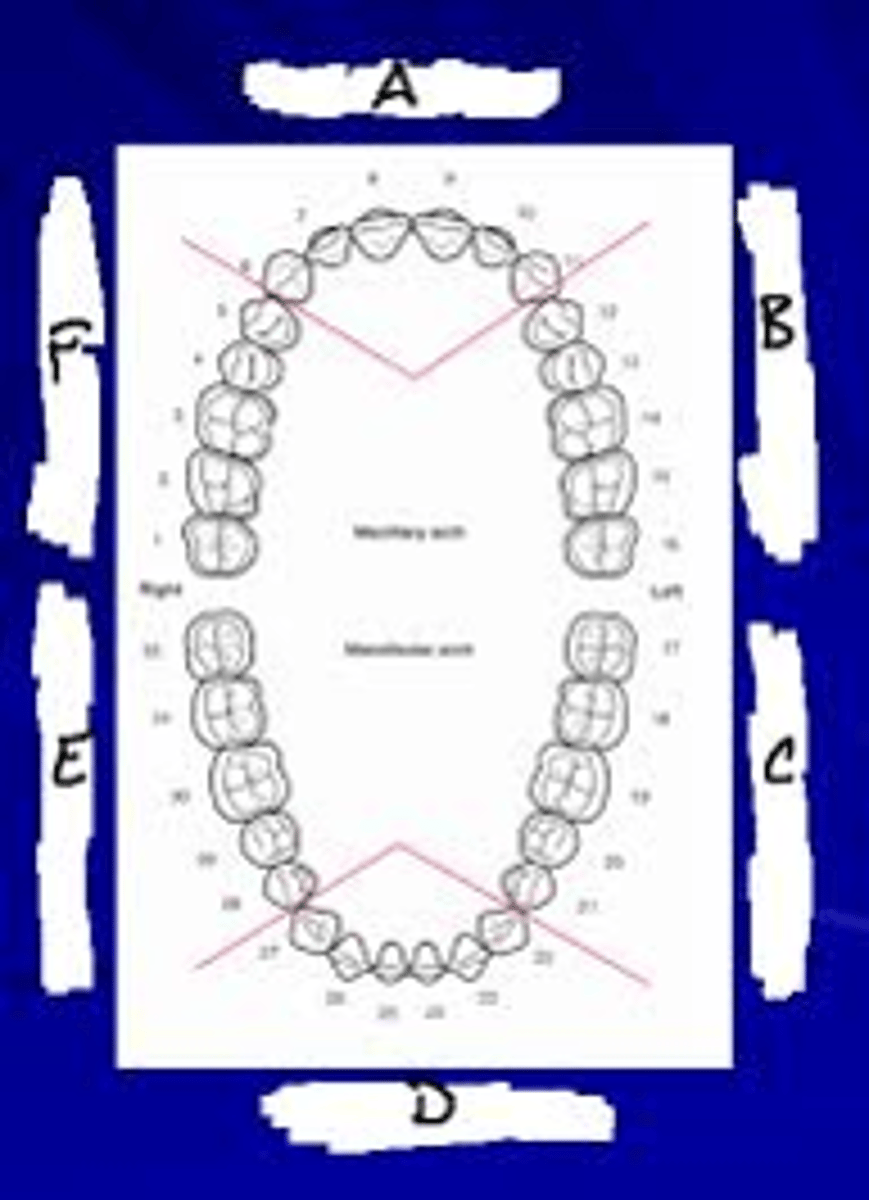
-mouth is divided into sextants
-the tooth w the most debris/calculus in each sextant is examined
-the DI and CI can be used separately or combined to determine oral hygiene
What are the calculations for
total DI
total CI
OHI score
all DI scores / # of sextants = DI total
all CI / # of sextants = CI total
CI total + DI total = OHI score (0-12)
How is the DI measured (0-3)
0 = No debris or stain
1 = Soft debris covering not more than 1/3 of tooth surface
2 = Soft debris covering more than 1/3 but not more than 2/3
3 = Soft debris covering more than 2/3
How is the CI measured (0-3)
0 = No calculus present
1 = Supragingival calculus covering not more than 1/3
2 = Supragingival calculus covering more than 1/3 but not more than 2/3, or flecks of subgingival calculus
3 = Supragingival calculus covering more than 2/3, or a band of subgingival calculus
Who developed the simplified oral hygiene index (OHI-S) and what does it measure
the same researchers who did OHI, Greene and Vermillion, but now the amount of debris and calculus on 6 index teeth of the sextants
What are the 6 index teeth examined on the OHI-S
3, 8, 14, 19, 24, and 30
How is scoring measured for the OHI-S
it is the same as the OHI using DI (0-3) and CI (0-3) but the total score could range from 0-6
What are the overall ratings in the OHI-S (EGFP 0-6)
Excellent = 0
Good = 0.1-1.2
Fair = 1.3-3.0
Poor = 3.1-6.0
What was the purpose of the patient hygiene performance (PHP)
it was developed in 1968 to assess how well a pt removes plaque after brushing
What is the procedure for PHP (4)
-teeth are disclosed
-6 teeth evaluated (same as OHI-S)
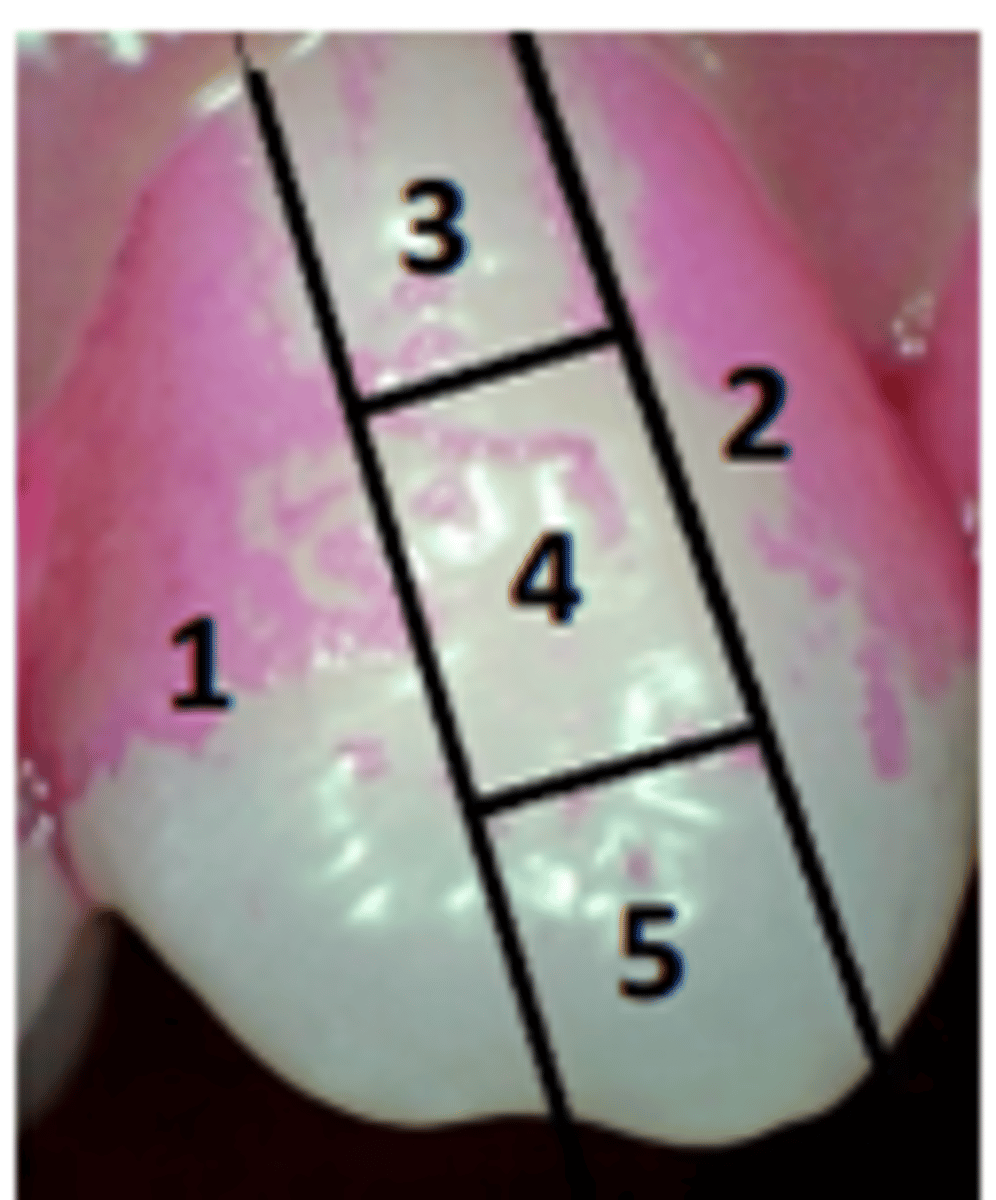
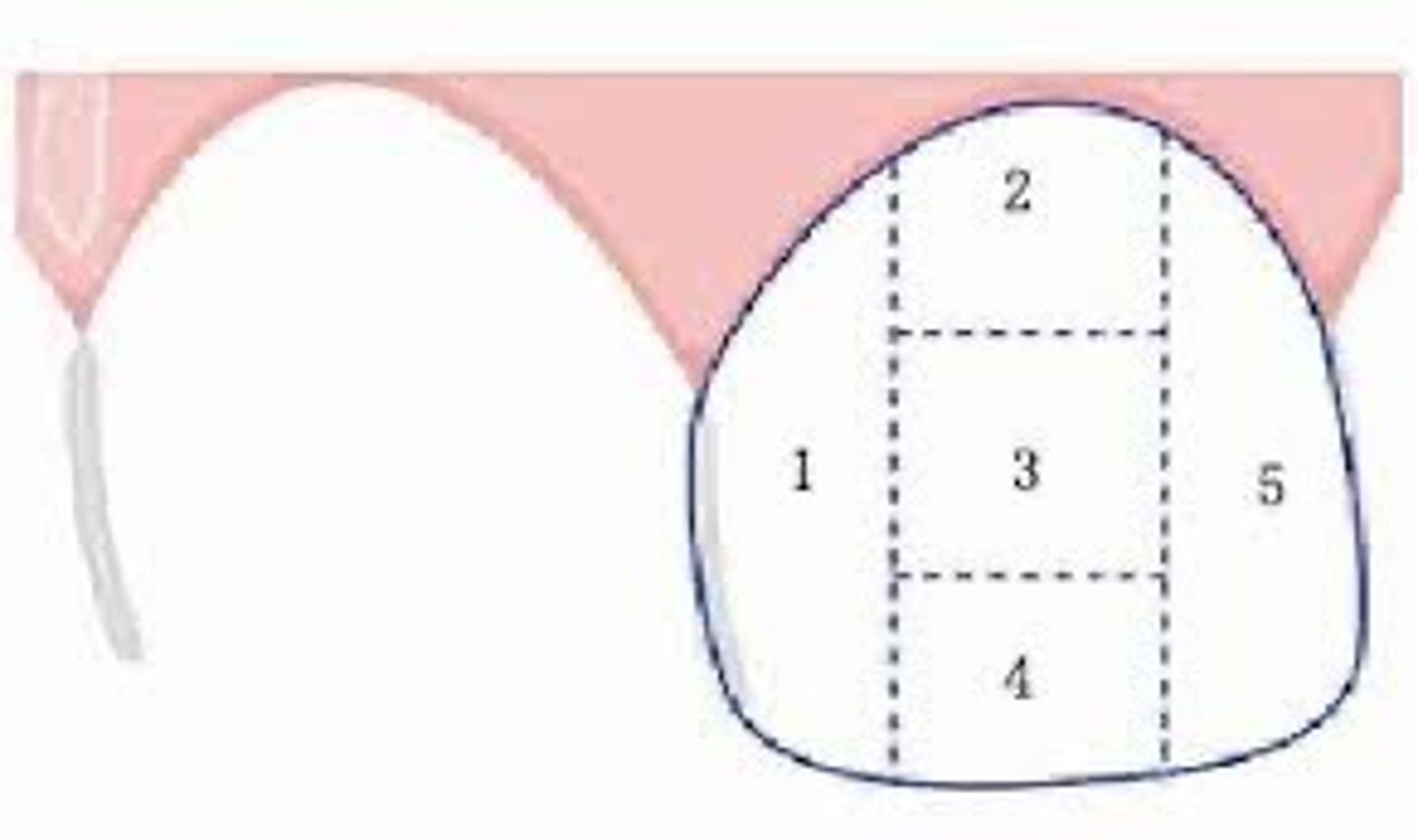
-each tooth is divided into 5 sections and the stains are counted
-add all areas w disclosing solution and divide by the total teeth examined
What divisions is the PHP divided into
5 surfaces
-distal third
-mesial third
middle third divided into
--incisal third
--middle third
--gingival third
What are the overall ratings for PHP (EGFP 0-5)
Excellent = 0
Good = 0.1-1.7
Fair = 1.8-3.4
Poor = 3.5-5.0
What is the purpose of the Volpe-Manhold Index (VMI)
it measures the supragingival calculus formation after a prophy and is widely used in testing new products
What is the procedure for VMI
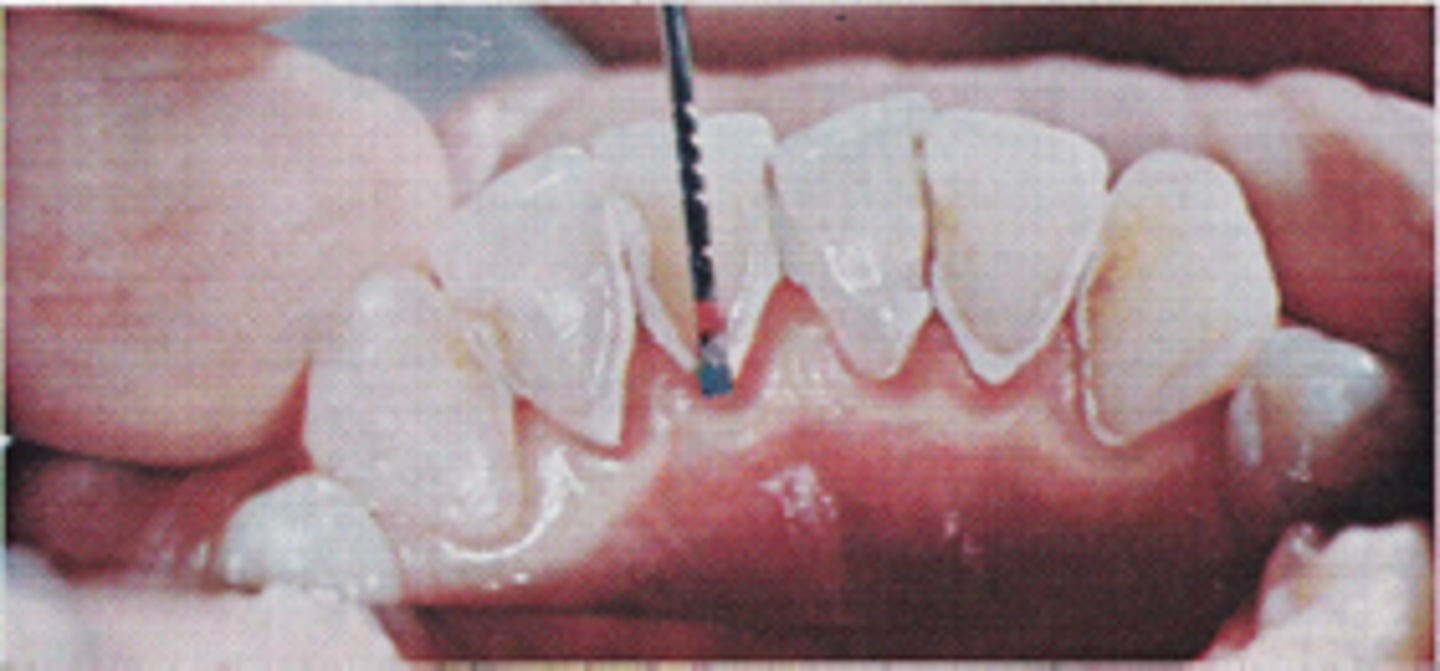
-examines L, D, M of 22-27
-probe measures calculus buildup after prophy in increments of 0.5 from 0-5mm
How is scoring assessed for VMI (2)
tooth score = adding all the scores of the 3 surfaces together
patient total score = sum of tooth scores
What is the purpose of the Loe & Silness Plaque Index (PI I)
it was developed in 1964 to measure the thickness of plaque at the gingival margin. tho it is very time consuming and it uses all teeth, it is a SENSITIVE index for gingivitis research
The PI can also be used in conjunction with what other index
gingival index (GI)
What is the procedure for a Pl I
-each tooth is air dried
-probe measures the level of plaque at the gingival margin
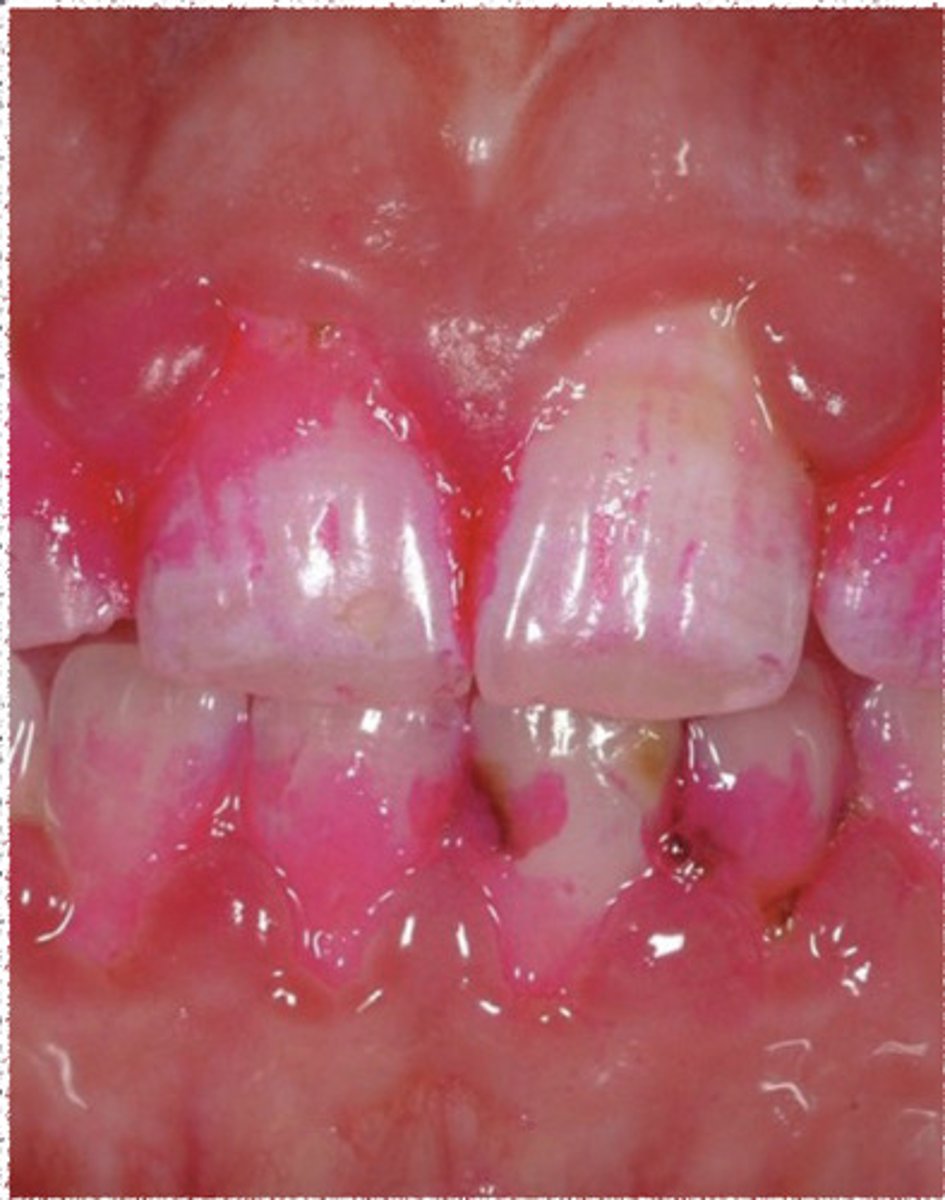
How is scoring assessed for the Pl I and how do we score (0-3)
0 = No plaque
1 = Film of plaque on gingival margin and adjacent tooth area
2 = Moderate accumulation of plaque
3 = Abundance of soft deposits
add up all the scores / by the # of teeth = scores range from 0-3
What is the purpose of the Loe & Silness Gingival Index (GI) and what does it evaluate
it was developed in 1963 to measure the severity of gingival inflammation. it evaluates color, consistency, and bleeding of the gingival margin and gingivitis only
What does the GI NOT evaluate
CAL or perio disease
What is the procedure for GI
-either all teeth or a predetermined selection is assessed on the M, D, B, L surfaces
-probe is inserted abt 1mm and moved in a horizontal stroke along the soft tissue side of the pocket
-BOP is assessed
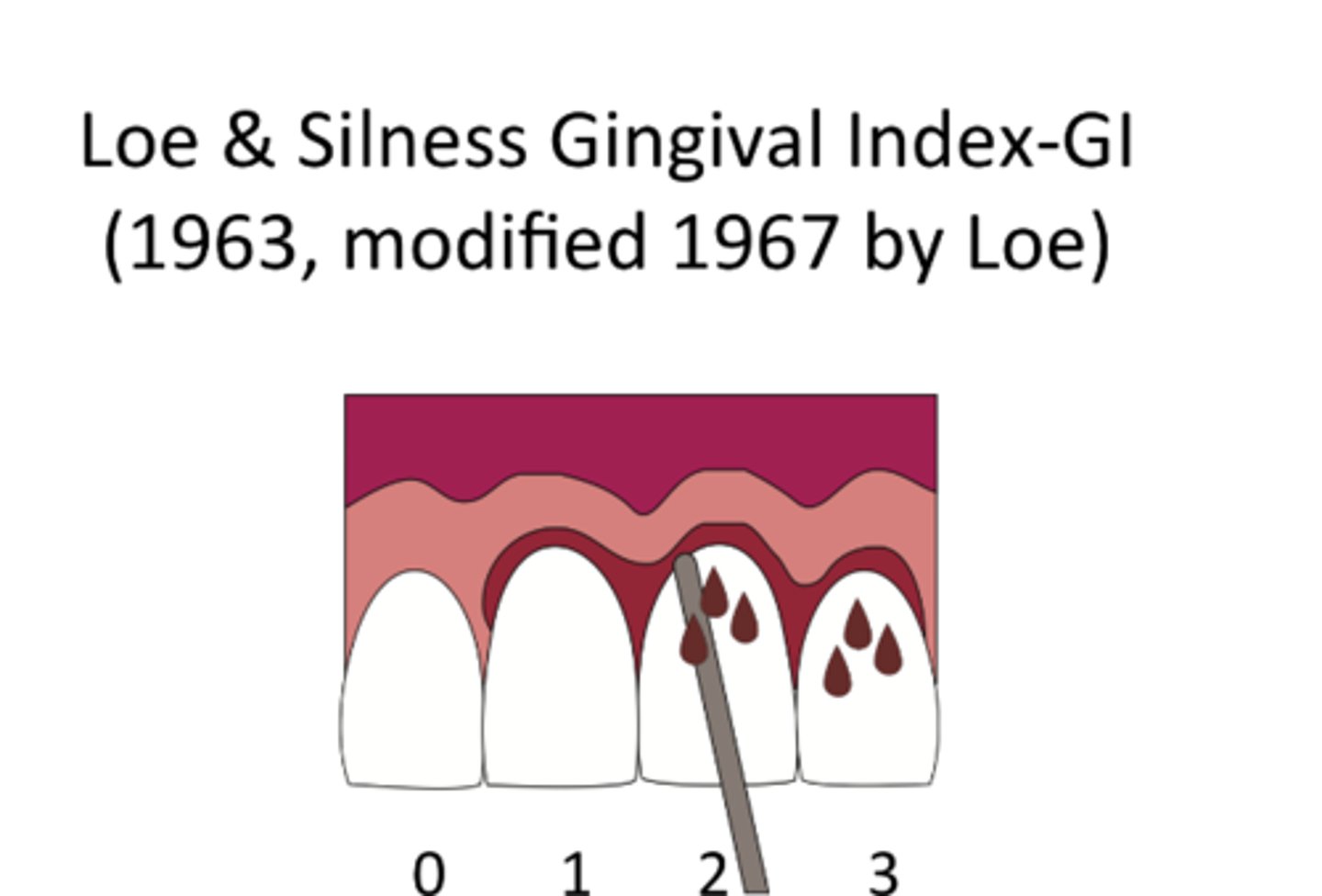
How is scoring assessed in GI (0-3) and how do we get the scores
0 = Normal gingiva
1 = Mild inflammation; slight color change and edema, no bleeding on probing
2 = Moderate inflammation; redness, edema, glazing, and bleeding on probing
3 = Severe inflammation; marked redness, edema, ulceration, and spontaneous bleeding
scores are added together than divided
What are the overall ratings for the GI (EGFP 0-3)
Excellent = 0
Good = 0.1-1.0
Fair = 1.1-2.0
Poor = 2.1-3.0
Who developed the modified gingival index (MGI) and what was its purpose
Lobene developed it and it is a modified version of the GI which DOES NOT require PROBING. the scoring system was also expanded to better detect mild inflammation. it is widely used for clinical trials testing new products and therapeutic agents
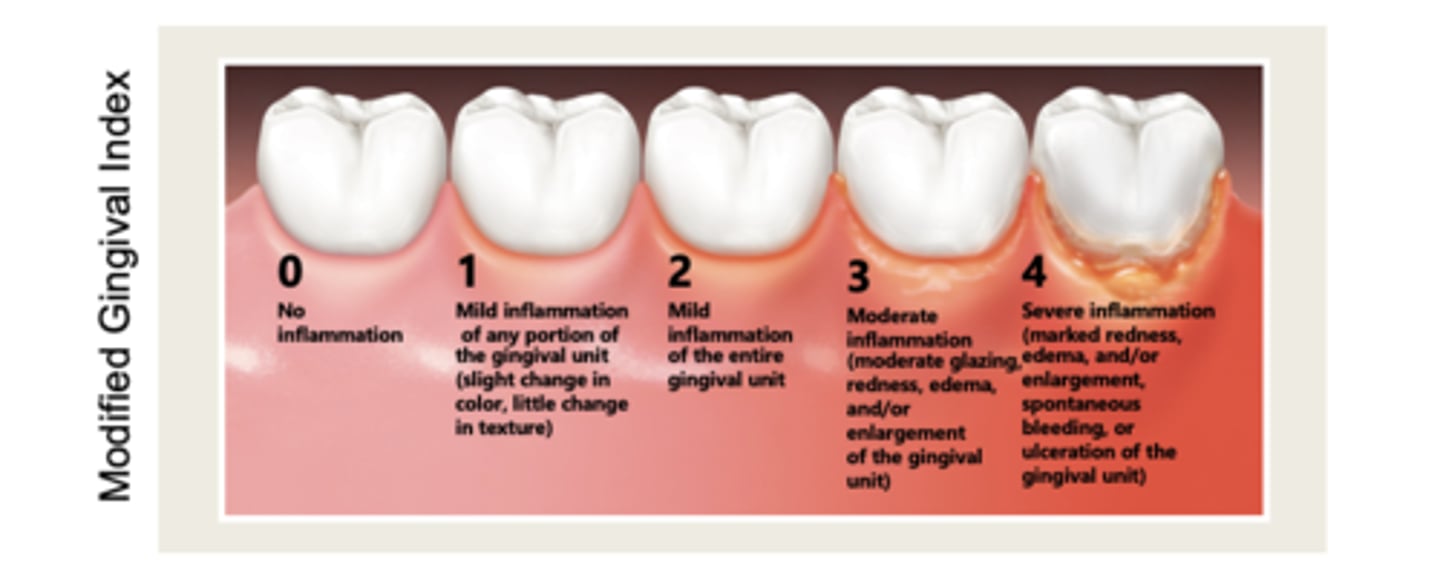
How is scoring assessed in MGI (0-4)
0 = Absence of inflammation
1 = Mild inflammation with slight color change and little texture change
2 = Mild inflammation involving the entire margin or papilla **
3 = Moderate inflammation with redness, edema, or hypertrophy
4 = Severe inflammation with marked redness, edema, spontaneous bleeding, or ulceration
What does the sulcus bleeding index (SBI) measure
BOP after 30 seconds on F, M, L, and D surfaces
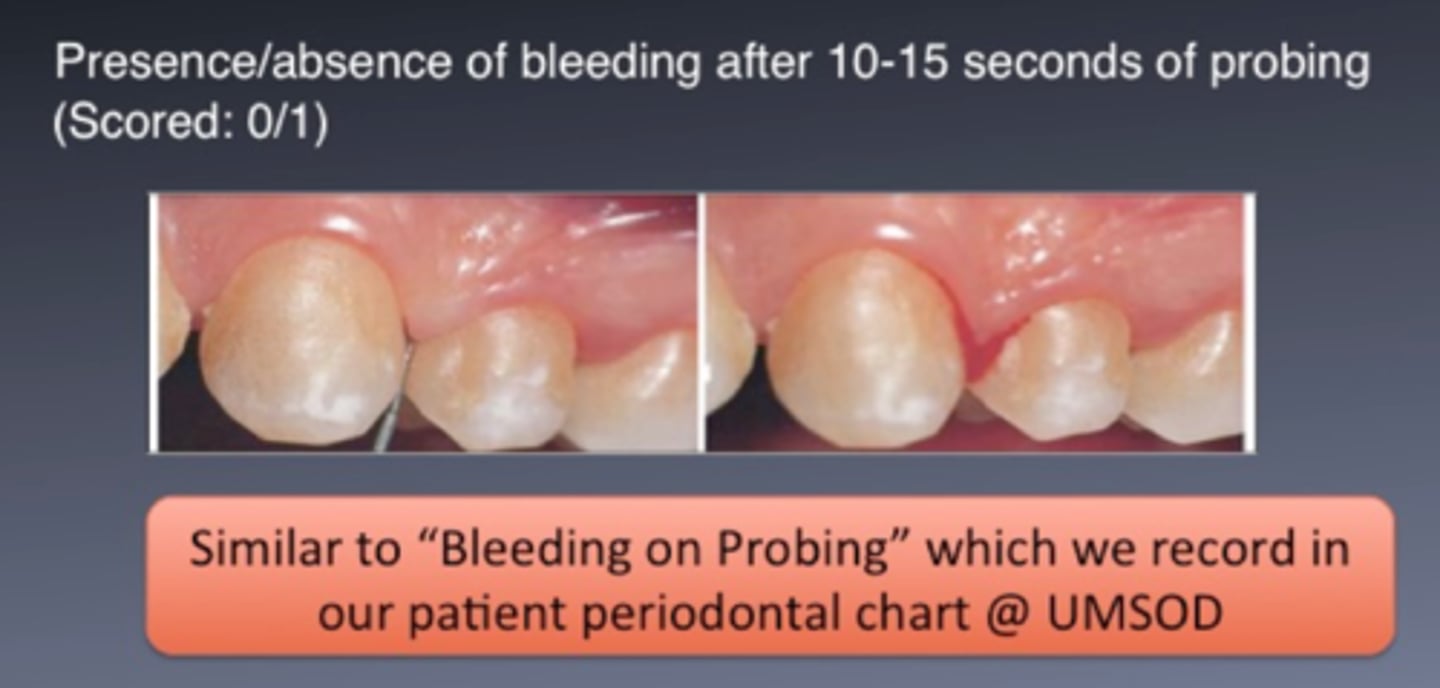
How is the scoring assessed in SBI (0-5)
0 = Healthy appearance, no bleeding
1 = Bleeding on probing only
2 = Bleeding on probing with color change
3 = Bleeding on probing, color change, and slight swelling
4 = Bleeding on probing with obvious swelling
5 = Spontaneous bleeding, marked swelling, and possible ulceration
What is the purpose of the gingival bleeding index (GBI)
it is a dichotomy index used to estimate gingivitis, so it is not very sensitive
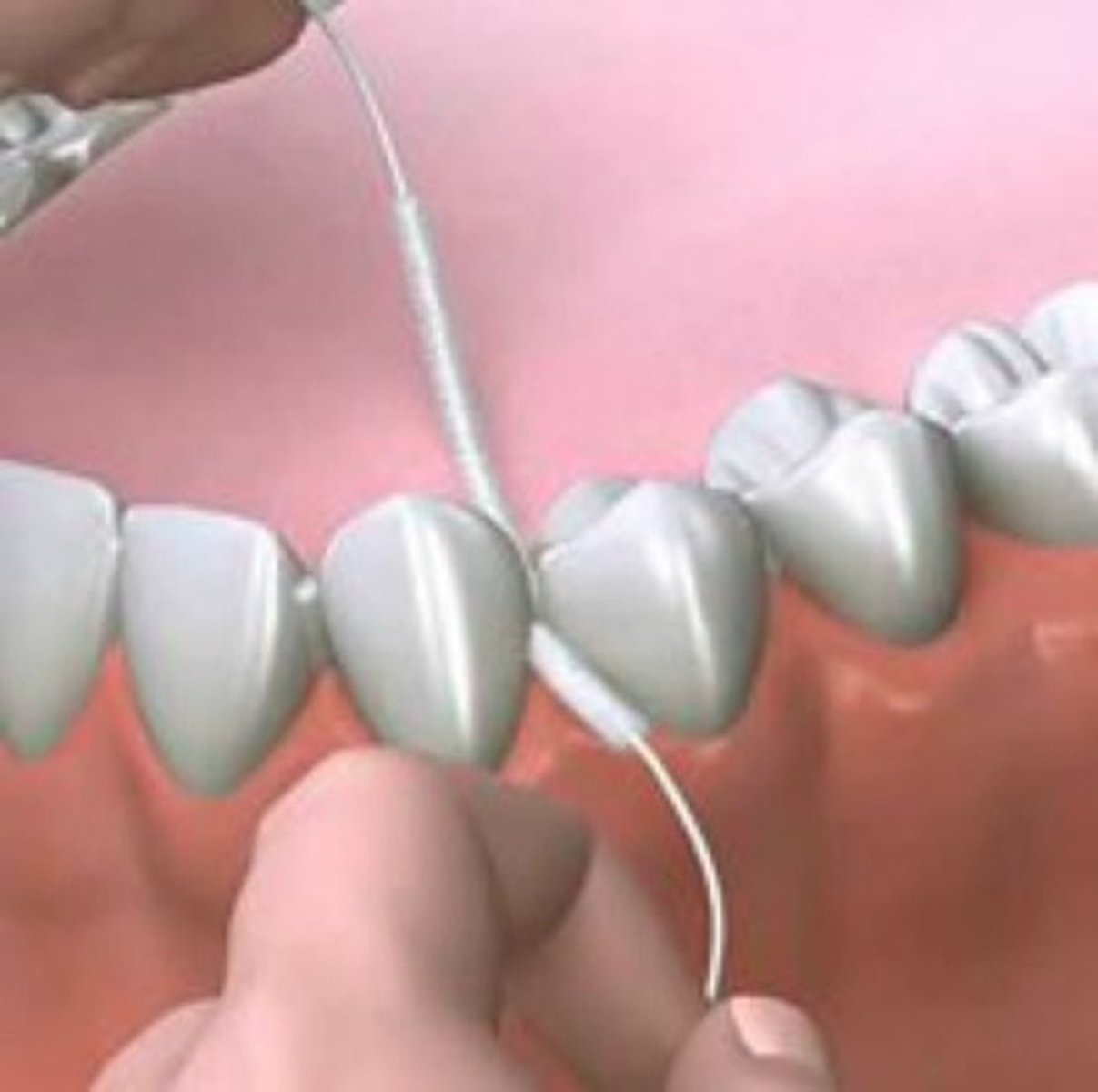
What is the procedure for GBI
-use unwaxed floss and move up and down for one stroke under the gingiva
-wait for 30 sec
-evaluate for BOP
What are two periodontal diseases that are now outdated
Russel's periodontal index (PI) and periodontal disease index (PDI)
What was Russells PI
its a classic composite index scoring periodontal disease and gingivitis as a single score. assessments were made visually but it did not include the CAL. it also graded all PDs deeper than a 3 mm the same.
ex: 4mm pocket = 10 mm pocket.
What was the PDI
it was a modified version of the Russell PI used in longitudinal studies. it measured both gingival and periodontal disease together in one score and used Clinical Attachment Loss (CAL) as a measurement. it was the first index to use selected Ramfjord teeth to represent the condition of the entire mouth
What was the first index to use the selected Ramfjord teeth and what were the numbers
PDI & 3, 9, 12, 19, 25, and 28
What was the purpose of the periodontal screening and recording (PSR) and what does it seek to do
it was developed in 1993 by the ADA and modified from the WHO's CPITN as a screening tool to determine if a pt needed a COMP PERIO EXAM. it is also useful for preliminary screening in large populations. it identifies periodontal treatment needs, and motivates patients to seek treatment.
What is the procedure for PSR (4)
-each tooth is probed using a special color-coded probe with a ball tip that helps detect calculus
-each sextant receives a code based on the deepest probing depth found in that sextant
-if a Code 4 is found, probing of that sextant can stop.
-the highest code recorded in all sextants is used to determine the patient's assessment and treatment planning needs.
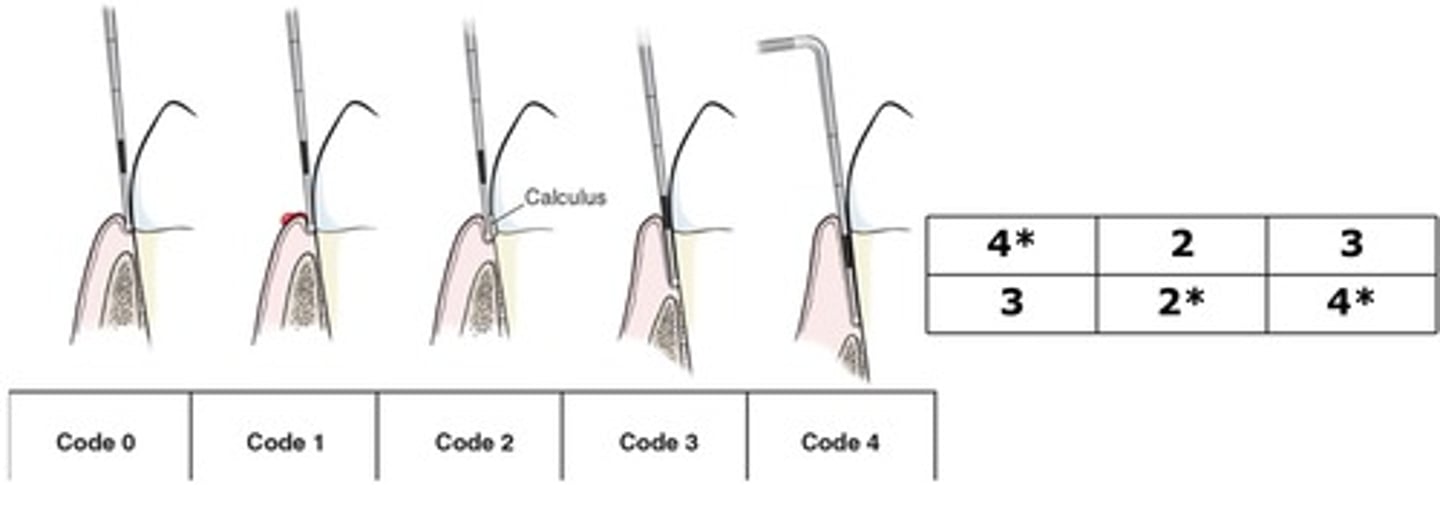
How is scoring assessed for PSR (0-4)
0 = Healthy tissue, no BOP, no calculus
1 = Bleeding on probing
2 = Calculus or rough areas present
3 = Pocket depth greater than 3.5 mm
4 = Pocket depth greater than 5.5 mm
= Furcation, mobility, recession, or mucogingival problems
What are the treatment needed for PSR codes (0-4)
TN 0 = Preventive care and biofilm control
TN 1 = Preventive care and biofilm control
TN 2 = Preventive care, calculus removal, and biofilm control
TN 3 = Comprehensive periodontal assessment and treatment planning, patient counseling regarding the treatment plan, and non-surgical periodontal treatment (SRP)
TN 4 = Same treatment as Code 3, plus treatment planning for surgical periodontal treatment
What is the purpose of the community periodontal index of treatment needs (CPITN)
similar to PSR, the mouth is divided into sextants, and the most severe finding in each sextant determines the score. it uses the same codes as PSR and the WHO probe, and patients are categorized into treatment groups based on their NEEDS.
What is the purpose of the community periodontal index (CPI)
it evaluates the periodontal status in a population and measures gingival health, bleeding, calculus, pocket depths, and attachment loss. the most severe finding in each sextant determines the score
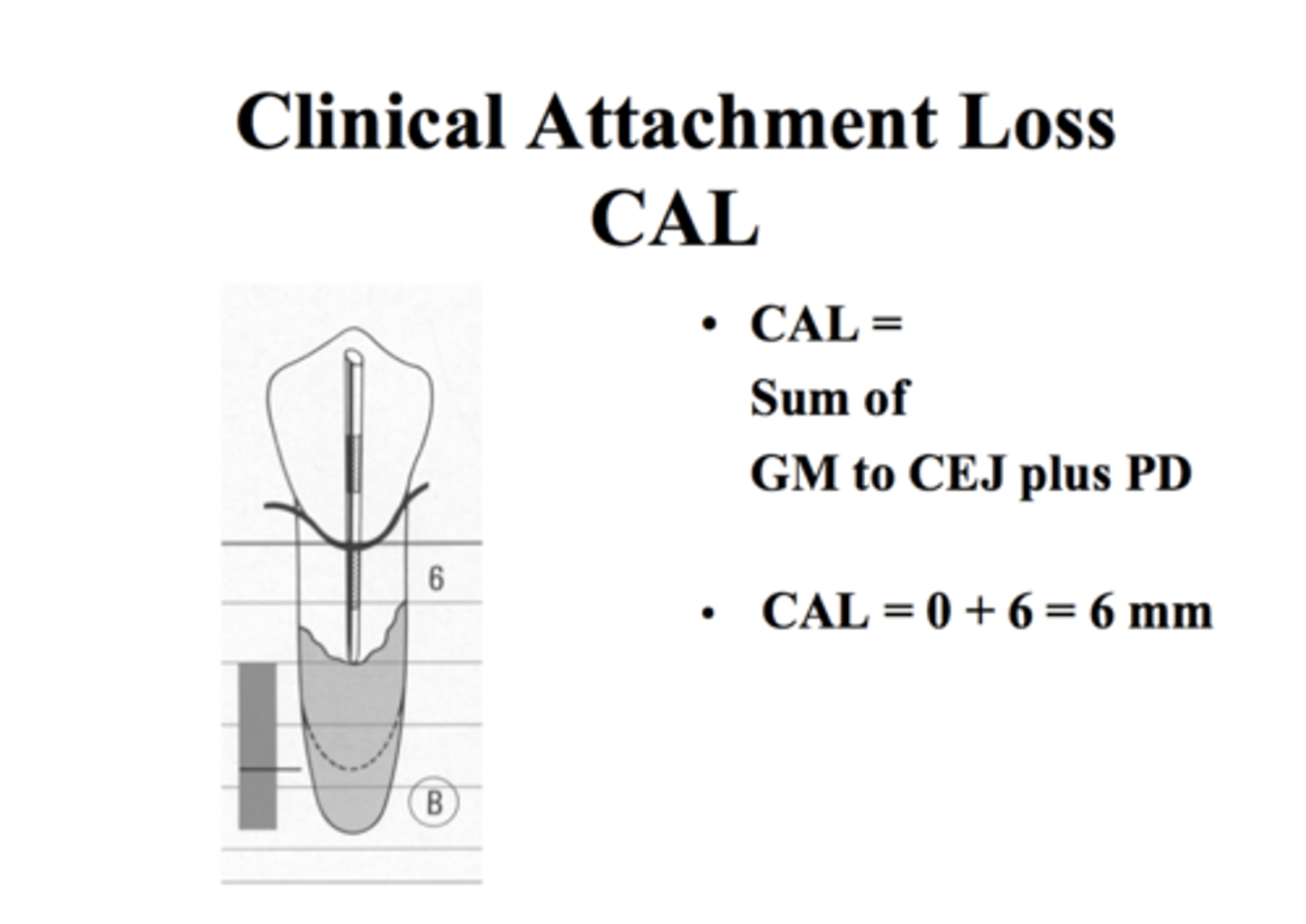
What is the difference bt the PSR and CPI (2)
1. CPI accounts for CAL. PSR does not
2. CPI does not have a tx needs component to see what the pt needs to have done to control periodontal disease
What CPI codes are given for PDs (0-4)
0 = Healthy tissue
1 = Bleeding on probing
2 = Calculus present
3 = 4-5 mm pockets
4 = 6 mm or deeper pockets
What CPI codes are given for CAL (0-4)
0 = 0-3 mm CAL
1 = 3.5-5.5 mm CAL
2 = 6-8 mm CAL
3 = 9-11 mm CAL
4 = > 12 mm CAL
What is the purpose of the DMF index
The DMF Index is an irreversible index that looks at a person's entire caries experience, including past and present areas of decay. It only measures coronal caries, not root caries.
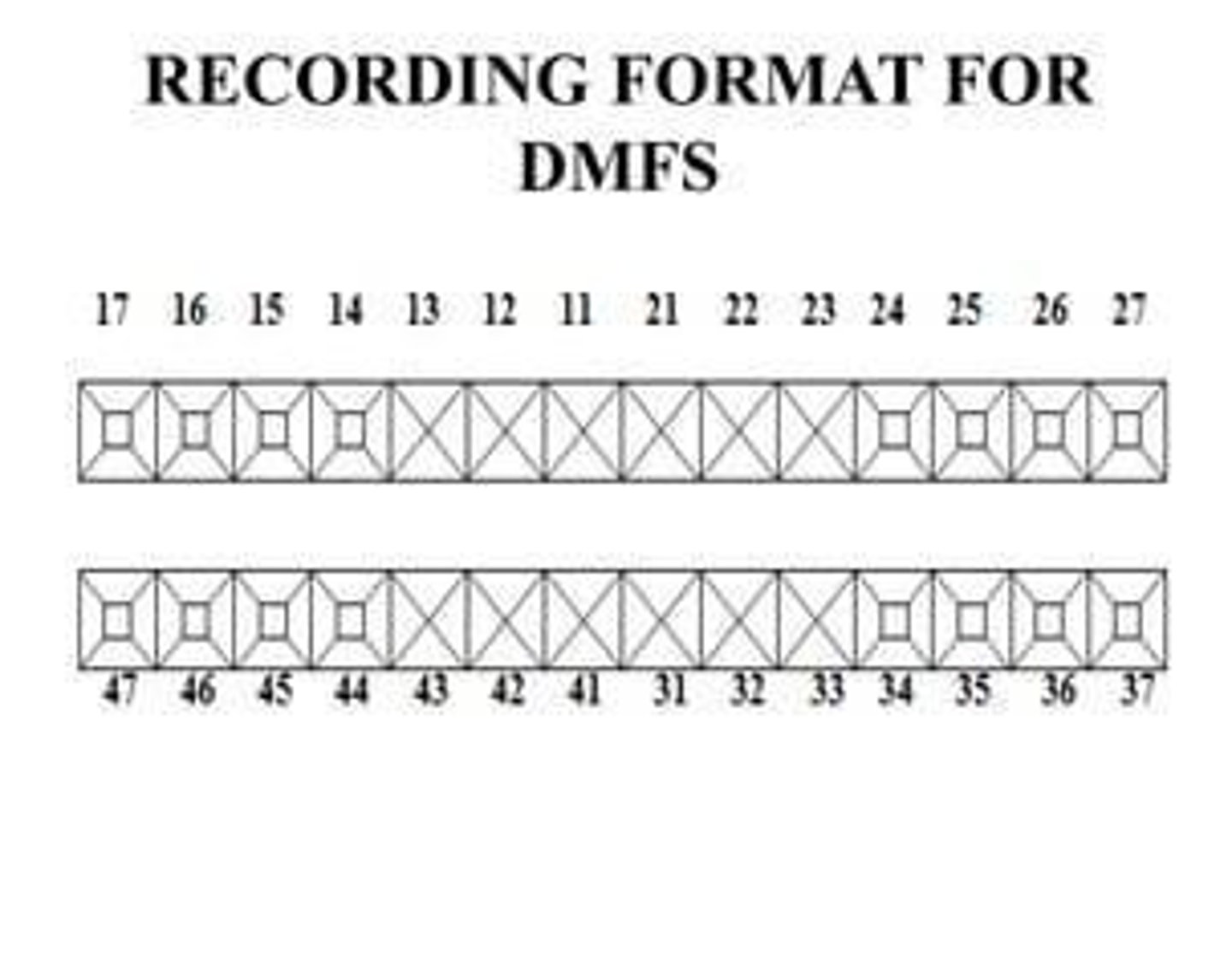
What is the general difference bt DMFT and DMFS
DMFT counts teeth and is used for surveys and prevalence studies, while DMFS counts surfaces, is more sensitive, and is used for cohort studies and clinical trials.
What is a drawback about the DMF index
it does not differentiate between extreme deterioration and a small amount of decay
What does DMFT or DMFS stand for
D = Decayed teeth/surfaces
M = Missing due to caries
F = Filled teeth/surfaces with no decay
T = adult teeth
S = adult surfaces
What is the criteria for DMF scoring (3)
1. A tooth can only be scored once.
2. Third molars are not included.
3. Unerupted teeth, congenitally missing or teeth missing from orthodontics, trauma, impaction, restored for aesthetic reasons, or primary retained next to its adults teeth are not included.
What are 3 caries experience indices for primary teeth
1. def
2. df
3. dmf
What is the scoring criteria for def
d = Decayed
e = Extraction indicated due to caries
f = Filled
-missing primary teeth are ignored
What is criteria is followed for scoring dmf (2)
used before exfoliation and only uses primary molars and canines
What is the scoring criteria for df
all decayed teeth = d
What are limitations to DMF/def (4)
1. It combines treated and untreated disease, so additional calculations are needed to separate the components.
2. The M component is difficult to assess because it can be hard to determine why people lost their teeth.
3. These indices can be difficult for the public and legislators to understand, making them less useful for health promotion.
4. They are mainly used by dental professionals to collect and analyze data.
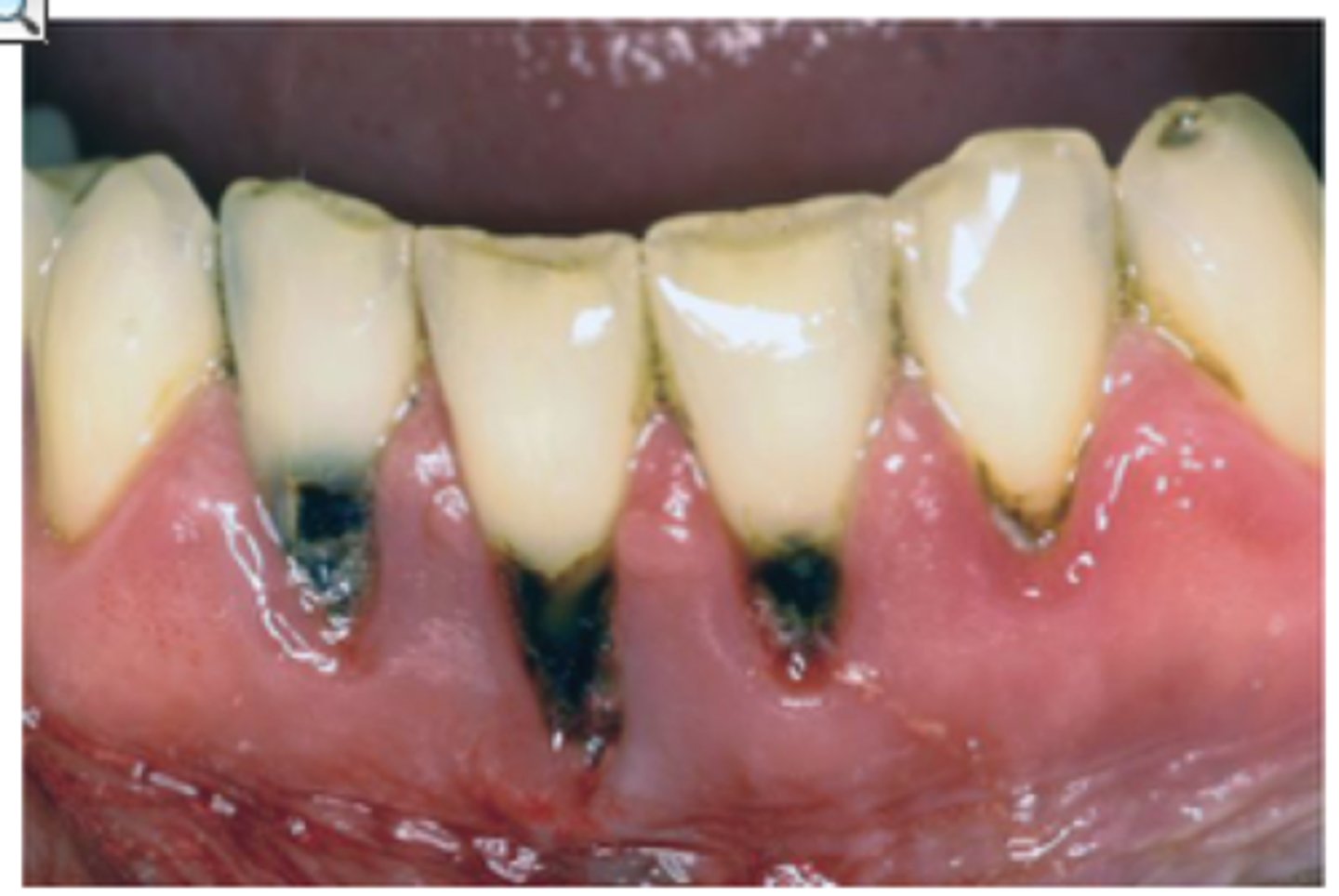
What is the purpose of the root caries index (RCI)
it measures root caries only. It includes only root surfaces that are at risk and is reported as a % of decayed and filled root surfaces
What is the equation for RCI
(decayed + filled root surfaces / decayed + filled + healthy root surfaces) x 100
What is the purpose of the basic screening survey (BSS)
it was developed by the ASTDD to collect community oral health. It is completed on a person-by-person basis rather than a tooth-by-tooth basis and can be performed by trained non-dental personnel.
Why can the BSS be easy to use (4)
1. Data is collected on a per-person basis, not for each individual tooth.
2. With a good calibration program, non-dental personnel can be trained to collect the data.
3. The index is dichotomous in nature, meaning the oral condition is either present or absent
4. It also has a strong treatment component.
What are types of treatment urgency in BSS (0-2)
0 = No problems
1 = Early care needed
2 = Urgent care needed due to pain, infection, swelling, or ulceration
What are other oral conditions measured (3)
Oral cancer and cleft lip/cleft palate are usually measured as a rate. Fluorosis is also examined.
Deans fluorosis is based on the two worst teeth in the mouth and categorized on a 6pt nominal scale from normal to severe.
What does the fluorosis index measure
The Fluorosis Index measures the severity of dental fluorosis. The score is based on the two most affected teeth and ranges from normal enamel to severe fluorosis.
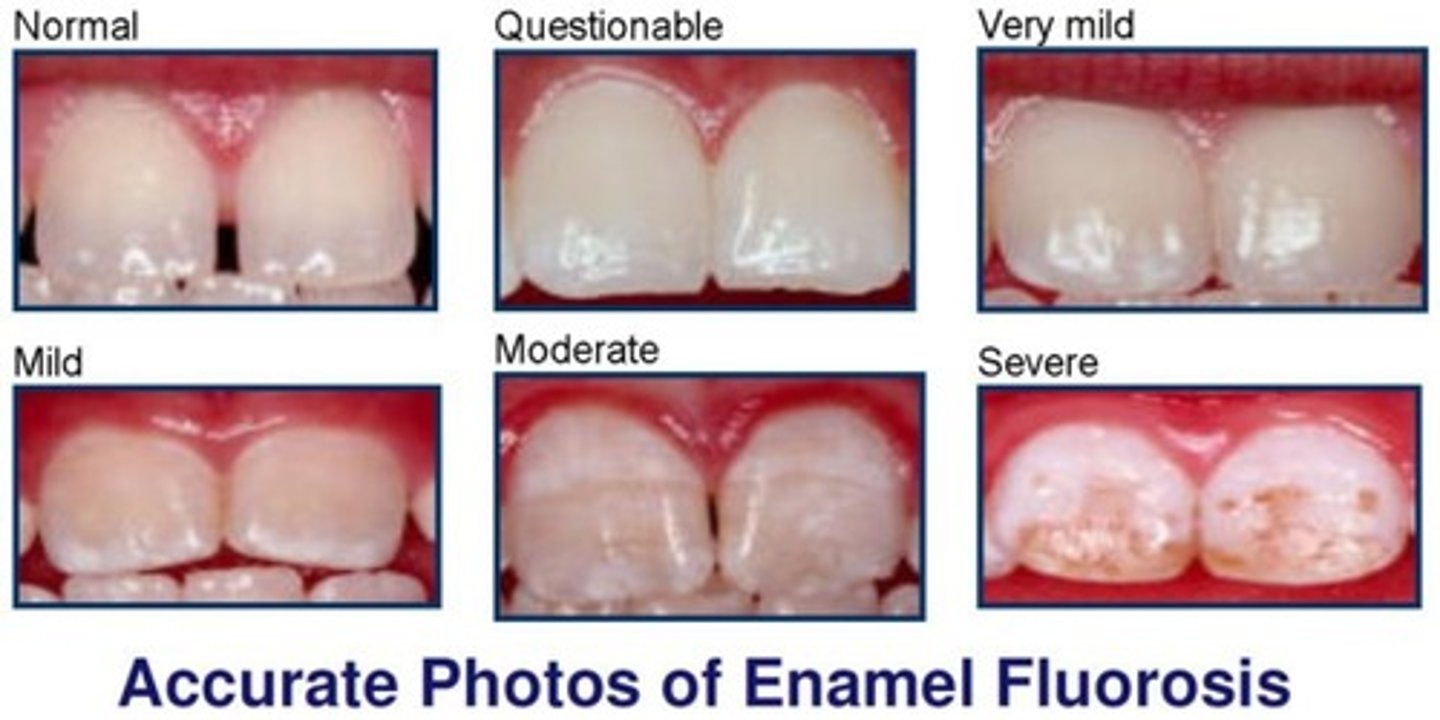
How is the fluorosis index assessed (6)
Normal = Smooth, glossy, white enamel
Questionable = Small white flecks or spots
Very Mild = White areas on less than 25% of tooth
Mild = White areas on more than 50% of tooth
Moderate = All enamel surfaces affected; brown stains and wear may be present
Severe = Hypoplasia, pitting, altered tooth shape, and widespread brown stains
What 3 points should we remember about dental indices
1. Most dental indices are ordinal, so they cannot be used for quantitative comparisons based on numeric values. The DMF Index is the exception.
2. When studying incidence, the same index should be used both times data is collected.
3. The level of disease and dental needs are always present. The precision of using indices determines how well you can detect the disease.