WILD 3600 Final
 Call Kai
 Learn
Learn Practice Test
 Spaced Repetition
 Match
Match Flashcards
 Knowt Play
1/108

There's no tags or description
Looks like no tags are added yet.
Name | Mastery | Learn | Test | Matching | Spaced | Call with Kai |
|---|
No analytics yet
Send a link to your students to track their progress
109 Terms
Why is accurate deer aging and scoring important for harvest management?
It helps manage harvest objectives, meets hunter expectations regarding antlers, and prevents hunter dissatisfaction.
When aging bucks on the hoof, what should be the primary focus over antlers?
Body characteristics.
What are the primary physical characteristics of a 1.5-year-old buck?
Long legs, slim body, and often described as a 'doe with antlers'.
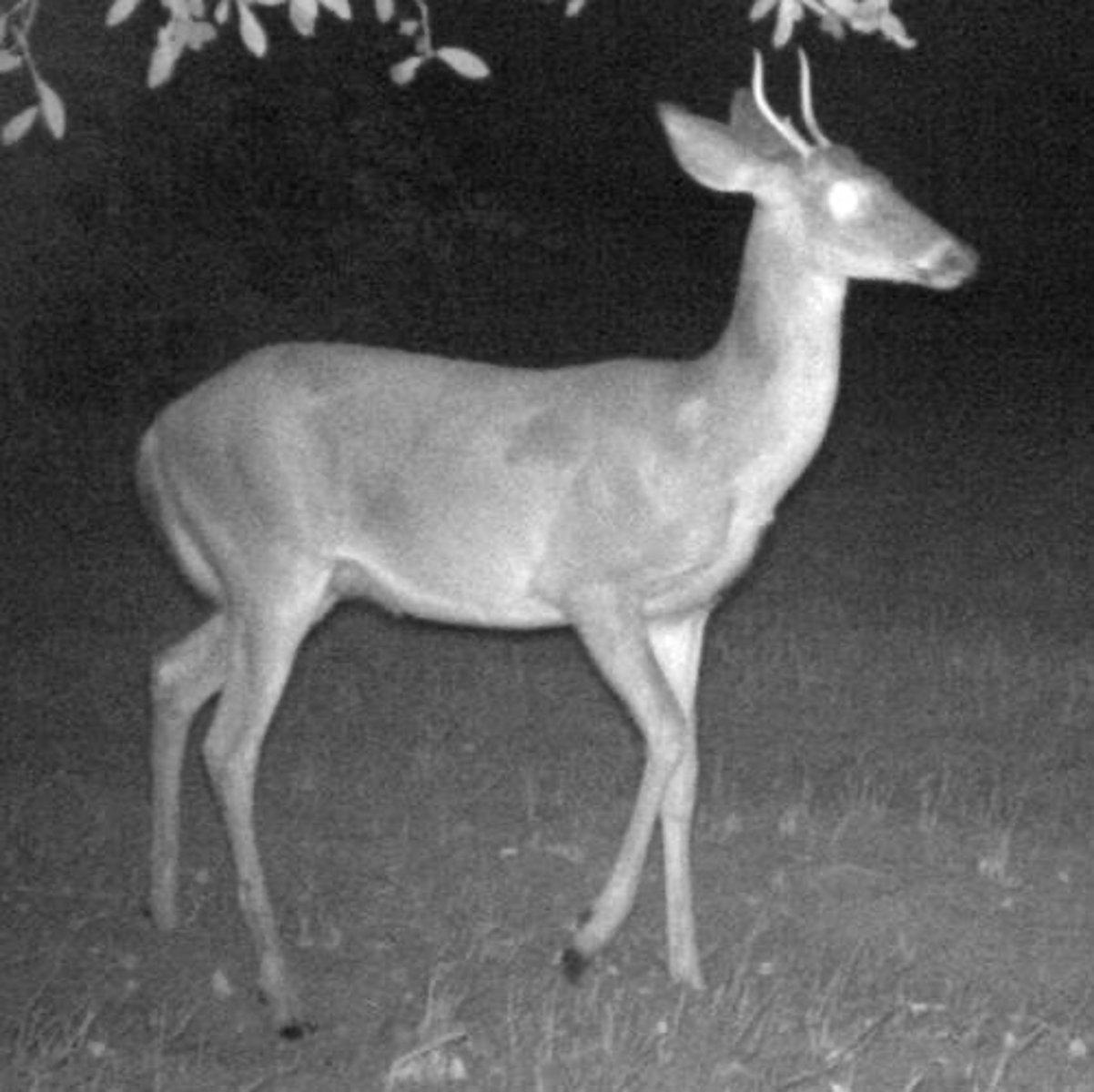
How can you identify a 2.5-year-old buck by its physical build?
It has some muscle in the shoulders, remains long-legged, and typically has antlers at or inside the ears.
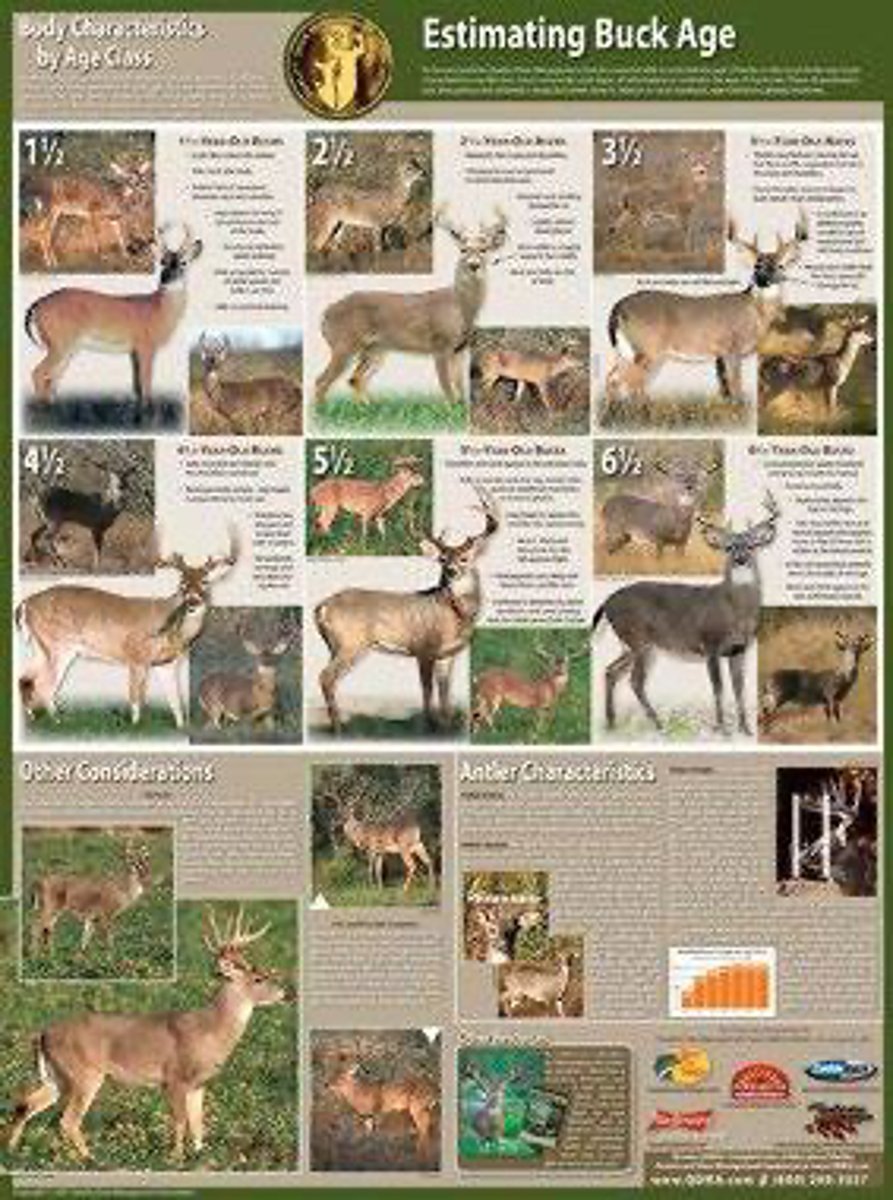
What physical features distinguish a 3.5-year-old buck?
Legs appear proportional to the body, muscled shoulders, and a thin waist.
What physical signs indicate a 4.5-year-old buck?
A rectangular appearance, swollen neck, flat belly line, and legs that may appear slightly short for the body.
What are the physical indicators of a buck that is 5.5 years or older?
Short legs, sagging belly, sagging back, and a neck that blends seamlessly into the body.
How do you determine if a deer is a fawn versus an adult based on tooth count?
Fawns have fewer than 6 teeth, while adults (1.5 years and older) have 6 teeth.
How can you distinguish a 1.5-year-old deer from a 2.5+ year-old deer using the 3rd premolar?
A 1.5-year-old has 3 cusps on the 3rd premolar, while a 2.5+ year-old has 2 cusps.
How do you use dentine wear on the 1st molar to age a 2.5-year-old buck?
In a 2.5-year-old, the dentine on the 1st molar is less than the enamel.
What characterizes the tooth wear of a 3.5-year-old buck?
Dentine on the 1st molar is greater than the enamel, while dentine on the 2nd molar is less than the enamel.
What characterizes the tooth wear of a 4.5-year-old buck?
Dentine on the 1st and 2nd molars is greater than the enamel, but dentine on the 3rd molar is less than the enamel.
What indicates a buck is 5.5+ years old based on molar wear?
Dentine on the 1st, 2nd, and 3rd molars is greater than the enamel, and cupping may be visible on the 1st molar.
How is the 'inside spread' of deer antlers measured?
It is taken at the widest point between the main beams, inside the antler beams.
What is the minimum length required for a point to be counted in antler scoring?
Points must be at least 1 inch long.
How is the circumference (H-measurement) of an antler measured?
It is measured at the smallest point between two tines; four measurements are taken on each side.
How is the main beam length of an antler measured?
It is taken from the lowest outside edge of the burr to the end of the beam.
What defines an 'abnormal point' in antler scoring?
Any point not originating from the top of the main beam.
What is the difference between typical and non-typical antler scoring?
Typical scoring follows standard symmetry, while non-typical scoring counts abnormal points separately and adds them to the total.
According to Boone and Crockett, what is the 'all-time' record score for a typical whitetail?
170 inches.
What is the Pope and Young typical minimum score for a whitetail?
125 inches.
What is the typical home range requirement for a bobwhite quail population?
Independent populations require thousands of acres.
What is the typical density of bobwhite quail in most supported areas?
1 bird per 10-20 acres.
Why are bobwhite quail considered relatively sedentary?
They need all their life requirements met within a 40-acre area.
What are the three primary types of cover required by bobwhite quail?
Nesting cover, brood-rearing cover, and roosting cover.
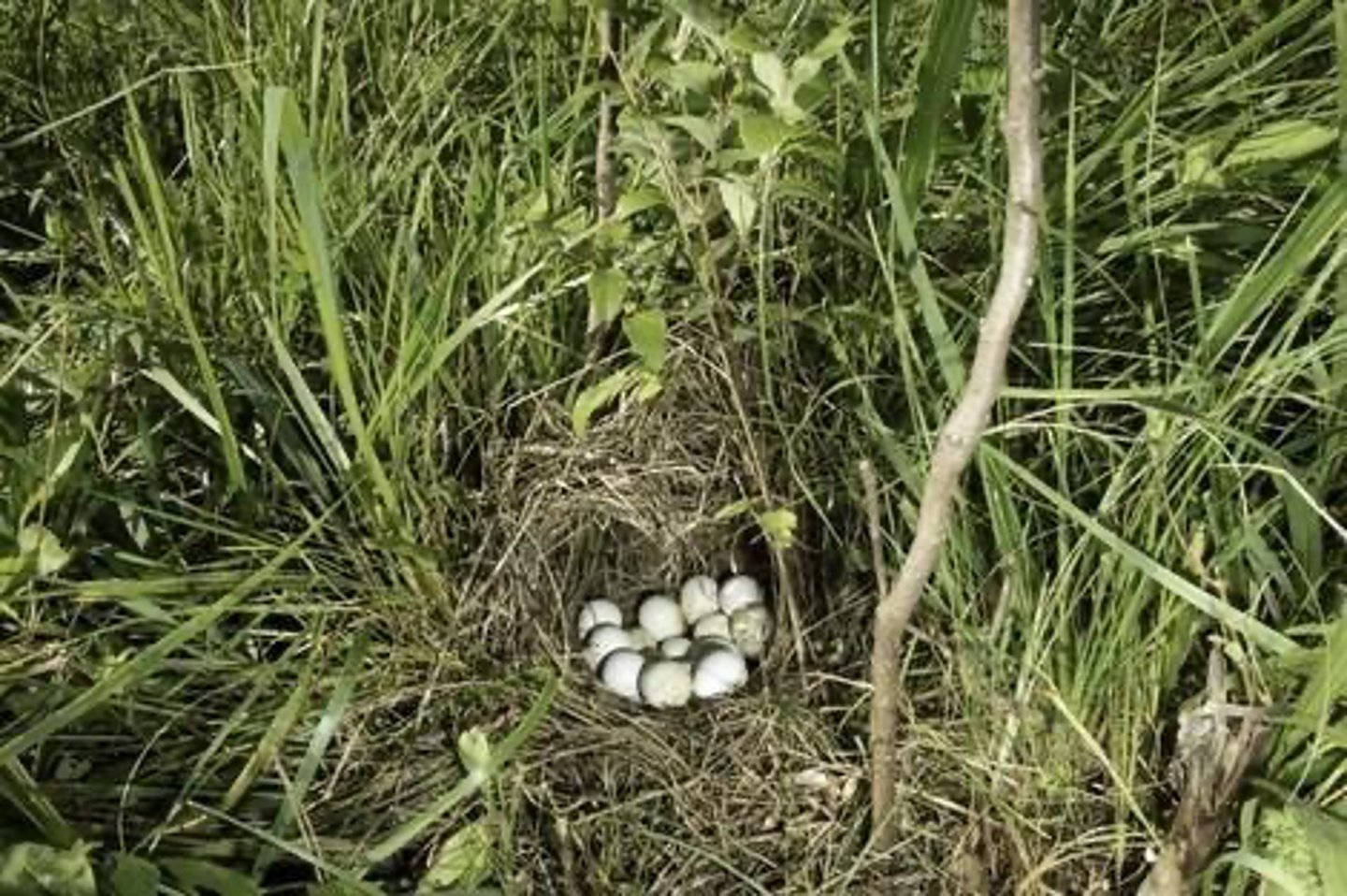
What is the ideal age of native grassland for bobwhite nesting cover?
2-year-old native grasslands with moderate litter accumulation.
Why is a 2-year disturbance cycle critical for nesting cover?
First-year growth lacks sufficient litter, while third-year growth becomes too dense for nesting.
What are the key characteristics of ideal brood-rearing cover?
1-2 year-old annual forb communities, 25-50% bare ground, high insect density, and woody shrub clumps for shade.
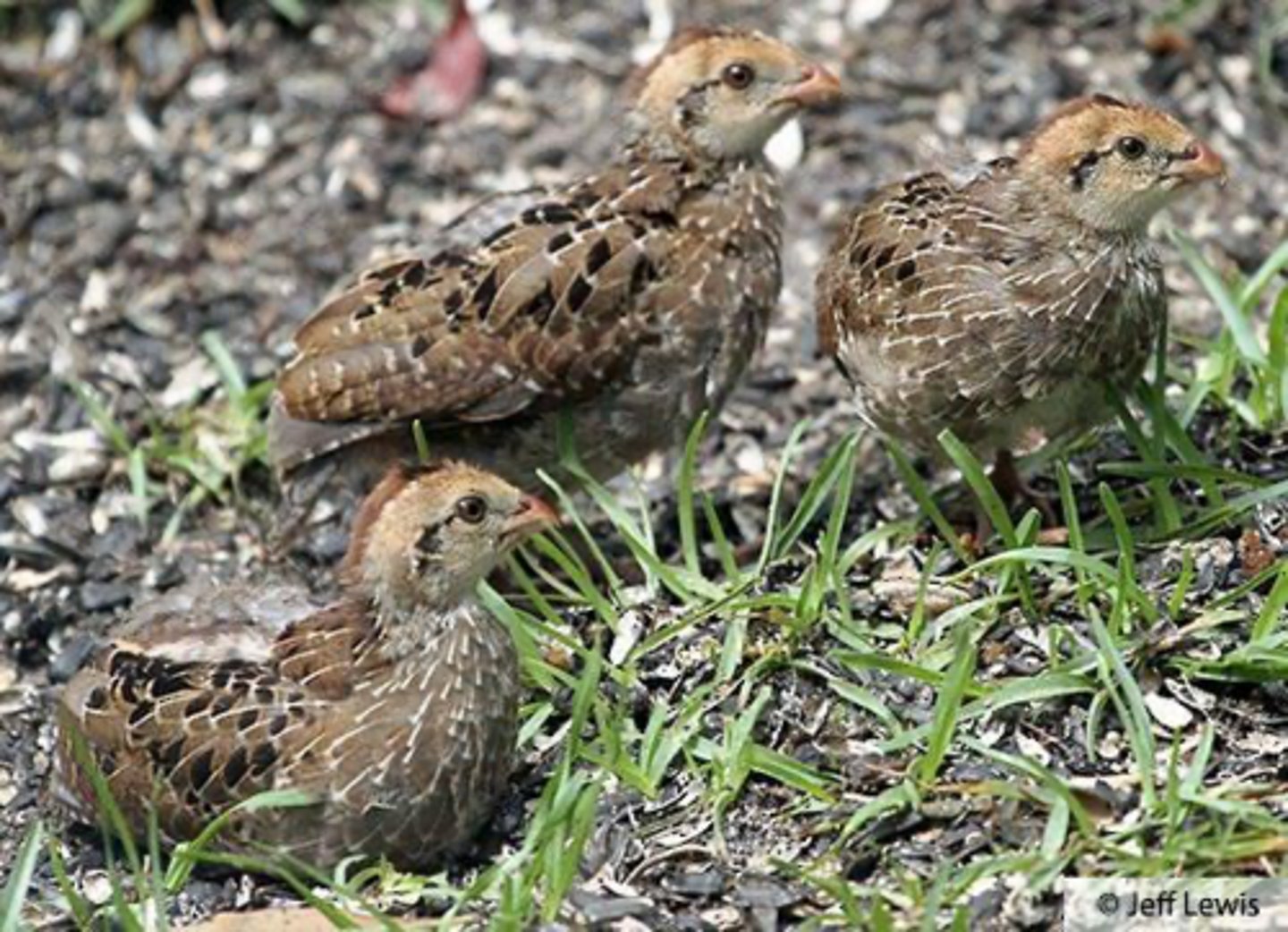
What are the three main objectives of a bobwhite management program?
Make every square foot usable, ensure interspersion of accessible plant communities, and address energetics and predation.
What is the recommended burn rotation for bobwhite habitat management?
A 2-year rotation, burning half of the area each year.
How should exotic cool season grasses be managed?
Mow or burn and spray during the fall.
How should exotic warm season grasses be managed?
Mow or burn in late winter and spray during the growing season.
What is the recommended density for establishing woody cover thickets?
Thickets 20-30 feet across, placed every 100 yards.
What is 'edge-feathering' in the context of quail management?
Managing 30-50 feet into forest edges to create transition zones while retaining species like oaks, walnut, and persimmon.
How should food plots be arranged to maximize utility?
Located along firebreaks, close to woody cover, and alternated in 100-yard segments.
When is supplemental feeding most beneficial for bobwhite quail?
During drought years.
What types of terrain indicate a higher need for intensive predator control?
Properties with an abundance of drains, creeks, bottoms, and hardwoods.
What are the requirements for an effective predator control program?
It must be intensive, cover the entire property, be long-term, and be performed annually.
Is hunting mortality in bobwhite quail considered compensatory?
No, it is not compensatory.
What is the recommended maximum population reduction for fall quail populations?
Less than or equal to 40% of the fall population.
What is the standard for a 'good' covey flush rate?
Greater than or equal to 4 flushes per hour.
How can managers estimate quail abundance in the fall?
By performing fall covey call surveys.
How does poor versus adequate fall nutrition affect yearling doe productivity?
Poor nutrition results in approximately 0.62 fawns, while adequate nutrition results in approximately 1.63 fawns.
What did the Michel et al. (2015) study conclude regarding regional variation in buck antler size?
Regional variation in antler size is primarily driven by nutrition rather than genetics.
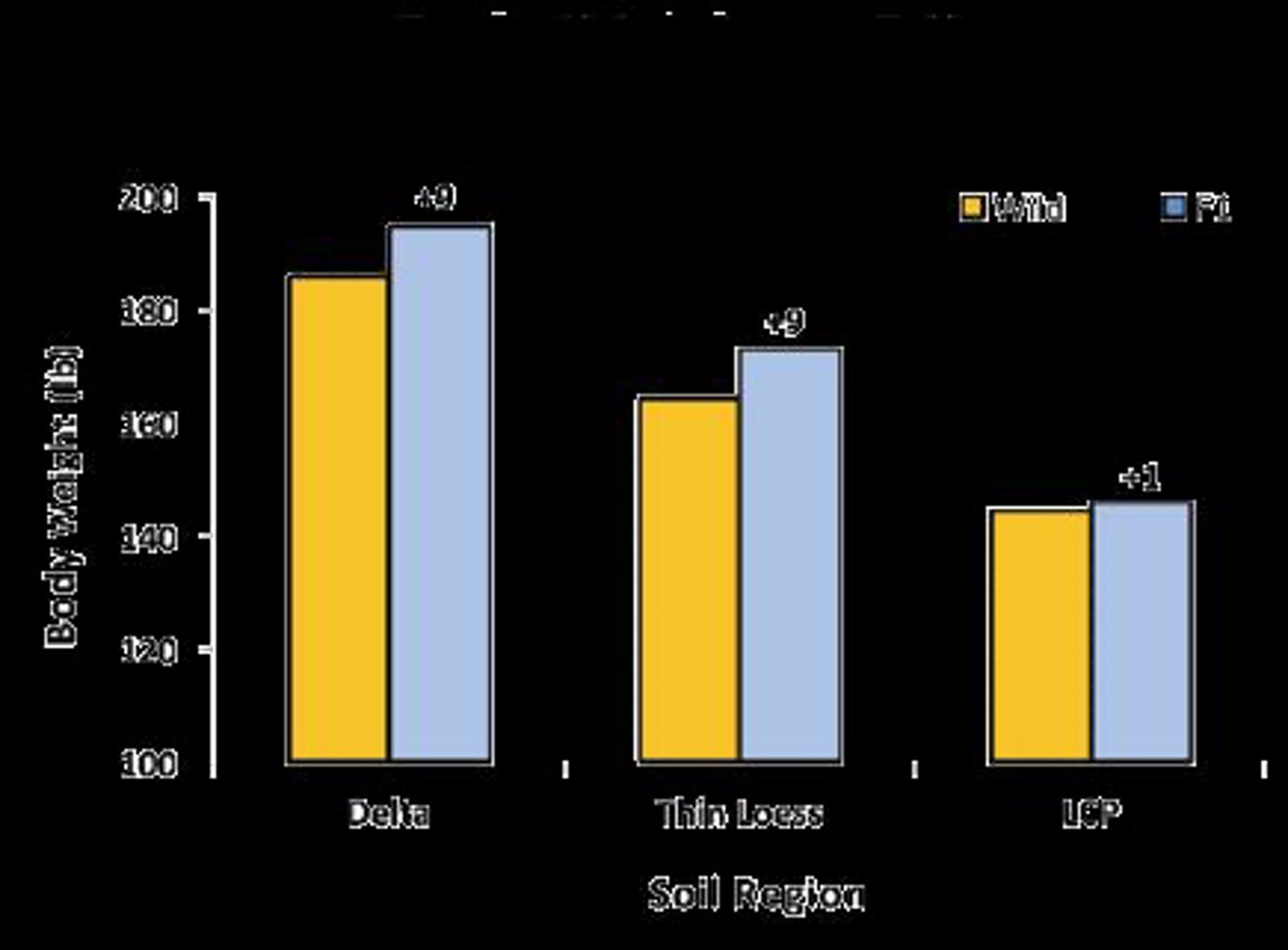
What were the results of the Michel et al. (2015) study regarding body mass after two generations of high-quality diet?
Body mass increased across all regions: +35 lbs for small antler regions, +17 lbs for medium, and +25 lbs for large.
What is the minimum crude protein percentage required for rumen function in adult deer?
Rumen function is impaired at levels below 6%.
What is the approximate crude protein requirement for maximum antler growth?
Approximately 16%.
Why is nutrition during the spring and summer critical for deer?
It drives antler development, body growth, and reproduction.
What is the primary purpose of fall/winter nutrition for deer?
It helps maintain body condition to prevent deficits following the growing season.
What are the recommended forest management practices to maximize carrying capacity (NCC) for deer?
Maintaining loblolly pine at 60 ft2/ac with a 3-year fire return interval.
What is the benefit of burning in mature loblolly stands regarding forage?
Burning increases both leaf biomass and crude protein production compared to untreated stands.
What percentage of a property should be dedicated to food plots?
At least 10%.
Which types of plants are recommended to bridge nutritional gaps in late winter/early spring?
Perennial and annual clovers, such as Ladino and Crimson clover.
What is a major 'do not' when selecting fall/winter forage for food plots?
Do not plant ryegrass.
What are the four steps involved in using camera surveys to estimate deer populations?
1. Establish bait sites, 2. Set up cameras over bait, 3. Take pictures for 10-14 days, 4. Analyze photos.
What metrics can be derived from hunter observation data?
Deer sightings per hour, buck sightings per hour, quality buck sightings per hour, and identifying productive hunting locations.
What are the most important factors to record when analyzing harvested deer?
Age, body mass, antler characteristics, and lactation status.
What are three indicators that a property should increase its doe harvest?
Overbrowsed food plots (confirmed by exclusion cages), below-average body weights/antler size, and an average harvested doe age of 4.5+ years.
What is the baseline doe harvest recommendation to maintain a population?
1 doe per 100 acres.
What is the baseline doe harvest recommendation to decrease a population?
2 or more does per 100 acres.
Can doe harvest alone balance a deer sex ratio?
No, you must also decrease buck harvest.
What is the primary goal of buck harvest management?
Hunter satisfaction, rather than population management.
Does culling bucks based on antler size change the genetics of a wild deer population?
No, culling does not change genetics.
What is the recommended basis for making buck harvest decisions?
Base harvest decisions on age, not antler size.
What is considered an 'excellent' harvest density for 4.5-year-old bucks?
3 or more per 640 acres per year.
What is the purpose of using exclusion cages in food plots?
To determine if the food plot is being overbrowsed by deer.
What is the average nest success rate for wild turkeys?
Approximately 33%.
What type of vegetation structure is most beneficial for turkey nesting success?
Dense vegetation ranging from knee to mid-thigh in height.
How does bottomland forest cover impact turkey gobbling activity?
Gobbling activity increases by 6.4% for every 1% increase in bottomland forest.
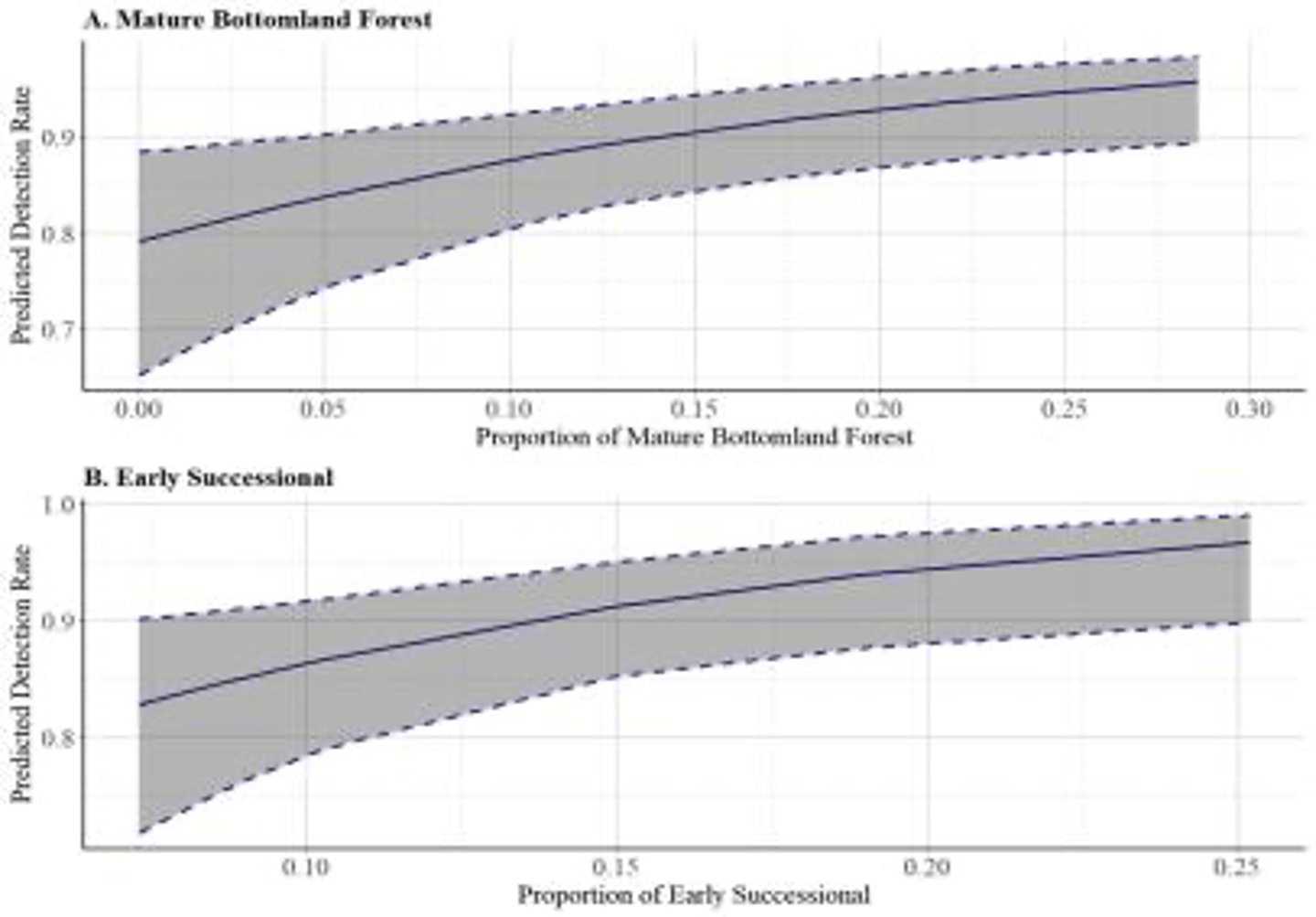
How does early successional vegetation impact turkey gobbling activity?
Gobbling activity increases by 10.5% for every 1% increase in early successional vegetation.
How does forb cover impact turkey gobbling activity?
Gobbling activity increases by 4.3% for every 1% increase in forb cover.
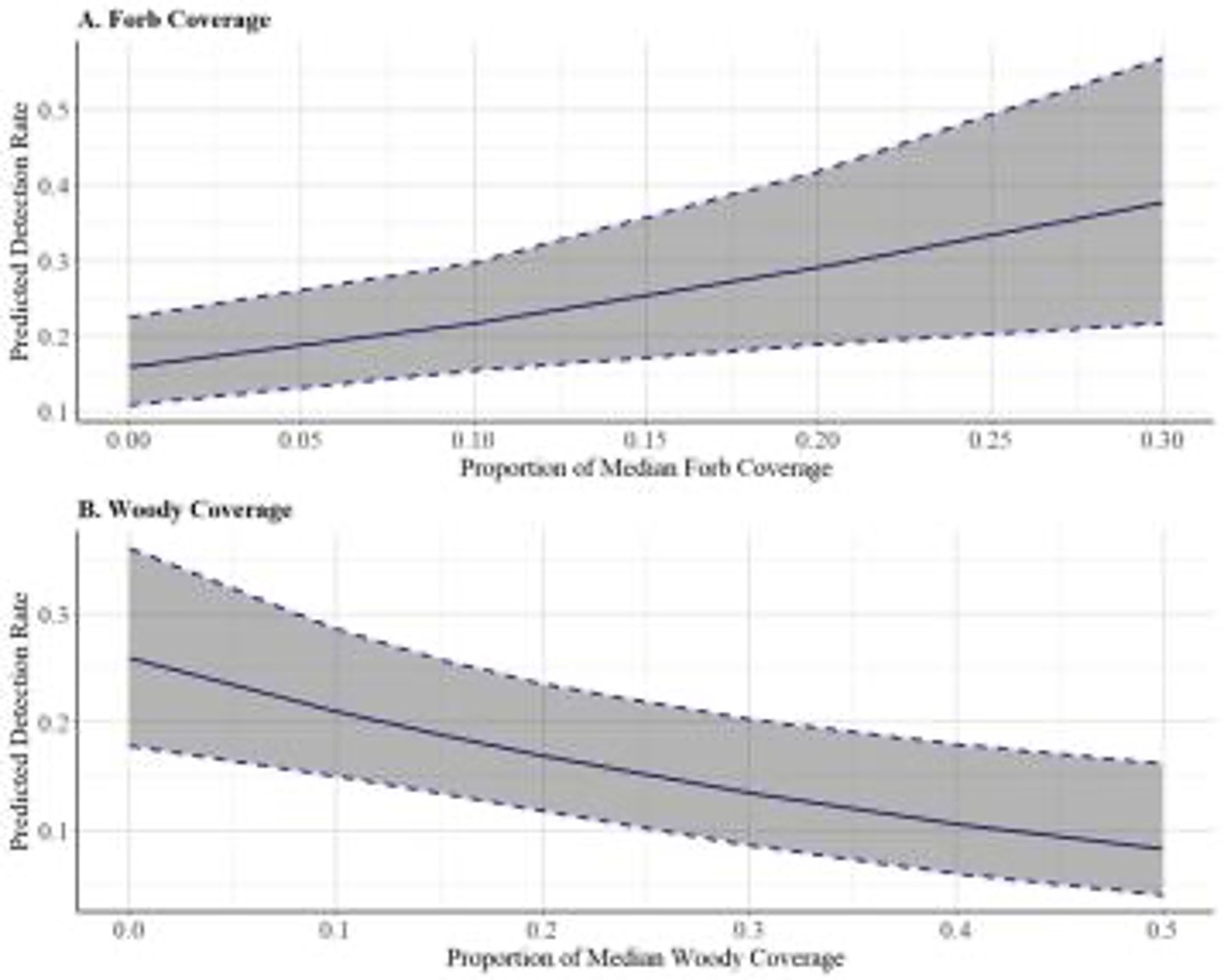
How does woody cover impact turkey gobbling activity?
Gobbling activity decreases by 2.7% for every 1% increase in woody cover.
What effect does increased fire frequency have on nest predators like feral pigs, raccoons, and opossums?
Increased fire frequency decreases the presence of these predators, with a 2-year fire frequency having the greatest effect.
Which land cover types show a positive correlation with county-level turkey harvest in Alabama?
Grassland/Herbaceous, Shrub/Scrub, Evergreen Forest, and Mixed Forest.
Why are well-managed openings considered a limited but critical cover type for turkeys?
They provide light for herbaceous plants, which offer structural cover, seeds for adults, and insects for poults.
What is the recommended minimum percentage of a property that should be dedicated to desired nesting/brooding structure?
At least 5%.
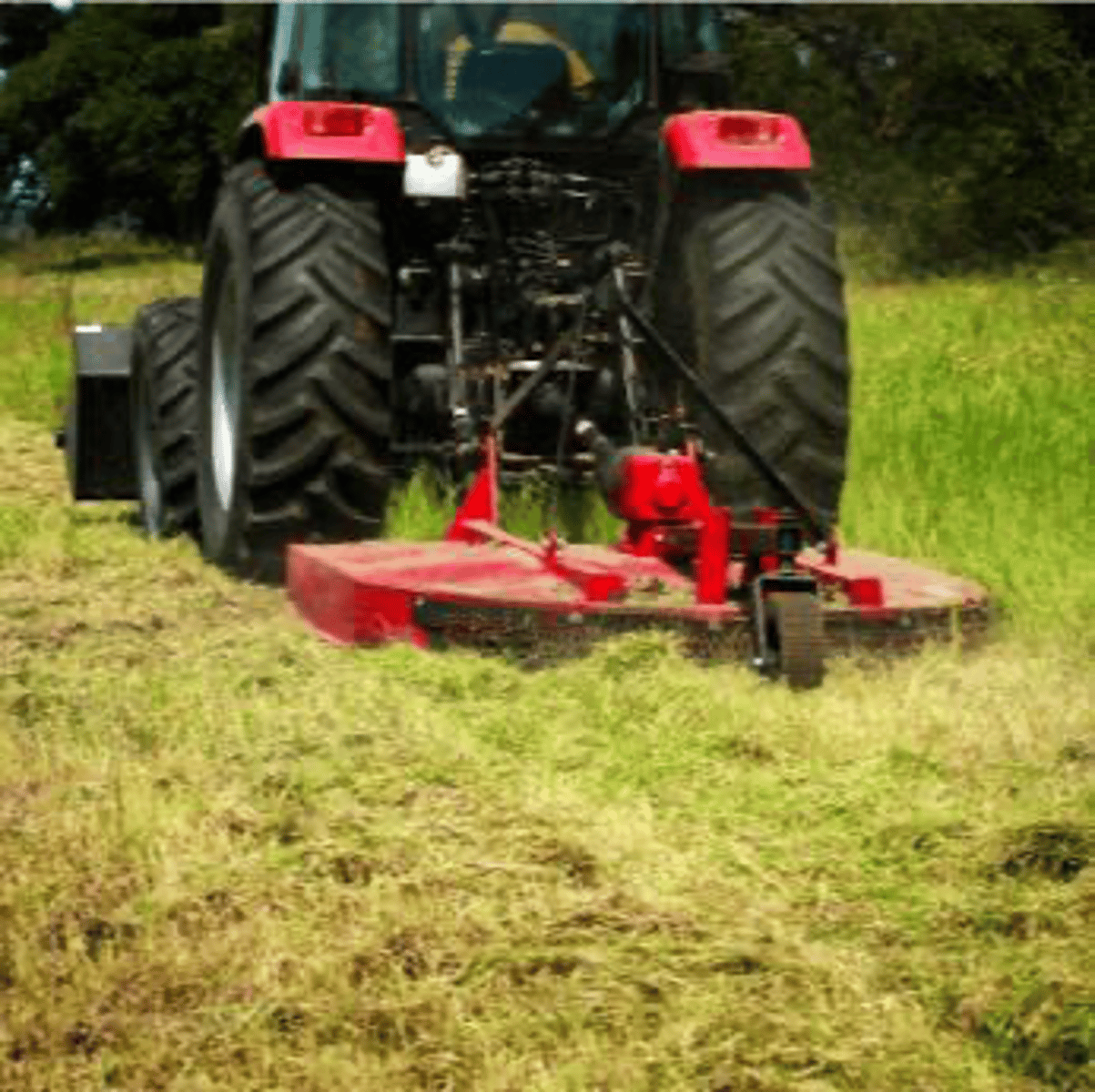
What are the negative impacts of frequent mowing on turkey habitat?
It increases grass coverage and thatch, decreases cover for nests/poults, and can directly destroy nests.
List three common invasive exotic grasses that should be managed in turkey habitat openings.
Bahia grass, Bermuda grass, and Tall fescue.
What is the recommended management strategy for controlling exotic grasses in turkey openings?
Kill exotic grasses with herbicides, allow natural revegetation, spot-spray with glyphosate, burn every ~2 years, and use winter disking.
What is a recommended annual cool-season mixture for turkey food plots?
10 lbs. of crimson clover and 40 lbs. of wheat or oats.
Why should 'clean' perennial clover plots be avoided for turkey broods?
They lack the necessary structure for protection; some structure should be allowed to develop by limiting mowing and spraying.
What is the recommended fire rotation for pine forests managed for turkeys?
A 2-year fire rotation (brooding in year 1, nesting in year 2).
What is 'daylighting' in the context of forest management for turkeys?
Thinning trees 30-60 feet on one or both sides of a road to increase brooding cover and improve property connectivity.
How does the availability of brood fields dictate pine forest thinning intensity?
If brood fields are limited, thin lower and use more frequent disturbance; if plentiful, use a moderate thin and a 2-year fire return.
What is the recommended management for late-rotation forests near creek drains?
Avoid isolating roosts and maintain 50-yard corridors every ~200 yards to provide connectivity and brooding cover.
What is the primary benefit of forbs for turkey poults?
They provide accessible insects, which are essential for poult development.
What is the estimated impact of improved habitat on the number of gobblers reaching 2 years of age?
It can increase the number of 2-year-old gobblers from approximately 10 to 23 per 50 hens.
What is the primary purpose of winter disking in turkey habitat management?
To keep grass coverage below 40% and encourage early successional growth.
What role do oak masts play in turkey habitat?
They provide an important winter food source.
What is the primary function of applying lime to a food plot?
It neutralizes acidic soils, which allows fertilizers to be used more efficiently by the plants.
Why is 'herbicide burndown' considered the first step for a successful planting?
It eliminates competing vegetation, ensuring that the new seedlings have the resources necessary to survive and thrive.
What is the main advantage of using a disk over a bottom plow for tillage?
A disk is less intensive and creates a finer seedbed, although it can create a hardpan layer.
When is the use of a cultipacker necessary in seedbed preparation?
It is necessary for small seeds, such as clover and millet, to ensure proper seed-to-soil contact.
What does the term 'Pure Live Seed' (PLS) refer to in planting?
It is a calculation used to determine the actual amount of viable seed to plant, ensuring accurate seeding rates.
What is a critical step that must be performed on legumes prior to planting?
They must be inoculated to ensure they can fix nitrogen effectively.
What are the primary advantages of using a no-till planting method?
It reduces erosion, benefits overall soil health, and increases soil moisture retention.
When evaluating herbicide costs, what metric should be prioritized?
Cost per acre, rather than cost per gallon.
What are the three main benefits of food plots for white-tailed deer?
Improved productivity, increased antler growth, and higher body weight.
Why are soybeans considered an excellent all-around food plot choice?
They provide up to 10 months of forage and are easy to manage using the Roundup Ready (RR) trait.
Which warm-season legume is recommended for areas with high deer density?
Cowpeas, as they are an alternative to soybeans that perform better under heavy browsing pressure.