BIOL 2160 EXAM 3 - CHAPTER 7
 Call Kai
 Learn
Learn Practice Test
 Spaced Repetition
 Match
Match Flashcards
 Knowt Play
1/94

There's no tags or description
Looks like no tags are added yet.
Name | Mastery | Learn | Test | Matching | Spaced | Call with Kai |
|---|
No analytics yet
Send a link to your students to track their progress
95 Terms
what can only burn glucose long-term?
nervous system unlike most cells in the body
why can’t the nervous system burn proteins or fats for energy?
because food intake is intermittent
where can one find glucose?
either in our blood or in the cells
how does one lower blood glucose levels?
by removing glucose from blood to cells
how does one raise blood glucose levels?
by removing sugar from cells to blood
what is need continuously for the nervous system?
glucose
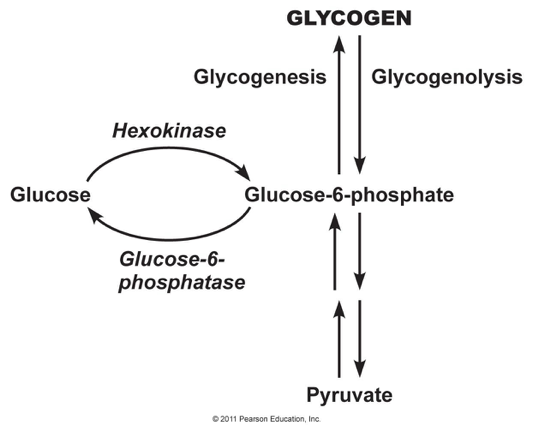
what is glucogenesis?
when blood sugar is high, glucose gets assembled or “created” into glycogen
where is glyocgen stored in?
liver and skeletal muscle
what is glycogen use for?
short-term energy
where does glycogen go to when there’s no more space for it in muscles?
results in getting assembled in fats and all over our bodies
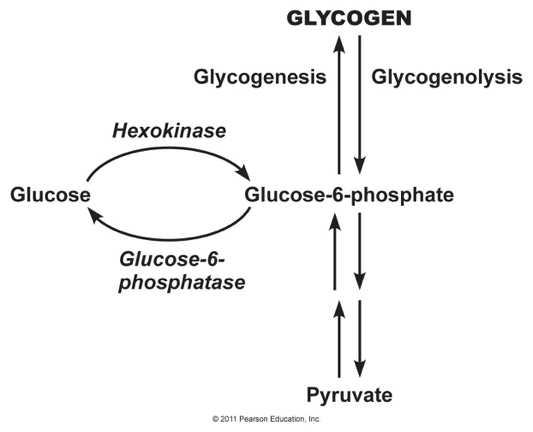
what is glycogenolysis?
when blood sugar is low, glycogen gets broken down or “break apart” into glucose
what is gluconeogenesis?
when new glucose molecules can be synthesized from proteins and fats
what is the purpose of gluconeogenesis?
to support the nervous system cells
where does gluconeogenesis occur?
carried out by the liver
what happens if you cut out sugar all together?
due to the nervous system needing glucose, the making of glucose from fats and proteins is all just a matter of rearranging their C, H, and O atoms
what are biomolecules?
proteins, fats, and sugars
how do biomolecules contribute to the making of ATP inside of cells?
biomolecules are broken down to release energy in the mitochondria during cellular respiration to make ATP
what are spare parts of biomolecules can be used for?
to build other proteins, fats, and sugars that the cell needs
how are biomolecules stored as for energy?
glycogen (carbohydrate) for short-term and triglyceride (fat) for long-term
what is metabolic rate?
Amount of energy (heat + work) released per unit time
what is metabolic rate influenced by?
by muscular activity, age, gender, and several other factors
what is happening if someone has a fast metabolism?
a lot of glucose is stored which is used with oxygen to make ATP → ATP is then used b/c of the process → the pace of ATP used and made result in fast metabolic rate
how is there ATP in the body?
has to be made as we need it, NOT stored
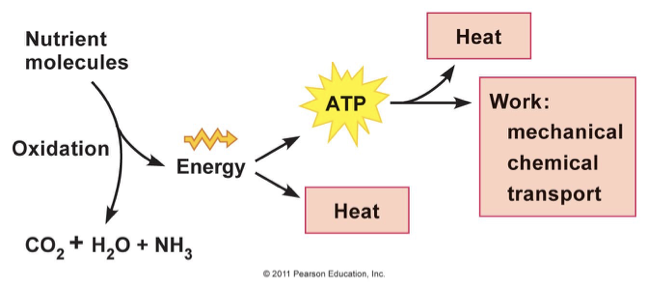
where does the left part happen in?
mitochondria
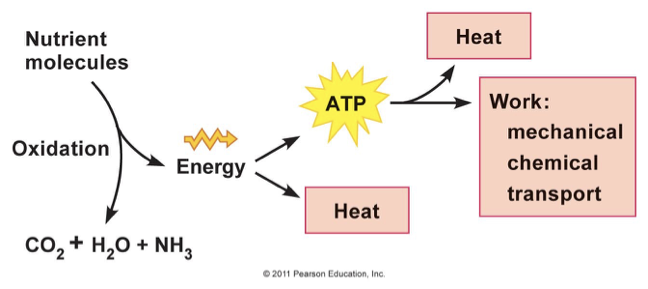
what does the right part a measure of?
of how active we are; the more active the more ATP will be used; the more work we do per unit time, the faster our metabolic rate is
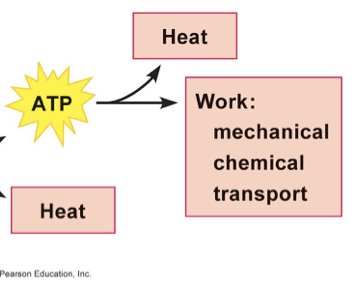
what is work?
mechanical chemical transport; anything that requires energy
what are some examples of work?
Use of proteins to generate movement or muscle contractions (muscles, cilia)
Formation of chemical bonds or building molecules like proteins (anabolism)
Moving molecules across membranes (active transport like NA+/K+ ATPase, endo/exocytosis)
what is Basal Metabolic Rate (BMR)?
Metabolic rate of person who is awake, lying down, physically/mentally relaxed, and fasted for 12 hours
what is Basal Metabolic Rate (BMR) equal to?
Roughly equal to rate of oxygen consumption
What does oxygen have to do with our metabolic rate?
It is used at the end of the electron transport chain during cellular respiration and is needed to make the majority of the ATP that we use. So, the more oxygen we use, the more ATP we are making, which is a reflection of how much ATP we are using. → metabolic rate
what is energy stored?
weight gained
what is formula used to explain weight gain or loss (energy balance)?
Energy stored = energy input – energy output
(energy output = work performed + heat released)
what is energy input?
how many calories we ate that day
what is energy output?
how many calories we used that day
what does it mean if energy stored is a negative number?
you will lose weight
what does it mean if energy stored in a positive number?
you will gain weight
what is positive energy balance?
when Energy input > Energy output
what is negative energy balance?
when Energy input < Energy output
what happens if you eat more calories than you burn?
energy will be stored in the form of fat
what are the states of energy balance since the body generally is not in energy balance?
absorptive state and postabsorptive
what is absorptive state?
3-4 hours following meal, positive energy balance, energy stored (cells will assemble glucose into glycogen and use the excess energy to build fats and proteins)
what is postabsorptive?
between meals, negative energy balance, energy mobilized. Glucose sparing (most cells metabolize proteins and fat, saving glucose for the nervous system)
what happens the longer your body stays in the postabsorptive state?
the more fat you will burn
what is adipocytes/adipose tissue?
cells that store fat (triglycerides), and fat is used for long-term energy storage
how much body weight is made up of Adipocytes/Adipose tissue normally?
20-30%
what is the abnormal body weight amount for Adipocytes/Adipose tissue?
80%
how much total energy reserves are from Adipocytes/Adipose tissue?
75-80%
how long can Adipocytes/Adipose tissue energy last?
Contains enough energy to last ~ 2 months
So how does our body know when to transition from the post-absorptive state to the absorptive state and vice versa?
regulated by hormones and endocrine system; regulated primarily by: insulin, glucagon, epinephrine
what is insulin?
an anabolic “building” hormone that promotes synthesis of energy storage molecules
what does insulin do and how?
lowers blood sugar by moving glucose from the blood to the cells
when is there an increased release of insulin?
during absorptive state (blood glucose levels high)
when is there a decreased release of insulin?
during post-absorptive state (blood glucose levels low)
how and where is insulin produced?
Produced by beta cells in islets of Langerhans in pancreas
what is the overall actions of insulin?
promotes synthesis (building) of most molecules and prevents the breakdown of most molecules
how does insulin get glucose out of the blood and into our cells?
because glucose is a large polar molecule, it’ll need to cross the plasma membrane using Glucose transport protein 4 (GLUT 4)
where is Glucose transport protein 4 (GLUT 4) located and why?
not in the membrane because if it were, glucose would constantly be moving into our cells, which would be bad because it would lead to constant low blood sugar
how does glucose transport protein 4 (GLUT 4) work?
when insulin gets released from Beta Cells in the pancreas, it binds to the Insulin receptor on normal body cells and causes GLUT 4 to be inserted into the membrane. This allows glucose to move from the blood into the cells
what is glucagon?
a catabolic hormone that’s an antagonist to insulin by signaling the stop of building molecules such as fat and protein, for normal cells to burn fats and proteins for energy (saving glucose for the nervous system), and to break down glycogen to raise the blood sugar
when is there a decreased release of glucagon?
during absorptive state (glucose levels high)
when is there an increased release of glucagon?
during post-absorptive state (glucose levels low)
how and where is glucagon made?
Secreted by alpha cells in pancreatic islets of Langerhans in the pancreas
what are the overall actions of glucagon?
breaking down of molecules because the whole purpose is to raise blood sugar levels
what is hyperglycemia?
Fasting (haven’t eaten in 9-12 hours) blood glucose; >140mg/dL, indicative of diabetes mellitus
what is hypoglycemia?
Fasting (haven’t eaten in 9-12 hours) blood glucose ; <60mg/dL, bad for CNS
what is A1C?
a measure of the percentage of your red blood cells that have glucose-coated hemoglobin
what are A1C levels?
essentially a representation of your average blood sugar levels for the past 3 months
what happens when glucose enters your bloodstream?
it attaches to hemoglobin in your red blood cells
what is epinephrine?
a sympathetic nervous system product that suppresses insulin, stimulates glucagon, and promotes post-absorptive processes
in what situation would epinephrine appear in?
“flight or fight” situations, stressful conditions, when someone has an allergic reaction and uses an epi pen, suffering a stroke, etc. (would need lots of glucose for these situations as well)
what does it mean when animals can smell fear?
what they’re actually smelling is epinephrine being released from an individual who is under extreme stress or fright
what does being pre-diabetic mean?
means that cells are becoming resistant to insulin which is a result of weight gain
how many americans are pre-diabetic?
57 million
how many Americans are diabetic?
8% (24 million people)
out of the world population, how many are diabetic?
7% (260 million people)
what are the vast majority fo diabetes cases due to?
cells becoming resistant to insulin
why is Type 1 diabetes called juvenile-onset?
because it is almost always detected in children (5-10%) and insulin-dependent diabetes mellitus
why is Type 2 diabetes called adult-onset?
because it is a result of obesity, which mostly happens in adults (90-95%) and insulin-independent diabetes mellitus
what is Type 1 Diabetes Mellitus?
an autoimmune disease where the immune system destroys beta cells of pancreas resulting in the loss of insulin secretion (need insuline pump installed to manage their blood sugar levels)
what is Type 1 Diabetes Mellitus believed to stem from?
believed to be partially genetic or may also be triggered by viral infection
what is Type 2 Diabetes Mellitus?
when the individuals produce enough insulin and nothing is wrong with their pancreas but due to obesity, their cells are full of glucose so when insulin binds to insulin receptors and GLUT 4 gets inserted into the membrane, glucose does not enter the cells, leaving glucose in the blood → chronic high blood sugar
why is Type 2 is believed to have a larger genetic factor than Type 1?
because obesity is believed to be more closely regulated by genetics than autoimmune disease
what is body mass index?
the ratio of your weight to your height
Why is BMI a better indicator of health for normal body types than athletic body types?
because muscle weighs more than fat
what is the likelihood of a person with a BMI under 25?
1 times more
what is the likelihood of a person with a BMI of 25-29.9?
2.42 times more
what is the likelihood of a person with a BMI of 30-34.9?
3.35 times more
what is the likelihood of a person with a BMI of >35?
6.16 times more
what are the acute (sudden) effects of diabetes?
Ketoacidosis, Hyperosmolar non-ketotic coma, and Hypoglycemic coma
what is Ketoacidosis?
Decrease in blood pH due to buildup of acidic ketones when cells burn proteins and fats instead of only glucose (cleanest burn) which is a direct result of hyperglycemia
How does decreased insulin lead to Ketoacidosis?
Decrease insulin → Increase blood glucose (hyperglycemia) and Increase fat and protein metabolism
explaination: High blood sugar means glucose levels remain high in blood, and low in cells. Cells must break down fats and proteins for energy. Results in the production of ketones.
what can Ketoacidosis result in?
to a coma or even death
what is hyperglycemia?
when the blood sugar is high, the excess glucose in the blood gets filtered into our urine causing the water also travel with it (osmosis) → increases volume or urine and urination
what is hyper-osmolar non-ketotic coma?
when elderly patients forget to monitor their blood sugar properly leading to extreme hyperglycemia → chronic high blood sugar leads to increased urination → dehydration → decreased blood volume (blood gets thicker) → increased blood osmolarity (thicker blood clots more easily) → lead to coma and/or increased blood clotting
what is hypoglycemic coma?
Accidental insulin overdose as part of diabetes treatment; Decreased blood glucose; Nervous system damage; can lead to death