Aegean Bronze Age - Minoans
 Call Kai
 Learn
Learn Practice Test
 Spaced Repetition
 Match
Match Flashcards
 Knowt Play
1/18

There's no tags or description
Looks like no tags are added yet.
Name | Mastery | Learn | Test | Matching | Spaced | Call with Kai |
|---|
No analytics yet
Send a link to your students to track their progress
19 Terms
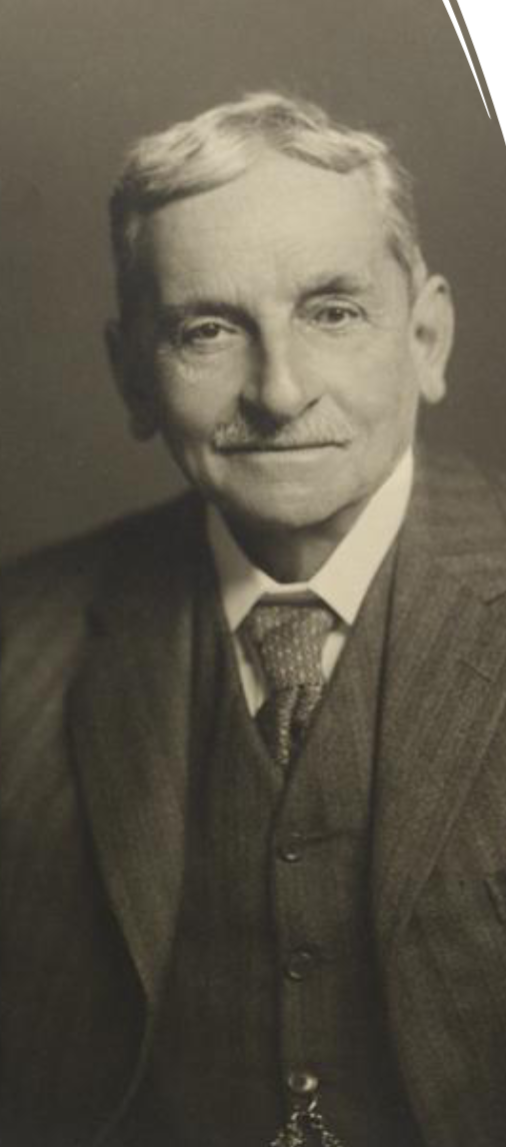
Sir Arthur Evans (1851-1941). Archaeologist and excavator of Knossos (a major Minoan center). Considered the discoverer of Minoan civilization, Identified Linear A and Linear B writing, his discoveries seemed to show the Mycenaean culture to be inferior to Minoan. Agent in the Balkans, used money to purchase Knossos hill.
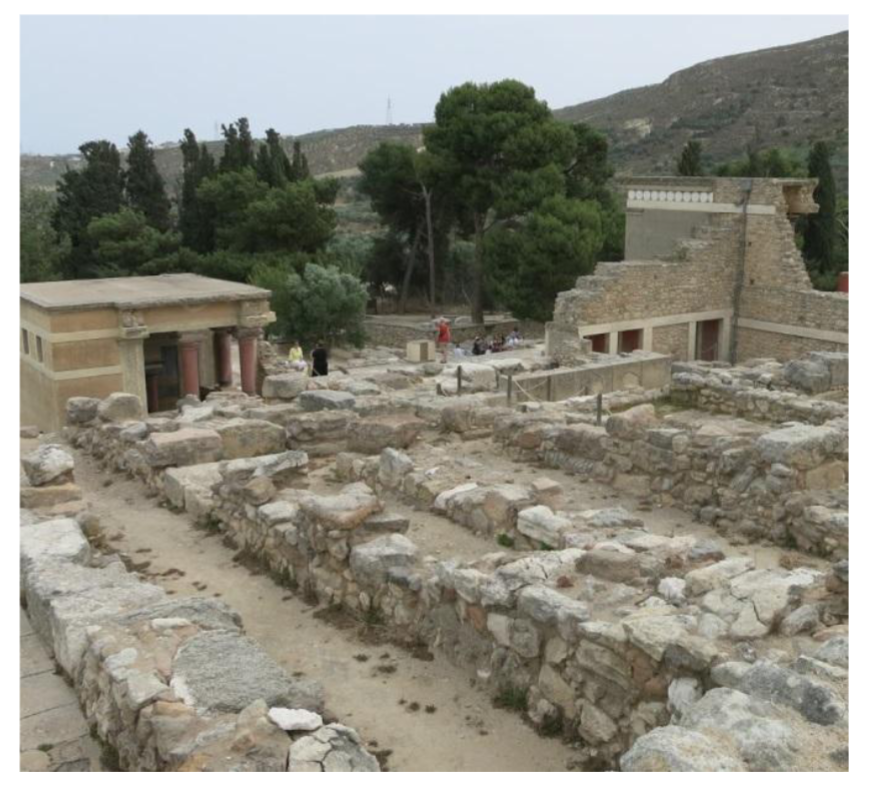
Protopalatial Period Knossos, 1900-1750 BCE. Mentioned by Homer as the great city of King Minos, site occupied since early Bronze Age, first palace built on the ruins of an older settlement, largest of the palace complexes on Crete, first palace was destroyed by an earthquake/fire in 1625 BCE. Evans followed Homer, like Schliemann. Largest palace complex on Crete.
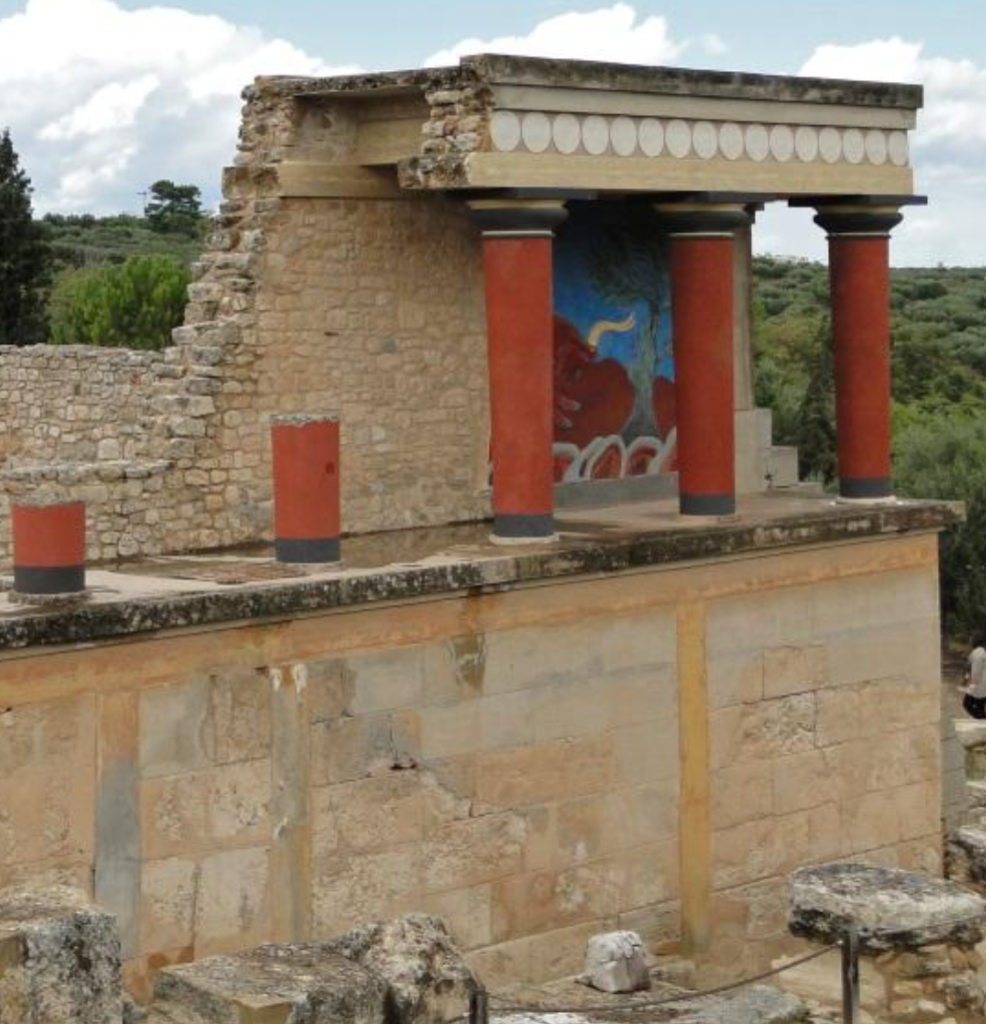
Neo Palatial period of Knossos (1750-1500 BCE). prompted by the destruction of the old palaces by earthquake c. 1625 BCE; new palaces built on a much grander scale at Phaistos, Knossos and other sites; no fortifications; time of peace and prosperity. Significant amount of expansion. Shared features with Phaistos (west court, east entrance, archives, central court, Minoan hall, lustral basins, large gathering spaces, large pits for vegetation called Koulouros, multi-functional spaces, architecture plays in harmony with gathering spaces). Throne room built from Mycenaean occupation. Unsure if they had kings or queens. May have ruled all of Crete at one point.
‘Palace-Style’ Amphora from Knossos. 1500-1450 BCE. Mycenaeans occupied Knossos and modified it to a degree and produced unique pottery to this period.
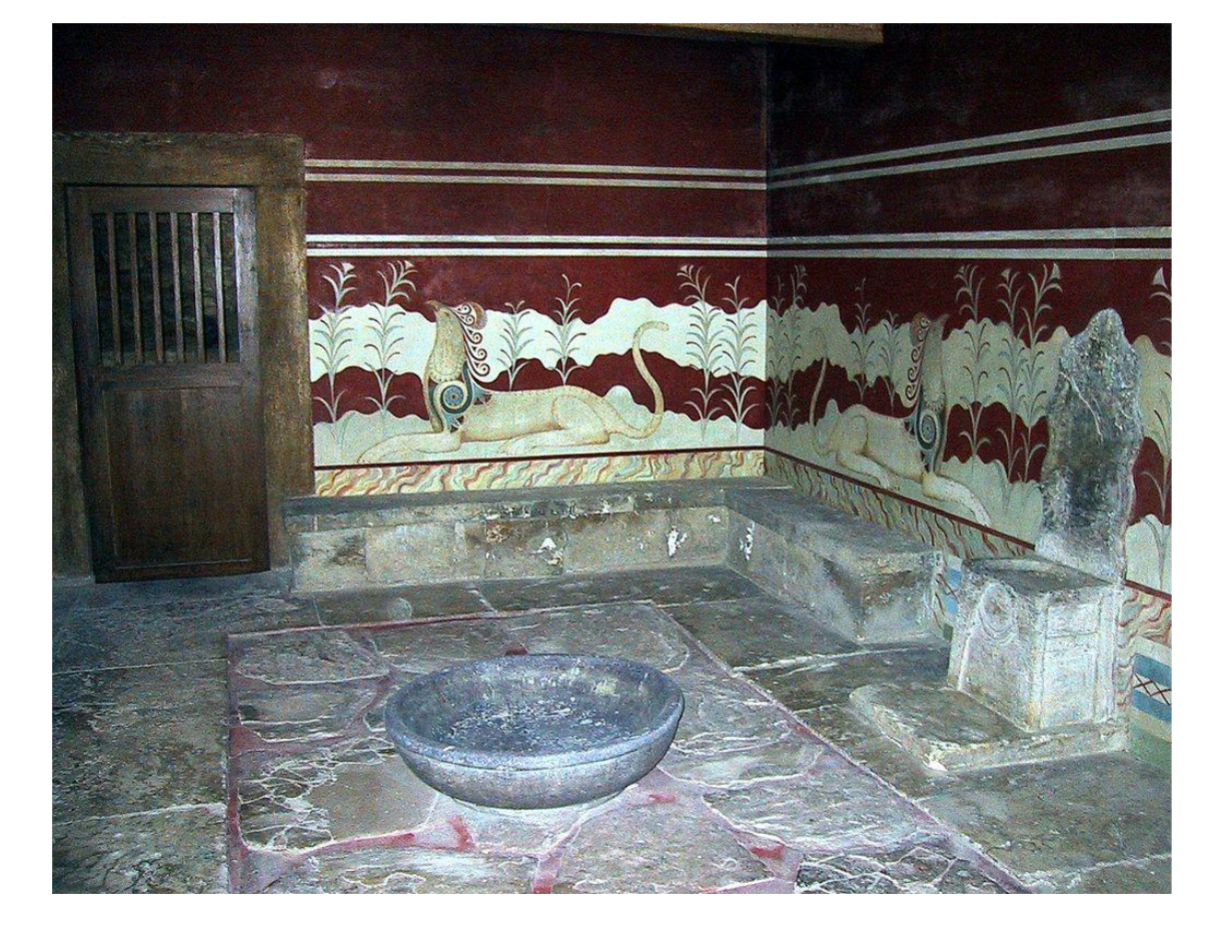
Mycenaean Knossos Throne Room. A later addition attributed to Mycenae. Alabaster throne with gypsum benches around it. Lustral basin outside. Griffins and leafy plants on the walls (a place of power, Griffins are protectors of kings where sphinxes protect the dead). Echoes the Mycenaean shift, but it is attributed to a Minoan style of art. A central bowl for offerings
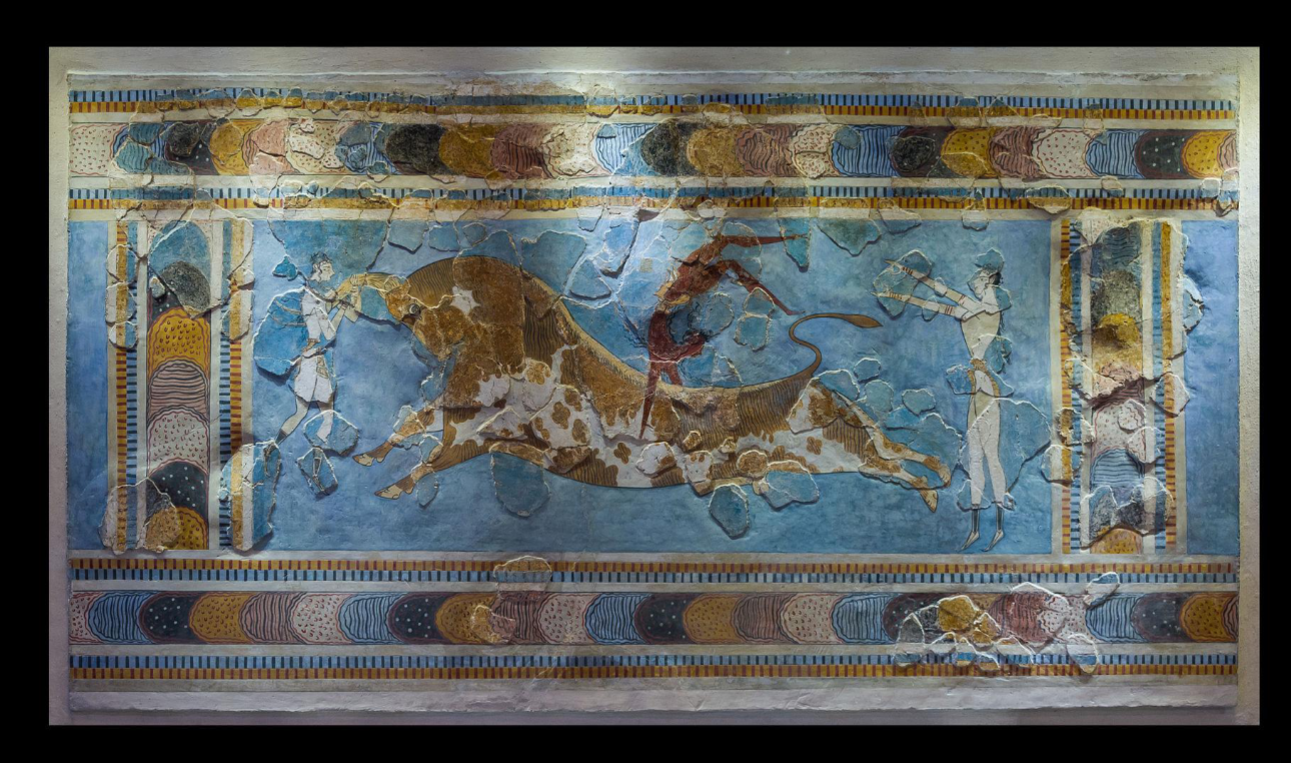
Bull jumping Fresco from Knossos. Mycenaean designs, pale attendants (female?) dark skin jumper (male?)
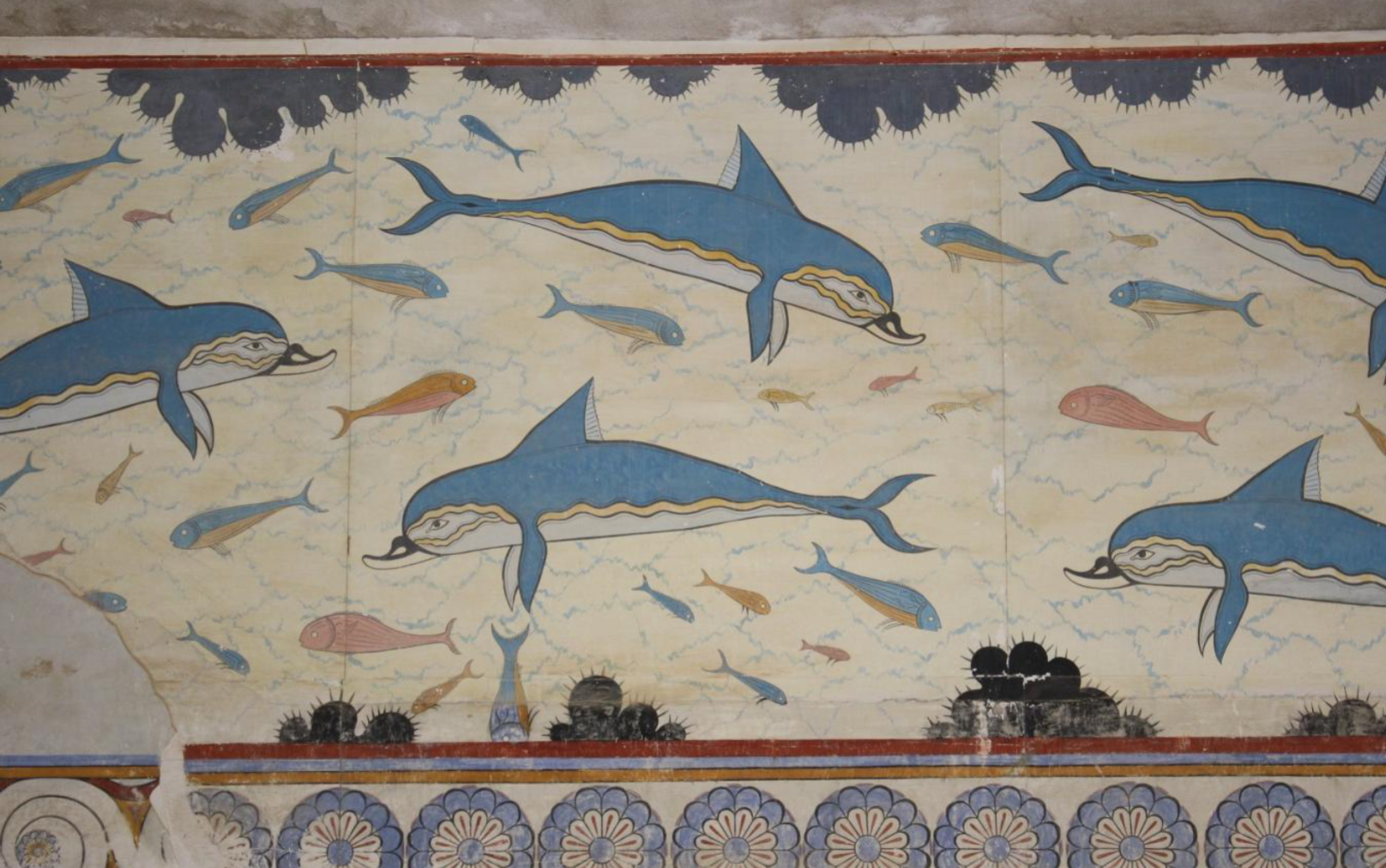
Dolphin Fresco from the Queen’s room at Knossos, 1600-1500 BCE. Affinity to the sea, depicts sea life.
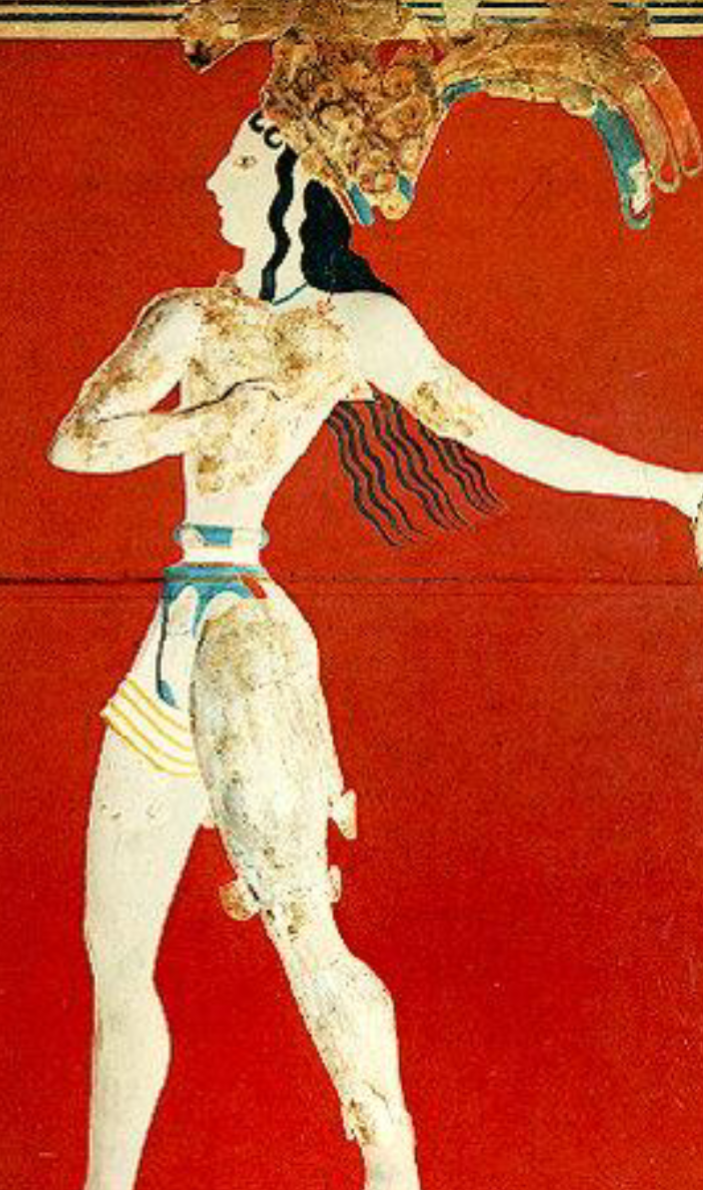
Priest King fresco, 1700-1600 BCE. Heavily reconstructed by Evans from fragments. Located near the south entrance to the central court, pieces come from three different figures leading to multiple interpretations, male or female? priest or king? Rope=female leading a bull? elaborate head dress
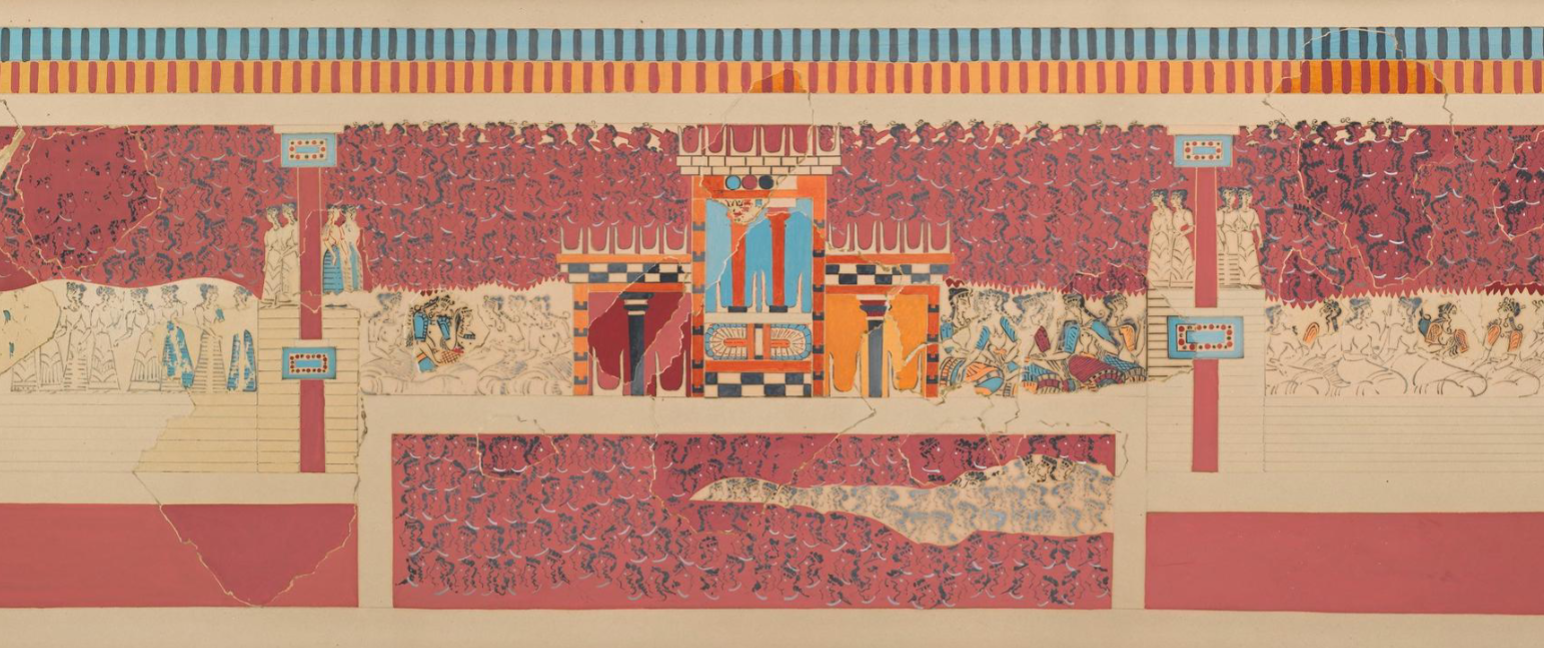
Miniature grandstand fresco 1750-1600 BCE. North West entrance. Tripart shrine with columns, bull horn decoration, females in colourful/ornate skirts, exposed breasts (priestesses), men in crowds (masculine hairstyles, dark skin tone), large community event, bull horns are important religious symbol for the Minoans (connected to worship of a Goddess, matriarchal society)
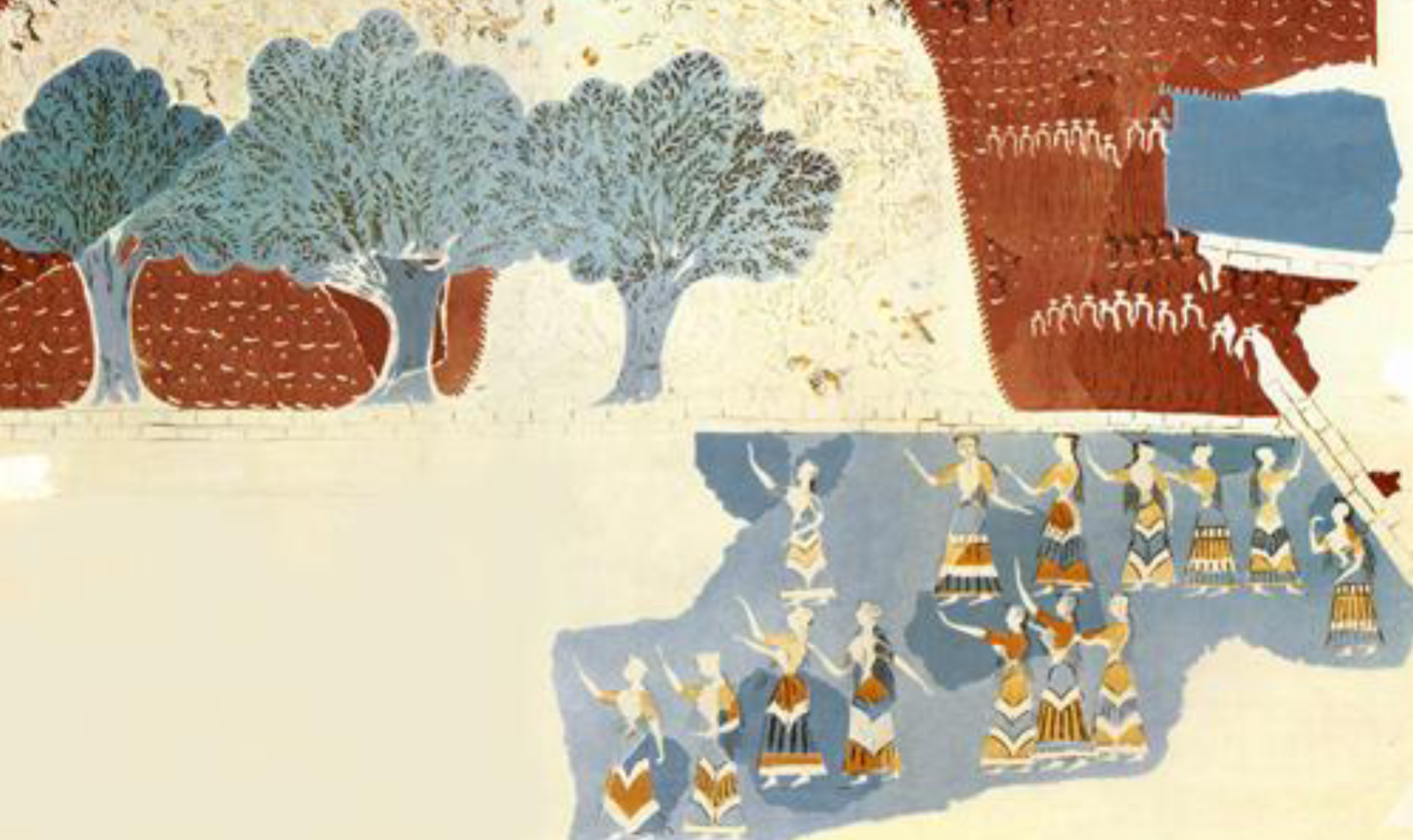
Sacred Grove fresco, 1750-1600 BCE. Trees placed in kolouros? females in elaborate dress
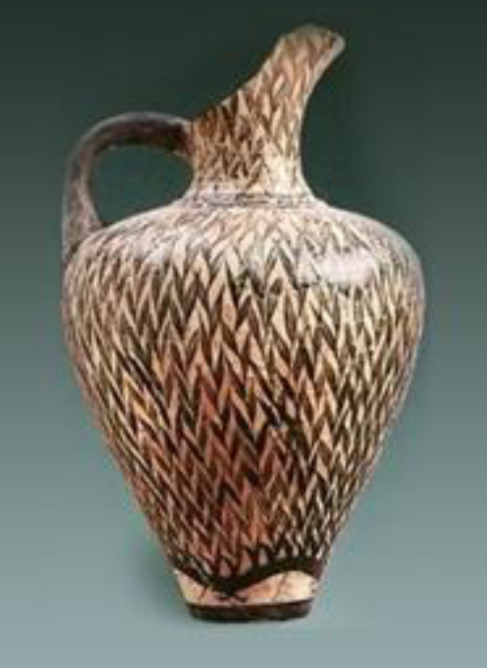
Jug of the Reeds from Phaistos, 1550-1500 BCE
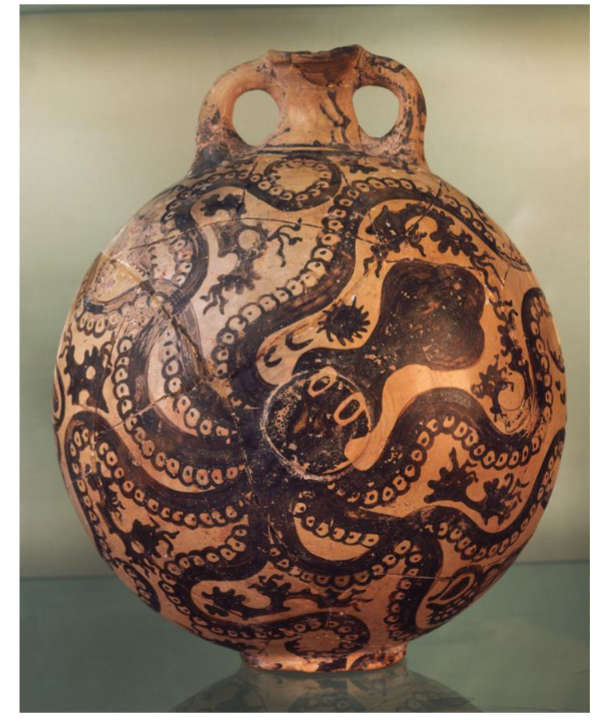
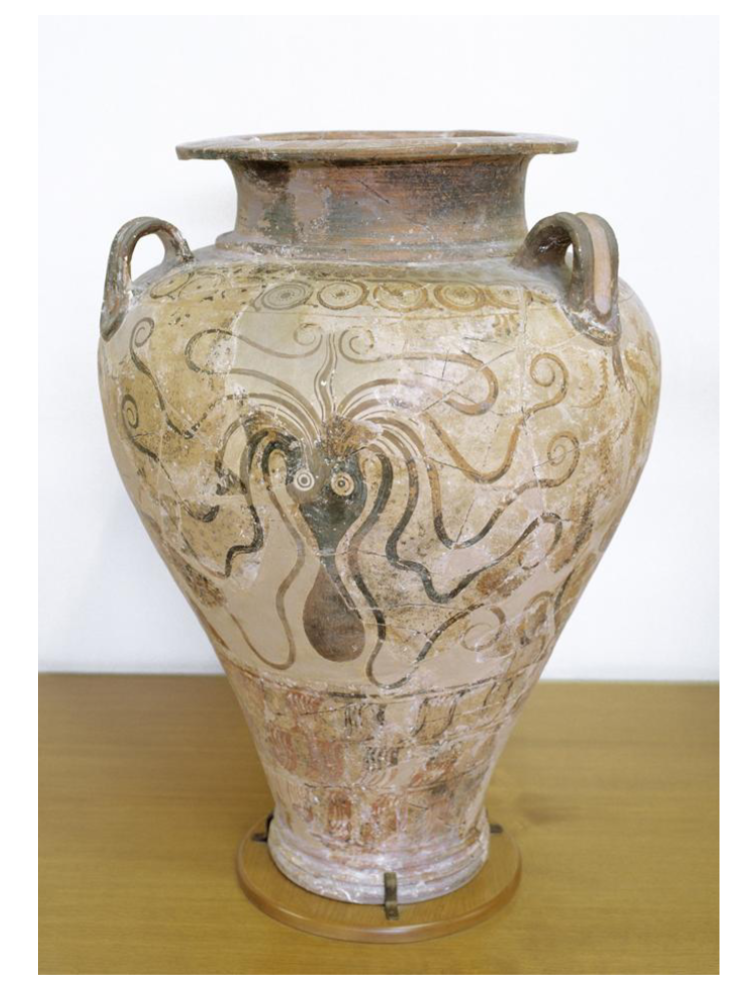
Octopus stirrup jar from Knossos, 1600-1500 BCE
The Site of Akrotiri
Located on the Island o Thera, one of the cycladic islands. Discovered in 1967 by Greek archaeologist Spyridon Marinatos. Site flourished around 1700-1600 BCE. Destroyed by volcanic eruption in the second millennium BCE and buried in volcanic pumice.
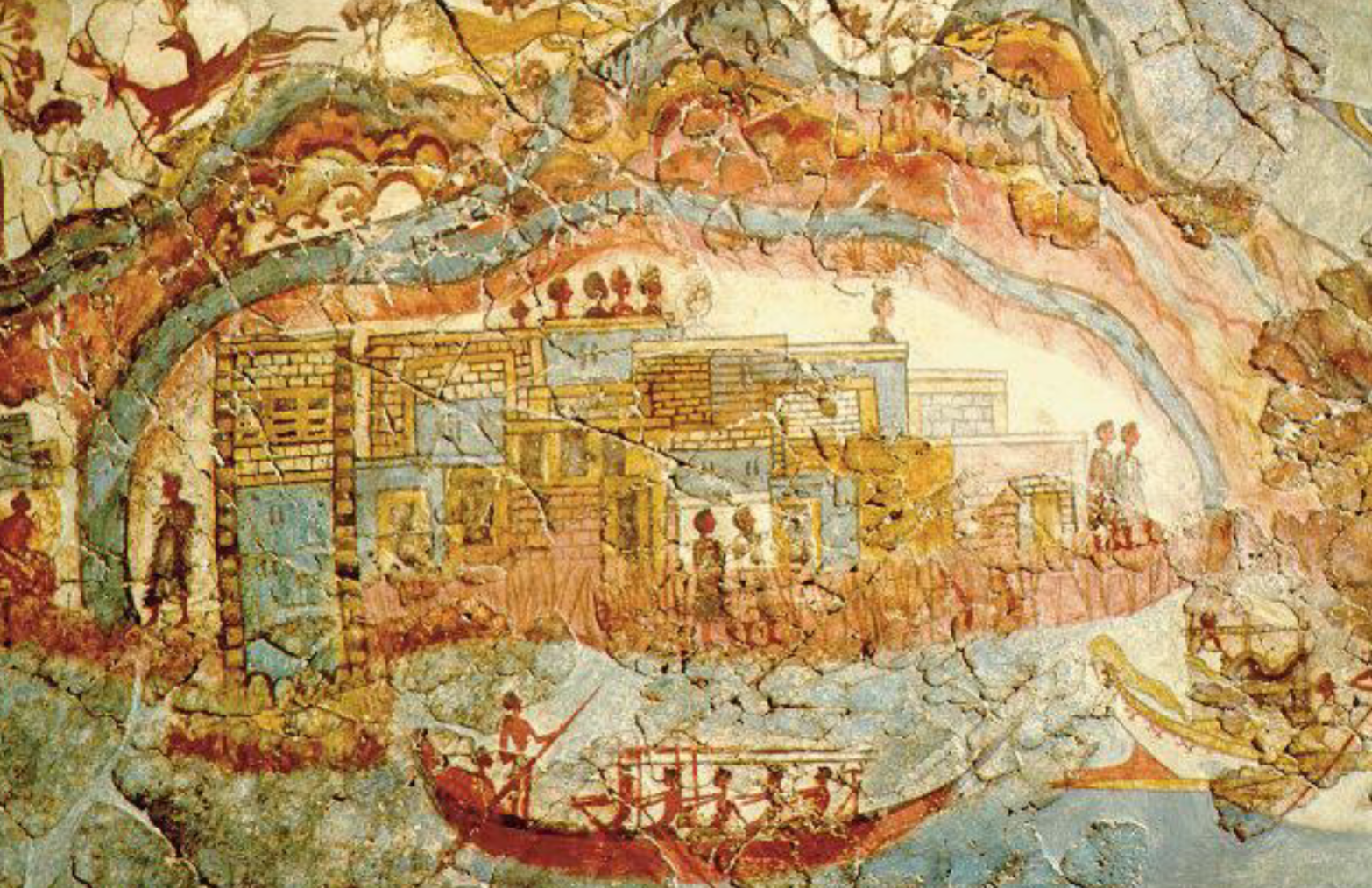
Flotilla fresco from the west house at Akrotiri. Naval sacred procession, lush landscapes with vegetation, lions
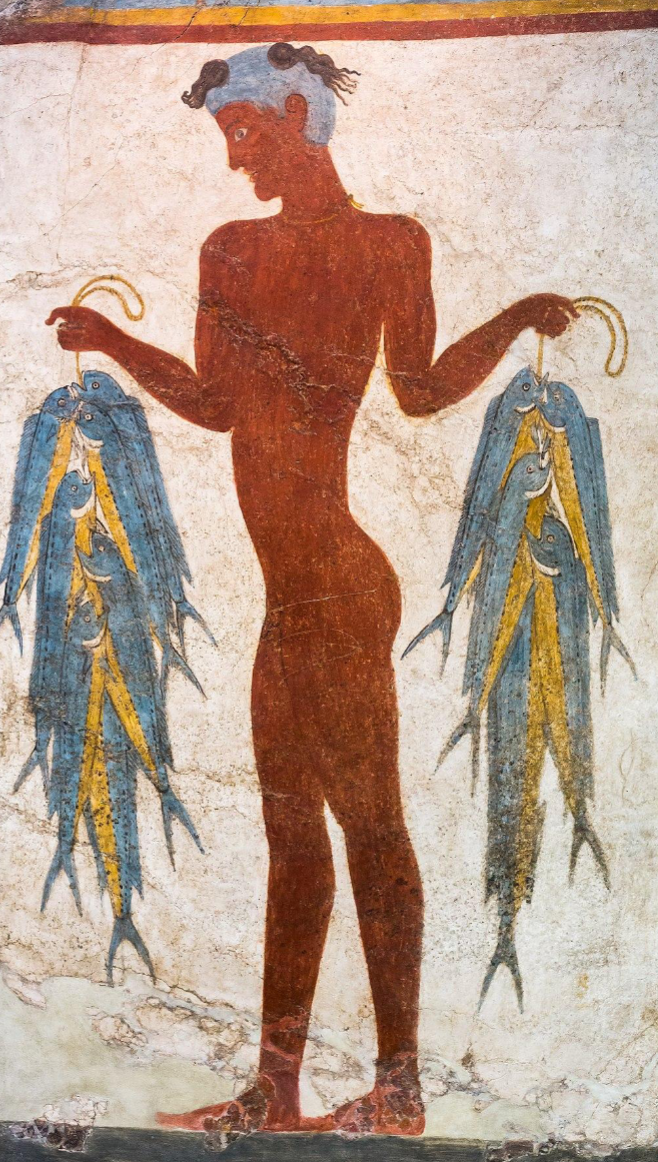
blue fisherman from the west house at Akrotiri (offerings for a deity?)
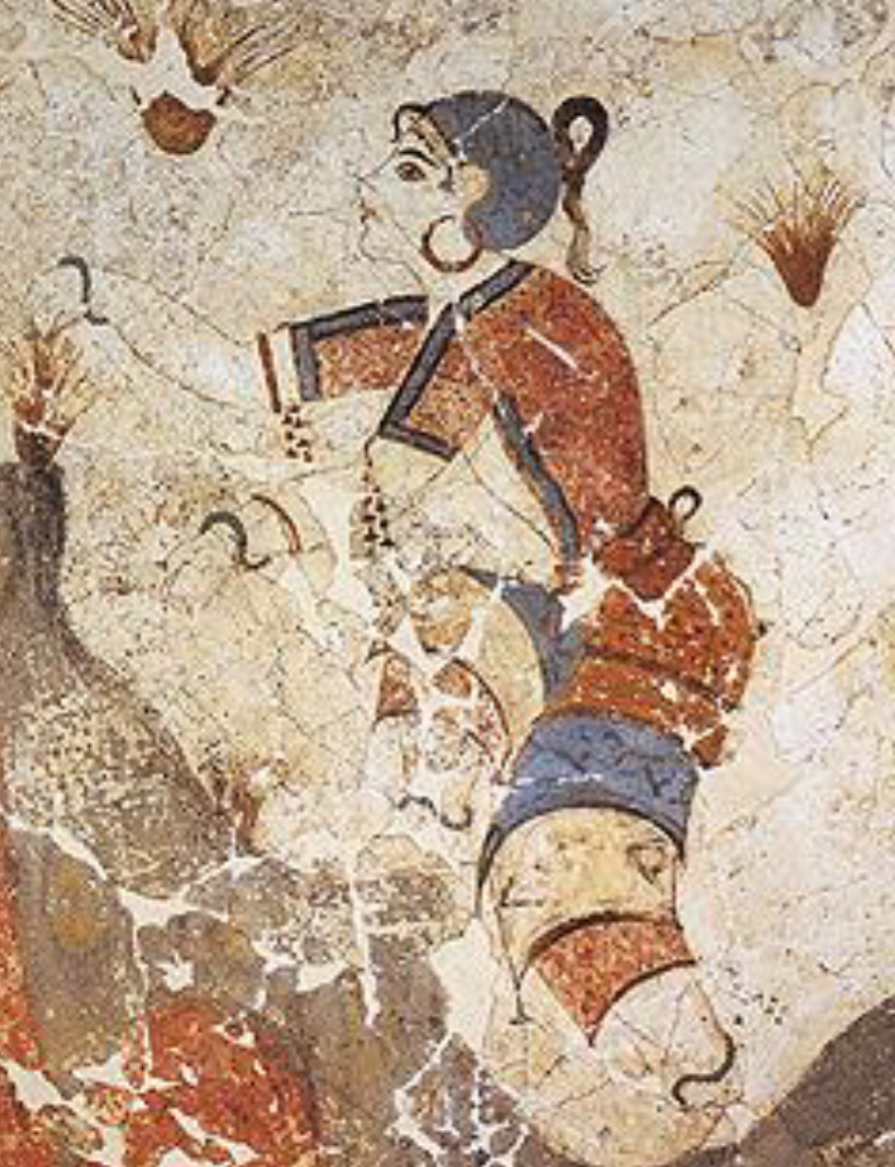
Saffron Gatherers fresco from Xeste 3 at Akrotiri. Depicts young women gathering saffron/crocus flowers, alludes to medicine used for menstrual pain that was gathered for rituals. similar dress to Minoans, the blue head dress is a symbol of youth
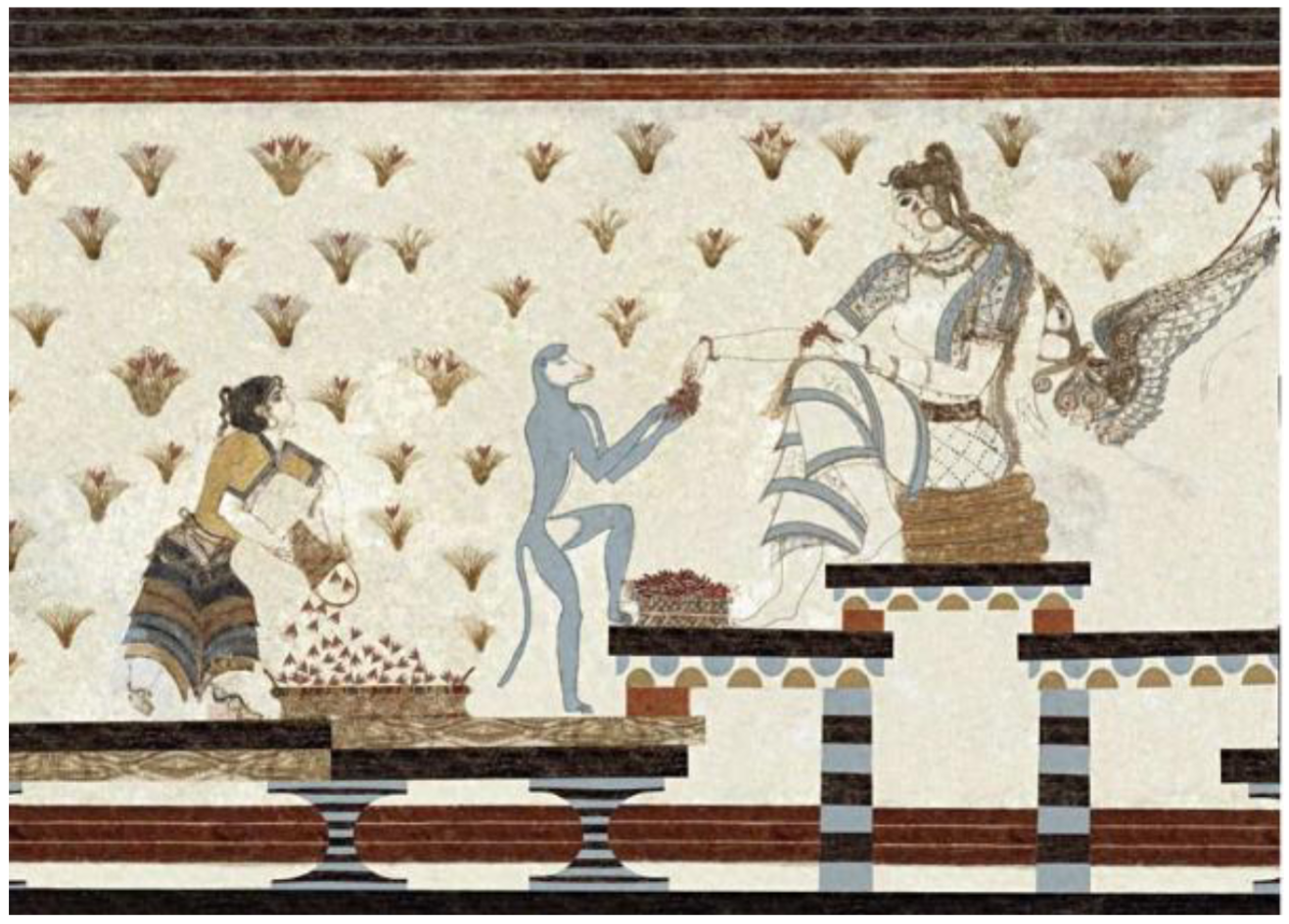
Goddess Fresco from Xeste 3 at Akrotiri. Saffron, prominent woman, griffin, blue monkey (connection to Africa)
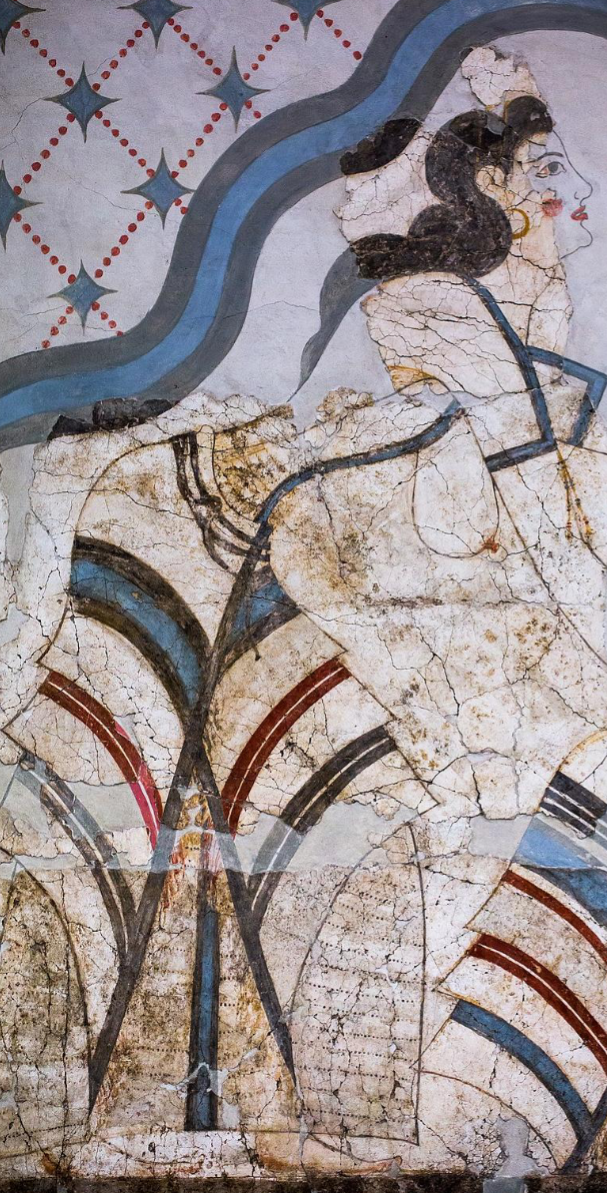
House of the Ladies fresco at Akrotiri. Note dress of this figure, which echoes that of Minoan women as seen in frescoes at Knossos, likely a ritual offering or robing ceremony scene given the adjacent figures. Note the starry skies and her makeup.
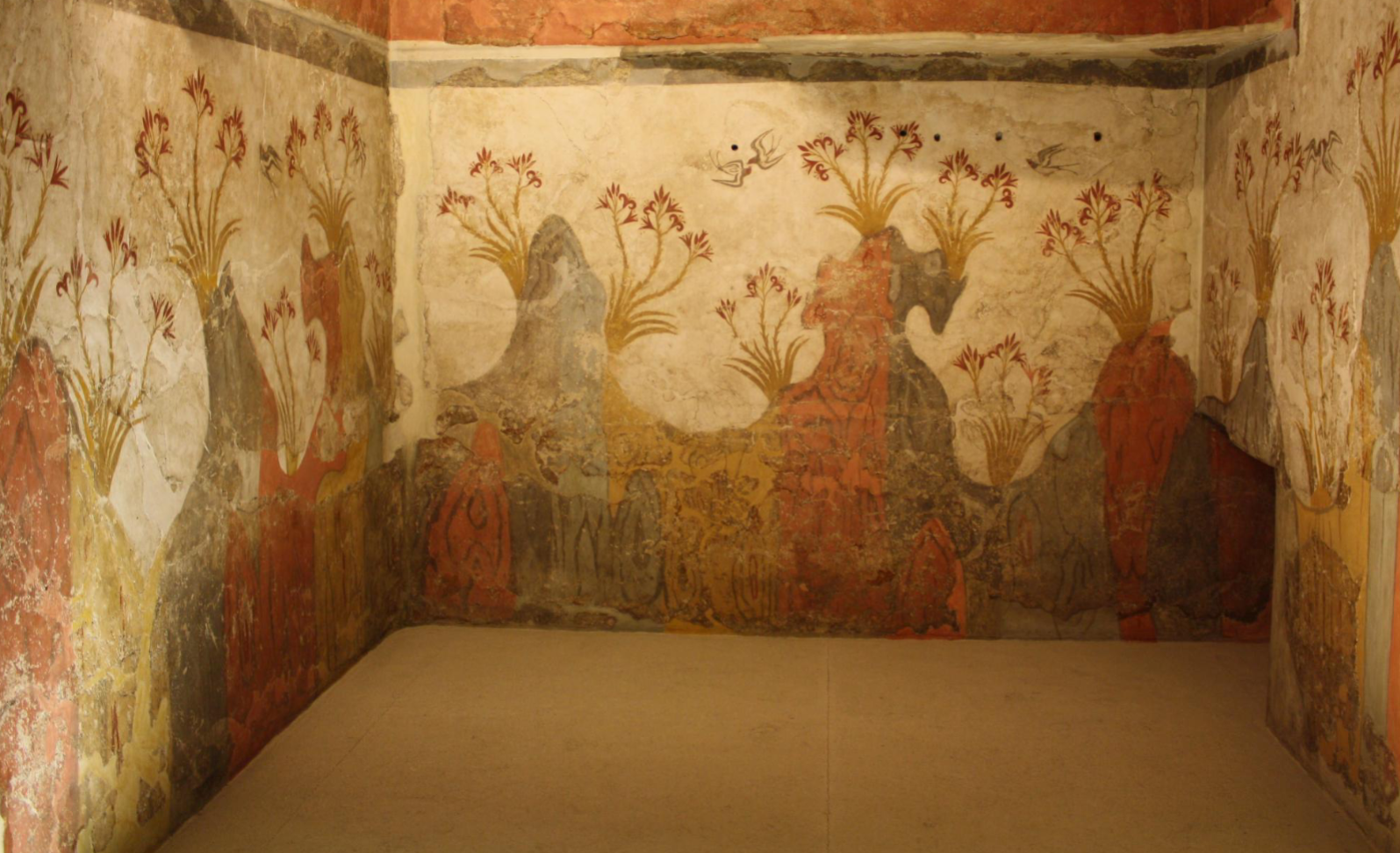
Lilies (spring) fresco from the House Delta at Akrotiri. The themes present in Akrotiri mirror those found in Minoa