Lecture 14: Micro algae biotech 1
 Call Kai
 Learn
Learn Practice Test
 Spaced Repetition
 Match
Match Flashcards
 Knowt Play
1/33

There's no tags or description
Looks like no tags are added yet.
Name | Mastery | Learn | Test | Matching | Spaced | Call with Kai |
|---|
No analytics yet
Send a link to your students to track their progress
34 Terms
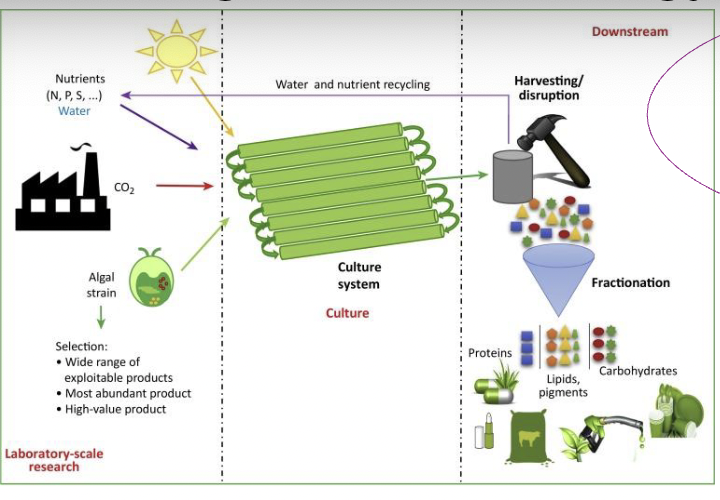
talk about what to focus on optimizing in each step och microalgae biotech
1. Lab-scale optimization:
- Species selection; Environmental conditions; Nutrients
—> lab scale research- not so much big production (eg at universities). You want to optimize and research how the process would work on a bigger scale- investigate what species, and environments and nutrients are needed and best suited etc. Focus on selecting a strain suitable for the desired end product
2. Scaling up:
- Reactors; Location; Cultivation modes
—> when scaling up you need to choose location etc- eg near availability to waste water to use as nutrient source for algea etc
3. Downstream processing
- Harvesting; Fractionation / Biorefinery
—> harvesting can depend on what kind of algea is grown- eg some sorts need to be centrifuged- how to separate the components, and what is the target product- try gettes as high purity and yield as possible
Key take away: Entire system is inter connected. For different products eg lipids vs proteins etc specific species might be better suited and the location and harvesting depend on this etc- evereything is intertwined
talk about the species and strain selection
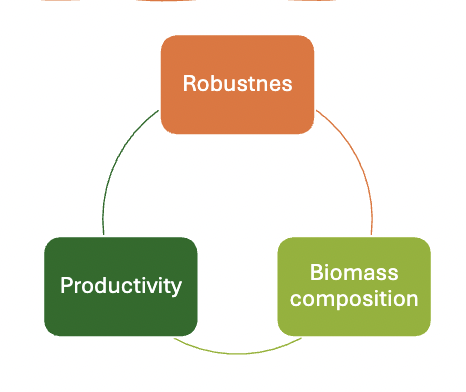
Wide variety: you want to choose species that has desired traits for your aim, when it comes to both biomass composition, productivity level and robustness- you want it to produce you aimed product, and at a certain productivity level:
name different approaches on how to choose species and strain
- You can isolate and characterize new strains
- Screening of known strains at different conditions: test known species under diffeent conditions
- Use strains from Algea culture collections: different ones- some quite old, eg GUMACC
talk about biomass composition in species selection
every species and strain have different capacities to produce different kinds of biomass- varies between them- some have higher protein production, others chlorophylls, other lipids etc.- you choose species based on what you expect them to have
- Different species are used for different products. All have in common that they are robust- easy to cultivate, and well researched
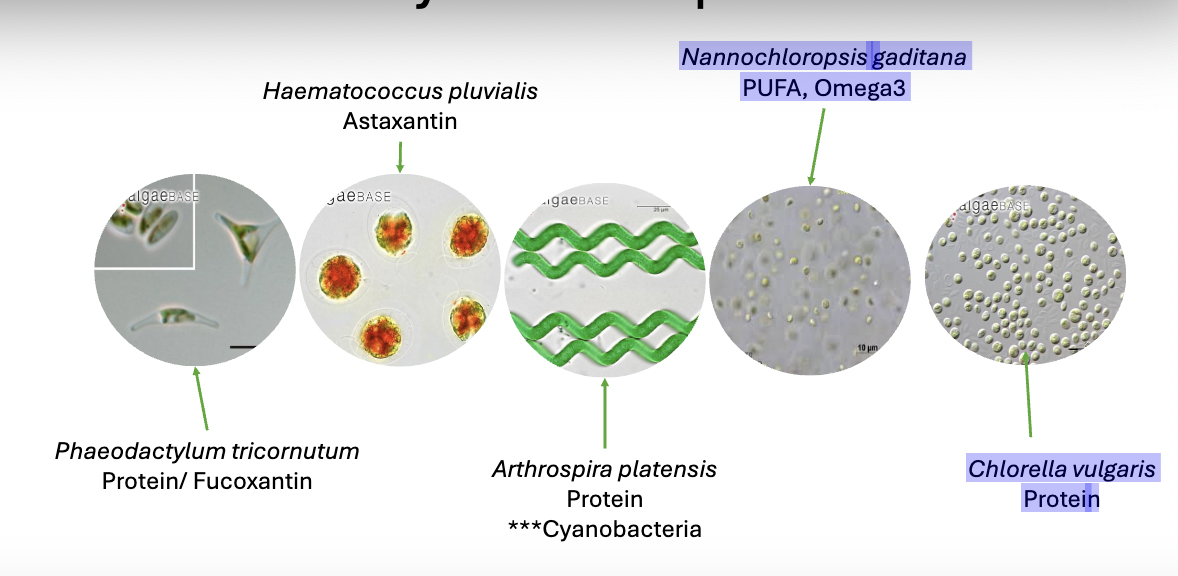
name some industrially relevant species
nannochloropsis (PUFA, omega 3)
chlorella vulgaris (protein)
phaeodactylum tricornutum (protein/Fucoxantin)
what you could look for in species selection through screening
When selecting species you can do screenings: looking for eg productivity/yield for the desired product.
- First screen during normal conditions- select for the highest productivity/yield- do further cultivations and screening to be able to select the one with the highest biomass production
clarify the terms: productivity, dry weight, yield, specific growth rate
- Productivity: the grams (either number of cells, or dryweight of biomass) /litres per day. Day by day measure
- Dry weight (DW): take culture- filter them and weigh- dry them and weigh again
- Yield= final grams per litres of product.
- Specific growth rate: species specific measure of growth. Unitless. Can tell you if a speices grows faster than other ones, and differ depending on conditions.
what is the first step to ensure scalability and feasibility
The choice of species is the first essential step to ensure scalability and feasibility: If a species has higher growth and is selected specifically for the desired product eg fatty acid production you can aqcuire very high yield on a large scale level.
what are the conditions you need to consider in microalgal cultivations- what two modes are there?
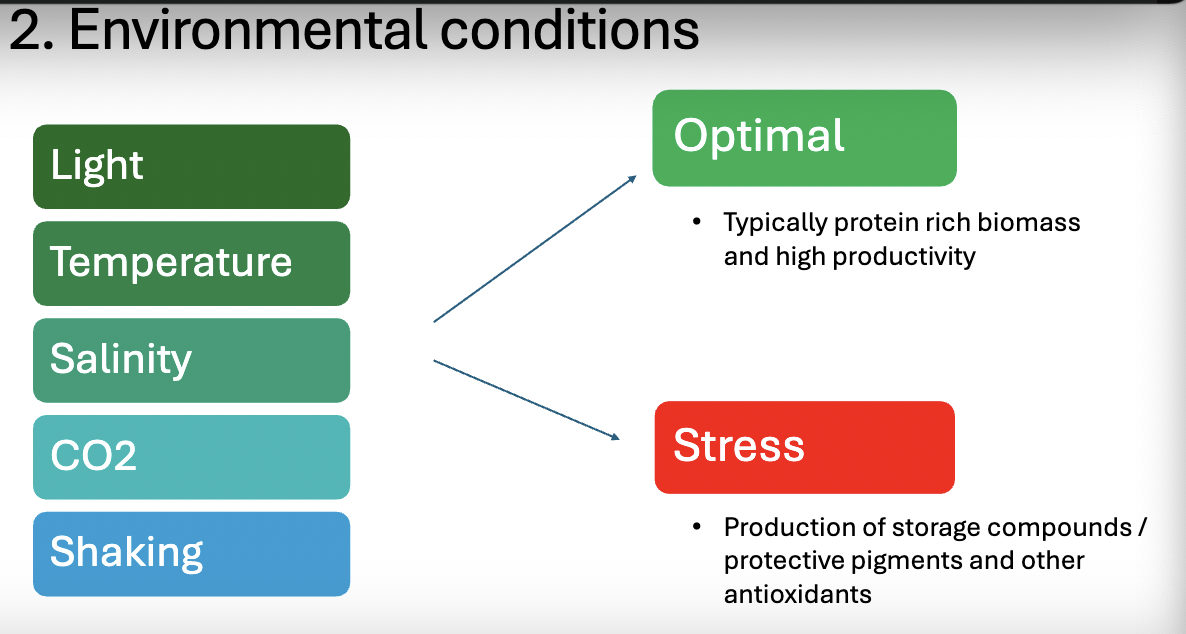
You need to take into account parametres such as light, temperature, salinity, CO2, and shaking.
- Optimal conditions- give high productivity and protein rich biomass
- Stress conditions: tend to give production of storage compounds/protective pigments and other antioxidants.
—> depending on the desired product you can regulate the environmental factors to aqcuire either stress/optimal conditions- and whatever this means for the used species when it comes to the environmental factors
explain how most algae act under optimal vs stress conditions
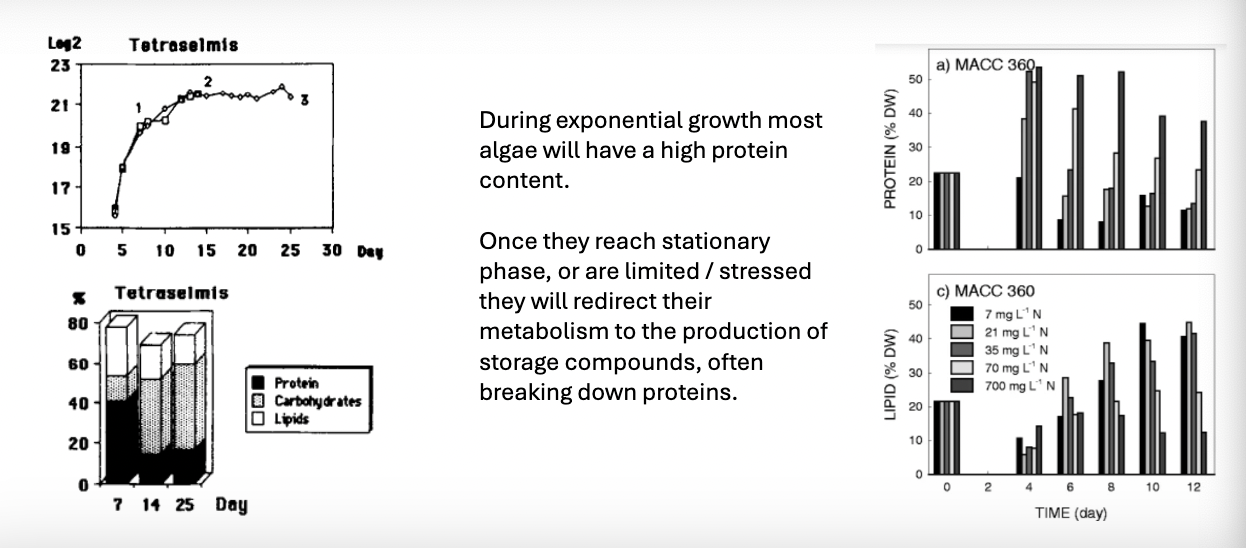
During exponential growth (optimal conditions) most algae will have a high protein content. -Once they reach stationary phase, or are limited / stressed they will redirect their metabolism to the production of storage compounds, often breaking down proteins.
explain how spirulina is made
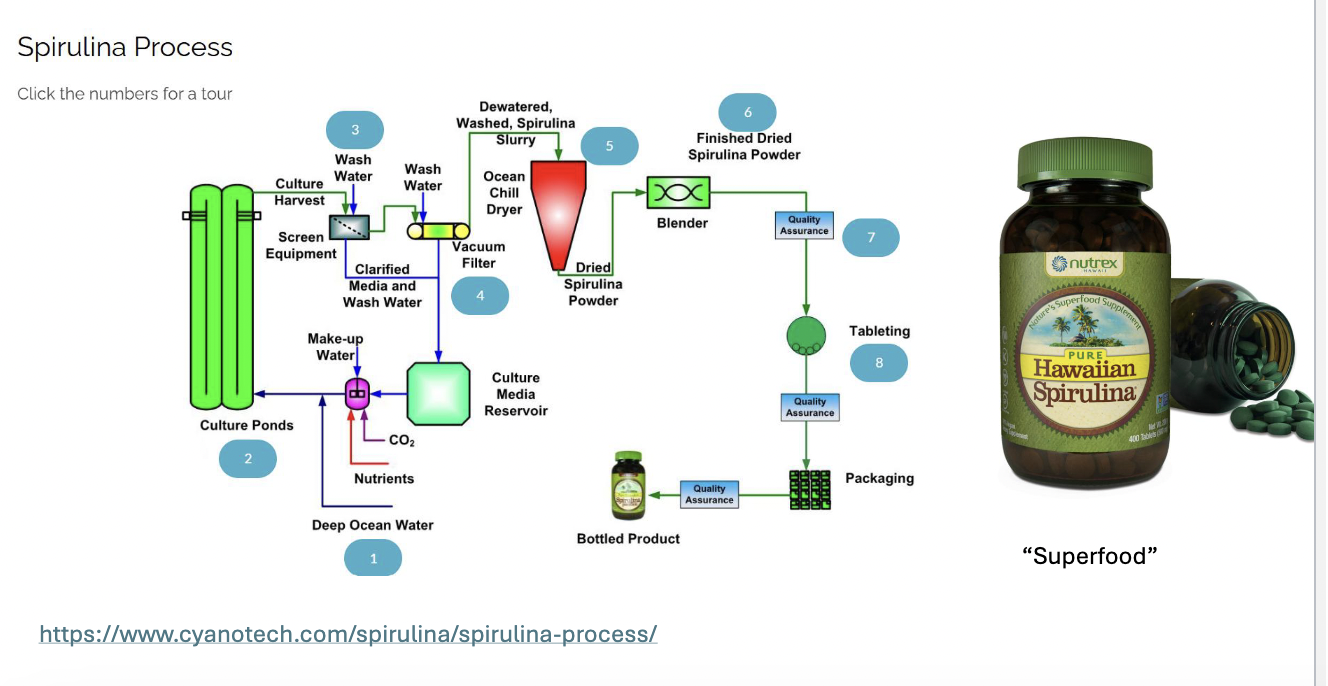
one of the easiest to cultivate- and hence one of the oldest productions. Freshwater cyanobacterium, can grow at high temperature and high pH. Food source far back in time.
- Spriulina process: They get ocean water to cool down the system a bit- maintain temperature. Grow algea in the ponds- equipment to separate the spirulina from water and other compounds. and recirculate the water. Spirulina is a very robust species to produce.
explain how light impact microalgal cultivations
Light as environmental factor: Needed for algea cultivation- photosynthesis.
- Light can change dramatically through seasons, if cultivating outdoors.
- Light can contribute heavily to cost of production if supplied artificially
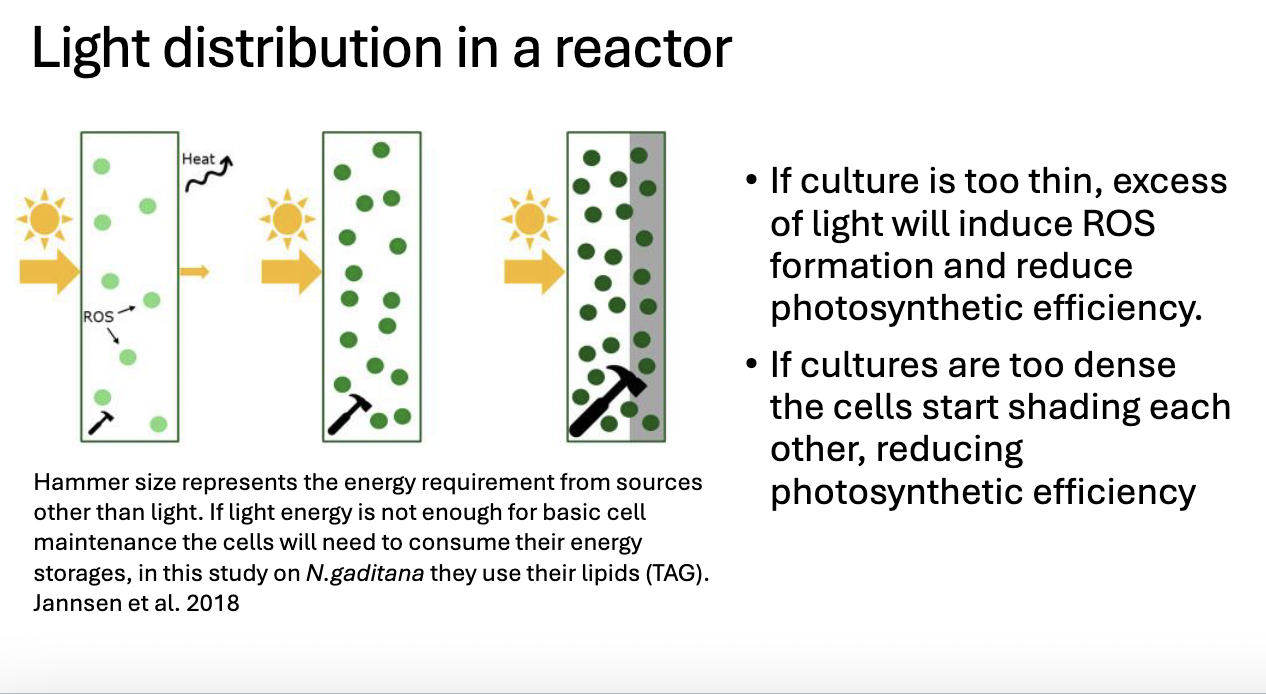
- Saturated light intensity leads to highest growth (stagnation at a certain point)- and too much lead to death, however the same goes for too little light- there is a sweet spot.
- If culture is too thin, excess of light will induce ROS formation and reduce photosynthetic efficiency.
- If cultures are too dense the cells start shading each other, reducing photosynthetic efficiency- the light will not penetrate into the culture.
—> you need to adjust the light depending on the medium of algea- density, eg increase the light parallel to the culture growth and density increase.
what happens if the microalgal culture is exposed to too much sunlight
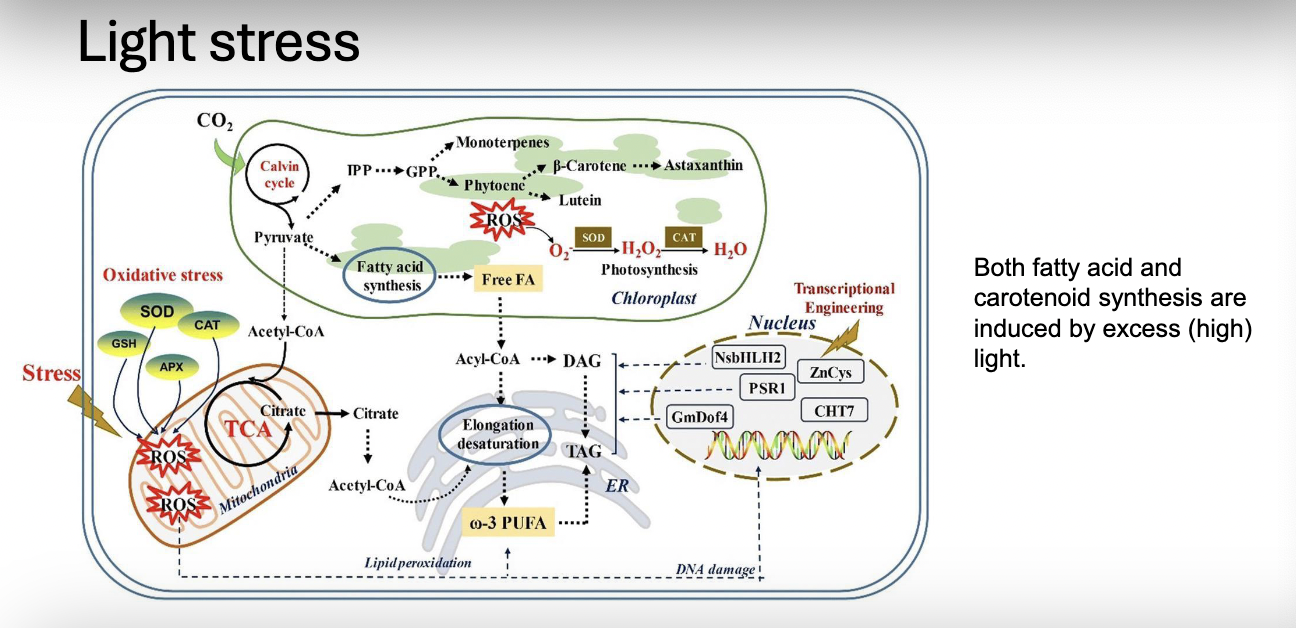
Light stress: Too much light- trigger defense system
- Primary defense: NPQ induction- energy is released as heat
- Secondary defense: antioxidants against ROS- different enzymes and antioxidants systems: one important of these are carotenoids.
- Both fatty acid and carotenoid synthesis are induced by excess (high) light: these could be desired products and hence light stress can be intentionally induced to achieve these
what are carotenoids?
Non-nitrogenous pigments. Contain many conjugated double bonds - easily oxidized.
Light is of great importance for carotenoid production in microalgae- when stressed- increased production to reduce ROS.
Some different functions (and some examples):
antenna (fucoxanthin, carotene)
photoprotection (lutein, violaxanthin, zeaxanthin)
antioxidant (astaxanthin)
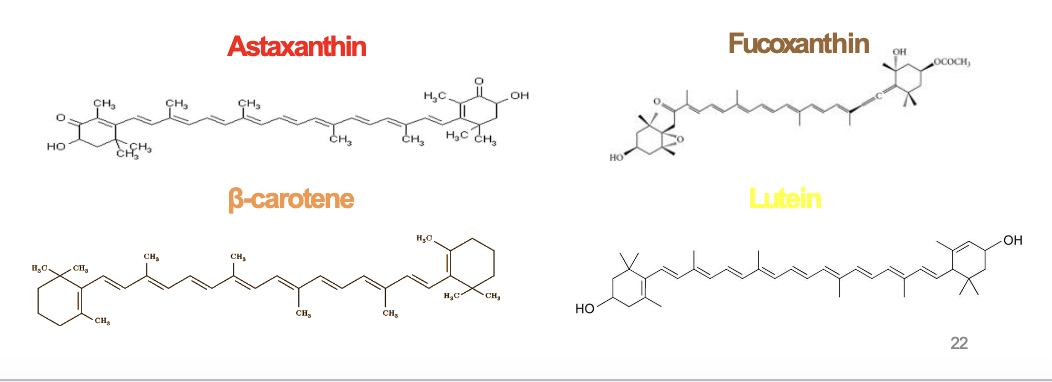
explain in short carotenogenesis
chain reaction that lead to carotenoid production.
The production could be so large that it is relevant for large scale production in microalae.
what is astaxantin
= natural carotenoid found in aquatic organisms. Primary source green alga Hematococcus pluvialis.
The most potent antioxidant in nature.
what is Haematococcus pluvialis, explain applications
A biflagellate green alga living in fresh water that use flagella to swim toward the nutrients
- When stressed, cells lose flagella, encyst and produce intracellular astaxanthin for protection against oxygen radicals and UV light (also: high light, temperature, and nutrient starvation
- High value product (astaxantin)
- First green- when stressed become pink/red due to synthesis of astaxantin
- Natural antioxidant, anti-cancer, anti- cardiovascular diseases, anti-aging, and anti-inflammatory activities.
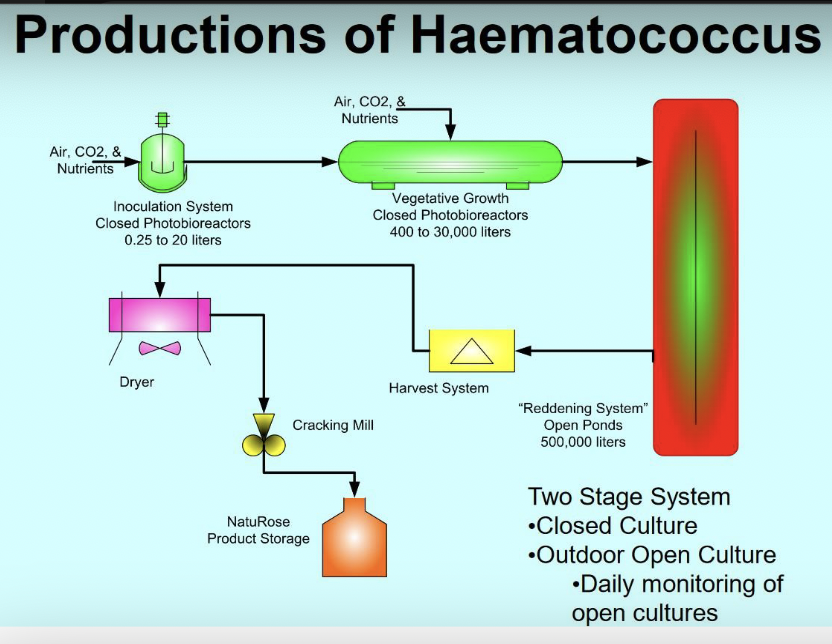
explain how astaxantin could be produced (haematococcus)
Responds to light stress—> two growth stages:
1) happy growth indoors under optimal conditions- boost rpoductivity to achieve highest yield
2) stress conditions- outdoors blasted with light and low nutrient- in this way you achieve a high yield of the desired product. (if only stress conditions- no/little growth, but if no stress conditions the desired product would not be synthesised)
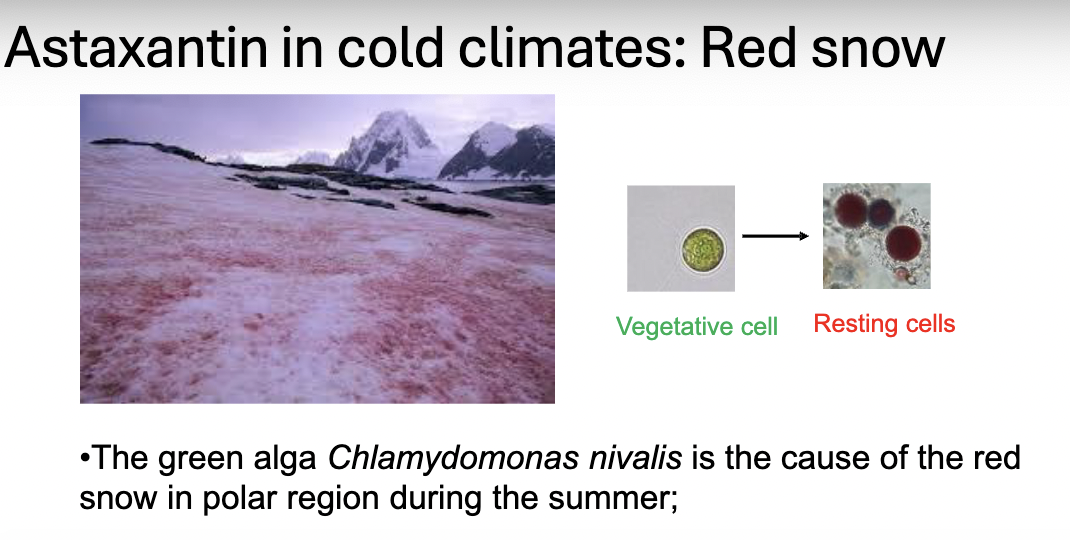
name an example of astaxantin in cold climates (red snow)
Chlamydomonas nivalis cause red snow- can survive in extreme conditions including limited nutrients, low temperatures (best growth 5 °C), and intense sunlight (thanks to astaxantin)
Lutein and fucoxanthin are examples of two other carotenoids that can be induced in microalgea by light stress- explain how
- Lutein production in Tetraselmis suecica (Tetraselmis suecica is a marine green microalga, widely used in aquaculture for the feeding of mollusks and crustacean larvae for its high concentration of lutein)
- Fucoxanthin in Phaeodactylum tricornutum: (Fucoxanthin, an orange-brown carotenoid which participates in energy transfer and helps protect the microalga from oxidative stress. Medium-low light condition increases the fucoxanthin concentration due to its light harvesting role)
—> these two where the first ones to be cultivated on upscaled outdoors closed system microalgea facilities. Under stable climate conditions and high light. Circular model.
talk about light and the choice of reactor
Light availability and distribution depend on the growth vessel eg tubular growth vessels result in a certain availability to light. Tubular reactors allow for high light saturation to the culture. However in ponds the bottom will not be exposed to light to the same degree- choose reactor depending on the conditions needed for the desired production and used strain/species- light distribution needs to be adjusted accordingly.
talk about the difference between strain and species
there are lots of different strains per species. Strains are genetically very similar but can have slightly different growth rates etc- have adapted differently to their environments.
talk about how temperature vary amongst species and strains
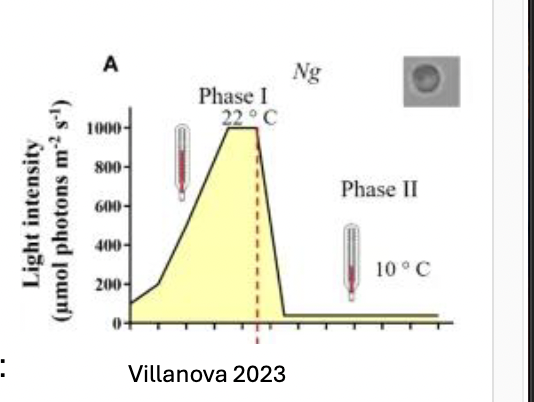
All strains/species have an optimal temperature range:
- Most algae and cyanobacteria reach maximum growth rate between 20- 30°C.
- Temperature can change dramatically through seasons, if cultivating outdoors.
- Temperature can contribute heavily to cost of production (heating/cooling)
relate the specific growth rate to strains and temperature
the specific growth rates differ between strains- they all have a preferred temperature range where they thrive and have their maximum growth rate.
—> Room temperature is the most common lab setup but can be adjusted depending on the optimum and where the strains where isolated from (hence best adapted to). To maintain a higher temperature in large scale ponds eg in species can be very costly (microalgea micro facilities- need to use green houses etc)
what could hight temperature stress lead to
High temperature stress can for instance lead to an increased Lutein production ( eg in Tetraselmis suecica.)
explain how low temperature impact microalgae
Low temperature stress:
- Decreases enzyme reaction rates
- Increases rigidity of the membrane.
—> cells have a range of natural adaptations to cold (relevant to biotech):
increased production of PUFA (increase fluidity of the cell membrane and combat the problem of the increased rigidity due to lowered temperature).
Differential energy partitioning: create reserve compounds as starch, lipids and carotenoids.
Produce anti-freeze proteins: can be interesting as high value product
talk about the increase PUFA production linked to low temperature stress. what are PUFA- applications?
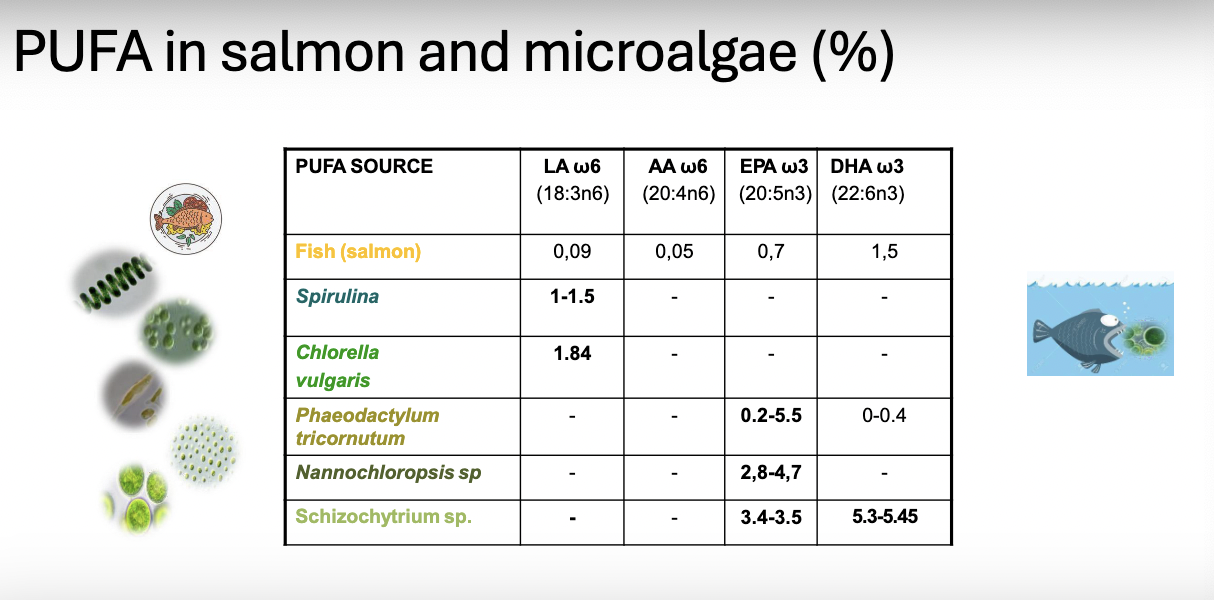
- PUFAs are fatty acids with high number of carbon atoms (>16) with two or more double bonds three atoms away from the terminal methyl group
- Including: Linolenic acid (LA), Eicosapentaenoic acid (EPA) and Docosahexaenoic acid (DHA) which are important for human health and nutrition (not synthesized by animal cells).
→ PUFAs are high value products. Eg vegan omega-3 can be derived from microalgea- the most famous ones are LA, EPA and DHA.
compare salmon vs algae derived omega 3
Omega 3= a sort of PUFA:
much higher concentration of them in microalgea compared to salmon for instance
makes microalgea very interesting.
Ethical and sustainability perspectives make microalgae very interesting due to their high concentrations of certain high value compounds such as omega 3s that otherwise come from fish
fish derived omega 3 bring problems such as over fishing and lower yield- omega 3 contents per fish being proportionally lower etc.
how could you utilize species with different responses to cold stress eg
different species have different strategies to withstand winter.
Nannochloropsis and Skeletonema showed increase in different kinds of compounds and PUFAS during different temperatures as well as different growth rates (and productivity) under the conditions.
You can use their different specific growth rates (and production optimums) to alternate cultivation of the different species during winter months and summer months to get the most out of the cultures during the different conditions.
talk about the response to salinity stress, adaptations?
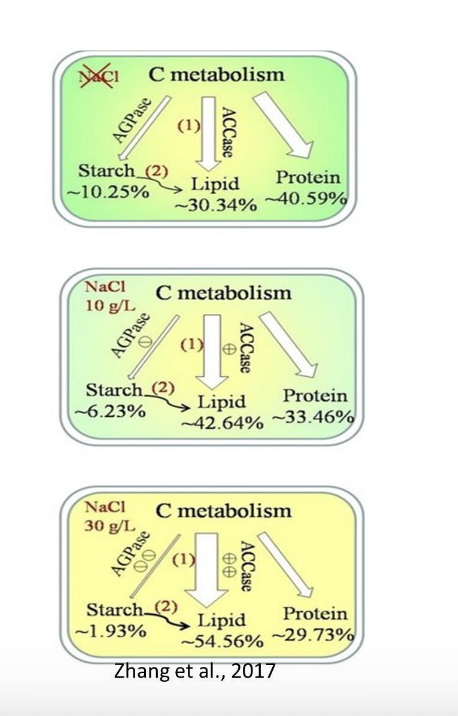
- Salinity affects physiological and biochemical composition of microalgae.
- Promotes carbon redistribution and starch conversion to lipids- Can be used for effectively inducing lipid accumulation in many algal species such as Chlorella, Dunaliella.
- Halophilic organisms can accumulate organic solutes such as glycine betaine, sugars, glycerol and ectoine under high salt conditions to protect themselves against osmotic shock. (if they would not have these they would go into osmothic shock due to their natural habitats high salinity levels)
- Salt stress leads to ROS production and the induction of protective mechanisms like carotenoid synthesis (Dunaliella).
- Tolerance to high salinity is an advantageous trait since it prevents contamination and invasive organisms.
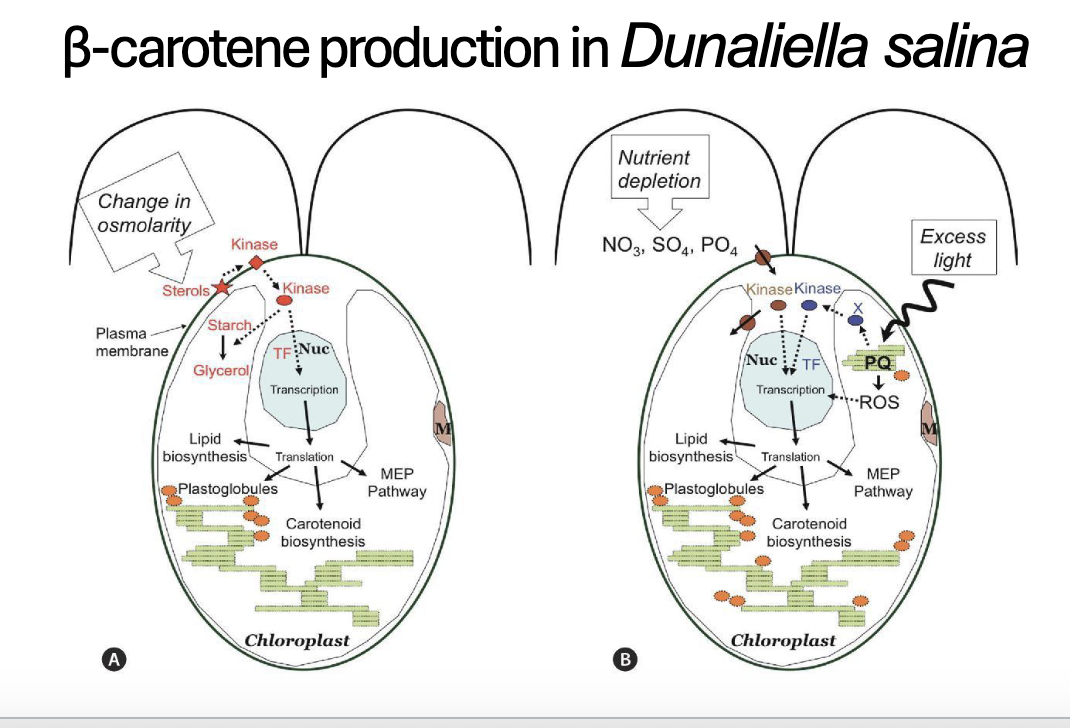
explain beta carotene production in dunaliella salina
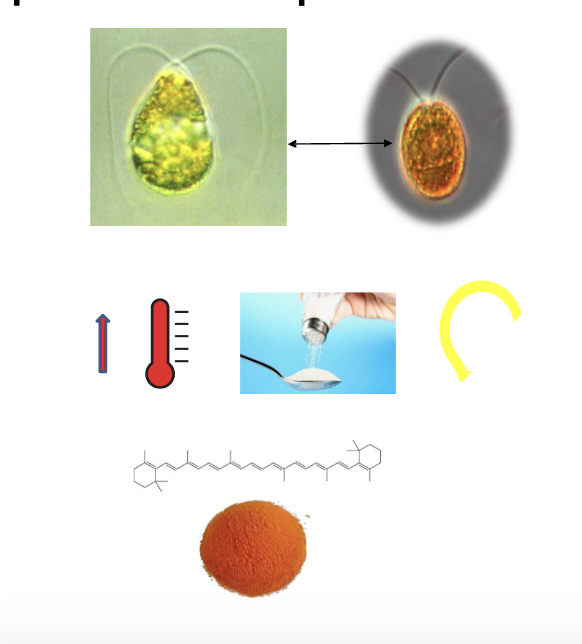
- Dunaliella salina is a biflagellate green alga that can appear in two different forms based on the external conditions
- Under stress conditions (high temperature, light intensity, salinity and low nutrient) can accumulate high amounts of β-carotene (up to 14% of its dry weight)
- It can be used as natural colorant in food and feed industry or in cosmetics for its anti-age action
—> can change colors drastically due to adaption to different stress conditions. According to the stress there are different pathways that ultimately lead to the synthesis increase of carotenoids.
explain how two pahse beta carotene cultures can look like
Beta carotene production in spain: Two growth phases:1) Optimal growth in tubular PBRs; 2) carotenogenesis stage in raceways (stress conditions due to nitrogen limitation- lead to induction of beta carotene increase).
- Carotenogenesis induction by cultivation in nitrogen-limitation during spring in Spain.
- Extremophile since it can grow in high salinity in open ponds
how can induced stress be useful
Stress in microalgea will induce production of certain chemicals- some of which are potentially useful in different applications eg in medicine.
name one example of an extremophile- how could they be useful
Galderia sulphuraria: extremophile. Found in naturally acidic hot springs: pH 0-4. One problem with large scale production is contamination (during lab scale cultures the conditions are very controlled however when you scale up contamination becomes a growing problem- hence the use of extremophiles is increasingly relevant and interesting)
- In the big reactors: once algae start growing, carbon sources is added, eg use of waste water- this also means an addition of bacterial populations- in large scale- entire microalgae cultures can die due to cascade effect of bacteria- extremophiles can grow in conditions that bacteria cannot- which eliminate the problem of bacterial outcompetition/problems