PHAR INFO LEC - 3.2 Research Designs and Methods
 Call Kai
 Learn
Learn Practice Test
 Spaced Repetition
 Match
Match Flashcards
 Knowt Play
1/66

There's no tags or description
Looks like no tags are added yet.
Name | Mastery | Learn | Test | Matching | Spaced | Call with Kai | Chat |
|---|
No analytics yet
Send a link to your students to track their progress
67 Terms
Study Design
Overall plan that allows researchers to seek answers to study questions and test study hypotheses
Like a blueprint or roadmap on what kind of research would be conducted
Primary Studies
Studies performed firsthand by the researchers
Basic medical studies
Clinical studies
Pharmacoepidemiologic studies
Pharmacoeconomic studies
Basic Medical Studies
Many of these are pre-clinical studies
Experimental in nature
Animal studies
Cell studies
Biochemical genetic, physiologic studies
In-vitro drug studies, formulation studies
Clinical Studies
Conducted on humans to evaluate a number of outcomes
Etiology or mechanism of disease
Diagnosis
Prevention
Interventions of disease management
Safety
Pharmacoepidemiologic Studies
Study of potential impact of drug therapy or clinical services in large numbers of patients using principles of epidemiology
Pharmacoeconomic Studies
Studies that describe and analyze the costs and consequences of drug therapy
Cost-minimization analysis
Cost-effectiveness analysis
Cost-benefit analysis
Cost-utility analysis
Descriptive Studies
Describe/summarize information about a population or phenomenon without making any casual inferences
Answer “Who,” “What,” “Where,” and “When,” but does not answer “Why” and “How” characteristics have occurred
Mostly used to generate hypothesis
Analytical Studies
Aim to understand the relationship and/or casual mechanism that may exist between 2 or more variables
Try to answer “Why” and “How”
Test hypotheses; quantify the relationship between an intervention and an outcome
Inferential statistics (ex. T-test, ANOVA)
Prospective Studies
Also called longitudinal studies
Researcher collects data after study onset by following individuals over a period of time
More resource intensive
Retrospective Studies
Evaluation of data from past events/existing data
Researcher cannot control past events/data collection methods
Interventional
Researcher controls the treatment
Relies on primary data
Typically seen when you want to see intervention and an outcome
Observational
Researcher observes the relationship between study variables in a natural setting (real world)
Uses primary data (surveys, interviews), or secondary data (medical charts)
Descriptive
Descriptive or Analytical?
Prevalence of HTN in Tondo, Manila
Analytical
Descriptive or Analytical?
Relation between smoking and lung cancer
Descriptive
Descriptive or Analytical?
Women satisfaction for antenatal care
Analytical
Descriptive or Analytical?
Effect of gestational obesity on fetal outcome
Analytical
Descriptive or Analytical?
Risk of lead exposure on mental retardation
Descriptive
Descriptive or Analytical?
Suggestions for improvement of UMC
Cross-sectional Study
Researcher collects data at one point in time/short period of time
Advantages:
Less time-consuming and less expensive
No problem of dropouts
Limitation:
Not practical for rare diseases
Purpose/Application of Cross-sectional Study
Purpose/Application:
Measure prevalence of risk or disease
Describe variable/s with no attempt to find a relationship between them
Case Report
Detailed analysis of a person/group with a particular disease or condition
Advantages:
May be the only realistic design for rare disorders
Limitation:
Biased reporting: Negative findings not published
Case Series
Group of case reports involving patients with common characteristics
Advantages:
May be the only realistic design for rare disorders
Limitation:
Biased reporting: Negative findings not published
Surveillance Study
Collection, analysis, and interpretation of health data
For:
infections
ADR/ADE
Purpose/Application of Surveillance Study
Purpose/Application:
Act as early warning system for disease outbreaks or for planning long-term strategies
Ecological Study
Unit of observation is a group or population, rather than an individual
Look for possible associations between exposure and outcomes in populations
Limitation:
High susceptibility to confounding (bias)
Purpose/Application of Ecological Study
Purpose/Application:
Highlight possible correlations between an exposure and an outcome in a population
Observational
Looks for the possible relationship of exposure and outcome
Researcher has no control
Analytical Cross-Sectional Study
Examines the relationship between exposure and outcome as they exist in the population at one time
Exposure and outcomes are both measured at the same time
Advantages:
Less time-consuming and less expensive
No problem of dropouts
Few ethical hurdles
Limitation:
Establishes association at most, not causality
Subject to bias and confounding
Not practical for rare diseases
Purpose/Application of Analytical Cross-Sectional Study
Purpose/Application:
Best for quantifying the prevalence of a disease or risk factor, and for quantifying the accuracy of a diagnostic test
Cohort Study
Longitudinal study that compares the outcome of an exposed group with an unexposed group
Track people forward in time from exposure to outcome
Advantages:
Can establish the temporal sequence between exposure and outcome
Few ethical hurdles
Limitation:
Time-consuming and expensive
Not suitable for rare diseases
Selection bias and change in exposure status can affect outcomes
Loss to follow-up can be a problem
Recruitment of participants is always based on exposure; they do not have the outcome yet
Can encounter both prospective (most) and retrospective
Purpose/Application of Cohort Study
Purpose/Application:
Most scientific way to find out the incidence and natural history of any disorder
Investigation of multiple outcomes after a single exposure
Studying outcomes of rare exposures
Reduce the risk of survivor bias
Cohort
Group of people with common characteristics and are followed over time from an exposure to one or more outcomes
Case-Control Study
Patients with a certain outcome or disease (cases) and an appropriate group of controls without the outcome or disease are selected
Compares the exposure of the cases with the controls
Both groups are followed backward in time to measure past exposure
Advantages:
Less time-consuming and cheaper
Limitation:
Population and time period from which cases arose are not known
Can only study one outcome at a time
Prone to selection bias and measurement bias
Opposite of Cohort Study
Recruitment is based on outcomes
Always on retrospective
Purpose/Application of Case-Control Study
Purpose/Application:
Most efficient study design for finding possible associations between exposures and outcomes
For rare diseases
For diseases with a very long latent period between exposure and outcome
Example of Case Study
Example of?
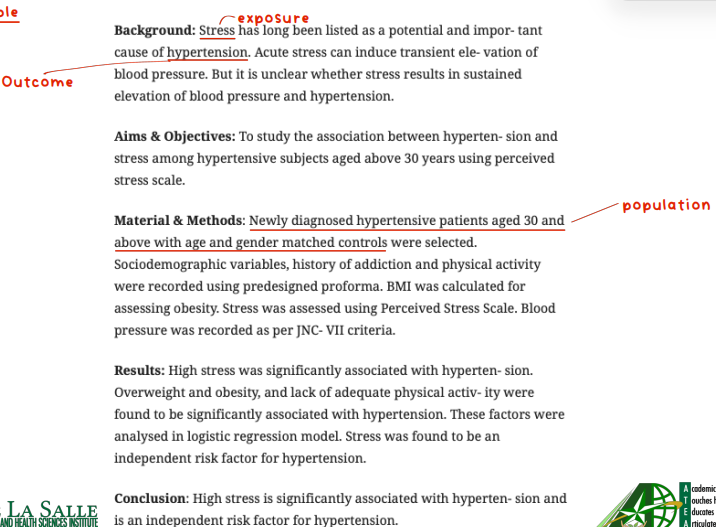
Example of Cross-Sectional Study
Example of?
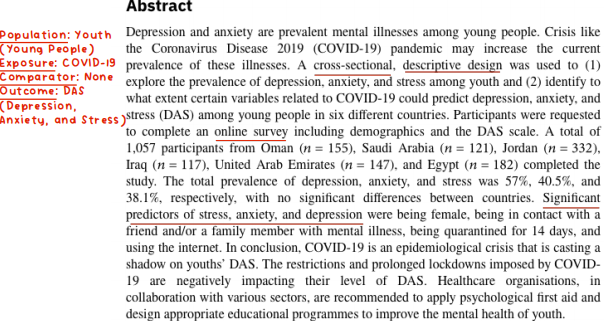
Example of Cohort Study
Example of?
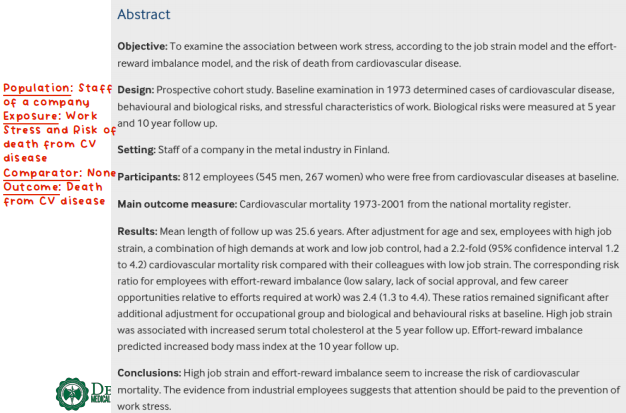
Basic Medical Study
Include animal experiments, cell studies, biochemical, genetic, and physiologic investigations
Include studies of properties of drugs and materials
Purpose/Application:
Pre-clinical studies which provide the basis for clinical trials
Bioequivalence studies of generic products
Epidemiologic Trial
Involve populations in community (real-world) settings
a. Field trials – intervention is given to individuals who are healthy but at risk; purpose is to test a preventive intervention
b. Community trial – intervention is applied to communities rather than individuals
Purpose/Application:
Determine real-world effectiveness of interventions
Testing preventive and educational strategies
Field Trials
Intervention is given to individuals who are healthy but at risk; purpose is to test a preventive intervention
Community Trial
Intervention is applied to communities rather than individuals
Clinical Trial
Studies involving humans which follow a predefined plan or protocol to determine the safety and effectiveness of medical products and practices
Advantages:
Minimizes bias and confounding (especially if RCTs)
Limitation:
Generally expensive and time-consuming
Addresses narrow clinical questions
Often expose participants to potential harm
Purpose/Application:
Lead to the development of new drugs, therapies, and interventions
Randomized Controlled Trials
Gold standard of research designs and the foundation for evidence-based medicine
Experimental comparison study in which participants are allocated to intervention (treatment) or control groups using randomization
All participants have an equal chance of being allocated to an intervention or control group, eliminating selection bias
Must be conducted according to principles and standards of good clinical practice (GCP)
Type of Study: Non-Randomized Clinical Trial
What type of study?
Patients with asthma were assigned alternatively (every other patient) to receive Drug A pr standard therapy.
Neither patients nor doctors were blinded.
Type of Study: Cohort Study
What type of study?
Researchers compared outcomes of patients who chose to take herbal supplements vs those who did not by following-up with patients over a 2-year period.
Type of Study: Clinical Study (Interventional)
What type of study?
Participants received Drug A for 4 weeks, then after a washout period, received placebo.
Outcomes were compared within the same individuals.
Type of Study: Cross-Sectional Study
What type of study?
A study was conducted to examine the relationship between daily sodium intake and blood pressure levels.
Participants completed a dietary survey and had their blood pressure measured during a single clinic visit.
Randomization
Process of assigning patients to a treatment or control group by chance alone
Highly effective in reducing biases and confounding in a study
Simple Randomization
Randomization:
Random number generator
Simple but can lead to unequal number of subjects in groups (studies with small sample size)
Block Randomization
Randomization:
Ensures treatment groups have equal numbers
Total number of subjects is divided into a series of ”blocks”
Stratified Randomization
Randomization:
Ensures that baseline characteristics are equal between groups
Group or Cluster Randomization
Randomization:
Groups of subjects are selected for randomization
All members of the cluster receive the same treatment
Allocation Concealment
Those enrolling patients into the study are prevented from knowing which group the patients are allocated to
Prevents selection bias
Occurs prior to the patients being enrolled in the study and stops once they are enrolled
Happens before enrollment
Blinding/Masking
Those involved in the trial are unaware of what treatment the patients are receiving
Patients, investigators (inc. data analyzers), data collectors/ care providers
Starts as soon as patients are enrolled in the study
Happens after enrollment
Open Label
everyone knows the treatment
prone to bias
Single Blind
done only if outcome measurements are purely objectives
healthcare provider and data analyst know
Double Blind
participant and healthcare provider do not know
Triple Blind
everyone do not know
Placebo Concurrent Control
In cases where there is no known effective therapy
Identical in appearance to the intervention; containing an inert substance
Active Control
In cases where there is a known or accepted standard of care
For disease states where it is not ethical or possible to administer a placebo to patients requiring treatment
Should be an equivalent dosing
Historical (External) Control
External group of patients that were observed at a different time or in a different treatment setting
Advantage is that all participants in the study receives the intervention
Disadvantage: participants and investigators are unblinded
Parallel Design
Each subject is randomized to either a treatment group or control group
All members of the group receive the treatment/ placebo over the duration of the study
Crossover Design
Each subject receives all of the interventions based on a specified sequence of events
After some time, there will be a switch to the other treatment group after washout period
Reserved for diseases that are stable and consistent over time
Factorial Design
Evaluate multiple interventions in a single experiment (e.g., multiple doses, drug regimens)
Adaptive Design
Assigning patients to a treatment group based on the previous success of the treatment as the trial progresses
Drug efficacy Study
Determines the effects of an intervention under tightly controlled conditions
Most RCTs conducted during drug development
Have very narrow inclusion and exclusion criteria
Drug Effectiveness Study
Determines the effects of an intervention under conditions that the drug is most often used in the clinical setting (real-world)
Clinical trials conducted during the post-marketing phase