OEB 190 Biogeography
 Call Kai
 Learn
Learn Practice Test
 Spaced Repetition
 Match
Match Flashcards
 Knowt Play
1/39

Earn XP
Description and Tags
Final
Name | Mastery | Learn | Test | Matching | Spaced | Call with Kai |
|---|
No analytics yet
Send a link to your students to track their progress
40 Terms
The "Sarawak Law" (1855)
Every species has come into existence coincident both in space and time with a pre-existing closely allied species
the father of biogeography
Alfred Russel Wallace
Biogeography vs Taxonomy
Biogeography: the distribution of life on earth
Taxonomy: how we organize the diversity of life
Most evolutionarily unique biogeographic regions
Australian region
Paleognathous palate vs Neognathous palate
palatines are lateral in paleognathous
palatines are medial in neognathous
Moa molecular data suggests that
1) possessed a full repertoire of olfactory receptor genes
2) could see in the UV range
The supercontinent Gondwana contained
most of today’s Southern Hemisphere continents, such as South America, Africa, Antarctica, Australia, India, Arabia, and Madagascar
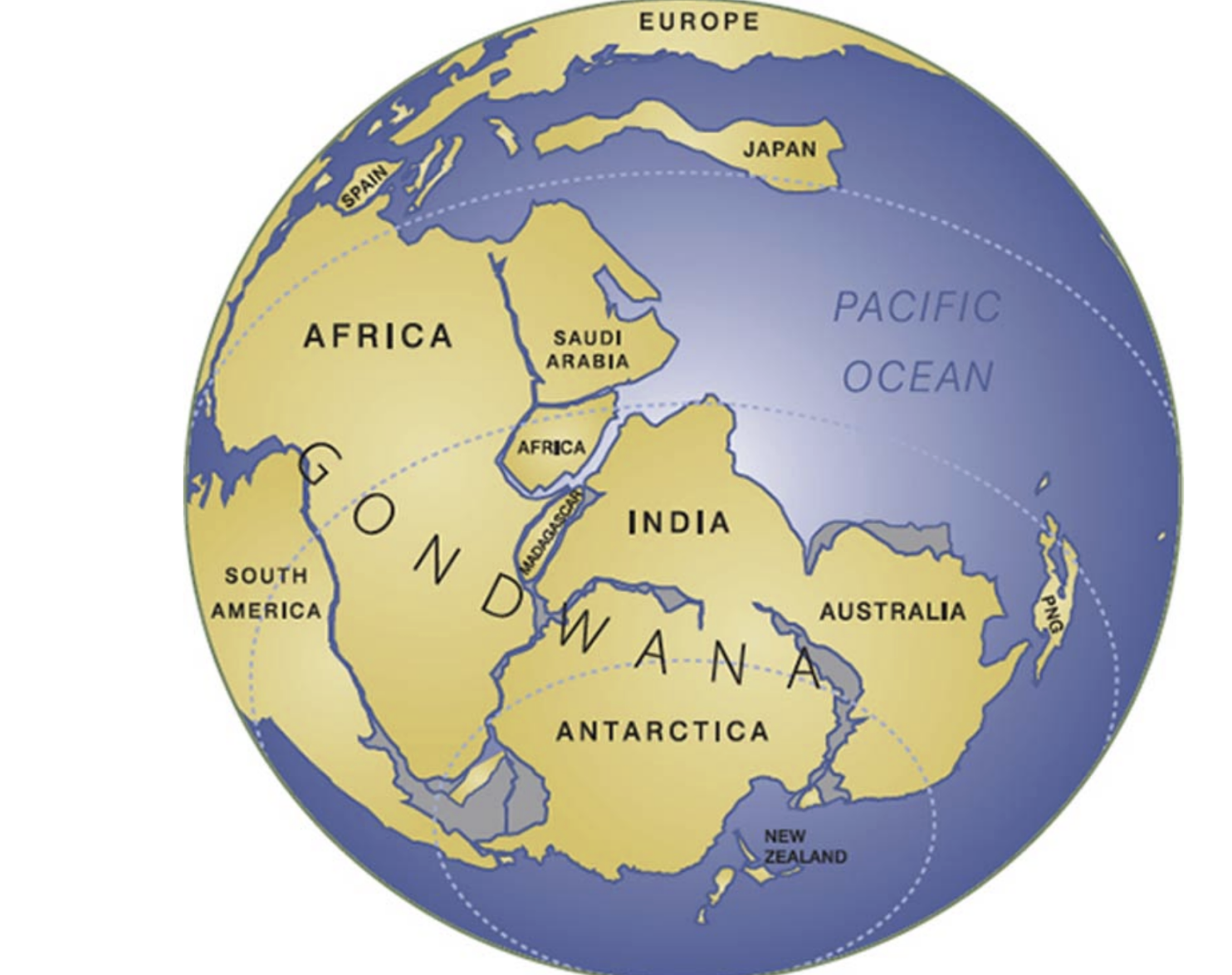
Continental drift and ratite biogeography
pattern lines up strikingly well with the breakup of the ancient supercontinent Gondwana
Palaeognaths and flight loss relationship
Evolved flight loss many times
how are Flamingos and grebes related
sister groups
Different recognized clades
Waterbirds (pelican, cormorant, alabatros, ibis)
Higher land birds (motmot, toucan, woodpecker)
based on what?
Syrinx
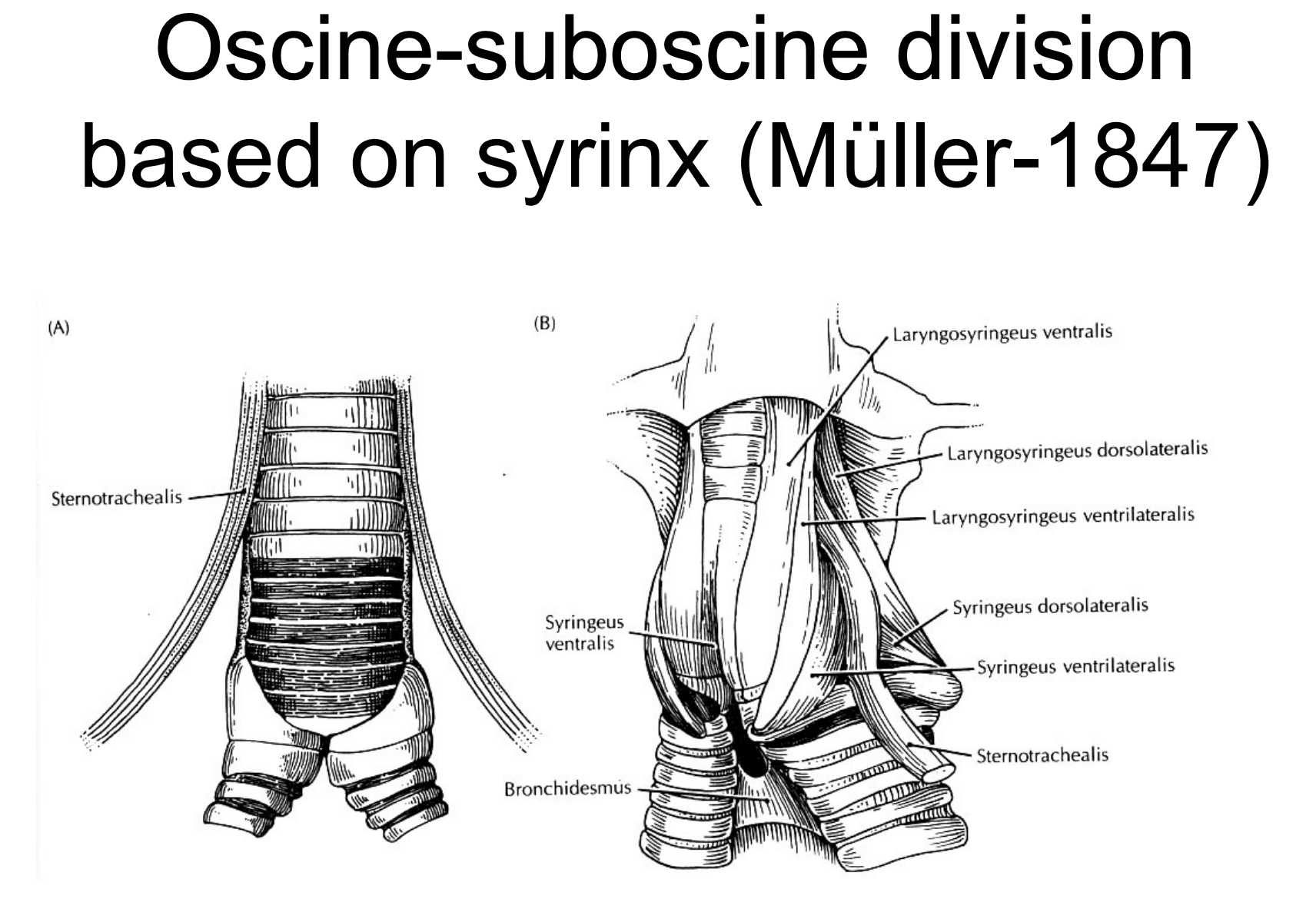
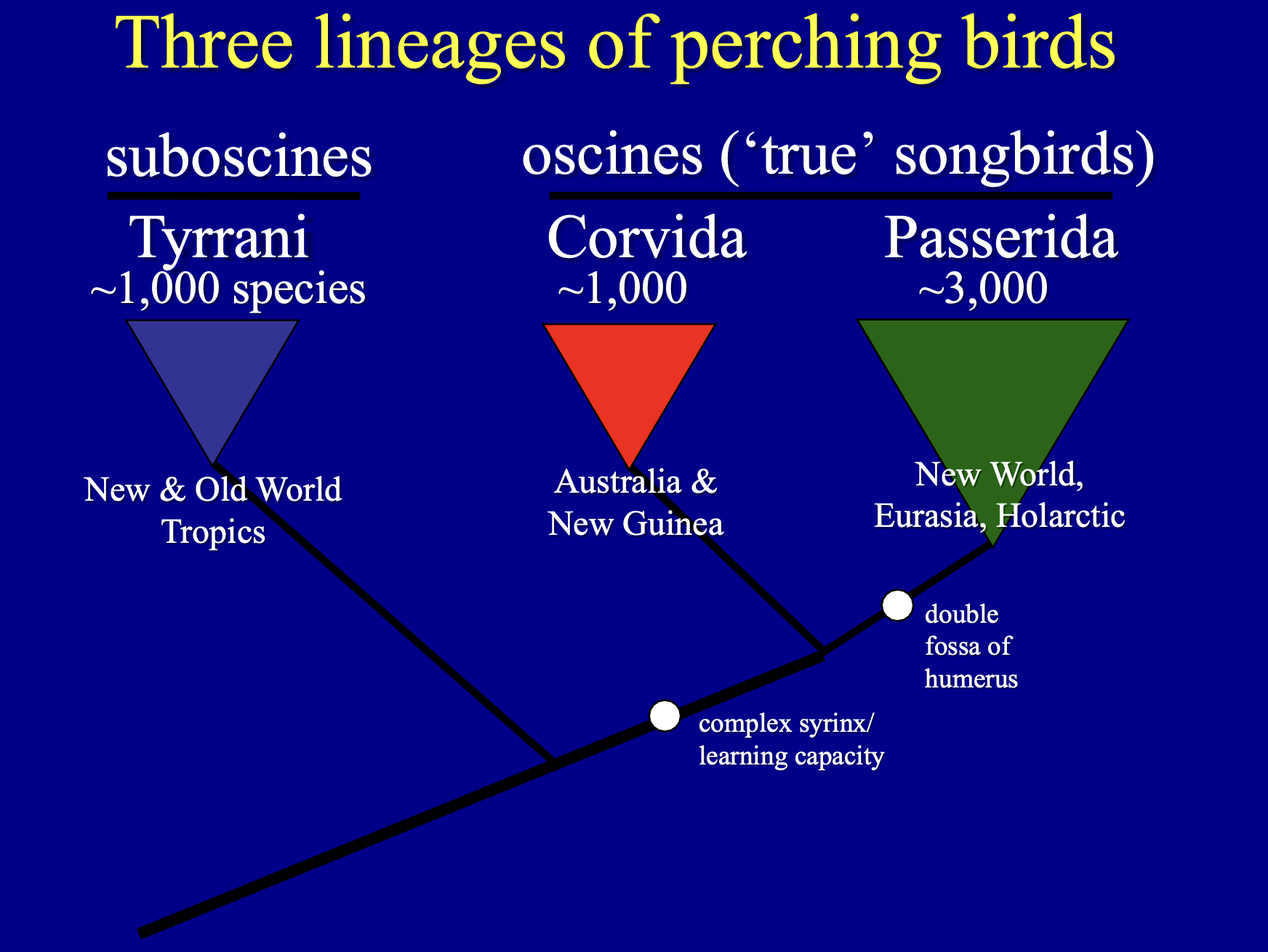
3 lineages of perching birds
Subossines
Tyranni
Ossines (complex syrinx/ learning capacity)
Corvida
Passerida (double fossa of humerus)
Basal lineages of extant clades often have what? Example?
Gondwanan distributions
Ie. Magpie Goose in Australia / New Guinea
ie. Orange-footed scrubfowl in Australia / New Guinea
Importance of New Zealand in global biogeography of bird
Long isolation = evolutionary “time capsule”
Survival of basal passerines (perching birds)
ie. Rifleman, Kiwis, Kokapo
Oligocene hummingbird fossil in Germany / France
overturn the simple idea that hummingbirds “originated and stayed” in the Americas
reveal a once-global lineage that later became geographically restricted
Haast’s Eagle fossil evidence suggests what? what evidence?
may have been a scavenger
evidence: very large, powerful, tearing beak, comparable in some ways to modern scavenging raptors.
Zealandia is thought to have undergone..
Oligocene Drowning (~25 mya)
Bird lineages in New Zealand show divergence times older than Oligocene Drowning, what does this suggest?
“Not fully drowned” (partial refugia)
Overwater dispersal happened earlier than assumed
Connections between the Neo- and Paleotropics? Examples?
biogeographic connection between tropical regions of the world, most likely shaped by historical dispersal across once-connected or climatically favorable routes, followed by isolation into New World and Old World lineages.
Trogons
Barbet / Toucan
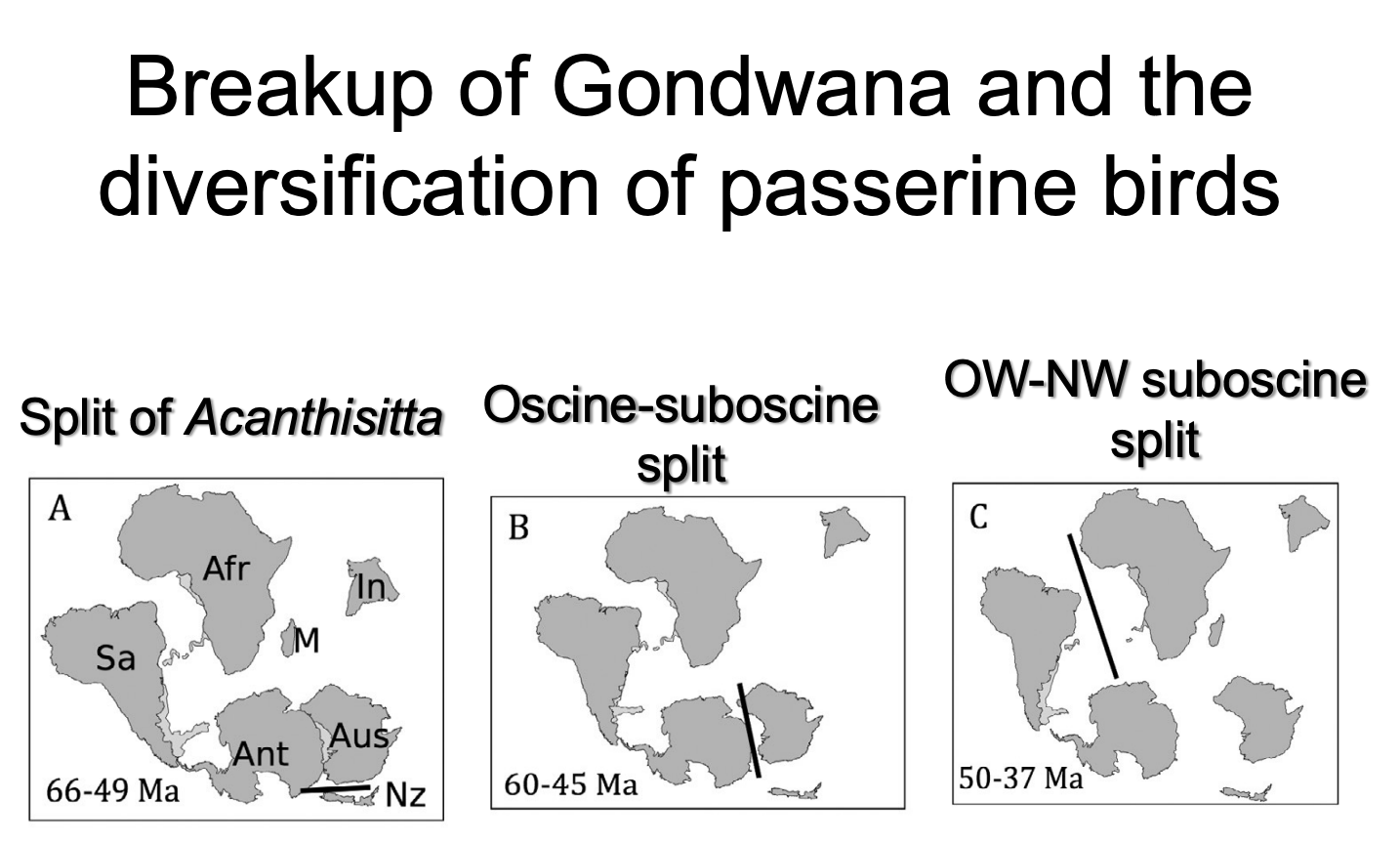
Breakup of Gondwana relation to passerine split
Late Paleogene (66 – 49 Ma)
New Zealand - Acanthisitta
Early Eocene (60 – 45 Ma)
oscine/subsoscine split
Later Eocene (50 – 37 Ma)
NW and OW Suboscine split
Subossine route into the New World
Subossines from bottom of South America (earlier arrival)
New World suboscine radiation (antsrhikes, tityras, manakins, cotingas, woodcreepers, flycatchers)
explains why suboscines are dominant in South America
Ossine route into the New World
Ossines from Canada and alaska
Evolved mainly in Australia/New Guinea
ie. Australian Corvidae radiation
Later spread globally, including into the Americas
major divisions within oscine passerines
Pneumatic fossae of the humerus
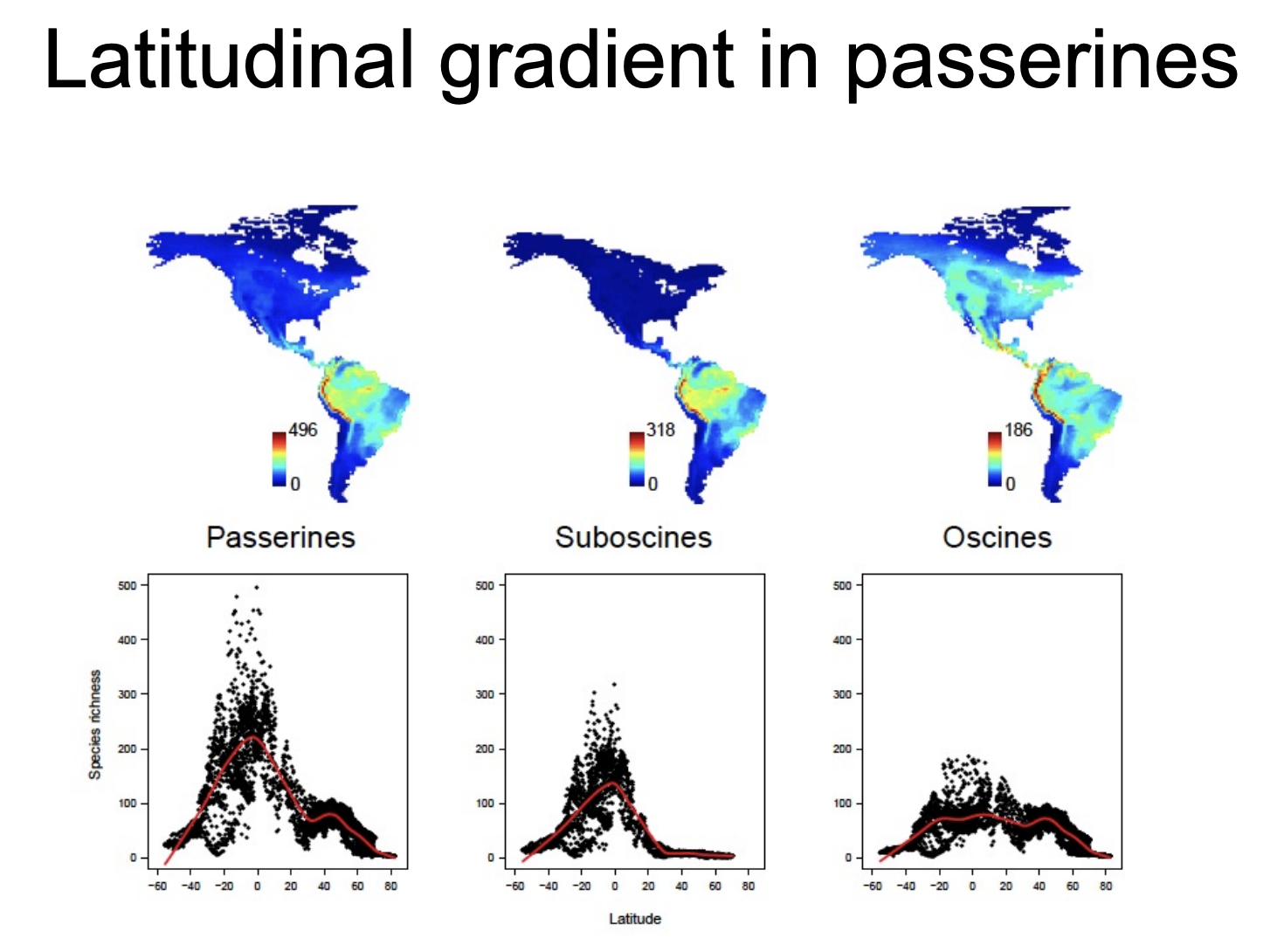
Latitudinal gradient in passerines, suboscines, and oscines.
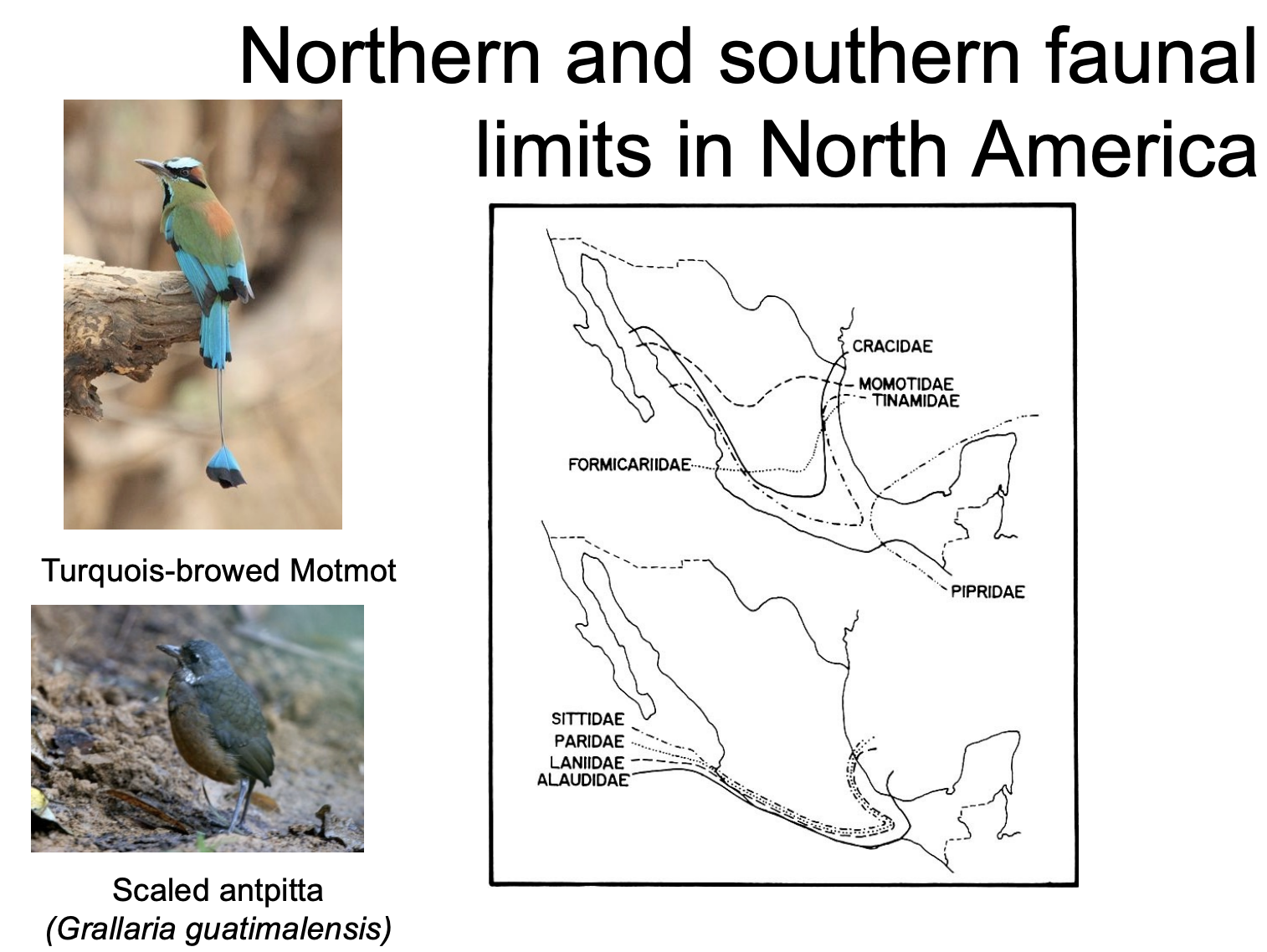
Northern and southern limits of ranges
What are Transmitting tags? What do they do?
Satellite tags can give scientists a highly detailed look at migratory journeys
Population models can use different data sources from
transmitting tags
banding
ebird
Common misconception about migration direction
not always north to south, can be east to west
also many species that breed on mountains migrate downslope after breeding
2 ways to understand migration
Escaping the snow to spend winter in the warm tropics (“Northern home”)
Escaping the competitive tropics to breed in a land of abundance (“Southern home”)
assumes tropics are competitive
migration is the outcome of…? How does this relate to plants?
a tradeoff between competition and mobility
“Strong” competitors hold their ground while “weak” competitors move around
Southern Home hypothesis
Prediction 1: Migrants that evolve out of the tropics should have close relatives there
Prediction 2: If migration evolves from resource hunting, then migration should appear more commonly in more nomadic and dispersive lineages
philopatric
tendancy to return to exact same area
Why might Northern and Southern home hypothesis be a false dichotomy
Because many migrants are intensely philopatric to both breeding and wintering areas….and even migratory stopover sites
so it is all home
ie. Whimbrels have same feeding sites
What is the Cox model?
Explains the the evolution of Neotropical migration
Migrants wintering in northern fringe of tropics expand niche seasonally due to untapped resources of north. Increased competition causes migration evern further north resulting in north migration in breeding season.
Levey-Stiles model for the origin of migration: Ecological correlation to migration
Ecological correlates of altitudinal migration in Costa Rican birds
fruit and nectar feeding birds more likely to be altitudinal migrants
Levey-Stiles model for the origin of migration: Microhabitat correlation to migration
canopy edge birds more likley to be altitudinal migrants
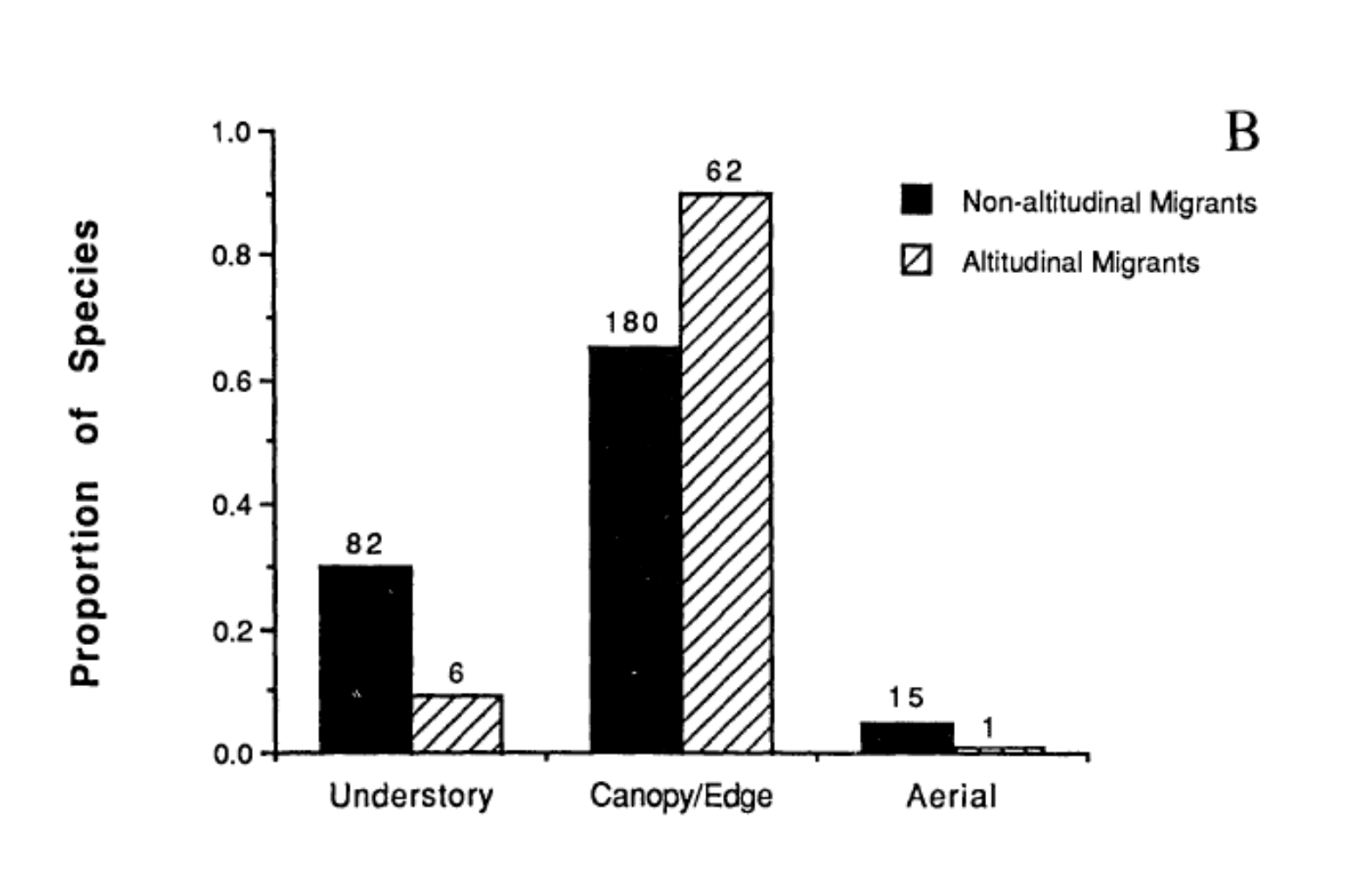
Examples for Levey-Stiles model
Flycatchers, Hummingbirds, Caprimulgiformes
Exceptions to Levey-Stiles model
Parulidae, Pewees (specific type of flycatcher)