A-level Psychology - Research methods
 Call Kai
 Learn
Learn Practice Test
 Spaced Repetition
 Match
Match Flashcards
 Knowt Play
1/141

There's no tags or description
Looks like no tags are added yet.
Name | Mastery | Learn | Test | Matching | Spaced | Call with Kai |
|---|
No analytics yet
Send a link to your students to track their progress
142 Terms
Aim
A general expression of what the researcher intends to investigate
Hypothesis
A precise and operationalised statement about the assumed relationship between variables
What are the 2 types of hypotheses?
null hypothesis and alternative hypothesis
What is a null hypothesis?
- there will be no difference or relationship
What is an alternative hypothesis?
- there will be a difference in the results between the control and the experimental groups
- two types directional and non directonal
Directional Hypothesis
States the direction of the predicted difference between two conditions or two groups of participants
Non-directional Hypothesis
Predicts simply that there is a difference between two conditions or two groups of participants without stating the direction of the difference
Independent Variable
Some event that either naturally varies or is directly manipulated by an experiment in order to test it's effect on another variable
Dependent Variable
A measurable outcome of the action of the independent variable in an experiment
Operationalise
Ensuring that variables are in a form that can be easily measured.
Experimental method
A researcher causes the independent variable to vary and records the effect of the IV on the dependent variable. The DV must be operationalised.
Control
(Refers to) The extent to which any variable is held constant or regulated by a researcher
Extraneous Variables
'Nuisance' variables that do not vary systematically with the IV. A researcher may control some of these.
Confounding Variable
Change systematically with the IV so we cannot be sure if any observed change in the DV is due to the CV or the IV. CVs must be controlled.
Demand Characteristics
Refers to any cue from the researcher or research situation that may reveal the aim of the study
Investigator Effect
Any effect of the investigator's behaviour on the outcome of the research (the DV)
Randomisation
The use of chance when designing investigations to control for the effects of bias
Standardisation
Using exactly the same formalised procedures for all ps in a research study
Control groups
Control groups are used for the purpose of setting a comparison. They act as a 'baseline' and help establish causation.
Single Blind Design
A ps doesn't know the aims of the study so that demand characteristics are reduced.
Double Blind Design
Both ps and researcher don't know the aims of the study to reduce demand characteristics and investigator effects.
Participant Variables
Individual differences. Differences among participants, overcome by a large sample size which dilutes any extremes
Situational Variables
People act differently in different situations. Time of day, Lab setting vs Natural setting
Validity
(Refers to) Whether an observed effect is a genuine one
External Validity
The degree to which a research finding can be generalised
Ecological Validity
A type of External Validity - generalising to other settings
Population Validity
A type of External Validity - generalising to other groups of people
Temporal Validity
A type of External Validity - generalising to other times/over time
Cultural Validity
A type of External Validity - generalising to other cultures
Internal Validity
The degree to which an observed effect was due to the experimental manipulation rather than other factors such as extraneous or confounding variables
Improving validity
Improving Lab Experiment Validity: Use controlled conditions, standardised procedures, control groups, and single/double-blind procedures to reduce bias.
Investigator Effects: Researchers may unintentionally influence results through behaviour, appearance, body language, or expectations.
Demand Characteristics: Participants may change their behaviour if they guess the aim of the study or feel too aware of being observed.
Improving Observation Validity: Covert and naturalistic observations encourage natural behaviour, while clear behavioural categories improve accuracy.
Improving Questionnaire Validity: Lie scales and reverse scoring help detect inconsistent or careless responses.
Mundane Realism
(Refers to) How a study mirrors the real world. The research environment is realistic to the degree to which experiences encountered in the research environment will occur in the real world.
Independent Groups
One group does one condition the other group does the other condition. Each ps experiences one condition and they're randomly allocated to the groups.
✔️no order effects
✔️no demand characteristics
✖️more ps
✖️ps variables
Repeated Measures
Participants doing both conditions. To avoid order effects conditions should be counterbalanced. AB-BA
✔️less ps
✔️no ps variables
✖️order effects
✖️demand characteristics
Matched Pairs
Individuals matched up by characteristic (eg by IQ) and separated with one half of the pair in each group to overcome individual differences
✔️less ps variables
✔️no order effects
✖️more ps
✖️matching is not perfect
Laboratory Experiment
conducted in a lab, a highly controlled environment
✔️ highly controlled evs and dvs
✔️ can be easily replicated
✖️hard to generalise
✖️demand characteristics
Field Experiment
A natural setting.
The researcher can control the IV.
✔️Higher external validity
✔️No demand characteristics bc ps don't know they are taking part in a study
✖️Difficult to control CVs
✖️Ethical issues bc ps don't know they are taking part in a study
Natural Experiment
IV cannot be manipulated because it naturally exists
DV naturally occurring
✔️an ethical option
✔️high external validity
✖️natural events occur rarely
✖️ps are not randomly allocated so there is a chance of ps variables
Quasi-Experiment
The IV is based on existing differences (eg age or gender) so can't be controlled
DV naturally occurring
✔️High control
✔️Comparisons can be made btwn ppl (eg ppl with and without autism)
✖️Ps are not randomly allocated so chance of ps variables
✖️Causal relationships not demonstrated
Population
The large group of ppl that a researcher is interested in studying
Sample
It is usually not possible to include all members of the population in the study, so a smaller group is selected - the sample.
Generalisation
The sample that is drawn should be representative of the population so generalisations can be made
Bias
The majority of samples are biased in that certain groups may be over or under-represented
Opportunity Sample
Recruit people who are most convenient or most available (eg people walking by you in the street or students at school)
✔️Easiest method (use the first suitable participants you find).
✔️Less time to locate your samples
✖️Inevitably biased (sample drawn from small part of population)
Random Sample
Using either the lottery method or the random number table. A way of randomly choosing someone.
Everyone has an equal chance of being chosen.
✔️Unbiased. All members of the target population have an equal chance of selection
✖️Representation not guaranteed.
Stratified Sample
Subgroups (or strata) within a population are identified (eg boys, girls, age groups). Ps are obtained from each strata in proportion to their occurrence in the pop. Selection of strata is done using a random sampling technique.
✔️Likely to be more representative than other methods
✖️Very time consuming to identify subgroups then randomly select and contact participants
Systematic Sample
Use of a predetermined system to select participants (such as selecting every 6th person from a phone book. The numerical is applied consistently) - also known as a sampling frame
✔️Unbiased as participants are selected using an objective system
✖️Requires a lot of time and effort to make a complete list of the population
Volunteer Sample
Self-selecting
Advertise in a newspaper/noticeboard/on the internet to gain volunteers
✔️Ps are more willing and interested to participate
✖️Sample is biased in other ways because participants are likely to be more motivated and/or with extra time on their hands. A certain type of person is more likely to volunteer.
Confederate
An individual who is part of a study, not a real participant, and has been instructed what to do and how to behave by the researcher/investigator.
Ethical Considerations
Issues that might impact on participants' well-being and how to deal with them. The British Psychological Society Code of Conduct (BPS Code of Conduct) is a quasi-legal document to protect ps. Ethics commitees weigh up costs (potential harm) and benefits (value of research) before deciding whether a study should go ahead.
Confidentiality
Concerns the communication of personal information from one person to another, and the trust that the information will be protected.
Deception
A participant is not told the true aims of a study (eg what participation will involve) and thus cannot give truly informed consent
Informed Consent
Participants must be given comprehensive information concerning the nature and purpose of the research and their role in it, in order to make an informed decision about whether or not to participate
Privacy
A persons right to control the flow of information about themselves
Protection From Harm
During a research study, participants should not experience negative physical or psychological effects, such as physical injury, lowered self-esteem, or embarrassment
Right To Withdraw
Participants can stop participating in a study if they are uncomfortable in anyway.
Debriefing
A post-research interview designed to inform participant of the true nature of the study and to restore them to the state they were in at the start of the study. A means of dealing with ethical issues
Presumptive consent
rather than getting consent from the ps themselves, a similar group of ppl are asked if the study is acceptable. If this group agree, then consent of the original ps is 'presumed'.
Prior general consent
ps give their permission to take part in a number of different studies - including one that will involve deception. By consenting, ps are effectively consenting to be deceived.
Retrospective consent
ps are asked for their consent (during debriefing) having already taken part in the study. They may not have been aware of their participation or they may have been subject to deception.
Self-report Techniques
An non-experimental technique or method used to find out about peoples behaviours
Observation
A way of seeing or knowing what ppl do without having to ask them. Observation is often used within an experiment as a way of assessing
Questionnaires should have a clear purpose, suitable length, clear questions, a mix of question types, and lie scales to ensure honest answers.c
✔︎ • can capture unexpected behaviour
✖︎ • risk of observer bias
Structured Observations
Predefined coding schemes and checklists to systematically count specific behaviors, producing quantitative, reliable, and easily analyzed data, often in controlled settings.
Quatative data
Unstructured Observations
Recording all relevant behaviors in a narrative format, without a predetermined framework.
No set categories, open-ended
Qualatative data
Naturalistic Observation
Behaviour is studied in a natural situation where it would normally occur.
✔︎ • high external validity
✖︎ • Low control
✖︎ • Ethical issues (informed consent)
Controlled Observation
Variables in the environment are regulated by the researcher
✔️ • High control
✖️ • Low ecological validity
Covert Observations
Observing participants without their knowledge (pretending to be a member of the public or another participant or through a one way mirror)
✔️ • demand characteristics reduced
✖️ • ethically questionable
Overt Observations
Participants are aware that they are being observed
✔️ • more ethically acceptable
✖️ • demand characteristics
Participant Observation
Observer pretends to be a participant, involved in the study
✔️ • can lead to greater insight
✖️ • possible loss of objectivity
Non-participant Observation
Observer watches from a distance, not involved in the study (sometimes still in the room)
✔️ • more objective
✖️ • loss of insight
Observation Bias
Humans personalities, views and perspectives naturally differ. Behaviour is seen in different ways by different people. To overcome this you could use an operationalised behaviours list
Behavioural Categories
Dividing a target behaviour (such as stress or aggression) into a subset of specific and operationalised behaviours
✖️• difficult to make clear and unambiguous
✖️ • Dustbin categories (categories which are hard to differentiate "smiling" and "grinning"
Sampling Procedures
A systematic method when continuous observation is not possible
Event Sampling
A sampling procedure in which a count is kept of the number of times a certain behaviour occurs
✔️ • May record infrequent behaviour
✖️ • complex behaviour oversimplified
Time Sampling
Recording the behaviour at regular time intervals (eg every 5 mins)
✔️ • easier to replicate (more standardised and controlled)
✖️ • May be unrepresentative
Pilot Study
A small scale trial version of an experiment to help formulate a hypothesis and test the experimental design with the aim to improve.
- check that participants understand instructions + materials are clear
- create behavioural categories + timing of observations
- ethical issues
Questionnaires
A set of written questions used to collect information about a topic(s).
✔️Can be distributed to lots of people
✔️respondents may be willing to "open up" bc its anonymous
✖️responses may not always be truthful (social desirability bias)
✖️response bias
Writing good questions
• avoid jargon
• avoid double barrelled questions
• avoid leading questions
Closed questions
Limited choices, data are quantitative.
✔️ • easier to analyse
✖️ • respondents are restricted
Open questions
Expressed in words, data are qualitative.
✔️ • respondents not restricted
✖️ • difficult to analyse
Interviews
Face-to-face interaction between an interviewer and interviewer
Neutral location
Rapport needs to be built
The patients needs to give consent
A reliable way of recording the participant's responses
Unstructured Interview
Interview sets out a general topic they are interested in and is then guided by the interviewee with further questions (conversation like)
✔️ • there is greater flexibility
✖️ • difficult to analyse
Structured Interview
Predetermined questions, essentially a questionnaire that is delivered face to face. No deviations from the questions.
✔️ • easy to replicate
✖️ • interviewees cannot elaborate
Semi structured interview
List of we have been worked out in advance but interviewers are free to ask follow up questions when appropriate
Concurrent validity
This assesses how closely two different tests of the same behaviour/skill agree with each other
Face Validity
This measure assesses whether a test or study measures what it set out to measure. Does this digit-span test measure the capacity of short-term memory?
Test-retest reliability
1. ps to complete the questionnaire
2. ps complete your questionnaire one month later
3. plot scores on a scatter graph
4. if there is a positive correlation you can assume your questionnaire is reliable
+ 0.8 high reliability
Inter-observer reliability
The extent to which observers agree in the observation of behaviour. (More than 80% agreement means high inter-observer reliability)
The observers compare the two independent data sets (often designed as a tally chart)
They then test the correlation between the two sets
+ 0.8 high reliability
Correlation
A systematic association between two continuous variables
✔️useful starting point for research
✔️relatively economical
✖️no causation
✖️method used to measure variables may be flawed
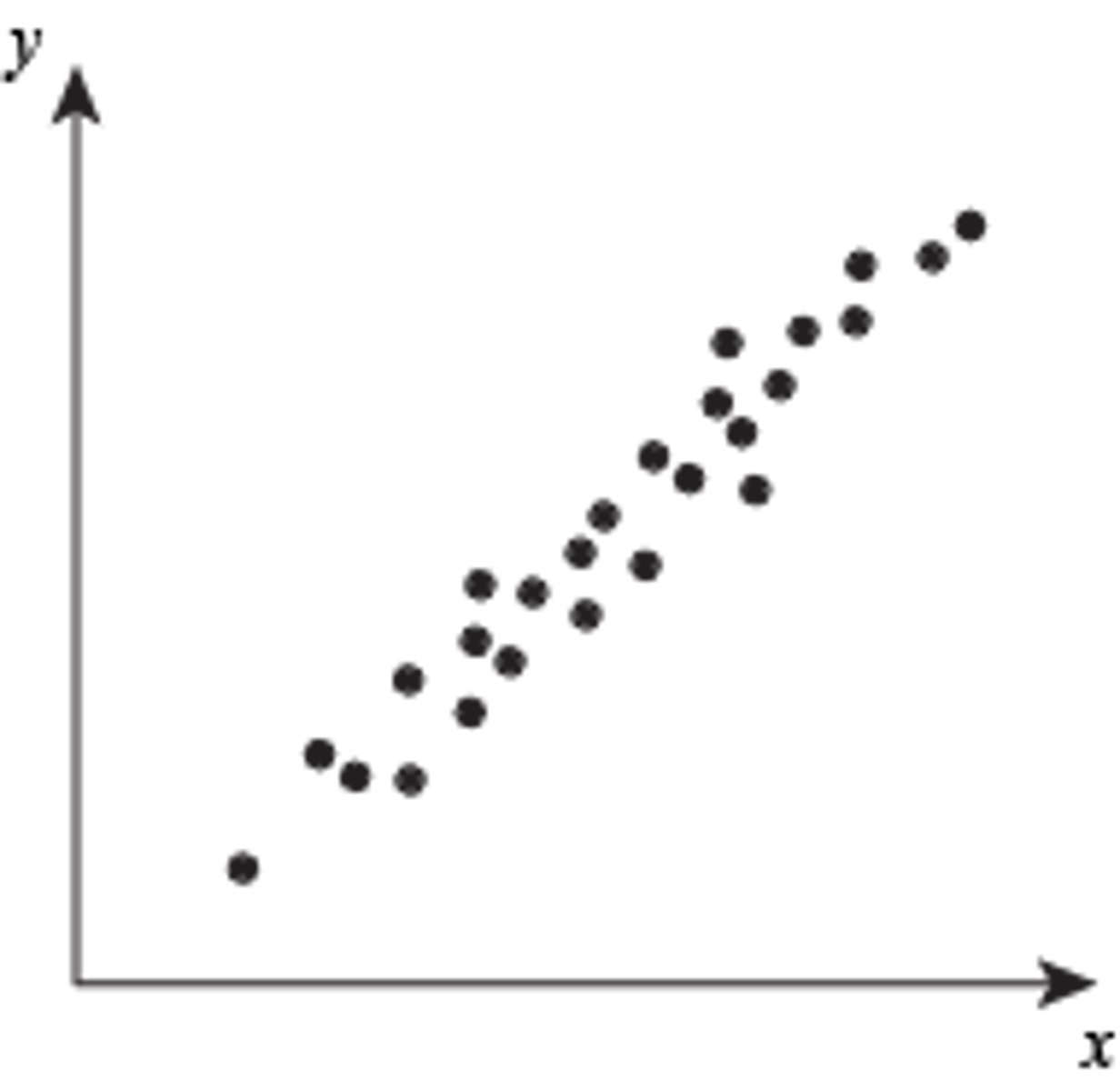
Positive Correlation
Type of correlation - The two variables increase together
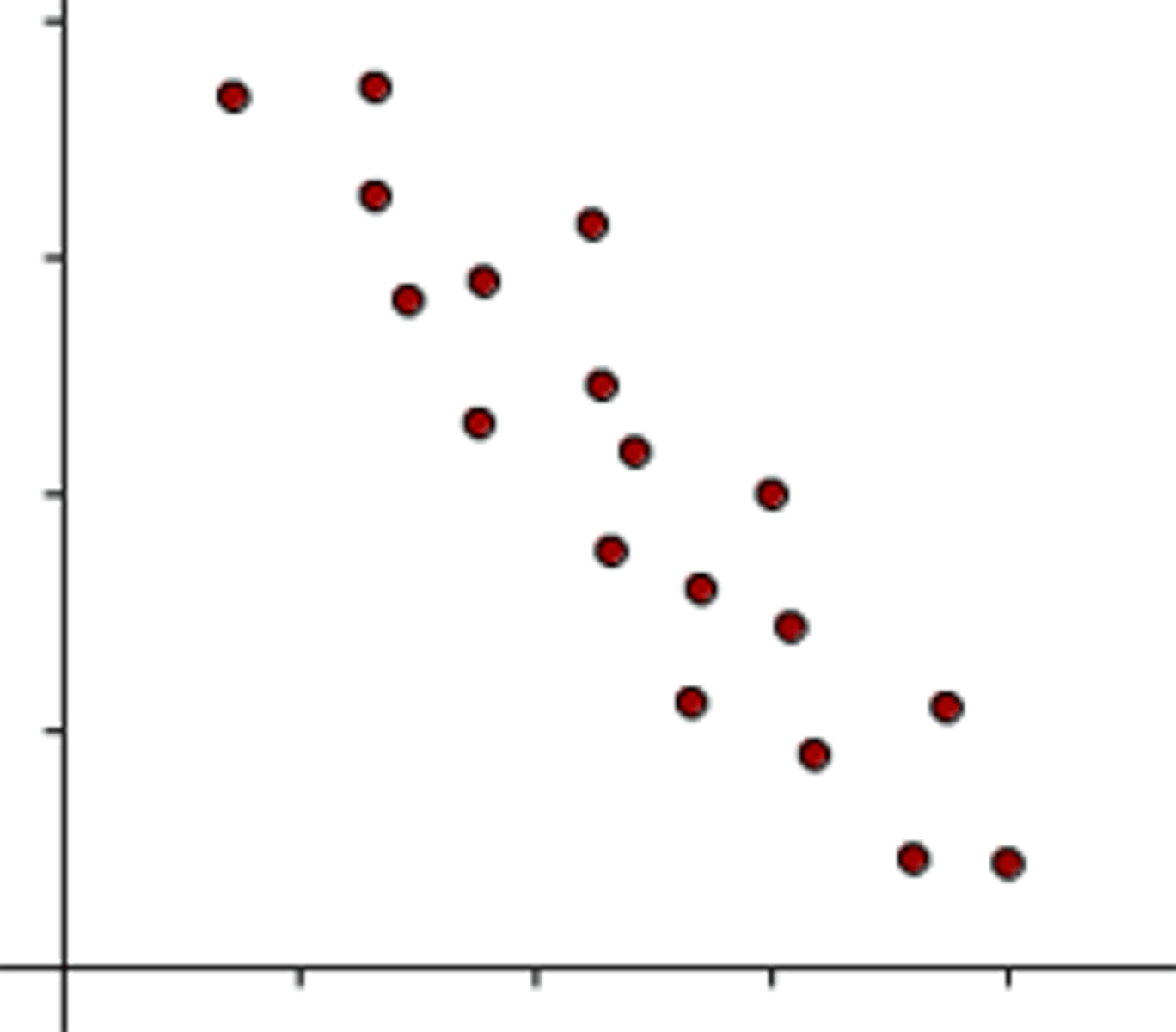
Negative Correlation
Type of correlation - As one variable decreases the other one also decreases
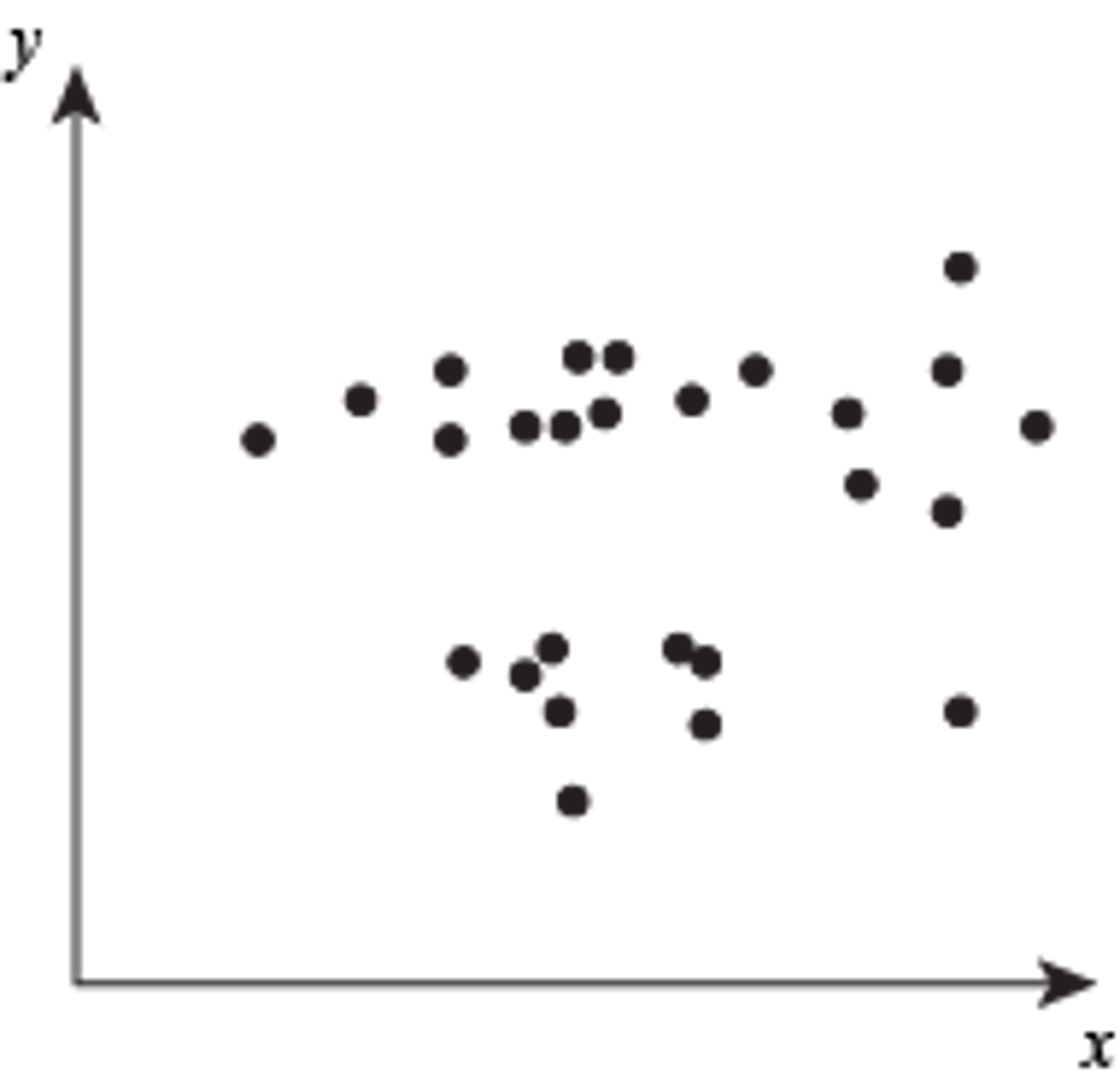
Zero Correlation
Type of Correlation - No relationship between points/variables
Correlational Hypothesis
States the association between co-variables.
Scattergrams
A correlation can be shown or illustrated using one of these. The scatter of the points indicates the degree of correlation between co-variables.
Correlation Coefficient
A measure of the extent of correlation that exists between co-variables.
Meta-analysis
Findings from a number of studies are used to produce a statistical result which represents an overall effect. This produces an effect size.
✔️ • increases validity of conclusions
✖️ • publication bias
Effect Size
Measure of strength of the relationship between two variables.
Systematic Review
A review of research, identifying an aim and the searching for studies that have addressed similar aims.
Case Study
- very detailed investigations of an individual/small group of people
- in-depth analysis of an event/rare disorder
- qualitative + quantitative data
Case study evaluation
Strengths
- data collected leads to detailed/interesting findings
- high levels of validity
- rich yield of data
Limitations
- time consuming
- increased time w/subjects could lead to reduced objectivity
- can't be generalised -> unique people/findings