ION CHANNELS
 Call Kai
 Learn
Learn Practice Test
 Spaced Repetition
 Match
Match Flashcards
 Knowt Play
1/36

Earn XP
Description and Tags
BIOPSYCH EXAM 1
Name | Mastery | Learn | Test | Matching | Spaced | Call with Kai |
|---|
No analytics yet
Send a link to your students to track their progress
37 Terms
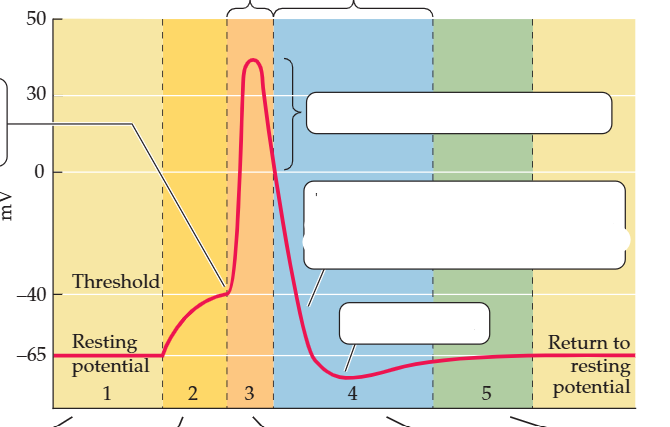
What occurs in the resting potential?
K + channels open and create the resting potential.
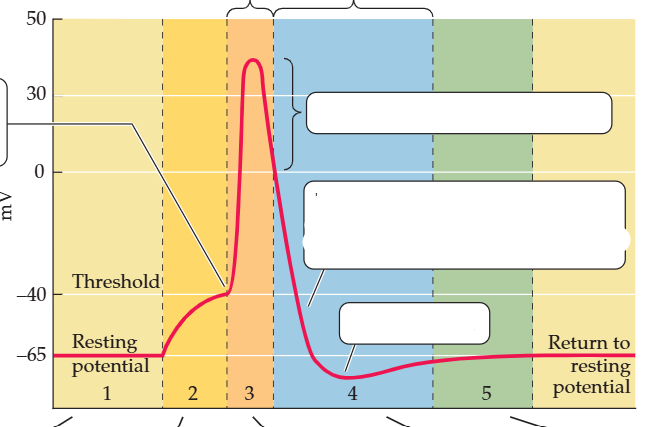
What occurs in the (2) area
Any depolarizing force will bring the membrane potential closer to threshold.
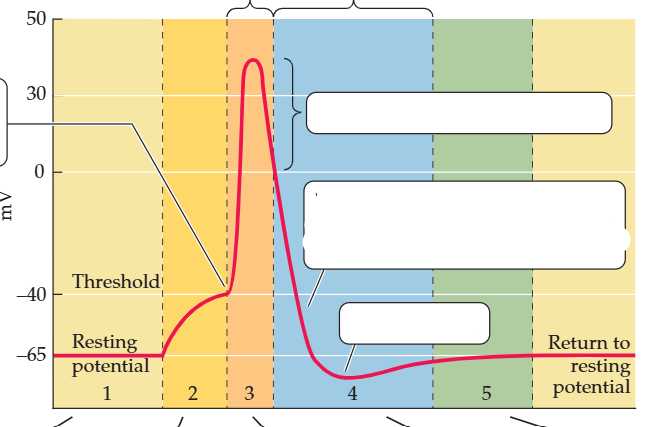
What occurs in the (3) area
At threshold, voltage-gated Na + channels open, causing a rapid change of polarity— the action potential.
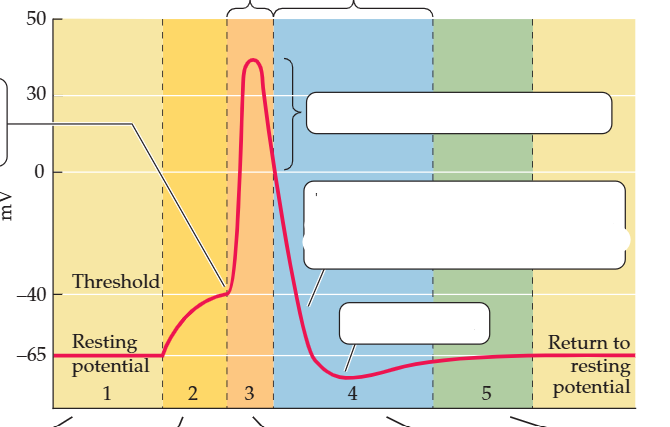
What occurs in the (4) area
Na + channels automatically close again; gated K + channels open, repolarizing and even hyperpolarizing the cell (afterpotential).
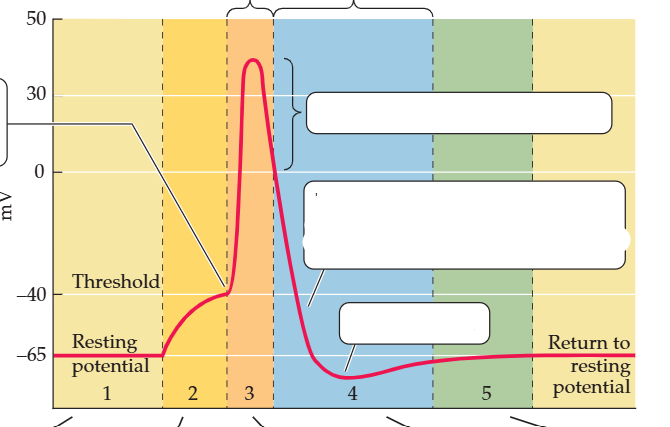
What occurs in the (5) area
All gated channels close. The cell returns to its resting potential.
What makes up the forebrain region
Telencephalon and Diencephalon
What makes up the Telencephalon region
Cerebral cortex, basal ganglia and limbic system
What makes up the Diencephalon region
Thalamus and Hypothalamus
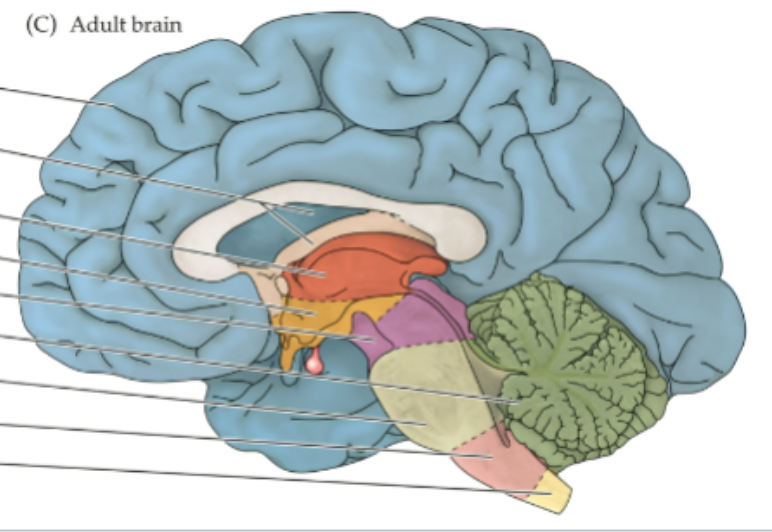
What is the yellow area
Spinal cord
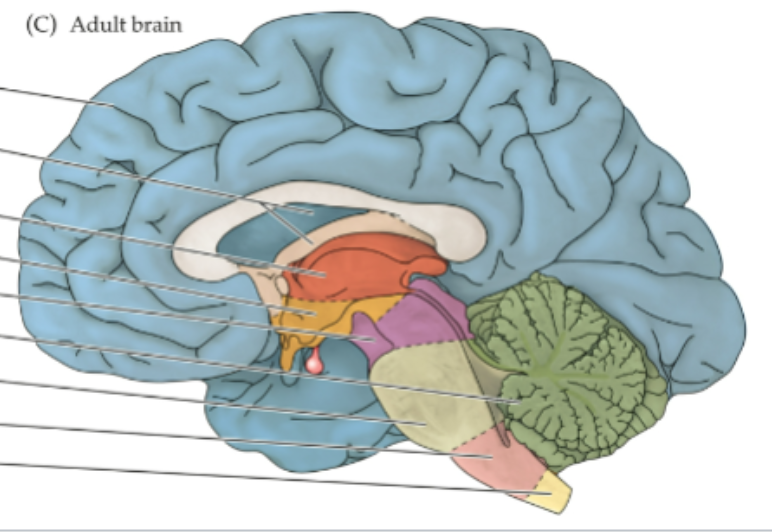
What is the pink area
medulla
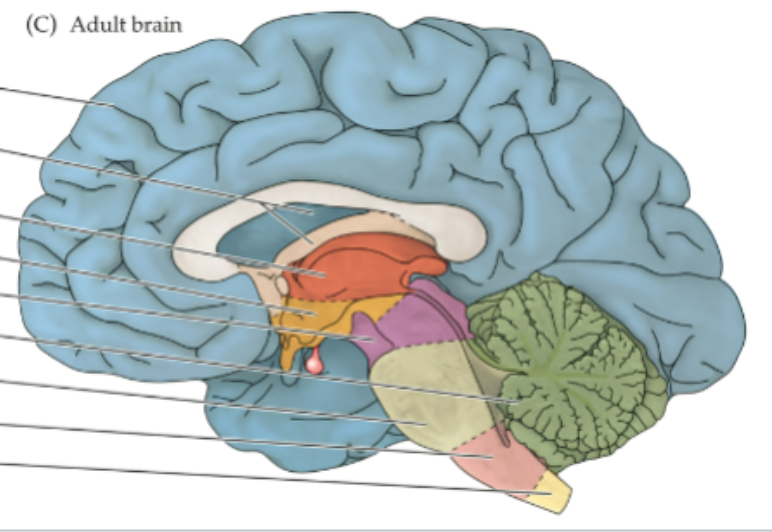
What is the greenish/yellow area
pons
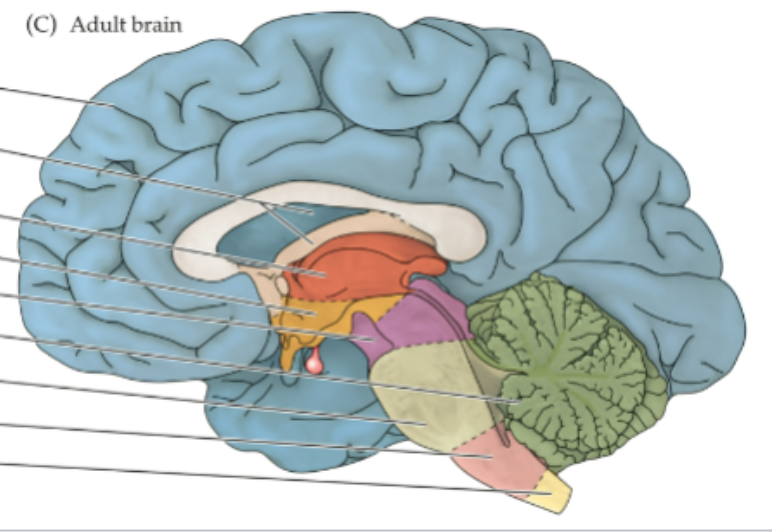
What is the purple area
midbrain
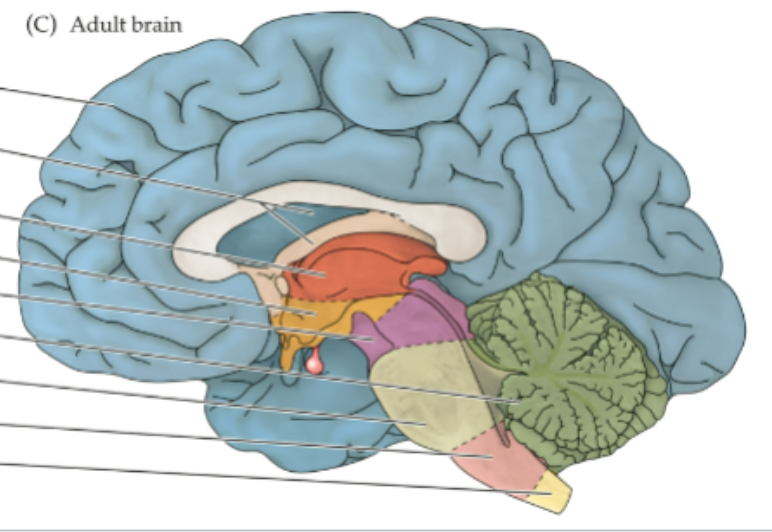
What is the orange area
hypothalamus
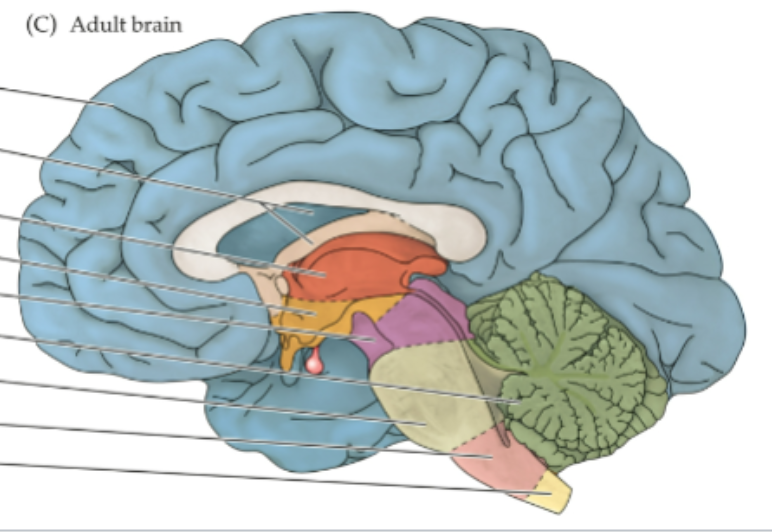
What is the red area
thalamus
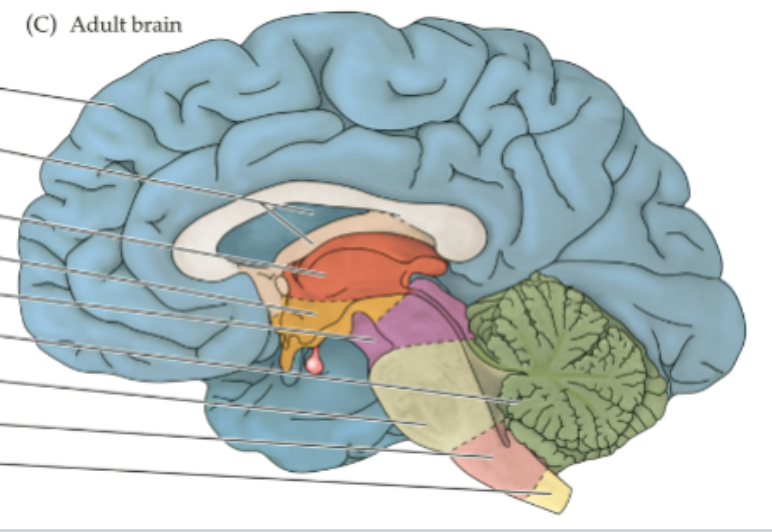
What is the tan area
Limbic system
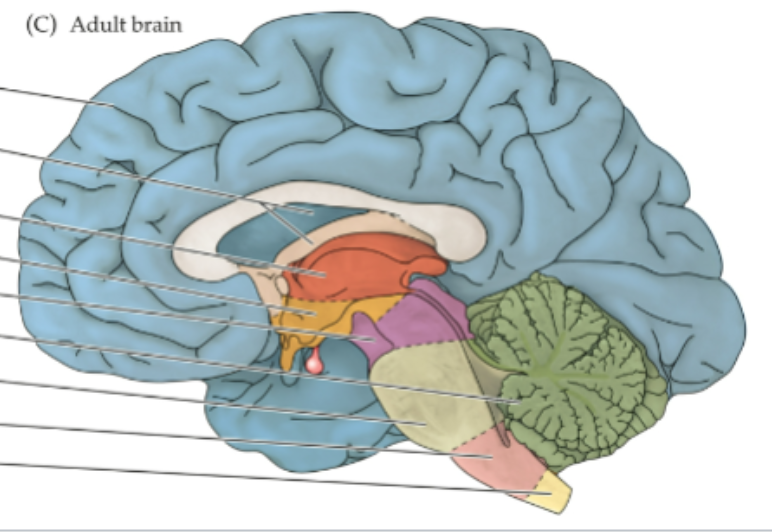
What is the darkish blue area
basal ganglia
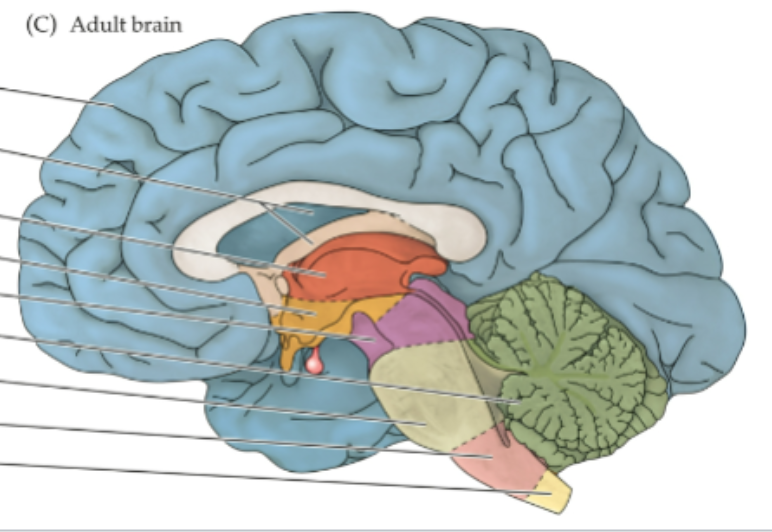
What is the light blue shaded area
cortex
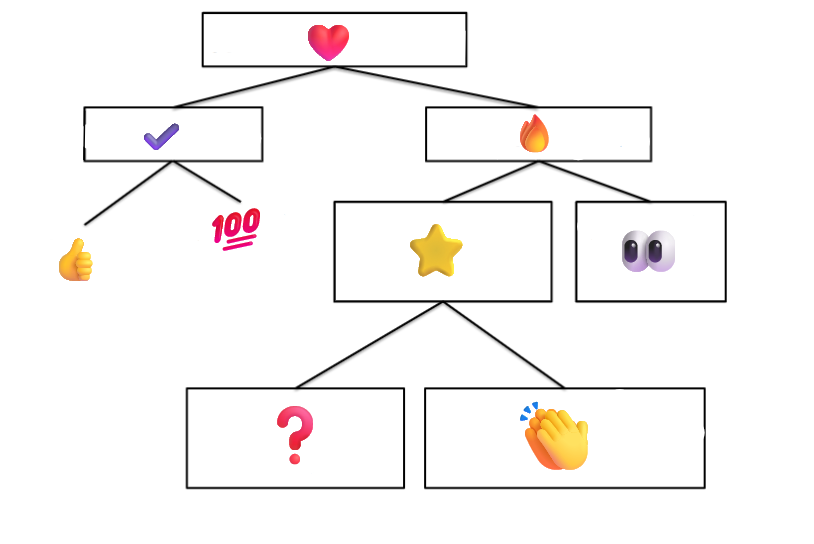
Identify the heart
Nervous system
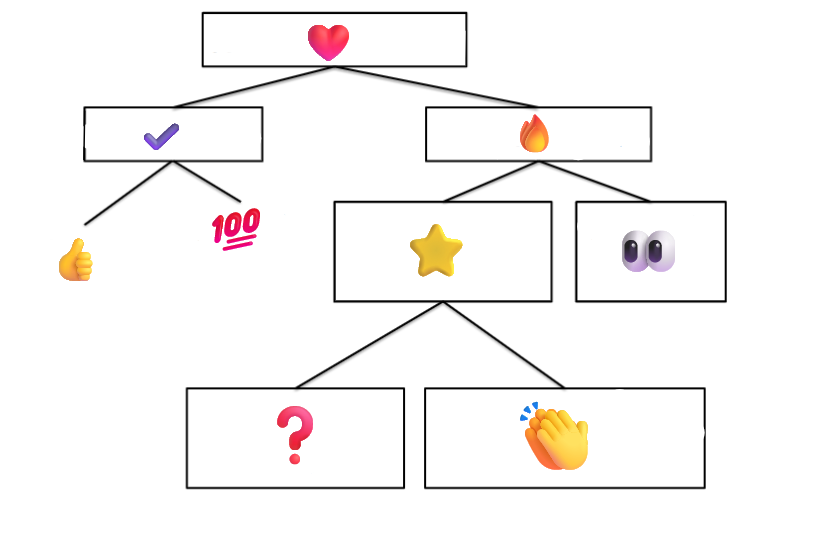
Identify the check mark
Central NS
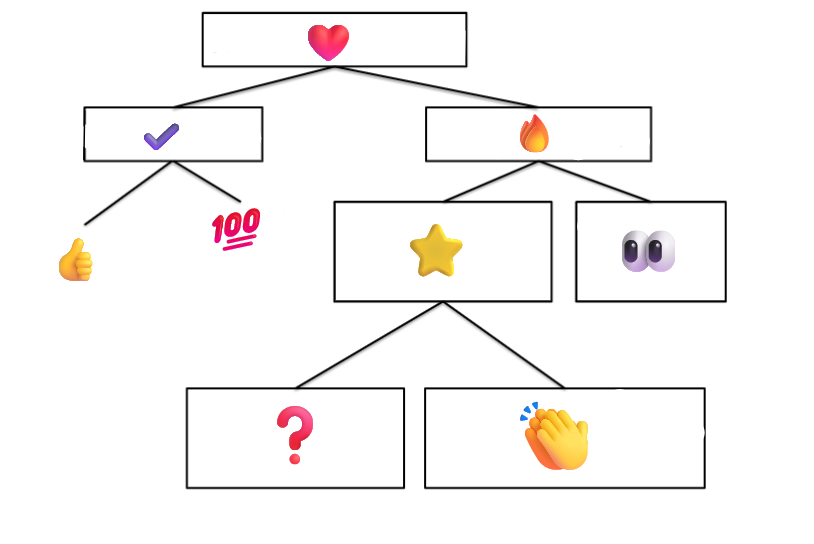
Identify the thumbs up
Brain
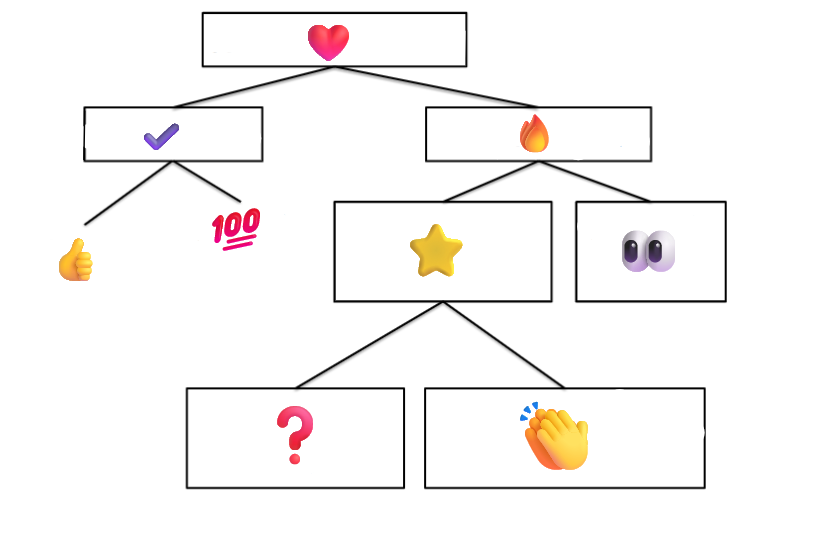
Identify the 100
Spinal cord
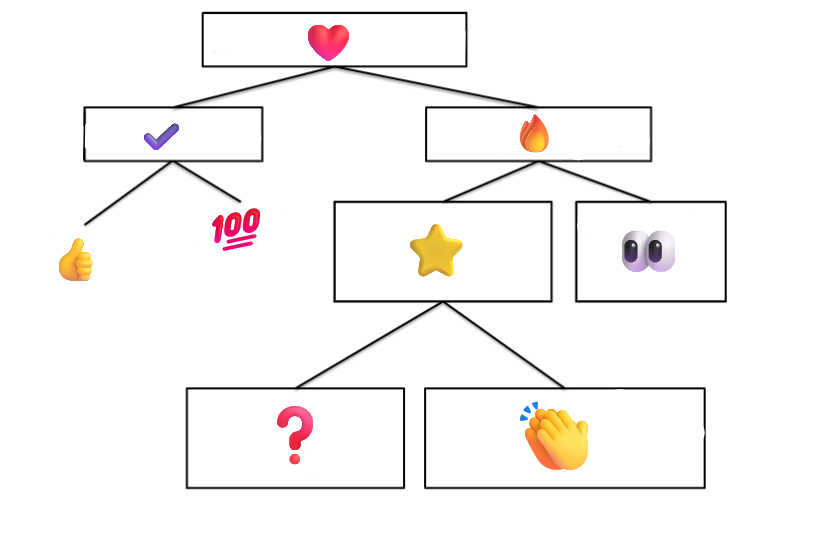
Identify the fire
Peripheral NS
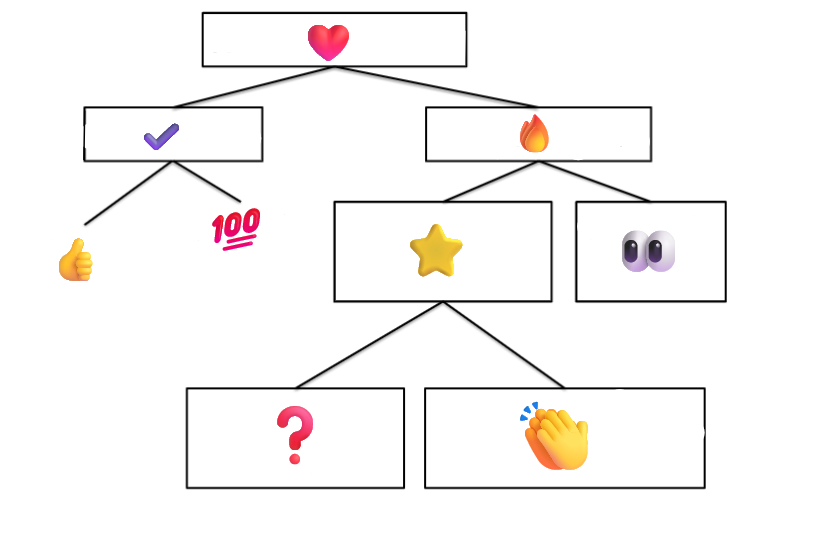
Identify the star
Autonomic NS
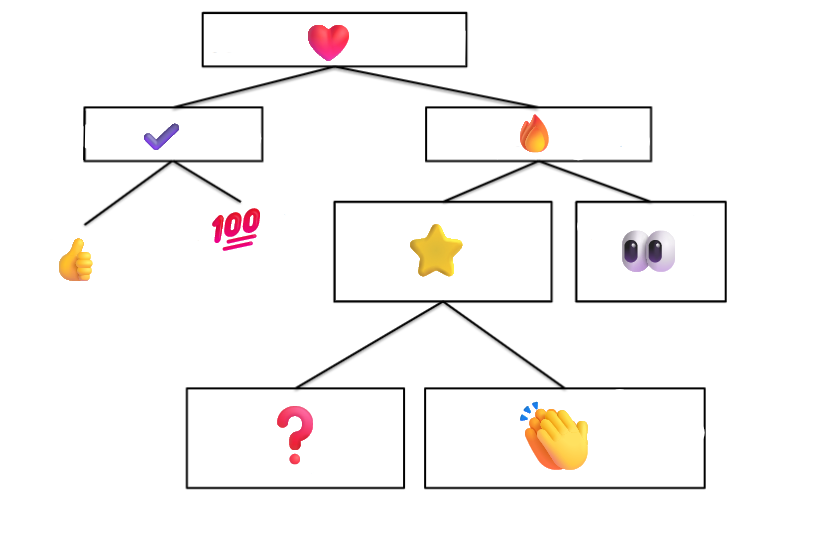
Identify the eyes
Somatic NS
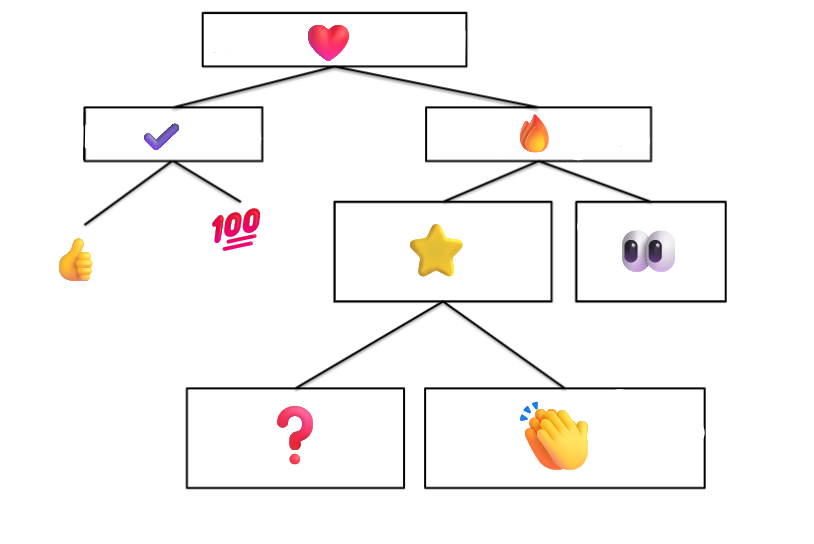
Identify the question mark
Sympathetic NS
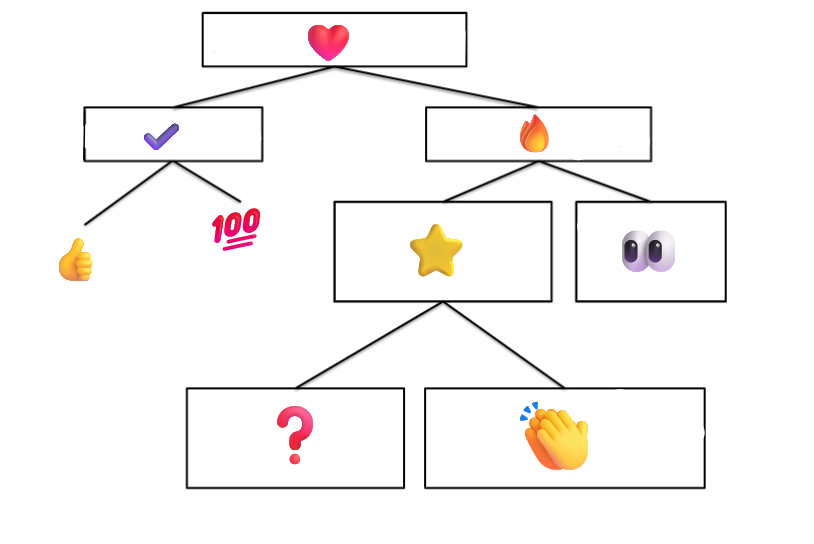
Identify the clapping hands
Parasympathetic NS
central nervous system (CNS)
the portion of the nervous system that includes the brain and the spinal cord
Peripheral nervous system (PNS)
The portion of the nervous system that includes all the nerves and neurons outside the brain and spinal cord
The somatic nervous system
Which consists of nerves that interconnect the brain and the major muscles and sensory systems of the body
The autonomic nervous system
Which consists of nerves that connect primarily to the internal organs
Vagus Nerve
The primary route by which the brain both controls and receives information from many internal organs