Human Immunodeficiency Virus
 Call Kai
 Learn
Learn Practice Test
 Spaced Repetition
 Match
Match Flashcards
 Knowt Play
1/23

There's no tags or description
Looks like no tags are added yet.
Name | Mastery | Learn | Test | Matching | Spaced | Call with Kai |
|---|
No analytics yet
Send a link to your students to track their progress
24 Terms
Human Immunodeficiency Virus (HIV)
HIV is a zoonosis resulting from cross-species transmission of Simian Immunodeficiency Virus (SIV) from monkeys
HIV taxonomy
Retroviridae othoretrovirinae lentivirius
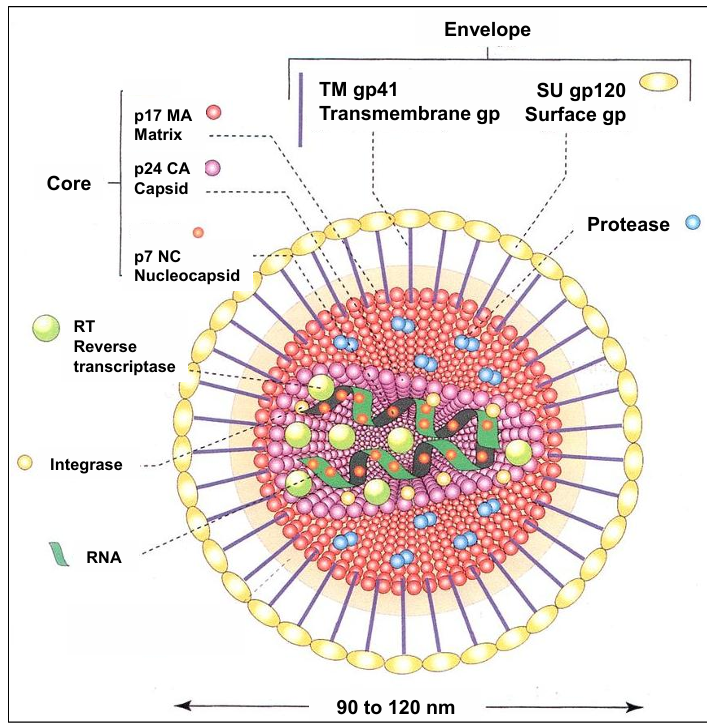
HIV structure
Positive single stranded RNA with 2 copies
Enveloped
Conical capsid core
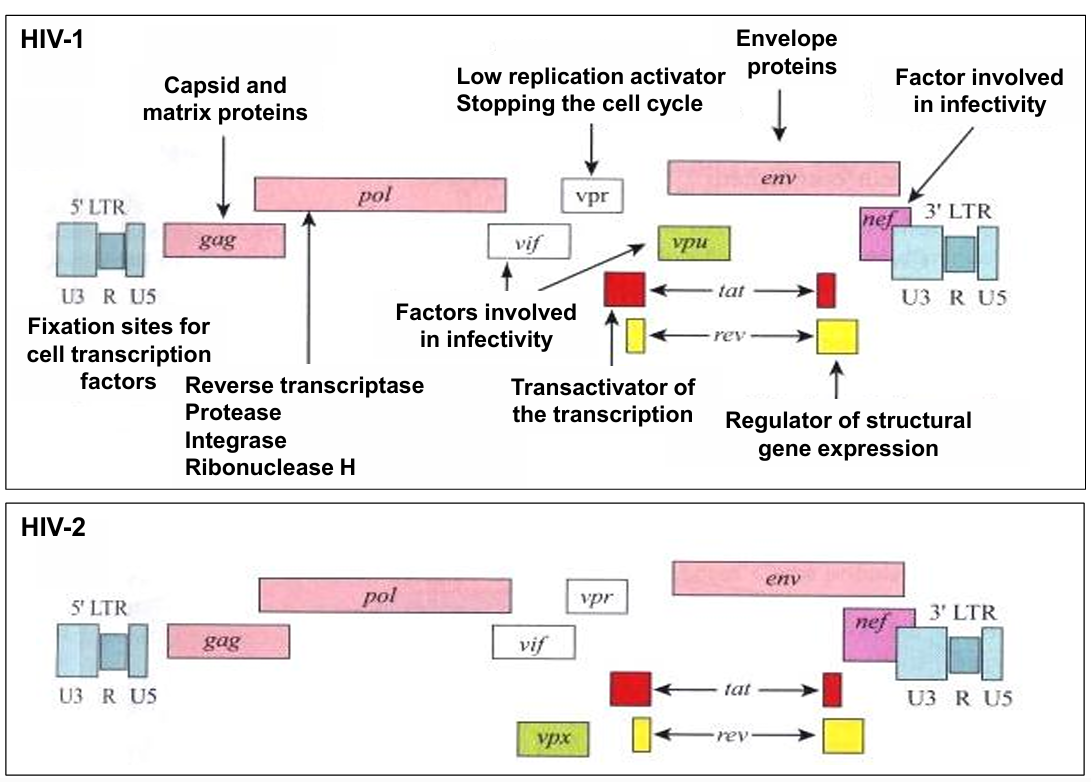
HIV genomes
Gag (structural), pol (enzymes like reverse transcriptase and protease), and env (envelope)
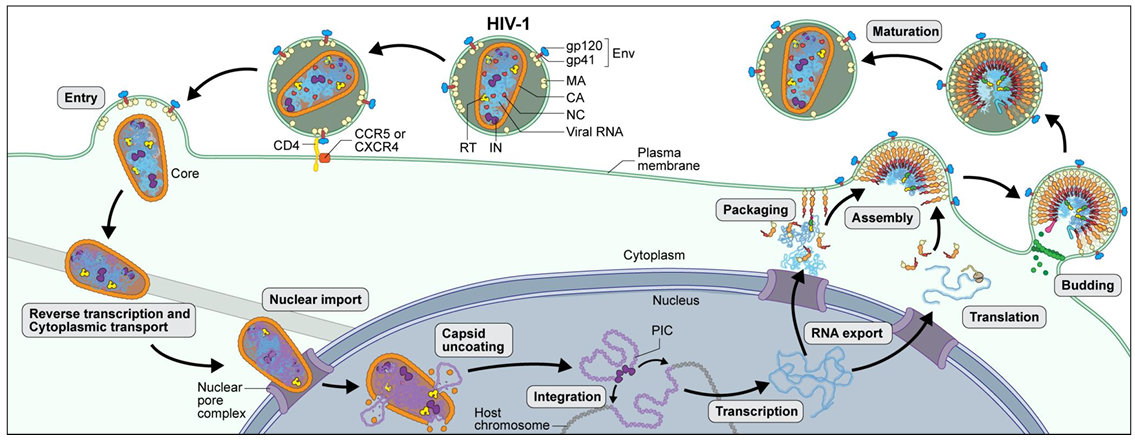
HIV multiplication cycle
Binding and entry
Reverse transcription
Integration: insertion of the viral DNA to the host DNA
Replication and transcription
Assembly and budding
Maturation
HIV variability
Replicates rapidly with a low-fidelity reverse transcriptase → frequent errors → high diversity
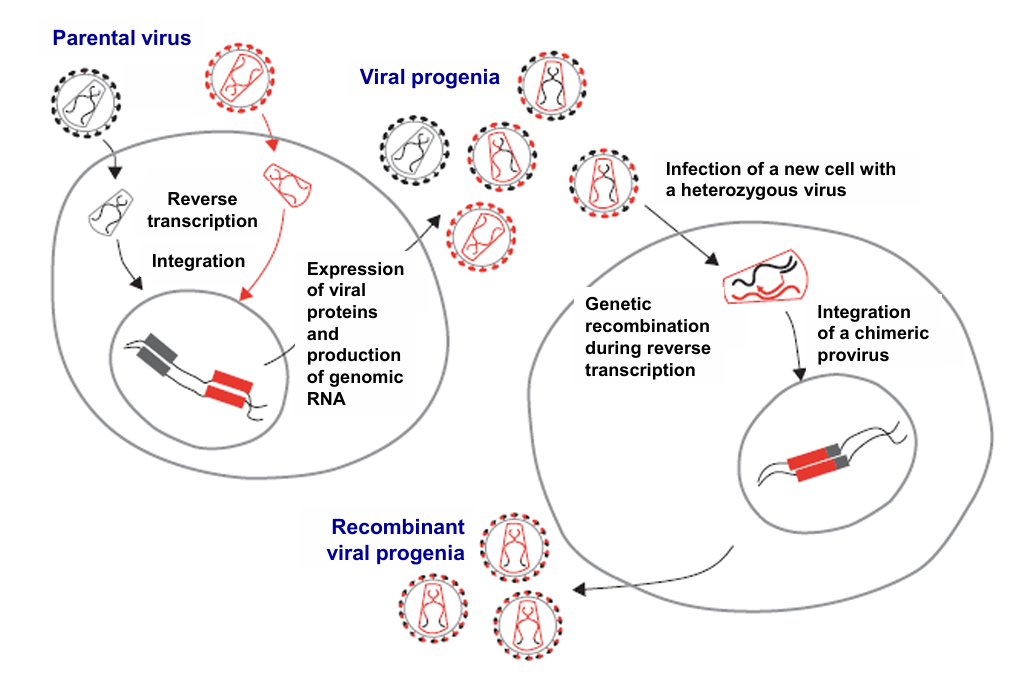
Viral recombination
Exchange of fragments of genetic material (DNA or RNA) among parental viral genome
HIV-1 diversity
Group M (major): europe, america, australia
Group O (outlier): central africa
Group N: cameroon
Group P: cameroon
HIV-2 diversity
A (sub-groups A1 and A2), B, C, D, E, F, G, H, and I
Viral quasispecies
Population structure of viruses with a large number of variant genomes
HIV envelope glycoproteins
gp120 and gp41 for HIV-1
gp105 and gp36 for HIV-2
HIV-2 infection and treatment
HIV-2 progresses more slowly and has a lower transmission risk but is naturally resistant to certain classes of antiretrovirals
HIV modes of transmission
Sexual route
By blood
From mother ro child: pregnancy, childbirth and breastfeeding
HIV target cells
CD4 T lymphocytes
HIV receptors
CD4 receptor and coreceptors (CCR5 or CXCR4) to enter cells
CCR5 polymorphism
Level of expression varies from one individual to another
CCR5△32 → protect R5 infections
HIV natural infection
Progresses from primary infection (high viral load) to clinical latency (stable but declining CD4 count) and finally to AIDS (acquired immunodeficiency syndrome)
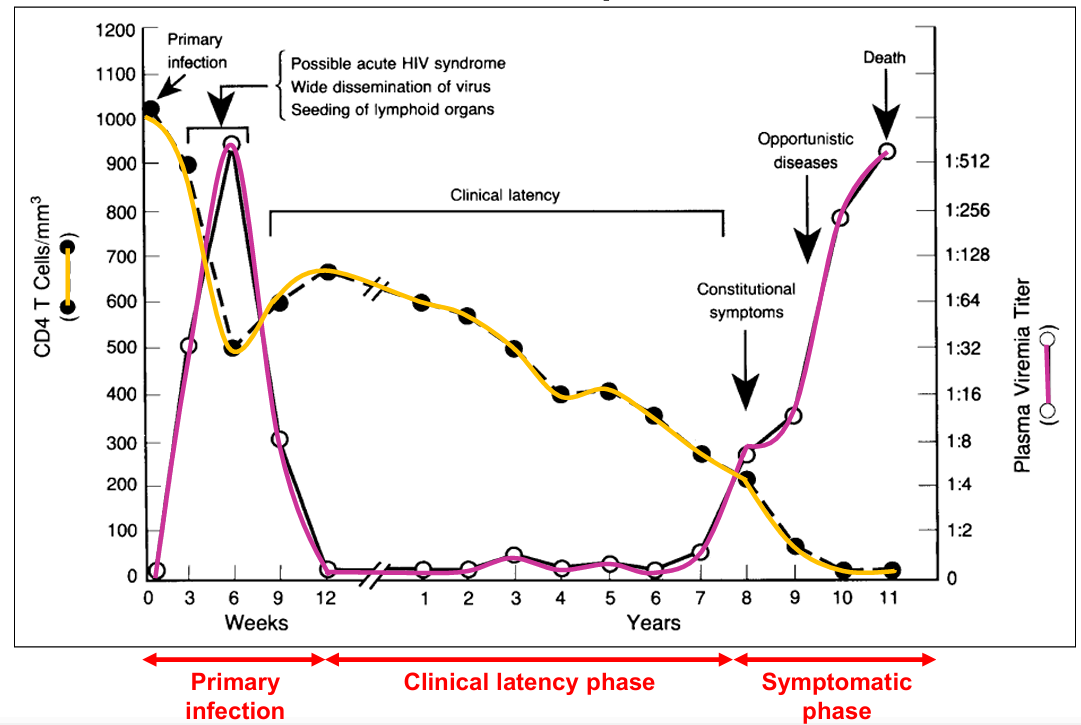
Establishment of HIV infection
Virus spreads rapidly in the body
Initially interacts with dendritic cells
Reach the blood (CD4 T lymphocytes) in 4 to 6 hours
Reach the lymph nodes in 48 hours
Detectable in the blood in 4 to 11 days
HIV antibodies can be detected after 1 month
HIV reservoir
The viral load reappears when the antiretroviral therapy (HAART) is stopped
CNS, lymph nodes, lymphoid tissue associated with digestive tissue, bone marrow, genital tract, blood, spleen, fatty tissue, lung
HIV can persist in this latent state as long as the cell carrying it
Evolution of HIV Infection
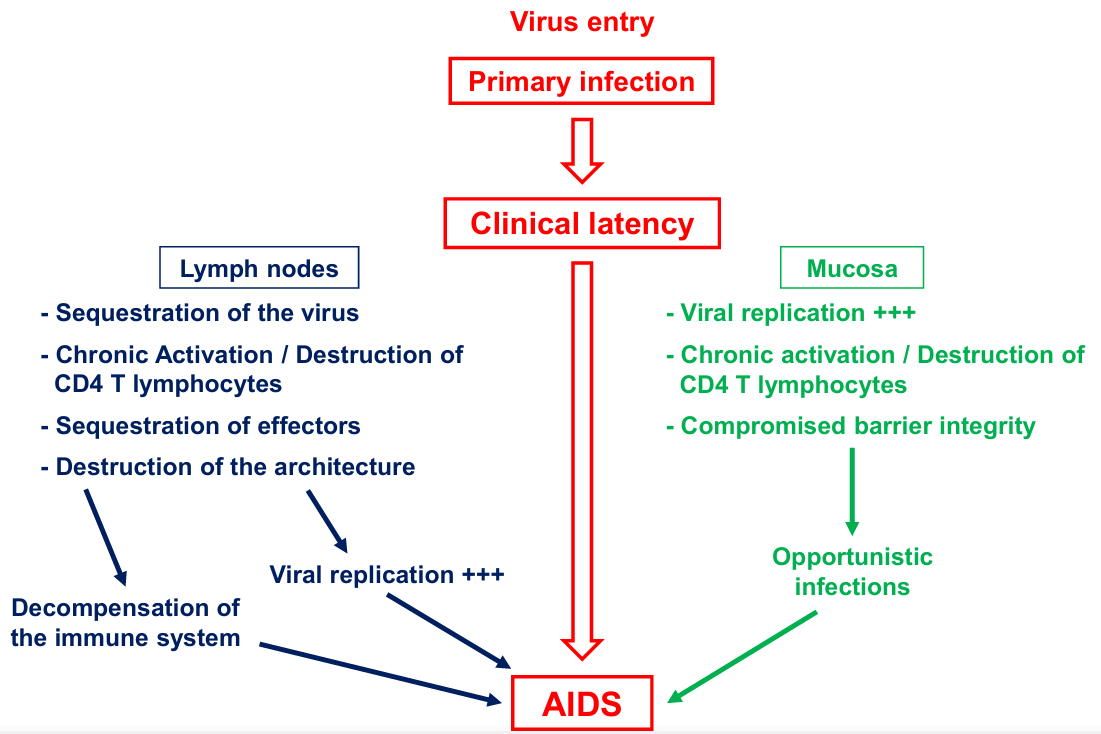
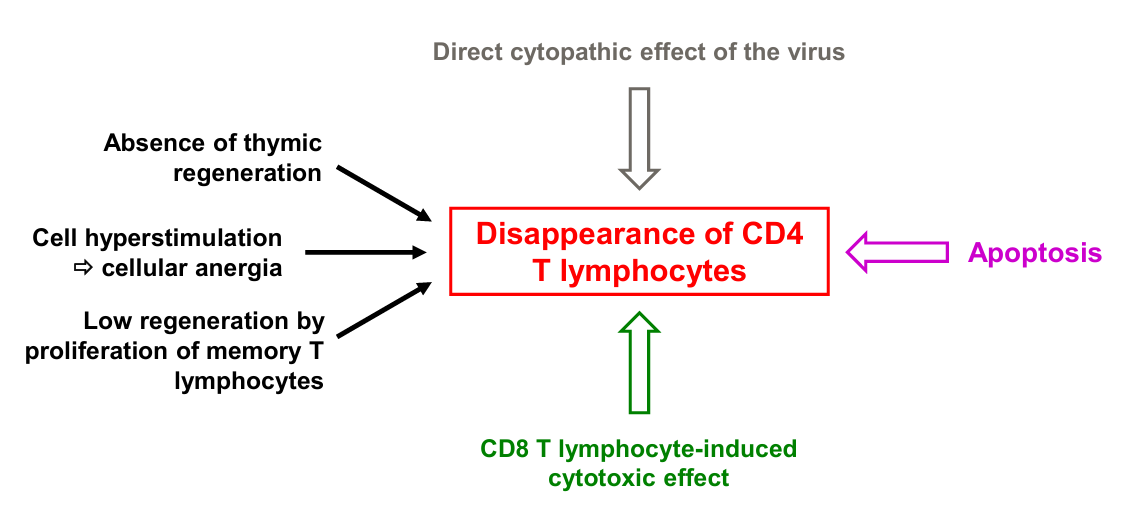
Progressive destruction of CD4 T lymphocytes
HIV symtoms
acute viral syndrome
polyadenopathy
cutaneous-mucous manifestations
digestive disorders
neurological symptoms
hepatic cytolysis
HIV CD4 T lymphocyte rate
Following initial contamination, there is often a long period where no apparent signs of the disease are visible, though the CD4 count is steadily decreasing.
Reappearance of Symptoms: As the CD4 rate falls below 500 cells/mm³, clinical manifestations begin to (re)appear as the immune system weakens
HIV CDC classification
A: asymptomatic phase
B: symptomatic (non-AIDS)
C: AIDS (opportunistic infections)