triple bio paper 1 all flashcards
 Call Kai
 Learn
Learn Practice Test
 Spaced Repetition
 Match
Match Flashcards
 Knowt Play
1/129

There's no tags or description
Looks like no tags are added yet.
Name | Mastery | Learn | Test | Matching | Spaced | Call with Kai | Chat |
|---|
No analytics yet
Send a link to your students to track their progress
130 Terms
What is a eukaryotic cell?
Contain their genetic material (DNA) enclosed in a nucleus.
What is a prokaryotic cell?
The DNA is not enclosed in a nucleus, but in a circular strand of DNA and maybe plasmids (small rings of DNA) too. Prokaryotic cells are much smaller than eukaryotic cells.
What are the standard units used in cell biology and how to convert between them?
metre, millimetre, micrometre, nanometre

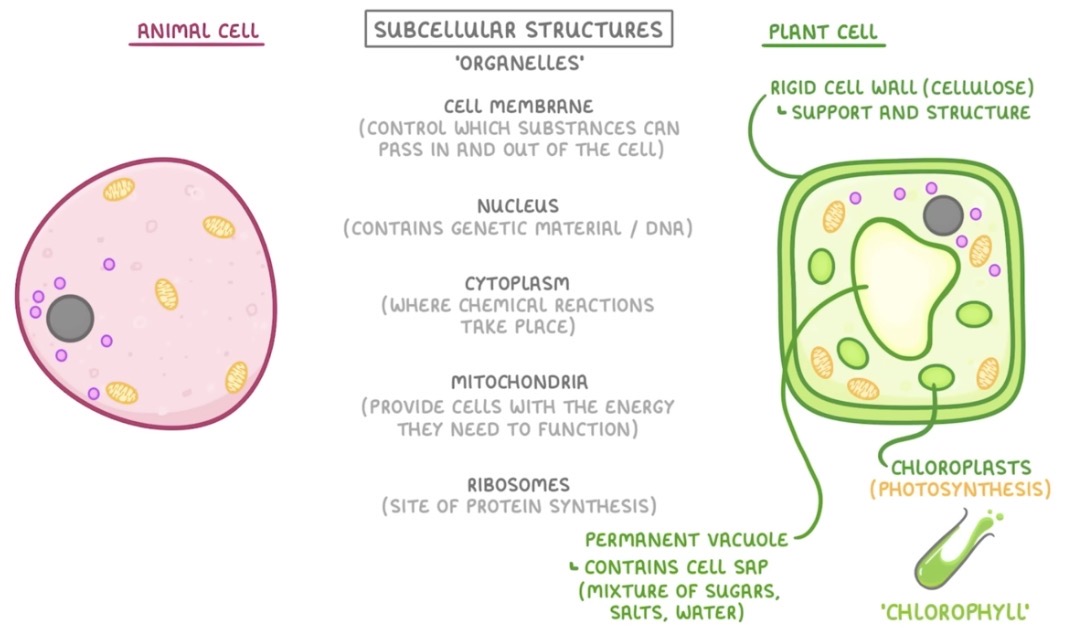
What are the parts of animal and plant cells and their functions?
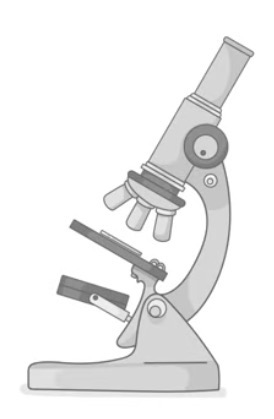
Label this microscope drawing.
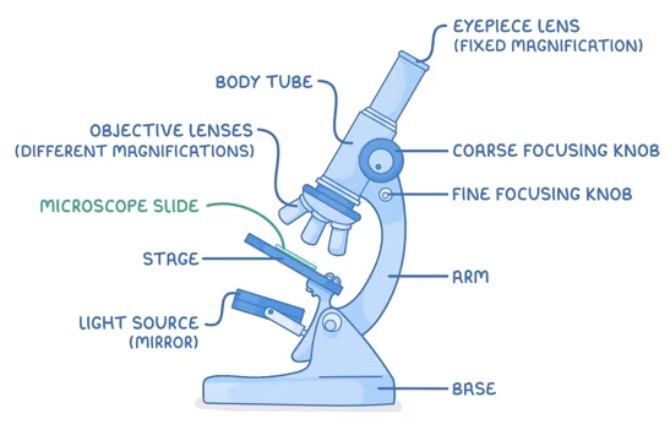
Required Practical: microscopes
Place the prepared slide onto the stage and secure with clips. Start with the stage at the lowest point.
Start with the lowest power objective lens.
Slowly turn the coarse focusing dial to raise stage until you see the specimen.
Swap to fine focus and adjust until specimen is clear.
Move up objective lens and readjust.
Electron vs light microscope
Electron microscope: higher magnification + resolution
Electron microscope: B&W image
Light microscope: colour image
What is the equation for magnification?
Magnification = image size / actual size
(MIA)
What is a specialised cell?
A cell that has differentiated.
Name 3 specialised animal cells with function and adaptations.
Nerve cell - sends electrical impulses around the body
Long axon to carry the impulses across body
Fatty sheath insulates axon to speed up impulses
Muscle cell - contract to move body
Contain protein fibres which can change their length
Contains lots of mitochondria to provide energy for muscle contraction
Sperm cell - fertilises ovum
Long flagellum to swim to the ovum + are streamlined
Contain lots of mitochondria to give energy needed for swimming
Name 3 specialised plant cells with function and adaptations.
Root hair cell - absorbs water + nutrients for plant
Hairs to increase surface area
Thin cell wall to improve absorption
Xylem cell - carries water and minerals from roots to leaves
Thick walls containing lignin for plant support
End walls between cells broken down to form a long tube for easy transport
Phloem cell - carries dissolved sugars up and down the plant
No nucleus and only limited cytoplasm
Each phloem cell has a companion cell with mitochondria to provide energy
What are the key facts about chromosomes?
The nucleus of a cell contains chromosomes made up on DNA molecules. Chromosomes carry many genes. In body cells the chromosomes are normally found in 23 pairs.
What is the cell cycle?
Chromosomes + organelles replicate
They are pulled apart and two nuclei reformed
Cytoplasm and cell membrane divide to form two identical daughter cells
These contain identical genetic material
Why is mitosis needed?
Growth
Repair
Replace
Asexual reproduction
What is a stem cell?
An undifferentiated cell.
What are embryonic stem cells and its disadvantages?
Pluripotent: can be grown into any type of human cell
Created from leftover embryos before differentiation
DISADVANTAGES
Risk of immune rejection
Ethical / religious concerns
What are meristems in plants and how could they be used?
Found in roots and buds of the plant
Can differentiate into any type of plant tissue, at any point in the plant’s life
Could be used to clone plants to stop extinction of rare species or produce cloned crops for farmers (for example rare plants with disease resistance can be cloned)
What are adult stem cells and how could they be used?
The stem cells found in bone marrow can differentiate to form cells found in our blood
Multipotent: can only differentiate into cells from the tissue in which they’re found
May be used to treat leukaemia - bone marrow transplant containing stem cells to form blood cells, however risk of transferring viral infections
What is therapeutic cloning and how could it be used?
An embryo is produced with the same genes as the patient
Stem cells from the embryo can be transplanted without being rejected by the patient’s immune system
Then the stem cells can differentiate to replace cells which don’t work properly
Could be useful for diabetes / paralysis
When does differentiation happen in plant and animal cells?
Most animal cells differentiate at an early stage. Many plant cells retain the ability to differentiate throughout their life.
What is diffusion?
Diffusion is the movement of particles from a high to low concentration, passively.
What are some substances transported in and out of cells by diffusion?
Oxygen and carbon dioxide in gas exchange
Urea from cells into the blood plasma for excretion by the kidneys
What factors affect diffusion?
Temperature: higher temperature, faster diffusion
Surface area: greater surface area, faster diffusion
Difference in concentration: larger concentration gradient, faster diffusion
What is osmosis?
The diffusion of water from a high to low water concentration through a partially permeable membrane, passively.
Explain osmosis in terms of animal and plant cells.
Cytoplasm has a low concentration of water (dilute). If a cell is placed in water, osmosis will take place and the cell will become swollen (plant cell wall stops bursting - becomes turgid). If a cell is placed in a very concentrated solution, water will move out of the cell and it will shrink (flaccid).
Required Practical: the effects of osmosis plant tissue
Use a cork borer to cut 3 potato cylinders of the same diameter. Use a knife and ruler to trim the cylinders to 3cm each.
Measure the mass of each cylinder using a balance.
Measure 10cm³ of three different salt concentrations into 3 different boiling tubes. Add in the potato cylinders.
Leave overnight. Then, remove the potato cylinders and dry gently with a paper towel.
Measure the new masses with a balance.
Calculate the percentage change in mass.
What is active transport?
The movement of particles from low to high concentration against the concentration gradient and across a partially permeable membrane, requiring energy / ATP.
Give a human and a plant example of where active transport is found
Root hair cells absorb mineral irons from the soil
Glucose from gut to the blood (needed for respiration)
What increases the effectiveness of an exchange surface?
Large surface area
Thin membrane (short diffusion pathway)
Efficient blood supply (in animals)
Being ventilated (in animals, for gas exchange)
What is a tissue?
A group of cells with a similar structure and function
What is an organ?
A group of tissues working together for a specific function. They’re organised into organ systems, which work together to form organisms.
What is digestion and why does it happen?
Food contains carbohydrates, protein and lipids. During digestion, these large food molecules are broken down into small molecules by enzymes. The small molecules can then be absorbed into the bloodstream.
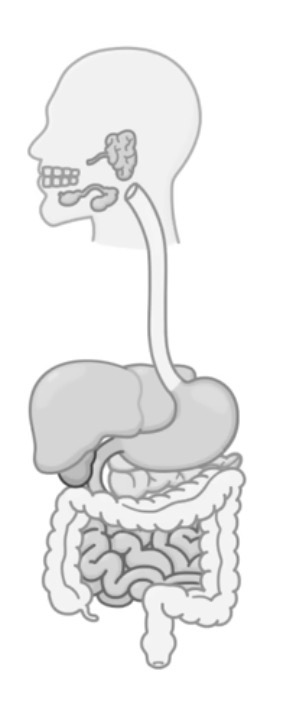
Label the digestive system.
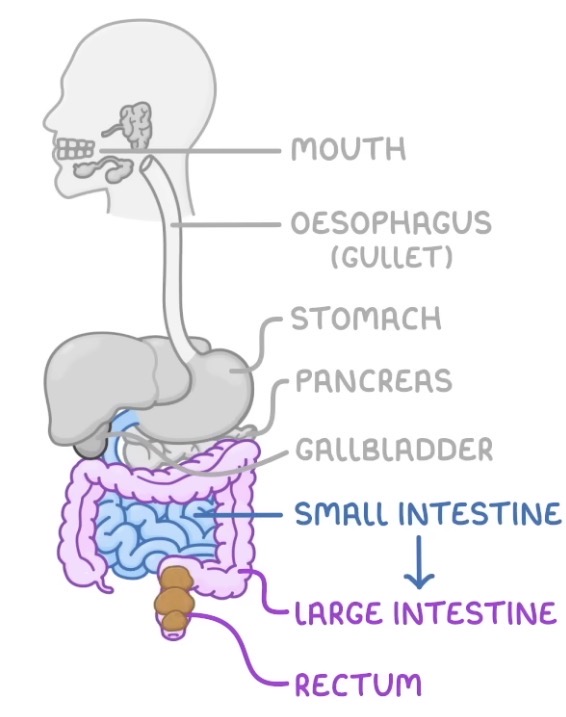
What are the functions of everything in the digestive system?
Glands (mouth + pancreas): produce digestive juices containing enzymes to break down food
Stomach: produces hydrochloric acid to kill bacteria and provide optimum pH for protease
Liver: produces bile + transported to small intestine
Gallbladder: stores bile
Small intestine: soluble food molecules absorbed into bloodstream
Large intestine: water absorbed into the bloodstream
Anus: faeces is released
What are enzymes?
Biological catalysts (speed up rate of reaction without being used up).
What is the lock and key theory?
The shape of the substrate is specific to the shape of the active site, and they bond to form an enzyme-substrate complex.
Once bound, the reaction takes place and the products are released from the surface of the enzyme.
What enzyme digests proteins and where is it found?
Protease converts proteins into amino acids.
Pepsin is produced in the stomach, and other forms are found in the pancreas and small intestine.
What enzyme digests carbohydrates and where is it found?
Carbohydrase converts carbohydrates into simple sugars.
Amylase is a carbohydrase which breaks starch down, and is found in the mouth, pancreas and small intestine.
What enzyme digests lipids and where is it found?
Lipase converts lipids into fatty acids and glycerol.
It is produced in the pancreas and small intestine.
What is the purpose of bile?
Increases rate of fat breakdown by lipase
It emulsifies fat to form small droplets which increases the surface area
It is alkaline, allowing it to neutralise stomachs acid
How is the small intestine adapted for exchanging materials?
Very long - large surface area
Lined with villi (which have microvilli), which increase surface area and have very good blood supply which increases the concentration gradient
Thin membrane - short diffusion path
Do enzymes need a specific temperature?
Yes, the optimum temperature is around 37ºC (body temperature). The rate of reaction increases up to this point, but if it becomes too hot, it denatures (changes shape) so the substrate no longer fits.
Do enzymes need a specific pH?
Yes, the optimum pH is usually 7, but some produced in places such as the stomach have a low optimum. If the pH is too high or low, the forces between the amino acids that make up the proteins will be affected. The enzyme will then denature.
Required Practical: effect of pH on amylase
Prepare a spotting tile with one drop of iodine in each well.
Add 1cm3 of amylase solution to a test tube, and 1cm3 of pH buffer solution to another test tube. Add 5cm3 of starch solution to a separate test tube.
Place all three tubes in a water bath at 30ºC and leave for 5 minutes.
Combine all three liquids into one test tube and stir, then place back in the water bath.
Every 30 seconds remove a sample and place in well. Record how long it takes for the iodine to remain orange.
Repeat steps 1-4 using different pH buffers.
Required Practical: food tests (starch + sugars)
Take the food sample and grind with distilled water using a mortar and pestle.
Transfer the paste to a beaker and add more distilled water. Stir.
Filter the solution to remove suspended food particles.
TESTING FOR STARCH:
Place 2cm3 of food solution into a test tube.
Add a few drops of iodine solution. If starch is present, it will turn blue-black. If not, it will stay orange.
TESTING FOR SUGARS:
Place 2cm3 of food solution into a test tube.
Add 10 drops of Benedict’s solution.
Place the test tube in a beaker containing boiled water and leave for 5 mins.
If sugar is present, it will go green for a small amount, yellow for a medium amount, and brick red for a lot of sugar. If not, it will stay blue.
Required Practical: food tests (proteins + lipids)
Take the food sample and grind with distilled water using a mortar and pestle.
Transfer the paste to a beaker and add more distilled water. Stir.
TESTING FOR PROTEIN:
Filter the solution to remove suspended food particles.
Place 2cm3 of food solution into a test tube.
Add 2cm3 of Biuret’s solution.
If protein is present, it will go lilac. If not, it will stay blue.
TESTING FOR LIPIDS:
Place 2cm3 of food solution (unfiltered) into a test tube.
Add a few drops of ethanol and gently shake the solution.
If lipids are present, it goes a cloudy white.
What does blood consist of?
Plasma (which is yellow), in which the red blood cells, white blood cells and platelets are suspended.
What is the function of blood plasma?
It transports soluble digestion products from the small intestine to other organs. It carries carbon dioxide from cells to lungs. It transports urea from the kidneys to the bladder.
What is the function of red blood cells?
They transport oxygen from lungs to cells. They have no nucleus, to make more room for haemoglobin (which oxygen binds to). They have a biconcave shape to give them a greater surface area.
What is the function of white blood cells?
They are part of the immune system, forming antibodies which bind to microorganisms. Unlike RBC, they have a nucleus and are much larger.
What is the function of platelets?
These are tiny fragments of cells with no nucleus. They help blood to clot and form scabs.
What are risk factors for cardiovascular diseases?
Diet high in fat and low in vegetables
High-salt diet increases blood pressure
Smoking
Lack of exercise
What is smoking a risk factor for?
Lung cancer, lung diseases, and cardiovascular diseases.
If pregnant, miscarriage or premature birth.
What is drinking alcohol a risk factor for?
Liver cirrhosis, liver cancer, addiction, and memory loss.
If pregnant, fetal alcohol syndrome - can cause learning difficulties and other problems.
What is obesity a risk factor for?
Type 2 diabetes.
What is disease interaction? Give examples.
One disease can lead to another.
Defected immune system —> infectious diseases
Viruses living in cells —> cancer
Immune reaction to a pathogen —> allergies
Bad physical health —> depression
What is health?
The state of physical and mental wellbeing.
What are the risk factors for cancer?
Genetics (e.g. breast cancer, prostate cancer)
Lifestyle (e.g. smoking: lung cancer, alcohol: throat cancer)
Ionising radiation which damages cells (e.g. radon gas: lung cancer)
How does cancer happen?
Cell division occurs with random genetic mutation.
What are the two different types of tumours?
Benign tumours - growths of abnormal cells contained within a membrane, won’t spread
Malignant tumours - cancerous and spread to other tissues / organs
What is the equation for photosynthesis?
Water + carbon dioxide —> glucose + oxygen
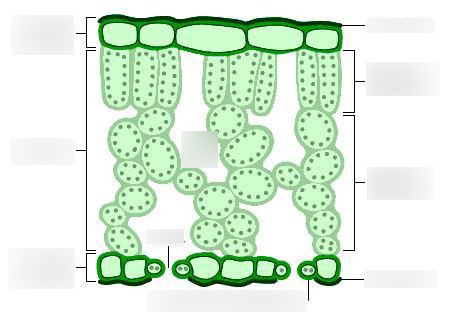
Label a plant tissue.
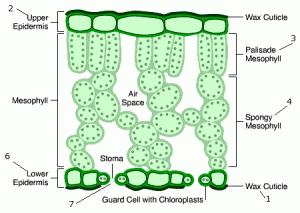
What are the function of the structures in a plant tissue?
Waxy cuticle - reduces water loss / evaporation
Epidermis - protects surface of the leaf, transparent to allow light to pass to the photosynthetic cells below
Palisade mesophyll - contains many chloroplasts for photosynthesis
Spongy mesophyll - full of air pockets to allow gas exhange
Stomata - allow carbon dioxide to enter and oxygen + water to leave
Guard cells - swell during very bright conditions to open the stomata, to allow for carbon dioxide to diffuse into the leaf for photosynthesis. In hot conditions, it closes its stomata to reduce water loss.
Meristem tissue at shoots and roots - contains stem cells which differentiate into different plant tissues
What is transpiration?
Minerals are actively transported into the root, followed by water from osmosis.
Via adhesion and cohesion, water travels up the xylem vessels.
Water is then lost through the stomata in the leaves.
What affects rate of transpiration?
Temperature - greater temperature, greater rate
Humidity - drier conditions, greater rate
Wind - windier conditions, greater rate
Light intensity - greater light intensity, greater rate (as stomata open for carbon dioxide for photosynthesis)
What is the double circulatory system and why is it useful?
The right ventricle pumps blood to the lungs for gas exchange. The left ventricle pumps blood around the rest of the body. The benefit of a double circulatory system is that it can travel rapidly, maintain greater BP, and allows for a greater delivery of oxygen and glucose.
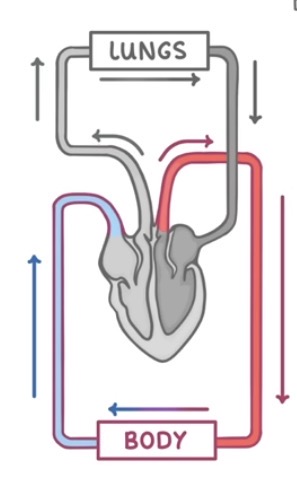
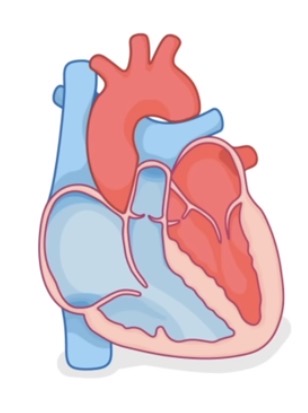
Label this diagram of the heart.
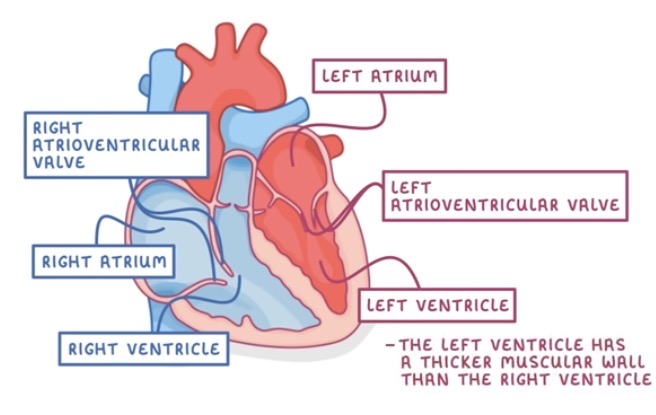
What are the four main blood vessels entering the heart?

Why does the left side of the heart have a thicker muscular wall and what is the process of blood in to out of the heart?
Blood enters the left atrium, which contracts and is forced into the ventricles. They then contract and force the blood out of the heart. Valves stop the blood running backwards. It has a thicker muscular wall because it has a very high pressure due to pumping blood around the entire body.
What is the natural resting heart rate controlled by?
A group of cells in the right atrium, called the pacemaker. Artificial pacemakers are electrical devices that correct irregularities in the heart rate.
What are the three different blood vessels and their adaptations?
Arteries - thick muscular walls to withstand high blood pressure, contain elastic fibres when the surge of blood passes through which recoils in between surges to keep blood moving
Capillaries - when blood passes through substances (e.g. glucose and oxygen) diffuse from the blood to the cell and carbon dioxide diffuses into the blood, thin walls for short diffusion pathway
Veins - carries very low pressure blood that could stop / go backwards, thin wall because blood pressure is low, contain valves to stop blood flowing backwards (like one-way door)
What is coronary heart disease?
Layers of fatty material builds up inside the coronary arteries, narrowing them. This reduces bloodflow through the coronary arteries, meaning lack of oxygen for the heart.
What treatments are given for coronary heart disease?
Statins - drugs which reduce the level of cholesterol in the blood, slowing down the rate fatty materials build up in the arteries - proven to reduce risk of coronary heart disease, but do have unwanted side effects
Stent - tube inserted into the coronary artery to keep it open - blood can flow normally, but won’t prevent other regions of coronary arteries narrowing
What is a cardiovascular disease concerning faulty heart valves? How can this be treated?
Valves may not fully open, so the heart has to pump extra hard to get blood through
Valves can be leaky, causing weakness and tiredness
Treated by either a mechanical valve (metal - lasts forever but increases bloodclots) or an animal valve (e.g. from a pig - need to be replaced)
What is heart failure? How can this be treated?
The heart cannot pump enough blood around the body. These patients may be given a donated heart and/or lungs. However, they is few of these and the patient must take drugs to stop the heart being rejected by immune system. Artificial hearts may be given temporarily while awaiting a heart transplant - but increase risk of blood clots.
What is the anatomy of the lungs?
Air passes into the lungs through the trachea, which contains rings of cartilage to prevent collapsing when inhaling
The trachea divides into bronchi, one in each lung, and then further into bronchioles
The bronchioles end in tiny air sacs called alveoli - sites of gads exchange in and out of the bloodstream
How are the lungs adapted for gas exchange?
Millions of alveoli - huge surface area
Alveoli have thin walls, so short diffusion pathway
Alveoli have good blood supply, meaning steep concentration gradient
Breathing increases rate of diffusion as it creates high concentration gradients
What is a communicable disease?
Diseases that can be spread from person to person (e.g. measles), by pathogens such as viruses or bacteria.
What is a non-communicable disease?
Diseases that cannot be passed from person to person (e.g. coronary heart disease).
What is a pathogen?
Pathogens are microorganisms that cause infectious disease. They can be bacteria, viruses, protists, or fungi.
How does bacteria make us ill?
Once inside the human body, bacteria reproduce very rapidly. they can then release toxins that damage tissues and make us feel ill.
How do viruses make us ill?
A virus invades a host cell and reproduces inside it. This damages the cell, for example when the virus leaves the cell the cell may burst + die.
How are pathogens spread?
In the air (e.g. in water droplets - influenza)
In water (e.g. cholera)
Direct contact (e.g. HIV)
How can we reduce the spread of pathogens?
Basic hygiene (e.g. washing hands before eating)
Clean drinking water
Using a condom in sex
Isolating patients with highly infectious diseases
Vaccination
What are some examples of viral diseases?
Measles - symptoms include a fever and red skin rash. It spreads in droplets when an infected person coughs / sneezes. Measles can damage the breathing system and brain, and be fatal - so many young children are vaccinated against measles.
HIV - symptoms are flu-like. It spreads by sexual contact or when drug users share needles with blood on. The virus is attacking the patient’s immune system cells. Over time, the immune system becomes so badly damaged that it cannot fight off other infections or cancers (called late-stage HIV or AIDS).
Tobacco mosaic virus - symptoms include a ‘mosaic’ discolouration of leaves, which reduces photosynthesis and therefore growth. It is a widespread plant disease infecting many species (e.g. tomatoes).
How can HIV be treated?
Antiretroviral drugs stop the virus from multiplying inside the patient so the virus doesn’t damage the patient’s immune system. However, these drugs are not a cure and must be taken for life.
What are some examples of bacterial diseases?
Salmonella - symptoms include fever, abdominal cramps, vomiting and diarrhoea. The pathogens that cause salmonella are spread by ingesting infected food or food prepared in unhygienic conditions. In the UK, all chicken are vaccinated against salmonella.
Gonorrhoea - symptoms include a thick yellow / green discharge from the penis or vagina and pain when urinating. Gonorrhoea is a STD, so is transmitted by sex. The spread of gonorrhoea can be controlled by using a condom, or treatment with antibiotics. It used to be treated with penicillin until many resistant strains appeared.
What is an example of a fungal disease?
Rose black spot - symptoms include leaves with purple / black spots, which then turn yellow and fall off. It is spread by water or wind. Rose black spot reduces photosynthesis and therefore growth. It can be treated with fungicides or removing + destroying the infected leaves.
What is an example of a protist disease?
Malaria - symptoms include fever and malaria be fatal. An infected person is bitten by a mosquito (the vector - carries the pathogen between people) and the malaria protist passes into the mosquito, who then bites a different person and passes the pathogen on. Malaria spread can be controlled by draining still water mosquitoes breed in / spraying them with insecticide, or using mosquito nets to avoid being bitten.
What are the non-specific defence systems of the human body (against pathogens)
Skin - protective outer layer of dead cells which pathogens cannot penetrate. Skin produces sebum which can kill bacteria. Scabs formed to prevent bacteria entering the body.
Nose - contains hair and mucus with traps pathogens.
Trachea and bronchi - covered with tiny hairs called cilia. Cilia are covered in mucus to trap pathogens, and waft the pathogens up to the throat to be swallowed into the stomach.
Stomach - contains hydrochloric acid which kills pathogens.
How does phagocytosis help in disease defence?
White blood cells detect chemicals released from the pathogen and move towards it. The WBC then engulfs the pathogen and destroys it using enzymes.
How does antibody production help in disease defence?
These antibodies stick to pathogens, which destroys them. Antibodies are extremely specific to specific pathogens. Antibodies can remain in the blood for a long time in case we ever get infected again with the same pathogen.
How does antitoxin production help in disease defence?
White blood cells produce antitoxins, which stick to toxic molecules and prevent them from damaging cells.
How do vaccines work?
Vaccination introduces small quantities of dead / inactive pathogens (so won’t lead to disease) into the body. This stimulates white blood cells to produce antibodies. If the same pathogen enters the body, the WBC can produce the correct antibodies quickly, preventing infection.
What is herd immunity?
If enough people are vaccinated, unvaccinated people can’t catch the disease as nobody around can pass the pathogen on.
What are antibiotics?
Antibiotics (e.g. penicillin) kill infective bacteria inside the human body, without harming body cells. Specific bacteria should be treated by specific antibiotics.
What is antibiotic resistance?
When an antibiotic is overused, the bacteria mutates to no longer be killed by the antibiotic. This is a serious problem as in the future bacterial diseases may be very difficult to treat.
What is prescribed for viruses?
Painkillers and other medicines - they only treat the symptoms; do not kill the pathogens. It is difficult to develop drugs that kill viruses without also damaging the body’s tissues.
What are traditional drugs extracted from and what are they now?
Plants and microorganisms.
Foxglove —> heart drug digitalis
Willow trees —> aspirin
Mould penicillium —> penicillin (Alexander Fleming)
Most new drugs are synthesised by chemists however originate from plant chemicals.
Why are drugs tested and how?
Checked for toxicity, efficacy, and dose.
Preclinical testing - on cells, tissues and liver animals - tests toxicity
Clinical testing stage 1 - small doses given to healthy volunteers, to check the drug is safe in humans
Clinical testing stage 2 - continued to find optimal dose with fewest side effects.