Monopolies
0.0(0)
Studied by 5 people Call Kai
 Learn
Learn Practice Test
 Spaced Repetition
 Match
Match Flashcards
 Knowt Play
Card Sorting
1/22

Earn XP
Description and Tags
Last updated 7:49 PM on 12/5/22
Name | Mastery | Learn | Test | Matching | Spaced | Call with Kai |
|---|
No analytics yet
Send a link to your students to track their progress
23 Terms
1
New cards
market power
ability to set the price
2
New cards
monopoly
one seller of a good or service with no close substitutes
3
New cards
price taker or maker
price maker
4
New cards
demand curve
downward-sloping
5
New cards
price
P > MR = MC
6
New cards
social surplus
not maximized, but may benefit from R&D
7
New cards
equilibrium long run profits
potentially greater than zero
8
New cards
barriers to entry
legal market power (patent and copyright)
natural market power (control of key resources and economies of scale)
natural market power (control of key resources and economies of scale)
9
New cards
patent vs copyright
sole creator or seller of good (20 years)
rights to the creator (lifetime)
rights to the creator (lifetime)
10
New cards
control of key resources
essential for the production of good or service
11
New cards
network externalities
a product's value increases as more consumers use it
12
New cards
natural monopoly
economies of scale over a very large range of output (fixed costs are high)
13
New cards
monopolist and perfect competition
produce output using a production process and input
incur production costs
maximize profits
incur production costs
maximize profits
14
New cards
difference with perfect competition
the monopoly can increase price and not lose all of its business
15
New cards
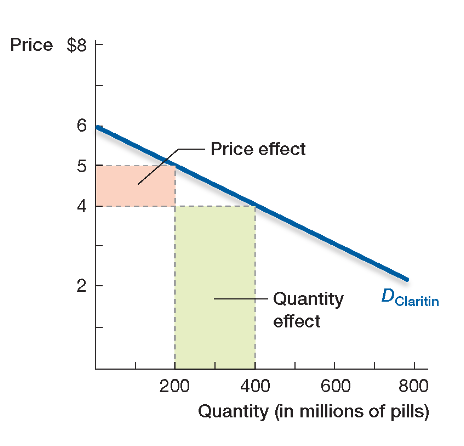
revenue curves
selling a greater quantity requires the monopolist to charge a lower price
16
New cards
net effect
quantity effect - price effect
17
New cards
marginal revenue
starts at y axis and is halfway between the demand curve and the y-axis
18
New cards
optimal solution
quantity: MC = MR
price: quantity = demand
price: quantity = demand
19
New cards
supply curve
supply relationship doesn't exist
20
New cards
restoring efficiency: price discrimination
charging different customers different price for the same good or service when there are no cost differences
21
New cards
first degree
when each consumer is charged the max they are willing to pay
22
New cards
second-degree
charged different prices based on the characteristics of the purchase
23
New cards
third-degree
consumers are charged different prices based on the characteristics of the customer or location