PALEO EXAM 3 QUESTIONS
 Call Kai
 Learn
Learn Practice Test
 Spaced Repetition
 Match
Match Flashcards
 Knowt Play
1/73

There's no tags or description
Looks like no tags are added yet.
Name | Mastery | Learn | Test | Matching | Spaced | Call with Kai |
|---|
No analytics yet
Send a link to your students to track their progress
74 Terms
The mollusca are the ____; the ____ are the _____
a. largest phylum; arthropoda; second largest phylum
b. smallest phylum; cnidaria; largest phylum
c. second largest phylum; arthropoda; largest phylum
d. third largest phylum, chordata; second largest phylum
c. second largest phylum; arthropoda; largest phylum
the arthorpoda belong to the clade ____
a. ecdysozoa
b. dueterostomes
c. lophotrochozoans
d. opisphokonta
a. ecdysozoa
the most diverse group of arthropods are the
a. crustacea
b. chelicerata
c. myriopoda
d. hexapoda
c. myriopoda
the horseshoe crab ____ is a living fossil becasue it looks similar to its ancestors in millions of year- old rocks
a. Pneumodesmus
b. eurypterus
c. limulus
d. triarthrus
a. Pneumodesmus
all of the following are true about gastropoda except
a. inlcude slugs and snails
b. characterized by shell coiling
c. marine, freshwater, and terrestrial habitats
d. creeping, floarting, and swimming locomotion
b. characterized by shell coiling
Torsion in Gastropoda refers to
a. twisting of the visceral mass horizontally 180 clockwise in relation to the lower part of the body so that the anus is under the head and the body in no longer symmetrical
b. twisting of the shell as the animal grows in a 360 counter clockwise or clockwise relation so that the body and shell is radially symmetrical
c. twisting of the shell as the animal grows in a 180 counter clockwise or clockwise relation sot that the anus is over the head and body and shell are radially symetrical
d. twisting of the visceral mass horizontally 180 clockwise in relation to the lower part of the body so that the anus is over the head and the body is no longer symmetrical
d. twisting of the visceral mass horizontally 180 clockwise in relation to the lower part of the body so that the anus is over the head and the body is no longer symmetrical
all of the following are mollusks except
a. ostracodes
b. mussels
c. oysters
d. cuttlefish
a. ostracodes
all of the following are subclasses of the cephalopoda except
a. nautiloidea
b. carpoidea
c. ammonoidea
d. coleoidea
b. carpoidea
battlefields refer to the
a. preservation of soft parts of ammonoid and nautiloid softparts in lagerstatten deposits
b. accumulations of orthocone nautiloids that are oriented in the same direction
c. accumulations of belemnite guards or rostra often oriented in the same direction
d. accumulations of ammonite opercula that are oriented differently based on the current
c. accumulations of belemnite guards or rostra often oriented in the same direction
the main control on the mode of life distribution in the water column of ammonites is
a. wave energy
b. water depth
c. water temperature
d. water oxygenation
d. water oxygenation
the following statements are true about sexual dimorphism in ammonites except
a. sex is revealed by suture patterns, with female pattern more complicated than males
b. sex is revealed by size where females are larger than males
c. males have lampets
d. as they grow, males maintain a cog-wheel shape, whereas females become smooth
a. sex is revealed by suture patterns, with female pattern more complicated than males
The largest cephalopod was ____ in the ____ and reached ____
a. cameroceras; early paleozoic; 11 m long
b. titanites; mid mesozoic; 3 m long
c. baculites ; late mesozoic; 2 m long
d. mortoniceras; late paleozoic ; 4 m long
a. cameroceras; early paleozoic; 11 m long
the following are true about mollusca except
a. unsegmented, some have shells, whereas other do not
b. have a water vascular system
c. the radula is the synapomorphy for mollusks
d. most common marine animal today, also in freshwater , on land
b. have a water vascular system
the oldest fossil mollusks were ____ from the ____
a. kimberella, edicaran
b. odontogriphus, middle cambrian
c. halkieriids, early cambrian
d. aplacophorans, ealry cambrian
c. halkieriids, early cambrian
the mollusca belong to the
a. duesterostomes
b. lophotrochozoans
c. ecydsozoa
d. opisphokonta
b. lophotrochozoans
The animals that share a common type of feeding structure- the lophophore- and belong to the lophotrochozoans include all of the following except:
a. rhabdopleurids
b. bryozoans
c. brachiopoda
d. phoronida
a. rhabdopleurids
the only giant reef-building mollusks were the ____ during the ____
a. crassostrea; later jurassic to late cretaceous
b. strophomenida; late permian
c. richthofenids; early permian
d. rudists; late cretaceous
d. rudists; late cretaceous
the ___ and ___ are the main brachiopod orders still alive today
a. strophomenids, atypids
b. pentameridas, protothida
c. rhynchonellids, terebratulids
d. productids, orthids
c. rhynchonellids, terebratulids
the only true infaunal brachiopod that lives in a vertical burrow is _____
a. spirifer
b. lingula
c. strophomena
d. crania
b. lingula
all of the following are true about the bryozoa EXCEPT
a. body fossil recrod begins in the cambrian
b. zooids live in zooecia
c. most are marine
d. only colonial forms are known
a. body fossil recrod begins in the cambrian
____ formed cone-shaped sprial, whereas ___ fromed a simple cone shape for suspension feeding from the water column
a. lunulites; stromatopora
b. rhabdomeson; castanapora
c. archimedes; fenestella
d. selenaria; fistulipora
c. archimedes; fenestella
all of the following are true about Bryozoa EXCEPT
a. the bryozoa experience major reduction in diversity at the permian- triassic boundary
b. the cyclostomata experience a major raditaion in the cretaceous
c. the bryozoa take another major reduction in diversity at the triassic jurassic boundary
d. boring bryozoa evolve in the cambrian and maintain the saem diversity to today
d. boring bryozoa evolve in the cambrian and maintain the saem diversity to today
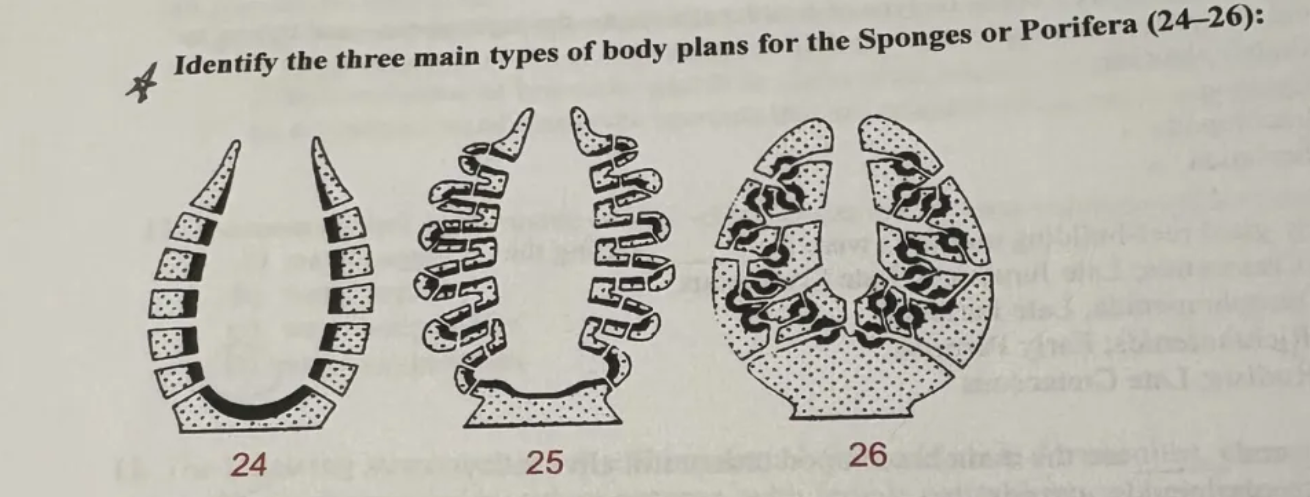
a. ascon
b. enteron
c. leucon
d. syncon
a. ascon
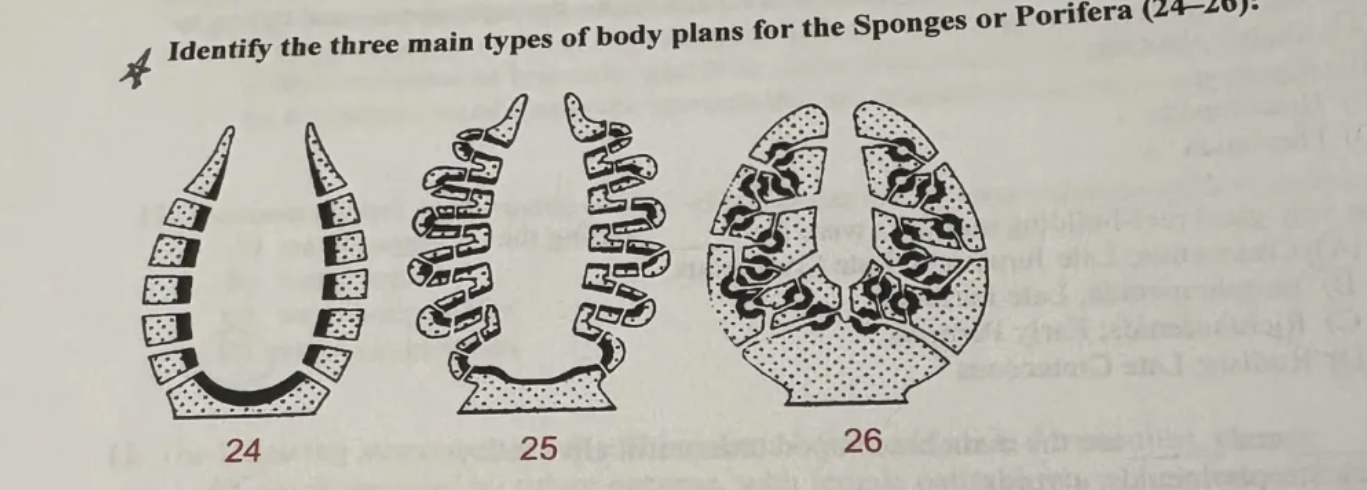
a. ascon
b. enteron
c. leucon
d. syncon
d. syncon
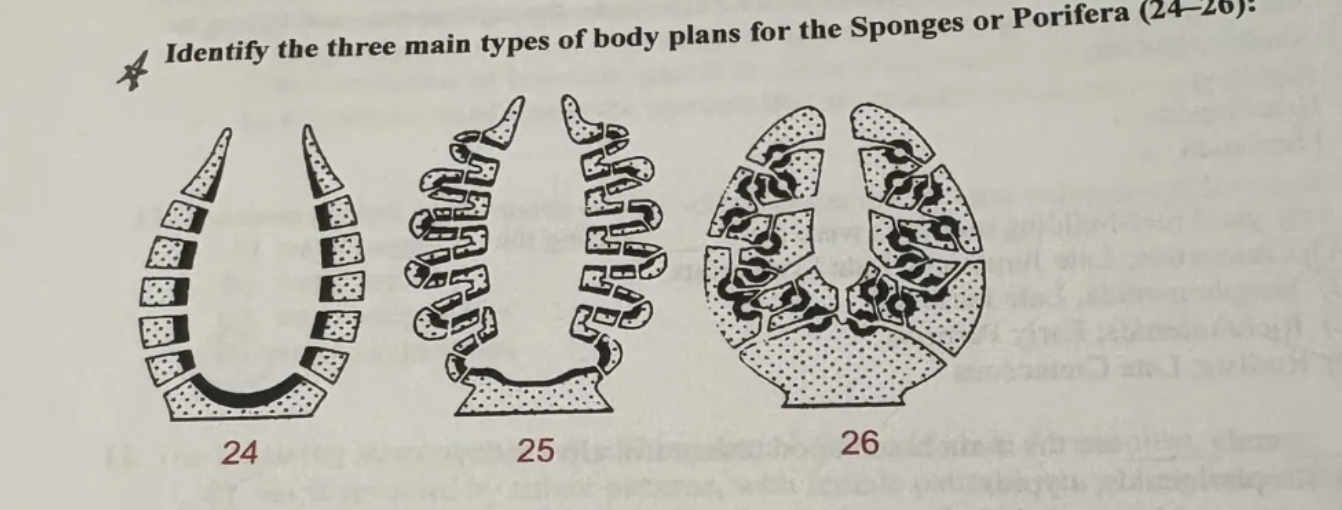
a. ascon
b. enteron
c. leucon
d. syncon
c. leucon
the oldest possible sponge is ____ from ___ based on ___
a. 600 Ma, china, fossils
b. 540 Ma, canada, fossils
c. 650 , australia, trace fossils
d.1 Ga , russia, molecular clocks
a. 600 Ma, china, fossils
All of the following characterize the Cnideria, except
a. radial symmetry
b. cells organized into a few tissue types
c. posses one opening as the mouth and anus
d. herbivore
d. herbivore
The three main groups of corals are the ___, ____ and ____ of which only the ___ are the corals today
a. holotheca, tabulata, and scleractinia, Holotheca
b. holotheca, rugusa, and scleratinia, rugusa
c. rugusa, tabulata, and scleractinia, scleractinia
d. rugusa, tabulata, and scleractinia, tabulata
c. rugusa, tabulata, and scleractinia, scleractinia
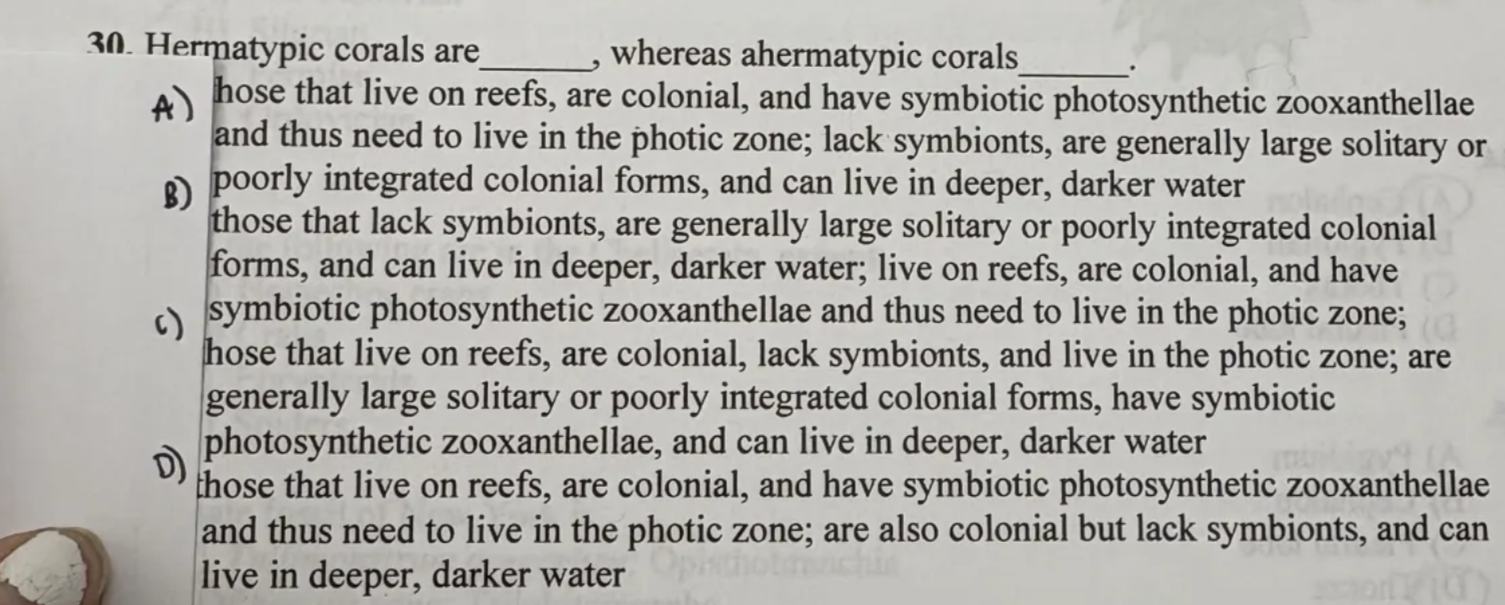
A
corals were part of the major reef builders during all these times EXCEPT
a. late ordovician-devonian
b. carboniferous- early permian
c. cretaceous-recent
d, cambrian-early ordovician
d, cambrian-early ordovician
all of the following are not trace fossils except
a. body impressions
b. microborings
c. biomolecules
d. fungi
b. microborings
of all the subphyla of the arthropods, only the ___ are extinct
a. chelicerata
b. myriapoda
c. trilobitomorpha
d. hecapoda
c. trilobitomorpha
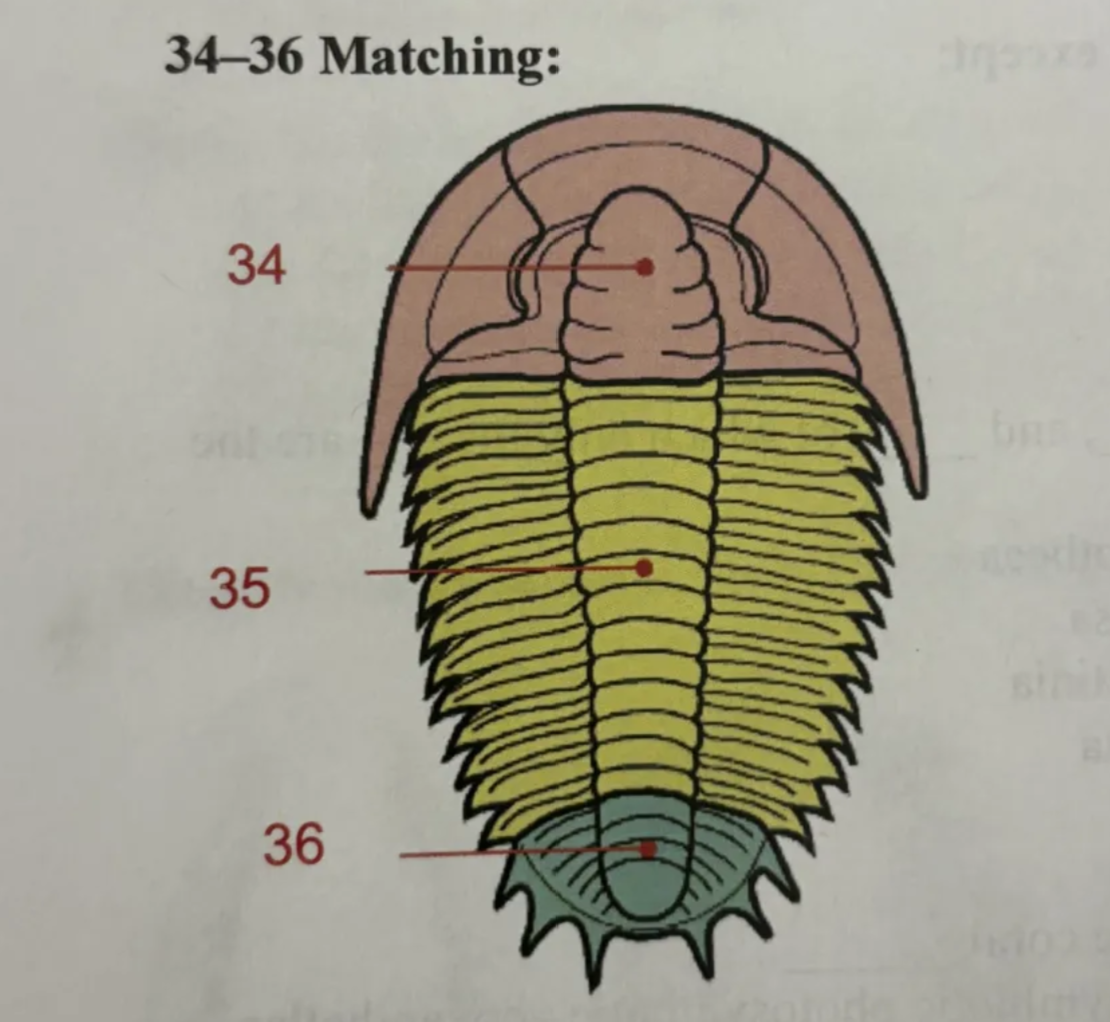
a. cephalon
b. pygidium
c. thorax
d. pleural lobe
a. cephalon
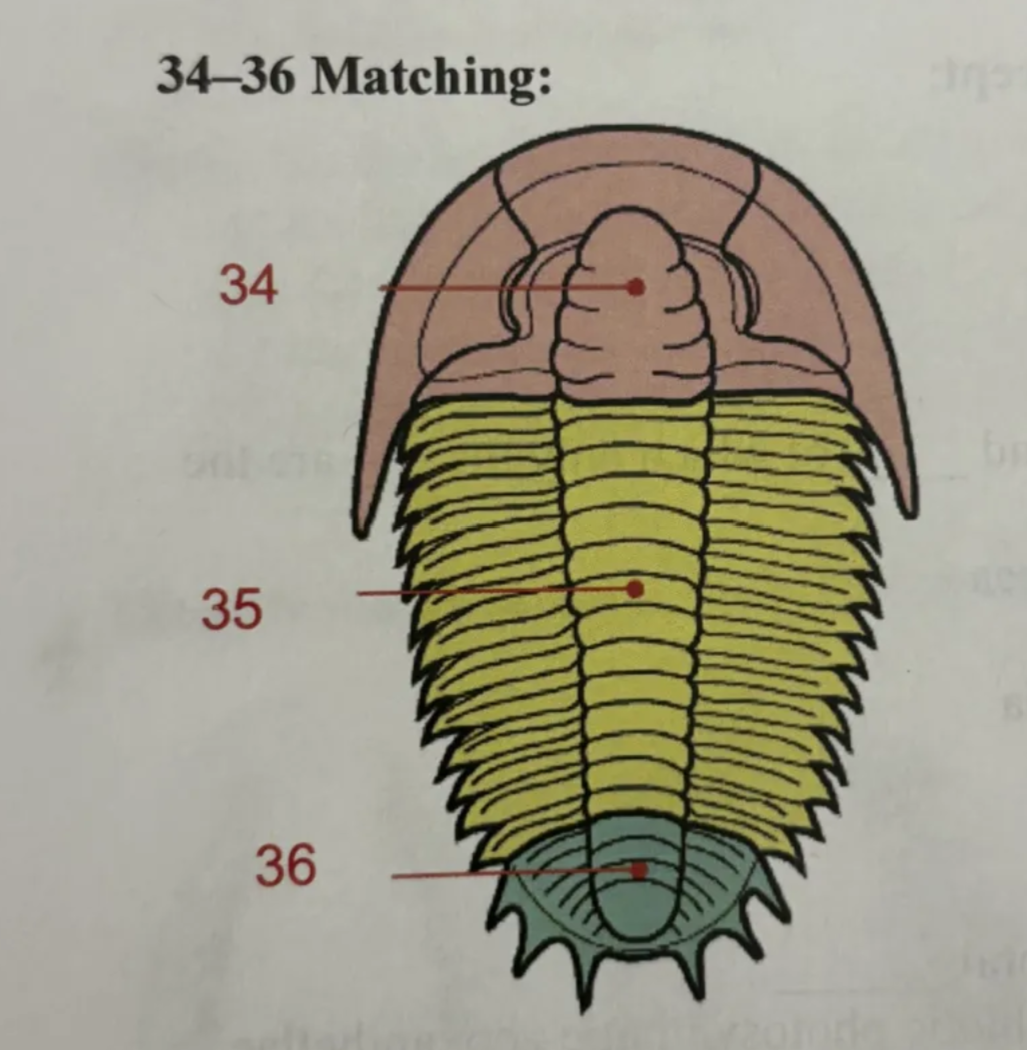
35.
a. cephalon
b. pygidium
c. thorax
d. pleural lobe
c. thorax
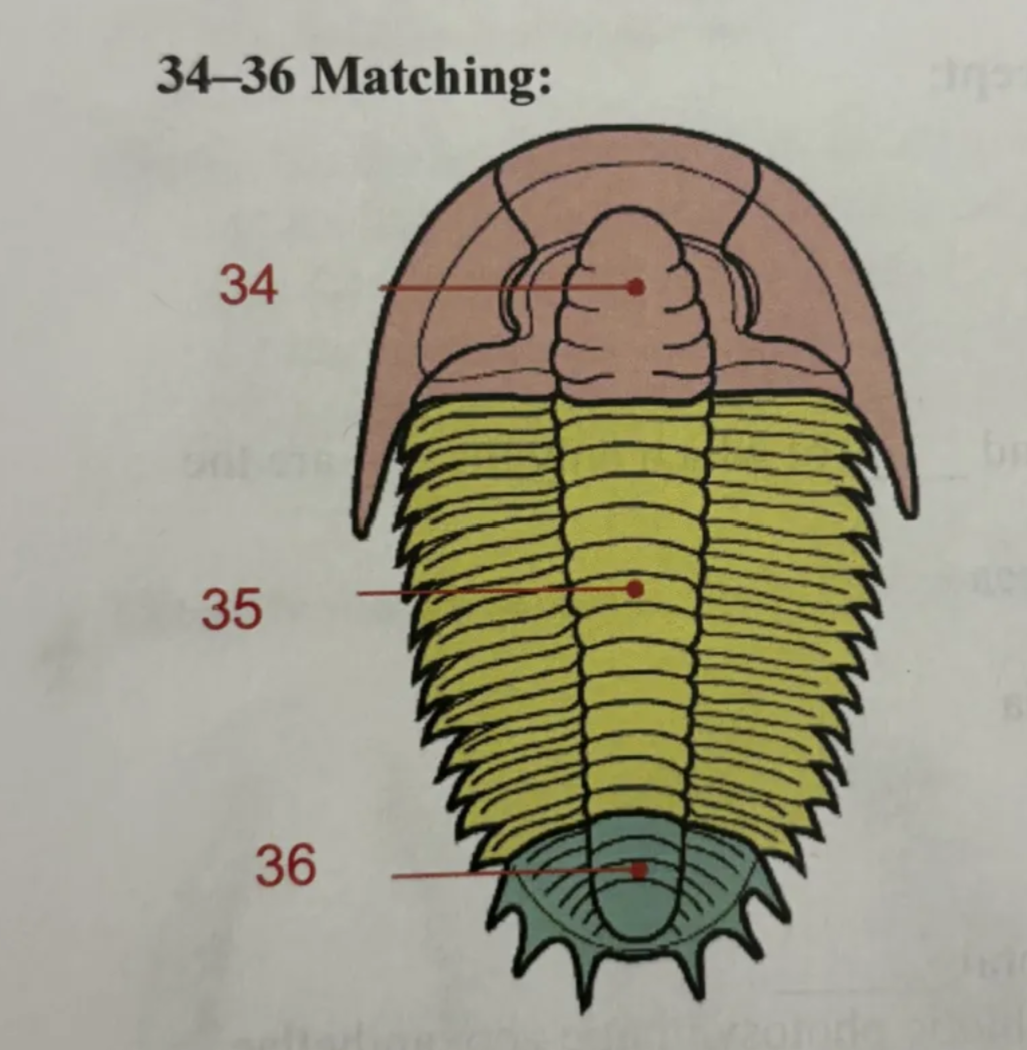
a. cephalon
b. pygidium
c. thorax
d. pleural lobe
b. pygidium
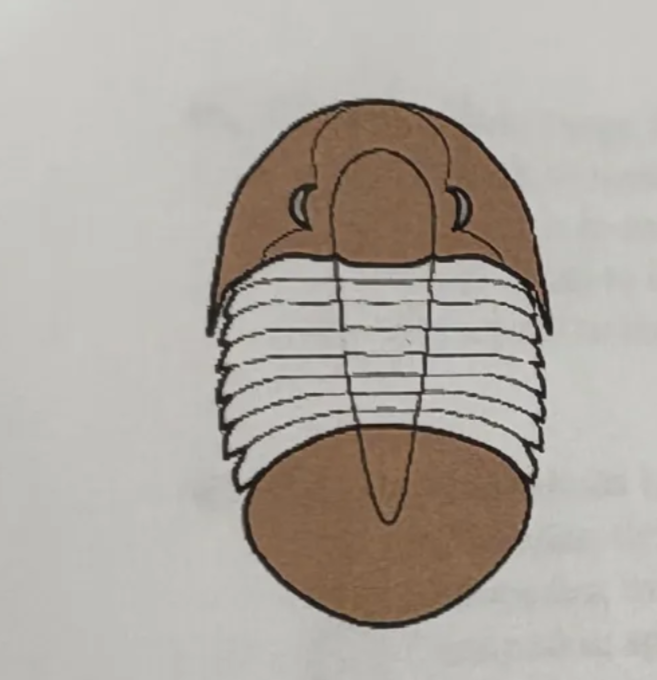
this trilobite is
a. macropygous
b.micropygous
c. subisopygous
d. isopygous
d. isopygous
the trilobites had their acme in the
a. late cambrian
b. silurian
c. permian
d. ordovician
a. late cambrian
all of the following are in the chelicerata except
a. horeshoe crabs
b. crabs
c. eurypterids
d. spiders
b. crabs
the state fossil of new york is ____
a. tullimonstrum gregarium; opisthobranchia
b. phacops rana; trilobitomorpha
c. eusarcus scorpionis; scorpionida
d. eurypterus remipes; eurypterida
d. eurypterus remipes; eurypterida
the trilobites went extinct ____
a. at the end of the triassic
b. at the end of the carboniferous
c. at the end of the permian
d at the end of the devonian
c. at the end of the permian
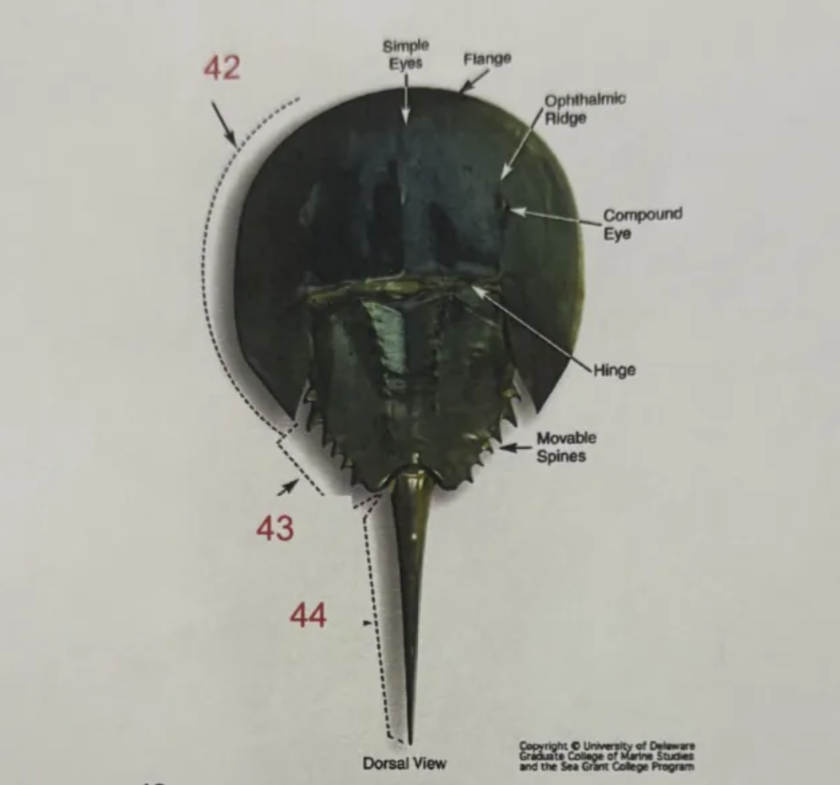
a. prosoma
b. telson
c. opsithosoma
d. hypstome
a. prosoma
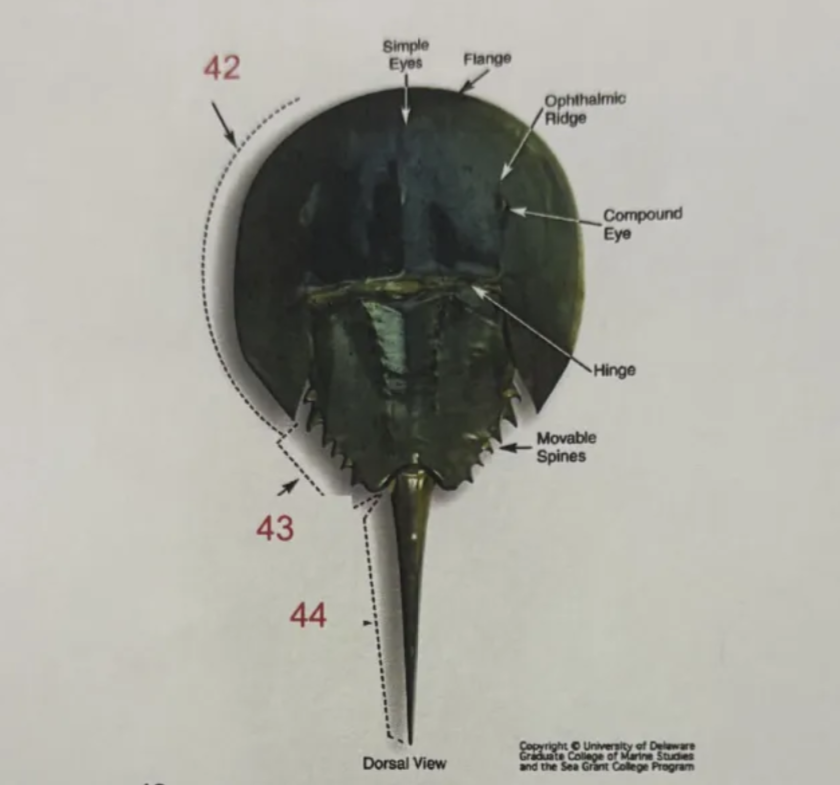
a. prosoma
b. telson
c. opsithosoma
d. hypstome
c. opsithosoma
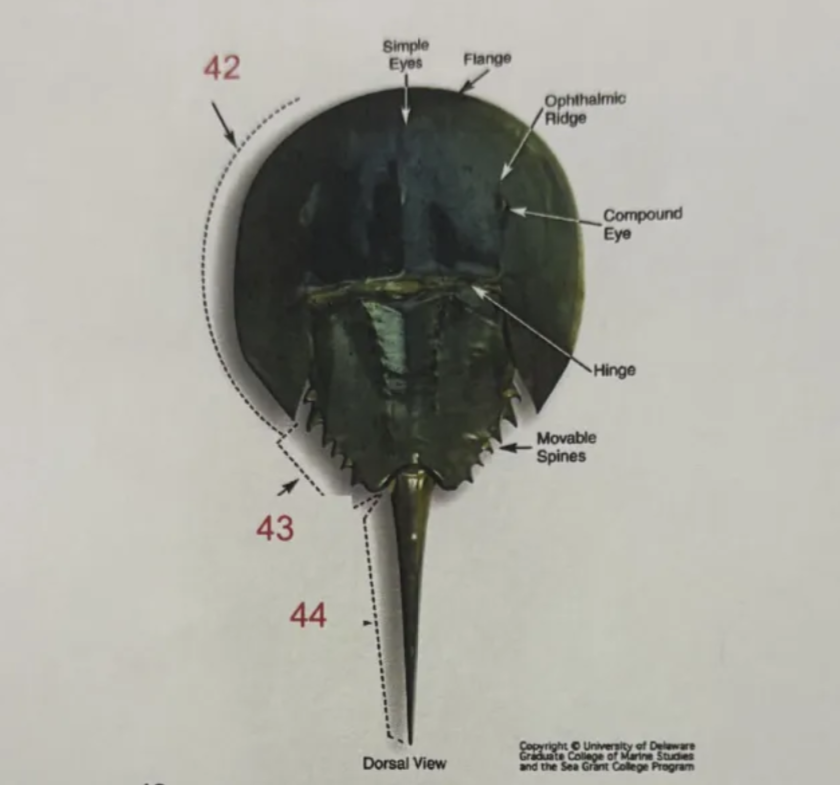
a. prosoma
b. telson
c. opsithosoma
d. hypstome
b. telson
The eurypterids evolved in the ___, had their acme in the ___ but went extinct ____
a. early ordovician , pennsylvanian, end of the triassic
b.early ordovician , silurian, in the permian
c.early ordovician , mississippian, in the triassic
d.early ordovician , devonian, at the end of the permian
b.early ordovician , silurian, in the permian
the myriapoda range from the ___ and are represented by the ___
a. silurain to recent, centipedes and millipedes
b. cambrain to recent; centipedes and spiders
c. ordovician to cretaceous; centipedes and millipedes
d. devonain to recent ; millipedes and ticks and mites
a. silurain to recent, centipedes and millipedes
the class diplopoda is represented by the ___; the class chilopoda by the ____
a. millipedes; ticks and mites
b. centipedes; millipedes
c. centipedes; spiders
d. millipedes; centipedes
c. centipedes; spiders
the largest terrestrial arthropods occured during the carboniferous because _____
a. O2 levels were between 19-22% of atmospheric gases
b. Co2 levels were between 10-15 % of atmospheric gases
c. O2 levels were between 32-35% of atmospheric gases
d. Co2 levels were similar to that of todays
c. O2 levels were between 32-35% of atmospheric gases
All of the following are in the crustacea except for
a. water fleas
b. eurypterids
c. ostracodes
d. barnacles
b. eurypterids
the oldest terrestrial fauna included all of the following except for
a. scorpions
b. millipedes
c. eurypterids
d. centipedes
c. eurypterids
most gastropods are classified into the subclass
a. pulmata
b. coleoida
c. opisthobranchia
d. prosobranchia
d. prosobranchia
sea slugs and pteropods are classified into the subclass _____
a. pulmata
b. opisthobranchia
c. prosobranchia
d. coleoida
b. opisthobranchia
the earliest body fossil record of metazoans are ____
a. doushantuo formation embryos
b. trace fossil evidence
c. small shelly fossils
d. edicaran biota
d. edicaran biota
the rise in the diversity of the cambrian fauna can actually be explained by the steep part of the model curve:
a. logistic curve
b. exponentail curve
c. additive curve
d. negative allometry curve
a. logistic curve
___ is the study of organism behavior and its products
a. trace fossils
b. ichnofacies
c. biogenic fingerprints
d. ichnology
d. ichnology
What is the relationship between disparity and the cambrian
a. disparity increased rapidly during the cambrian explosion, an evetn never again matched during the evolution of animal life
b. disparity was greater in the cambrian than today, with the extinction of some phyla since the camrbian
c,. disparity increased rapidly dujring the camrbian expllosion and has continued to increase since the camrbian
d. disparity increased rapidly during the late neoproterozoic and peaked during the cambrian
a. disparity increased rapidly during the cambrian explosion, an evetn never again matched during the evolution of animal life
Terrestrail slugs and snails are classified into the subclass
a. prosobranchia
b. coleoida
c. pulmata
d. opisthobranchia
c. pulmata
the state fossil of illinois is ___, and it belongs to ___
a. eurypterus remipes; eurypterida
b. tullimonstrum gregarium; opisthobranchia
c. phacops rana; trilobitomorpha
d. eusarcus scropionis; scorpionida
b. tullimonstrum gregarium; opisthobranchia
Orthocone nautiloids were dominant in the ____ as ___
a. carboniferous; saprivores
b. cenozoic; omnivores
c. mesozoic; herbivores
d. paleozoic, carnivores
d. paleozoic, carnivores
The Goniatites were an abundant cephalopod from the ___ to the ___
a. devonian;permian
b.cretaceous;recent
c.triassic;cretaceous
d.carboniferous;triassic
a. devonian;permian
The ceratites were an abundant cephalopod from the ___ to the ___
a.cretaceous;recent
b.carboniferous;triassic
c.triassic;cretaceous
d.devonian;permian
b.carboniferous;triassic
the ammonites were an abundant cephalopod from the ___ to the ___
a.cretaceous;recent
b.carboniferous;triassic
c.triassic;cretaceous
d.devonian;permian
c.triassic;cretaceous
the gastropoda were thought to have eveolved from the ___ and their acme in the ____
a. polyplocophora; mesozoic
b. aplocophora; paleozoic
c. monoplocophora; cenozoic
d. diplacophora; early paleozoic
c. monoplocophora; cenozoic
____ is thought to be a deep-rooted representative of the mollusca found in the ____
a. kimerella; edicaran
b. halkieriids; early cambrain
c. odontogriphus; middle cambrian
d. aplacophorans; edicarain
a. kimerella; edicaran
the tiering depth of marine trace fossils is controlled by
a. oxygenation
b. depositional energy
c. sedimentaion rate
d. all of the above
d. all of the above
the tiering depth of continental trace fossils is controlled by
a. groundwater profile
b. depositonal energy
c. sedimentational rate
d. all of the above
d. all of the above
all of the following are trace fossils except:
a. footprints
b. borings
c. biogenic isotopic signatures
d. nests
c. biogenic isotopic signatures
__and ___ from the middle cambrian burgess shale were once thought to be annelids or lophophorates, but are now thought to be mollusks becasue they contain a raduala
a. odontogriphus and halkieria
b.wiwaxia and odontogriphus
c. odontogriphus and pikia
d. wiwaxia and acaenoplax
d. wiwaxia and acaenoplax
the class ____are the most advanced mollusks and first evolved in the ___
a. sacphapoda; devonian
b. bivalvia; lower cambrian
c. gastropoda; lower cambrian
d. cephalopoda; upper cambrian
b. bivalvia; lower cambrian
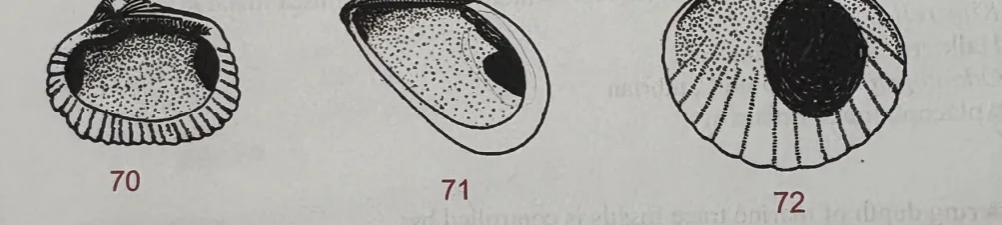
70
a. isomyrian
b. anisomarian
c. heteromarian
d. monomyarian
a. isomyrian
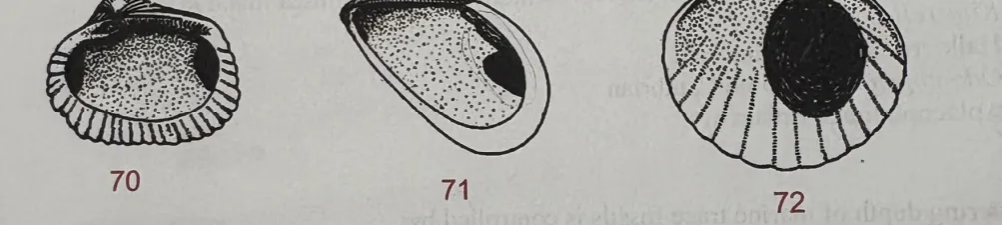
71
a. isomyrian
b. anisomarian
c. heteromarian
d. monomyarian
b. anisomarian
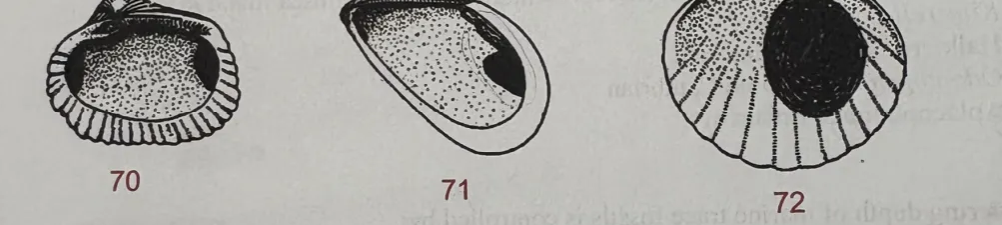
72
a. isomyrian
b. anisomarian
c. heteromarian
d. monomyarian
d. monomyarian
the eyes of the trilobite Erbenochile erbeni were rimmed with an eye shade because it lived in ___ and was ____
a. highly turbid shallow water. diurnal
b. clear deep water, nocturnal
c. brightly illuminated shallow water, nocturnal
d. brightly illuminated shallow waters, diurnal
d. brightly illuminated shallow waters, diurnal
____ along with stromatolites, were early cambrian reef builders but went extinct by the end of the cambrian
a. archaeocyathids
b. stromatoporoids
c. chaetetids
d. demosponges
a. archaeocyathids