18 Chapter Reagents : Aldehydes and Ketones Nuc Addition

0.0(0)
Studied by 0 people
call kaiCall Kai
learnLearn
examPractice Test
spaced repetitionSpaced Repetition
heart puzzleMatch
flashcardsFlashcards
GameKnowt Play
Card Sorting

1/24

encourage image

There's no tags or description

Looks like no tags are added yet.

Last updated 12:39 AM on 5/12/26
Name
Mastery
Learn
Test
Matching
Spaced
Call with Kai

No analytics yet

Send a link to your students to track their progress

25 Terms

1
New cards

Making Aldehydes

1) PCC

  • 1° Alcohol → Aldehyde

2) 1) DIBAL-H, 2) H2O

  • Ester → Aldehyde

3) 1) LiAlH[OC(CH3)3]3 2) H2O

  • Acid Chloride → Aldehyde

2
New cards

Making Ketone

1) PCC or Jones Reagent

  • 2° Alcohol → Ketone

2) 1) R2CuLi 2) H2O

  • Acid Chloride → Ketone

3
New cards

Ozonolysis to make Ketones and Aldehydes

1) O3

2) H3C-S-CH3

Alkene → Ketone + Aldehyde
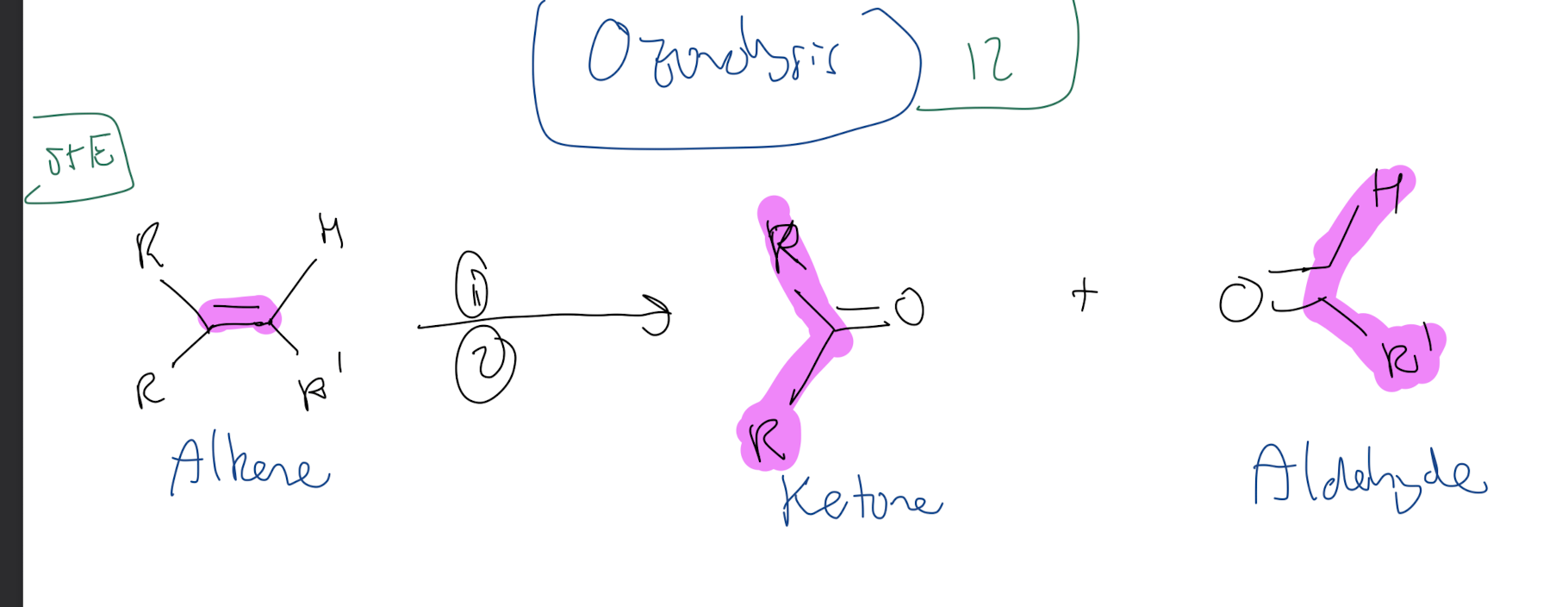
<p><strong>1) O3</strong></p><p><strong>2) H3C-S-CH3</strong></p><p></p><p><strong>Alkene → Ketone + Aldehyde</strong></p>
4
New cards

Nucleophilic Addition Reactions

5
New cards

1) Reagent:

1) NaBH4, CH3OH

OR

1) LiAlH4

2) H2O

Aldehyde/Ketone → Alcohol

<p><strong>Aldehyde/Ketone → Alcohol</strong></p>
6
New cards

2) Reagent:

1) RMgX or RLi

2) H2O

Aldehyde/Ketone → Alcohol
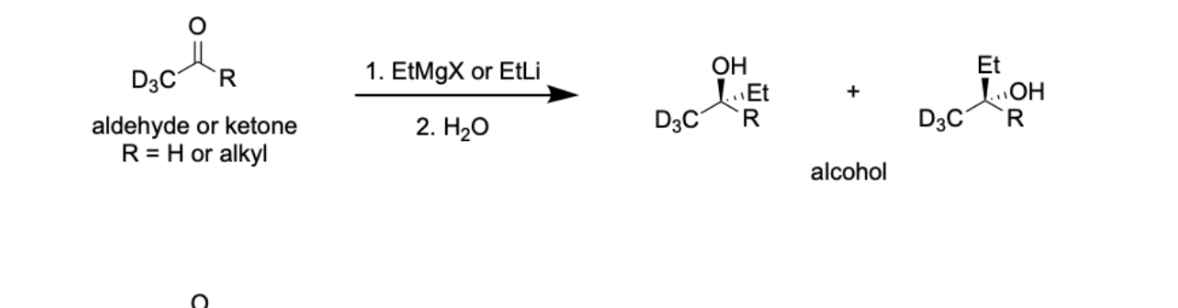
<p>Aldehyde/Ketone → Alcohol</p>
7
New cards
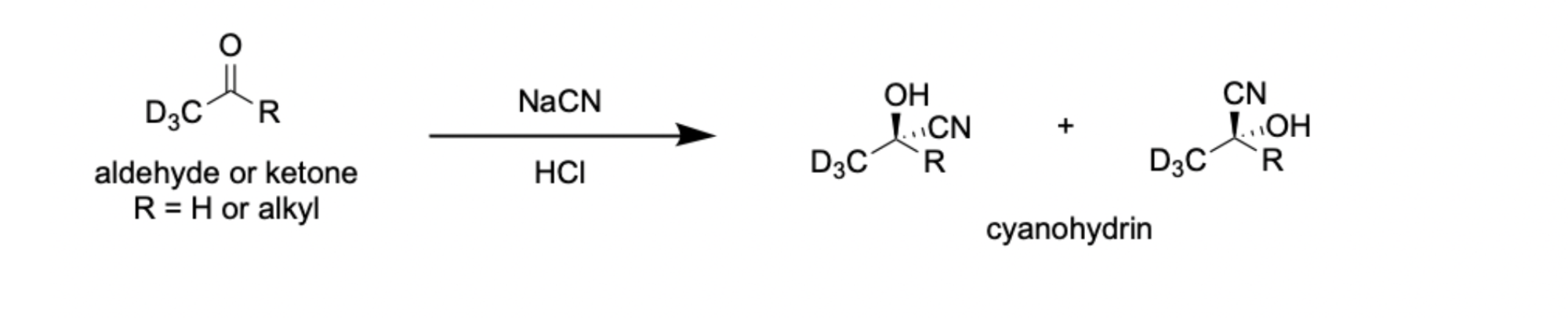
<p>3) NaCN, HCl</p>

3) NaCN, HCl

Ketone/Aldehyde → Cyanohydrin

Alkoxide gets protonated by the H in HCl
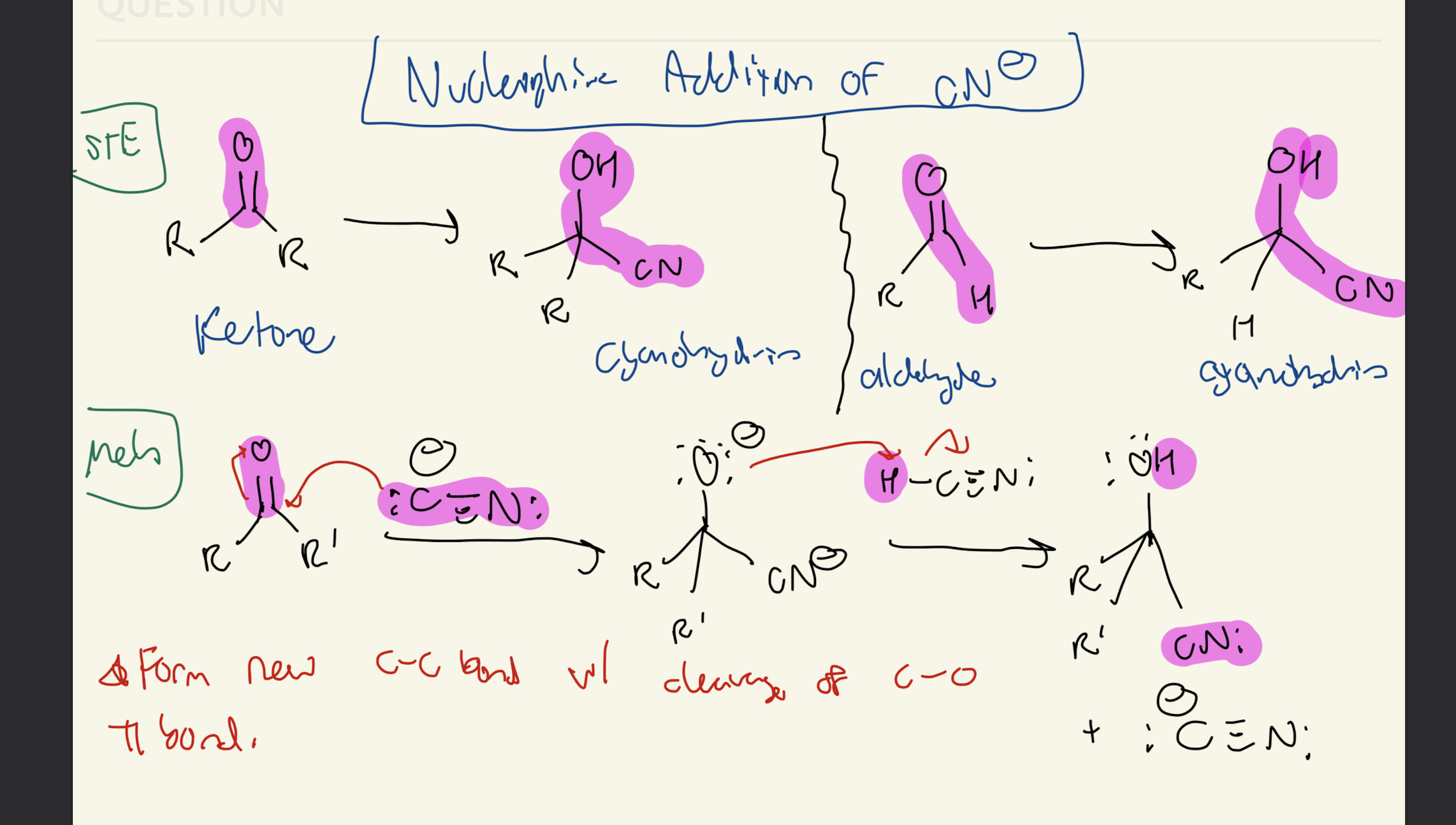
<p><strong>Ketone/Aldehyde → Cyanohydrin</strong></p><p><strong>Alkoxide gets protonated by the H in HCl</strong></p>
8
New cards

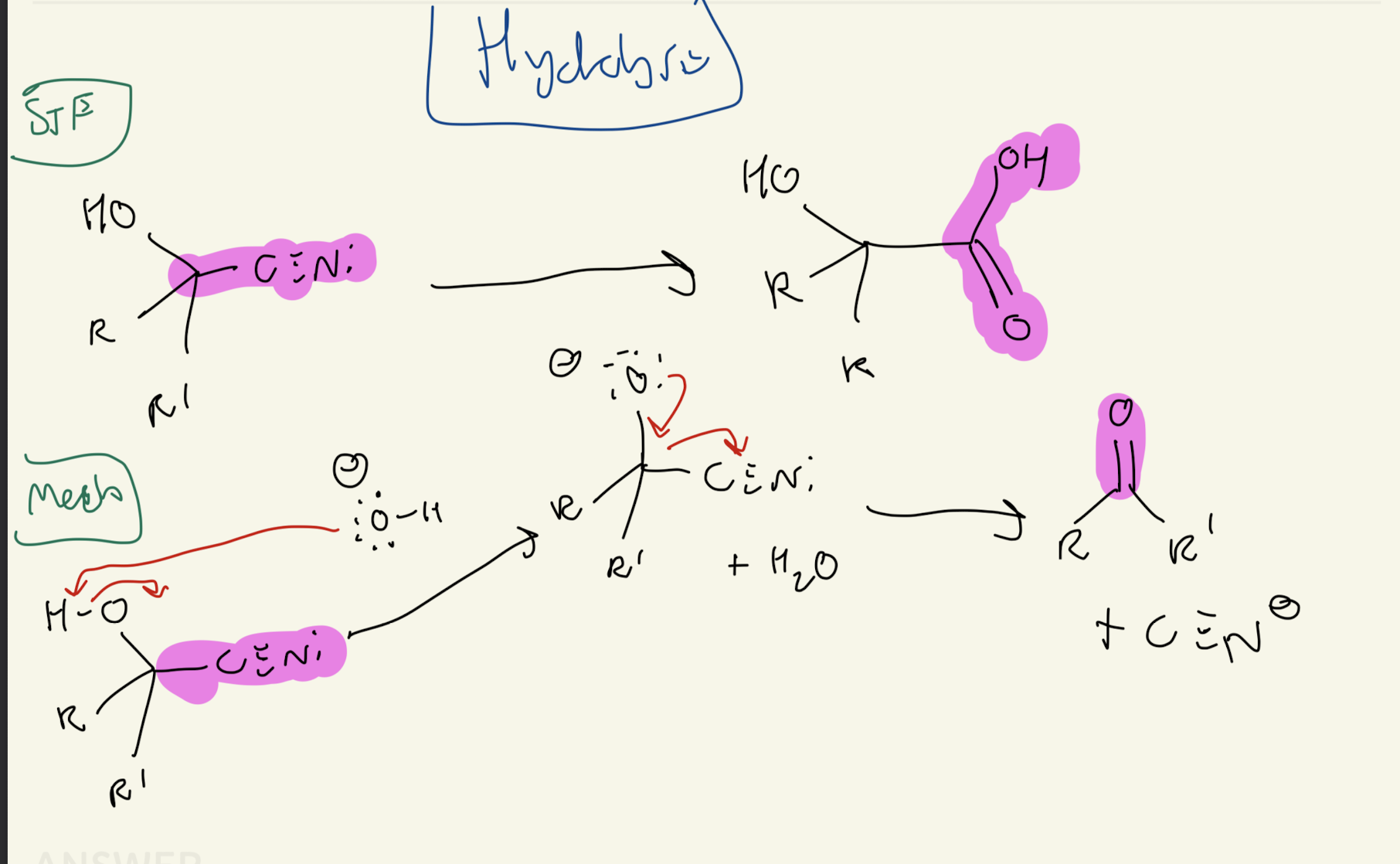
3R)
NaOH (OH-)

Cyanohydrin → Ketone

<p><strong>Cyanohydrin → Ketone</strong></p><p></p>
9
New cards

3b) Hydrolysis:

Cyanohydrin → Alpha Hydroxy Carboxylic Acid
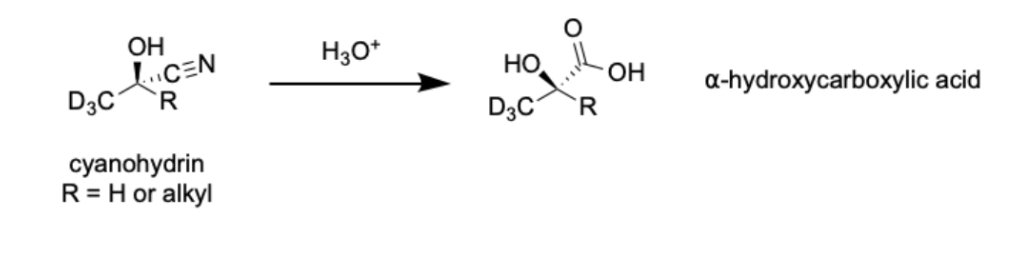
<p><strong>Cyanohydrin → Alpha Hydroxy Carboxylic Acid</strong></p>
10
New cards

3C Hydrolysis ANION

Cyanohydrin → Alpha Hydroxy Carboxylate Anion
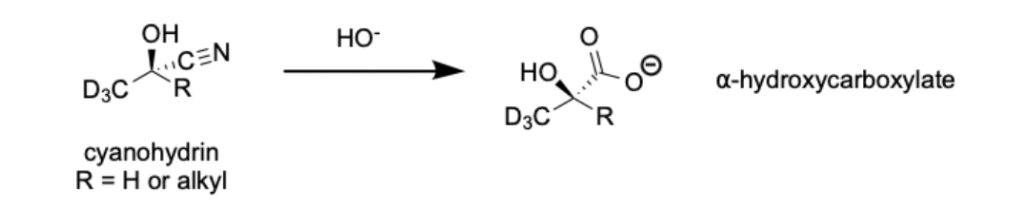
<p><strong>Cyanohydrin → Alpha Hydroxy Carboxylate Anion</strong></p>
11
New cards

4) Wittig Mechanism

1) PPh3 + 1° Alkyl Halide → Phosphorium Salt

2) Phosphorium Salt + Butyl OrganoLithium → Ylide

3) Ylide + Aldehyde/Ketone → Oxaphosphatene → Final Product

SHORT CUT:

1) Remove Alkyl Halide of Stariting Material

2) Remove Carbonyl of Aldehyde/Ketone

3) Combine both with Alkene to form FINAL PRODUCT
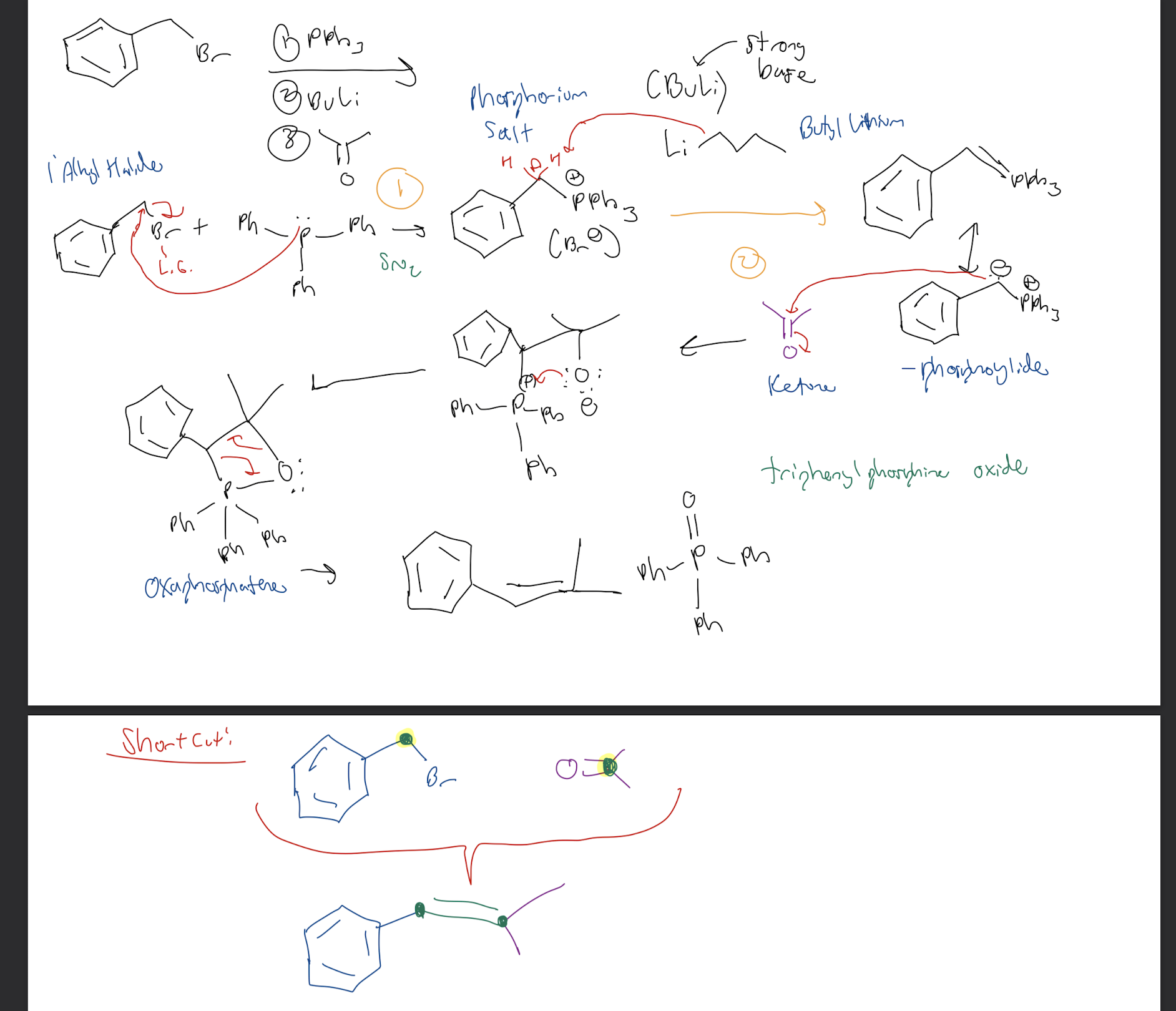
<p><strong>1) PPh3 + 1° Alkyl Halide → Phosphorium Salt</strong></p><p><strong>2) Phosphorium Salt + Butyl OrganoLithium → Ylide</strong></p><p><strong>3) Ylide + Aldehyde/Ketone → Oxaphosphatene → Final Product</strong></p><p></p><p><strong>SHORT CUT:</strong></p><p><strong>1) Remove Alkyl Halide of Stariting Material</strong></p><p><strong>2) Remove Carbonyl of Aldehyde/Ketone</strong></p><p><strong>3) Combine both with Alkene to form FINAL PRODUCT</strong></p>
12
New cards
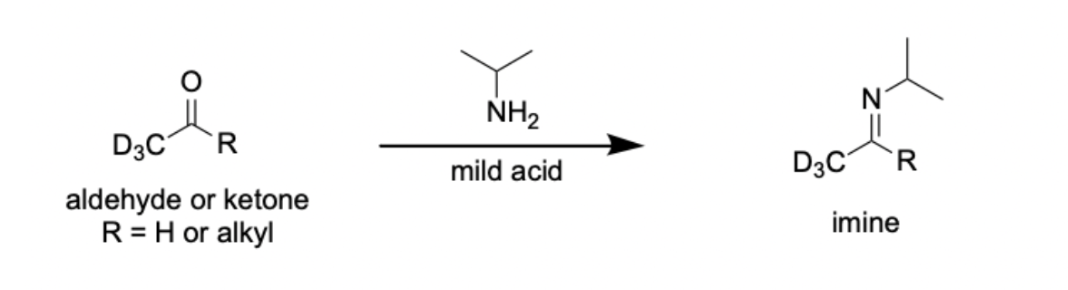
<p>5) 1° Amine + mild acid (H+)</p>

5) 1° Amine + mild acid (H+)

Aldehyde/Ketone → Imine

1) Nuc Addition of Amine

2) 2 Proton transfers to form Hemiaminal intermediate

3) Acid Proton Transfer forming L.G H2O

4) Proton Transfer on Hydrogen ON the nitrogen to form IMINE
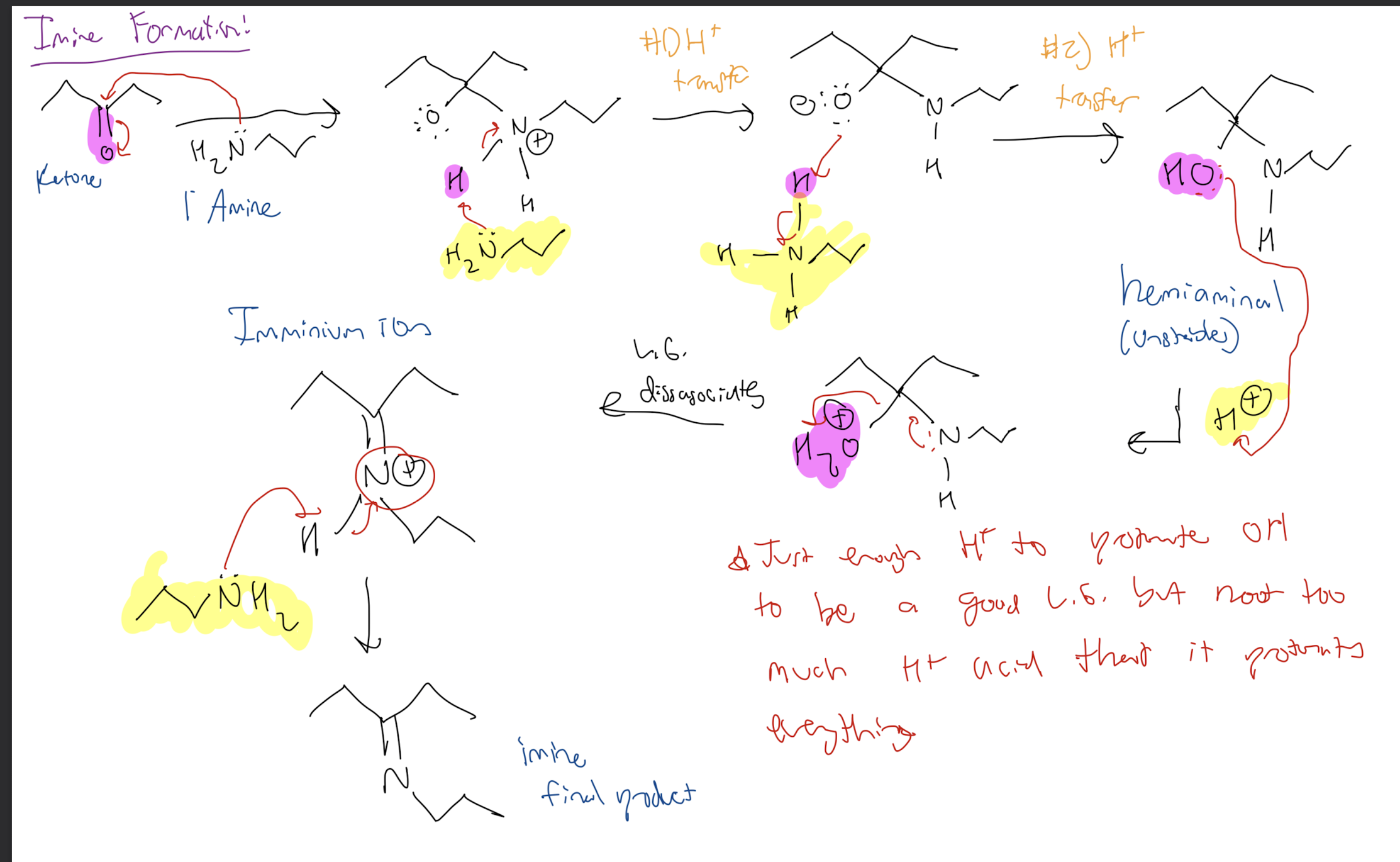
<p><strong>Aldehyde/Ketone → Imine</strong></p><p><strong>1) Nuc Addition of Amine</strong></p><p><strong>2) 2 Proton transfers to form Hemiaminal intermediate</strong></p><p><strong>3) Acid Proton Transfer forming L.G H2O </strong></p><p><strong>4) Proton Transfer on Hydrogen ON the nitrogen to form IMINE</strong></p>
13
New cards
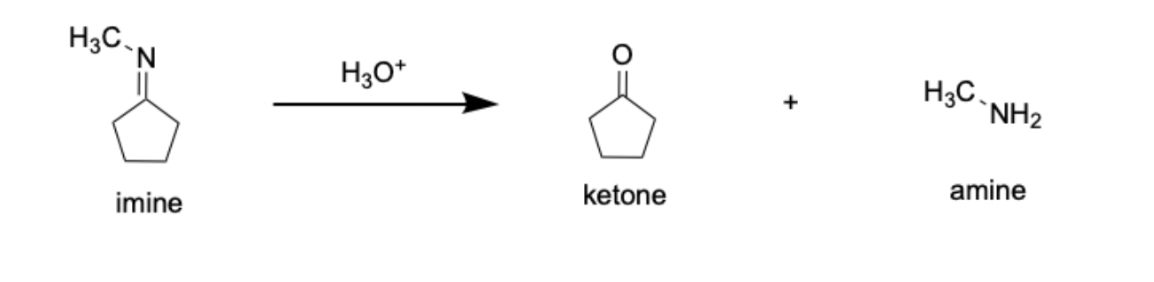
<p>5R)<strong> 1° Imine Hydrolysis</strong></p>

5R) 1° Imine Hydrolysis

1) H3O+ Proton Transfer

2) H2O Attaches to Carbon Double Bond to N

3) H2O Deprotonated, then NHR Protonated

4) Form Carbonyl, Amine leaves as L.G

5) Amine L.G deprotonates H from Carbonyl

6) Ketone + Amine NH3+
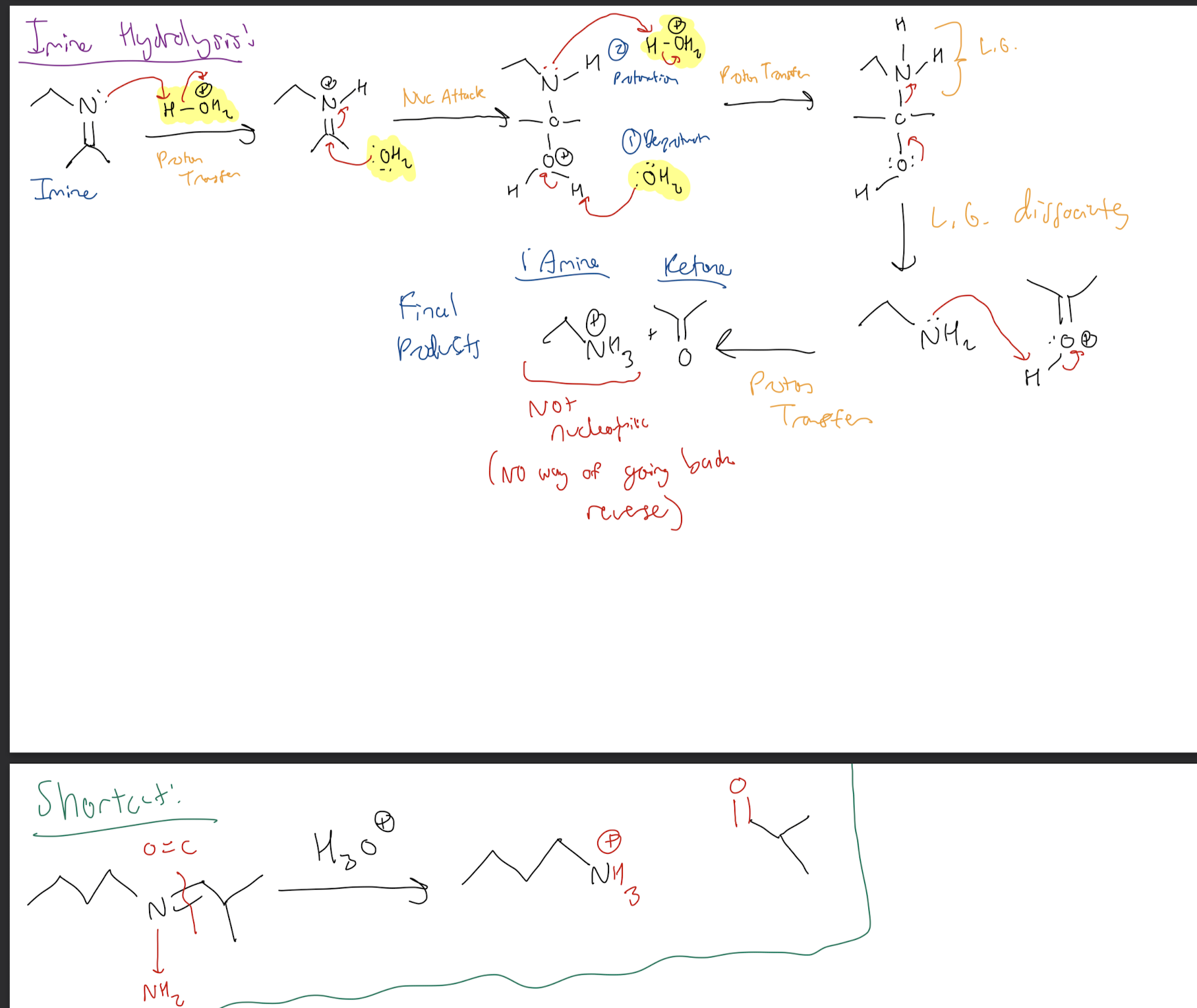
<p>1) H3O+ Proton Transfer</p><p>2) H2O Attaches to Carbon Double Bond to N</p><p>3) H2O Deprotonated, then NHR Protonated</p><p>4) Form Carbonyl, Amine leaves as L.G</p><p>5) Amine L.G deprotonates H from Carbonyl </p><p>6) Ketone + Amine NH3+</p>
14
New cards
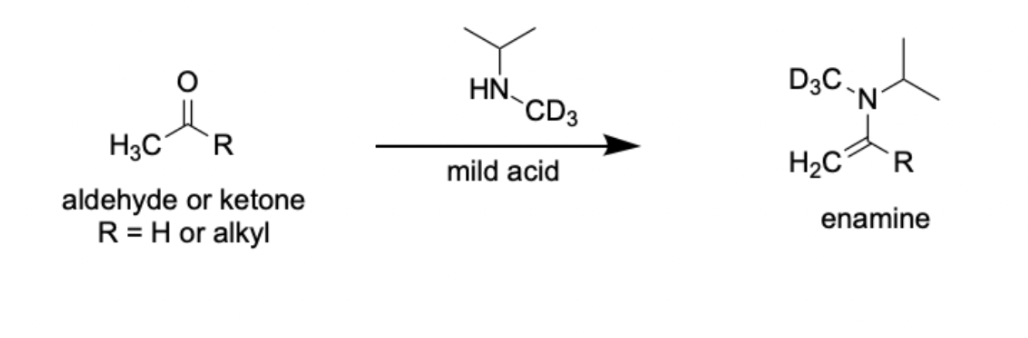
<p>6) 2° Amine + mild acid (H+)</p>

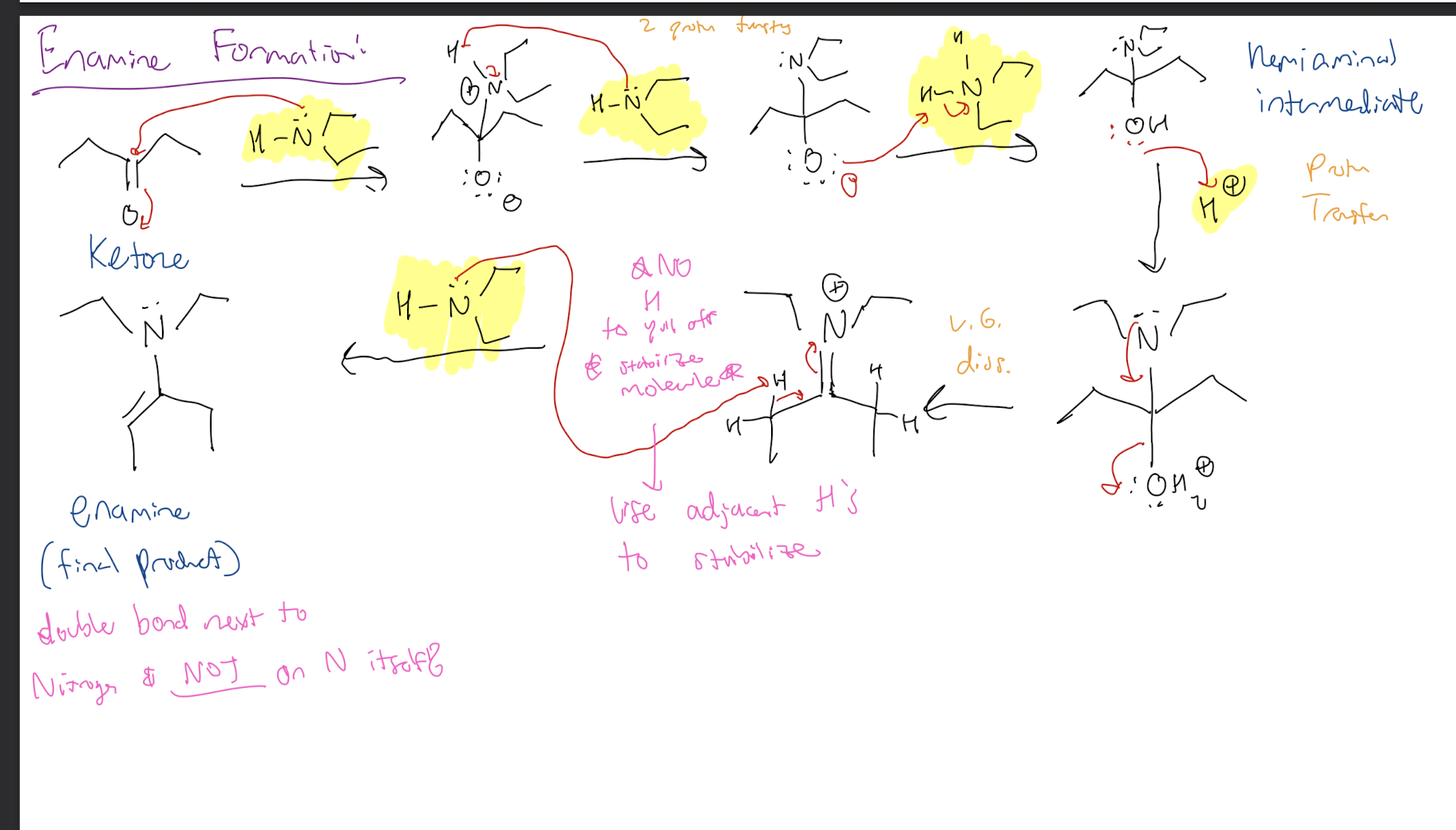
6) 2° Amine + mild acid (H+)

Aldehyde/Ketone → Enamine

1) Nuc Addition of Amine

2) 2 Proton transfers to form Hemiaminal intermediate

3) Acid Proton Transfer forming L.G H2O

4) Proton Transfer on Hydrogen ADJACENT to nitrogen to form ENAMINE
<p><strong>Aldehyde/Ketone → Enamine </strong></p><p><strong>1) Nuc Addition of Amine</strong></p><p><strong>2) 2 Proton transfers to form Hemiaminal intermediate</strong></p><p><strong>3) Acid Proton Transfer forming L.G H2O </strong></p><p><strong>4) Proton Transfer on Hydrogen ADJACENT to nitrogen to form ENAMINE</strong></p>
15
New cards

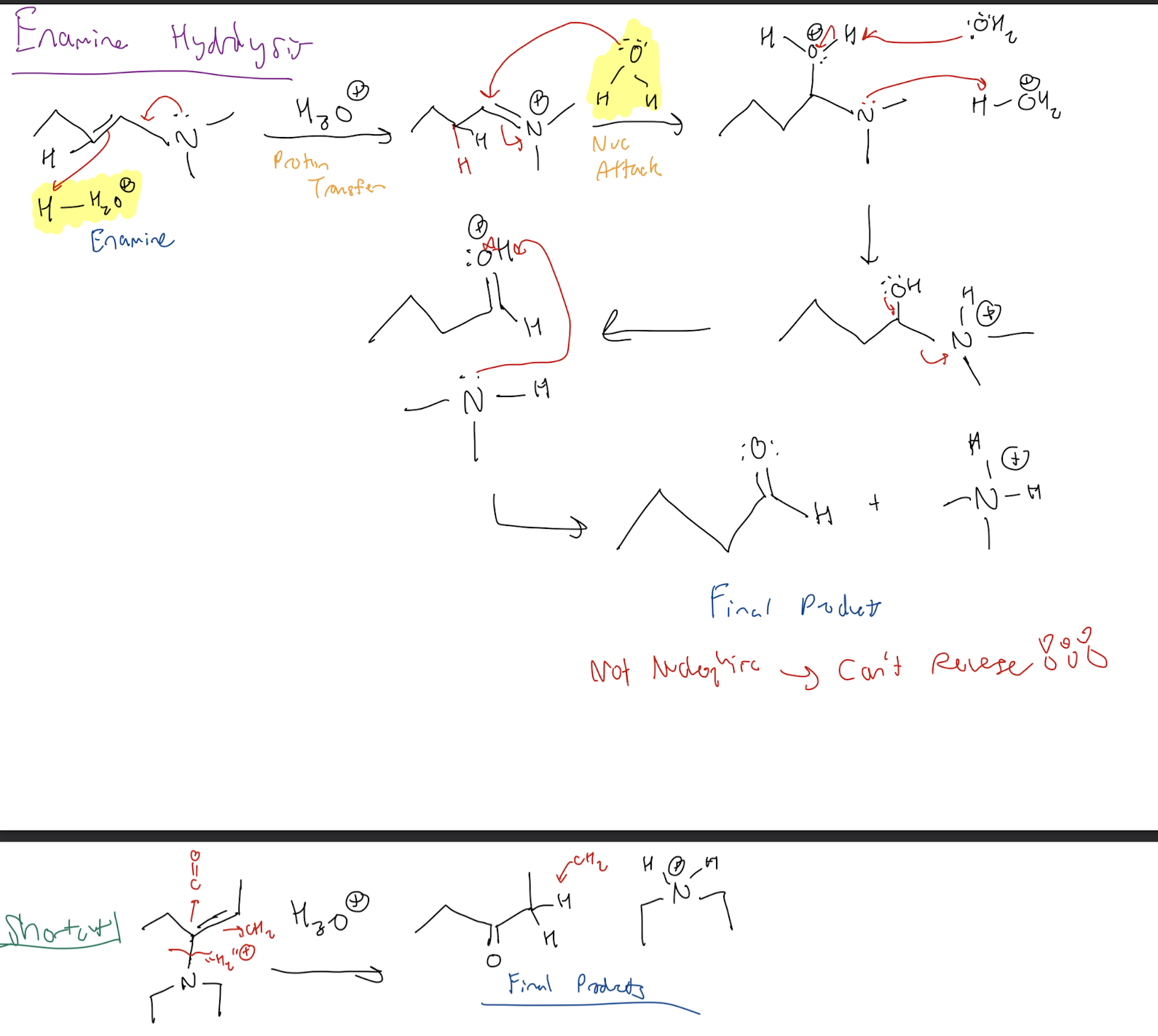
6R) 2° Enamine Hydrolysis

1) Carbon-Carbon Alkene Proton Transfer

2) H2O Attaches to Carbon Double Bond N

3) Deprotonate H2O and Protonate N

4) Form Carbonyl and Make AMine a Leaving Group

5) Deprotonate OH carbonyl to form Ketone Final Product
<p>1) Carbon-Carbon Alkene Proton Transfer</p><p>2) H2O Attaches to Carbon Double Bond N</p><p>3) Deprotonate H2O and Protonate N</p><p>4) Form Carbonyl and Make AMine a Leaving Group</p><p>5) Deprotonate OH carbonyl to form Ketone Final Product</p>
16
New cards
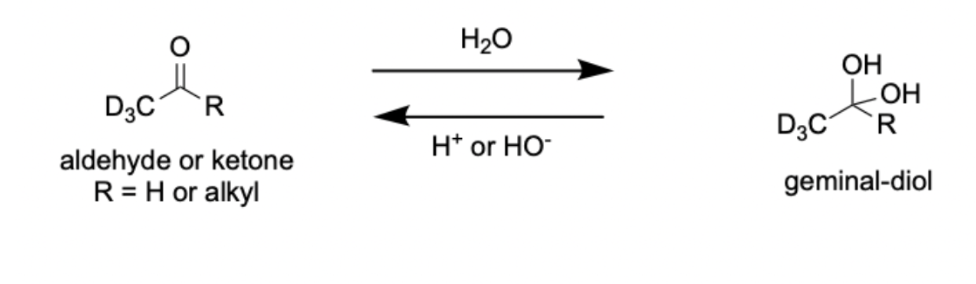
<p>7) NEUTRAL Hydration <strong>(H2O)</strong></p>

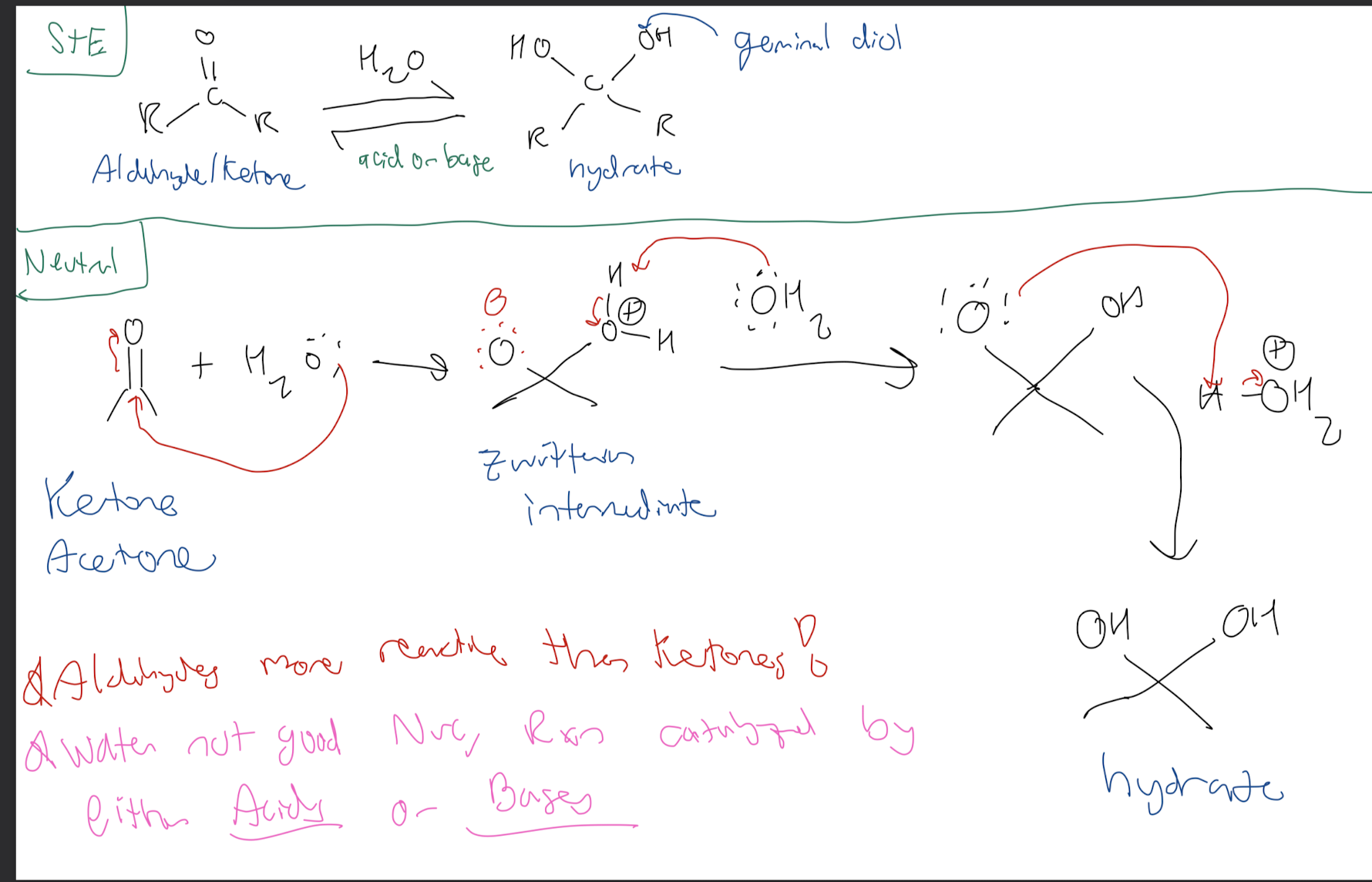
7) NEUTRAL Hydration (H2O)

Aldehyde/Ketone → Hydrate: Geminol-Diol
<p>Aldehyde/Ketone → Hydrate: Geminol-Diol</p>
17
New cards

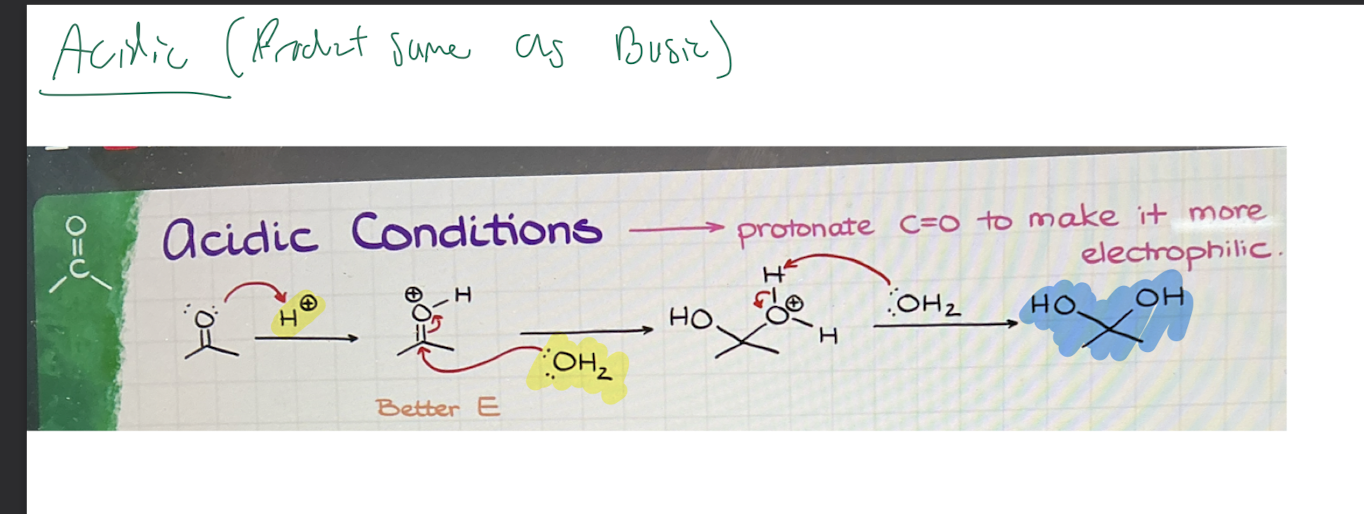
7a) Acidic Hydration (H+) then (H2O)

Aldehyde/Ketone → Hydrate: Geminol-Diol
<p>Aldehyde/Ketone → Hydrate: Geminol-Diol</p>
18
New cards

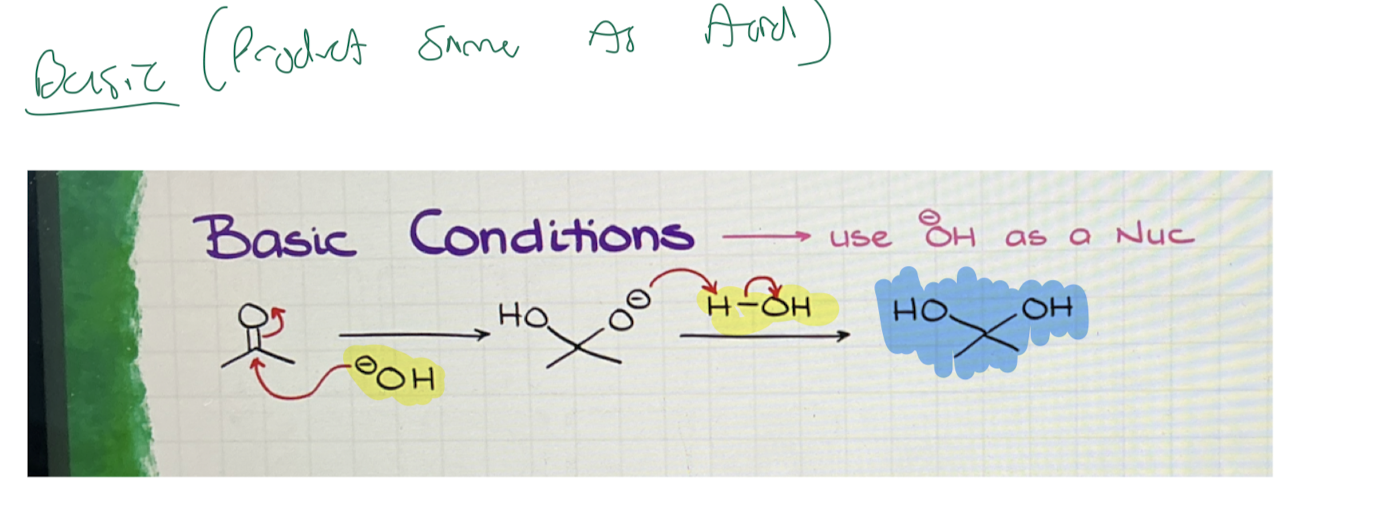
7b) Basic Hydration (OH-) then H2O

Aldehyde/Ketone → Hydrate: Geminol-Diol
<p><strong>Aldehyde/Ketone → Hydrate: Geminol-Diol</strong></p>
19
New cards

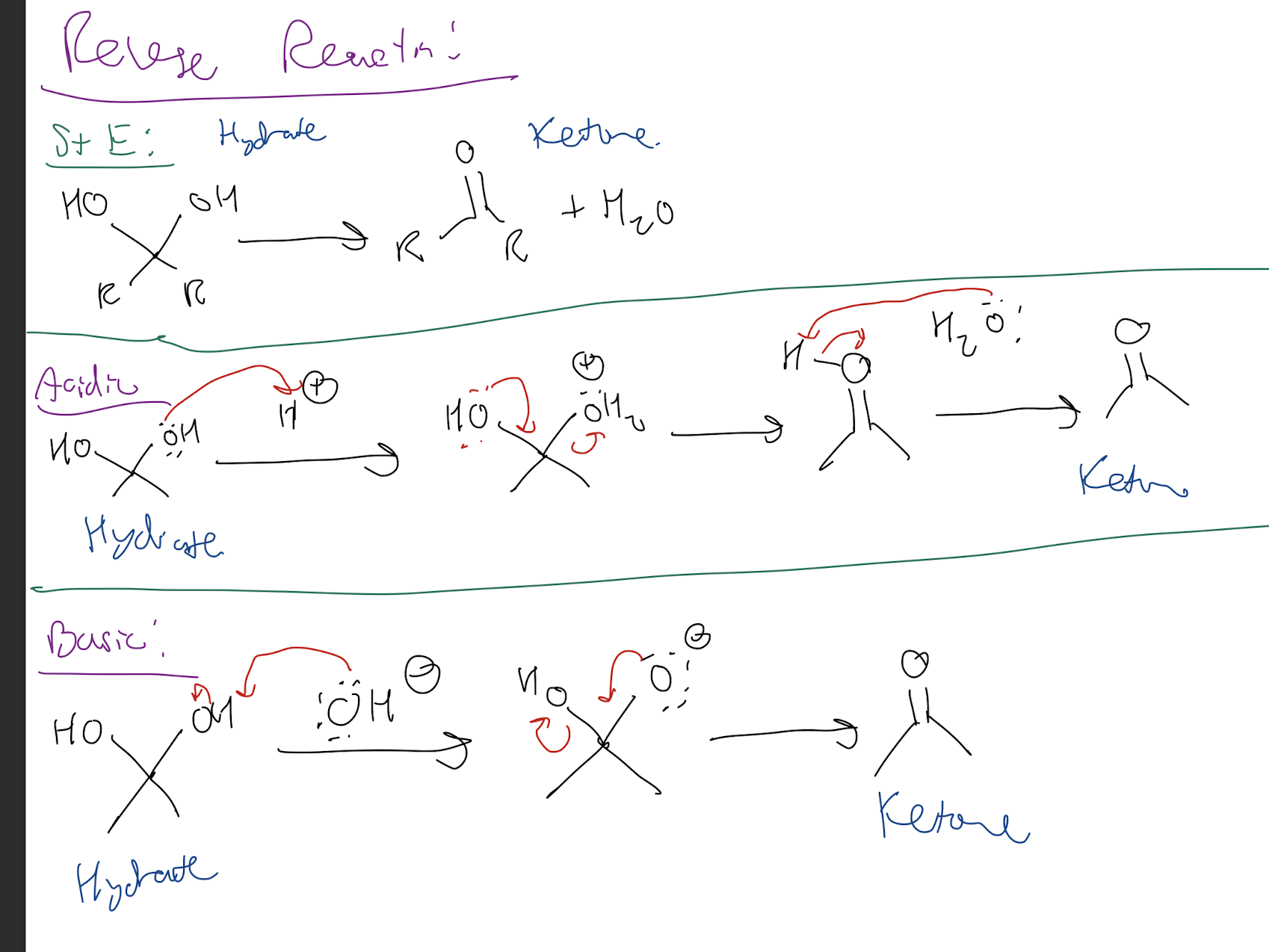
7R) H+ (Acidic) or OH- (Basic)

Hydrate → Ketone/Aldehyde
<p><strong>Hydrate → Ketone/Aldehyde</strong></p>
20
New cards

8) Reagent
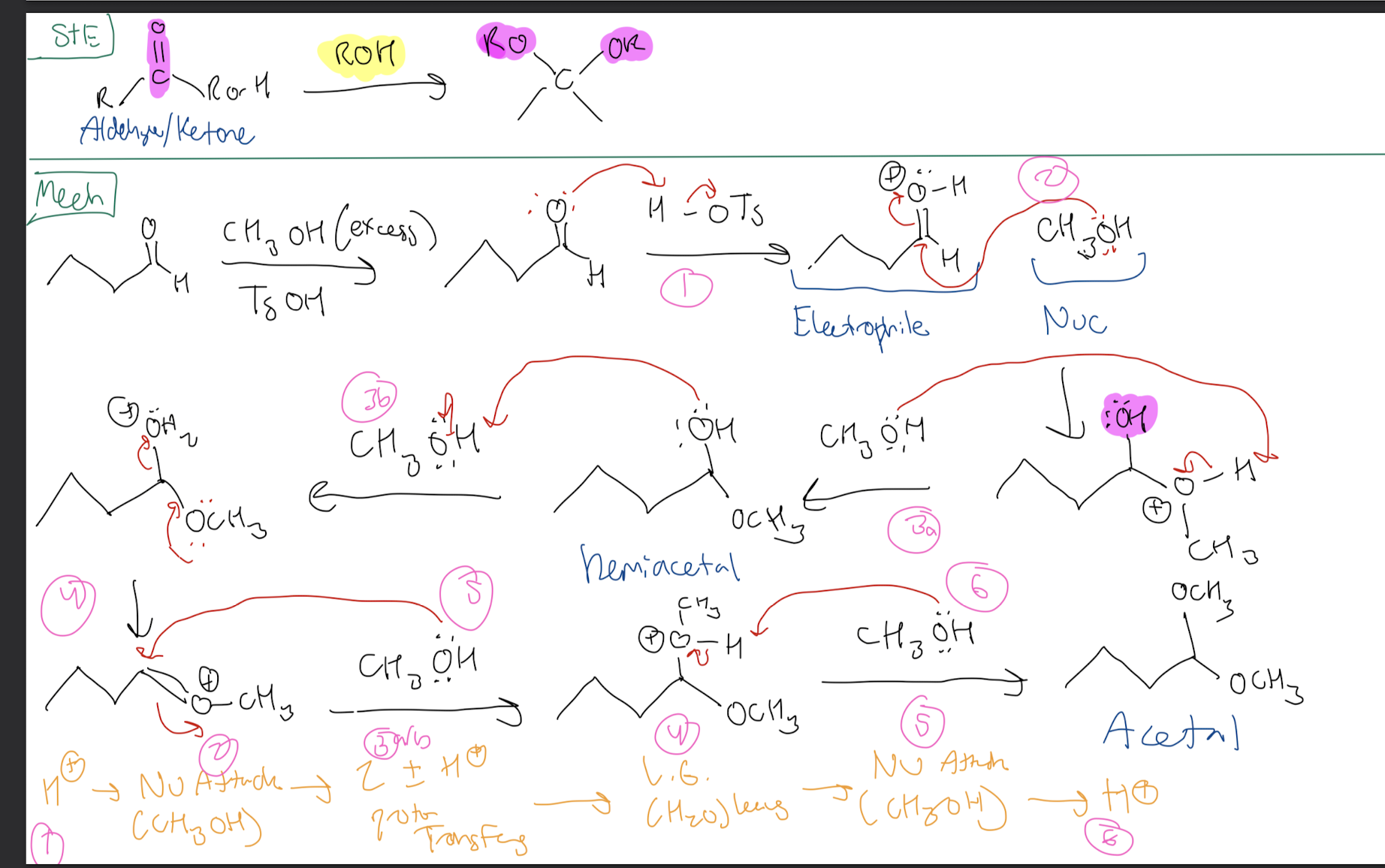
1) R’OH (Excess) , TsOH (Acid Catalyst)

Acid: TsOH, H2SO4

Acetal Formation

Ketone/Aldehyde → HemiAcetal → Acetal

1) Proton Transfer from Acid Catalyst on Carbonyl

2) Nuc Attack from ROH

3) 2 ± H+ proton transfers

4) L.G. H2O leaves

5) Nuc Attack from CH3OH

6) Proton Removal to form ACETAL
<p><strong>Acetal Formation</strong></p><p><strong>Ketone/Aldehyde → HemiAcetal → Acetal</strong></p><p></p><p>1) Proton Transfer from Acid Catalyst on Carbonyl</p><p>2) Nuc Attack from ROH</p><p>3) 2 ± H+ proton transfers</p><p>4) L.G. H2O leaves</p><p>5) Nuc Attack from CH3OH</p><p>6) Proton Removal to form ACETAL</p>
21
New cards

8R)
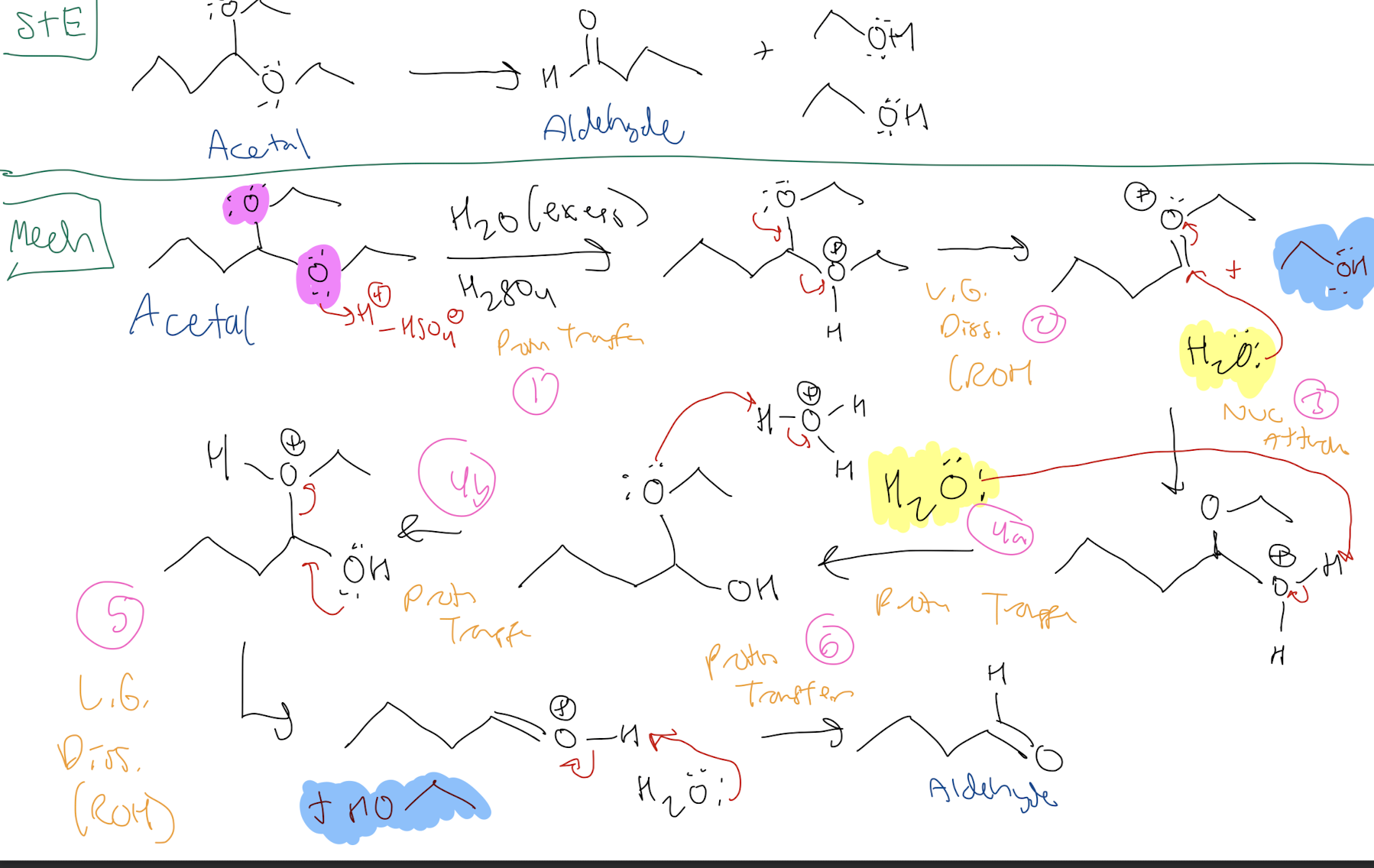
1) H2O (excess), H2SO4 (Acid Catalyst)

Acid: TsOH, H2SO4

Acetal → Aldehyde

1) Acid Catalyst Proton Transfer

2) L.G Dissassosciation of ROH

3) Nuc Attack of H2O at Carbonyl

4) Proton Transfer (Deprotonation of H2O and Protonation of ROH)

5) L.G Dissassociation of ROH #2

6) Deprotonate H from OH using H2O
<p><strong>Acetal → Aldehyde</strong></p><p>1) Acid Catalyst Proton Transfer</p><p>2) L.G Dissassosciation of ROH</p><p>3) Nuc Attack of H2O at Carbonyl</p><p>4) Proton Transfer (Deprotonation of H2O and Protonation of ROH)</p><p>5) L.G Dissassociation of ROH #2</p><p>6) Deprotonate H from OH using H2O</p>
22
New cards

9) Reagent

1) OH-R-OH (Diol), H2SO4 (Acid Catalysst)

Acid: TsOH, H2SO4

Proton Transfer: ROH, HSO4-, H2O

Cyclic Acetal Formation

Ketone/Aldehyde → HemiAcetal → Cyclic Acetal

1) Proton Transfer from Acid Catalyst on Carbonyl

2) Nuc Attack from ROH

3) 2 ± H+ proton transfers

4) L.G. H2O leaves

5) INTRAMOLECULAR Nuc Attack from OH

6) Proton Removal of H from OH to form CYCLIC ACETAL
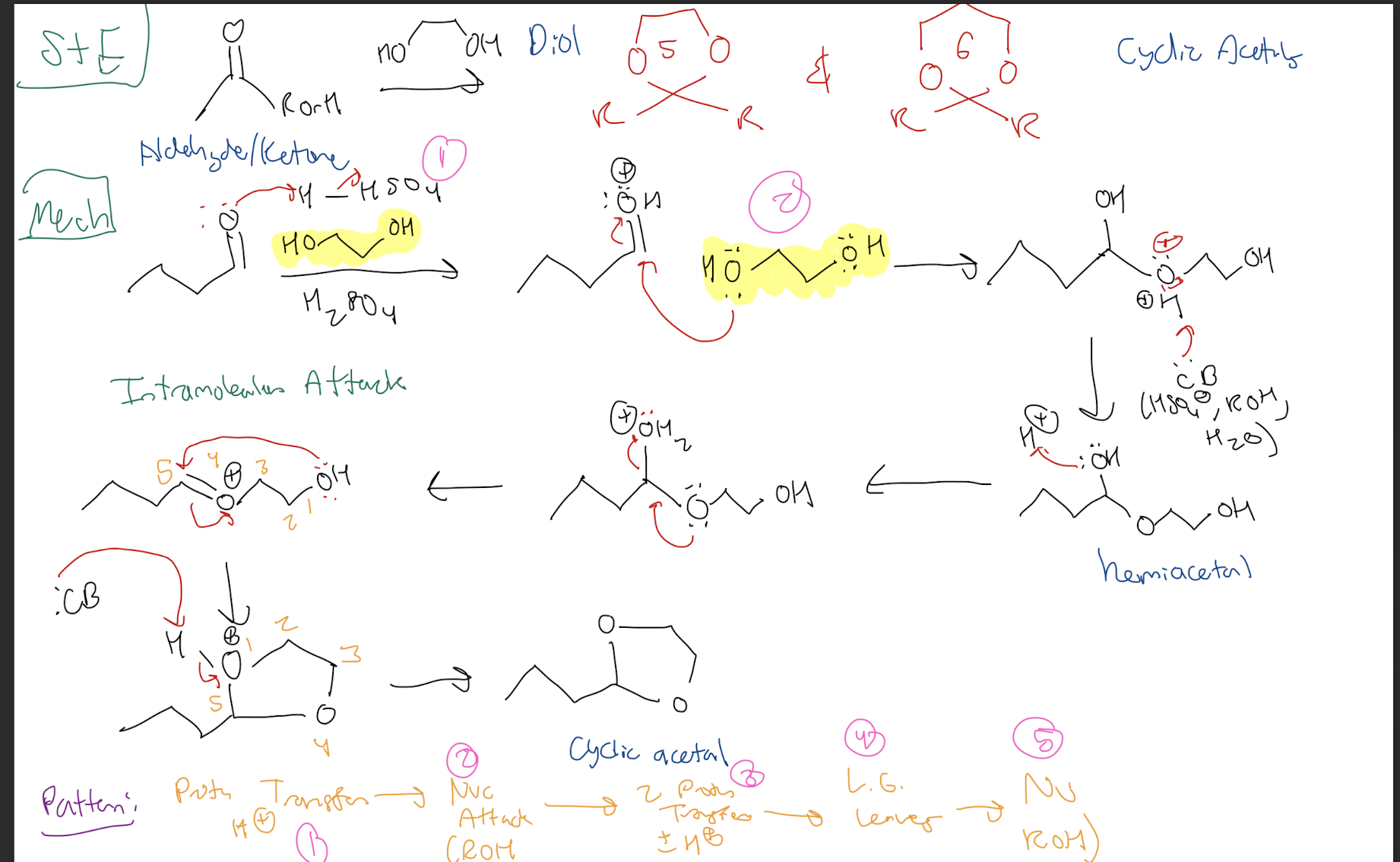
<p><strong>Cyclic Acetal Formation</strong></p><p></p><p><strong>Ketone/Aldehyde → HemiAcetal → Cyclic Acetal</strong></p><p></p><p>1) Proton Transfer from Acid Catalyst on Carbonyl</p><p>2) Nuc Attack from ROH</p><p>3) 2 ± H+ proton transfers</p><p>4) L.G. H2O leaves</p><p>5) INTRAMOLECULAR Nuc Attack from OH</p><p>6) Proton Removal of H from OH to form CYCLIC ACETAL</p>
23
New cards

9R) Reagent

1) H2O (excess), H2SO4 or TsOH (Acid Catalyst)

1) Acid Catalyst Proton Transfer

2) L.G Dissassosciation of ROH INTRAMOLECULARLY (

  • still part of the same moleucle

3) Nuc Attack of H2O at Carbonyl

4) Proton Transfer (Deprotonation of H2O and Protonation of ROH)

5) L.G Dissassociation of ROH #2

6) Deprotonate H from OH using H2O to form KETONE and DIOL
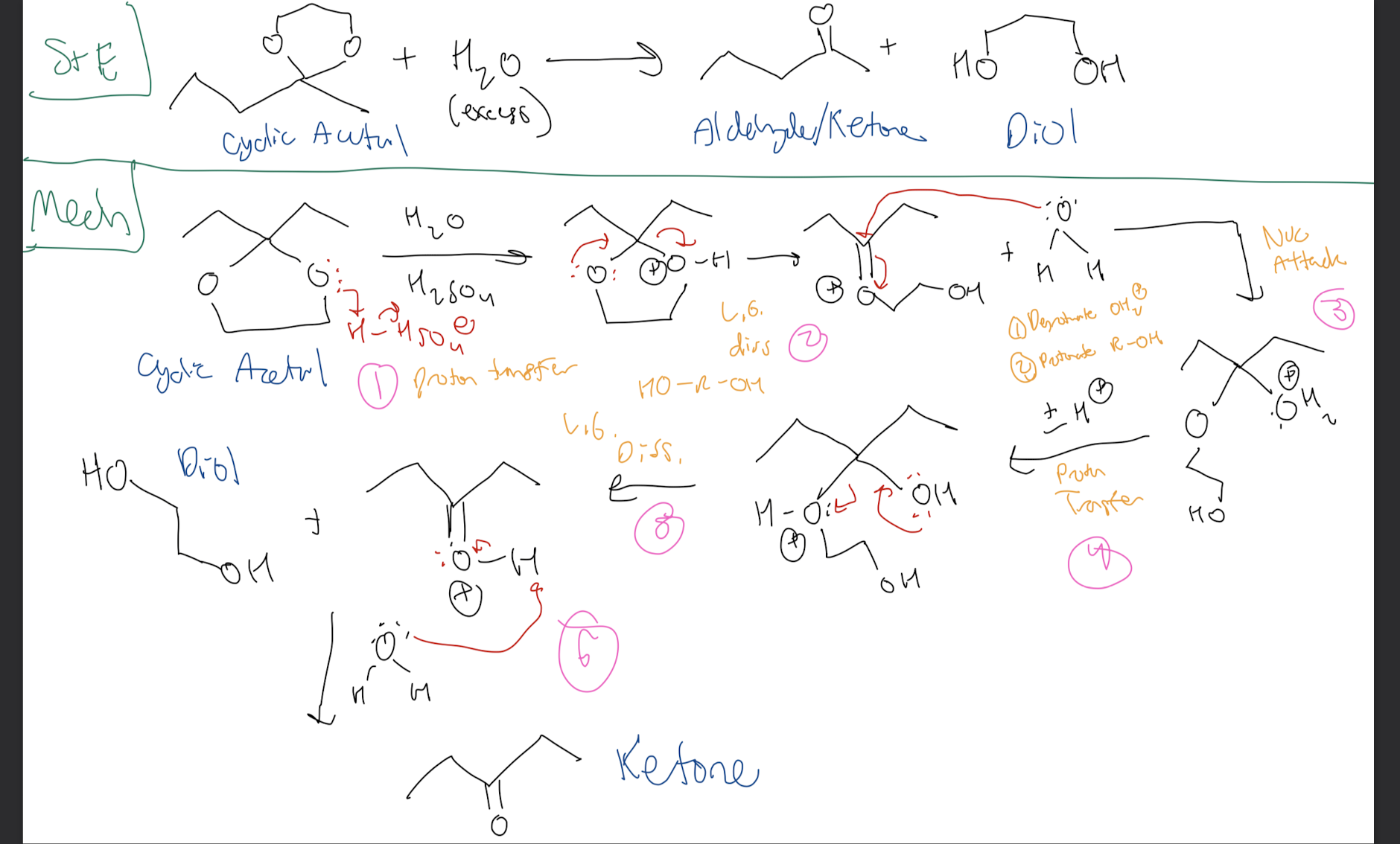
<p>1) Acid Catalyst Proton Transfer</p><p>2) L.G Dissassosciation of ROH INTRAMOLECULARLY (</p><ul><li><p>still part of the same moleucle</p></li></ul><p>3) Nuc Attack of H2O at Carbonyl</p><p>4) Proton Transfer (Deprotonation of H2O and Protonation of ROH)</p><p>5) L.G Dissassociation of ROH #2</p><p>6) Deprotonate H from OH using H2O to form KETONE and DIOL</p>
24
New cards

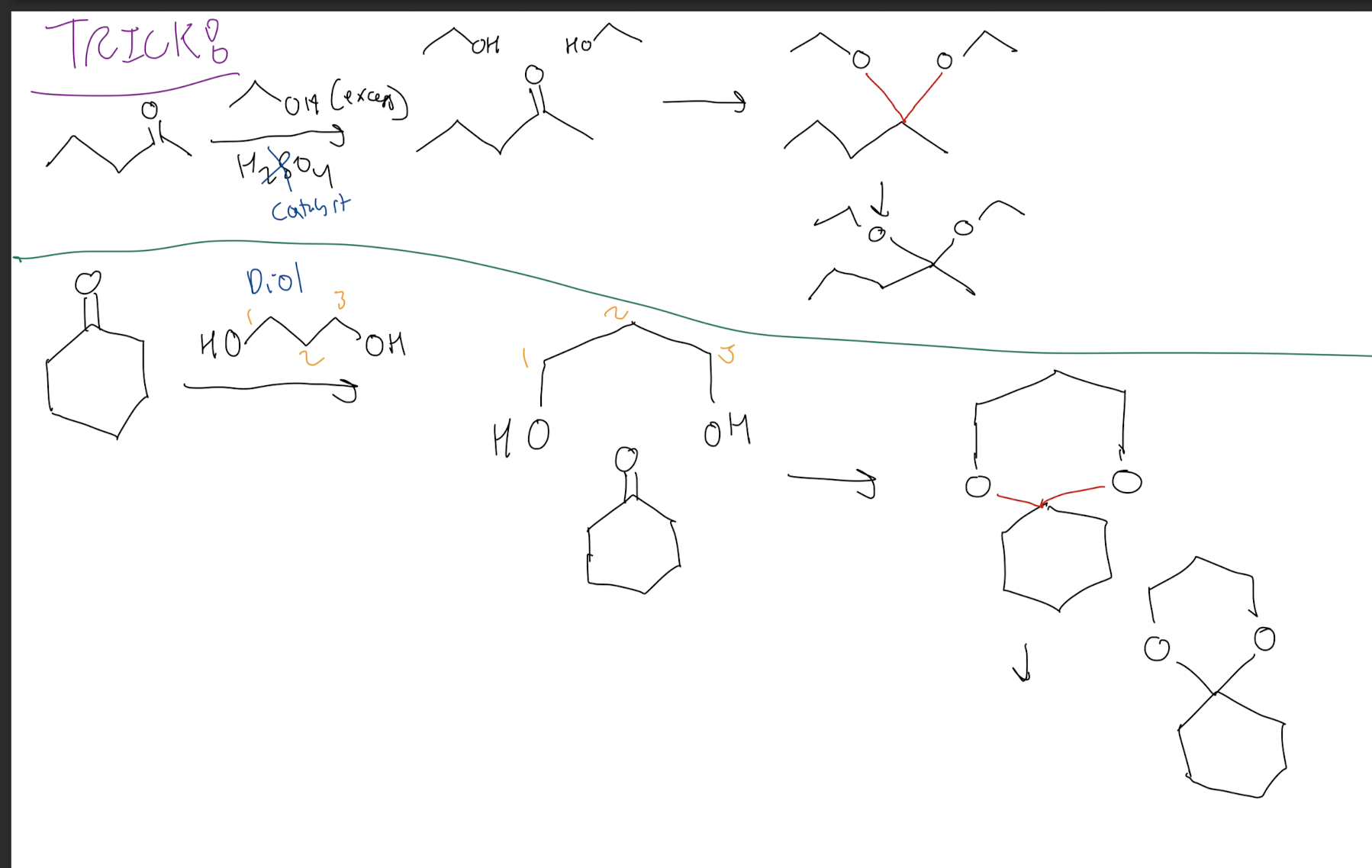
8 and 9 TRICK FOR ACETAL FORMATION

knowt flashcard image
25
New cards

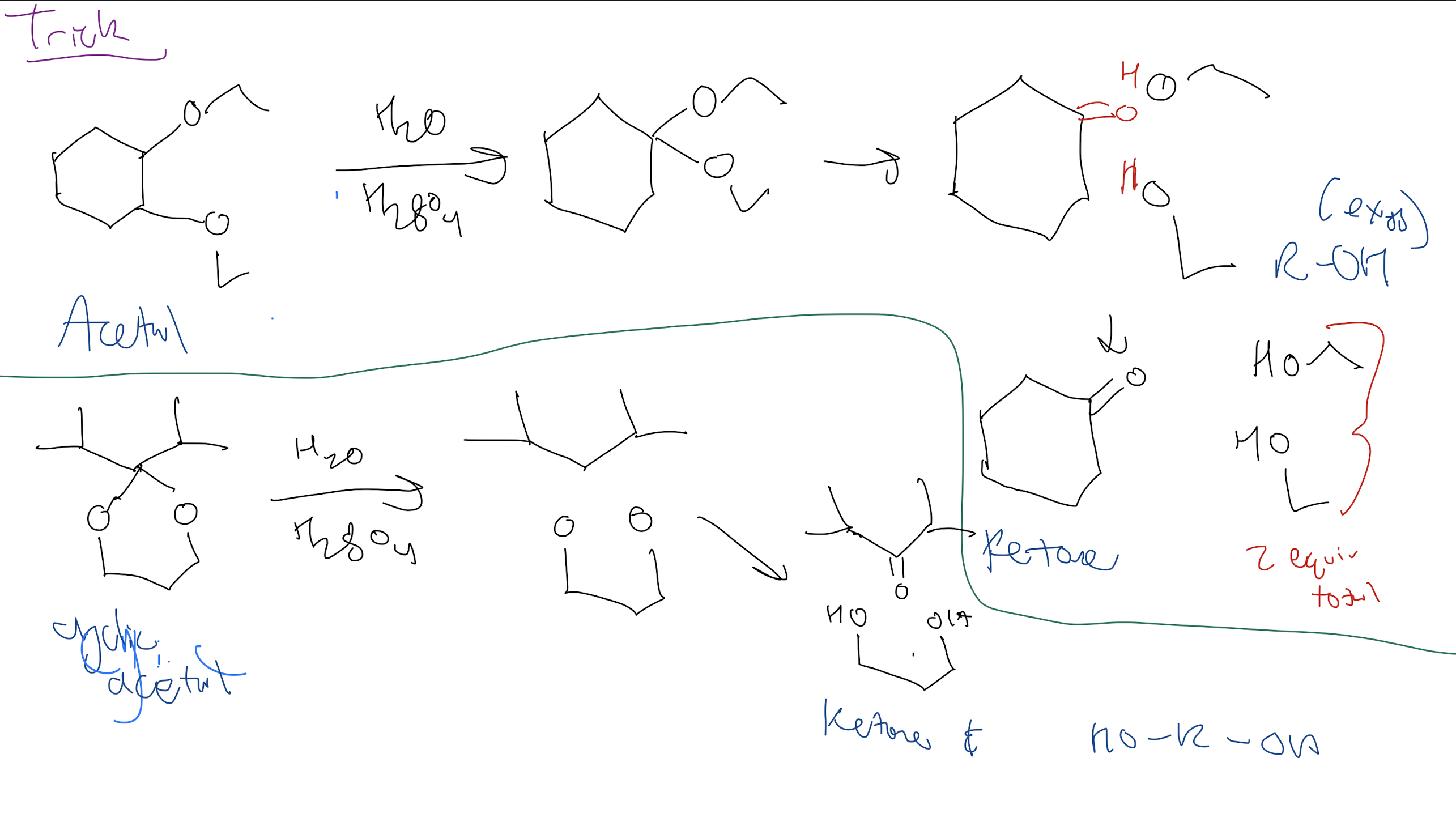
8 and 9 TRICK for ACETAL HYDROLYSIS

knowt flashcard image