Nails
 Call Kai
 Learn
Learn Practice Test
 Spaced Repetition
 Match
Match Flashcards
 Knowt Play
1/41

There's no tags or description
Looks like no tags are added yet.
Name | Mastery | Learn | Test | Matching | Spaced | Call with Kai |
|---|
No analytics yet
Send a link to your students to track their progress
42 Terms
Natural Nail
The hard protective plate located at the end of the finger or toe.
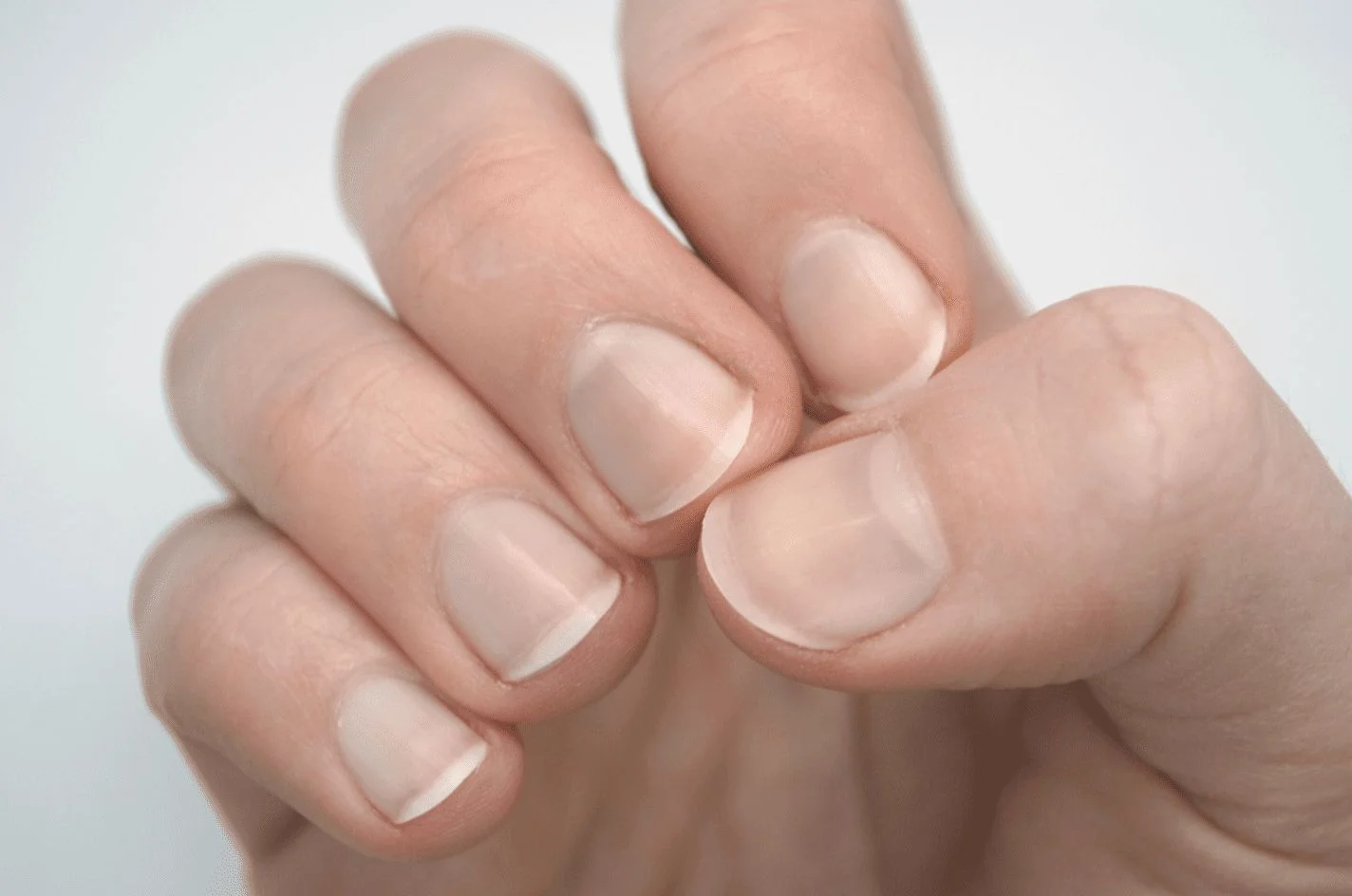
Natural Nail Unit
All the anatomical parts of the fingernail necessary to produce the natural nail plate.
Onyx
The technical term for nail of the fingers or toes.
Nail Folds
The folds of normal skin that surround the nail plate.
Nail Grooves
A slit or furrow on the sides of the nail.
Lateral Nail Folds
Folds of normal skin that line the sides of the nail plate, also known as the sidewall.
Nail Plate
A hard keratin plate on top of and slowly sliding across the nail bed as it grows; the most visible and functional part of the nail unit.
Free Edge
The part of the nail plate that extends over the lip of the finger or toe.
Nail Bed
Portion of the living skin that supports the nail plate as it grows toward the free edge.
Bed Epithelium
A thin layer of tissue between the nail plate and the nail bed.
Matrix
An area where the nail plate cells are formed, this area is composed of matrix cells that make up the nail plate.
Cuticle
The dead, colorless tissue attached to the nail plate
Eponychium
Living skin at the base of the nail plate and covering the matrix area.
Hyponychium
A slightly thickened layer of skin that lies between the fingertip and free edge of the nail plate, it forms a protective barrier that prevents microorganisms from invading and infecting the nail bed.
Ligament
A tough band of fibrous tissue that connects bones or holds an organ in place.
Nail Disorder
A condition caused by an injury or disease of the nail unit.
Beau’s Lines
Visible depressions running across the width of the natural nail plate.
Bruised Nailbed
A condition in which a blood clot forms under the nail plate, forming a dark purplish spot; this is usually due to physical injury.
Discolored Nail
The nail turns a variety of colors, which can be surface staining, a disorder, or poor circulation.
Eggshell Nail
A noticeably thin, white plate that is more flexible than normal.
Hangnail
A condition in which the eponychium or the other living tissue surrounding the nail plate becomes split or torn.
Infected Finger
Visible redness, pain, swelling, broken skin, or pus. Refuse service and refer to physician.
Leukonychia
Whitish discoloration found inside the nail plate, usually caused by injury to the nail matrix.
Melanonychia
Significant darkening of the fingernails or toenails, may be seen as a black band under or within the nail plate, extending from the base to the free edge.
Nail Psoriasis
A noninfectious condition that affects the surface of the nail plate, causing it to appear rough and pitted with reddish spots on the nail bed and onycholysis.
Nail Pterygium
An abnormal condition that occurs when the skin is stretched by the nail plate; usually caused by serious injury or allergic reaction.
Onychorhexis
Split or brittle nails that also have a series of lengthwise ridges that give a rough appearance to the surface of the nail plate
Pincer Nail
Increased crosswise curvature throughout the nail plate caused by an increased curvature of the matrix.
Plicatured Nail
Also known as folded nail; a type of highly curved nail plate often caused by injury to the matrix, but that may be inherited.
Ridged Nail
Vertical lines running the length of the natural nail plate, usually related to normal aging.
Splinter Hemorrhage
Caused by physical trauma or injury to the nail bed, which damages the capillaries and allows the small amounts of blood flow.
Onycholysis
Separation of the nail plate and bed, often due to injury or allergic reactions.
Onychocryptosis
Ingrown nail; nail grows into the living tissue around the nail.
Onychomadesis
The separation and falling off of a nail from the nail bed.
Onychomycosis
A fungal infection of the nail plate.
Onychosis
Any deformity or disease of the nails.
Onychia
Inflammation of the matrix of the nail with shedding of the nail.
Paronychia
A bacterial inflammation of the tissues surrounding the nail; pus, redness, and swelling are usually present.
Pseudomonas Aeruginosa
Common bacteria that can cause infection and the test microorganism for a hospital disinfectant, which is the type of disinfectant that should be used in a salon.
Pyogenic Granuloma
Severe inflammation of the nail, in which a lump of red tissue grows up from the nail bed to the nail plate.
Tinea Pedis
The medical term for fungal infections of the feet.
Trumpet Nail
A disorder in which the edges of the nail plate curl around to form the shape of the trumpet or sharp cone at the free edge.