Designing Period Furniture
 Call Kai
 Learn
Learn Practice Test
 Spaced Repetition
 Match
Match Flashcards
 Knowt Play
1/44

Earn XP
Name | Mastery | Learn | Test | Matching | Spaced | Call with Kai | Chat |
|---|
No analytics yet
Send a link to your students to track their progress
45 Terms
All furniture can be divided into two groups, what are they?
Horizontal and vertical structure
Every primary mass should be divided into 2 parts, these are called?
Major and minor masses
The compass curve is commonly found in what 2 styles of furniture?
Colonial and Early American
What is a fillet?
90 degree edge
Standard chair seat height
18”
Standard table height
30”
Standard footstool height
16”
What are the 4 classifications of furniture ornamentation?
Contour enrichment
Painting
Carving
Inlaying
Abstract motifs are derived from?
geometric shapes
Naturalistic motifs are derived from?
Plants and animals
Artificial motifs are derived from?
Man-made things
In furniture, style refers to?
The use of certain design characteristics
In furniture, period refers to?
Designates a measure of time where certain design characteristics were popularized
What are the 3 broad areas the furniture industry uses to categorize the basic characteristics?
Traditional
Provincial
Contemporary-Modern
Softwoods
ex. Pine / Poplar
Coniferous / Cone Bearing
Needle-leafed
Evergreen
Hardwoods
ex. Maple
Deciduous
Broad-leafed
Palm & Bamboo
Giant Grasses
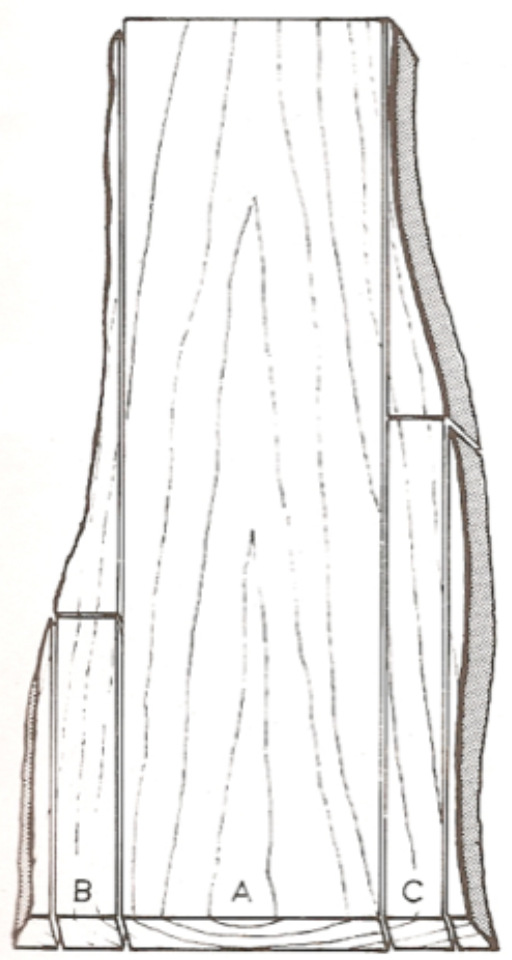
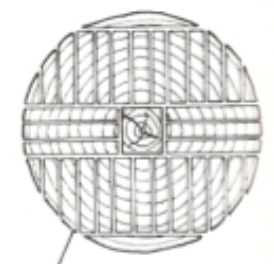
Plane Sawn / Flat Sawn
Tangential Cut
Annual Rings
“Slicing bread”
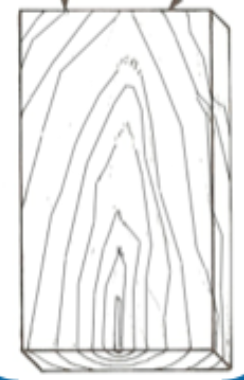
Wane-edge Board
“waney”
Quarter Sawn
Runs 90 degrees to the surface
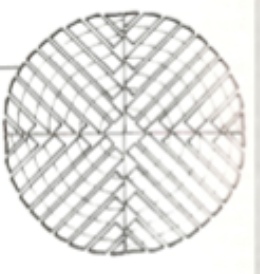
Billet Sawn
Produces more stable lumber. Often passed off as quarter sawn.
22-15
Standard. Thoroughly air-dried.
20
Dry rot safety line
16
Outdoor furniture
15
Intermittently heated interiors
12-14
Occasionally heated interiors
11-13
Normal heating
9-11
Continuous high degree heating
8
Radiator shelves & casings
Pin Knots
1/2” or smaller
Spike / Splay Knots
“Slash knots”, Sliced during sawing.
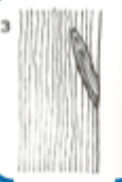
Encased Knots
Dead, oozes forever
Branched Knots
2 or 3 knots springing from a common center
Tangential Shakes
Splitting of the weakest links. Caused by age, wind, or heat.
Double Heart Shake (2 Shakes in a line)
Star Shake (Radiating out)
Frost Shake (Severe weather)
Cup & Ring Shake
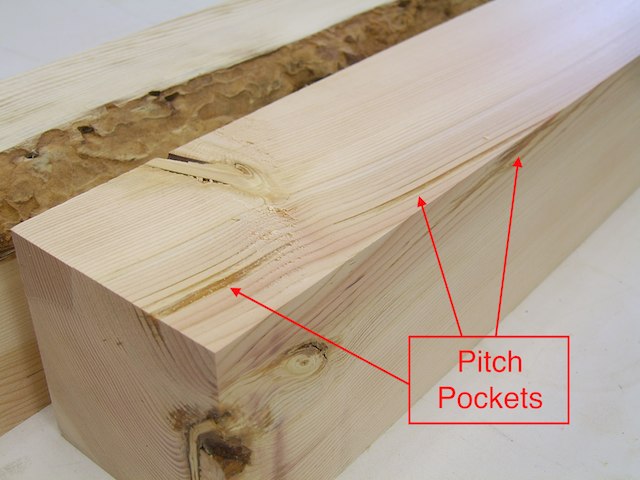
Pitch Veins
Filled with Sap
Sun Checking
Small splits from rapid sun drying
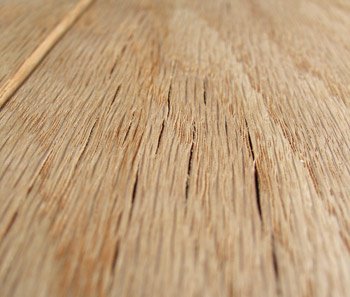
End Splitting
Too rapid drying
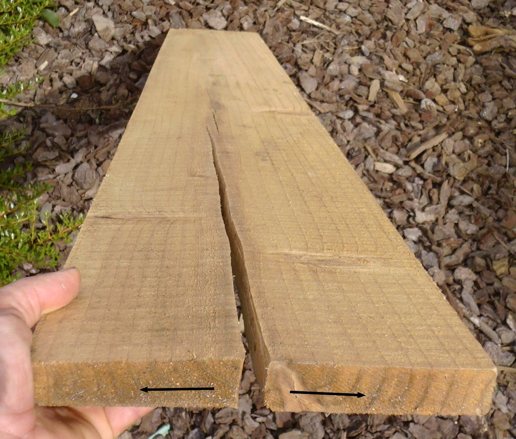
Cupping
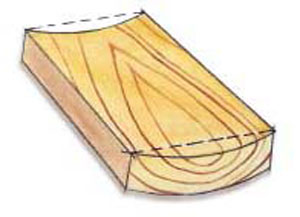
Bowing
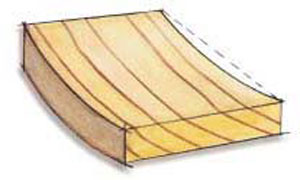
Springing
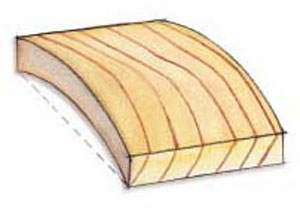
Warping
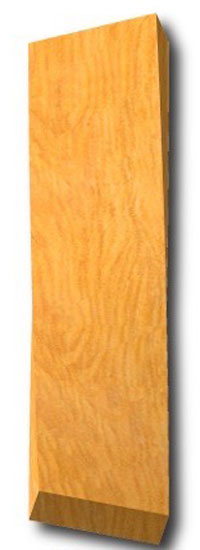
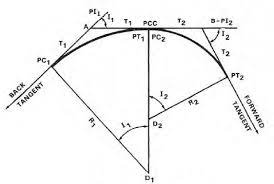
Compass Curve
Regular circle. Often used in colonial and early America
One-Directional Curve
“The Curve of Force” , no straight lines, Oval shape.
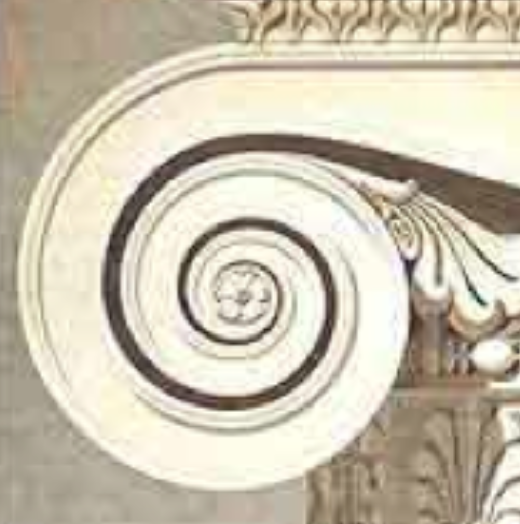
Reverse Curve
Sharper on one bend than the other. “Squiggle”
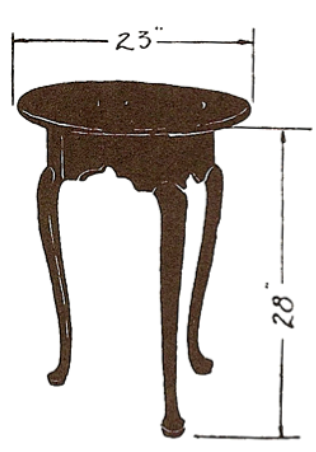
Compound Curve
curve made up of two or more circular arcs