I&I A2
 Call Kai
 Learn
Learn Practice Test
 Spaced Repetition
 Match
Match Flashcards
 Knowt Play
1/133

There's no tags or description
Looks like no tags are added yet.
Name | Mastery | Learn | Test | Matching | Spaced | Call with Kai |
|---|
No analytics yet
Send a link to your students to track their progress
134 Terms
Parasite
an organism that resides on or within another living organism in order to find the environment and nutrients it requires for growth and reproduction
What are the 2 most prevalent human parasites?
helminths: worms
Protozoans: unicellular
TRUE OR FALSE: Helminths are more pathogenic than protozoans
FALSE
What are other terms for the helminths a) tape worm, b) flukes, c) roundworm?
a) cestode
b) trematode
c) nematode
What is the a) residence, b) pathology and c) symptoms of Schistosome /blood fluke?
a) blood
b) acute or chronic
c) abdominal pain, diarrhea, bloody urine or poo, anaemia, enlarged liver and spleen
What is the a) residence, b) symptoms and c) pathology of tape worm?
a) gut
b) abdominal pain, diarrhea, weight loss
c) chronic
What is the a) residence, b) symptoms and c) pathology of stronglioides (round worm)?
a) penetrate skin→ to the lungs→ gastrointestinal tract
b) abdominal pain, diarrhea, wheezing, itching
c) acute and chronic
What is the a) residence, b) symptoms and c) pathology of guinea worm (round worm)?
a) subcutaneous
b) blister formation with burning sensation
c) chronic, sort of
Giardia symptoms/how can it manifest? (7)
Asymptomatic
acute short-lasting diarrhea (1-3 weeks)
Nutritional disorders
weight loss
allergies
lower cognitive function
cancer
Giardia transmission routes
person-person
Water/food borne.
Zoonotic.
TRUE OR FALSE: There are 8 known Giardia genotypes, with different ones most associated with human to human and animal transmission
FALSE: Genotypes A and B are most human infecting AND zoonotically transmitted
Giardia has a binucleated genome. What are the functions of each of the two nuclei?
BOTH transcriptionally active and replicate at the same time (same functions)
What organelles does Giardia have and not have?:
ER
feeding organelle
Golgi
Mitochondrion
nucleus
HAS:
ER
feeding organelle
nucleus
DOESN’T HAVE:
Golgi
Mitochondrion
What are the challenges in treating giardia? (4)
Negative impact of main drug (5-Nitroimidazoles) on microbiome
Short term & long-term side effects of drugs
drug resistance is common in some areas.
difficult to culture
Blood Fluke life cycle (7 steps)
eggs shed from excrement
miracidia released from eggs
miracidia picked up by snails
miracidia→ sporocysts
sporocysts→ cercariae; released (into water)
cercariae burrow under human skin
cercariae→ schistosomulae; enter bloodstream and migrate to target organs
TRUE OR FALSE: Parasites are sexless
FALSE: often they are, but some, for instance schistosomes have both male and female
Tapeworm lifecycle (7 steps)
eggs released into environment
ingestion by animal host
oncospheres hatch and move through intenstinal wall to muscle
oncospheres→ cysticerci
humans ingest not-fully-cooked, infected meat
attachment to intestine
shedding of egg containing segments from end of tail
Guinea worm life cycle (5)
larvae consumed by copepod
Human or animal consumes infected copepods through food or water
larva penetrates stomach an intestine→ migrates to underneath the skin
fertilized worm penetrates skin, causing a blister
larva released from submerged blister by mature worm
Leishmania lifecycle
sand-fly sucks blood→ a or b
injects promastigote
a) promastigote phagocytosed by macrophage
promastigote→ amastigote
multiplication and cell lysis in macrophage and other cells
b) ingests infected cells
amastigote→ promastigote (in gut)
division and migration to proboscis (sucker)
What are the a) cutaneous/mucocutaneous and b) visceral manifestations of Leishmaniasis?
a) ulcer/scar tissue, destruction of mucus membrane
b) Fever, enlargement of Spleen & Liver, Post-kala-azar dermal Leishmaniasis
What are the species of human malaria? (5)
Plasmodium…
falciparum
vivax
malariae
ovale
knowlesi
Malaria lifecycle (6 steps)
gametocytes circulate in mosquito blood
male and female gametocytes fuse in gut→ motile stage
oocyst formation and multiplication
sporozoite formation and travel to salivary gland
transmission to humans→ travel to liver and multiplication
merozoites enter blood and enter RBC→ replicate→ lyse RBC
a) What are the main symptoms of malaria and b) what percentage of cases show all three?
a) inflammation from cytoadherence to vasculature, acidosis, anaemia
b) 35%
What are the top three symptomatic configurations associated with malaria cases?
cytoadherence + acidosis + anaemia (35%)
cytoadherence + acidosis (28%)
acidosis (24%)
To what demographic is malaria the biggest threat and why?
pregnant women in 1st and 2nd pregnancies; placenta is a site of cytoadherence for dominant placental binding antigen PfEMP1 VAR2CSA which is relatively conserved, immunity develops by 3rd pregnancy, causes low birth weight and impaired development
How much more likely are those affected by cerebral malaria to a) develop neurological disability and b) die from respiratory and diarrheal diseases?
a) 28x
b) 4x
What social and economic factors affect and are affected by malaria? (6)
Political stability
Economic stability.
Changes in climate
Pandemics
Education
GDP
What is available to prevent or combat malaria and what are the limitations? (3)
bug netting→ needs reapplication of insecticide, can result in insecticide resistance
clinical drugs→ drug resistance
vaccine→ limited efficacy
TRUE OR FALSE: Immunity to malaria is impossible
TRUE
Is the infectious dose of malaria high or low?
low
What are the impacts of RBC malaria infection on the immune response/body/cells? (5)
increased size of RBC
increased rigidity of RBC
reduced oxygen flow (hypoxia)
RBC express surface proteins to stick to microvasculature
Inflammation
a) What is cytoadherence and b) antibody recognition of malaria mediated by?
a +b) P. falciparum erythrocyte membrane protein 1 (PfEMP1)
b) multiple PfEMP1 proteins; can be switched between to evade immune response
How do mosquitos adapt to develop resistance for malarial control insecticides? (2)
Mutated sodium channel
Upregulation of detoxifying enzymes
What causes artemisinin activation?
parasites digest Haemoglobin causing build up of Haem and Fe2+
What chronic diseases does T. gondii cause to which groups? (3)
congenital toxoplasmosis: vertically transmitted to fetus
Cerebral toxoplasmosis: in the immunocompromised
Ocular toxoplasmosis: 4.5% of infections
T. gondii Life Cycle: just the general gist tbh… (3 steps)
shed parasites ingested via water or food
interconvert between asexually reproducing bradyzoites (persistence, slow replication, chronic) and tachyzoites (mobile, fast replication, acute)
In definitive host: bradyzoites→ merozoites; undergo sexual replication and shedding
TRUE OR FALSE: T. gondii can be transmitted alongside blood and organ donation
TRUE
What is the difference in manifestation of T. gondii infection in a) immunocompetent and b) immunocompromised patients?
a) Asymptomatic/ flu-like symptoms, swollen lymph nodes, tissue damage
b) encephalitis, pulmonary and cardiac disease
What other conditions is chronic T. gondii infection associated with?
Neurological, behavioural and neuropsychiatric disorders
Heart disease
What is the a) total transmission of T. gondii during pregnancy and what is it specifically in b) first, c) second, d) third trimester.
a) 20-30%
b) 5-10%
c) 15-30%
d) 30-72%; 75% subclinical
Why are felines the definitive host for T. gondii?
Lack intestinal Δ-6-desaturase needed for linoleic acid metabolism, causing linoleic acid build up which promotes parasite gametogenesis
a) What are the apical organelles and b) what do they collectively mediate? (5)
a) see image
b) Egress, attachment, entry, modification, downregulating immune responses
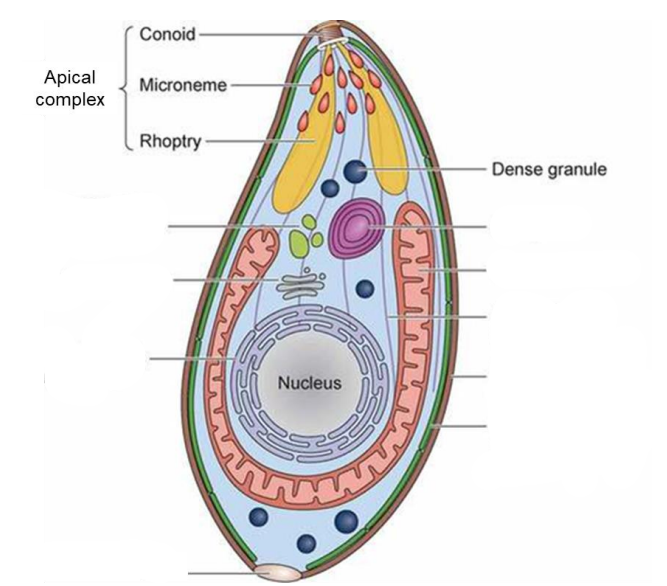
T. gondii has expanded ligand families. What are they and what are they for?
SRS (surface proteins): attachment
MIC (microneme): adhesion and invasion
RON/ROP (rhoptry)
GRA (dense granule): modification
T. gondii Egress Triggers (5)
Fas:FasL ligand binding→ caspase activation→ ↑ [Ca2+]
Perforin insertion into host membrane→ ↓ [K+]→ ↑ [Ca2+]
abscisic acid increases above threshold
acidification in the parasitophorous vacuole→ Ca2+-dependent secretion of micronemes→ ↓ suppression by K+
NTPases deplete host cell ATP→ ion pumps run dry→ ↓ [K+]
TRUE OR FALSE: T. gondii is hard to fight against because it can change expression to inhibit intrinsic and/or extrinsic apoptotic pathways
FALSE: Can just inhibit both
How can T. gondii overcome host Cell Apoptosis? (3)
inhibit Bax from oligomerizing with Bak, which would release cytochrome C
Upregulates anti-apoptotic molecules
interference with caspase-8 inhibits Fas
intracellular tissue cysts of T. gondii are (reactivated/quiescent) in immunocompromised and (reactivated/quiescent) in immunocompetent, causing (acute/chronic) infection.
intracellular tissue cysts of T. gondii are (reactivated/quiescent) in immunocompromised and (reactivated/quiescent) in immunocompetent, causing (acute/chronic) infection.
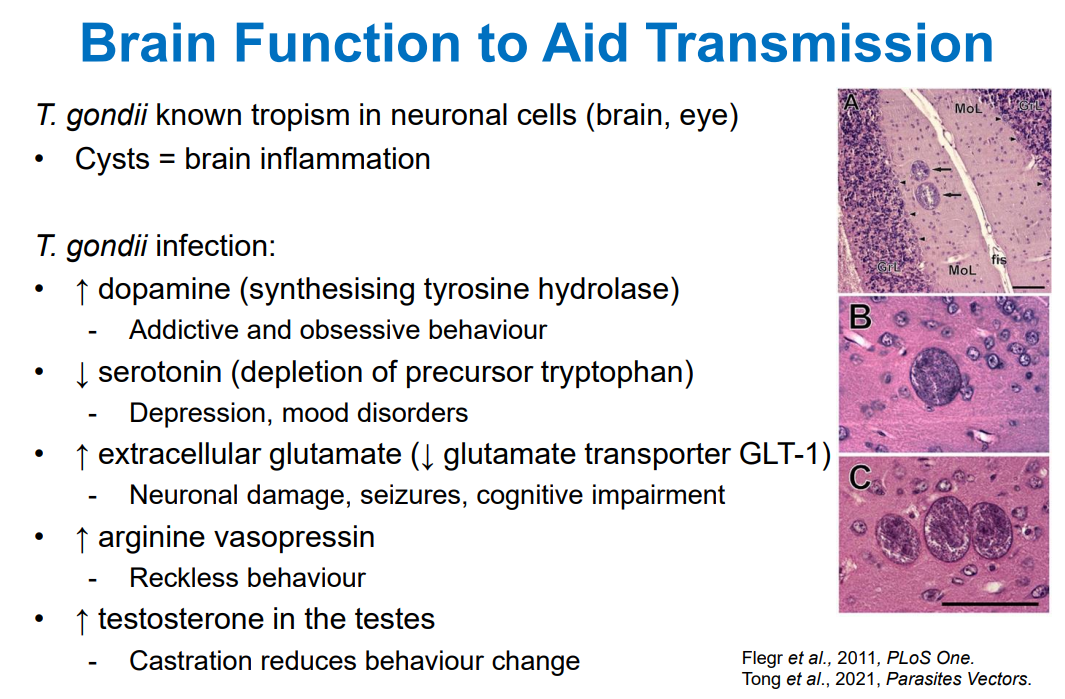
like aight bro…
Symptoms of cryptosporidiosis
Gastroenteritis
Diarrhoea
Dehydration
Malnutrition
(__) of cows are exposed to cryptosporidium by 2 weeks old
95%
TRUE OR FALSE: Cryptosporidium has multiple definitive hosts
TRUE: Does sexual replication in every host (hosts= mammals)
The Cryptosporidium lifecycle (at least 6 steps)
parasite-containing oocyst enters host
oocyst activated in intestine by bile salts
sporozoite released from oocyte
sporozoite infects intestinal epithelial cell
three cycles of asexual replication forming (from 1 meront) 8 merozoites each
sexual determination into male (female= non-replicating): forms gamont which releases 16 gametes
fertilization→ diploid zygote→ meiosis→ sporulation
Cryptosporidium transmission routes
faecal-oral
food/water borne
How is water treated for cryptosporidium and why?
irradiation, ozone, chlorine dioxide needed because oocytes are ethanol and bleach resistant
Cryptosporidium oocytes can survive for (__) after being shed
months!
What is outside/on top of an intestinal epithelial cell?
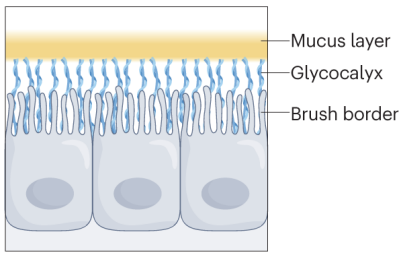
How does Cryptosporidium trigger host recognition? (2)
most importantly, is recognised by STAT1 and IFNγ (as well as other IFNs)
How does Cryptosporidium limit immune response? (4)
Downregulation of STAT1 & IFNγ
Inhibition of apoptosis
>150 exported proteins; likely immune modulators
MEDLE2 triggers ER stress; limits inflammatory response
What organelle does Crypto lack?
functional mitochondria
What features make replication of Crypto unusual?
mitosis with uncondensed chromosomes
Nuclear envelope doesn’t break down during mitosis
very rapid meiosis; produces 8 daughter parasites in <1hr
Challenges in studying Cryptosporidium (5)
Understanding of this biology usually poor
Lack of continuous in vitro culture
No long-term storage
Genetic modification difficult
Small size of parasite
a) American and b) African trypanosomiasis (scientific name)
a) Trypanosoma cruzi
b) Trypanosoma brucei
a) American and b) African trypanosomiasis: what disease does it cause?
a) chagas disease
b) sleeping sickness
What is the pathogenesis of Chagas disease? (2 phases)
acute phase 2 months post infection with mild symptoms
over time 30% develop cardiac complications and 10% develop digestive, neurological or mixed alterations
a) what are the treatments for Chagas disease and b) why are they not so effective (3)?
a) benznidazole or nifurtimox
b) long treatment period, early symptoms hard to catch, causes serious side effects in 40%
Trypanosoma cruzi lifecycle (7 steps)
multiplying epimastigotes in midgut (of triatomine)
metacyclic trypomastigotes in hindgut
triatomine bug takes blood meal
trypomastigotes penetrate cells at wound site
trypomastigotes→ amastigotes and undergo binary fission
amastigotes→ trypomastigotes→ burst from cells
Trypanosoma brucei (HAT) life cycle (6 steps)
bloodstream trypomastigotes→ procyclic trypomastigotes in midgut
divide by binary fission
leave midgut→ epimastigotes; multiplication in salivary gland
epimastigotes→ metacyclic trypomastigotes
tsetse fly takes blood meal
metacyclic trypomastigotes→ bloodstream trypomastigotes; carried around body
TRUE OR FALSE: Trypanosoma brucei is fully extracellular
TRUE
What outcomes does Trypanosoma brucei result in in patients? (2)
Sequestration in the adipose tissue results in wasting
Neurological symptoms from parasites in the cerebrospinal fluid
What treatments are available for a) early, b) non-severe late, c) late T.b. gambiense from HAT?
a) Pentamidine
b) Fexinidazole
c) Nifurtimox –Eflornithine combination therapy
What treatments are available for a) early, b) late T.b. rhodensiense from HAT?
a) Suramin
b) Melarsoprol; up to 10% fatal! 😱
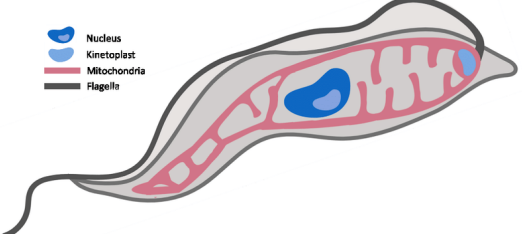
kinetoplast: what is it/where is it found and what does it do?
Dense mitochondrial DNA network in trypanosome
Needed for survival in arthropods, loss associated with drug resistance
The trypanosome genome encodes (__) surface proteins and expresses (__) at one time, anchored to the surface membrane with (__)
The trypanosome genome encodes very many🤷♀️ surface proteins and expresses one at one time, anchored to the surface membrane with glycosyl inositol phosphate
Do out of (+)ssRNA , (-)ssRNA and dsRNA viruses, which have the following features: a) RdRp, b) nucleocapsid
a) dsRNA
b) (-)ssRNA, dsRNA
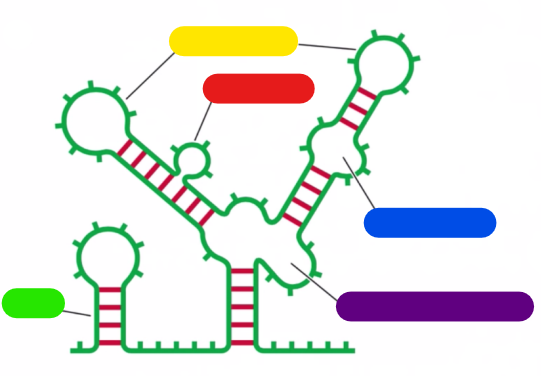
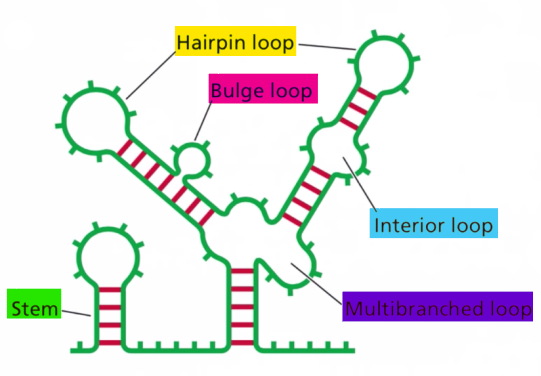
name the following structures on linear RNA
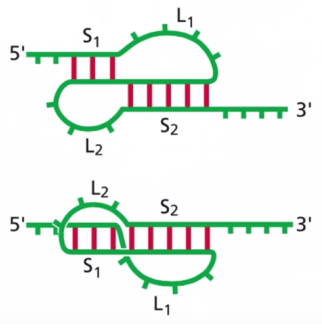
The structure shown is…
a pseudonot
Viral RNA can replicate with (high/low) fidelity polymerase
Viral RNA can replicate with (high/low) fidelity polymerase
What are the two modes of RNA transcription initation and what are the primers required?
de novo; no primer
primer-dependent; terminal or 5’-Cap proteins
TRUE OR FALSE: Virus (+)ssRNA genome is not modified before translation
FALSE
TRUE OR FALSE: The (+)ssRNA genome resembles cellular mRNA
TRUE
How do alphaviruses differ from (+)ssRNA viruses?
make subgenomic RNA in addition to full length complementary genomic RNA
What are some examples of alphaviruses and what disease do they cause?
Togaviridae; Rubella, Sindbis, Ross River Fever
Caliciviridae; Norovirus
(+)ssRNA replication during infection (7 steps)
binding to receptor
entry into an endosome
genome and VPg primer protein is released into cytoplasm
translation in polypeptide
cleavage of polypeptide
replication→ accumulating (+) strands
packaging and release
What structures does polio have that assist it during replication? (3)
cloverleaf at 5’ end
Cre transcription element
pseudoknot at the 3’ end
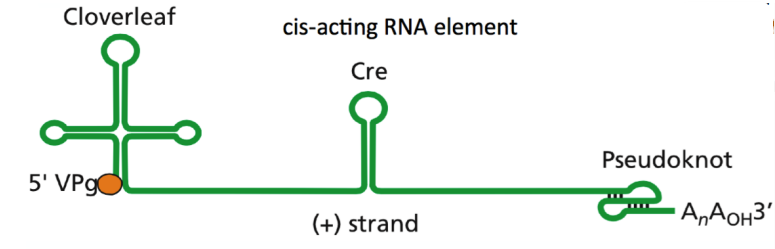
What is the function/the process of this function in action of Cre? (4 steps)
Two 3CD protein complexes join to the stem of Cre
an additional 3D protein joins to the Cre loop
VPg binds with primarily A-U nucleotide pairing to loop
Two Uracils synthesized on VPg giving primer function
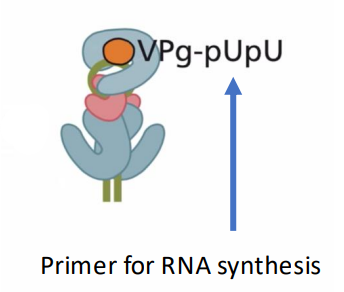
Poliovirus transcription (6 steps)
viral 3AB protein joins to host membrane→ recruits PCBp
host PCBP2 and the viral 3CD bind to the 5′ cloverleaf-like structure of +RNA; host PABP bound to the 3′ poly(A) tail
interaction between PCBP2 and PABP→ ends of the RNA genome come together
cleavage of 3CD and the release of the RdRp
synthesis of (-)RNA utilising Vpg-UU as a primer
dsRNA is then partly unwound by the chaperone activity of the host hnRNPC and the binding of PCBP2 and 3CD to the 5′ end of the (+)RNA
Where is the Cre element in the genome?
can be anywhere
What is the product of subgenomic RNA?
structural proteins
To transcribe subgenomic RNA, alphaviruses have (__) in/on (__)
To transcribe subgenomic RNA, alphaviruses have subgenomic promoter on the (-)RNA strand
TRUE OR FALSE: Sub-genomic RNAs are not not packaged within virions
TRUE
How does polio initiate translation?
Via IRES element/structure on poliovirus mRNA that directly binds to cellular translation factors and shifts all the translational machinery to Poliovirus translation
Is function of IRES CAP-dependent or independent?
independent
What virus other that polio a) recruits ribosome in a similar manner and b) what is the difference?
a) hepatitis C
b) HCV does not destroy the cellular protein translation machinery thus does not directly kill hepatocytes
What kind of RNA genome does Coronavirus have?
(+)ss
Does coronavirus have subgenomic RNA?
yes
SARSCoV-2 Discovery process (9 steps)
Bronchoalveolar lavage fluid (BALF) collected from sick patients.
Bronchoalveolar Lavage fluid used to directly inoculate Vero (Monkey Kidney) cells
Total RNA isolated
Screened by RT-PCR for other known respiratory pathogens.
RNA present is reverse transcribed to cDNA
DNA Sequencing then carried out using Illumina and Nanopore Platforms.
de novo sequencing to construct genome from overlap between reads
RT-PCR primers specific for SARSCoV-2 designed
Full genome sequencing methods developed to monitor viral evolution
What type of dye is used for the RT-PCR of covid samples and why is it problematic?
SYBR Green intercalating dye binds any double-stranded DNA which causes false positive fluroscence if your sample is contaminated or non-specific primers are used
What do melt curves in RT-PCR show?
multiple peaks indicate multiple products
How can the specificity of fluroscence generators in RT-PCR be improved?
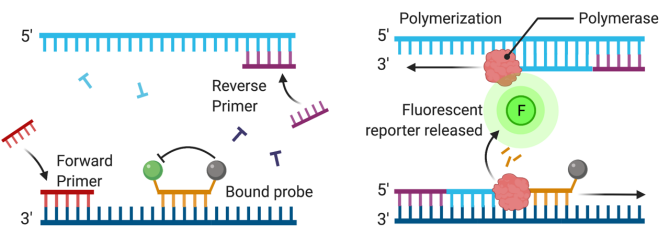
TRUE OR FALSE: The main limitation of probe based RT-PCR is that only one gene target can be made to produce fluorescence.
FALSE: probes for different targets can be made to emit at different wavelengths.
The main downside would probably be that no melt curve can be generated