EMES FINAL Midterm content
 Call Kai
 Learn
Learn Practice Test
 Spaced Repetition
 Match
Match Flashcards
 Knowt Play
1/29

There's no tags or description
Looks like no tags are added yet.
Name | Mastery | Learn | Test | Matching | Spaced | Call with Kai |
|---|
No analytics yet
Send a link to your students to track their progress
30 Terms
Life-style Habitats of Marine organisms
Neuston
Nekton
Plankton
Benthos
Epifaunal
Infaunal
Semi-infaunal
Neuston
organisms associated with the sea surface (includes microorganisms)
Nekton
larger organisms that swim in the water column and can move against a current or turbulence
Plankton
organisms that live suspended in the water (may have some ability to move but not against ocean currents or turbulence)
Benthos
animals and plants associated with the seafloor
Epifaunal
live on the seabed surface
Infaunal
can burrow within the soft seabed
Life Depth Habitats
Intertidal
Subtidal
Neritic
Epipelagic
Mesopelagic
Bathypelagic
Abyssopelagic
Hadal
Intertidal zone
range of depths between the highest and lowest extent of the tides
Subtidal zone
the entire remainder of the sea from the lowest water tidemark to the greatest depth of the ocean
Neritic zone
also continental shelf) includes all seafloor and open- water habitats between the high-water mark and shelf edge
Epipelagic zone
upper 200 meters of water
Mesopelagic zone
200 to 1000 meters
Bathypelagic zone
from 1000 to 4000 meters
Abyssopelagic zone
from 4000 to 6000 meters
Hadal zone
environments at seabed and in the waters of trenches (>6000 meters)
Photic zone
>1% of surface light, anything less then theres not enough light
5% total of ocean’s volume
Three of the ocean basins are connected in the southern hemisphere in a body of water called the
Southern Ocean
Coriolis Effect
a phenomenon that causes fluids, like water and air, to curve as they travel across or above Earth’s surface
Ekman Transport
net motion of fluid as the result of Coriolis and turbulent drag forces
When wind blows over the ocean, the Coriolis effect plus friction makes the net movement of surface water go 90° to the wind:
to the right of the wind in the Northern Hemisphere
to the left of the wind in the Southern Hemisphere
Zooplankton
primary consumers
consists of all heterotrophic plankton (heterotroph is an organism that cannot produce its own food)
come as eukaryotic protists (ex. Radiolaria) or eukaryotic animals (jellyfish or krill)
Copepods (animal zooplankton) are the most abundant (by mass) in the ocean
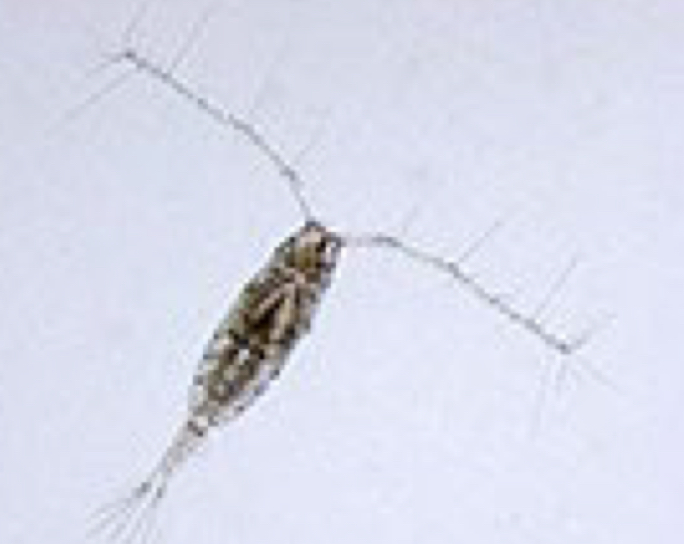
Which of the following are examples of zooplankton (select ALL correct answers):
A Ciliates and Radiolaria
B Copepods and Siphonophores
C Trichodesmium and Prochlorococcus
D None of the above
A+B
List the types of Plankton
Holoplankton
Meroplankton
Ichthyoplankton
Meroplankton
organisms that spend part of their time in the plankton but also spend time in the benthos (ex. crab, lobster, shrimp)
Holoplankton
organisms spending all their life in the water column and not on or in the seabed (ex. copepods, krill, foraminifera)
Ichthyoplankton
the eggs and larvae of fish
List types of Larval dispersal for Meroplankton
Planktotrophic and Lecithotrophic
Planktotrophic
feed in plankton
“foragers”
small eggs
many eggs/spawn
long time in plankton ~10-40 days
better dispersal
Lecithotrophic
don’t feed (egg sac for nourishment)
“lunch packers”
large eggs
fewer eggs
short time ~0-5 days
poorer dispersal
Which of the following are reasons why planktotrophic larvae are better at dispersing over greater distances, compared to lecithotrophic larvae? (Choose ALL correct answers)
A Planktotrophic larvae can actively feed, which allows them to survive longer in the water column.
B Planktotrophic larvae spend less time in the plankton and therefore avoid predation.
C Planktotrophic larvae spend 10 - 40 days in plankton, allowing for longer dispersion time.
D Planktotrophic larvae have an egg sac for nourishment, so they can disperse instead of searching for food.
A+C