Biobased materials: Part II
 Call Kai
 Learn
Learn Practice Test
 Spaced Repetition
 Match
Match Flashcards
 Knowt Play
1/19

There's no tags or description
Looks like no tags are added yet.
Name | Mastery | Learn | Test | Matching | Spaced | Call with Kai |
|---|
No analytics yet
Send a link to your students to track their progress
20 Terms
Lignin
= aside from cellulose and hemicellulose the most important type of biomass in nature
contains a lot of aromatic residues, while cellulose and hemi-cellulose don’t (they’re composed of sugars)
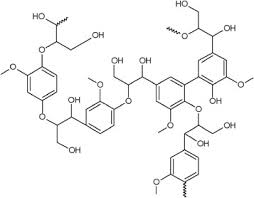
drawback of lignin as SM in chemical industry
has a strong structural inhomogeniety because the linkages between the aromatic rings can be quite different
not the case for cellulose or starch which only contian alpha or beta glucose
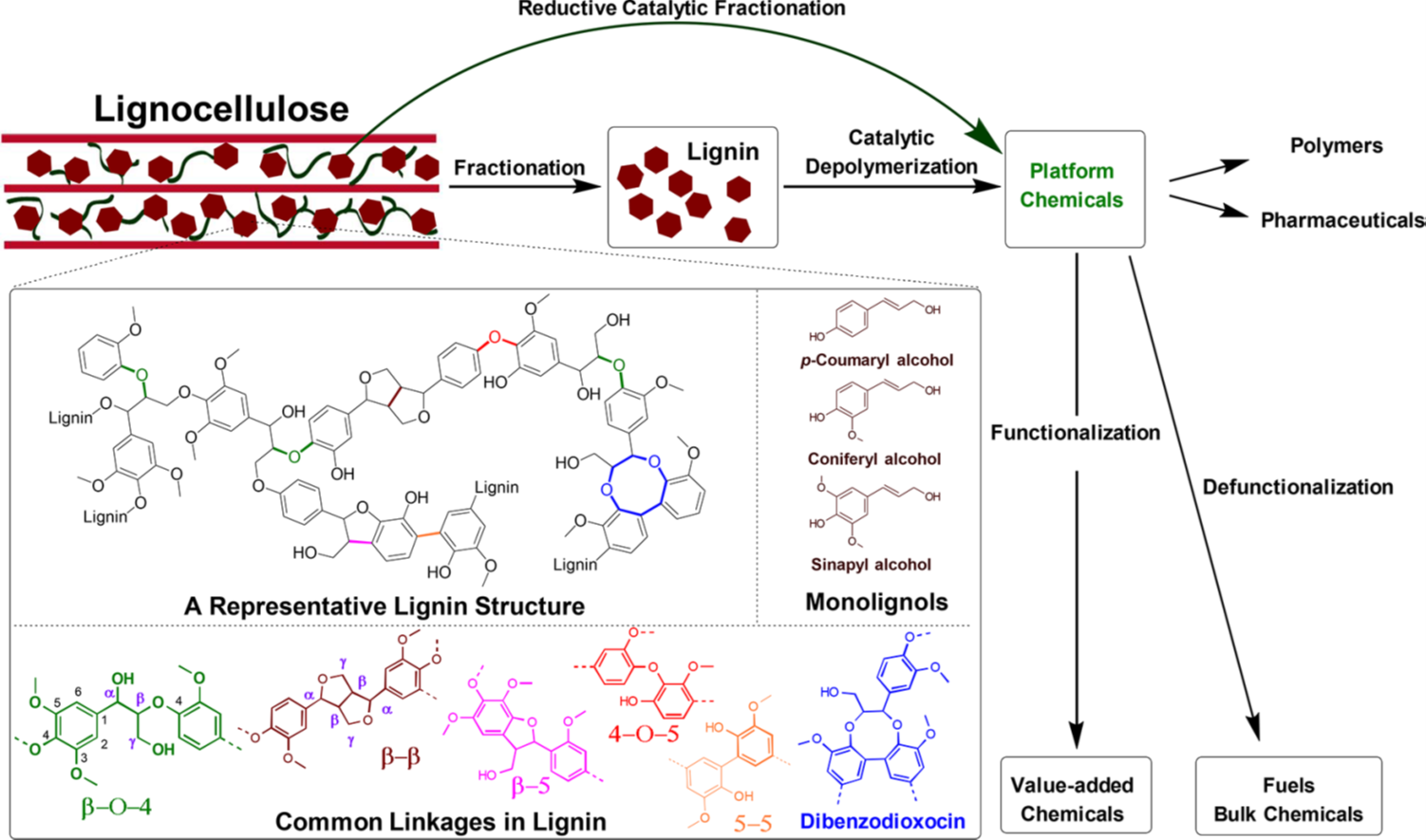
lignin in chemical industry
Breakdown of lignin generally leads to monolignols
wich are benzenes substituted with oxygen containing moieties and differ by amount of substituents
How?
lignocellulose is fractionated to get rid of cellulose and hemicellulose
forms pure lignin
Lignin is depolymerized to monolignols or related products
these can be used for other purposes
starting materials for
pharmaceutical
polymers
defuncitonalization to be used as fuels
(not a great idea)
functionalized to value added chemicals
can be used as additives to fossile fuels to improve performance (petrol)
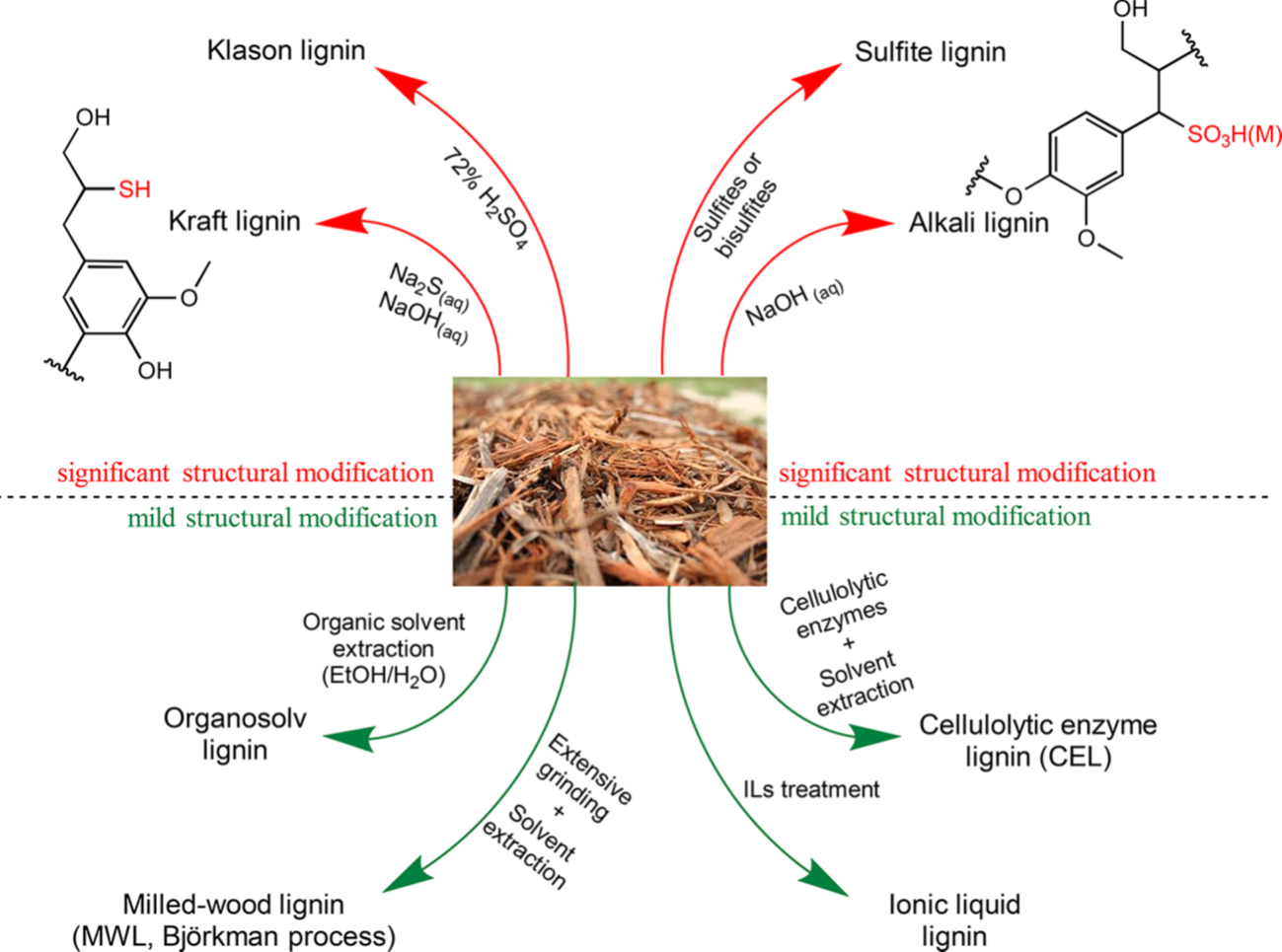
Extraction of lignin in the past
previously ligin was mostly a by product of the paper industyr
paper is made from cellulose extracted from wood rendering lignin as a side prodcut
red arrows = yields strongly modified lignins rendering them useless (with incorporation of sulfur)
cellulose used to be extracted by the Kraft process yielding pure cellulose using sulfides in base
but this funcitonalizes lignin with sulfur containing functional groups
now catalytic treatments for further processing and funcitonalization cannot be used as the sulfur containging groups can poison the catalyst needed for these processes
Alternatives
H2SO4 —> Klason lignin
NaOH —> Alkali lignin
green arrow = yields only mild or minimial modification of ligin
organic solvent extraction
attractive because not chemical modificaiton
ILs= ionic liquids
also been attempted but higher in price
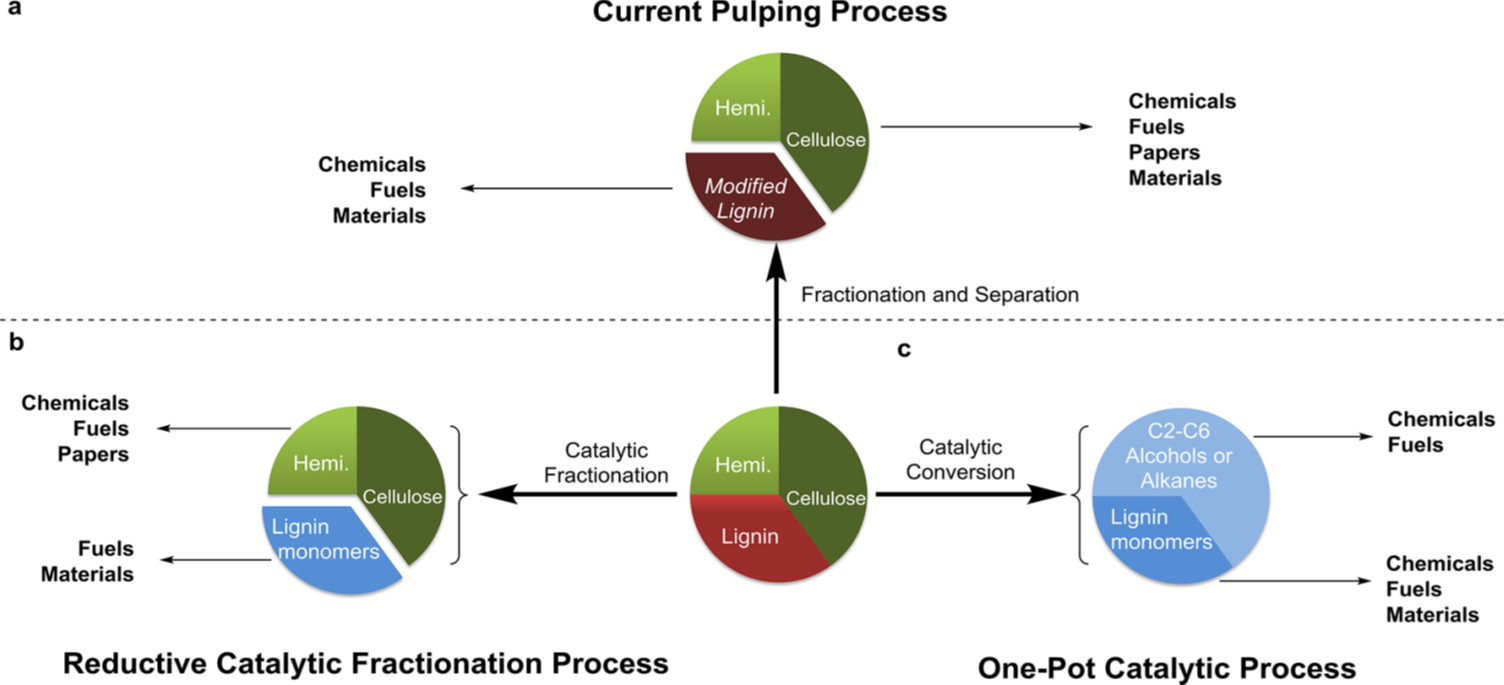
Treatments of biomass
Best way to is to treat lignocellulose biomass alltogether with attractive functionalization, 3 approaches
fractionation and separation = current pulping process
separates modified lignin (preferably not to strongly modified
also yields an untouched cellulose/hemicellulose fraction
RCF = reductive catalytic fractionation
separates lignin and fully convert lignin into lignin monomers
leaves the sugar moieties untouched
catalytic conversion = one-pot catalytic process
full catalytic conversion to a mixture of lignin monomers and low molecular weight alcohols and alkanes
mostly used for fuels and chemicals
Reductive catalytic fractionation (RCF)
Relies on catalytic hydrogenolysis and depending on the type of metal used, you obtain (but leaves sugars intact):
alkylphenols = with aliphatic alcohols removed
metals with high oxophilicity
Pd not very oxophilic
Zn2+ is due to LA properties (not Zn metal)
so Pd/Zn2+/C removes aliphatic alchols
or: Ru/C
monlignols = aliphatic alchols intact
Pd/C
Ni/C
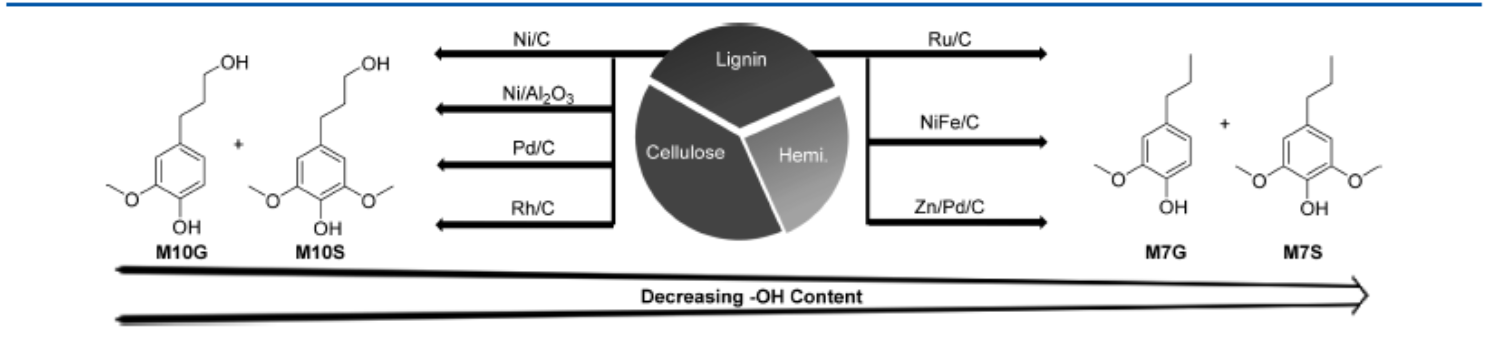
lignine contains a lot of benzyilic carbon with an oxygen attached (benzylic alcohols or ethers) which are cleaved upon hydrogenolysis = what fragments the polymer
aliphatic alcohols are not removed by hydrogenation and require a lewis acid (like Zn2+)
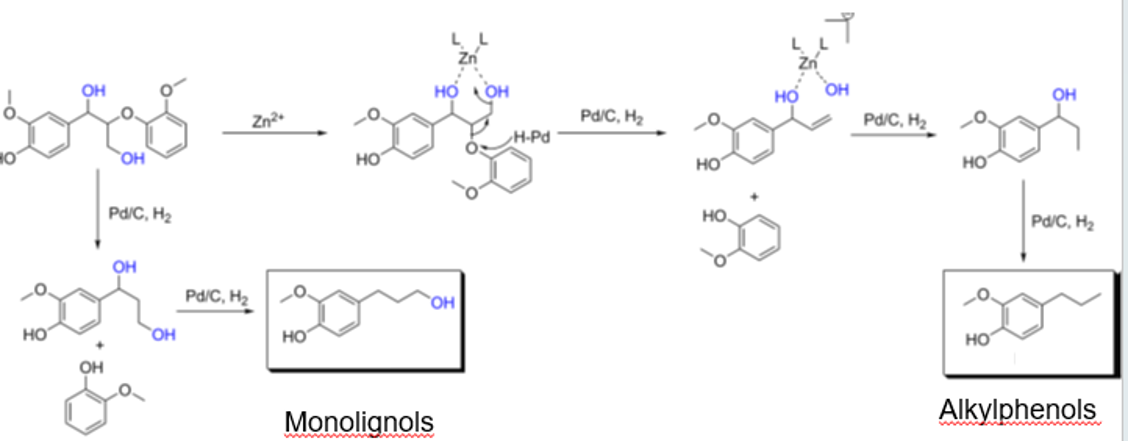
The first step on the left is not cleavage of a benzylic carbon with an alcohol attached but the neighbouring benzyilic alcohol activates it for cleavage (chatgpt)
Lignin in bioprocessing
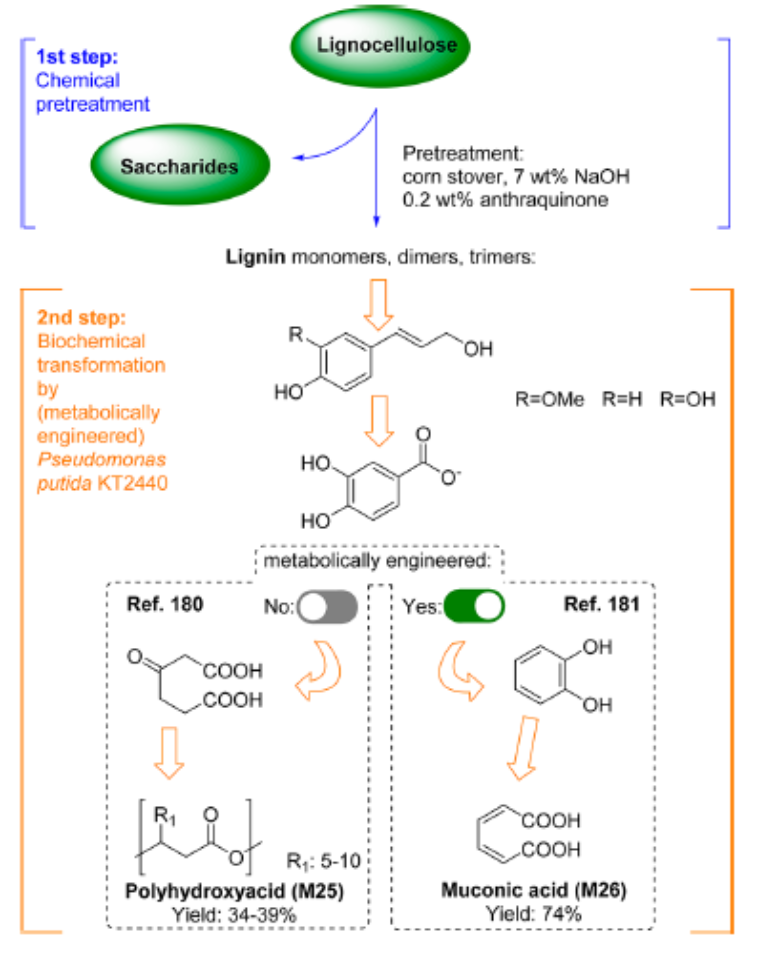
After chemcial treatment of lignocellulose lignin monomers (monolignols), dimer, trimers are formed.
this is type: ‘fractionation and separation’ although not entirely the same as before
it still sepeartes the saccharides (cellulose and hemicellulose) from lignin but druing the process some bonds can be cleaved leading to lignin monomer, dimers and trimers apart form polymeric lignin
These can undergo futher biochemical transformations:
like treatment with bacteria (pseudomonas)
these do chemical modificaitons on the lignin derived chemcicals and get different results depending on whether they were genetically engineered or not:
not engineered: yields polyhydroxyacid
can be used for surgical yarns
much like PHB or PHBV obtained from starch through engineered biomass
engineered:
yields catechol which is converted to muconic acid in high yields
Lignin reductive processing
lignine derived chemcials through RCF can be further functionalized to fine chemicals and materials or defunctionalized to bulk fuels orchemicals
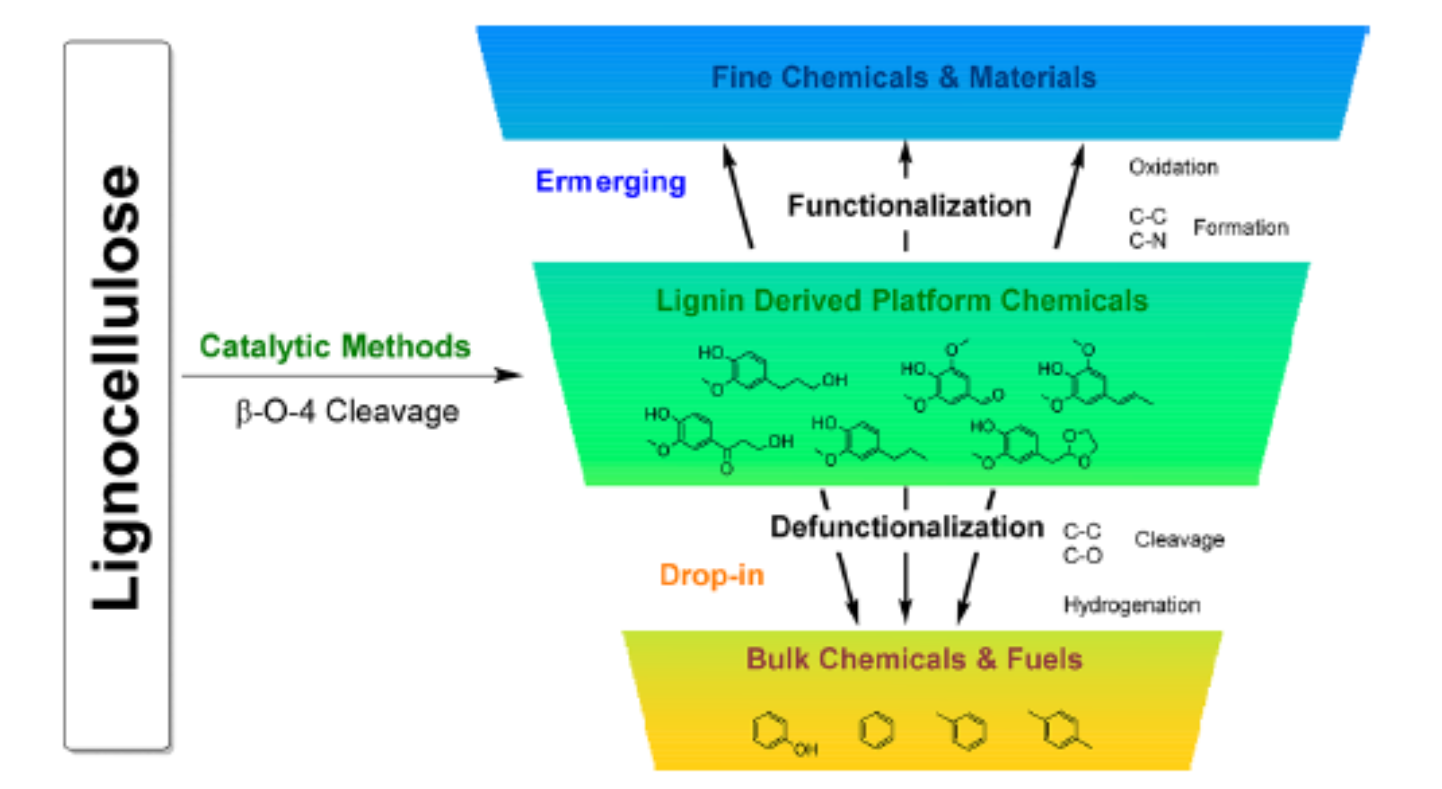
Functionalization involves emerging processes
this means they are new with respect to the processes applied in the chemical industry nowadays
so they’re difficult to implement because the chemical industry does not like change
safety: processes done for a long time, know how to do them safely, new procedures would require safety assessment froms scratch
it’s a captial intensive industry: meaning that it tries to avoid new investments in new plants and procedures
defunctionalization involves Drop-in
this is taking another feedstock and turning them into something that can be used by current chemcial plants
far easier to realise (less severs changes)
good solution on short term
but emerging processes are needed on long term to get rid of fossile fuels
Lignin derived building blocks for new materials (non-drop in = emerging)
Lignocellulose is either:
depolymerized
via
fractionation and separation
can yield muconic acid after bacterial treatment
reductive catalytic fracitonation
monolignons with or without aliphatic alchohols
then functionalized
and finally polyerized again to new bio-based polymers
directly funcitonalized
but challenging to control properties because they’re highly dependent on the lignin structure
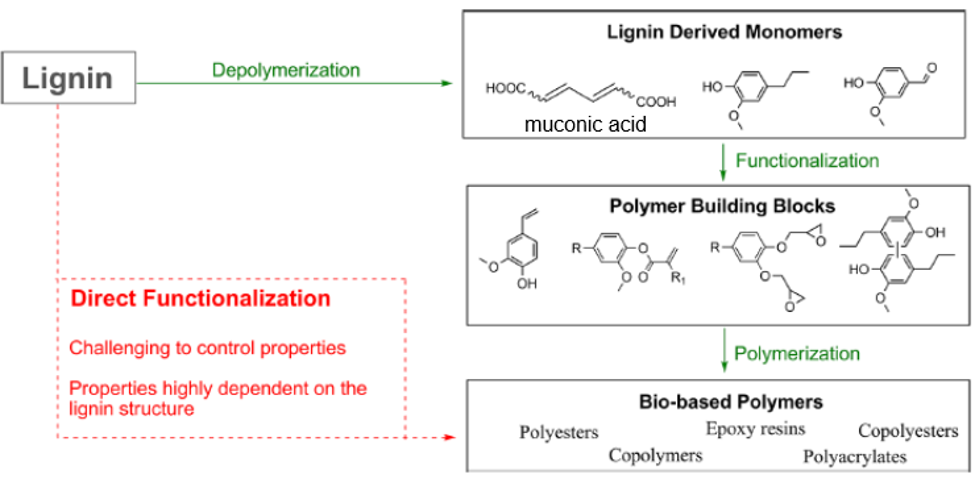
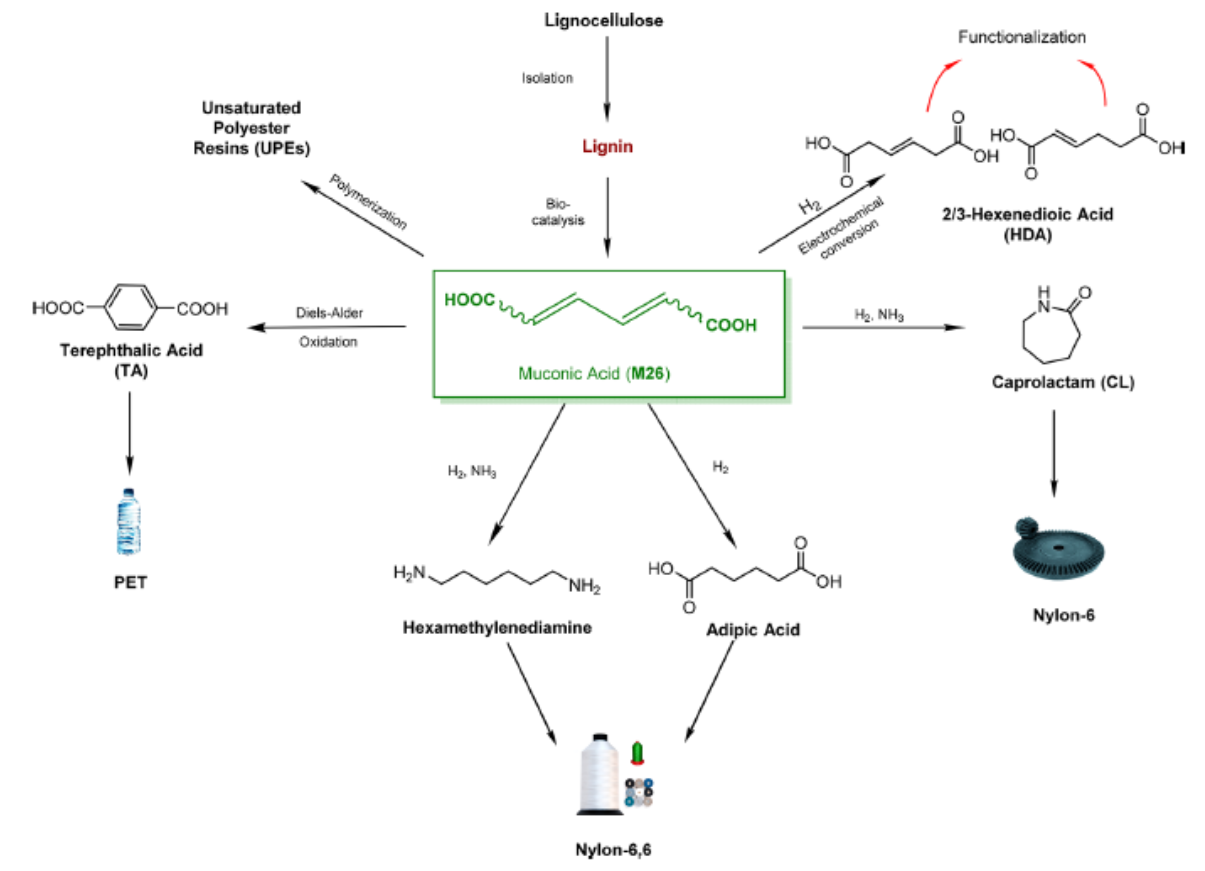
lignin derived building blocks for new materials (mainly drop-in)
what can we do with muconic acid
partial hydrogneation (2 double bond)
building block for further functionalization
hydrogenation + NH3 forms caprolactam
for synthesis of Nylon-6
hydrogenation to diacid and reductive amination to di-amines
combined these monomers form nylon-6,6
Dials alder
forms terephtalic acid for the production of PET
polymerization
yields unsaturated polyesters
plant oils as green resources
Smaller fraction of biomass next to cellulose, lignin hemicellulose some proteins and oils
but chemically interesting
They can be easily extracted and have some structural diversity.
can be obtained form reesterification of triglycerides yielding glycerol and the needed fatty acids

use:
biobased polymers
bio fuels
starting point for commodity chemicals
ricinoleic acid is particularly interesting due becasue enantiomerically pure.

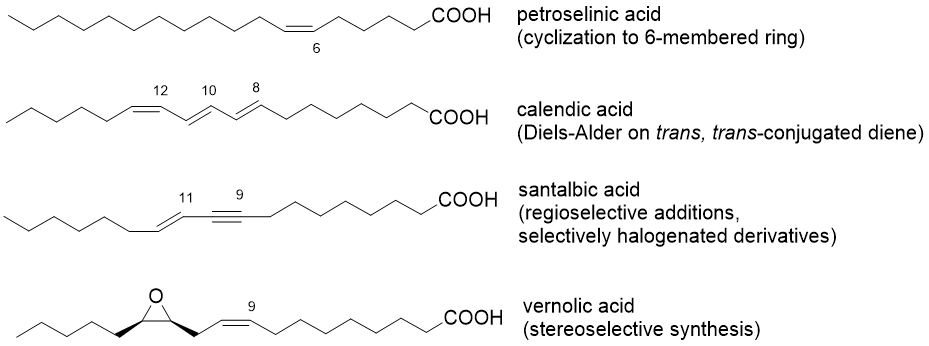
New plant oils
= oils found in plants that weren’t considered before as a source of plant oils
will become increasingly available via screening of natural organisms, selective breeding and genetic engineering
petroselenic acid
only 1 double bond and position relative to COOH allows for cyclisation to 6-ring
calendic acid
trans double bonds can form diene for DA
santalbic acid
alkyne
vernolic acid
enantiomerically pure
contains epoxice
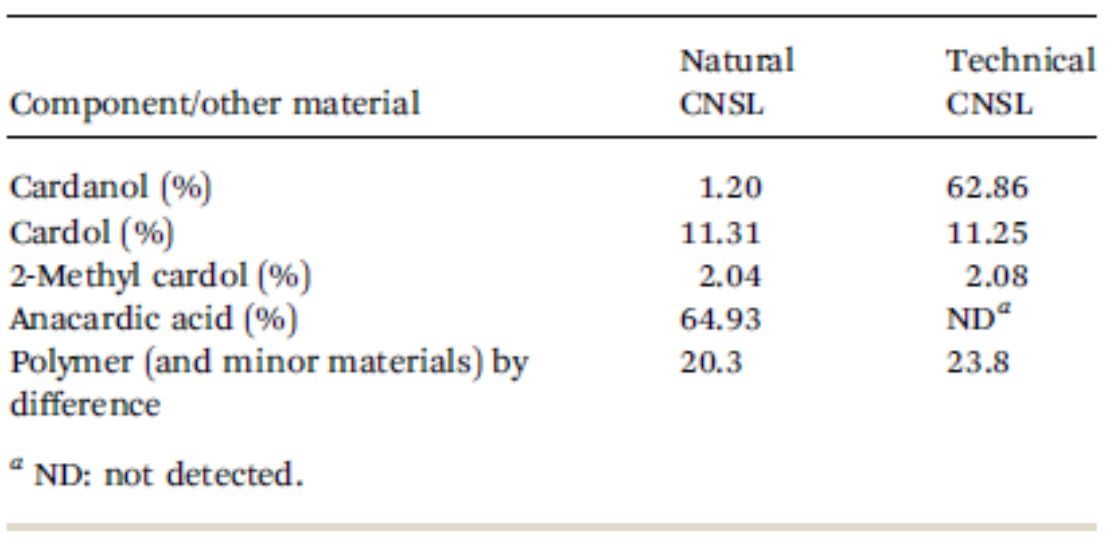
CNSL
= cashew nut shell oil
inedible
currently a large waste stream of 450,000 tonnes/year
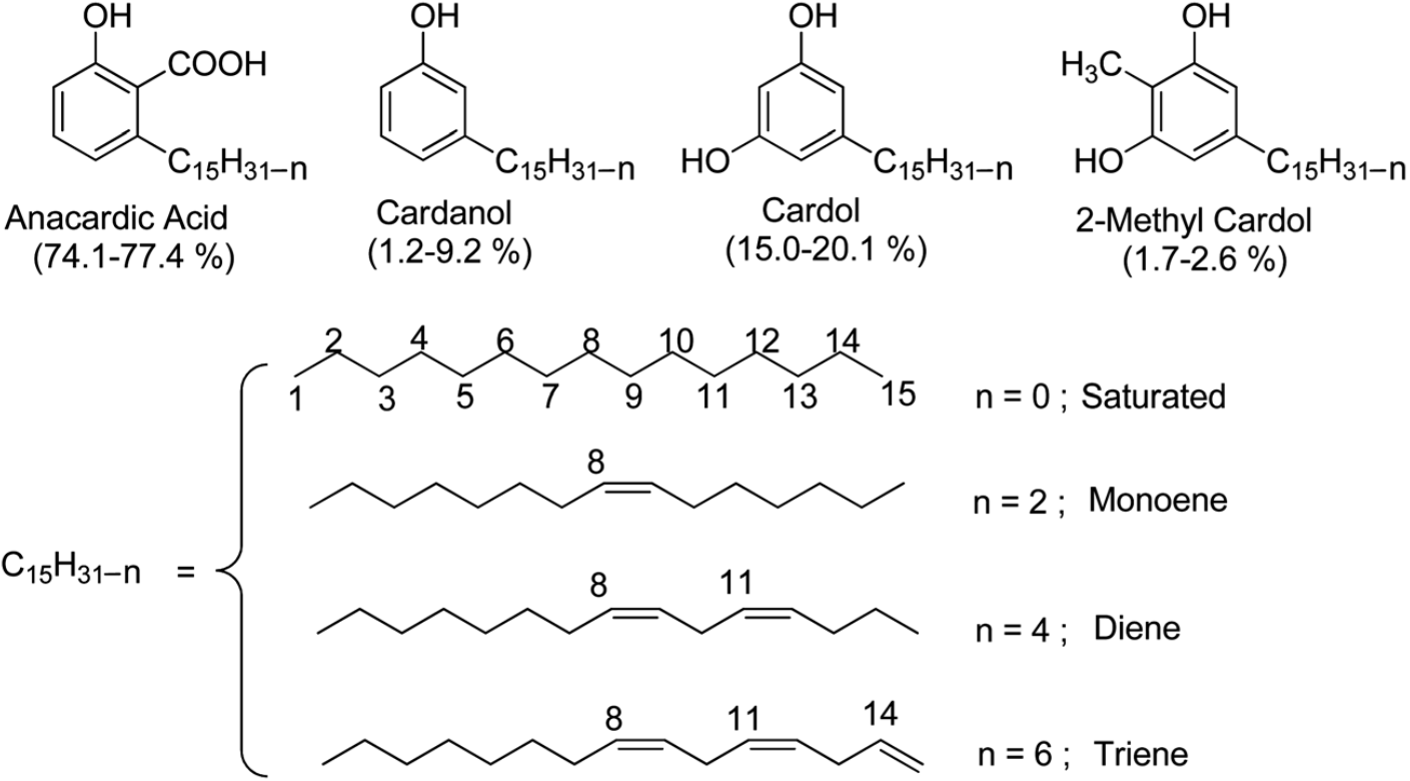
anacardic acid is the largest fraction
but upon heating the COOH is cleaved of and it is fully converted to cardanol
So in technical CNSL (means thermally treated) cardanol is the largest fraction
plant oils for biobased polymers (3 resins)
Traditional application field = cross-linked systems
A resin is a solid or highly viscous liquid that can be converted into a polymer.
Epoxy resins form an important and versatile class of cross-linkable polymers made from monomers containing at least two strained-ring groups called oxiranes
Alkyd resins
has been applied on large scale for a long time eg. for paints
glycerides with unsaturated fatty acids are polyesterified with polyols and diacids
fatty acid chains contain double bonds that are prone to H radical absraction by oxygen biradicals during drying leading to crosslinking causing the paint to dry
blending these polymerized oils with different dyes gvies different colored paints
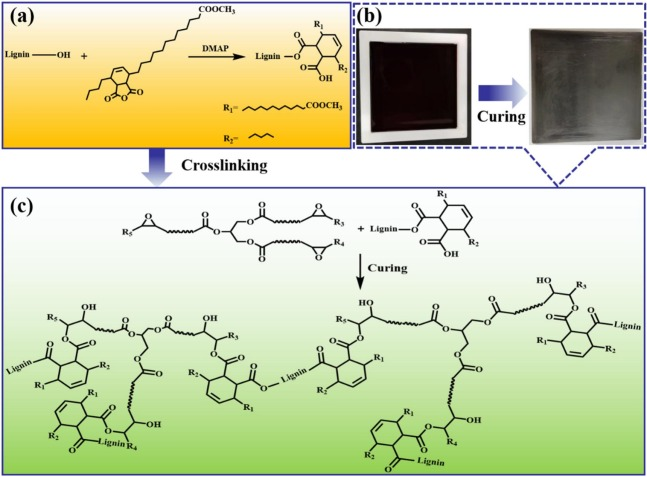
Epoxy resins (new application of oils)
= material containing epoxide(s) that can react with crosslinkers to form polymers or highly crosslinked networks
Curing = epoxide ring opening and crosslinking that turns the resin into a solid material.
So here the epoxidized fatty acids are the epoxy resins that after curing or polymerization are turned to a crosslinked network for instance for coating.
traditional approach
Bisphenol A attacks on epichlorohydrin forming a new epoxide
can be attacked by other O- of bisphenol A and so on forming prepolymers that need to be crosslinked

However
bisphenol A is hormone dirsupting adn epichlorohydrin is carcinogenic so alternatives are needed
Crosslinking = curing
Amine based crosslinking
reacts with epoxide terminal groups (only two per prepolymer)

so need at least a trifunctional crosslinker for crosslinking to occur (NH2 is difunctional)
anhydride based crosslinking (phtalic anhydride)
Although it phtalic anhydride is a bifunctional crosslinker

it reacts with both the epoxide end groups and the interal OH groups,
so the prepolymer acts as the multifuncional entity
Alternatives to epichlorohydrin and bisphenol A: Epoxides form vegetable oil

double bonds can be oxidized to epoxides using H2O2 which can be polymerized
H2O2 is a green oxidant
CHOOH only used in catalytic amounts
and only produces water as waste
can alos introduce more than 1 epoxid allready introducing some crosslinking
in these examples they show these vegetavl oil epoxides as crosslinkers because attached to glycerol
epoxidized fatty acids can then be crosslinked
degree of unsaturation and degree of epoxidation determine corss linking density and thus material properties like Tg and tensile strength
Polyurethane resisns (new application of oils)
epoxides can also be turned into alcohols forming polyols if it contains more double bonds
higher crosslinking density is stronger material properties
higher I value = higher Tg and higher tensile strength
Linear polymers from vegetable oil (4)
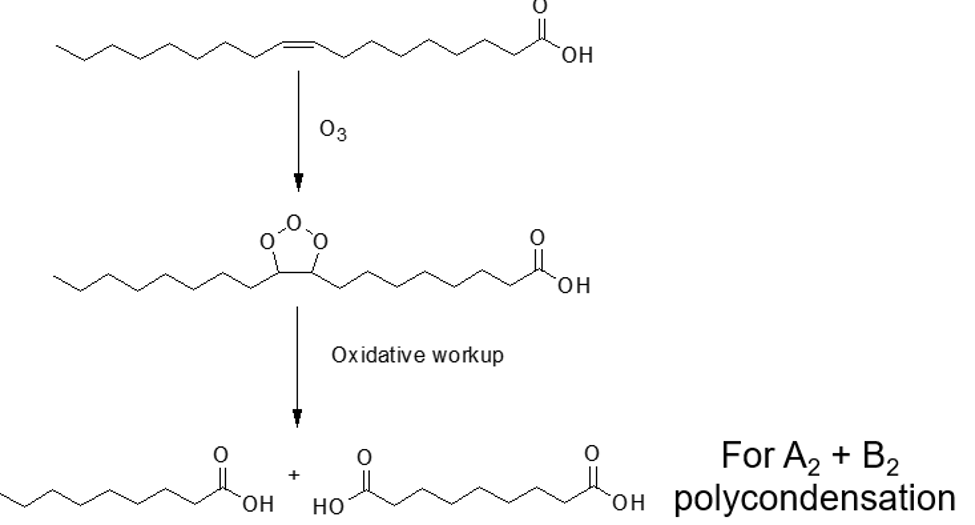
Synthesis of diacids form vegetable oil
fatty acid can be oxidatively cleaved via ozonolysis
traceless reaction: no additional reagents or waste
good for sustainability
still rather toxic (but can be generated in situ)
oxidative workup
generates diacids
can be used for A2 + B2 polycondensation
Alternative
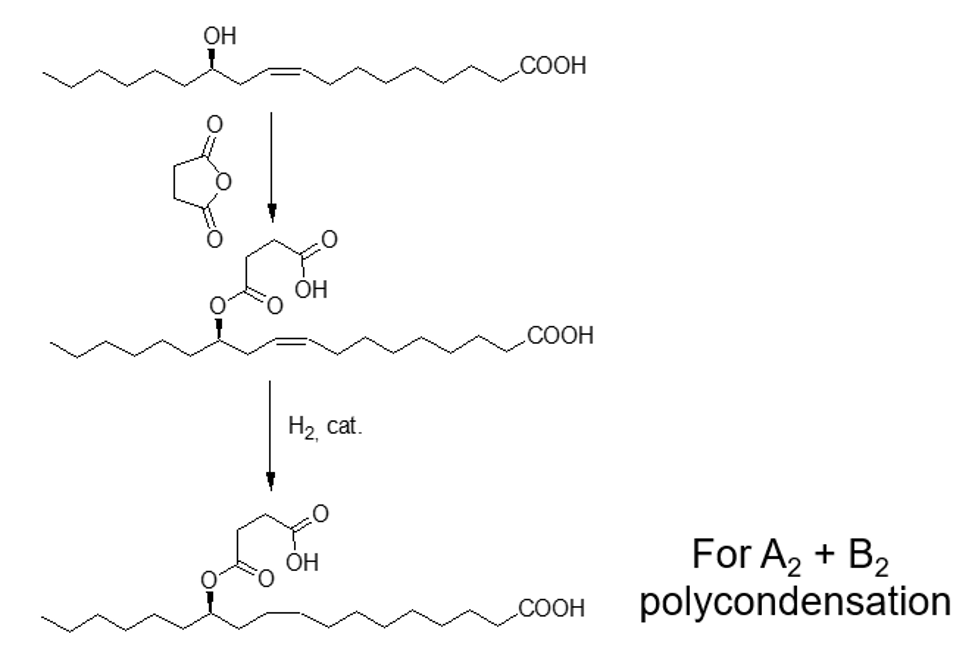
alcohol of ricinoleic acid reactis with succinic anhydride which ringopens to an ester and acid
succinic anhydride can easily be prepared form bioprocess form succinic acid
double bond can be hydrogenated if not needed
product can be used again as diacid for polycondensation
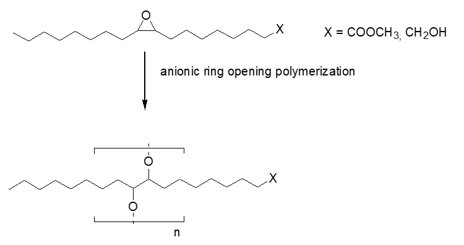
Ring opening polymerization of epoxides
epoxidation with H2O2 as before
the epoxy resins can now be polymerized via anionic ROP
to linear polymers instead of crosslinked networks
modifying X can also alter polymer properties (like hydrophilicity
Metathesis
= very attractive from sustainability point of view
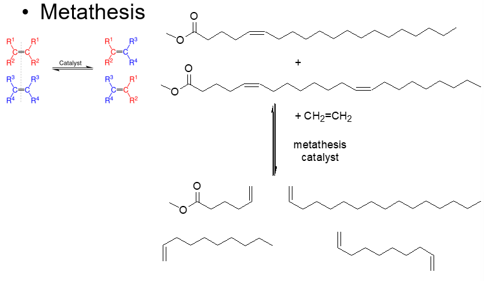
methathesis of two different fatty acids with ethylene can form various starting points for further polymerizations
equilibrium: shift by removing products you don’t need
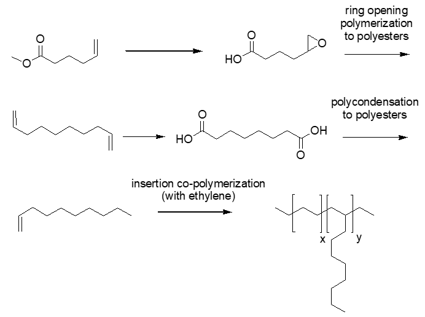
yields terminal double bond:
turn into epoxide for anionic ROP
copolymerize with ethylen to give bio-based modified PE
by playing with amount of comonomer you can alter properties like Tg and tensile strength
if two terminal ones: turn into diacid via ozonolysis for polycondensation
Acyclic diene metathesis (ADMET) polymerization
= metathtesis of monomer with two terminal alkenes
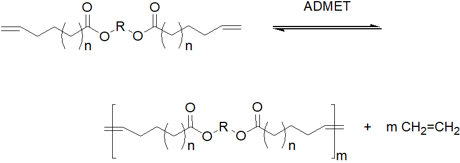
this generates ethylene which can be easily removed under reduced pressure to shift the equilibrium
derivatization of cardanol
Cardanol is formed through decarboxylation of anacardic acid, the main component of cashew nut shell oil (CNSL)
produced in large amounts and discarded as waste but it is useful
it can be dervatizised in various ways
esterifications
hydrogenolysis
O sulfation
nitration,…
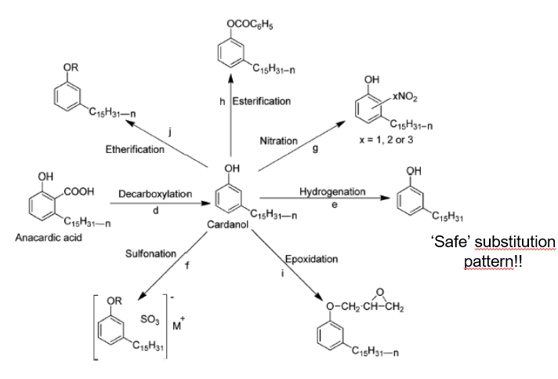
it has a safe substitution pattern:
4- alkyl phenols are toxic, because they can be oxidized at the benzyilic position to quinone interemediates which are very electrophilic (arom gets restored and michael acceptor) and thus prone to Nuc attack by cellular components
difficult to prepare better 3-substitued analogues due to +M effect of OH
But can be derived from CNSL
Also useful for difuncitonal monomers:
cardenol can be transformed to bisphenols that can serve as alternatives to bisphenol A to make epoxy resins
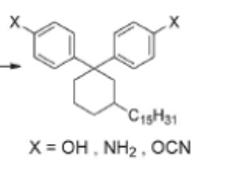
as bisphenol A is hormone disrupting, this serves as a good biobased alternative
Oxidative enzymatic polymerization
not verry common
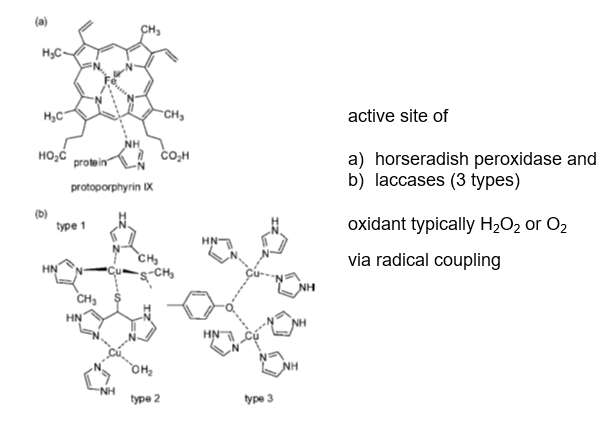
horseradish peroxidase (HRP)
catallyses compounds using with the help of H2O2
consist of Iron surrounded by a porphyrin ring
H2O2 oxidizes Fe to compound 1 which accepts é from substrates generating radicals while going back to its original oxidation state
laccases
Cu based complexes that use molecular oxygen for the oxidation of compounds genrating water as a side product
—> polymerization via radical coupling
oxidative enzymatic polymerization of phenols using HRP
HRP polymerziaton of pheonl leads to heterogenous polymers
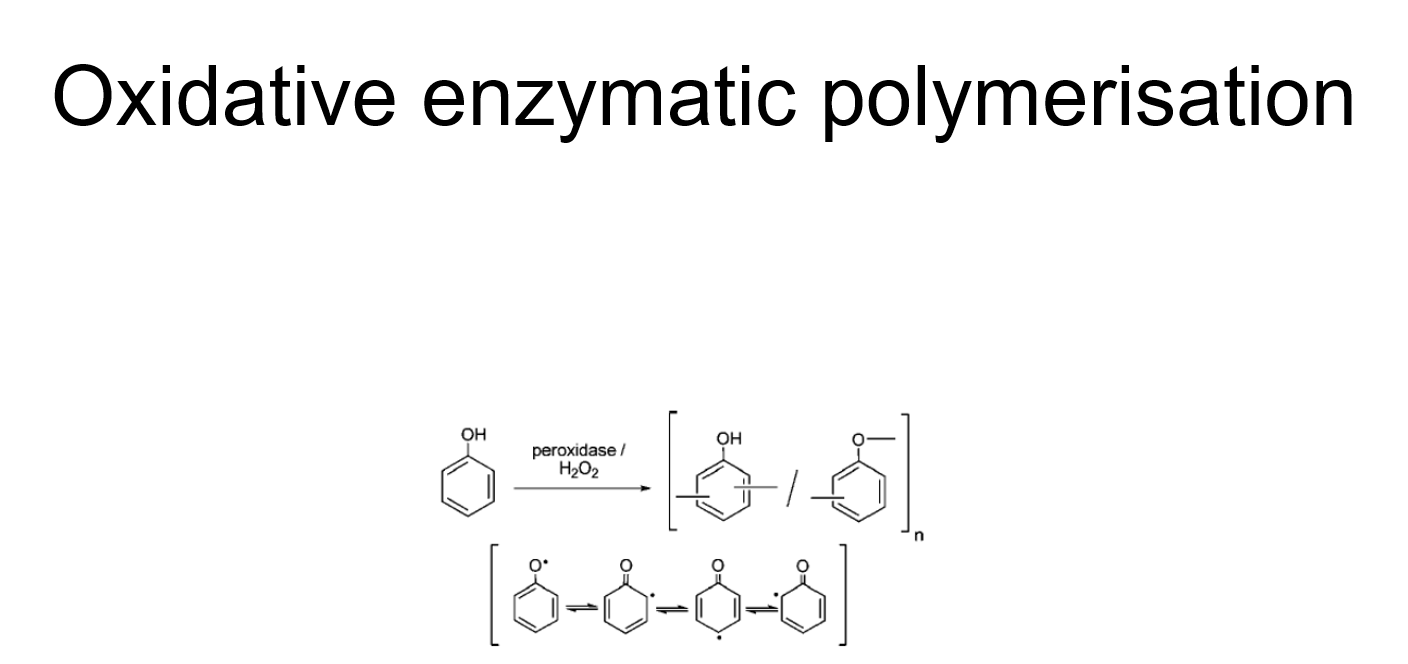
the radical can be delocalized over the entire ring, so couplin gcan occur through he carbons and oxygen
so the structure is a little ill defined
Solution = regioselectivity via the template-like effect
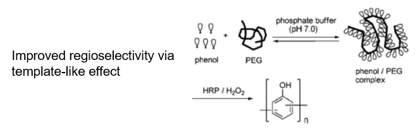
PEG contains a lot of H-bond acceptors (O from ethers)
phenol can form H-bonds to these Oxygens forming a PEG chain decorated with phenol
this makes coupling though O less likely because it’s sterically shielded
but still not full homogeneity because coupling can still occur through several carbons
Good functional group tolerance
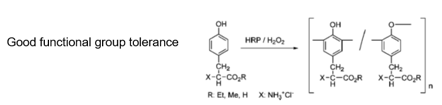
polymerization allows various FG on phenol, even cationic ones
this is good news because this helps increase solubility
good for aqeous environment of the enzymes needed
solubility

if phenols are not well soluble - use cycldextrin,
this forms well soluble complexes with the phenols
it has an inside cavity that is hydrophobic while the outside is hydrophilic
this helps perform the polymerzation in water
because the enzymes perform best in water or highly polar solvents
oxidative enzymatic polymerisation:
other applications
surface patterning:
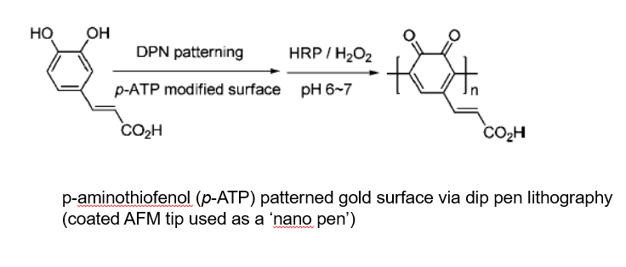
take gold surface
has high affinity for sulphar
using p-ATP (para-aminothiophenol) the entire surface can be covered forming a monolayer with the basic amine sticking out
Then a second layer of acid species is attatched
using an AFM tip as a kind of pen dipped in a solution the acid to write something on nanoscale
after wrting detachment can be avoided by polymerizing the acid units via oxidative enzymatic polymerization
this gives polymer in certain patterns attached to a surface
no real application
Other applications:
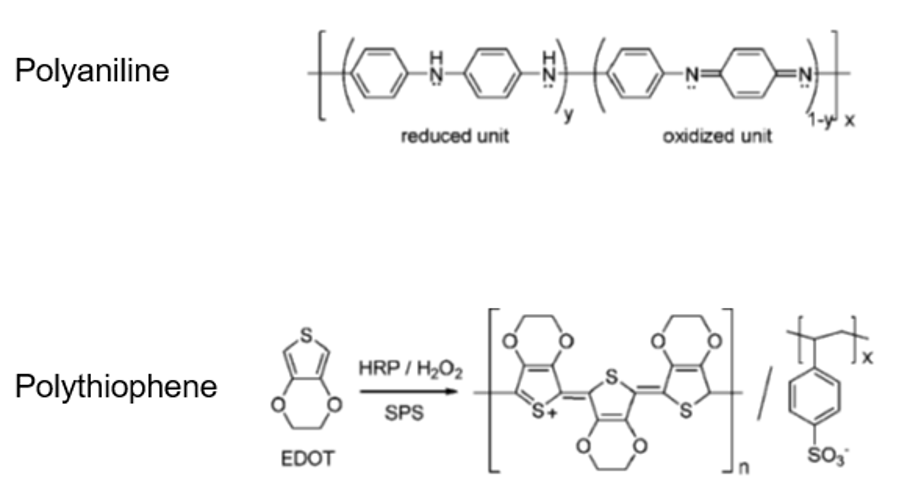
polyaniline
polythiophen
these are quick and dirty ways
no control over molar mass likke guy Koeckelbergs
but cheap and applicable at large scale = what industry likes