chapter 8 blood pt.3
 Call Kai
 Learn
Learn Practice Test
 Spaced Repetition
 Match
Match Flashcards
 Knowt Play
1/12

There's no tags or description
Looks like no tags are added yet.
Name | Mastery | Learn | Test | Matching | Spaced | Call with Kai |
|---|
No analytics yet
Send a link to your students to track their progress
13 Terms
anemia
blood disorders involving either a reduction in the number of circulating erythrocytes or the amount of hemoglobin in red blood cells; results in decreased oxygen delivery to tissues.
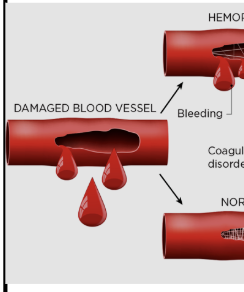
hemophilia
Inherited lack of a vital clotting
factor; results in an almost
complete inability to
stop bleeding.
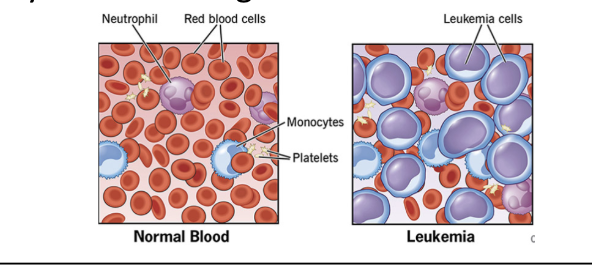
leukemia
Cancer of leukocyte-forming red bone marrow; the patient has a large number of abnormal and immature leukocytes circulating in the blood.
polycythemia
Condition characterized by too many erythrocytes, blood becomes too thick to flow easily through blood vessels
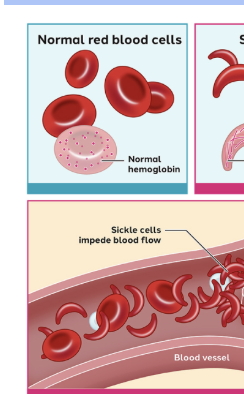
Sickle cell Disease
Abnormally shaped red blood cells that can block blood flow and lead to various complications. These red blood cells, instead of being flexible and disc-shaped, become rigid and crescent-shaped (sickle-shaped). This abnormal shape prevents them from moving easily through small blood vessels, causing blockages and leading to pain, organ damage, and other health problems.
thrombocytopenia
Deficiency in thrombocytes or clotting cells.
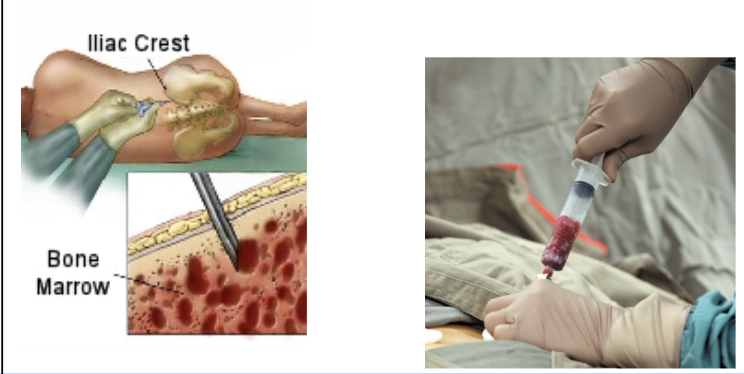
Bone marrow aspiration
Removal of a small sample of bone marrow by needle for examination for diseases such as leukemia.
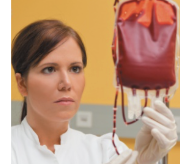
Blood Transfusion
Transfer of blood from one
person to another
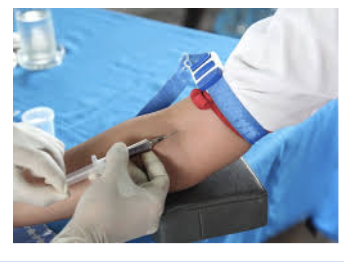
phlebotomy
Removal of a blood specimen from a vein for laboratory tests; also called venipuncture
hemoglobin (Hgb, hb)
hem/ = rw = blood
-globin = S - protein
Blood test that measures the amount of hemoglobin present in a given volume of blood
hematocrit (HCT, Hct,)
Blood test that measures the volume of red blood cells within the total volume of blood or percentage of RBC’s to plasma
Prothrombin time
Blood test that measures how long it takes blood to clot.
Erythropoiesis
erythr/o = network
-poiesis = formation or production
So it means formation of red blood cells .