Supply and Demand Shifts
 Call Kai
 Learn
Learn Practice Test
 Spaced Repetition
 Match
Match Flashcards
 Knowt Play
1/3

Earn XP
Description and Tags
Shortage, surplus, excess demand, excess supply, incentive, ration, bid up, signal, price, quantity
Name | Mastery | Learn | Test | Matching | Spaced | Call with Kai |
|---|
No analytics yet
Send a link to your students to track their progress
4 Terms
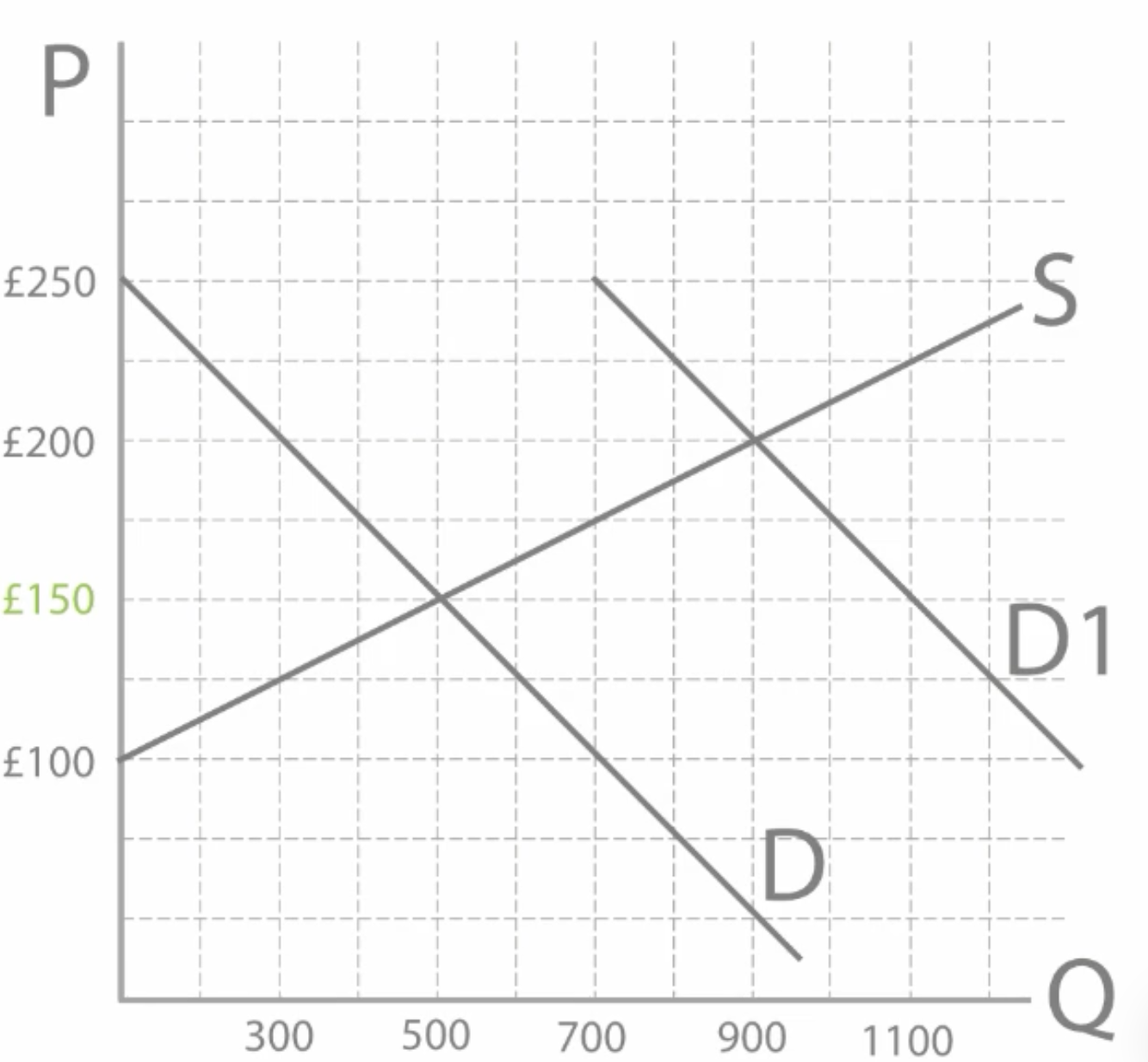
What happens when there is a Increase in Demand?
When there is a shortage of a good, consumers will bid up the price. This signals to and incentivises producers to supply more, leading to an extension in supply. It also rations how much consumers demand, leading to a contraction in demand. This brings us to a new equilibrium at a higher price.
What happens when there is a Decrease in demand?
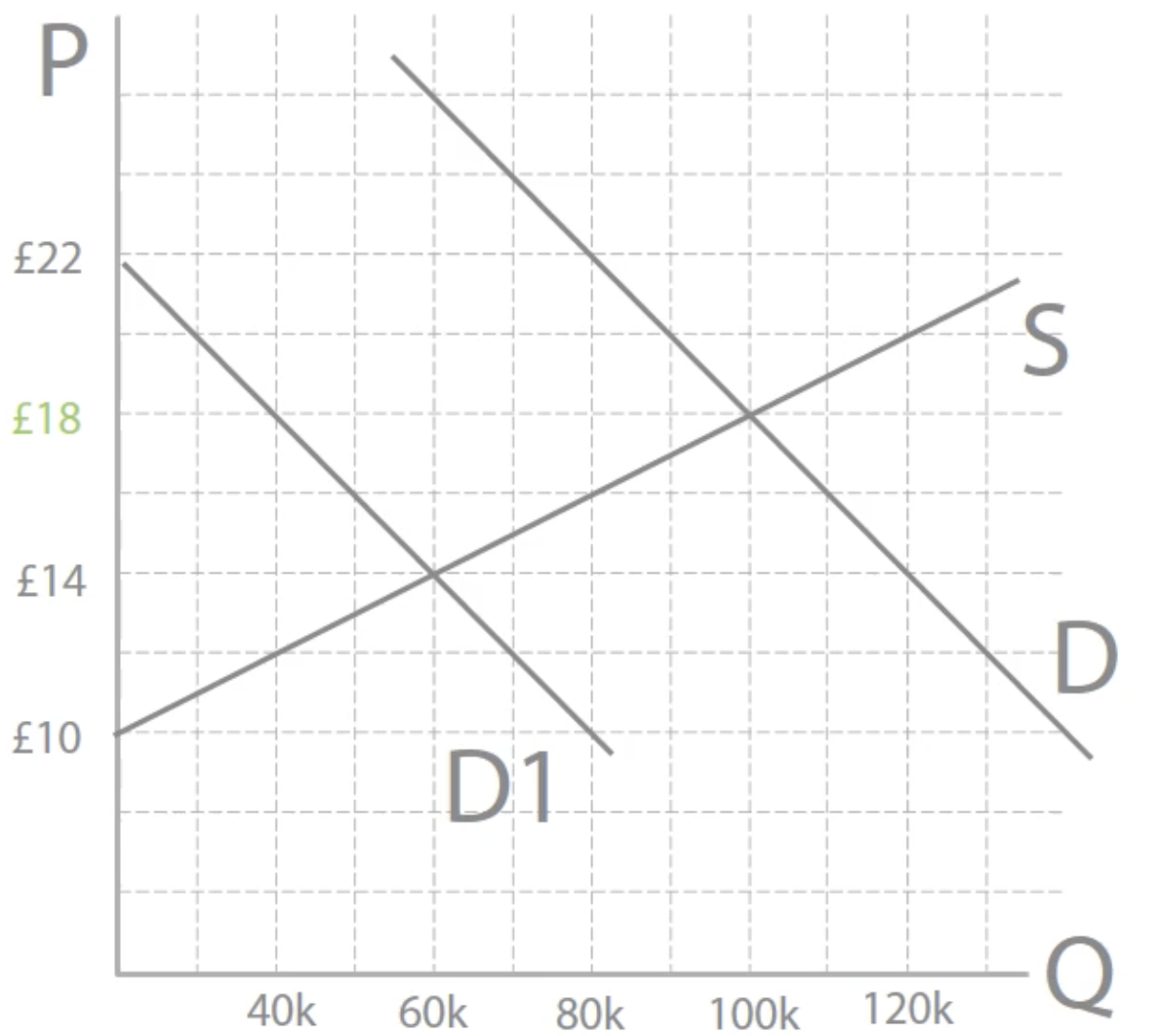
When there is an excess supply of a good, producers will decrease the price to sell off their surplus. The decreasing price signals to producers to supply less, and reduces incentive to supply, leading to a contraction in supply. It also increases quantity demanded because consumers will buy more goods as price decreases. This brings us to a new equilibrium at a lower price.
What happens when there is an increase in supply?
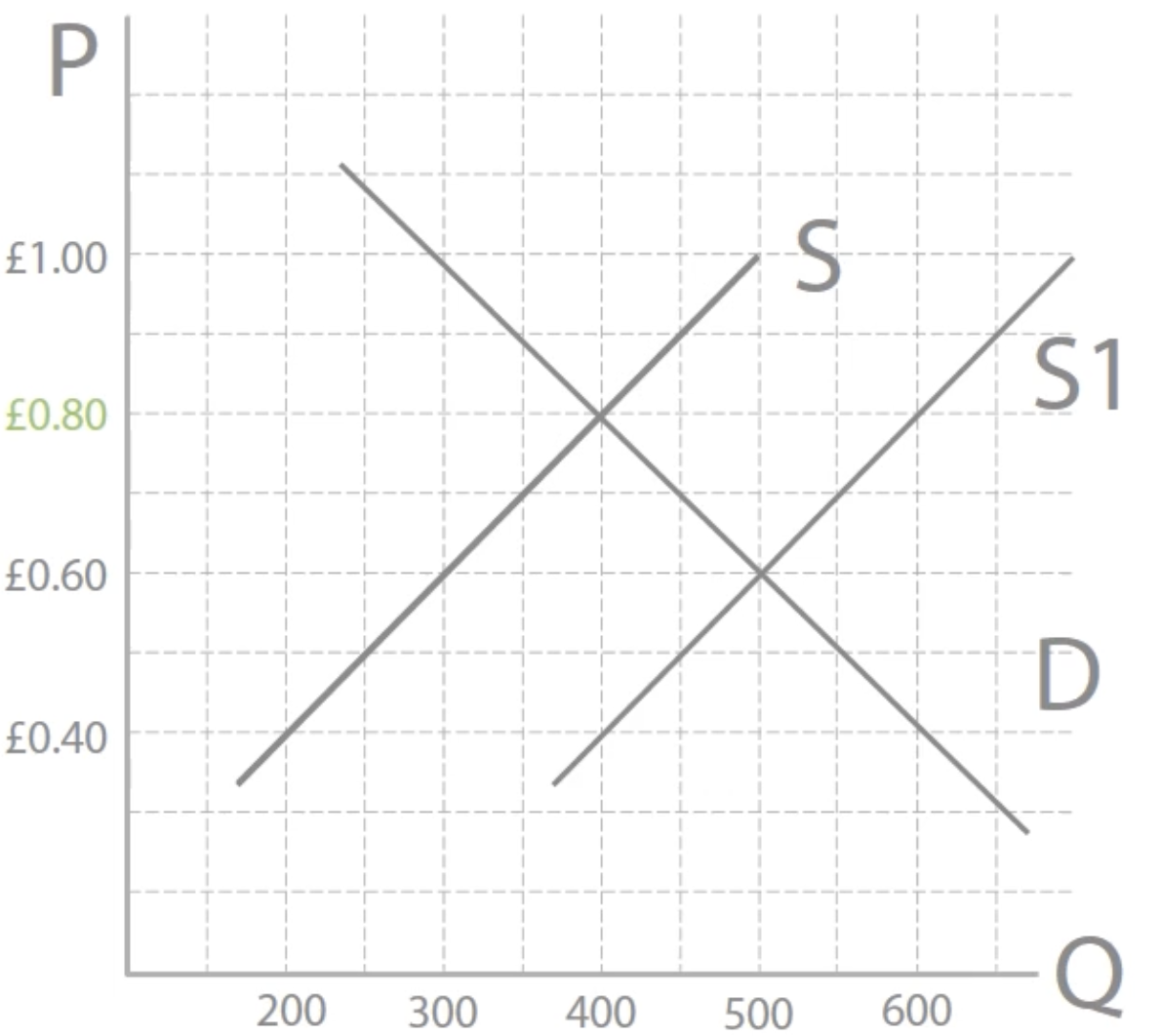
When there is an excess supply of a good, producers will decrease the price to sell off their surplus. The decreasing price signals to producers to supply less, and reduces incentive to supply, leading to a contraction in supply. It also increases quantity demanded because consumers will buy more goods as price decreases. This brings us to a new equilibrium at a lower price.
What happens when there is a decrease in supply?
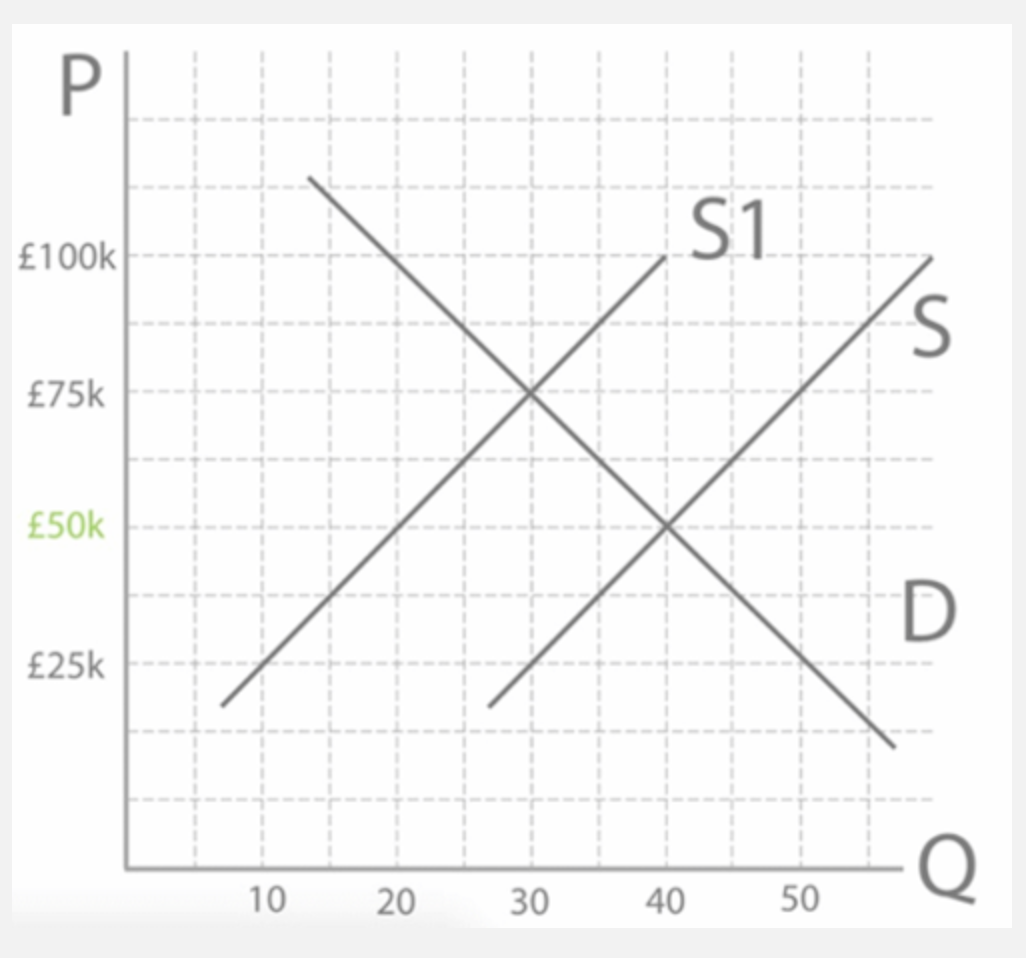
When there is a shortage of a good, consumers will bid up the price. This signals to and incentivises producers to supply more, leading to an extension in supply. It also rations how much consumers demand, leading to a contraction in demand. This brings us to a new equilibrium at a higher price.