Anatomy - Endocrine System
 Call Kai
 Learn
Learn Practice Test
 Spaced Repetition
 Match
Match Flashcards
 Knowt Play
1/43

There's no tags or description
Looks like no tags are added yet.
Name | Mastery | Learn | Test | Matching | Spaced | Call with Kai |
|---|
No analytics yet
Send a link to your students to track their progress
44 Terms
Endocrine Overview
SLOW coordination of the body (compared to fast Nervous System)
- Homeostasis
- Growth
- Development
- Reproduction
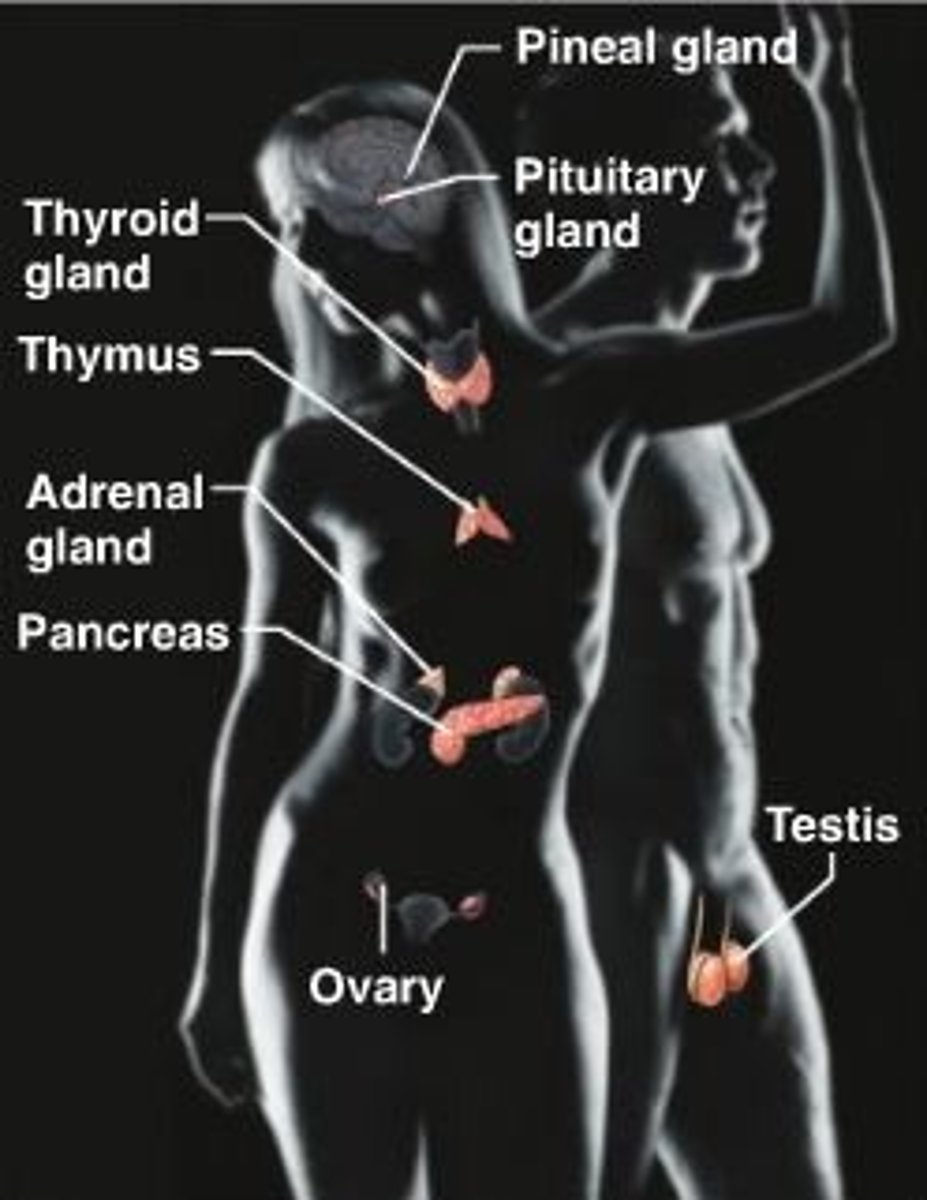
Endocrine glands
Component of the Endocrine system that is stimulated to secrete hormones
Hormones
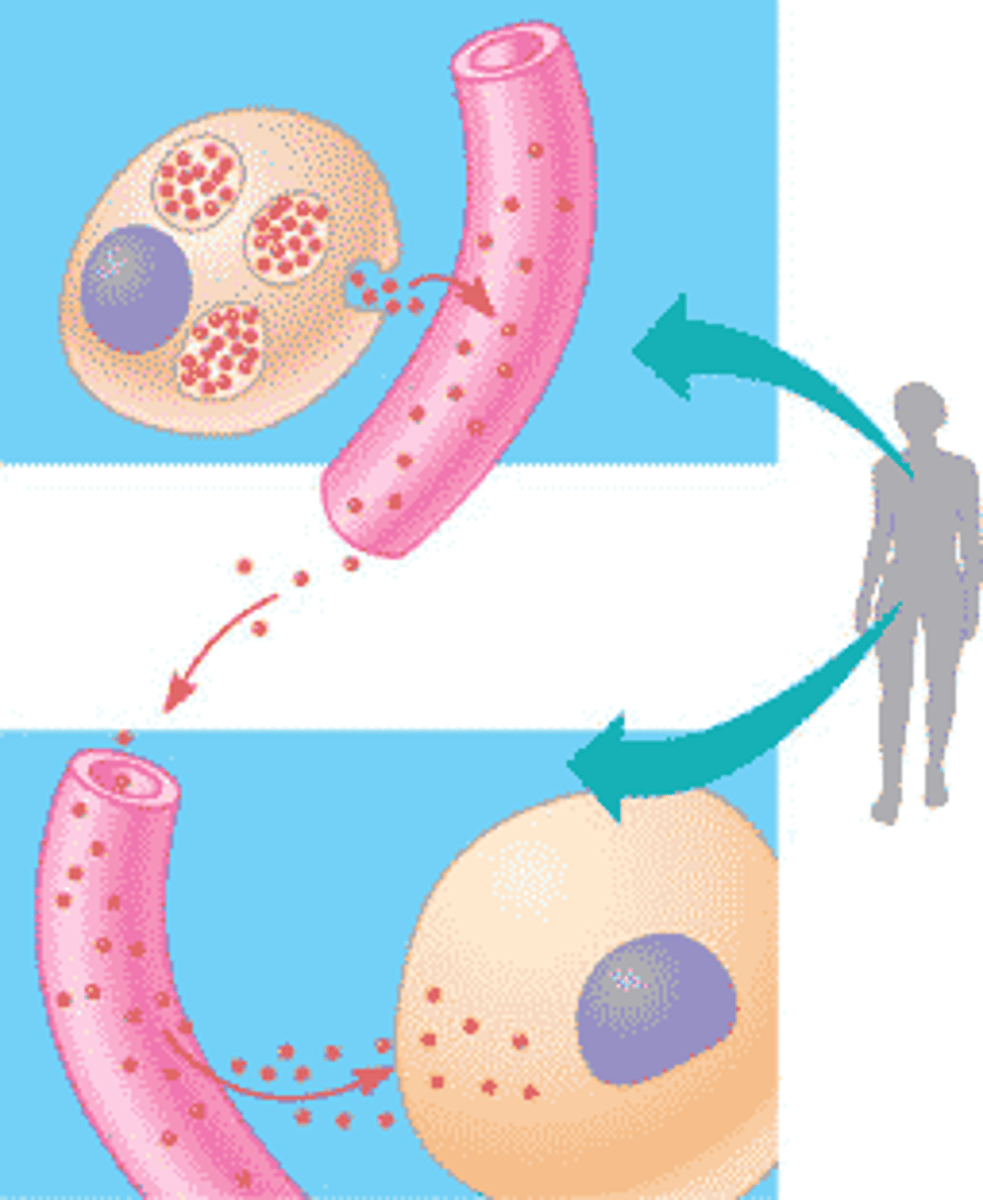
component of the Endocrine System; chemical substances that travel in the blood
Target tissue/organ
component of the Endocrine system in which hormones bind to its receptors and regulate the organ's functions
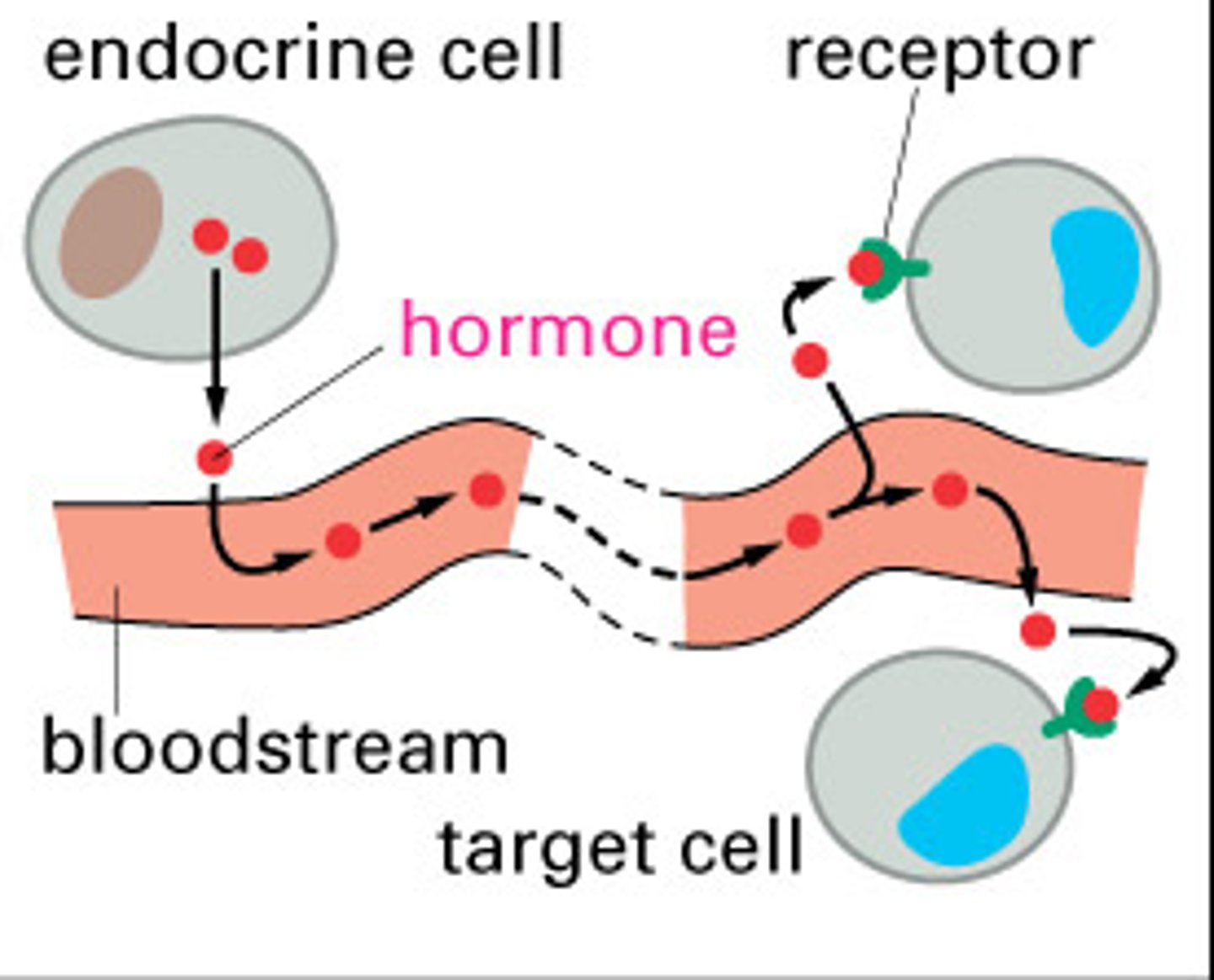
How hormone's bind to receptor
Lock and key mechanism; like an enzyme binding to a specific substrate
2 major types of hormones
1) Steroid (cholesterol-based)
- Ex. Estrogen & Testosterone
2) Amino Acid based (nonsteroidal)
- Ex. Epinephrine (adrenaline) derived from Tyrosine
- Ex. Melatonin derived from tryptophan
- Ex. Insulin; 51 amino acids
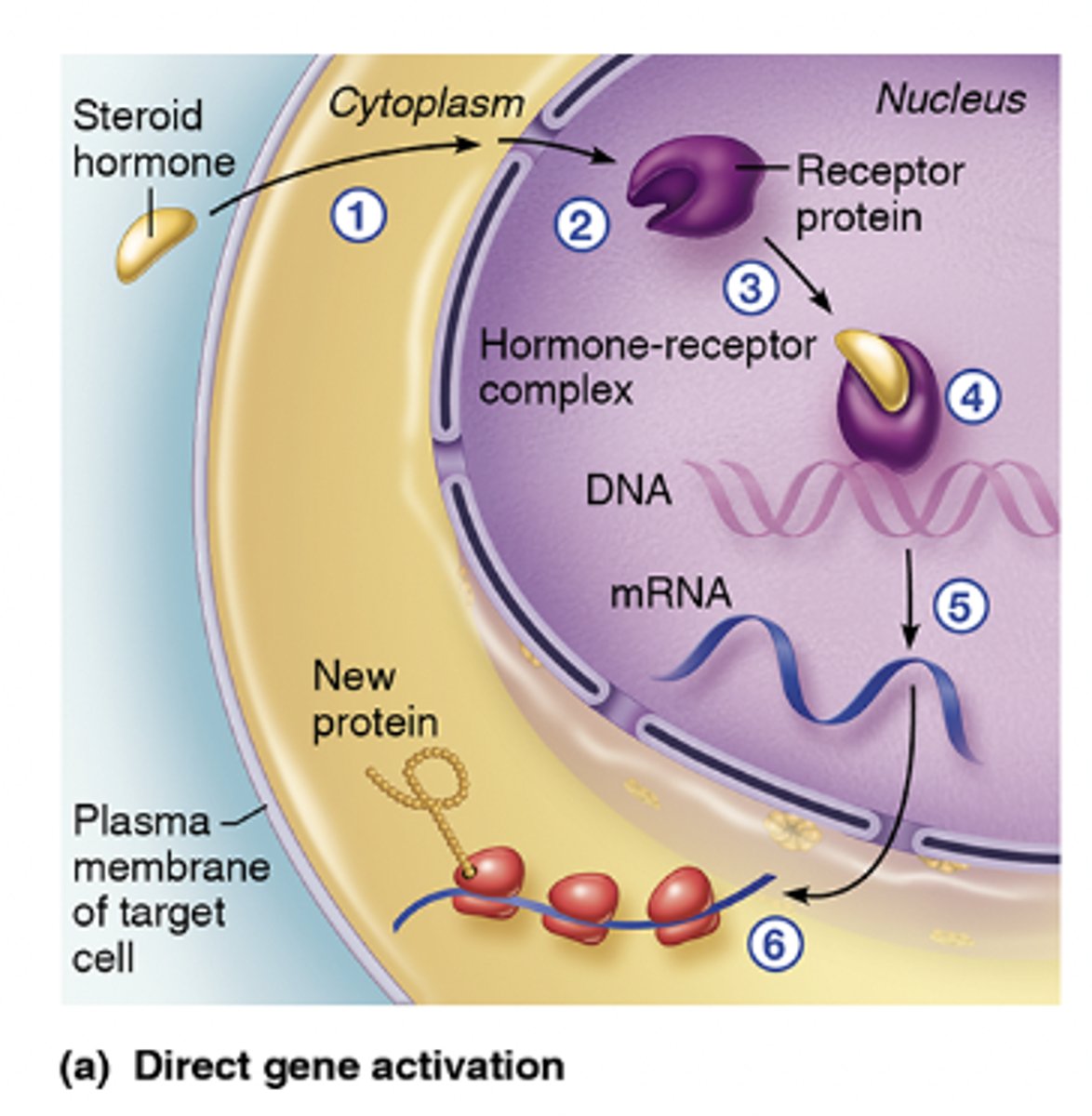
Steroid Hormone -> Direct Gene Activation
1) Lipid-soluble hormones diffuse directly into the nucleus
2) Nuclear hormone receptor
3) Hormone-receptor complex binds to DNA and regulates specific genes (Turned on or off)
Amino acid -> Second messenger system
Water-soluble hormones cannot diffuse into the cell
- Membrane-bound receptor
- Activated receptor stimulates second-messenger molecule (Ex. activated cycle AMP, cAMP, triggers glycogen breakdown)
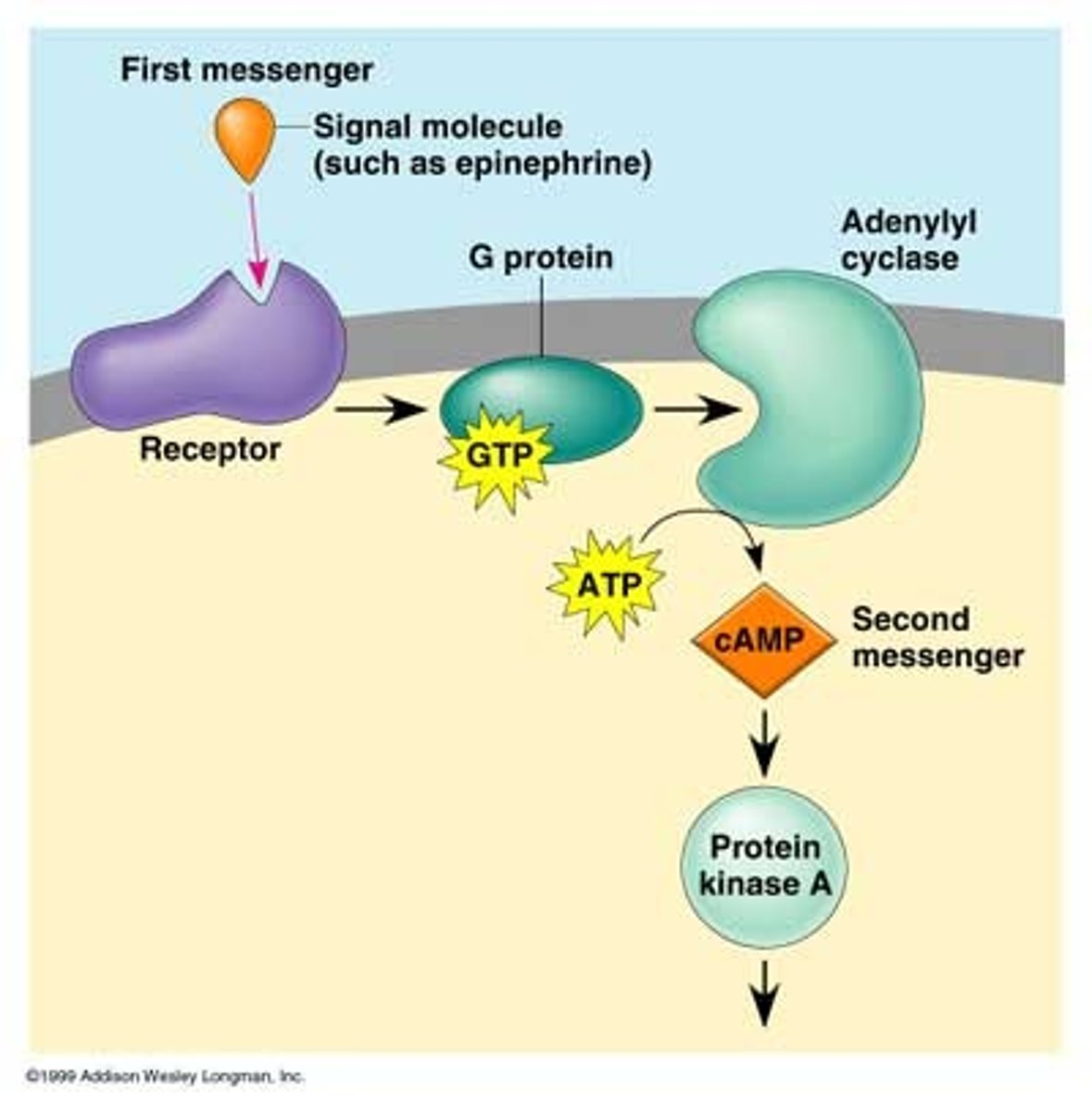
Hormonal hormone release
Hormones stimulate other hormones to be released
- most common type of stimulus
Humoral hormone release
Blood ions or nutrients stimulate hormone release
Neural hormone release
Nerve stimulates hormone release
Negative Feedback
hight hormone levels -> effect -> less hormone secretion
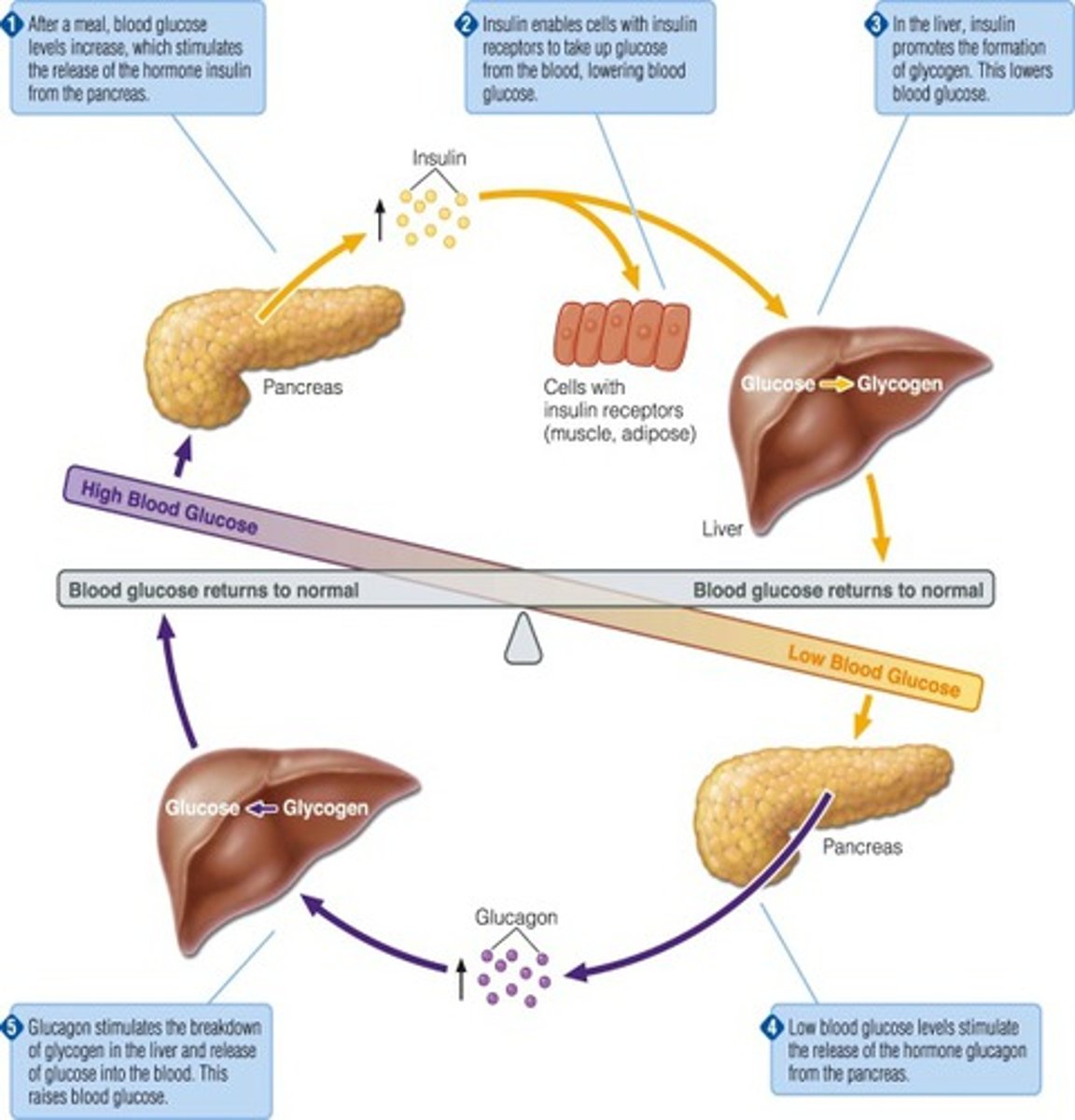
example of hormonal stimulus
Hypothalamus hormones -> anterior pituitary gland hormones -> thyroid/adrenal/testes hormones
thyroid/adrenal/testes hormones -> anterior pituitary gland hormones -> Hypothalamus hormones
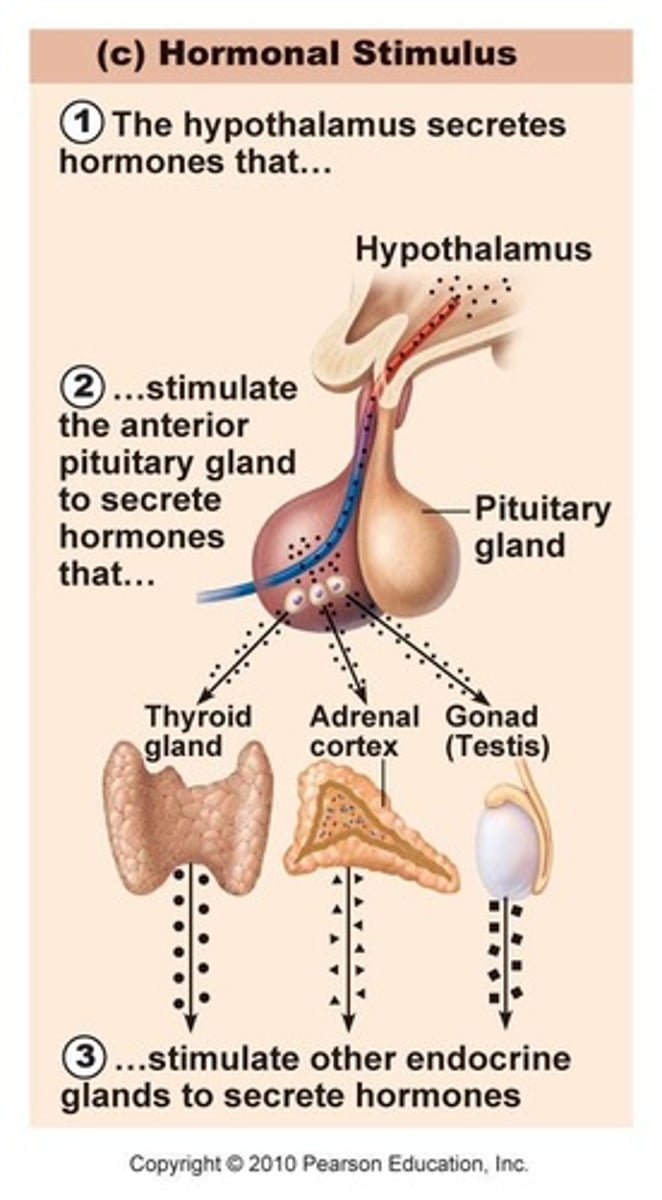
Example of humoral stimulus
Low blood calcium -> Parathyroid hormone (PTH) -> Activate osteoclasts + Inhibit osteoblasts -> Blood calcium rises
Blood Calcium rises -> Parathyroid hormone (PTH)
Example of neural stimulus
Sympathetic nervous system (fight or flight) -> Adrenal glands release catecholamines (epinephrine & norepinephrine)
Hypothalamus
Regulates the anterior pituitary gland via releasing + inhibiting hormones
- produxes oxytocin and ADH (stored in pineal gland)
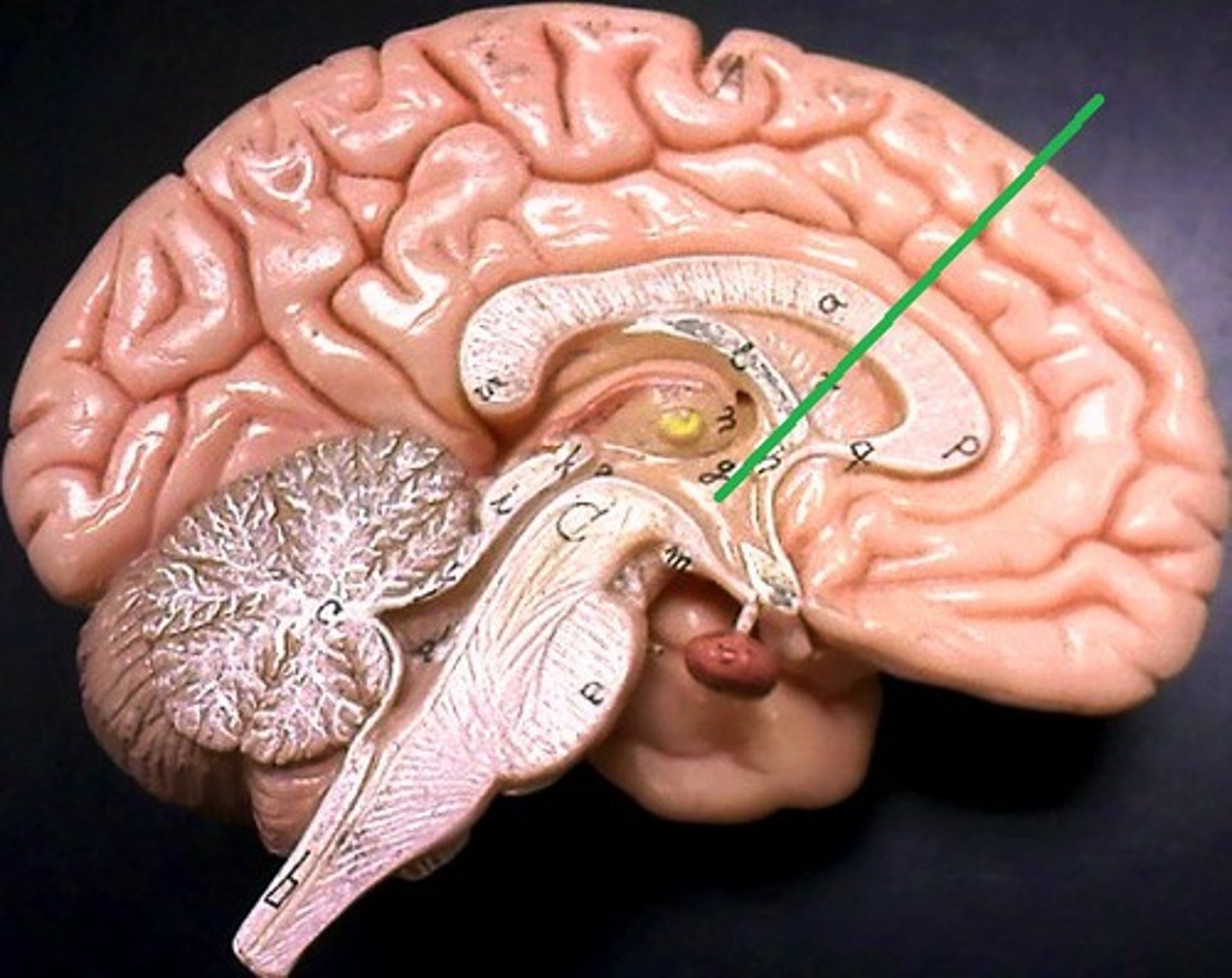
Oxytocin
Crucial in labor and breastfeeding
- produced by the hypothalamus
Antidiuretic hormone (ADH) (aka vasopressin)
Inhibits urine production (Diuresis)
Kidneys reabsorb water -> blood volume increases
- produced by hypothalamus
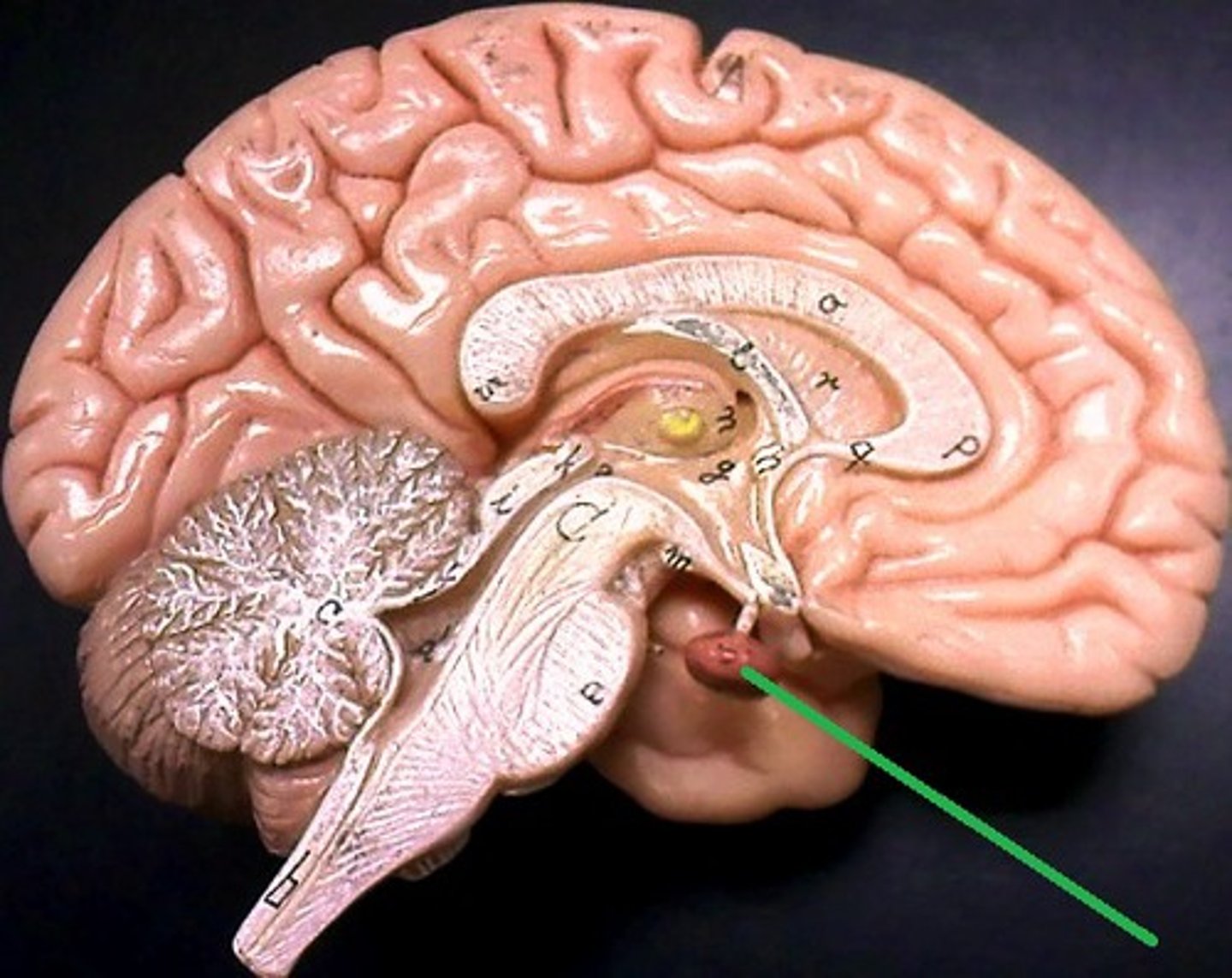
Pituitary gland
Size of a pea; protected by sphenoid bone
Anterior = glandular tissue
- makes pituitary hormones
Posterior = nervous tissue
- storage area for hormones
Growth Hormone (GH)
Growth of Bones + Skeletal muscle
- regulated by hypothalamus
Prolactin (PRL)
stimulates breast milk production
- regulated by hypothalamus
Thyroid-stimulating hormone (TSH)
Stimulates thyroid
- regulated by hypothalamus
Adrenocorticotropic Hormone (ACTH)
Stimulates adrenal glands
- regulated by hypothalamus
Follicle-stimulating hormone (FSH)
Stimulates ovaries (estrogen + eggs)
Stimulates testes (sperm)
- regulated by hypothalamus
Luteinizing Hormone (LH)
stimulates ovaries (estrogen + progesterone)
Stimulates testes (testosterone)
- regulated by hypothalamus
Melatonin
High _____ at night
Low ______ at noon
- regulated by day-night cycling
Thyroid gland
Bottom of the neck
2 important hormone = Thyroid hormon + Calcitonin
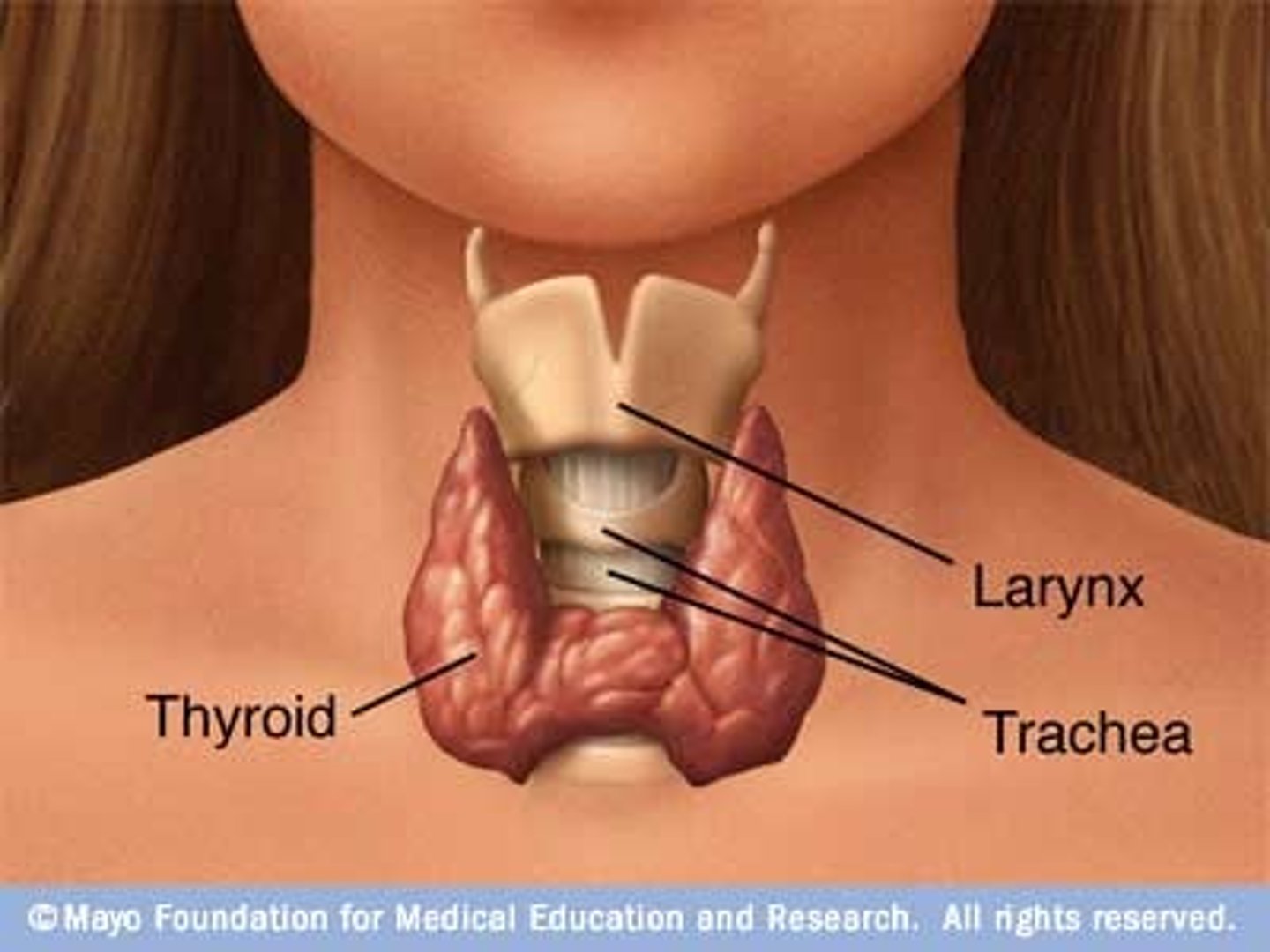
Thyroid hormone - T4 + T3
Controls cell metabolism
- requires iodine
- T4 Produced -> converted to T3 (the active form)
- Stimulated by TSH from anterior pituitary
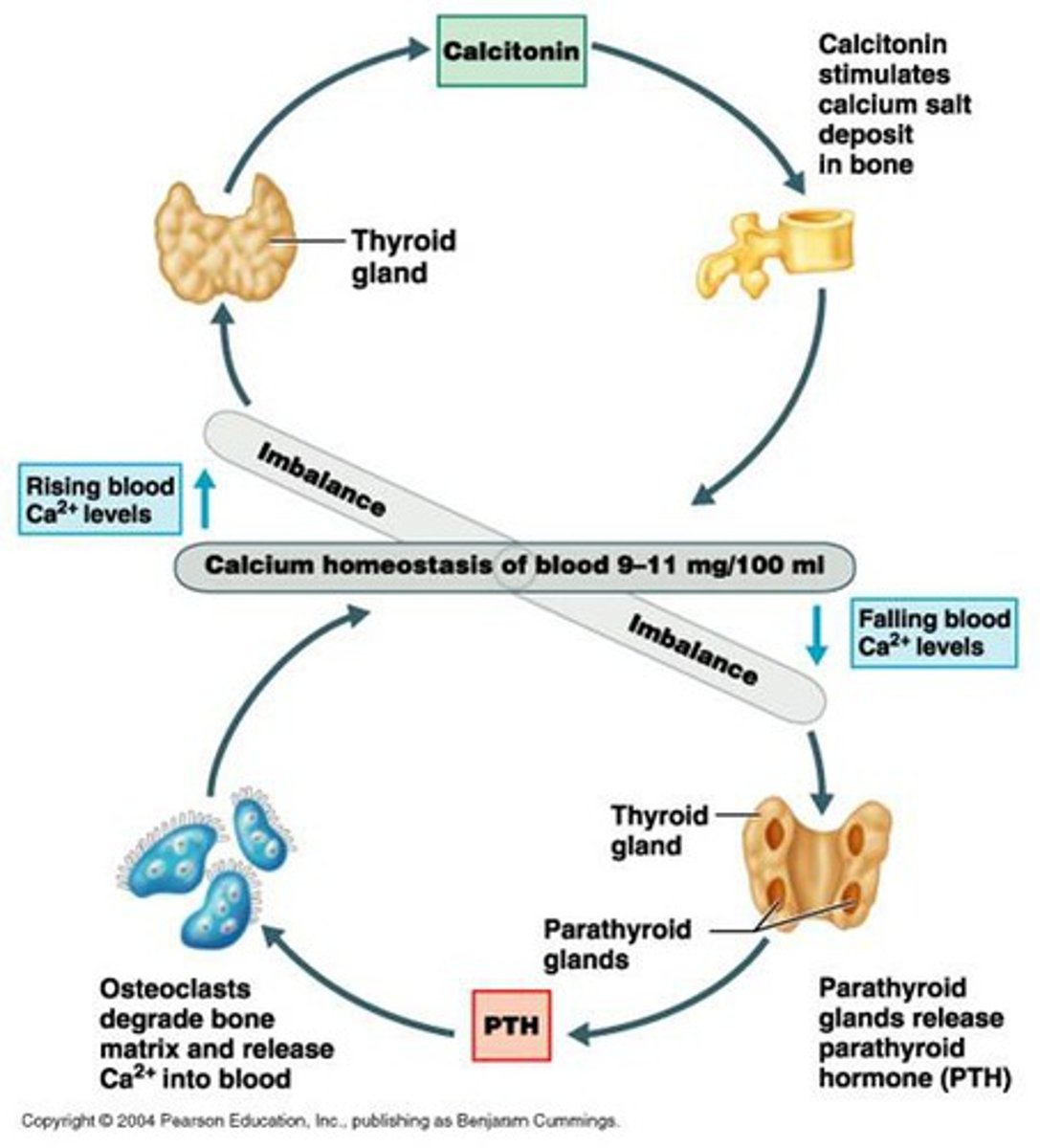
Calcitonin
Stimulates decrease in blood calcium
- triggers deposit of calcium into bone
- Stimulated by blood calcium levels
Parathyroid gland
4 parathyroid glands attached to thyroid
1 hormone = parathyroid hormone
Parathyroid hormone (PTH)
Stimulates increased blood calcium -> activates osteoclasts
Targets bone AND kidneys AND intestines
- to retain and absorb more calcium
- Stimulated by blood calcium levels
Negative feedback with Thyroid / Parathyroid hormones
PTH and Calcitonin are antagonists
PTH = hypercalcemic hormone
Calcitonin = hypocalcemic hormone
Adrenal glands
- Bean-shaped
- 1 on top of each kidney (2 total)
2 sections:
- Adrenal cortex (glandular) - 3 steroid hormones
- Adrenal medulla (nervous tissue)
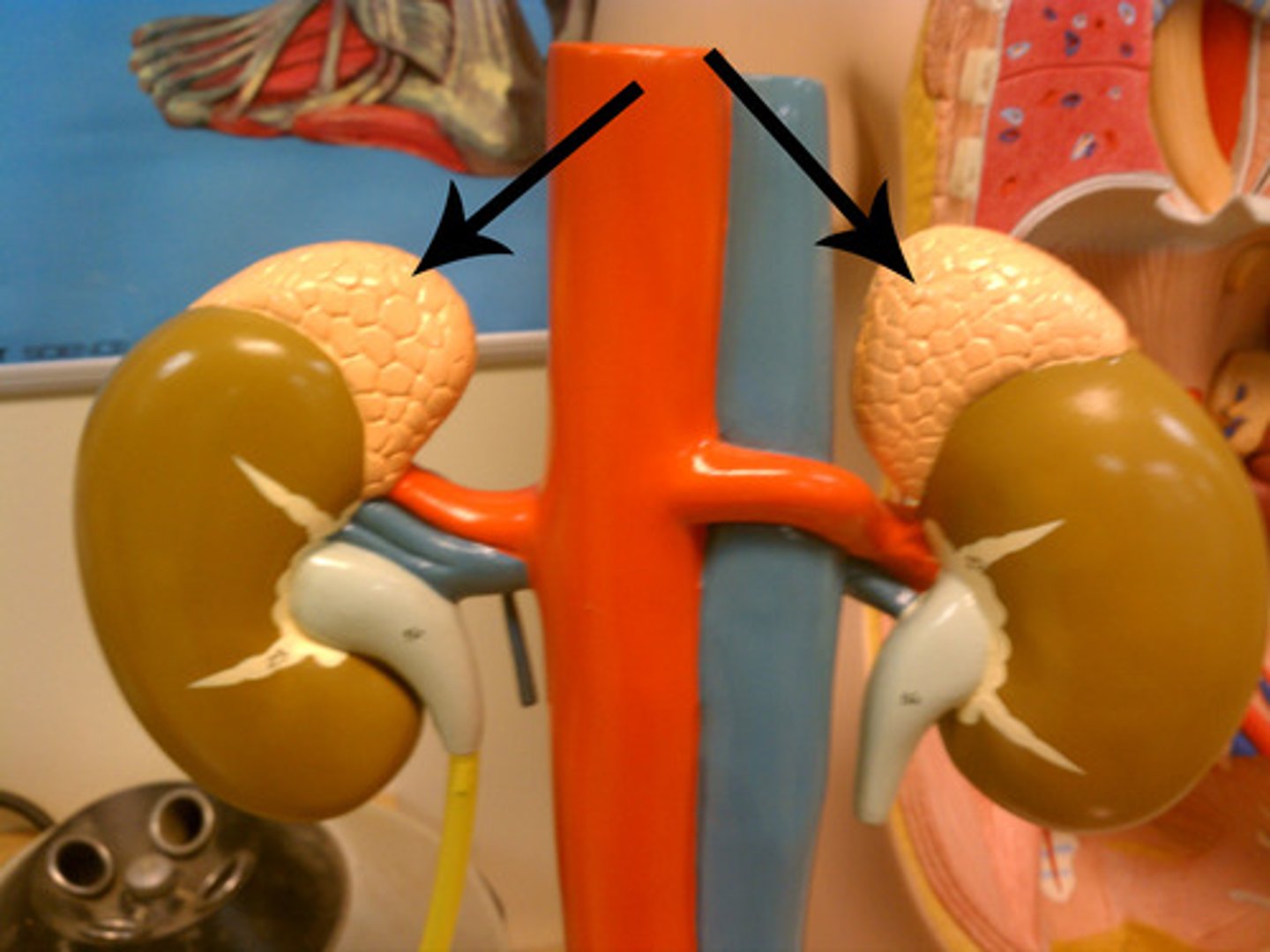
Aldosterone (mineralocorticoid) - Cortex
Regulates minerals, mainly sodium (Na) + Potassium (K) ions
- also regulates water
- stimulated by kidneys + heart
- Target = kidneys
Cortison & cortisone (glucocorticoids) - Cortex
1) Long-term stress response
2) Regulates blood glucose
- hyperglycemic hormones
3) Reduces inflammation
- Stimulated by ACTH from anterior pituitary
Sex Hormones - Androgen & Estrogen
- Lesser amount than gonads
Epinephrine/Norepinephrine (adrenaline/noadrenaline) - Adrenal medulla
Neural stimulation; sympathetic nervous system (fight or flight)
- Increase Heart rate & blood pressure & blood glucose
- vasoconstriction
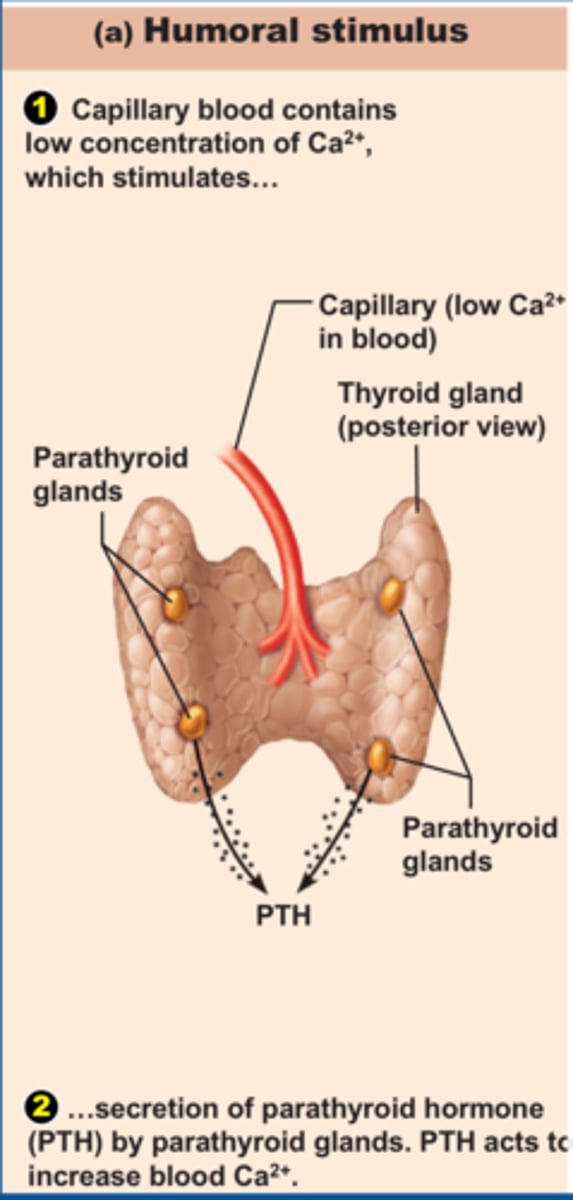
Pancreas
Regulates the level of sugar in the blood
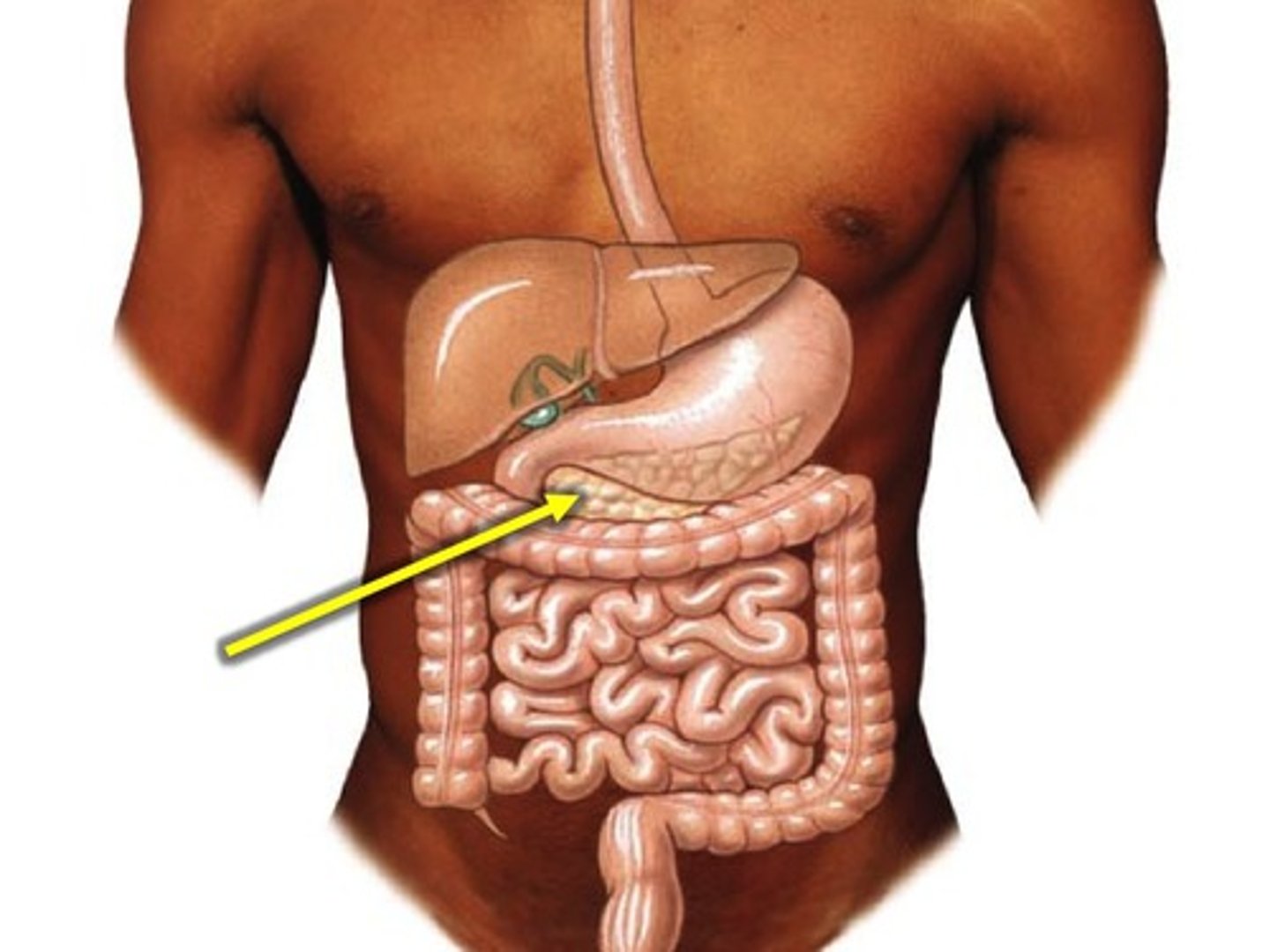
Insulin
Hypoglycemic hormone
Increases cell metabolism, systemic, to use up blood glucose
- Stimulated secretion via High blood glucose
Glucagon (antagonist of insulin)
Hyperglycemic hormone
Primary target = liver where glycogen is stored
- Glycogen gets broken down into glucose
- Stimulated secretion via Low blood glucose
Thymus
Large in infants/children
Decreases in size through adulthood
1 hormone = Thymosin
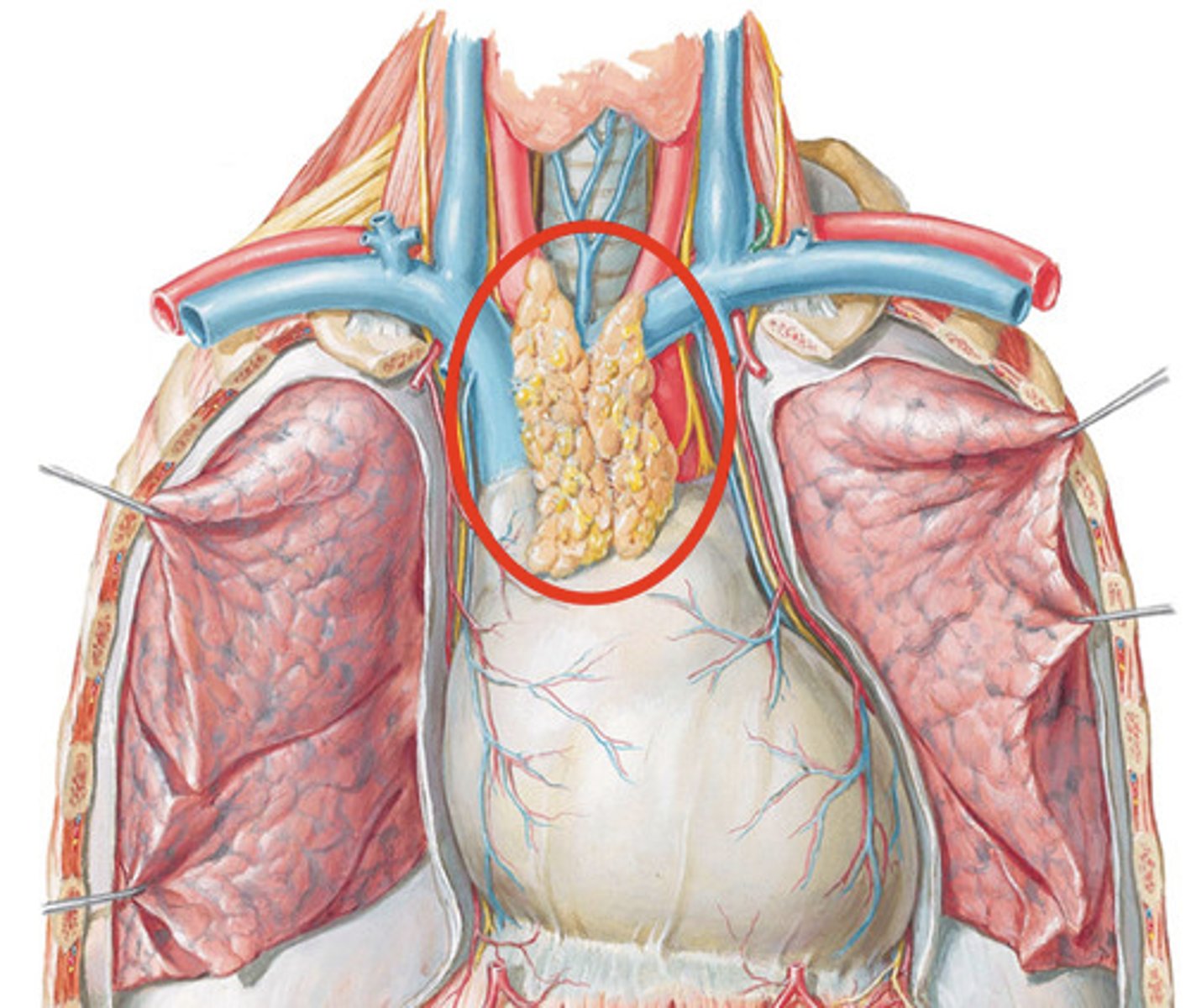
Thymosin
T cell programming
NK cell and dendritic cell activation
- imunoodulation
Estrogen + Progesterone
1) Steroid hormones
2) Stimulated to be released by the anterior pituitary (FCH + LH)
3) Play role in menstrual cycle and breast development
4) Produce ova (exocrine function)
Estrogen = major role in growth development in women
Progesterone = role in maintaining pregnancy
Testes - 2 in scrotum
Testosterone (Androgens)
Growth and Reproduction in men
Continuous production of sperm (exocrine function)
- Stimulated by FCH and LH