Lab Practical I
 Call Kai
 Learn
Learn Practice Test
 Spaced Repetition
 Match
Match Flashcards
 Knowt Play
1/119

Earn XP
Description and Tags
BIO-168
Name | Mastery | Learn | Test | Matching | Spaced | Call with Kai |
|---|
No analytics yet
Send a link to your students to track their progress
120 Terms
anatomy
the study of the structure
physiology
how does it work
order of organs & parts of the human body
atom—>molecule—>macromolecule—>organelle—>cell—>tissue—>organ—>organ system—>organism
metabolism
sum total of all chemical reactions in the body
*variable—> age, disease states, therapies, meds, lifestyle change
characteristics of life
movement (gross & internal)
responsiveness (sweat/ shiver)
growth
reproduction (mitosis & meiosis)
respiration (break down glucose)
digestion (macro—>micromolecules)
absorption
circulation
assimilation (to build up)
excretion
maintenance of life
water (anabolic/catabolic)
food (anything you consume—> glucose)
oxygen
heat (98.6 avg temp)
pressure (atmospheric pressure is important for breathing, hydrostatic pressure keeps blood flowing)
homeostasis
internal balanced environment
negative feedback
helps maintain homeostasis
ex: blood clotting, urine contractions during childbirth
positive feedback
removes you from homeostasis, short-lived
ex: body temp, blood pressure, glucose levels in the blood
stimulus
a change occurs in the literal environment
receptors
detects and provides information about the stimuli
control center
decision-maker that maintains the set point
effectors
muscle or glands that cause the necessary change in the internal environment
response
the change is corrected
chemistry
relationship between atoms
atomic number
identifies each element
# of protons
atomic mass
# of protons + # of neutrons
measured in amu
CHONPS
(elements that living organisms require)
Carbon, Hydrogen, Oxygen, Nitrogen, Phosphorus, Sulfur
mass
how much space is occupied (constant)
weight
measure of force of gravity (variable)
isotope
change in # of neutrons
pH
potential hydrogen
cation
lose/give electrons
it’s positive to give than receive
anion
receive/ gain electrons
covalent bonding
sharing of valence electrons
ionic bonding
physical shift in valence electrons
organic
lived
Carbon, Hydrogen
inorganic
never lived
everything else
solvent
does the dissolving
solute
gets dissolved
synthesis reaction
A+B—>AB
decomposition reaction
AB—>A+B
single displacement reaction
A+BC—>B+AC
double displacement reaction
AB+CD—>AD+BC
water
is an important solvent
major component of blood (rusty water)
transports heat
oxygen
drives cell’s metabolism
carbohydrates
C,H,O
monosaccharides & polysaccharides
lipids
C,H,O
insoluble in water
fats
saturated fat
max # of hydrogens
unsaturated fat
decreased # of hydrogens
proteins
C,H,O
amino acids
denature
pH, temp, radiation
nucleic acids
C,H,O,N,P
nucleotides
DNA
deoxyribose nucleic acid
A-T
G-C
RNA
ribonucleic acid
A-U
G-C
how many valence electrons represents stability?
8
Lithium has more neutrons than protons
makes it an isotope
cancer
uncontrolled mitosis
apoptosis
programed death of cell
nucleus
stores DNA, determines function, regulate mitosis & apoptosis
cytoplasm
organelles + cytosol
cell membrane/ plasma membrane
semi-permeable
rough ER
*presence of ribosomes
site of protein synthesis
smooth ER
lipid synthesis
mitochondria
synthesis of ATP
golgi body/complex/apparatus
ID of protein
package/ modify
secretion
vesicles
storage
lysosomes
contains digestive enzymes
peroxisomes
detox
micro villi
higher surface area for absorption
cilia
movement of substances
flagellum
movement of cell (sperm cell)
diffusion
*no ATP required
movement of particles
high to low concentration
osmosis
*no ATP required
*semi-permeable membrane
movement of water
high to low concentration
facilitated diffusion
*no ATP needed
movement of particles
“facilitated” = helping (through gates or proteins on the membrane)
passive mechanisms
no ATP required
active transport
ATP is required
endocytosis
to bring inside
phagocytosis
particle intake
pinocytosis
fluid intake
exocytosis
removal from the cell
hypotonic
water IN
isotonic
equilibrium
hypertonic
water OUT
mitosis
creation of new cells from existing cells
G1
growth & development
S phase
synthesis of DNA
G2
replication of all organelles
interphase
majority of cell’s life
prophase
nuclear membrane breaks down
chromatin condenses into chromosomes
centrioles move to opposite ends of the cell
homologues pair
23 pairs, 46 total chromosomes
somatic cells
“body” cells
metaphase
“middle”
spindle fibers anchor to the centrioles & chromosomes line up in the middle
anaphase
chromatids separate to opposite ends
telophase
chromatin inside newly formed nucleus, cleavage furrow forms
cytokinesis
50/50 split on the cytoplasm before the end of telophase
stem cell
“blank canvas”
tendon
connects muscle to bone
ligament
connects bone to bone
goblet cells
secrete mucus
visceral
deep
parietal
shallow
serous fluid
fluid found in joints
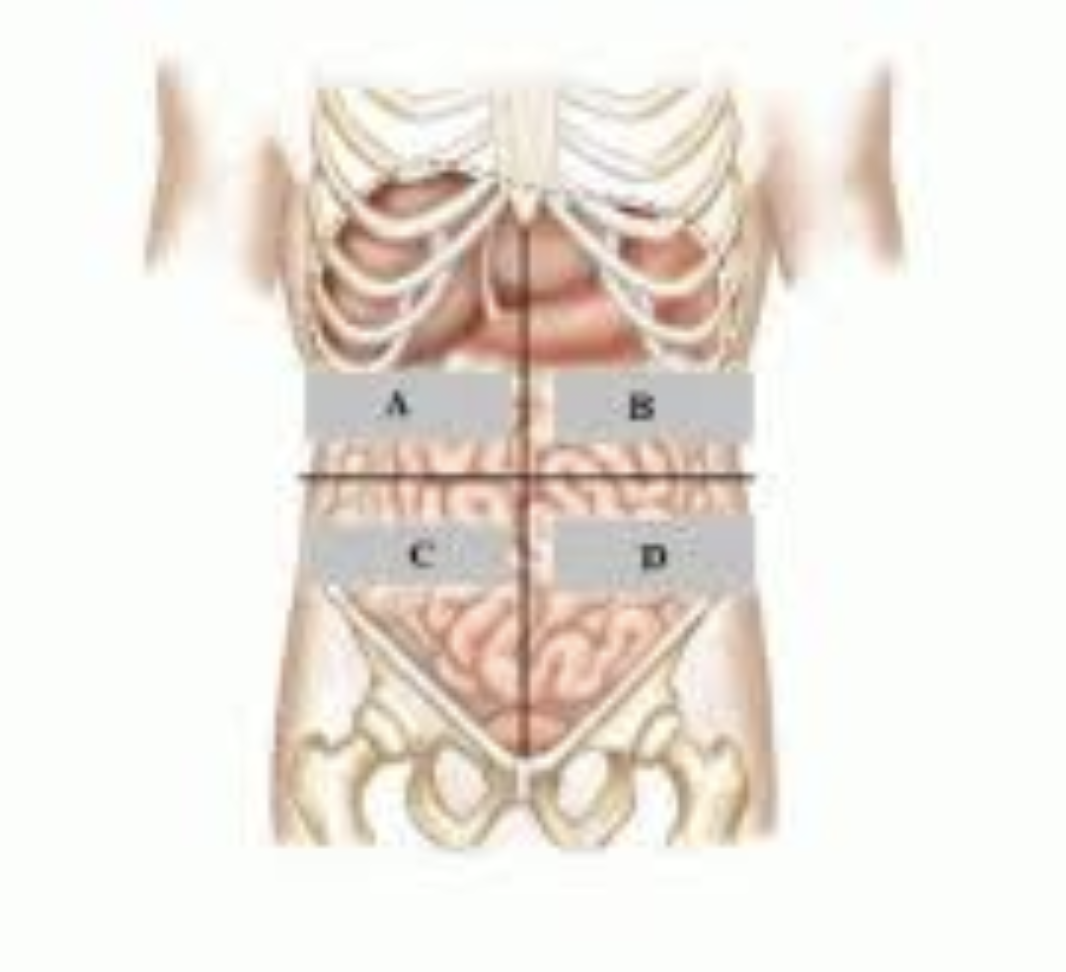
A?
right upper quadrant
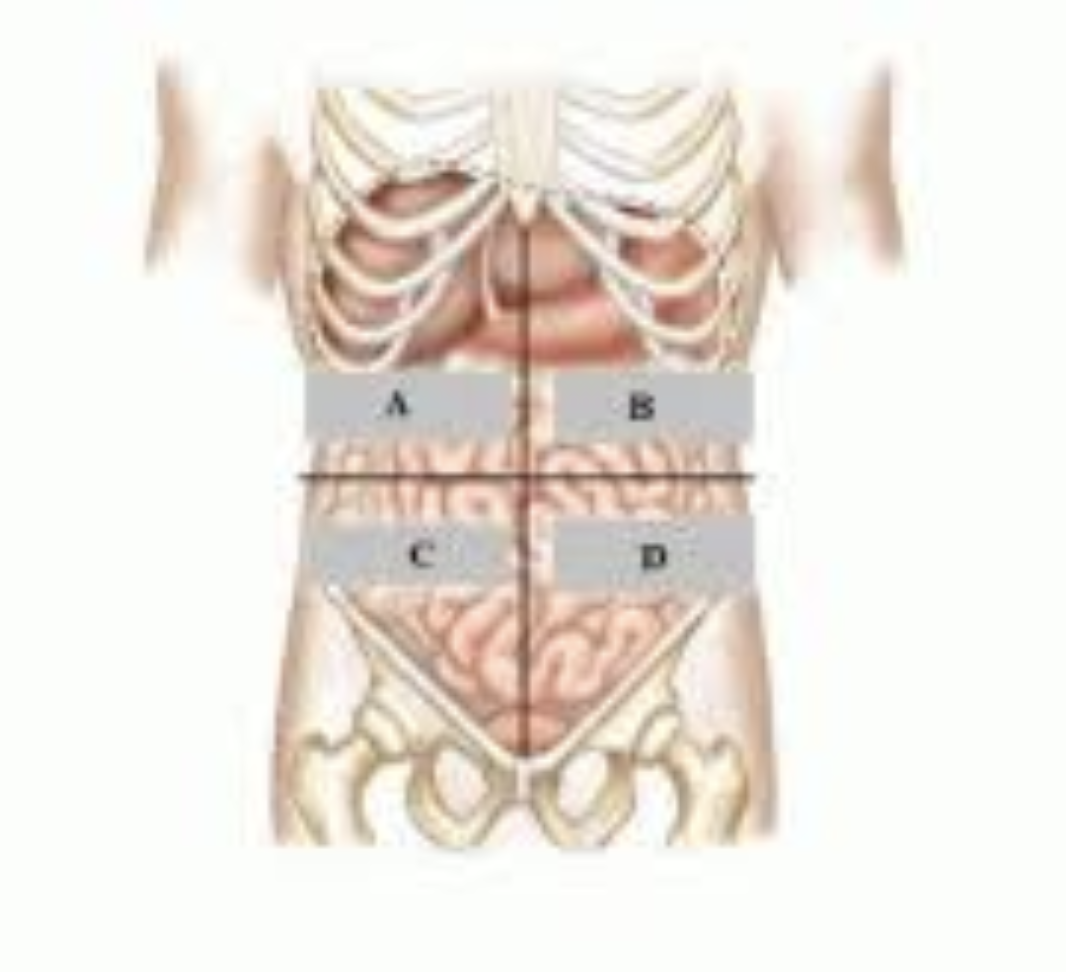
B?
left upper quadrant
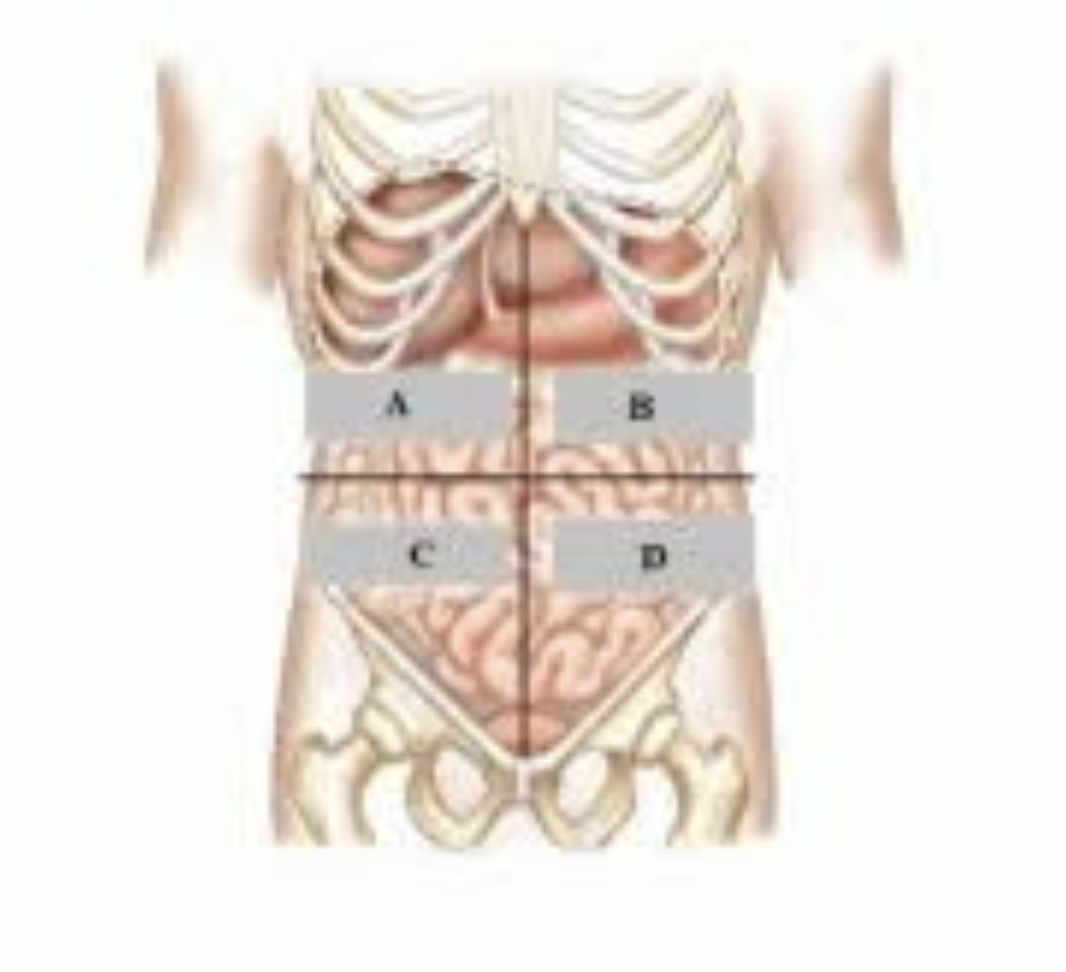
C?
right lower quadrant
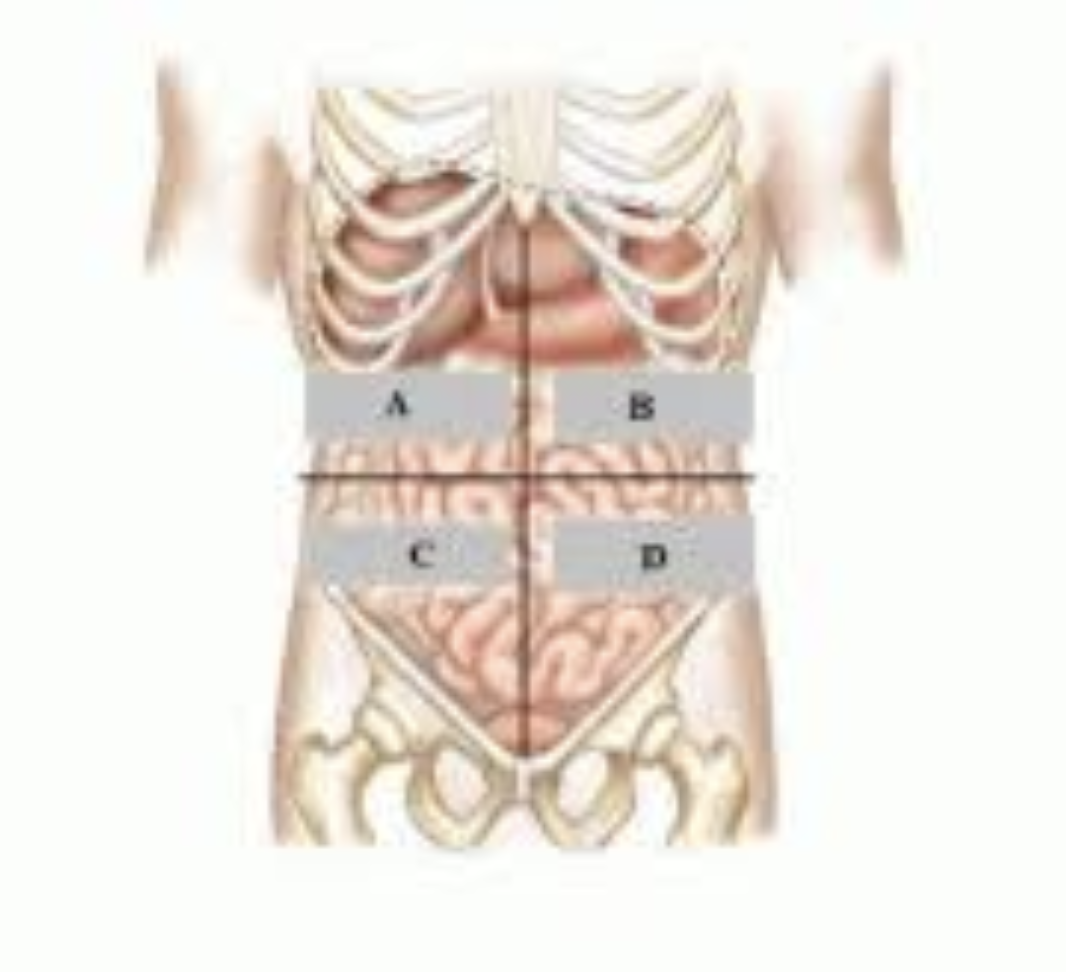
D?
left lower quadrant
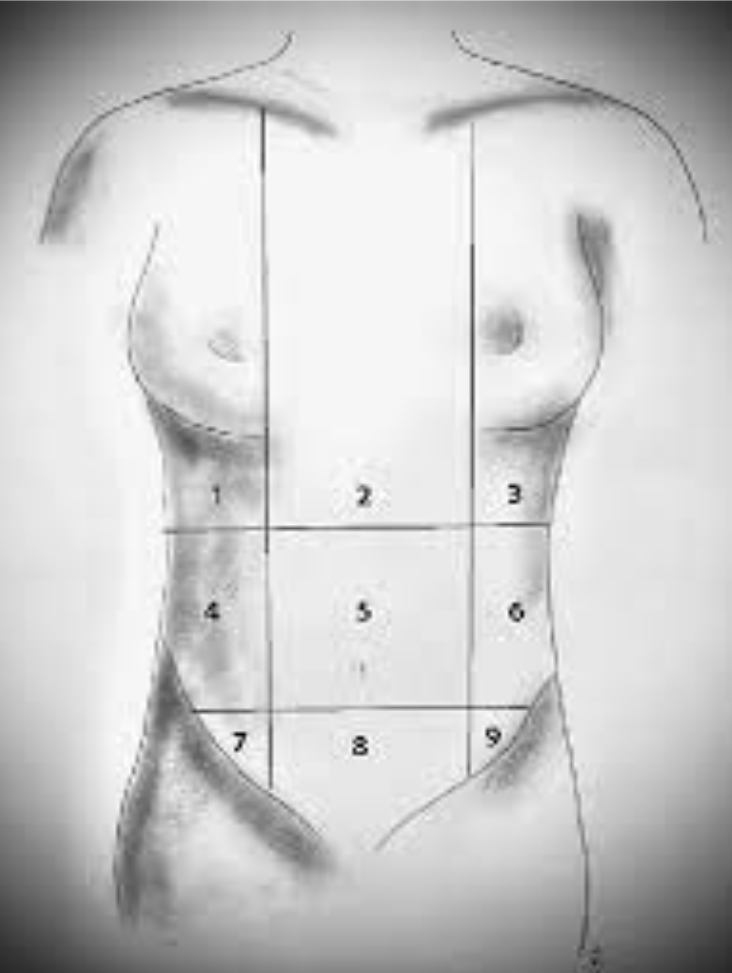
1?
right hypochondriac region
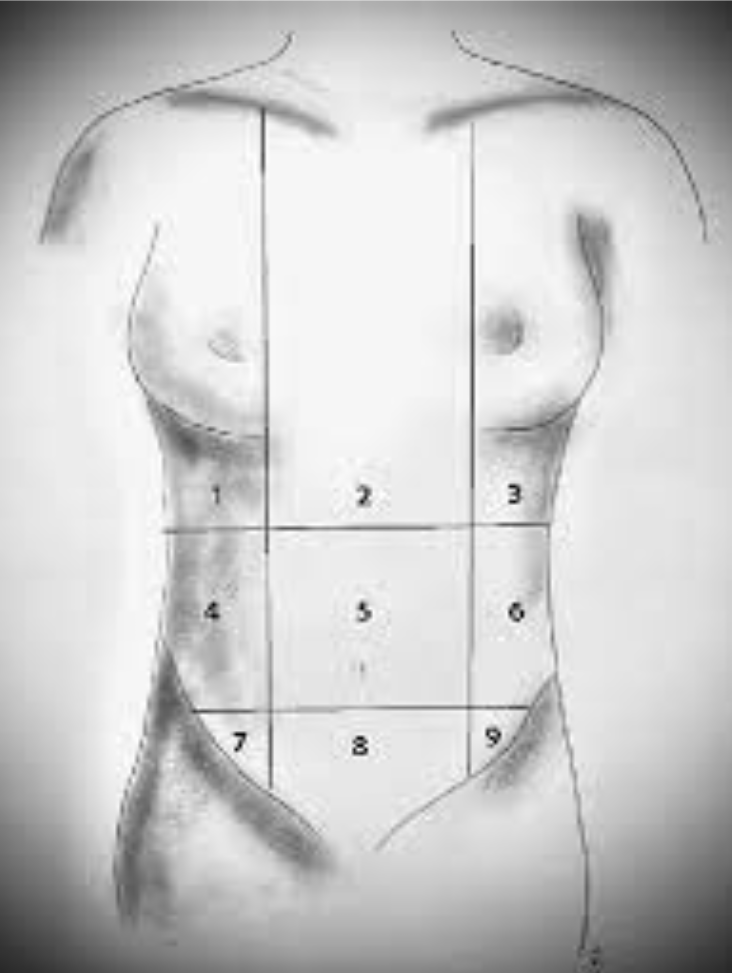
2?
epigastric region
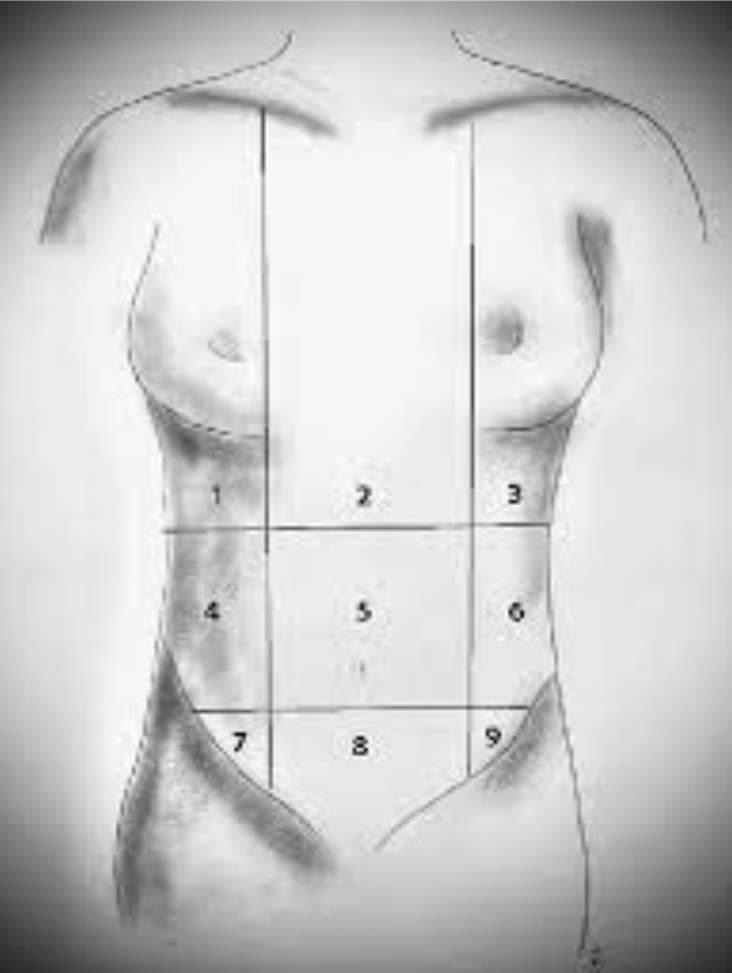
3?
left hypochondriac region