Edexcel IAL Chemistry Unit 1

0.0(0)
Studied by 0 people
call kaiCall Kai
learnLearn
examPractice Test
spaced repetitionSpaced Repetition
heart puzzleMatch
flashcardsFlashcards
GameKnowt Play
Card Sorting

1/200

flashcard set

Earn XP

Last updated 11:46 PM on 4/24/26
Name
Mastery
Learn
Test
Matching
Spaced
Call with Kai

No analytics yet

Send a link to your students to track their progress

201 Terms

1
New cards
Atom
The smallest, electrically neutral particle of an element that can take part in a reaction.
2
New cards
Element
A substance which cannot be broken down into simpler substances by chemical means and contains only one type of atom.
3
New cards
Ion
An electrically charged atom or group of atoms that has gained or lost electrons.
4
New cards
Molecule
The smallest electrically neutral particle of an element or compound which can exist on its own.
5
New cards
Compound
A pure substance containing two or more different atoms chemically joined together.
6
New cards
Empirical Formula
The smallest whole number ratio of atoms of each element in a compound or molecule.
7
New cards
Molecular Formula
The actual number of atoms of each element in a compound or molecule.
8
New cards

Mole (mol)

The unit for amount of substance; contains 6.02 times 1023 particles.

9
New cards
Avogadro Constant (L)

6.02 times 1023 mol-1.

10
New cards

Relative Atomic Mass (Ar)

The weighted average mass of an atom of an element relative to 1/12th the mass of a carbon-12 atom.
11
New cards
Molar Mass

The mass per mole of a substance (gmol-1).

12
New cards
Molar Volume

The volume occupied by 1 mole of any gas at a specific temperature and pressure (24 dm3 at RTP).

13
New cards
Ideal Gas Equation

pV = nRT (where p is pressure in Pa, V is volume in m3, T is temp in K).

14
New cards
Concentration

The amount of solute (mol) dissolved in a volume of solution (dm3).
15
New cards
Atom Economy
(Molar mass of desired product / Sum of molar masses of all products) x 100.
16
New cards
Percentage Yield
(Actual yield / Theoretical yield) x 100.
17
New cards
Proton
Relative mass 1, relative charge +1, located in the nucleus.
18
New cards
Neutron
Relative mass 1, relative charge 0, located in the nucleus.
19
New cards
Electron
Relative mass 1/1840, relative charge -1, located in orbitals.
20
New cards
Atomic Number
The number of protons in the nucleus of an atom.
21
New cards
Mass Number
The total number of protons and neutrons in the nucleus.
22
New cards
Isotopes
Atoms of the same element with the same number of protons but different numbers of neutrons.
23
New cards
<p>Mass Spectrometer Step 1</p>

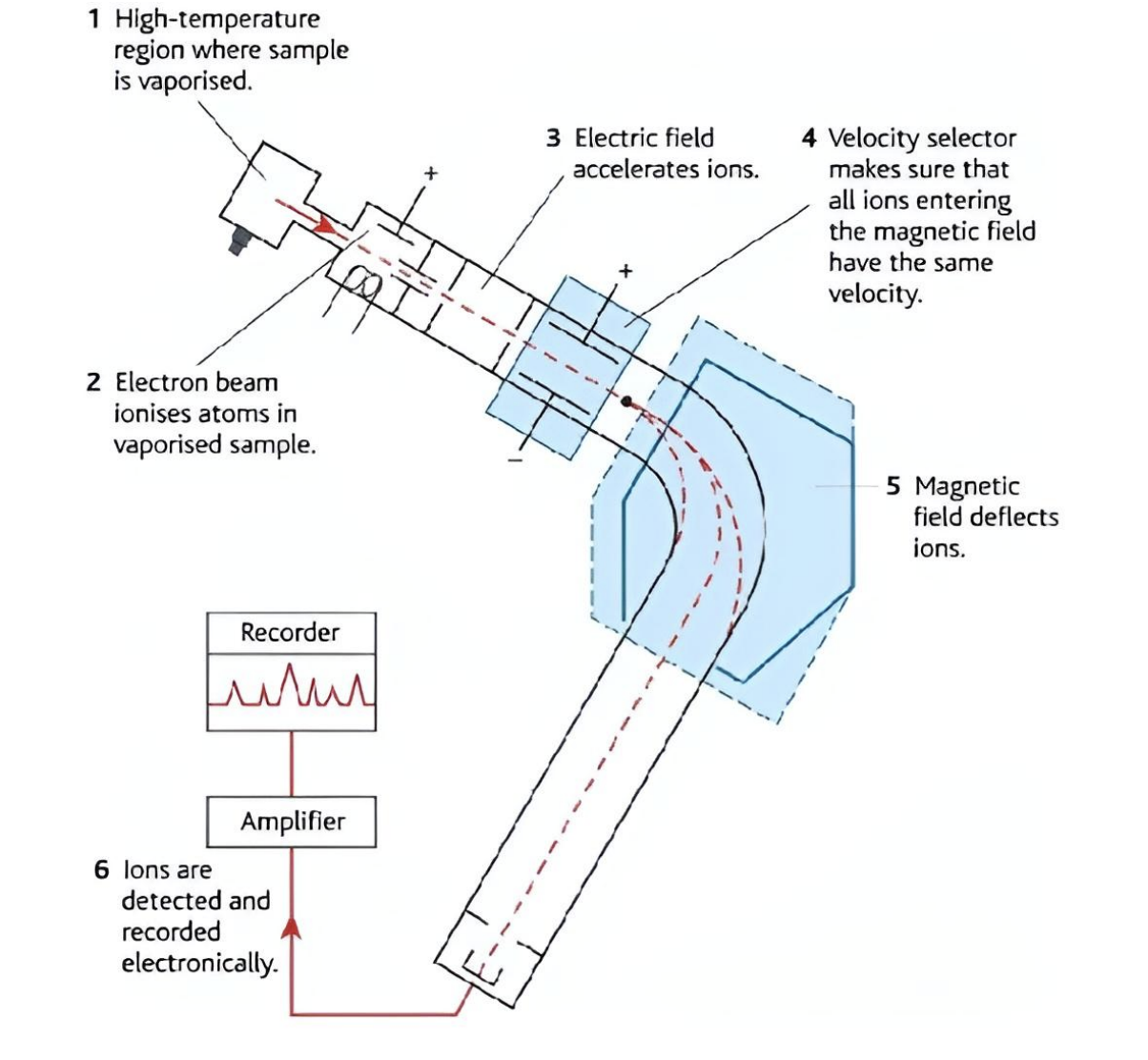
Mass Spectrometer Step 1

Vaporisation: The sample is turned into a gas.

24
New cards
Mass Spectrometer Step 2
Ionisation: Gaseous atoms are bombarded with high-energy electrons to form 1+ cations.
25
New cards
Mass Spectrometer Step 3
Acceleration: Cations are accelerated by an electric field to the same kinetic energy.
26
New cards
Mass Spectrometer Step 4
Velocity Selection: Ions are filtered by speed.
27
New cards
Mass Spectrometer Step 5

Deflection: Ions are deflected by a magnetic field according to their mass-to-charge (m/z) ratio.

28
New cards

Molecular Ion Peak

The peak with the highest m/z ratio, representing the relative molecular mass (Mr).

29
New cards
Quantum Shell
The main energy level of an electron (n=1, 2, 3, etc.).
30
New cards
Orbital
A region that can hold up to two electrons with opposite spins.
31
New cards
<p>s-orbital Shape</p>

s-orbital Shape

Spherical.

32
New cards
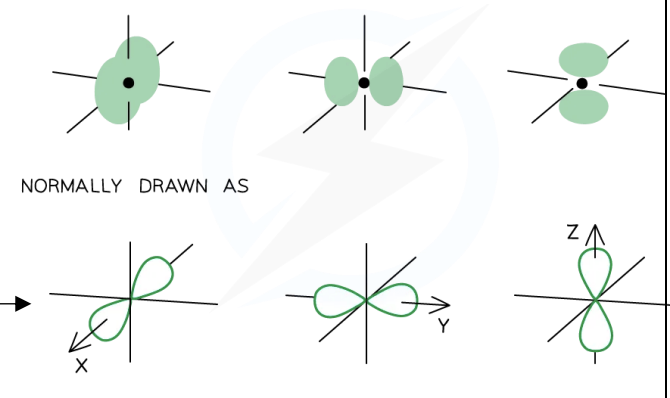
<p>p-orbital Shape</p>

p-orbital Shape

Dumbbell-shaped.

33
New cards
Hund's Rule
Electrons occupy orbitals of the same energy singly before pairing to minimize repulsion.
34
New cards
<p>First Ionisation Energy</p>

First Ionisation Energy

The energy required to remove one mole of electrons from one mole of gaseous atoms to form one mole of 1+ gaseous ions.

35
New cards
Successive IE "Big Jump"
Indicates that an electron is being removed from a inner quantum shell closer to the nucleus.
36
New cards
Periodicity
The repeating pattern of physical and chemical properties across periods.
37
New cards
Ionic Bond

The strong net electrostatic force of attraction between oppositely charged ions.

38
New cards
Hydrocarbon
A compound containing only carbon and hydrogen.
39
New cards
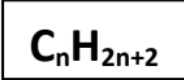
Homologous Series

A family of compounds with the same functional group and general formula, differing by CH2.
40
New cards
Functional Group
An atom or group of atoms that determines the chemical properties of a molecule.
41
New cards
Structural Isomerism
Molecules with the same molecular formula but different structural formulas.
42
New cards
<p>Saturated</p>

Saturated

Contains only single carbon-carbon bonds (Alkanes).
43
New cards
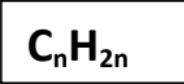
<p>Unsaturated</p>

Unsaturated

Contains at least one C=C double bond (Alkenes).

44
New cards
Free Radical
A species with an unpaired electron.
45
New cards
Homolytic Fission
The breaking of a covalent bond where each atom takes one electron from the pair.
46
New cards
Heterolytic Fission
The breaking of a covalent bond where one atom takes both electrons.
47
New cards
Electrophile
An electron-pair acceptor (attracted to high electron density).
48
New cards
Nucleophile
An electron-pair donor (attracted to electron-deficient areas).
49
New cards
Substitution Reaction
An atom or group is replaced by another.
50
New cards
Addition Reaction
Two molecules react to form a single larger molecule.
51
New cards

Hazard: Toxic

Represented by a skull and crossbones; can cause death if swallowed or inhaled.
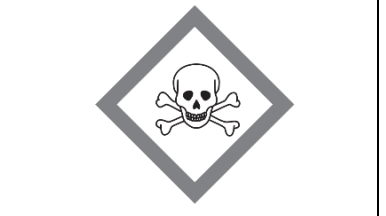
<p>Represented by a skull and crossbones; can cause death if swallowed or inhaled.</p>
52
New cards

Hazard: Corrosive

Can damage skin or eyes on contact and destroy metals.
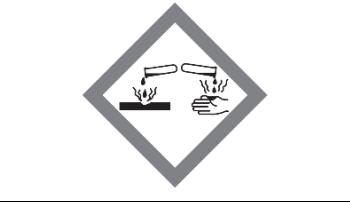
<p>Can damage skin or eyes on contact and destroy metals.</p>
53
New cards
Fractional Distillation
The process of separating crude oil into fractions based on boiling points.
54
New cards
Cracking
Breaking long-chain alkanes into smaller, more useful alkanes and alkenes.
55
New cards
Reforming
Converting straight-chain alkanes into branched or cyclic hydrocarbons for better combustion.
56
New cards
Cation
A positively charged ion (usually metal), smaller than its parent atom.
57
New cards
Anion
A negatively charged ion (usually non-metal), larger than its parent atom.
58
New cards
Isoelectronic Ions

Ions with the same number of electrons (e.g., N3-, O2-, F-, Na+, Mg2+, Al3+.
59
New cards
Polarisation
The distortion of the electron density of an anion by a neighboring cation.
60
New cards
Polarising Power
The ability of a cation to distort an anion; increased by high charge and small radius.
61
New cards
Polarisability
The ease with which an anion's electron cloud is distorted; increased by large radius and high charge.
62
New cards
Covalent Bond
The strong electrostatic attraction between two nuclei and a shared pair of electrons.
63
New cards
Dative Covalent Bond
A bond where both electrons in the shared pair come from the same atom.
64
New cards
Bond Length
The distance between the nuclei of two covalently bonded atoms.
65
New cards
Bond Energy
The energy required to break one mole of a specific bond in the gaseous state.
66
New cards
Electronegativity
The ability of an atom to attract a bonding pair of electrons in a covalent bond.
67
New cards
Polar Bond
A covalent bond where electrons are shared unequally due to a difference in electronegativity.
68
New cards
Metallic Bonding
The strong electrostatic attraction between metal cations and a sea of delocalised electrons.
69
New cards
Giant Ionic Lattice
A regular 3D arrangement of oppositely charged ions (e.g., NaCl).
70
New cards
Giant Covalent Structure
A 3D network of atoms joined by covalent bonds (e.g., Diamond, Graphite, Silicon).
71
New cards
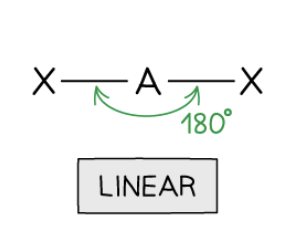
<p>Linear Shape</p>

Linear Shape

2 bonding pairs, 0 lone pairs, 180° bond angle.
72
New cards
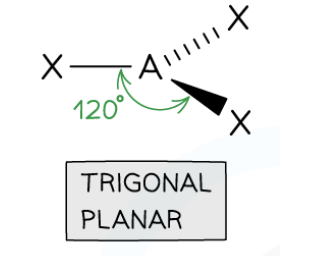
<p>Trigonal Planar Shape</p>

Trigonal Planar Shape

3 bonding pairs, 0 lone pairs, 120° bond angle.
73
New cards
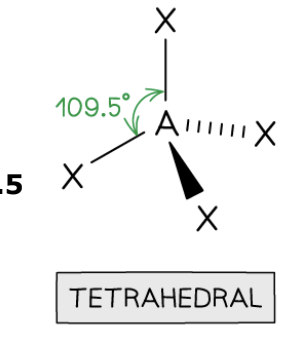
<p>Tetrahedral Shape</p>

Tetrahedral Shape

4 bonding pairs, 0 lone pairs, 109.5° bond angle.
74
New cards
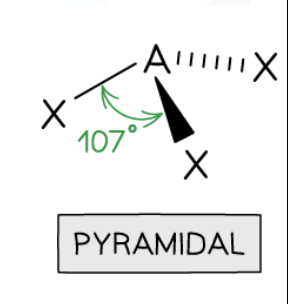
<p>Trigonal Pyramidal Shape</p>

Trigonal Pyramidal Shape

3 bonding pairs, 1 lone pair, 107° bond angle (e.g., NH3.
75
New cards
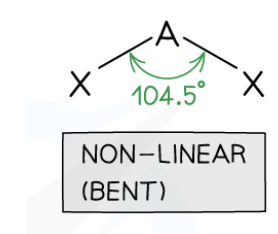
<p>V-Shaped / Bent</p>

V-Shaped / Bent

2 bonding pairs, 2 lone pairs, 104.5° bond angle (e.g., H2O).
76
New cards
Mole (Mass)
Mass / Molar Mass
77
New cards
Mole (Gas at RTP)
Volume / 24
78
New cards
Ideal Gas Equation
pV = nRT
79
New cards
Pressure unit for pV=nRT
Pascals (Pa)
80
New cards
Volume unit for pV=nRT
Cubic meters (m3)
81
New cards
Temperature unit for pV=nRT
Kelvin (K)
82
New cards
Atom Economy
(Molar mass of desired product / Total molar mass of all products) x 100
83
New cards
Percentage Yield
(Actual yield / Theoretical yield) x 100
84
New cards
Parts per million (ppm)
(Mass of solute / Mass of solution) x 1,000,000
85
New cards
Density
Mass / Volume
86
New cards
Reactivity Series (High to Low)
K, Na, Li, Ca, Mg, Al, Zn, Fe, Cu, Ag, Au
87
New cards
<p>Group 2 Reactivity Trend</p>

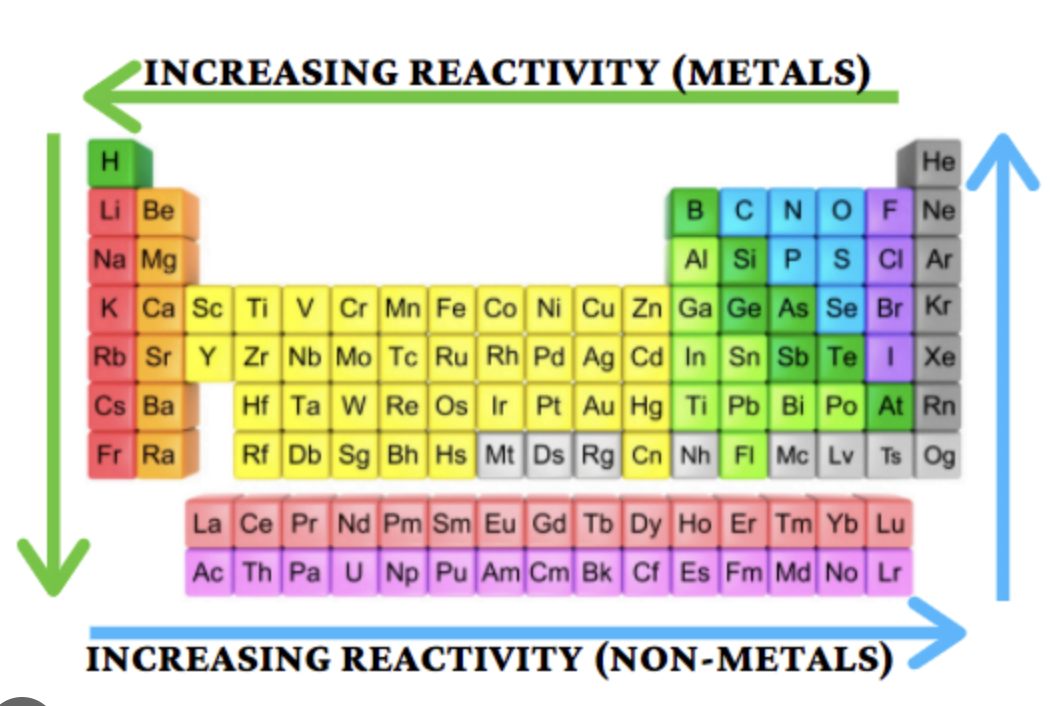
Group 2 Reactivity Trend

Increases down the group
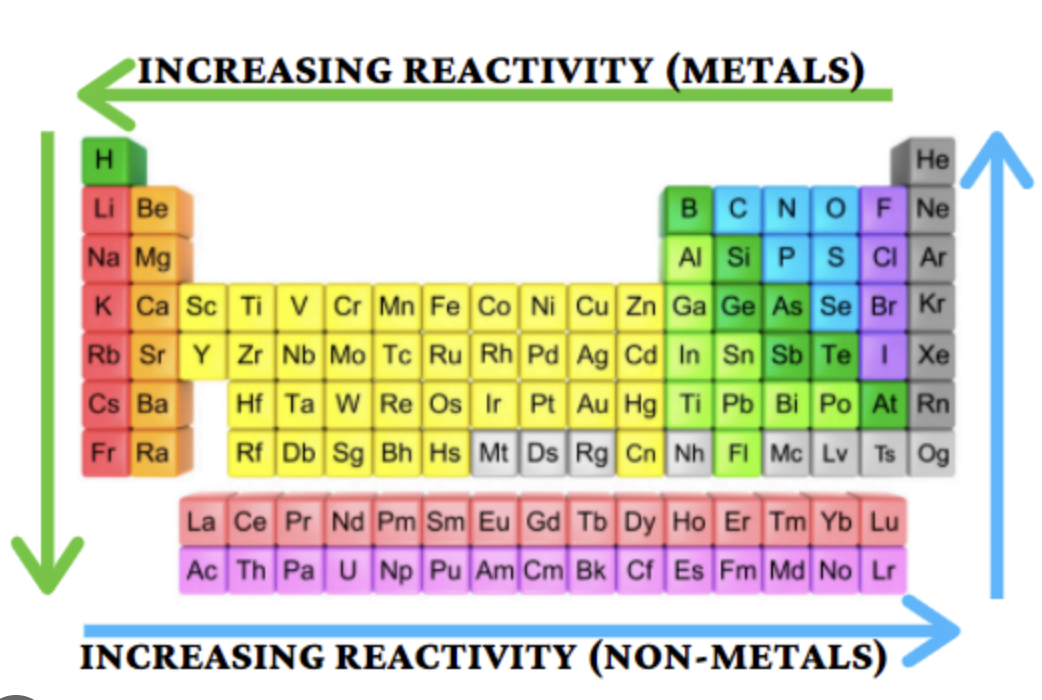
88
New cards
Group 7 Reactivity Trend
Decreases down the group
89
New cards
Electronegativity Trend
Increases across a period and up a group
90
New cards
First Ionisation Energy Trend
Increases across a period, decreases down a group
91
New cards
Atomic Radius Trend
Decreases across a period, increases down a group
92
New cards
Chlorine + Potassium Bromide
Orange solution forms (Bromine displaced)
93
New cards
Bromine + Potassium Iodide
Brown solution forms (Iodine displaced)
94
New cards
Complete Combustion
Carbon Dioxide + Water
95
New cards
Incomplete Combustion
Carbon Monoxide + Water
96
New cards

Alkane + Halogen (UV)

Halogenoalkane + Hydrogen Halide

97
New cards

Alkene + Hydrogen (Nickel)

Alkane

98
New cards

Alkene + Bromine Water

1,2-dibromoalkane (Colourless)

99
New cards
Alkene + Steam
Alcohol
100
New cards
Alkene + Acidified Potassium Manganate
Diol (Purple to Colorless)