Lecture 24 - Arthropoda (Trilobita + Crustacea)
 Call Kai
 Learn
Learn Practice Test
 Spaced Repetition
 Match
Match Flashcards
 Knowt Play
1/49

There's no tags or description
Looks like no tags are added yet.
Name | Mastery | Learn | Test | Matching | Spaced | Call with Kai |
|---|
No analytics yet
Send a link to your students to track their progress
50 Terms
What is Trilobita?
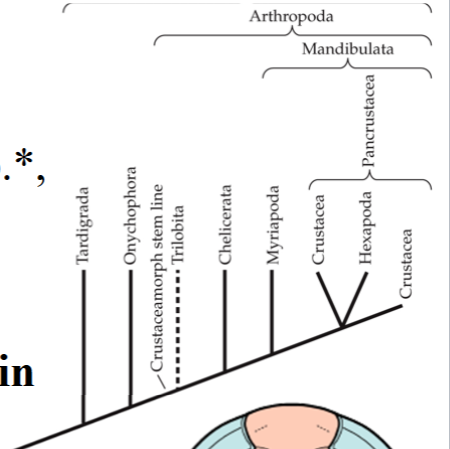
where does it fall on the Phylogenetic tree?
EXTINCT Subphylum within the arthropods
Trilobita
Number of species
MARINE, FRESH or TERRESTRIAL
When were they present
When were they wiped out?
25 000 species = Entirely MARINE
PRESENT = Cambrian era
WIPED OUT = End-Permian extinction event
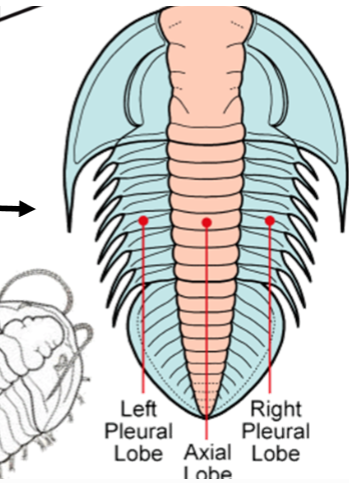
******What is the body plan of Trilobita?
HOW MANY LOBES + how are these lobes arranged?
What 3 features does it have?
3 lobed body (hence the name) → arranged longitudinally
Features:
1 pair antennae
1 pair compound eyes
many pairs of Biramous limbs
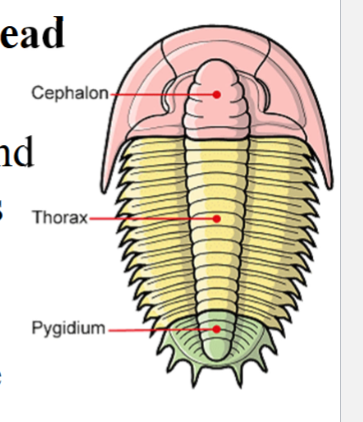
What are the TAFMATA that trilobites have?
Head, Thorax + Pygidium
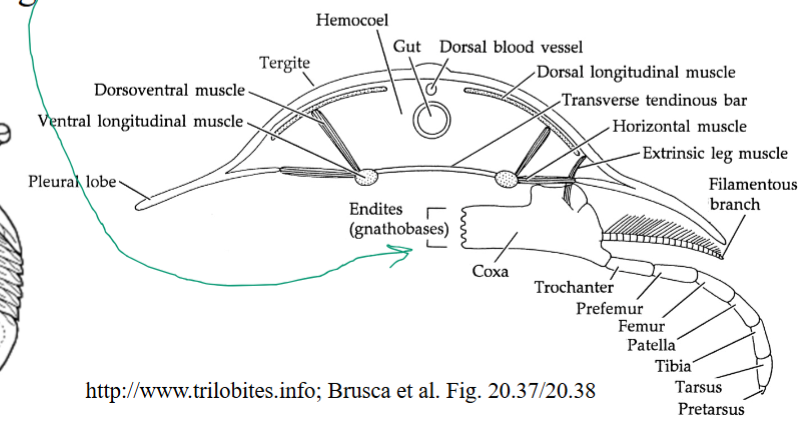
****What are coxal Endites
lobes or projections arising from the inner margin of the coxa (basal article of arthropod limb), often involved in feeding or limb articulation in arthropods.
they are the mouth parts of a trilobite + occupy the length of its underbody (not restricted to the head)
often SPINY
*****What type of feeders are trilobites?
Most = detritivorous or predatory
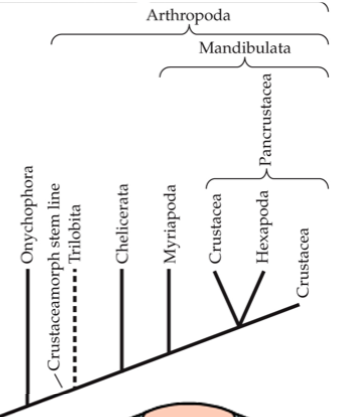
What are we defining as CRUSTACEANS for this course?
Non-hexapod Pancrustacea
“Crustacea”
How many species
Marine, fresh or terrestrial
70 000
MOSTLY MARINE, many fresh + some terrestrial
Which Arthropod group has the Heaviest land invertebrate?
Crustaceans = Non-hexapod Pancrustaceans
***What is the General Morphology of ‘Crustaceans’?
head appendages?
Type of EYE
5 pairs of appendages on head
compound eyes that can be stalked or sessile
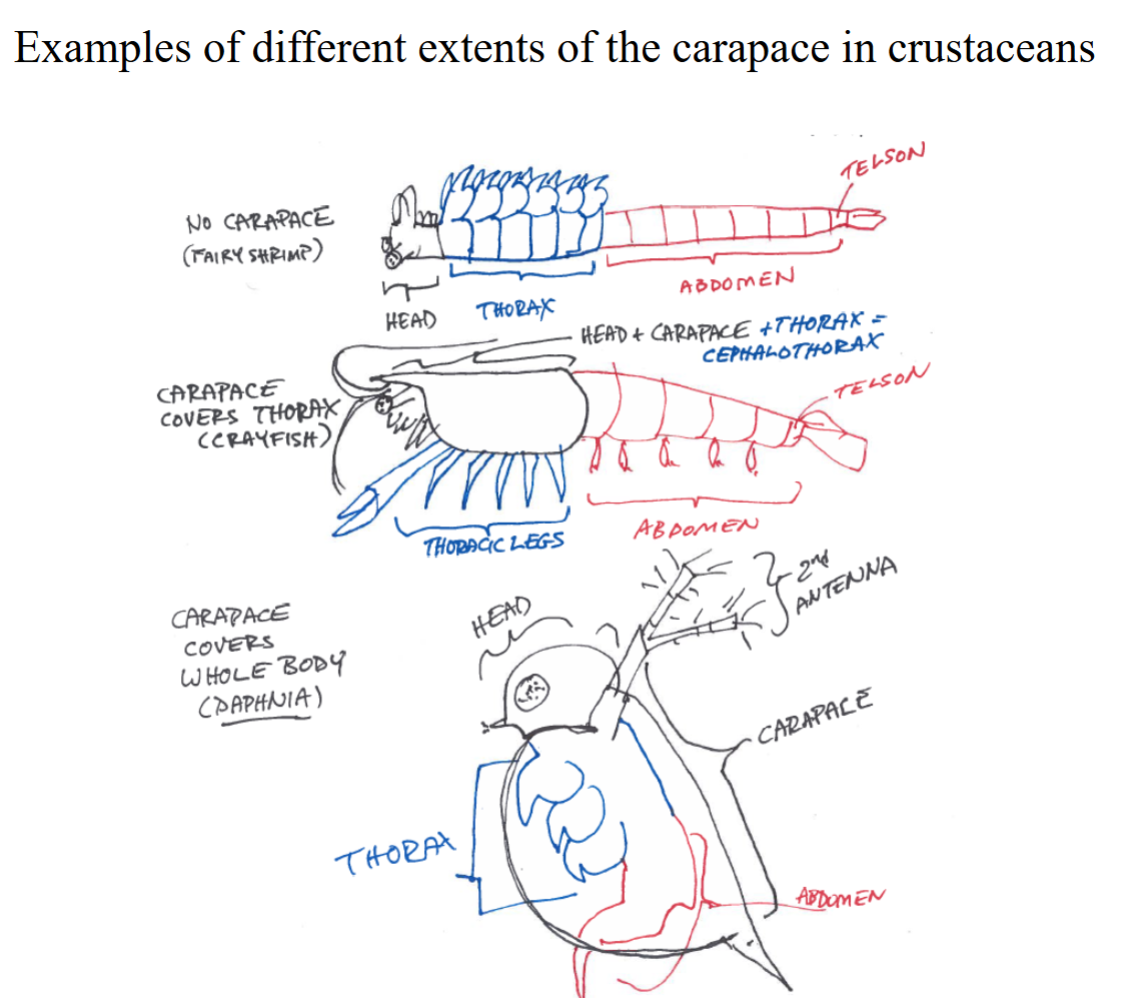
What is a carapace?
Shield that extends backways that covers the head and some/all of the thoracic segments of crustaceans
****What are maxillipeds?
Limbs modified for feeding in crustaceans
commonly in the anterior thoracic segments that fuse with the head
***What are pereopods?
Thoracic limbs that are used for walking
*True or false: The abdominal region of a crustacean ALWAYS has limbs?
FALSE
It may or may not
***What are Pleopods?
Abdominal limbs of the crustacean which may be used for swimming or holding eggs or to transfer sperm
*****What type of REPRODUCTION do Crustaceans have?
Hermaphrodites or separate sexes?
Asexual vs. sexual reproduction?
Almost ALL have separate sexes + ONLY reprod SEXUALLY
*******What are the 2 exceptions to separate sexes + sexual reprod of crustaceans?
hermaphroditic barnacles
Cyclically parthenogenic cladocerans
*****How is Sperm transferred in crustaceans?
DIRECT transfer of sperm NO free-spawning of gametes into the water
*****What are gonopods
Modified limbs for transferring sperm present on males
***Do female crustaceans brood their eggs?
YES they frequently brood their eggs
******What type of cleavage do crustacean zygotes have?
What is the LARVA called?
Cleavage can be intra-lecithal, spiral or radial
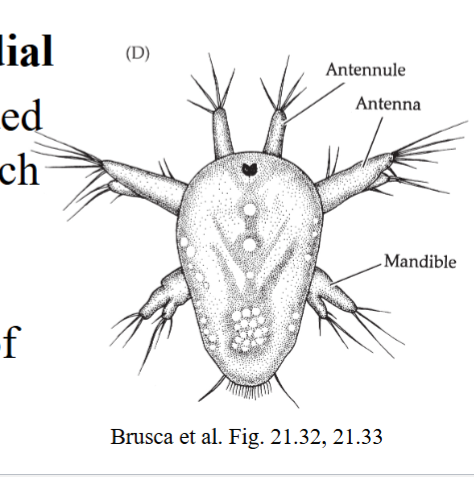
LARVAE = Nauplius
***Nauplius morphology
appendages?
Eye?
3 appendages
Naupliar eye (simple eye in middle of forhead)
***In Crustacean Taxa that produces Very yolky eggs vs. Little yolk what does naupliar development look like?
Where do they pass the naupliar stage
What type of development do they have?
Very yolky = naupliar stage = passed in the egg shell juvenile that hatches out looks very similar to the adults eg.
DIRECT DEVELOPMENT
Little yolk = FREE SWIMMING/planktonic Naupliar larval stage = undergo several other larval stages until adult-like juvenile stage is reached = Indirect development
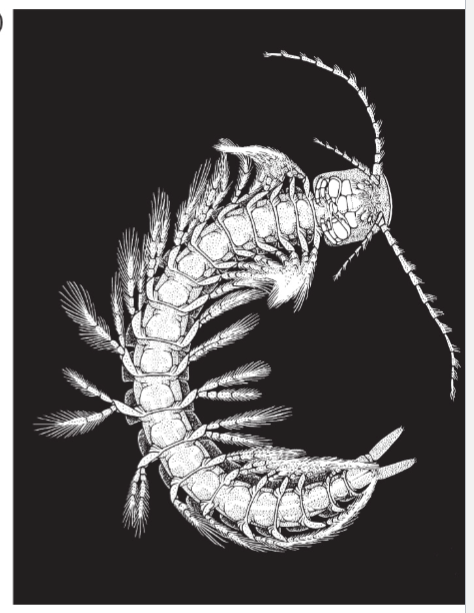
*******What is Remipedia?
General morphology? → Type of Segmentation + What tagmata
What are they sister to?
a CLASS of crustaceans
Homonomous segments
2 tagmata = HEAD + TRUNK
Sister to HEXAPODA
*******What is Branchiopoda??
Fresh, Marine or Terrestrial
What type of feeders are they?
CLASS of crustacean (fairy shrimp, water fleas etc.)
Almost all = FRESH WATER
mostly FILTER FEEDERS
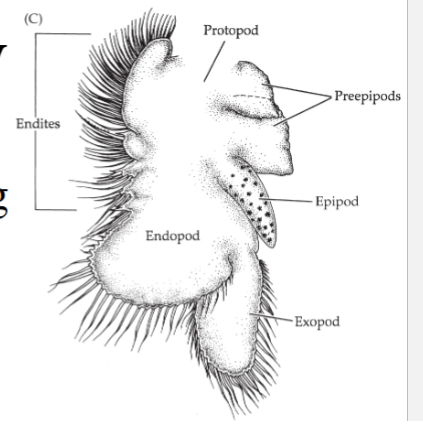
******Almost all Branchiopoda have _____Limbs used for ________, filter-feeding +/or __________
Phyllopodous limbs used for swimming, filter-feeding +/or Gas exchange
******What is an example of branchiopoda? it does not use their phyllopodous legs to swim but rather their powerful second antennae
Daphnia
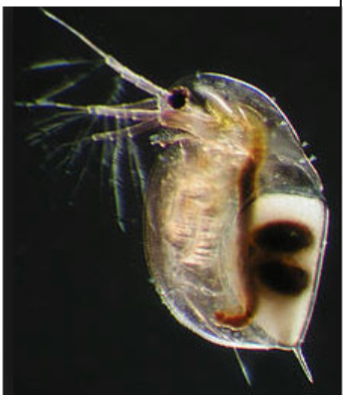
******To what extent does the carapace of Branchiopods cover the body?
Highly VARIALBLE
completely absent → completely covered
*****What type of reproduction does branchiopoda use?
Cyclic parthenogens
organisms alternately reproduce asexually and sexually. This mode of reproduction involves the alternation of asexual and sexual phases, with individuals developing from unfertilized eggs during the asexual phase
******What is Malacostraca
What type of crustaceans are in this group?
To what extent does the carapace cover the body
What type of eyes?
CLASS = contains the Shrimp, crab, lobsters cray fish etc. = important food for humans
All have Carapace = covers part or all of the thorax
stalked or sessile eyes
*****What is Hoplocardia?
What type of crustaceans does it contain
What is so special about them? 2 characteristics
Where do they live?
Carapace?
Subclass of Malacostraca = contains the stomatopods + mantis shrimp
MOST COMPLEX EYES of any arthropod
SPEARING/CLUBBING/SNAPPING thoracic limbs = POWERFUL STRIKE (like a bullet)
Live in burrows
small carapace
*******Most malacostracans belong to the Order _____?
DECAPODA = crabs, lobsters, cray fish etc.
*****How many pairs of what type of legs do Decapods have?
Carapace? = WHAT DOES IT COVER?
5 pairs of pereopods (thoracic limbs used for WALKING) with one or more pairs = modified CLAWS which can be chelate or subchelate
Well developed Carapace= encloses Leg bases + Gills in a branchial chamber
****Malacostraca/ Decapoda Claws evolve from?
Normal walking legs
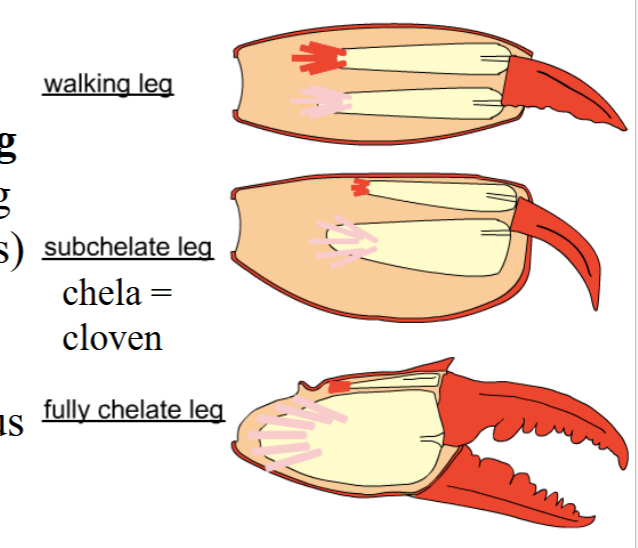
*******Compare between a walking leg, subchelate leg + Fully chelate leg in Malacostraca
How does the closer apodeme differ in FULLY chelate claws
Closer Apodeme muscle gets stronger + larger
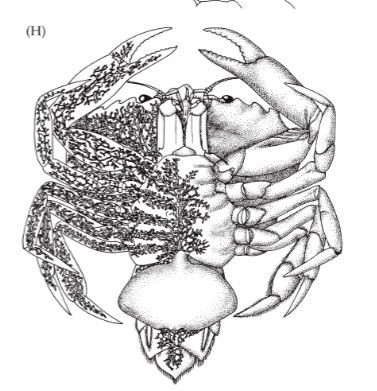
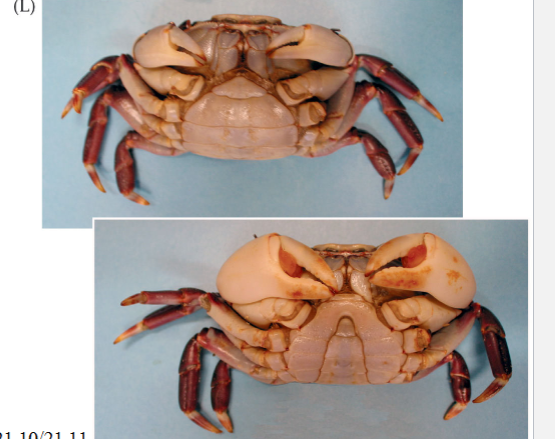
*****What is the abdomen like in TRUE CRABS?
GREATLY REDUCED
top = female bottom = male
******isopoda + Amphipods
Type of eyes
Carapace
Marine, fresh or terrestrial
Sessile eyes
LACK CARAPACE
FULLY TERRESTRIAL (esp. isopods) + some marine + fresh
*********How do Isopods + Amphipoda DIFFER?
Isopods = Dorsoventrally flattened
Amphipods = laterally flattened
Amphipods generally have MORE VARIABLE leg morphology
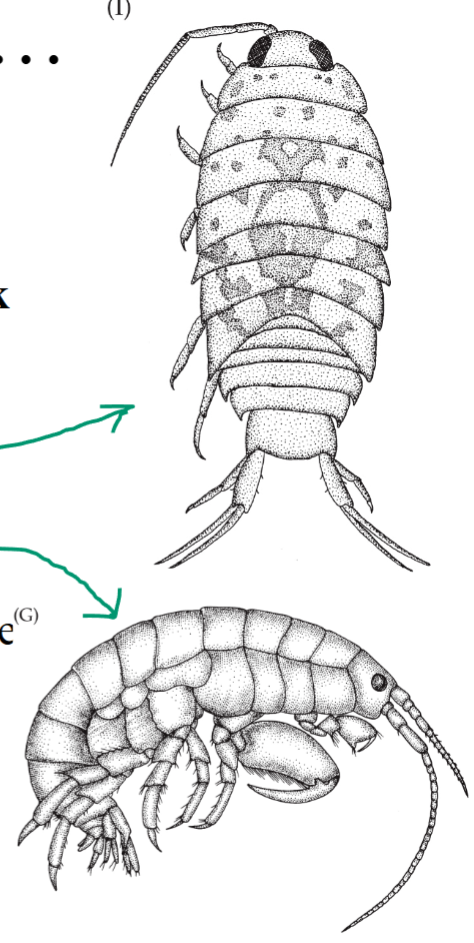
*******Etymology: Iso vs. Amphi
Explain the names of isopod + amphipods
Iso = equal= similar legs
amphi = both= variable leg morphology
*****What type of Feeding do isopods + amphipods do?
ecological role?
ecologically very diverse
predators, herbivores detritivores etc.
PARASITES
*****How do PARASITIC isopods + amphipods compare to the non-parasitic types?
What is an example of an extreme difference in morphology
Parasitic = highly morphologically modified → SOME LACK APPENDAGES and have SAC-like bodies
*****Terrestrial Isopods + Gas exchange?
what system do they use?
have given up gills and use Spiracle + trachea system
******What is Thecostraca?
Order within crustaceans
*****What is Cirripedia?
WHAT is the COMMON NAME?
SUBCLASS that makes up almost the entirety of Thecostraca
Common name = BARNACLES
******Cirripedia
Marine, fresh or terrestrial
What type of feeding/ecological role do they do?
MARINE
Most = sessile filter feeders + some = parasites
*****What were Cirripedia thought to be? What discovery made them categorized with crustacean?
What morphologically about them made them mistaken?
Thought to molluscs until their LARVAE were discovered
Attached to substrate + enclosed in calcareous plates
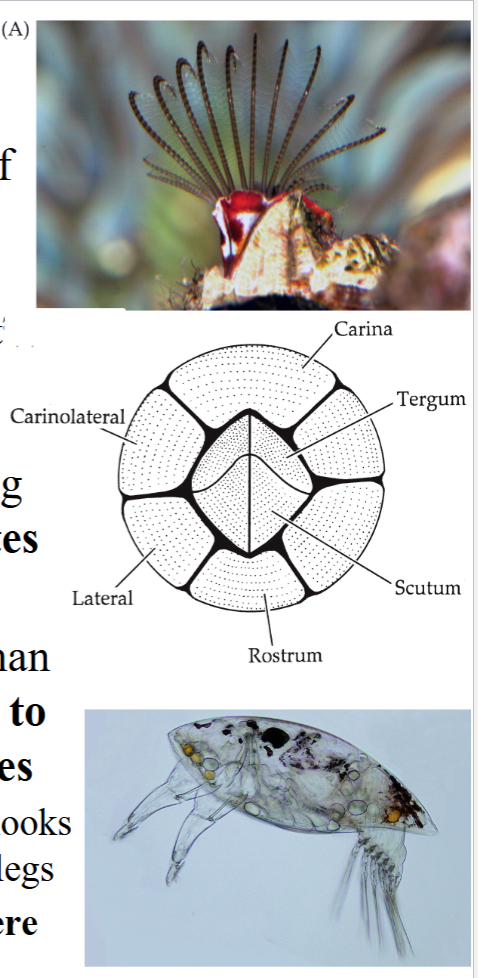
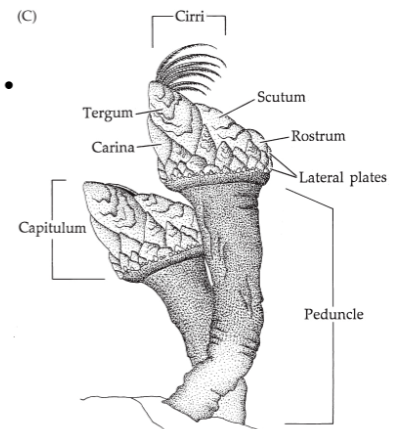
****What is a STALK for Cirripedia?
Free living barnacles can be Stalked or unstalked
******Cirripedia
Separate sex or hermaphroditic?
penis?
Hermaphroditic
have VERY LONG PENISES to reach into the shells of as many neighbors as possible
*******What affects the length of the feeding appendages?
what results in LONG vs. SHORT appendages?
Influenced by Wave strength
HIGH wave force = SHORT appendage
****True or false there are PARASITIC BARNACLES
if yes give an example
TRUE
none off the info below is bolded on the slides
Rhizocephala invades bodies of other crustaceans where they grow an almost fungus like body that invades the haemocoel of the host