control of gene expression at the post-transcriptional level
 Call Kai
 Learn
Learn Practice Test
 Spaced Repetition
 Match
Match Flashcards
 Knowt Play
1/8

There's no tags or description
Looks like no tags are added yet.
Name | Mastery | Learn | Test | Matching | Spaced | Call with Kai |
|---|
No analytics yet
Send a link to your students to track their progress
9 Terms
This is control of gene expression after transcription
in eukaryotes, what does transcription produce
pre-mRNA / primary mRNA
what does primary mRNA contain? (definitions)
-exons: coding region
-introns: non-coding region [do not code for amino acids]
the primary mRNA needs to be modified before leaving the nucleus.
process of post-transcriptional control
-pre-mRNA is modified
-introns are removed from the pre-mRNA
-exons are joined together
-this produces mature mRNA
-the mature mRNA leaves the nucleus for translation
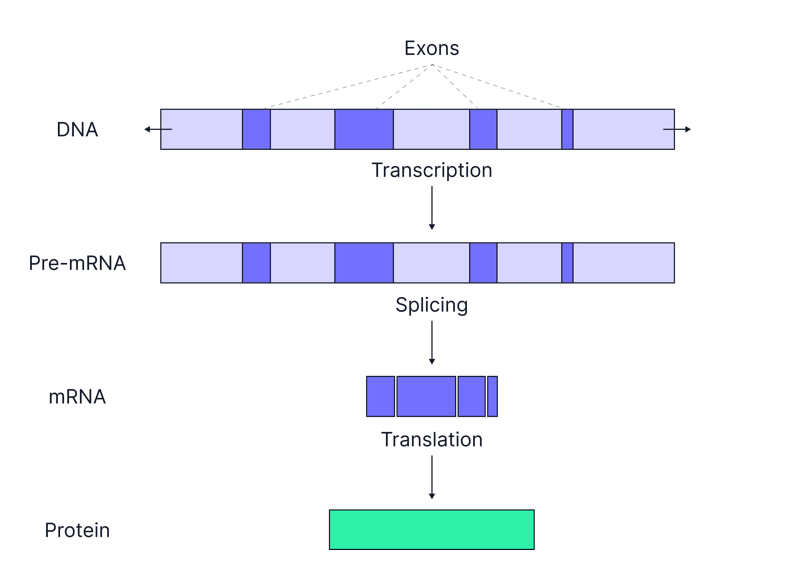
name of process removing introns and what does it ensure
splicing→ it ensures only coding sections of mRNA are used to form proteins during translation
alternative splicing
exons can be joined together in different combinations→ produces different version of mRNA molecules→ produce different proteins from the same gene
in prokaryotes, mRNA is produced without splicing. There’s no introns in prokaryotic DNA.
the primary mRNA strand is complementary to the DNA template strand