WK 6 finance
 Call Kai
 Learn
Learn Practice Test
 Spaced Repetition
 Match
Match Flashcards
 Knowt Play
1/18

There's no tags or description
Looks like no tags are added yet.
Name | Mastery | Learn | Test | Matching | Spaced | Call with Kai |
|---|
No analytics yet
Send a link to your students to track their progress
19 Terms
what are real options
discretionary opportunities that are embedded within firm’s investment projects.
they give firms the right but not the obligation to exercise the option
options can be optimally exercised to maximise project value by waiting until after receiving new information in future
Limitation of standard NPV analysis
standard/static NPV analysis treats investment decisions as if they are now or never decisions with no alternatives when in reality managers tend to have flexibility in terms of the decisions they make in regard to projects. Hence, this flexibility provided by options should be accounted for in project evaluation and NPV analysis.
What is a call option (financial options)
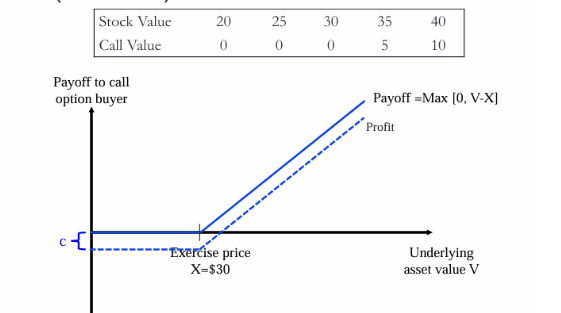
it is a contract between a holder and writer that gives the holder the right but not the obligation to buy the underlying asset at a pre-specified exercise/strike price (X), even if the value (V) of the underlying asset changes
What is a put option
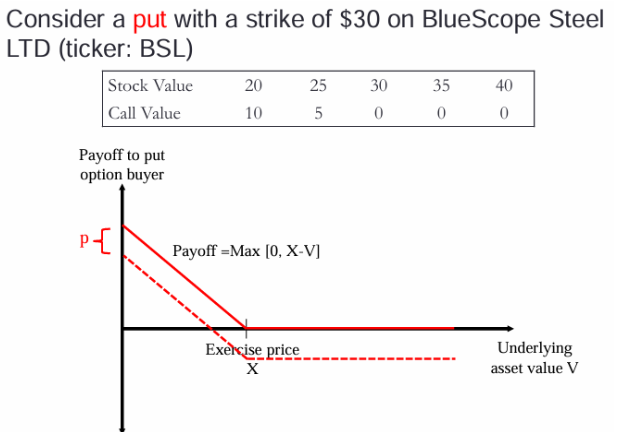
it is a contract between a holder and writer that gives the holder the right but not the obligation to sell the underlying asset at a pre-specified exercise/strike price (X), even if the value (V) of the underlying asset changes
What is T, c and p
T=time to expiration
c=euro call premium (diff between payoff and profit)
p=euro put premium (diff between payoff and profit)
Payoff from call option
V-X (you benefit when V increases, cuz you can buy for cheaper)
Payoff from put option
X-V (you benefit when V decreases, cuz you can sell for higher)
Issues with real options
you must be able to identify options in the project and identify what type of options they are
need to be able value real options
need to know how to value diff types of options
Conditions that need to be met for real option to exist
news will arrive in future
when news arrives, it may affect managers decision making
How to identify real options
search for uncertainty managers may face
look for clues in project’s description: phases, strategic investment, scenarios
examine pattern of cash flows and expenditures : might occur in stages
What does the exercise price represent in real options
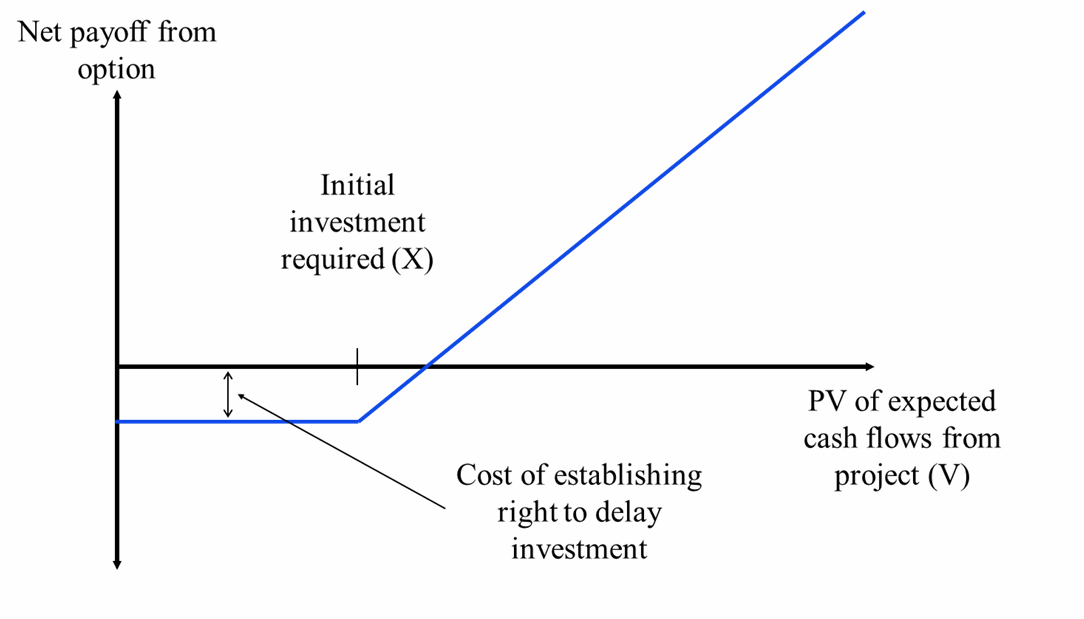
what you pay/cost of the actual project
What does the premium represent in real options
The price of obtaining the actual option/keeping that form of flexibility
what does the underlying asset represent in real options
the project whose value the option depends on ie the present value of cash flows
Types of real options
Option to delay
allows you to delay making the investment
Option to expand: allows company to see how things are going before expanding
Option to abandon: allows firm the opportunity to abandon the project if it turns out to be unsuccessful
Option to vary
Option to delay (making an investment)
pros: gives you the chance to respond and react to new market information before making your decision
Cons: delaying can reduce the PV of cash flows from the early cash flows the business missed out on from delaying, or gives competitors the chance to dominate the market
may not be costless as you may need to pay for a license or patent so you can act in future
generally viewed as call option
Option to expand/grow
generally viewed as call option
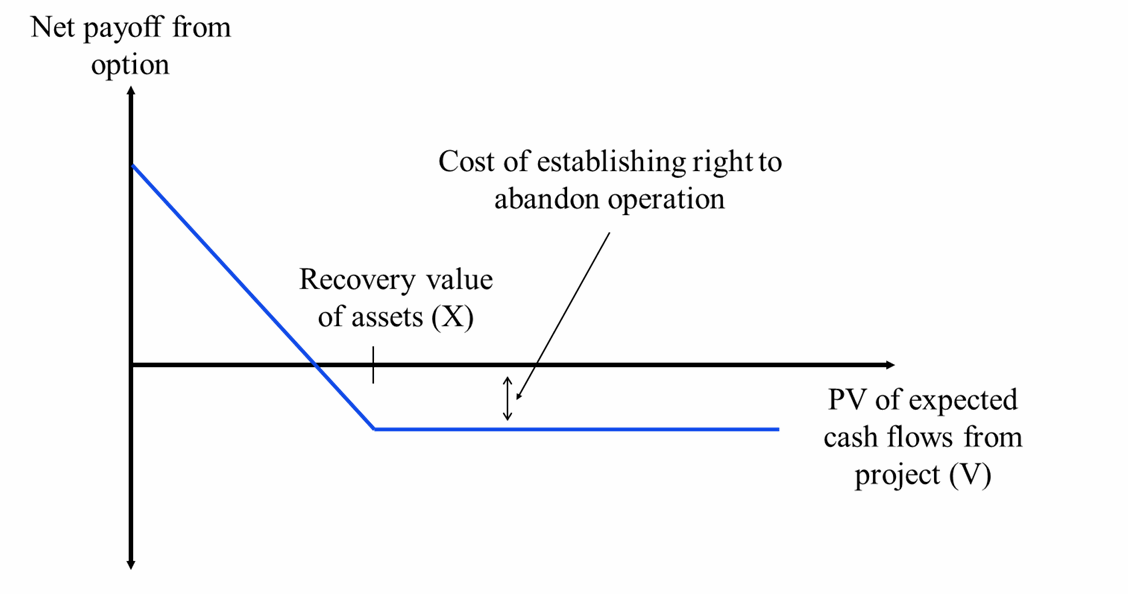
Option to abandon
can use if there is a get out clause
or if firm can abandon the project and realise the salvage value
X=money associated with getting out ie. salvage value of assets
viewed as put option
Option to vary
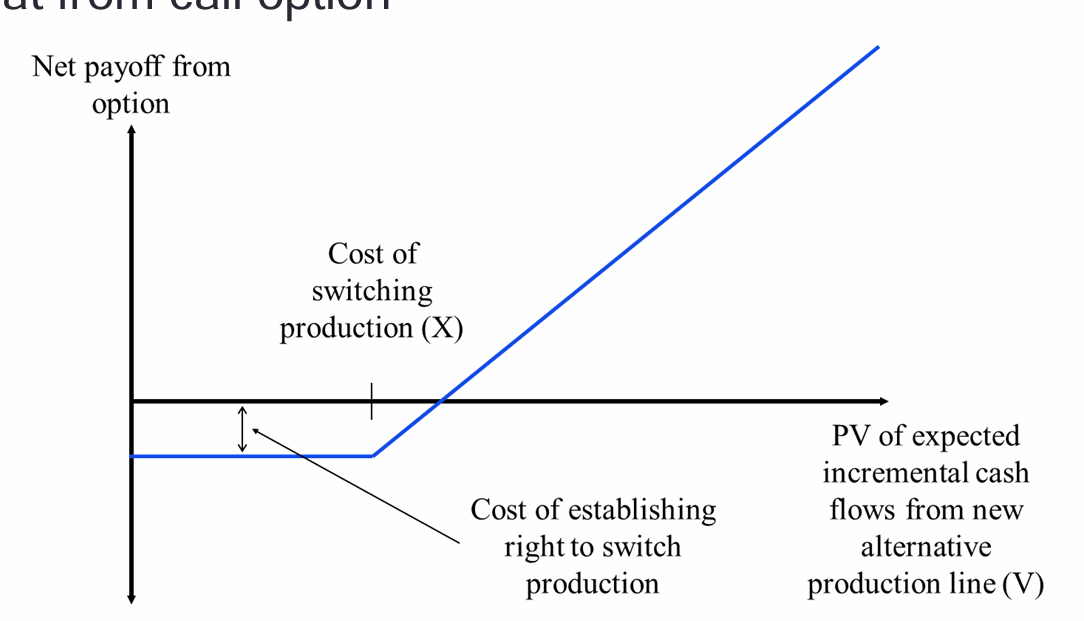
allows firm to revise its operatin decisions for a fixed cost in response to market conditions
eg. option to alter production rate, option to switch inputs
treated as call option
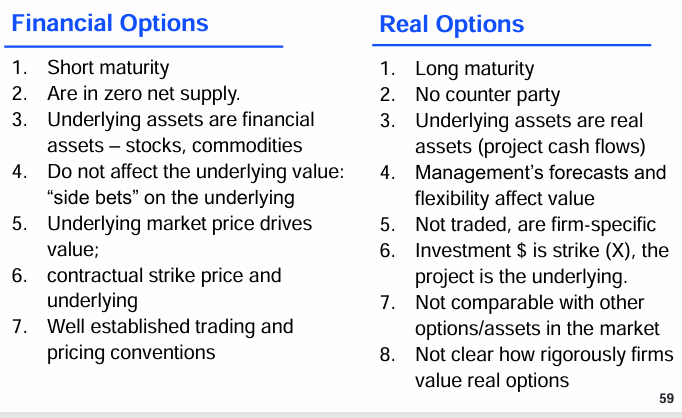
Financial vs real options