NUTR 302: Final exam
 View linked note
 Call Kai
 Learn
Learn Practice Test
 Spaced Repetition
 Match
Match Flashcards
 Knowt Play
1/51

There's no tags or description
Looks like no tags are added yet.
Name | Mastery | Learn | Test | Matching | Spaced | Call with Kai |
|---|
No analytics yet
Send a link to your students to track their progress
52 Terms
What is the meaning of the one health approach?
a. The one health approach is the belief the more you degrade Earth’s natural resource, the faster the resources will come back
b. The one health approach is the idea of thinking about the relationship between human health and environmental health. If a enviroment is bad, humans living in it are at risk of developing health problems
c. The one health approach is an idea of thinking about the relationship between human health and planetary health. When our planet is healthy, humans are healthy. If soil is healthy, humans are healthy.
d. The One Health approach also includes animals in the equation. It recognizes that human, animal, and environmental health are all interconnected, and protecting one protects the others.
c. The one health approach is an idea of thinking about the relationship between human health and planetary health. When our planet is healthy, humans are healthy. If soil is healthy, humans are healthy.
How is soil health related to human health?
-The nutrient quantity in soil affects the quality of the plants we eat
-Soil is the foundation of all nutrients the plant needs
-There may be a connection between the soil microbiome and human microbiome
Soil is a living system. Soil is a matrix of….. (choose all that apply)
a. solids
b. liquids
c. fecal matter
d. gases
e. microbiota
a. solids
b. liquids
d. gases
e. microbiota
What compound makes soil alive?
a. Stored nitrogen in the soil
b. Stored carbon in the soil
c. Store oxygen in the soil
d. Stored magnesium in the soil
b. Stored carbon in the soil
Name some characteristics of farming in natures image
-More trees
-Less annual crops
-We get more deep rooted plants through the soil horizon
-More fungal connections in the soil
Which of the following practices help conserve soil? (Select all that apply.)
a. Overgrazing
b. Conservation tillage
c. Removing all plant cover after harvest
d. Poly-culture (planting multiple crops at once)
e. Excessive tilling
f. Cover cropping
b, d, f
Name some things that can strain soil health
-Synthetic pesticides
-Synthetic fertilizers
-Bare soil
-Overgrazing
-Heavy machinery on wet soil
True or False: The more organic matter we get in our soils, aka as more carbon, the more our soil can act like "sponges" which can fight floods and droughts
True
____ soil doesn’t catch water as fast as _____ covered soiled. This is why good grazing and taking care of soil is important, it can act as a sponge and prevent floods and droughts
a. grass; bare
b. bare; grass
b. bare; grass
Define green water
Rain water used by plants, water for soil
Define blue water
The water that is in a reservoir, like groundwater, lakes, streams, glaciers, snow
define grey water
Polluted water which was not in contact with fecal matter. Ex include waste water from showers, sinks, washing machine
Climate change will most directly affect which aspect of water resources?
a. Water distribution across regions
b. The chemical composition of all groundwater
c. The salinity of all oceans
d. The temperature of all rivers
a. Water distribution across regions
The Ogallala Aquifer supplies approximately how much of Texas’s crop production?
a. 10%
b. 20%
c. 30%
d. 40%
c. 30%
What is currently happening to the Ogallala Aquifer?
a. It is rapidly expanding
b. It is becoming contaminated but remains full
c. It is drying out
d. It is unaffected by agricultural use
c. It is drying out
What is “virtual water”?
a. Water generated through desalination
b. The water used in producing goods that are traded elsewhere
c. Water stored underground for emergencies
d. Artificially created drinking water
b. The water used in producing goods that are traded elsewhere
Why is food considered a form of virtual water in water-scarce regions?
a. Because food contains naturally high water content after processing
b. Because producing food requires water that is effectively exported when the food is sold
c. Because food evaporates water into the atmosphere
d. Because food replaces the need for irrigation
b. Because producing food requires water that is effectively exported when the food is sold
What is a major advantage of drip irrigation?
a. It increases water evaporation
b. It applies water to the entire field evenly
c. It reduces water use by delivering water only where needed
d. It requires no energy to operate
c. It reduces water use by delivering water only where needed
Which statement best describes the size of the agricultural workforce in the United States?
a. It makes up about 1% of all U.S. workers.
b. It is the largest workforce sector in the country.
c. It consists mostly of workers on long-term visas.
d. It has decreased to fewer than one million workers
a. It makes up about 1% of all U.S. workers.
Which of the following trends has been observed among farmworkers in recent years?
a. A decline in overall employment in agriculture.
b. An increase in the number of female agricultural workers.
c. A shift toward mostly permanent, year-round positions.
d. A major decrease in migrant labor.
b. An increase in the number of female agricultural workers.
The primary purpose of the H-2A visa program is to:
a. provide a pathway to U.S. citizenship for farmworkers.
b. allow foreign workers to fill temporary seasonal agricultural jobs.
c. support long-term residency for experienced farmers.
d. replace domestic workers with automated labor.
b. allow foreign workers to fill temporary seasonal agricultural jobs.
Which of the following is a requirement for employers who use the H-2A program?
a. They must offer overtime pay after 30 hours.
b. They must provide housing and transportation for workers.
c. They must allow workers’ families to accompany them.
d. They must guarantee multi-year employment contracts.
b. They must provide housing and transportation for workers.
Which statement describes a major challenge faced by workers in the H-2A program?
a. They receive higher wages than most domestic workers.
b. They automatically qualify for permanent residency.
c. They can easily switch to other industries for better pay.
d. They are limited to working in the U.S for about 10 months
d. They are limited to working in the U.S. for about ten months.
Which of the following is a common occupational hazard for agricultural workers?
a. high-altitude work
b. heavy metal radiation
c. pesticide exposure
d. noise from industrial machinery
c. pesticide exposure
Agricultural workers often face environmental conditions such as:
a. crowded housing, limited sanitation, lack of transportation
b. guaranteed access to affordable healthcare
c. unstable transportation systems provided by employers
d. high-standard workplace ventilation
a. crowded housing, limited sanitation, lack of transportation
Agricultural exceptionalism
A form of structural oppression that excludes agricultural workers from most worker protection laws in the U.S
Which of the laws/acts farmworkers were intentionally excluded from
a. National Labor Relations Act (NLRA), 1935
b. Social Security Act, 1935
c. Federal Fair Labor Standards Act (FLSA), 1938
d. Occupational Safety and Health Act (OSHA), 1970
a. National Labor Relations Act (NLRA), 1935
c. Federal Fair Labor Standards Act (FLSA), 1938
Which state first established overtime requirements for agricultural workers?
a. Hawaii
b. Washington
c. Maryland
d. California
d. California
If a state does not have its own minimum wage law, farmworkers are paid according to:
a. federal minimum wage rules
b. whichever wage the employer chooses
c. city-level wage requirements
d. guidelines from farm labor associations
a. federal minimum wage rules
Which of the following can be composted?
a. Dry leaves, branches, and grass
b. Aluminum foil
c. Glass jars
d. Plastic wrappers
a. Dry leaves, branches, and grass
Which food items are acceptable in compost?
a. Packaged snacks
b. Meat, bones, and dairy
c. Candy wrappers
d. Plastic forks
b. Meat, bones, and dairy
how long does a carrot take to break down in compost?
a. 3 years
b. 10 years
c. 6–8 weeks
d. 1 day
c. 6–8 weeks
After 10 years in a landfill, a carrot will:
a. Decompose completely
b. Become soil
c. Dissolve in water
d. Still look like a carrot
d. Still look like a carrot
Which paper products can be composted?
a. Pizza boxes, napkins, paper towels (no cleaners)
b. Glossy magazines
c. Laminated brochures
d. Receipt paper
a. Pizza boxes, napkins, paper towels (no cleaners)
Which label confirms something is compostable?
a. Recyclable
b. Natural
c. Biodegradable
d. Compostable
d. Compostable
When used on farms, compost emissions become:
a. Higher
b. Neutral
c. Negative
d. Unmeasurable
c. Negative
Compost filters stormwater pollutants by:
a. 10–20%
b. 60–95%
c. 20–40%
d. 50–60%
b. 60–95%
Produce stickers are harmful because they:
a. Decompose too fast
b. Turn into microplastics
c. Add nutrients
d. Attract pests
b. Turn into microplastics
Waste diversion means:
a. Burying waste
b. Burning waste
c. Keeping waste out of landfills by composting/recycling/reuse
d. Shipping waste overseas
c. Keeping waste out of landfills by composting/recycling/reuse
how does biodiversity help maintain soil health? (Select all that apply)
a. Improves nutrient cycling
b. Increases soil structure and aeration
c. Enhances water retention
d. Reduces the variety of soil organisms
e. Suppresses pests and diseases
f. Causes soil to lose organic matter
a. Improves nutrient cycling
b. Increases soil structure and aeration
c. Enhances water retention
e. Suppresses pests and diseases
Agroforestry
The practice of intentionally combining trees and shrubs with crops or livestock on the same land to create a more sustainable and productive system
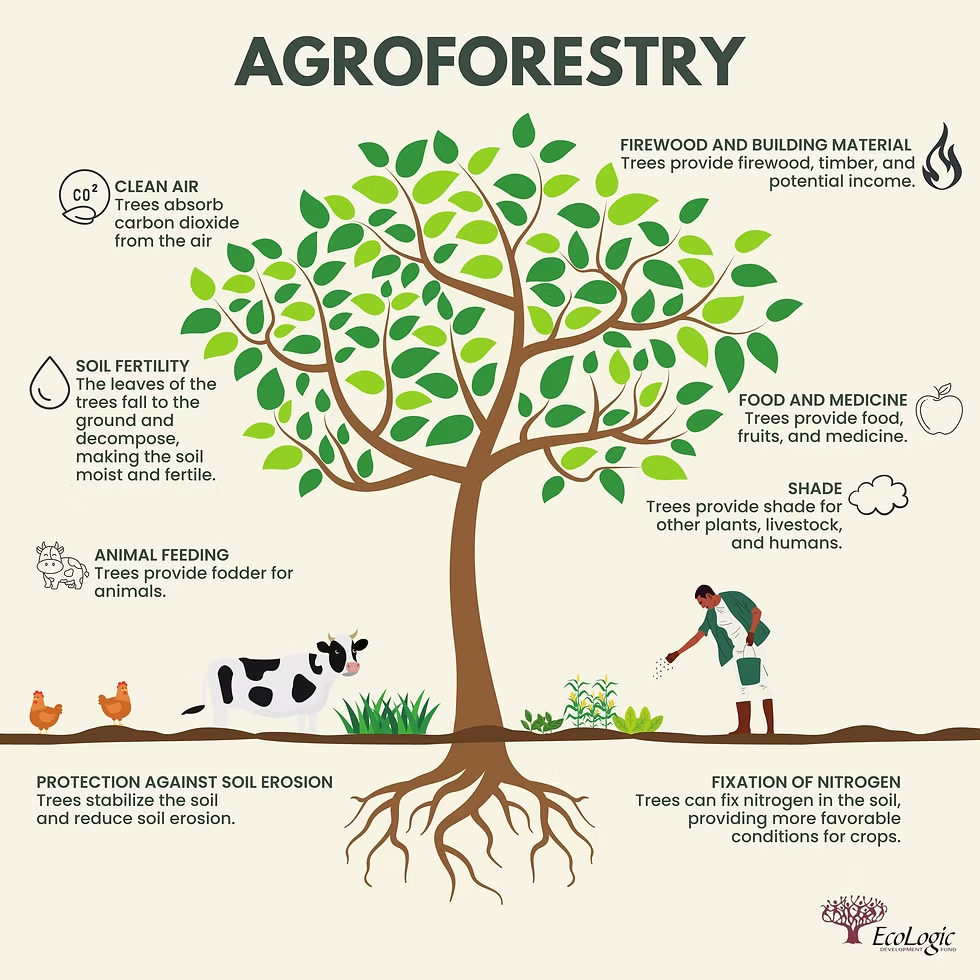
differentiate fresh water vs ground water
Ground water:
-Water stored underground i.e. soil, sand, & rock (aquafiers)
-Comes from rain seeping into the ground
-Usually Accessed by wells, springs, or pumping
-Filtered naturally through soil & rock
Fresh water:
-Water w/ low salt content found on Earth’s surface i.e. rivers, lakes, streams, ponds, glaciers, & ground water
-more vulnerable to pollution due to runoff & human activities
What are the 5 principles we must follow to plant in nature’s image (Gabe Brown TedTalk)
Least amount of mechanical disturbance as possible. Such as not tilling the soil
Armor on the soil surface, aka cover cropping. Less prone to wind and water erosion
Diversity. Having different species of grass, legumes, forms, etc
Leaving roots in the ground as long as possible, encouraging a habitat for insects
Animal impact. Cow & lamb grazing, hens out on pasture, bees that pollinate and provide honey
What is soil carbon?
a. The carbon stored in soil from decomposed plants, animals, and microbes
b. Carbon found only in rocks beneath the soil
c. The carbon in the atmosphere above soil
d. Carbon contained in soil minerals like sand and clay
a. The carbon stored in soil from decomposed plants, animals, and microbes
Name some solutions to prevent wasting water in an agricultural context
-Drop irrigation: Delivers water to soil only where its needed. It reduced water use and the energy required for pumping. It’s More efficient than using overhead sprinklers
-Learning from indigenous practices
How is water wasted in an agricultural context
-Over irrigation (causes runoff, water lodging)
Poorly maintained irrigation infrastructure which causes leaks in canals, pipes, pumps
What were the 2 major acts agriculture workers were intentionally excluded from?
a. Civil rights act of 1964
b.. National labor relations act (NLRA) 1935
c. Federal Fair Labor Standards Act (FLSA) of 1938
d. Occupational Safety and Health Act (OSHA) of 1970
b.. National labor relations act (NLRA) 1935
c. Federal Fair Labor Standards Act (FLSA) of 1938
Name the main demographics of food service and farm working
Food service:
-women
-More than 1/3 mothers, and over half of those are single mothers
-POC
Farmworking:
-undocumented immigrants
-people of lower income
When we put food waste in landfill it produces ______?
a. Carbon dioxide
b. cocaine
c. methane
d. nitrogen
c. methane
What does Washington’s Organics Management Law require?
A. Cities must ban all food and yard waste by 2030.
B. Certain businesses must divert their organic waste to composting if they generate enough of it.
C. Residents must compost at home starting in 2024.
D. Some local governments must offer separate organics collection services.
B. Certain businesses must divert their organic waste to composting if they generate enough of it.
D. Some local governments must offer separate organics collection services.
what is the annual revenue of agritourism in the U.S
a. $5 million
b. $81 million
c. $543 million
d. $949 million
d. $949 million
Food systems countdown initiative