Marketing test 1
 Call Kai
 Learn
Learn Practice Test
 Spaced Repetition
 Match
Match Flashcards
 Knowt Play
1/71

There's no tags or description
Looks like no tags are added yet.
Name | Mastery | Learn | Test | Matching | Spaced | Call with Kai |
|---|
No analytics yet
Send a link to your students to track their progress
72 Terms
What is marketing
Marketing is the process of promoting, selling, and distributing a product or service to meet customer needs and drive business growth. It involves research, strategy, and communication to connect with target audiences.
Main principle of Marketing Myopia
Define & anchor your business around CUSTOMERS NEEDS, not on the basis of your product
Important note abt product longevity
Product superiority is NOT a guarantee of long term success
features of Modern marketing
Refocus → customer needs determining what is made
Marketing now the startegic driver ; not just part of strategy
reallocation + restructuring of power - not main focus on the product itself , factory moves towards end of chain - less focus on tech advancement as a means to meet needs
Concepts of product marketing
Production concept - focus on making things cheap ; if my things r cheap + accesible, ppl will buy
Product concept - focus on continous product improvement for success - assumption that ppl care about product quality,value,performance & featerus , !!DANGEROUS!! - product superiority thing
Selling concept - Aggresive selling - well still be able to sell a shitty product if we have good salespeople pushing sales( Drawback : not likely to build loyalty. Focus on transactions )
Marketing concept - focus on needs/wants of traget market , then delivers value - customer & competitor oriented
Societal marketing concept - thinking about the long term good of society as a whole (difficult)
The selling concept → Marketing concept post Levitt
Inside out (making product THEN finding willing buyers) vs outside-in (opposite):
Selling concept : starts @ factory → focus on existing products → thru selling & promo → ends w profit achieved by sales volume
Marketing concept: Market→ Consumer needs focus → thru intergrated marketing → ends w profit thru consumer satisfaction
Biggest reasons for business failure
No market need
Not enough cash
Wrong people on the team
Competition
Prices and costs
Netflix case study
Blockbuster video v succesful in 2004- worth 8 billion - even on stock exchange
bankrupt in 2010
Why is flopped : Late fees , Later tried streaming & kiosk but it was too late , Enron (their partner) also tanked
Netflix:
started in 1999 as mail order subsription service
offred to Blockbuster for $50 mil , said no
Now worth $42 bill
Streaming transition labelled a “dumb marketing decision” - had forgone 75% market value
Started making OWN CONTENT - defined by need they fufilled , not service they offered
The overall marketing startegy
ID & satisfy NEEDS
Which will turn into → consumers choosing to buy
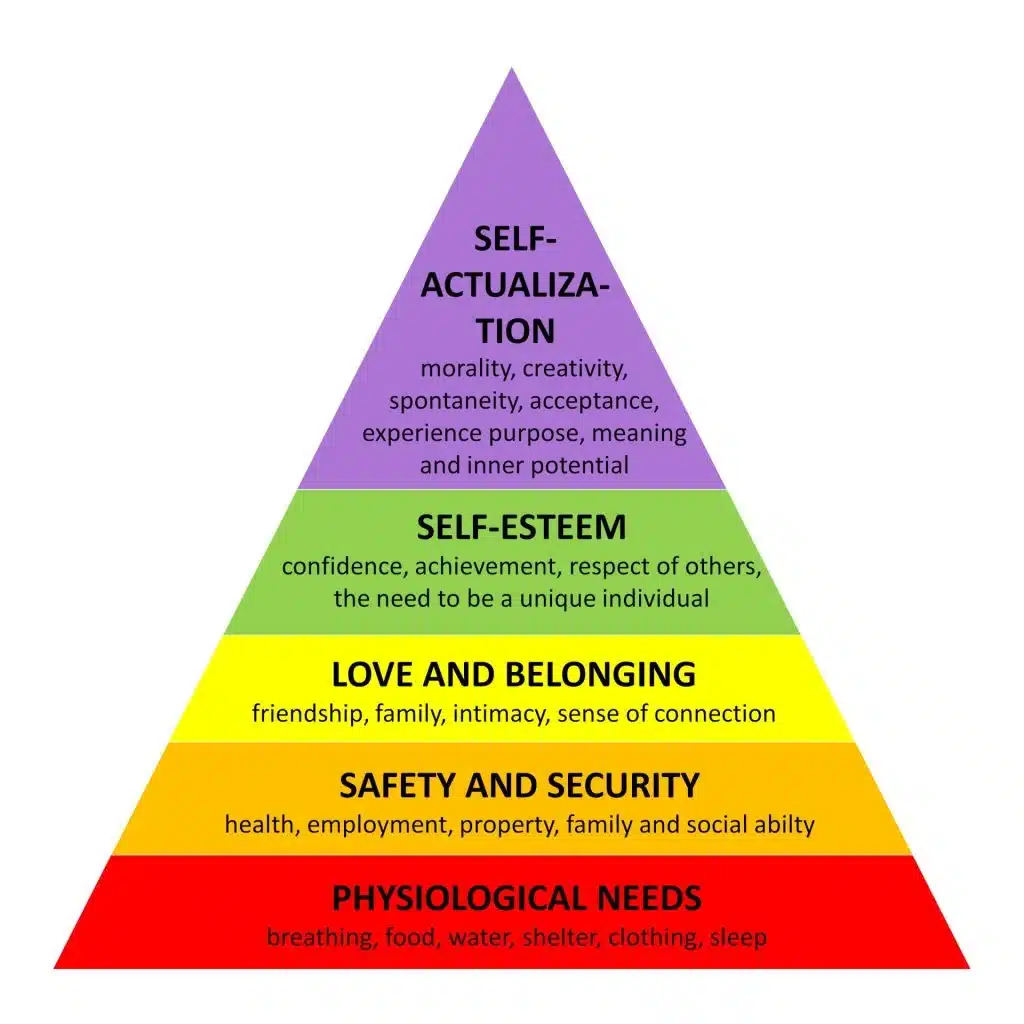
Maslows hierarchy
Once tier x need is met ; you move up. NOT TRUE brokies want LV just as much
Value
Value = Benefit - Cost
Value is determined by the utility combo of price + non- price benefits offered
Marketing defined
Its providing value to consumers & capturing value from consumers
About exchange : The provision/transfer of G & S or ideas in return for smth of value
Beware of extremsit views / predictions
VR , NFTs ( those art thingies)
The Marketing framework
Diagnosis → identify the problem to solve /opportunity - CONSUMER WANTS + NEEDS , COMPETITOR ANALYSIS (who)
Strategy → make a plan of action based on the diagnosed problem, defining how to achieve objectives (how to win)
Tactics → execute the plan through specific actions & campaigns ie - Where to sell,product attributes,price
Feedback loop (which goes right back to 1) → look at results and adapt strategies based on performance data.
Share of wallet
how much of a customers total spending a business captures in the product/services it offers (ie- how much unilever is in our pantries)
Category trade-offs
category = grp of similar products (hair care,snacks,skincare etc)
Categories of competitors important see slide 9 L5
direct - pronutro vs futurelife
Indirect - eggs (humpty dumpty) - other breakfast brands →Category separation :trade off competitors(buying jeans instead)
Substitutes - Mcdonalds (not in same bizz category but DO MEET NEED)
Geographic separation → (distant)competitors overseas
Timing separation → Potential competitors (who might enter the market after trends shift)
Porter 5 forces - slide 10
RIVALRY AMONGST EXISTING COMPETITORS (main one) also impacted by:
Threat of new entrants
bargaining power of buyers & suppliers
threat of substitutes
Share of voice
measure of your advertisng presence/strength vs ur competitors (how much is our brand/product talked abt compared to ocmpetitors?)
key to succesful marketing
Understanding & mastering the environment your business operates in.
Benefit: having an expansive view of whats going on around you = strong diagnosis formed
Micro vs Macro environment
internal environment (your company)
Micro environment : Suppliers, competitors, consumers
Macro : Economy at large, Tech enviro , Financial enviro
purpose of market research
helps marketing mangers/other business ppl make decisions w the relevant and reliable info obtained
provides intelligence
elements market research aims to satisfy
Find opportunities
Create superior value
Solve problems
Sources of Marketing info
Internal data :
databases of the firms activity
Drawbacks: Hard to analyse , goes out-of-date quickly , data management and mining expensive & complex
Marketing intelligence
public info about marketplace
looks @ consumer behaviour (changing preferences) & competitors actions
Marketing research
specifc + gives key insights public data doesnt
collection process can be outsourced (research firm)
drawback: expensive
an Insight
deep, actionable understanding of a target market/customer from data analysis + research that solves a previously unanswered question
benefit : useful to drive effective marketing strategies + make decisions
sources: surveys,social media,reviews
Market
Actual + potential buyers of a product/service
types of segments (why we do it- identify target market)
Geographic - country , province , neighbourhood etc
Demographic - Age,Gender,Income,Religion
Psychographic - Lifestyle, Personalities (ie Social vs Indulgent drinkers) , Social class
Behavioural - complex - Occasion (home drinkers vs going-out drinkers) , Types of users - first time, potential,repeat ,ex, non-users, usage rate , loyalty status
combination segmentation
combines diff segments
Features our segments must have
Measurable
accesible
substantial (cant be to niche ;must be significant enough)
differentiable
actionable - clear ways to target this segment
LSM- living standards measure
south african - dividing whole country up into segments
based on living standards in terms of asset ownership
10 categories (from less valuable to more value assets/what type of assets you had (satelite dish or no? etc)
critique:
aim was to overcome race as a segmentation determinant in SA
BUT poor got assets (free houses and assets bought from grants) so would jump LSM levels even though their disposable income didnt grow
generic - doesnt consider product category
Strategy
After we diagnose and segment , we decide on our target market (set of uyers w shared common needs/characteristics the firm decides to serve)
targeting strategies
determined by:
resources
product/market variability
product life cycle
competitors
targeting startegies cont
Niche - small specialised subgrp of a whole market
Mass market - sale of undifferentiated , standardized product sold to a whole market in the same way
Segmented- targets a defined segments of a big market ie Cocopops → for kids
Micro marketing - small market thats hard to define/differentiate - cable car on Table mountain
Positioning
unique position your bizz/product/comp holds in the consumer’s mind (volvo vs bmw - both selling cars(same target market) but v big on safety , bmw more bougie)
understanding positioning SEE BIG SLIDE
not neccessarilly abt product attributes BUT what we associate w the brand
“the positioning decision provides the co w strategic direction for any future marketing activities” - theodore leaveitt
positioning refelcted in slogans
Bases of Positioning
By Product attribute
Price/quality
Use/Application - like head & shoulders for dandruff
By product user - associating the product w a person - loubitouin SoKate heels
By competitor - implicit/explicit reference to known competitor
important note about positioning
its ONLY based on perception
good positioning is short n sweet - clearer more direct message
Positioning statement
statement summarising firm/brand positioning
provides focus
Identifictaion of comeptitive advantage
differentiates product
is a Value proposition
Repositioning
adjusting perceptions abt you or your competitors
Marketing trinity
segemntation
targeting
product positioning
strategy nexus
how the corporate and marketing strategy work tg
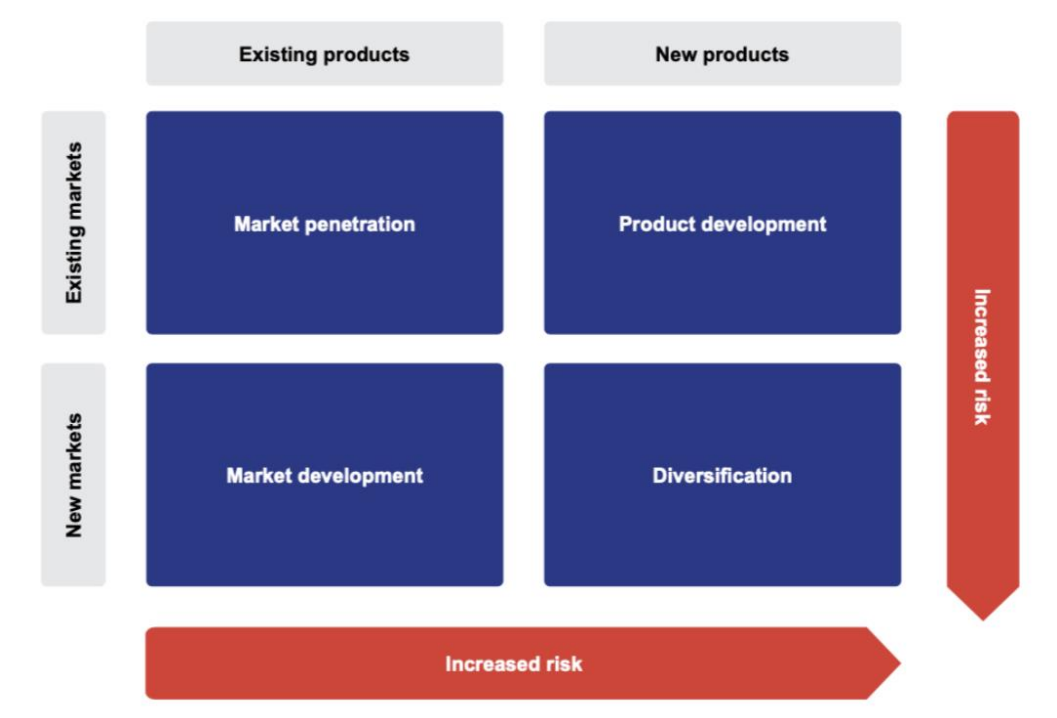
Ansoff matrix
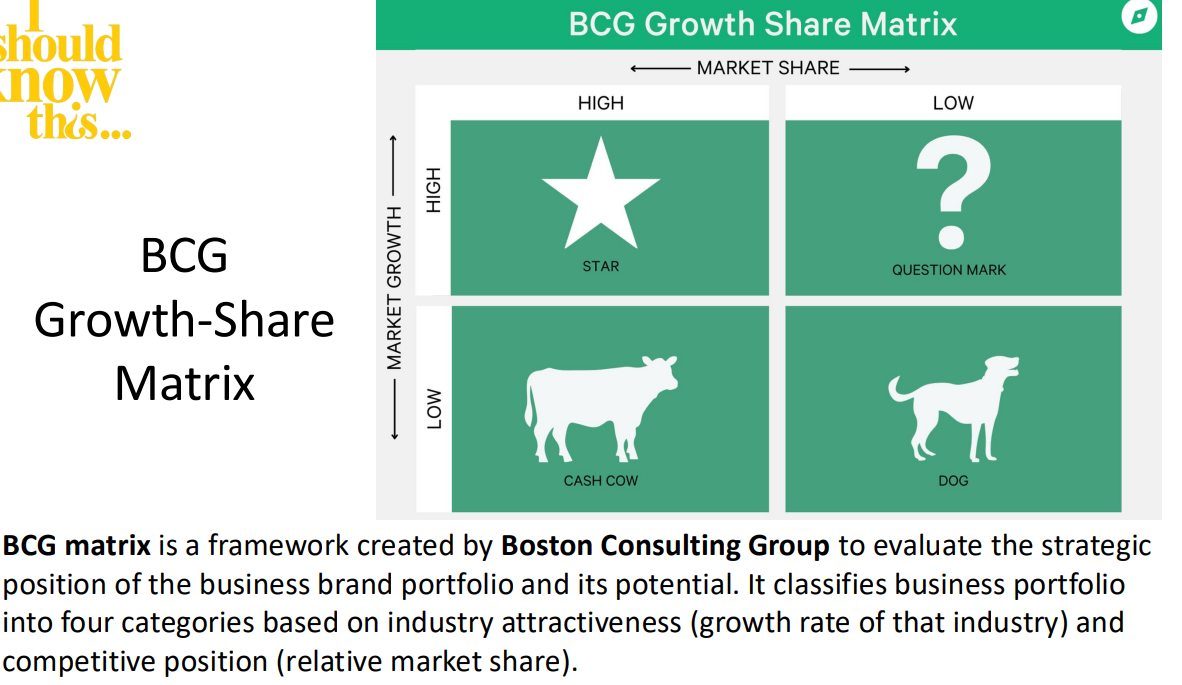
Boston matrix
Blue ocean & red ocean strategy
blue → 1 company dominates alone in a new market (focus on diferentiating,lowcost,making n capturing new demand)
red→ Many cos compete in the same market (exploit existing demand,compete for market share - differentiation OR low cost)
objectives
specific+ measurable things a business wants to achieve
based on diagnosis
effective startegising
must skillfully choose what NOT to do
brand
unique , recgocnizable feature of a good/service that differentiates it from competitors .
Name, design, symbol , slogan
how do consumers benefit from branding
simplify choice
reduce search costs
competiton for differentiation encourages innovation
importance of branding
marketing influence
shape consumer perceptions
financial value → loyalty, trust
what brands tell us
quality
attributes
benefits - red bull gives you”wings”
values
personality : done using adj describing product qualities, subjective - increase trust/confidence
brand equity
the value a brand adds to a product, based on recognition, loyalty, and perceived quality.
the psoitive differential effect knwing a brand name has on customer response
measures of brand equity
often harder to measure
loyalty → hard to measure cuz its a attitude OR a behaviour (what you like n what you are loyal to different)
perceived quality compared to others
brand awareness - quantify it
market behaviour
why its hard to value startups
based on potential
how to build a brand
Brand development - product line extension, Brand extension (virgin active, virgin mobile)
Brand positioning
Brand name
Brand sponsorship
drawbacks n bennies of brand extention
halo and horns effect
multi branding
tiger brands → the holding name/company → individual brands ; jelly tots , jungle oats
brand development
advantage:
awareness already established
economies of scale
access to retail space
disadvantages:
lack of focus
stretch brand too far
1 fuck up affects all
choosing a Brand name
suggest product benefits
simple
distinctive
easy to translate
can be registered & legally protected
types of brands
Manufacturer brand - producer brand : kellogs
Private brand -distributors - usually reatilers - woolworths brand stuff
Liscensing - a brand sells liscence to use their intellectual property - marvel merch
Co-branding - the simba mrs balls chutney collab
brand architecture
optimising hierarchy , links, roles of brands in our porfolio and their relationships within the overall brand strategy.Lets barnds play multiple roles
types
branded house : Monolithic → one master brand w a single name under which everything is unified 1 visual system : bmw. features of that subbrand less important than the brand promise
Endorsed→ Endorsement by the parent product w clear market presence .Nestle products , kellogs : small in the corner , focusis on subbrand
house of brands 🇦
Free standing → unilever : lots a brands w seperate corporate identities under one org
hybrid → combo of mono,branded,endorsed . Happens thru mergers/acquisition
How to choose the right architecture for desired product attributes
keep strategy in mind
must be simple
think of client needs
think if values align
flexibility?
Activation v brand building
activation → encourage immediate short term sales → bogof , discounts
building→ encourage sustainable long term sales thru loyalty + brand identity
DONT MIX THESE TACTICS → dilutes effectiveness of strategy
characteristics of bizz w strong differentiation going on
access to scientfic research
strong development team
good sales team that communicates product strengths well
quality + innovation reputation
salience
assumed relevance/imporatnce brands think they have to consumers - i am a loyal consumer of colgate but i dont think abt or care abt the product
why distinctiveness is most important - byron sharp
when a brand looks like itself - easily recognizable, noticeaball , good brand recall . more important than differentiation , not the main driver for being competitive
combo of differentiation + distinctiveness is best
Product levels
core benefit → not the bennies of actual product , what customer need is it adressing . Ipad → communication
actual product → tagible features : pro max what what what
augmented product → added services n benefits to product → warranty , free cleaning , customer support
product types
consumer : convenience (day-to-day,cheap,accesible),shopping (less locations , not bought super often,specialiaty - luxury , unsought (not often thought about by consumers)
industrial products : Materials + parts, Capital equip , supplies+ services
Organisations,ppl (pr celebs),place,idea :
Individual product decisions
quality (level + consistency), style & design, support services
Experience → cape union marts cold chamber , coke making u your own can
Diffusion of new innovations (spreading acceptence of an innovation over time thru communicating w members of a social sytem)
elements
Innovation
channels of communiation
social sytem
time
look @ product life cycle slide
product develop,intro , growth , maturity , decline
Test technique : Decide if this new product is a good idea
Why are they doing this ?- why would a business want to make a new product - share of wallet , growth , diversifictaion , spread risk , enter new market
Is it a good idea? - look at horns v halo effect,etc
What strategies and tactics? - Multi branding? Co-brand? Liscensing? 4 Ps :Product ? Price? Promo? Place?