Biomechanics SUNY Brockport (Danny Too) Exam 1
 Call Kai
 Learn
Learn Practice Test
 Spaced Repetition
 Match
Match Flashcards
 Knowt Play
1/57

There's no tags or description
Looks like no tags are added yet.
Name | Mastery | Learn | Test | Matching | Spaced | Call with Kai |
|---|
No analytics yet
Send a link to your students to track their progress
58 Terms
Physiological Kinesiology
is the study of the response of the systems of the body to the stress of exercise
Psychological Kinesiology
is the study if these topics applied to human movements
Philosophical Kinesiology
is the study of the value of movement to an individual or in a society
Sociological Kinesiology
is the study of human interaction during the course of moving,playing, or participating in an activity or sport
Mechanical Kinesiology
is the study of human movement using Newton's Laws
Statics
is the study of mechanical properties of objects that are in equalibrium (not moving)
(e.g foot contact during walking, compression of the meniscus of the knee)
Statics and Forces
Stress force- the application of force to an object, which causes Strain- the development of internal forces
Kinematics
the description of the motion of an object,
displacement,
velocity,
and acceleration
Dynamics
is the study of the mechanical properties of objects that ARE IN MOTION such that relative motion occurs between an object and the environment
Internal forces
can cause changes in body shape
can change the position of the center of mass WITHIN THE BODY
(e.g muscles)
External Forces
Friction,Gravity,Ground Reaction Forces
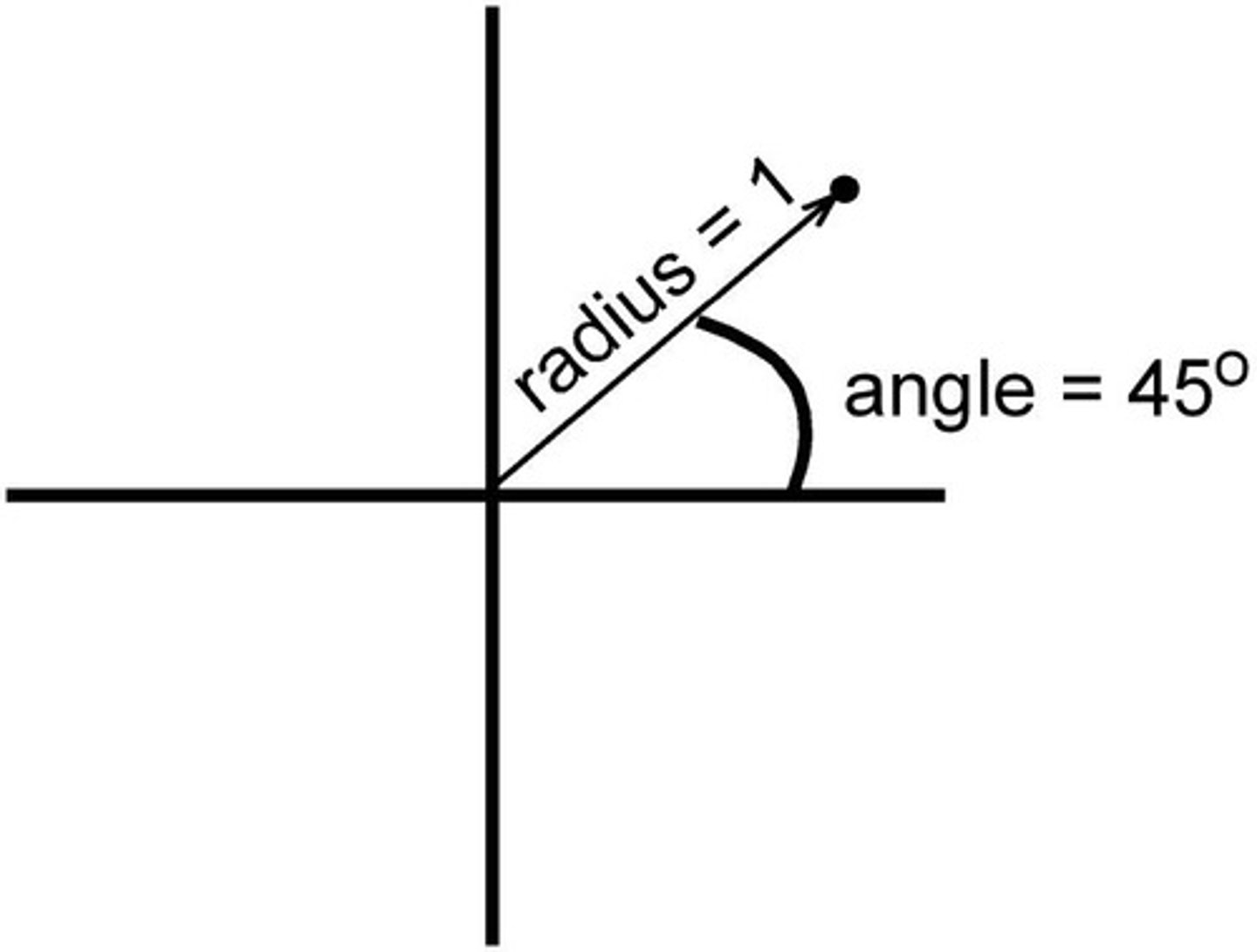
Polar Coordinate System
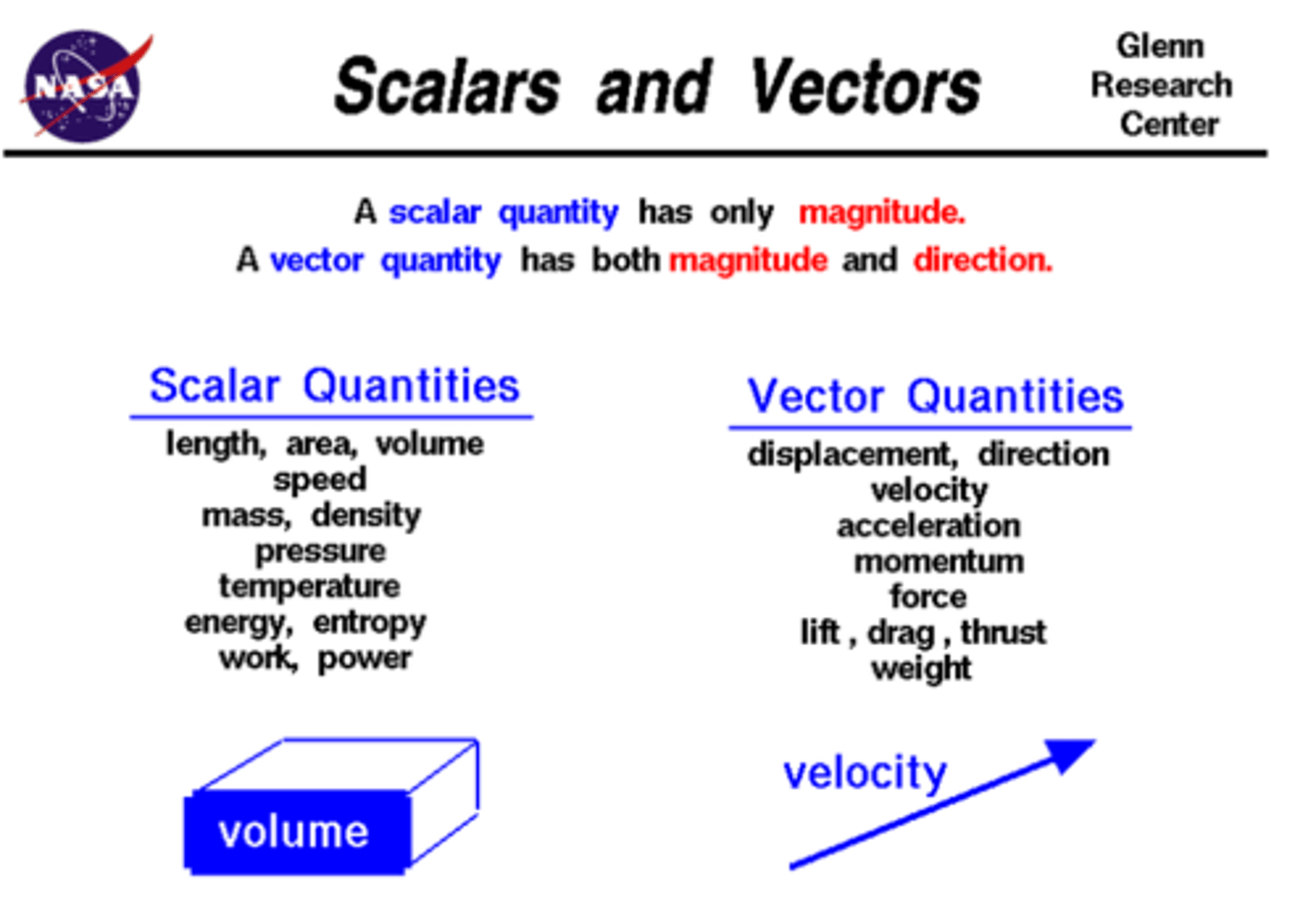
Scalar Quantities
quantities that have magnitude only (speed, temp, and mass)
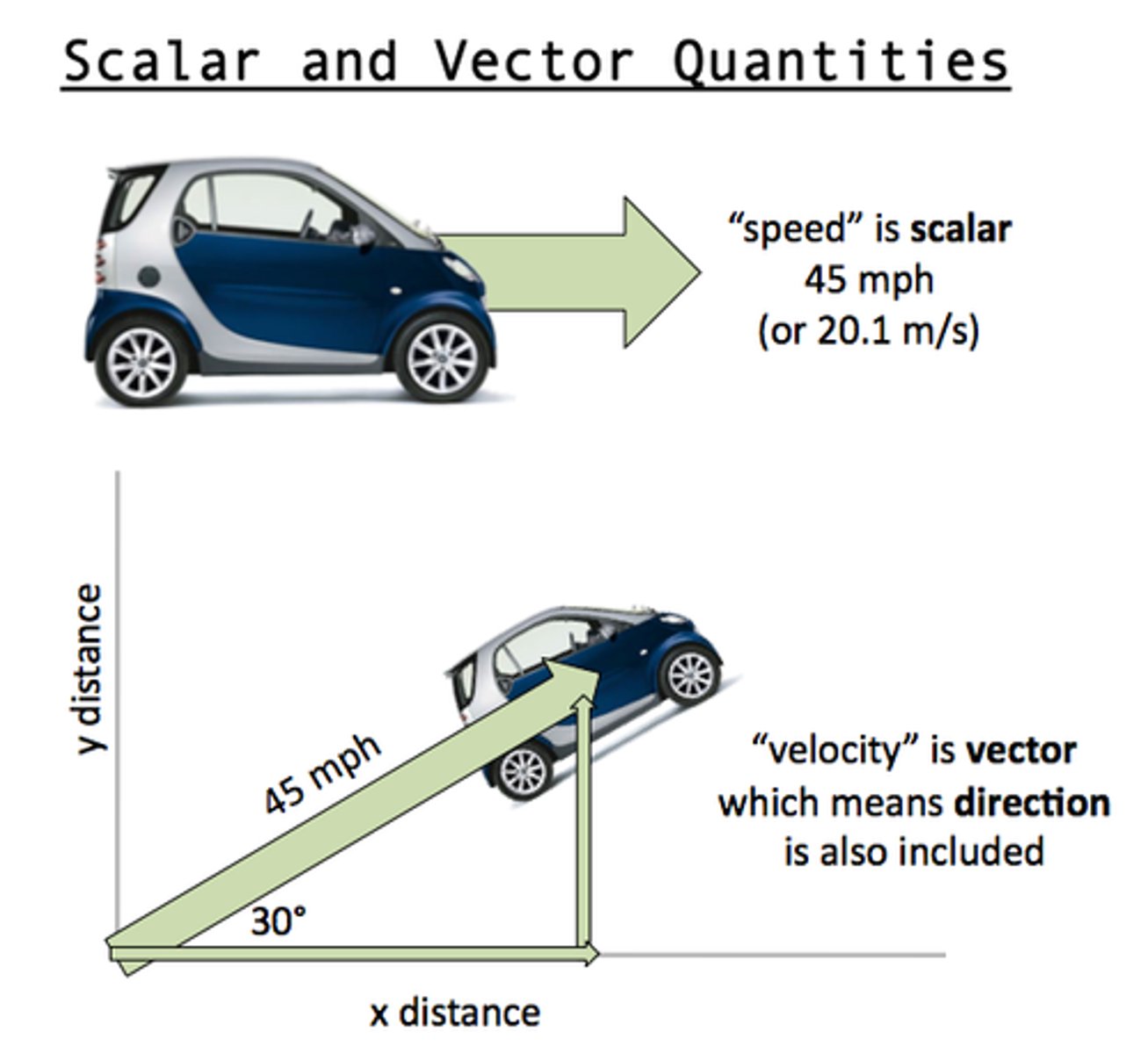
Vector Quantities
have magnitude and direction (displacement, velocity, force, and contact forces)
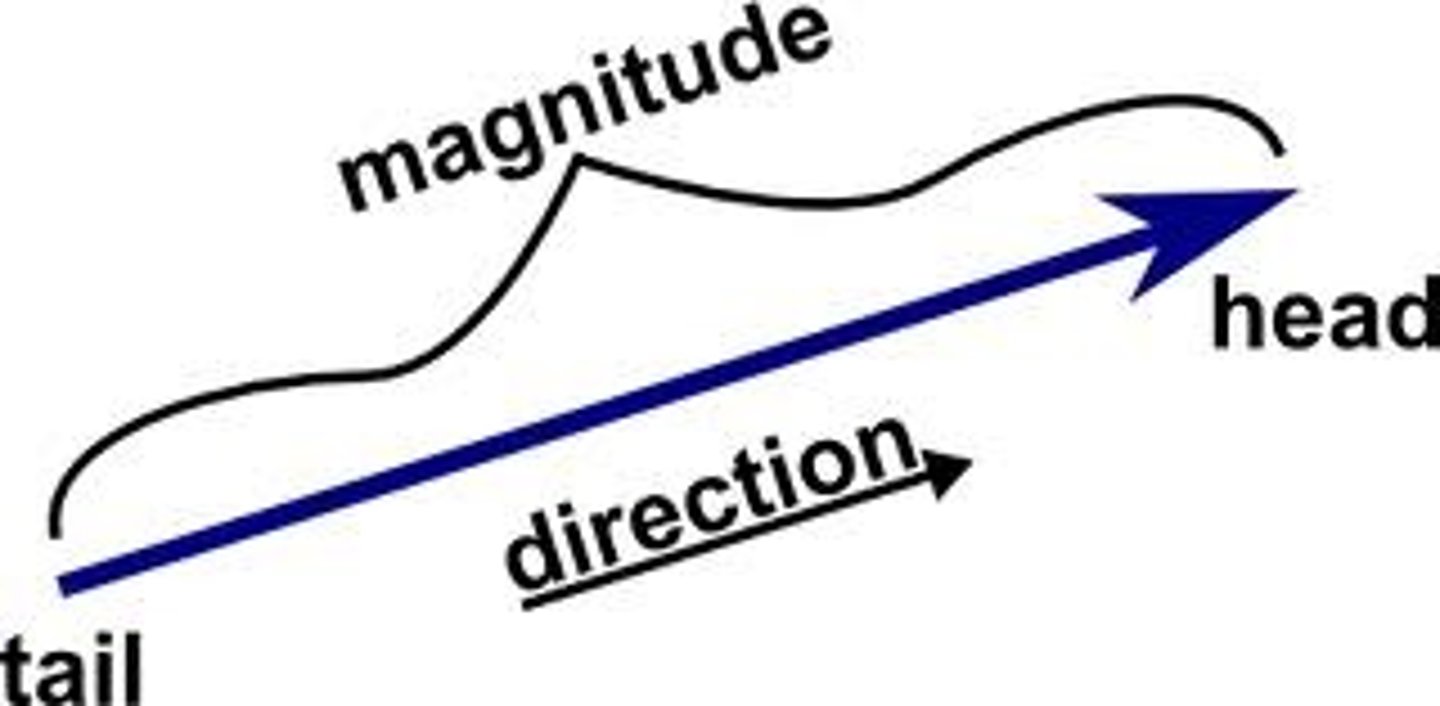
Graphical Vector Properties
Vector Quantity Representing Gravity in a global reference system
(0,9.8m/s^2))
Stabilizing Component of Muscle Force
-acts parallel to the segment being moved by the muscle
-can be directed towards the joint
-can be directed away from the joint
Angle of Pull is <90 degrees
the direction of the the SC is always towards the joint and exerts a compressive force at the joint increasing stability
Angle of Pull is >90 degrees
the direction of the SC is always away from the joint, and exerts a dislocating force at the joint which would tend to decrease stability
Angle of Pull <45 degrees
the SC is always greater than the RC
Angle of Pull between 45 and 135 degrees
the RC is greater than the SC
Angle of Pull greater than 135 degrees
the SC is greater than the RC
At exactly 45 and 135 degrees
SC and RC are equal, and there is no dominant role of the muscle as it does both functions equally well
At exactly 90 degrees
there is no SC
Factors Affecting Friction
-the type of material of the surfaces in contact
-the smoothness or irregularities of the surfaces
-the velocity of the movement
-the normal force (holding/pressing the two surfaces together)
Friction
is a force that opposes the sliding of one object over another, and opposes the rolling of one object over another
In a Local Reference System, friction can only act...
along the x-axis
In a Global Reference System, friction can only act...
at any angle between the x and y axis
In GRS friction for a magnet on a vertical metal surface will act...
along the +y-axis
In a LRS, friction for an object on a vertical surface will act...
along the -x-axis
Affects Frictional Force for an Object on a Horizontal Surface
-normal force
-perpendicular force
-the weight of the object
What affects frictional forces between two surfaces?
-velocity of movement
-smoothness/irregularities of the surface
-magnitude of the force holding the surfaces together
-type of material
Coefficient of Friction
1.0>(u)>0
Coefficient of Friction for (starting, stopping, static, and non-moving)
(u=1.0)
Coefficient of Friction for (moving sliding, dynamic, and kinetic)
(u)<1.0
Coefficient of Friction for (rolling)
(0.1>u>0.0001)
The Calculation of the Coefficient of Friction
(u)=(FFR)/(FN)
When pulling an object...
friction decreases because the normal force has decreased
When pushing an object with arms parallel to the ground...
normal force will remain unchanged in the object being pushed and the person doing the pushing
Buoyancy
-is created as an object is immersed in a fluid
-is equal to the weight of the fluid displaced by the object
-always acts vertically upwards in a global reference system
-always acts on the opposite direction of gravity
If specific gravity of object is >1.00 than...
object will sink
If specific gravity of object is less than or equal to 1.00 than...
object will float
Stable Floating Position
-center of buoyancy located at or above the center of gravity
Unstable Floating Position
-center of buoyancy located below the center of gravity
Drag Force only occurs when....
there is movement
Static Fluid Force exists when....
an object is floating in water
If the two systems are moving in the same direction, then the relative velocity is found by...
taking the difference between them <--, <---- = subtract adding both <---,----> = +
(same for Drag Force)
If the two systems are moving in the opposite direction, then the relative velocity is found by...
adding both <---,----> = +
(same for Drag Force)
Drag Force in a GRS
If vector is (5,45 degrees) then drag force is (5,225 degrees)
its opposite
for Drag Force as velocity doubles...
drag force is quadrupled
Surface Drag is also called...
viscous drag or skin friciton
The Mathematical Calculation of Drag Force includes
-the coefficient of drag
-the cross-sectional area
-fluid density
-fluid velocity
Form Drag is also known as..
pressure drag or profile drag
Factors Affecting Form Drag are..
-The shape of the body
-the CSA of the object, that is PERPENDICULAR to the direction of motion
-the density of fluid
-the relative velocity
Factors Affecting Surface Drag
-the smoothness of the object
-the CSA of the object, that is PARALLEL to the direction of motion
-the density of the fluid
-the relative velocity
Lift Force will always...
act perpendicular to drag force and the oncoming fluid flow
A tennis ball hit with topspin, moving forward and upward will experience a Magnus effect that is....
downward and forward
When a baseball is moving straight up over home plate (perpendicular to the ground) the Magnus effect will cause the ball to move towards the back stop