Unit 1: Biological Membranes
 Call Kai
 Learn
Learn Practice Test
 Spaced Repetition
 Match
Match Flashcards
 Knowt Play
1/30

There's no tags or description
Looks like no tags are added yet.
Name | Mastery | Learn | Test | Matching | Spaced | Call with Kai |
|---|
No analytics yet
Send a link to your students to track their progress
31 Terms
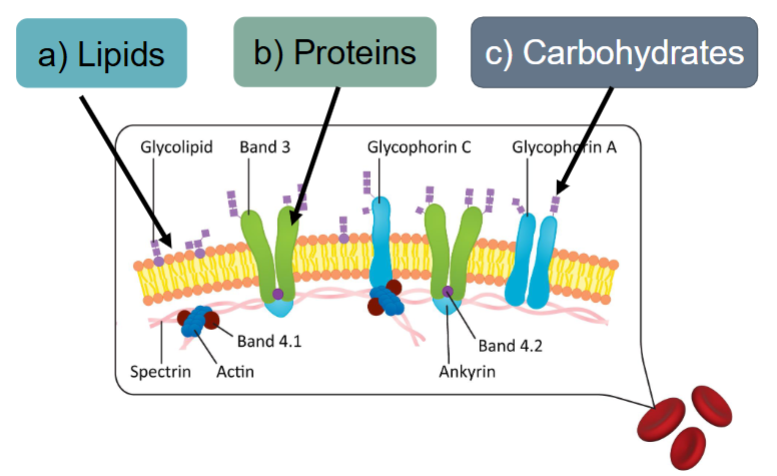
What are the main Components of a biological membrane (there are 3)
Lipids
Proteins
Carbohydrates
Are all biological membranes the same within Eukaryotes?
No, as many differing types of cells have unique functions, some requiring a unique composition of lipids proteins and carbohydrates.
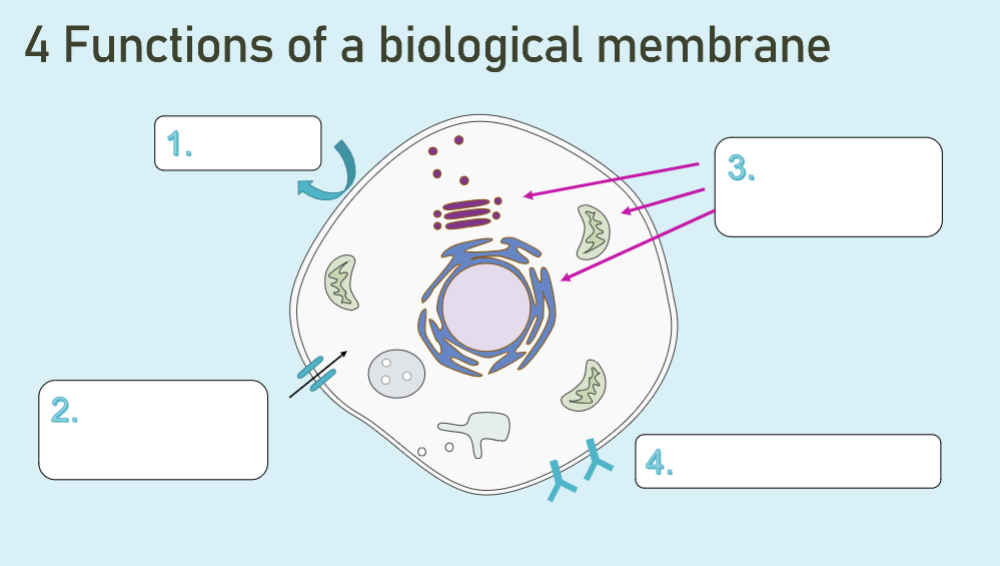
What are the 4 Main Functions of the Biological Membrane?
Organization
Barrier from the extracellular region
Selective Permeability
Communication
What are the 4 Major Features of the Biological Membrane
a. The membrane is a Bilayer
b. Membrane is organized, but fluid
c. The membrane has different permeability for different types of molecules
d. The membrane is asymmetric
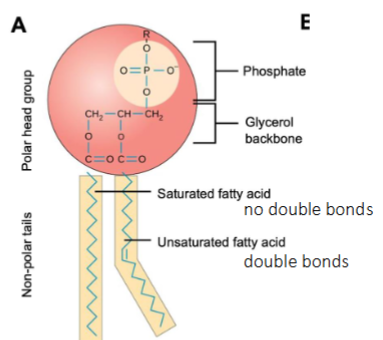
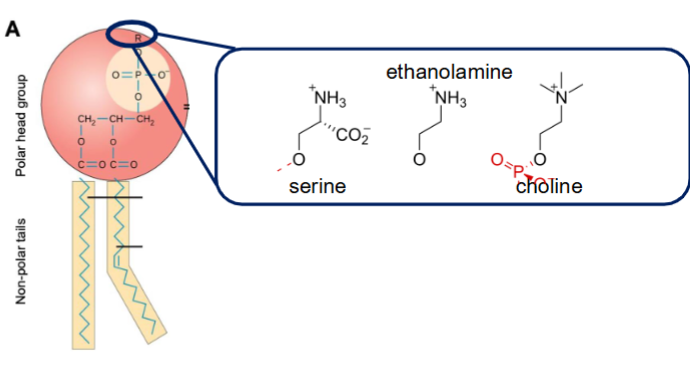
What are the 4 Components of a Phospholipid
Phosphate head (gives the polar charge)
Glycerol (serves as the bridge between the head and tail)
Saturated fatty acid (straight carbon chain)
Unsaturated fatty acid (bent carbon chain caused by an alkene)
Why is the phospholipid considered an Amphipathic Molecule?
The phospholipid is an organic molecule that contains both polar and nonpolar regions.
Nonpolar (hydrophobic): located on the fatty acid tails
Polar (hydrophilic): located on the phosphate head
What are the 2 main types of shapes the phospholipid produces?
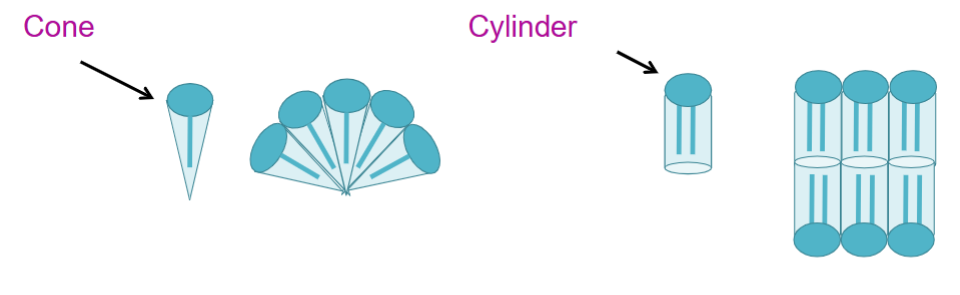
What part of the phospholipid allows variation and subsets? Give an example of a type of Phospholipid
The R group above the phosphorus represents structural variation creating various types of phospholipids.
The most common type of phospholipid is the Phosphatidylcholine (PC)
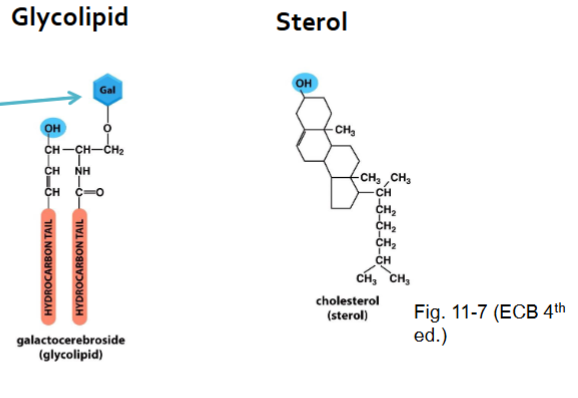
What are examples of other lipids that serve as membranes outside of phospholipids?
Glycolipids and Sterols are common examples of differing types of lipid membranes
How do Bilayers form?
Nonpolar tails cluster together and avoid polar molecules, such as the hydrophilic head and water.
This is what causes the cylindrical and cone structures as the phospholipid creates a division between it’s polar and nonpolar region.
How does Thermodynamics explain the hydrophobic effect
According to the Gibbs Free energy ΔG=ΔH−TΔS (more negative G better favorability for rxn), free energy will be minimized if the tails cluster together.
This allows greater motional freedom of water and a more negative G value.
Increased entropy of water = increased stability of the system
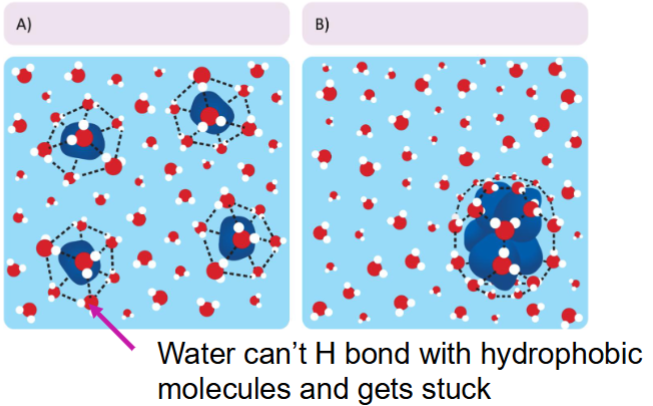
Why is there no water within the hydrophobic core of the bilayer?
Water cannot H-bond with the fatty acid tail.
What is the Fluid Mosaic Model?
The concept that phospholipids are not static and constantly move on the lateral (horizontal axis)
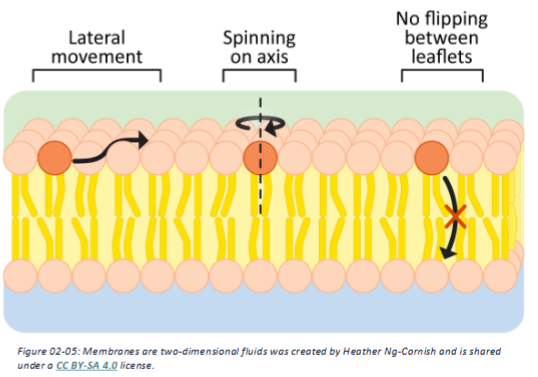
What does fluidity exactly measure?
It measures the ability of lipid movement and overall “stiffness” of the membrane
Why are phospholipids only fluid on the lateral axis (horizontal)? Why can’t they flip between leaflets (opposite sides)
To flip transverse, the polar headgroup would be exposed to the membrane interior which is energetically unfavorable
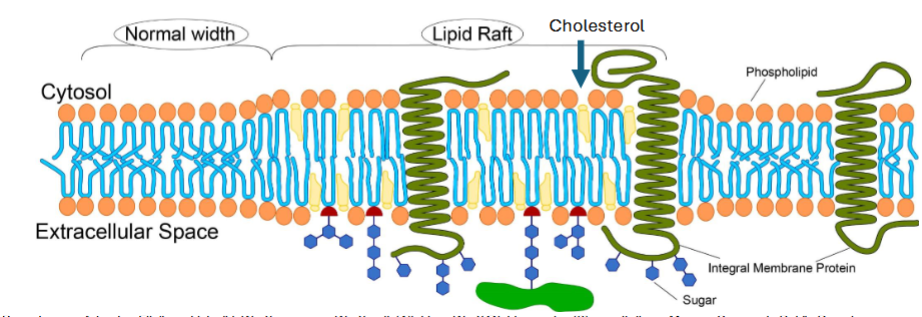
Within the Fluid Mosaic Model, what are Microdomains?
Microdomains are “tiles” or regions of specific types of lipids.
They are usually rich in cholesterol and sphingomyelins that organize proteins for various functions (signaling, transport, organization)
These segments are often called “Lipid Rafts” as these structures separate biochemical activities from the rest of the membrane creating distinct functional units.
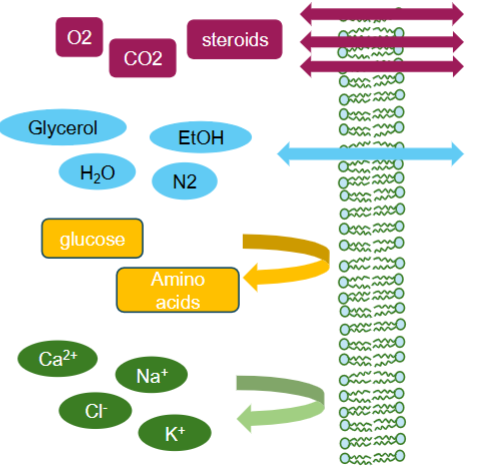
What types of molecules cannot pass the bilayer? What molecules can?
Generally, hydrophilic and polar molecules cannot pass through the lipid bilayer. In contrast, many hydrophobic nonpolar molecules can easily pass.
Nonpolar molecules (CO2, O2, steroids, etc) can freely pass without any specific conditions.
Small uncharged polar molecules (H2O, EtOH, etc.) can diffuse well across bilayers
Large uncharged molecules (Glucose, Amino acids, etc.) cannot diffuse well across bilayers
Charged Ions as well (Na+, Cl-, etc.) cannot pass.
How can molecules that cannot permeate the bilayer travel through?
Transporters and Channel proteins can bring in molecules within the system.
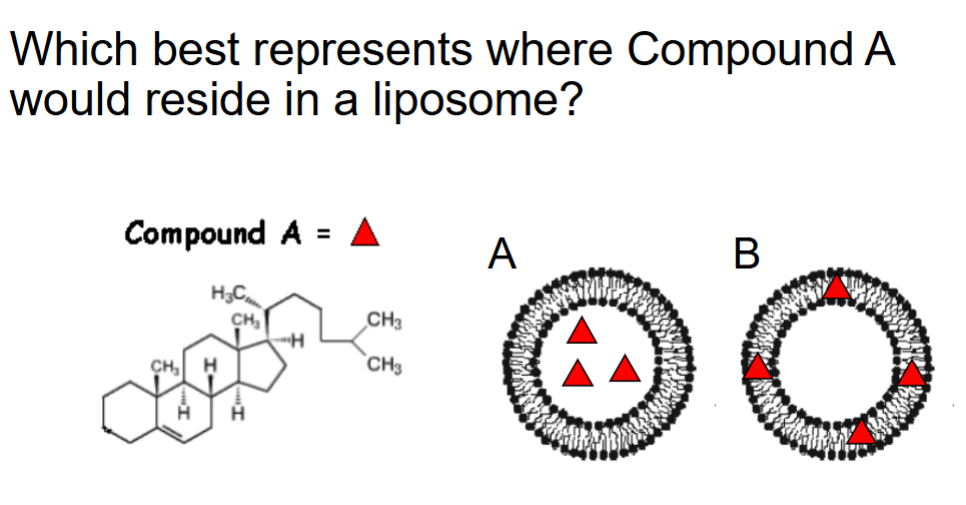
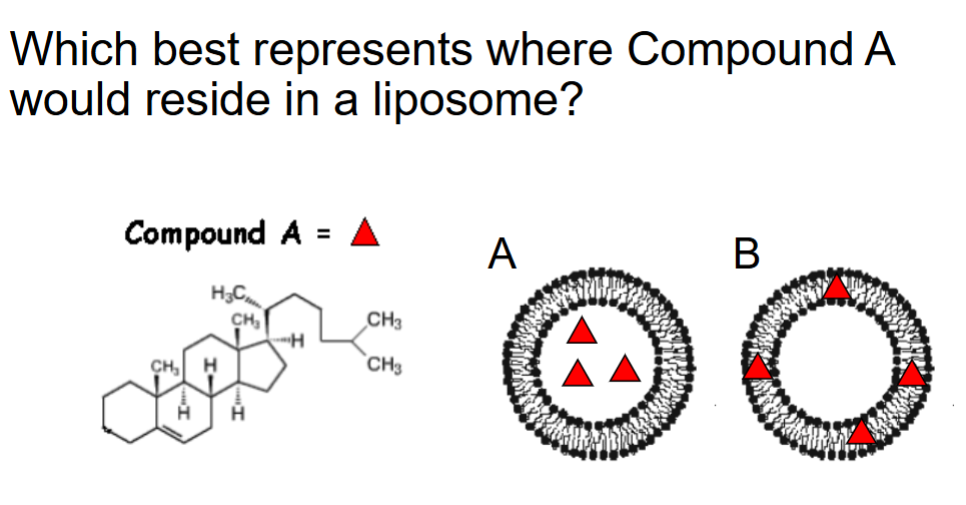
*There is a OH at the bottom left of the molecule*
B is the correct answer, as this molecule (Cholesterol) is amphiphilic, meaning it will get stuck in the lipid bilayer being more stable
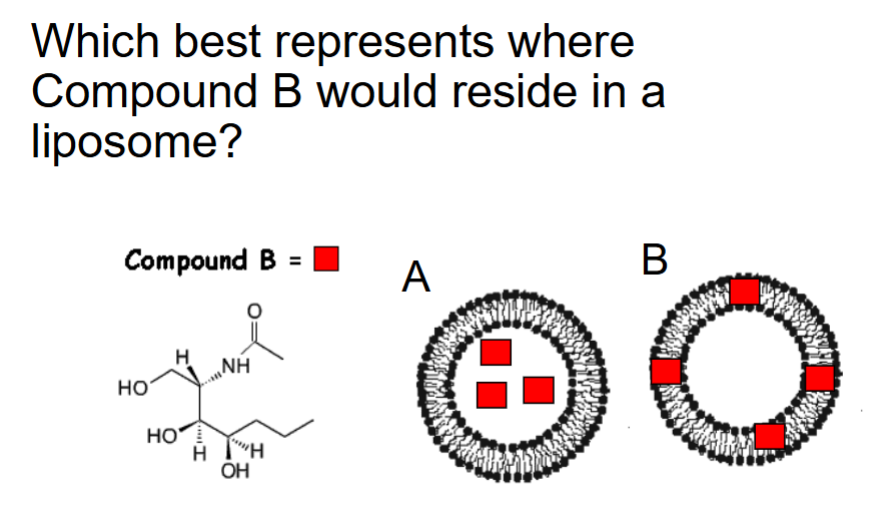
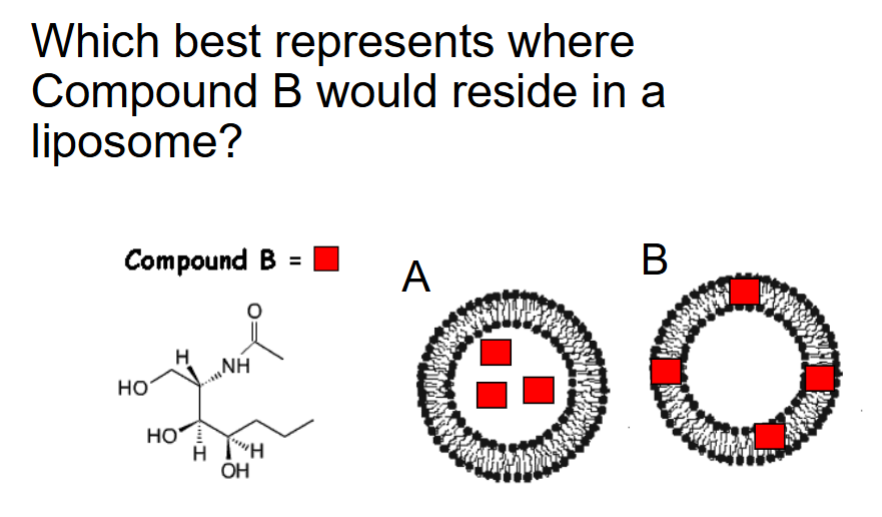
A is the correct answer as this molecule is strongly polar and will be most stable outside of the hydrophobic interior of the lipid bilayer.
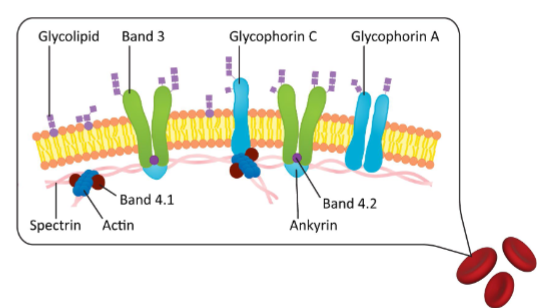
Why is the membrane asymmetric? Describe the composition of each common component on each side of the cell membrane
Lipid composition is uneven between the outer and inner leaflet
Some proteins have specific orientations within the membrane (proteins can either protrude on one or both sides of the bilayer).
Carbohydrates are mainly found on the extracellular side of the membrane (for signaling and recognition)
How are new lipids formed and inserted into the bilayer?
New lipids are produced in the endoplasmic reticulum (ER) and carried through vesicles to the cytosol bound leaflet.
How is lipid asymmetry maintained?
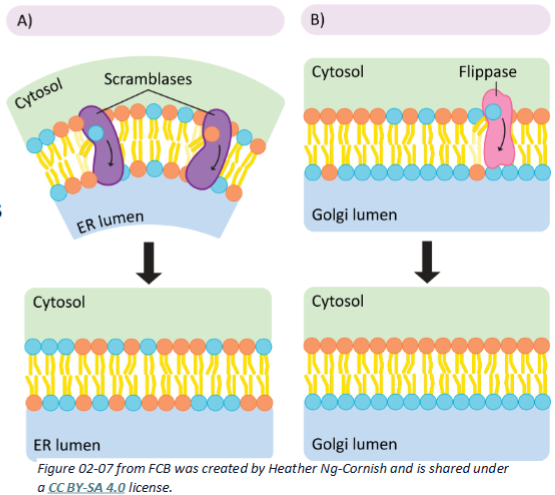
Scramblase and Flippase are proteins used to maintain the asymmetrical orientation
What does Scramblase and Flippase do?
Scramblase randomly flips lipids from one leaflet to the other in order ease the curvature of the membrane
Flippase flips specific lipids from one leaflet to the other.
What are the roles of carbohydrates on the cell membrane
Carbohydrates serve as cell identity and communication.
For example, lymphocytes use sugars to distinguish foreign organisms (bacteria, viruses, fungus, etc.) from cells from the body
How does temperature affect membrane fluidity?
Colder temperatures cause stiffness, tightening phospholipids together
Hotter temperatures loosen the membrane, spacing phospholipids apart.
What are the advantages and disadvantages of Endotherms?
(These are organisms that maintain core temperature through metabolic processes)
Does not need to spend excessive energy producing new lipids
However, are more prone to extreme temperature shifts (e.g. Hypothermia)
What are the advantages and disadvantages of Ectotherms?
(These are organisms whose core temperature is influenced by the external temperature)
Modulates membrane composition to maintain fluidity
However, this can be energy intensive by constantly synthesizing new lipids
What are the 3 key features that allows cells to help regulate fluidity?
Fatty acid Saturation: saturated tails can pack tightly, unsaturated are more loose
Fatty acid length: shorter tails increase fluidity, longer tails decrease fluidity
Sterol Composition: sterols such as cholesterols act as buffers maintaining fluidity at varying temperatures.
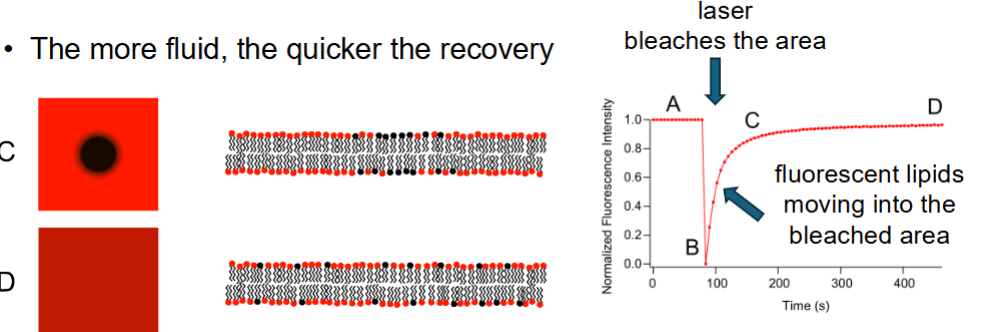
What is FRAP? What does it measure?
Fluorescence Recover after Photobleaching, refers to a technique that measures membrane fluidity by bleaching (damaging) a target area and measures the time of recovery.
Faster Recovery indicates a higher fluidity
Slower Recovery indicates a slower fluidity
How does frap work? What are the steps?
Fluorescent dye is labeled/marked on proteins or lipids
A high powered laser bleaches (damages) a specific portion of the cell
Within the bleached area, the amount of fluorescence that comes back is measured. (This is due to the fluidity of phospholipids in that the dark spot will eventually dissipate as new lipids come in)