physio psych st. john's 14 15 16
 Call Kai
 Learn
Learn Practice Test
 Spaced Repetition
 Match
Match Flashcards
 Knowt Play
1/211

There's no tags or description
Looks like no tags are added yet.
Name | Mastery | Learn | Test | Matching | Spaced | Call with Kai |
|---|
No analytics yet
Send a link to your students to track their progress
212 Terms
brief, driven by external stimuli that provoke action
emotion
brief, driven by internal stimuli, and allow for a conscious awareness of a situation
feelings
can have a much longer duration driven by both internal and external stimuli. effects how we process a situation
mood
what are the two major components of emotion
physical sensation (heart rate)
conscious, subjective feeling (scared)
the overall positive or negative quality of an emotion
valence
difference between moods and emotion
moods are longer lasting
if we evolved the capacity to experience and express emotions, emotions must have served some ___________ function
adaptive
the theory that a person's physical state provides cues for the identification of an emotional state
"bottom up -- body then brain"
james-lange theory
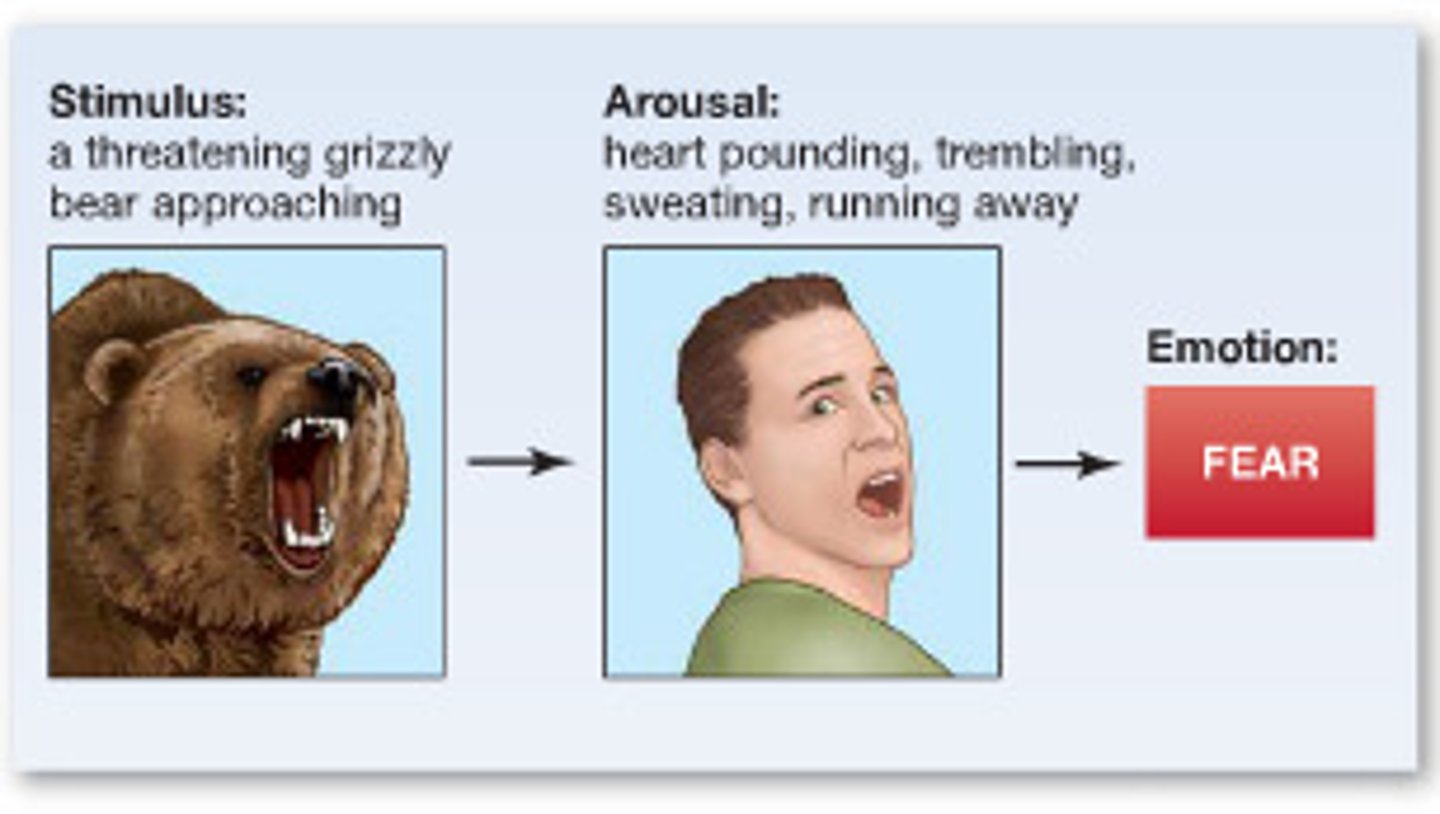
the theory that subjective and physical responses occur simultaneously and independently
"top-down -- brain then body"
cannon-bard theory
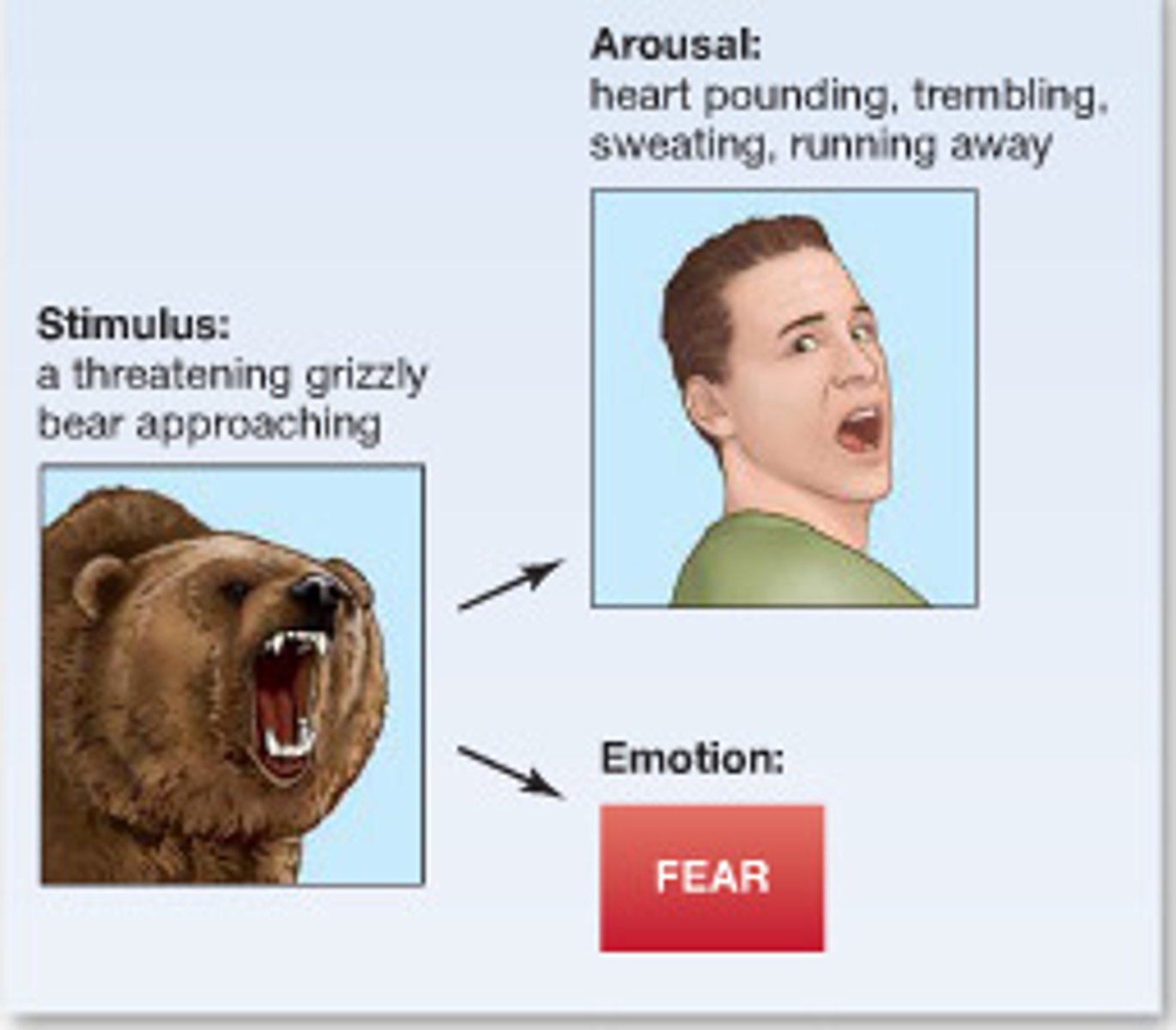
theory that the visceral and the cognitive evaluations of such stimulus contribute to the emotional response
schachter-singer theory of emotion
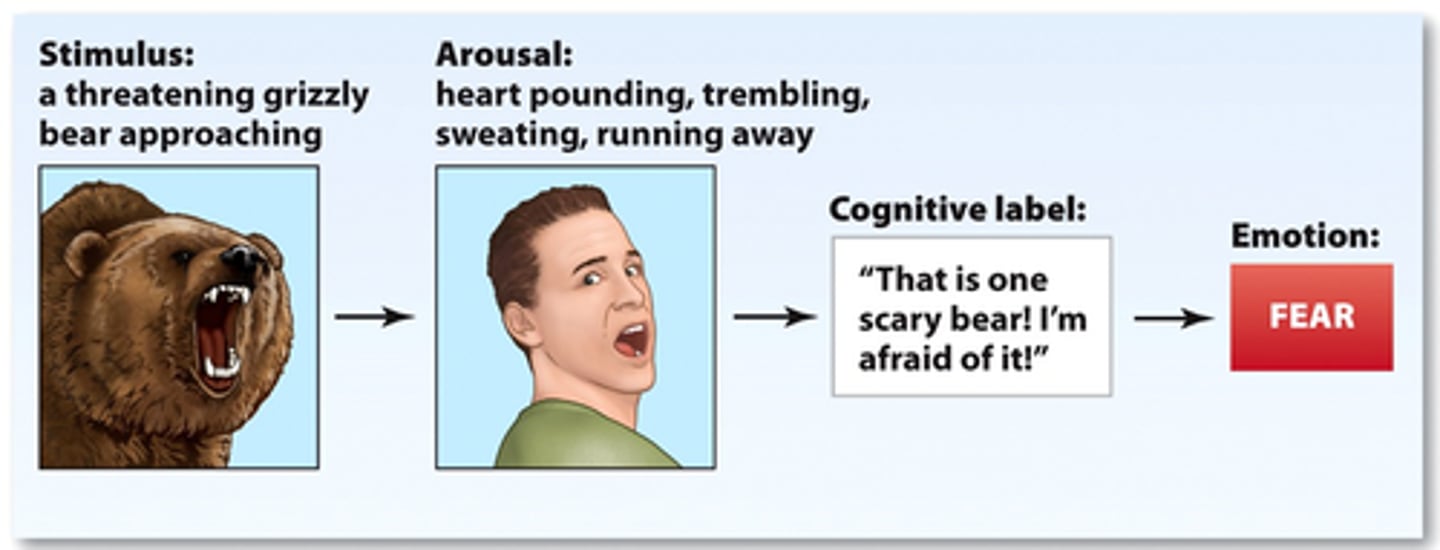
where does the flight or flight responses come from
hypothalamus
this nervous system produces different patterns of arousal during different emotional states
automatic nervous system
the ANS has stronger responses to ________ states
negative
the 7 primal emotional states
seeking, care, play, lust
fear, anger, sadness
the 4 directions of a valence emotion graph
clockwise
high arousal, pleasure, low arousal, displeasure
babies prefer staring at faces that are gazing back at them. T or F?
true
where do facial nerves originate
either side of the midline in the pons
facial nuclei do not communicate with each other, so it is possible for emotional expression to vary in intensity from one half of our _____ to the other
faces
which hemisphere is more active in emotional perception, especially of negative emotions
right
individuals with greater activity in left hemisphere tend to be more __________; right hemisphere more cautious, prone to unpleasant emotions
extraverted
brain responses are well described as
dimensions of emotions?
or
discrete categories?
dimensions of emotions
can physical actions impact feelings of emotion?
yes. (easier to feel anger whole standing rather than lying down)
which groupings of nerves affect facial expression
trigeminal (5) and facial (7)
input from the primary motor cortex is responsible for _______ ________.
voluntary expression
input from the subcortical system is responsible for _______________ __________
spontaneous expression
the facial nuclei receive input from ____ pathways
2
people with damage to the primary motor cortex are unable to ______ on command on the side of the mouth contralateral to their damage
smile
when a person suffers damage to areas in one hemisphere, the ability to express emotion in the _________ lower face will be reduced
contralateral
the ability to express voluntary emotion is impaired.
people with this condition can spontaneously smile on their paralyzed side of the face
voluntary facial paresis
we rarely identify someone's emotion from facial expression alone. t or f?
true
which parts of our brain identify stimuli and arousal
amygdala and insula
damage to the amygdala reduces ___________
emotionality
_______ distinguishes between positive and negative stimuli
insula
neurological disorder caused by bilateral damage to the temporal lobes (amydala) causing
not feeling fear
seizures
inapproraite licking
hyperintense sex drive
kluver-bucy syndrome
rare genetic condition that causes calcium to accumulate in the amygdala until it wastes away
people with this disease cannot feel fear
urbach-wiethe disease
which body part recognizes conscious, cognitive appraisals of threat
anterior cingulate cortex
the core region of the limbic sensory cortex
insula
the _____ represents the body's internal state
insula
anger, sadness, elation, disgust, sexual arousal, and anxiety all concern themselves with which part of the insula
whole body sensations
anterior insula
pain, temperature, fatigue, itch, pressure, and tension all cocnern themselves with what part of the insula?
basic visceral sensations
posterior insula
a test that studies decision making using cards... the task was developed to detect impaired judgement in patients with damage to the ventromedial prefrontal cortex
iowa gambling task
an unpleasant and distruptive state resulting from the perception of danger or threat
stress
sources of stress
stressors
once danger has been perceived and identified, are the reactions that ensue afterwards predictable?
yes
short-term stress is actually harmful. true or false?
false
general adaptation syndrome
when the stressor is first perceived
alarm stage
general adaptation syndrome
stressful situation continues past this initial alarm stage
resistance stage
`general adaptation syndrome
strength and energy are at very low levels
exhaustion stage
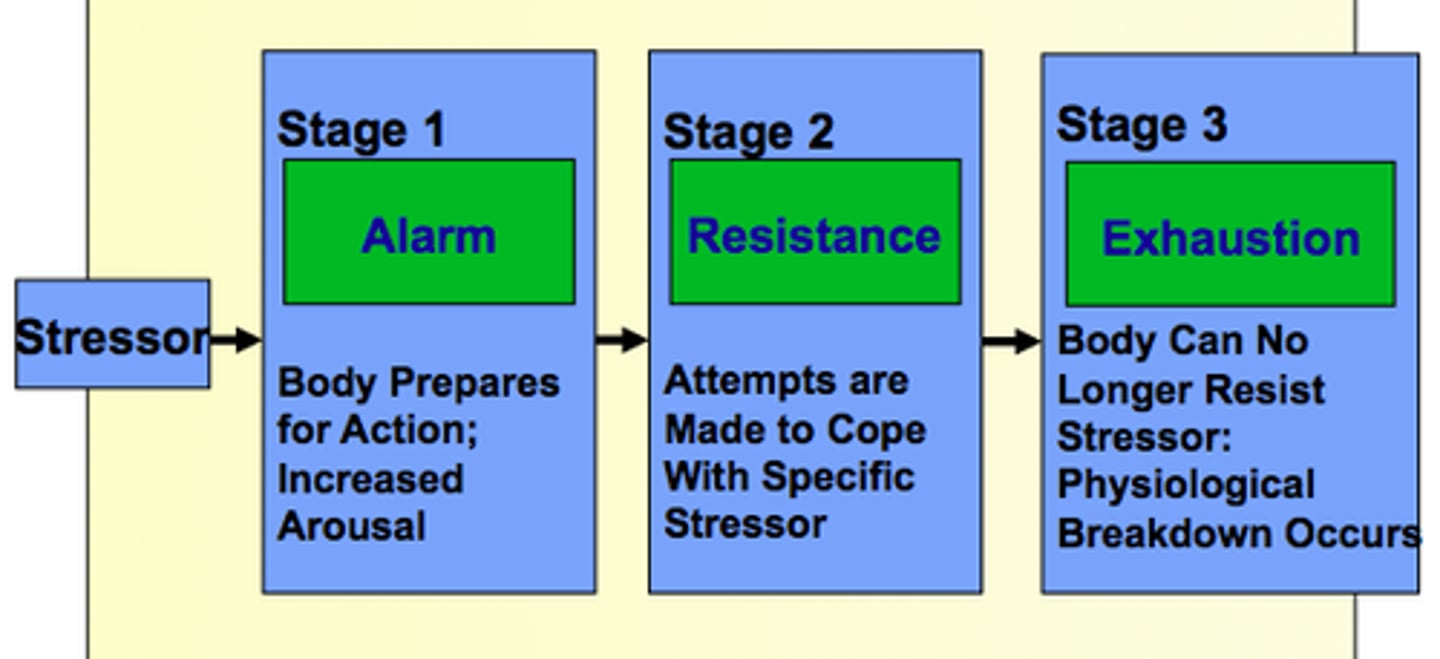
two systems respond to stress messages to the hypothalamus
this system causes epinephrine to release from adrenal glands
sympathetic adrenal-medullary (SAM)
two systems respond to stress messages to the hypothalamus
which system produces immediate flight-or-fight responses
sympathetic adrenal-medullary
two systems respond to stress messages to the hypothalamus
system that releases corticotrophin-releasing hormone (CRH) and vasopressin
hypothalamic-pituitary-adrenal axis (HPA)
which hormone stimulates release of cortisol
ACTH
which body part inhibits CRH release in response to high cortisol levels
hippocampus
the HPA is _____ in onset to response to stressor than the SAM is
slower
associated chemical of HPA
cortisol
associated chemical of SAM
epinephrine, norepinephrine
HPA ________ our immune system
suppresses
HPA _________ our immune system
enhances
the intentional initiation of hostile or destructive acts toward another individual
aggression
this type of aggression is premediated, goal-directed, unemotional
predatory (cold) aggression
this type of aggression is not premeditated and is associated with emotions of anger/fear
impulsive (hot) aggression
___________ ________ and the ACC inhibit aggressive "drives" from subcortical structures (amygdala)
prefrontal cortex.
removal of cerebral cortex produces ____ ___
sham rage
in sham rage, animals act enraged but do not actually experience the said fear/anger, as this requires a function _______ _____
cerebral cortex
what 2 cortices inhibit aggression
anterior cingulate and orbitofrontal
This cortex is associated with _________ _____ and verbal threats
physical intimidation
frontal activation _______ in impulse aggression but not in premeditated aggression
lowers
genotypes associated with violence also increase risk of ________
alcoholism
alcohol ______ the inhibition of aggression
reduces
prenatal exposure to _______ is correlated with higher aggressiveness
testosterone
low levels of serotonin predict higher aggressiveness or lower aggressiveness?
higher
________ inhibits violence, so low levels of it predict aggressiveness
serotonin
our ability to understand the intentions and behavior of other people
social cognition
social cognition involves both emotional networks that support _____ and cognitive networks supporting ____ ___ ____
empathy, theory of mind
the ability to perceive and understand the mental state of others, and to recognize that they differ from our own
theory of mind
the ability to predict the thoughts of another person
first order theory of mind
the ability to understand what a third person would think about the second person's thoughts
second order theory of mind
how do researchers identify the development of the theory of mind in a child
the sally-anne task
false belief test
do other species besides humans have informational theory of mind ? (the type that sally-anne tests on)
no
a special sub-field within psychology that seeks to understand and treat patients with various cognitive and/or affective impairments
neuropsychology
who assesses and treats the physical consequences of disease or injury of neuropsychology
neurologist, neurosurgeon
the ___________ assesses and treats the cognitive consequences of disease and injury
neuropsychologist
who would assess the soldier's cognitive functioning and provide rehabiliation for changes in attention span and working memory?
the neuropsychologist
a sudden-onset cerebrovascular event that causes brain damage
stroke
bleeding in the brain
cerebral hemorrhage
disruption of the blood supply
cerebral ischemia
an obstruction (blood clot, debris)
ischemia
third leading cause of death and most common cause of adult disability
stroke
swelliing of the blood wall that causes cerebral hemorrhage
aneurysm
temporary blockage of blood flow to the brain causing sudden, temporary stroke-like symptoms that usually last 1-2 hours (rarely over 24) without permanent damage. It is a critical warning sign of an impending major stroke
transient ischemic attacks
formation of a blood clot that turns into a blood vessel that is attached to the wall
thrombosis
when a blood vessel moves into the bloodstream (pulmonary)
embolism
obstruction of the blood supply to an organ or region of tissue, typically by a thrombus or embolus, causing local death of the tissue.
infarction
technique used by the body where a mild non-lethal ischemic episode can induce resistance to a subsequent severe ischemic injury in the brain
ischemic tolerance
is hemorrhagic strokes associated with hypertension?
yes
are hemorrhagic strokes associated with arteriorvenous malformations?
yes
causes of ________ are high blood pressure and vascular abnoramalities
hemorrhage
causes of ____ are arterioschlerosis and blood clots
ischemia
hemorrhages are frequently ____, while ischemias causing infarctions
fatal
the most abundant neurotransmitter
glutamate