Johns Hopkins University - Organic Chemistry Lab Exam 3
 Call Kai
 Learn
Learn Practice Test
 Spaced Repetition
 Match
Match Flashcards
 Knowt Play
1/149

There's no tags or description
Looks like no tags are added yet.
Name | Mastery | Learn | Test | Matching | Spaced | Call with Kai | Chat |
|---|
No analytics yet
Send a link to your students to track their progress
150 Terms
Grignard Reaction
forms new carbon-carbon bonds
Formation of the Grignard Reagent
reaction between an alkyl halide and magnesium metal forming and orgomagnesium halide (Grignard reagent)
- oxidative insertion between carbon-halogen bond of organic halide
- Grignard reagents are good nucleophiles
Change in oxidation state of Mg in formation of Grignard Reagent
goes from 0 oxidation state in orgohalide to +2 oxidation state in the Grignard reagent
Ranking of akyl/aryl halides to use to form Grignard reagents
best = iodides, then bromides/chlorides
Grignard Reagents
- Grignard reagents are extremely good nucleophiles and strong bases. They react with many electrophiles containing a C=O (carbonyl) group such as aldehydes, ketones, esters, and carbon dioxide, as well as epoxides.
- very strong bases, react violently with water/alcohol
Grignard reagent + formaldehyde
forms primary alcohol
Grignard reagent + aldehyde
forms secondary alcohol
Grignard reagent + ketone
forms tertiary alcohol
Grignard reagent + esters
forms tertiary alcohol
Grignard reagent + CO2
forms carboxylic acid
What types of conditions are needed for the formation of a Grignard reagent?
need anhydrous conditions! no water/alcohol present because the grignard reaction will react violently to form alkanes
Starting a Grignard reaction
- autocatalytic
- initiates on surface of Mg metal
- hard to get started but once it starts, it generates a lot of heat to keep the reaction going
- need to grind Mg turnings to expose fresh Mg to initiate reaction
Functions of iodide in a Grignard reaction
1. Indicator: color fades as Mg is activated
2. Activator: chemically cleans the oxide layer on the surface of Mg turning to expose fresh Mg surface for the reaction with bromobenzene
Why is diethyl ether used as the solvent in Grignard reactions?
1. Since Grignard reactions can react with oxygen to form hydroperoxides, the vapors from the highly volatile diethyl ether solvent (BP 35 degrees) prevent oxygen from reaching the reaction mixture
2. Ether molecules coordinate with the Grignard reagent, stabilizing it
Reaction of Grignard reaction & oxygen
forms hydroperoxides
Drying tubes
composed of anhydrous calcium sulfate with cobalt chloride indicator
- blue when dry
- pink when wet
- help equalize pressure
- prevents atmospheric moisture from entering through condenser but also leaves flask open to the atmosphere so gas pressure doesn't build up
Refluxing a reaction
- heating a reaction mixture at its boiling temp
- reaction occurs at BP of the solvent
- condenser prevents loss of the solvent
- water flows up the condenser
- boiling stones/stir bar prevent bumping
- open at top so not heating a closed system
Diethyl ether
extremely flammable! keep away from direct heat
BP= 35 degrees C
Glassware containing reaction mixture in Lab I
250 mL round bottom flask
Adapter used in Lab I
Claisen adapter - changes 1 neck into 2 necks
Possible byproducts in Lab I
Biphenyl dimer: forms when bromobenzene reacts with phenyl magnesium bromide with heat
Benzene: forms when phenyl magnesium bromide reacts with water (quenches the water) to form benzene and MgBrOH
How do we avoid the formation of the biphenyl dimer in Lab I?
1. add phenyl magnesium bromide slowly so that it reacts with the Mg turnings and is not present in large enough concentrations to react with any previously formed Grignard reagent
2. Use dilute solution to reduce rate of dimer formation. any additional ether can be added only after the initial reaction is initiated
3. Use as little heat as possible
Grignard reaction work up
alkoxide intermediate in diethyl ether with Mg(OH)2 salts (insoluble): add 1. 50mL ice + 50mL 1M H2SO4 then 2. 10mL Et2O + 10mL 1M H2SO4. forms triphenylmethanol (soluble in ether) and MgSO4, MgBr2, H2SO4, H2O (soluble in water)
What is in the organic ether layer in Lab I?
Top layer (yellow): triphenylmethanol product in Et2O
What is in the aqueous water layer in Lab I?
Bottom layer (white): MgSO4, MgBr2, H2SO4, H2O
What does the ice and acid (and the rest of the workup) do in Lab I?
- converts water insoluble magnesium salts Mg(OH)2 to water soluble salts like MgSO4, which move into the aqueous layer
- protonates the magnesium salt of triphenylmethanol to form the product
- converts any unreacted Mg turnings into magnesium sulfate, which is water soluble
Reaction of Mg metal and H2SO4
react to form MgSO4 and H2 gas, which causes foaming
Color change in bottom layer after adding H2SO4 in Lab I
turns from white to clear
Funnel used to transfer solution into sep funnel in Lab I
pyrex funnel
What do we add to the sep funnel for the extractions in Lab I?
1. First, drain the bottom layer
2. then add H2O to pull out salts, drain bottom layer
3. 20 mL saturated NaHCO3 to neutralize H2SO4, shake with venting then drain
4. 20mL brine (saturated NaCl) to begin drying process, shake and drain
Drying agent used in Lab I
Anhydrous MgSO4
Gravity filtration in Lab I
- must add 30mL to RB flask before filtering
- do NOT wet filter paper with water since we are using hexanes
Why do we use hexanes in Lab I?
- product is less soluble in hexanes than Et2O
- Et2O is low boiling (35 degrees C), whereas hexanes is high boiling (69 degrees C)
- so when we do a simple distillation, Et2O distills first and then the product has lower solubility in the solution (since it's now hexanes only) and it crashes out
Crude triphenylmethanol product (after distillation)
white yellow crystals in yellow solution
Simple distillation considerations in Lab I
- thermometer bulb below side arm
- cover with foil for first 5 mins
- stop when solvent level goes below mark
Triphenylmethanol product final appearance
small, fine, yellow crystals
Bixin
orange-yellow carotenoid. used for coloring in food and annatto seeds are a major source of bixin
- 11 conjugated pi bonds
- carboxylic acid at left terminal end
- methyl ester at right terminal end
Energy equations
v=c/l, l=c/v, E=hv=hc/l
Absorption at UV and visible wavelengths
promotion of an electron from the HOMO to the LUMO
extensive conjugation reduces HOMO to LUMO gap - energy is absorbed at longer wavelengths
How does conjugation affect absorption?
reduces HOMO-LUMO gap - compound absorbs at longer wavelengths
as number of conjugated pi bonds increases, the energy difference between the ground and the excited state decreases
Lycopene
red color in tomatoes. 11 conjugated pi bonds
B-carotene
orange color in carrots. 11 conjugated pi bonds
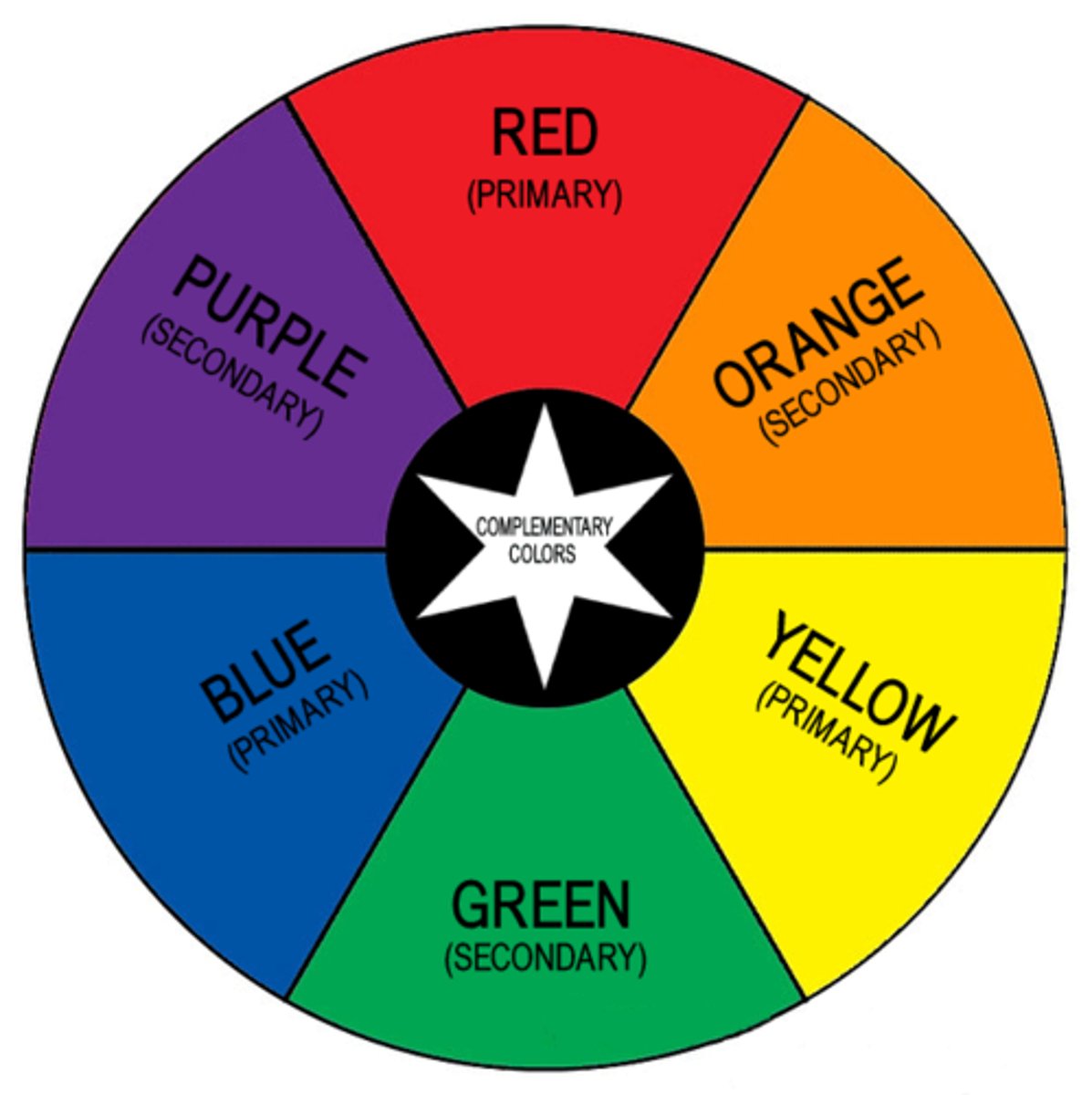
color wheel
Methyl bixin
both ends have methyl esters
Norbixin
both ends have carboxylic acids
Compounds in Annatto seeds
Bixin
Methyl bixin
Norbixin
How many extractions do we do in Lab J? Which solvent and how much?
4 extractions, 5mL of 10% EtOH in DCM solvent added 4 times. total solvent used = 20mL
Where do we dispose of the solids on the filter paper in Lab J?
in the biohazard waste box
TLC plates in Lab J
3 TLC plates used. On all three, spot:
Lane 1: Annatto extract (1 spot)
Lane 2: A more concentrated spot of Annatto extract (2 spots)
Lane 3: Bixin standard
Solvents used for the TLC plates in Lab J
1. DCM
2. 3% EtOH in DCM
3. 10% EtOH in DCM
Development of TLC plates in Lab J
DCM plate: no movement of Bixin, Rf=0
3% EtOH in DCM plate: Bixin well separated, Rf=0.24
10% EtOH in DCM plate: Bixin moved far up near the solvent front, not good separation, Rf=0.82
Color of Bixin on TLC plate
bright orange spot
Best solvent to use, as determined in Lab J
3% EtOH in DCM
Silica gel safety concerns
inhalation hazard
DCM safety concerns
carcinogen and also flammable
- keep covered in the hood
- need to double glove
- if glove become damaged or soiled:
1. Remove gloves
2. Wash hands for 20 seconds with warm water & soap
3. Replace with new gloves
Waste disposal for Annatto seeds
biohazard waste box
Waste disposal for filter paper
biohazard waste box
Filtration in Lab J
Do NOT add water to filter paper! will cause a phase separation
Seeds get trapped in filter and extract goes into flask
Where do the seeds go during the extractions in Lab J?
Seeds go back into beaker using a spatula to do more extractions. after all 4 extractions, they are disposed of in the biohazard box
Extraction process for Lab J
1. Add 5mL solvent (10% EtOH in DCM)
2. Stir for 1 min
3. Vacuum for 30 seconds
What do we use to transfer the extraction solution to the RB flask?
pasteur pipette
TLC considerations
- cover with watch glass to prevent evaporation
- place plate at incline
- solvent below baseline
Polarities of compounds in Lab J&K
Norbixin = most polar
Bixin = moderately polar
Methyl bixin = most nonpolar
DCM solvent plate in Lab J
no separation of bixin
methyl bixin is the only compound that moves
3% EtOH solvent plate in Lab J
good separation of all 3 compounds
10% EtOH solvent plate in Lab J
Bixin moves up the plate but is too close to Methyl bixin to separate
Where is Norbixin in all 3 TLC plates in Lab J?
at baseline - too polar to move in all three solvents
Separation on the 3% EtOH TLC plate in Lab J
from bottom to top: Norbixin, Bixin, Methyl Bixin
bright orange/red spots
Solvents used in Lab J
DCM: not polar enough, everything stays at baseline
10% EtOH in DCM: too polar, everything moves up solvent front and can't be separated
3% EtOH in DCM: good polarity, everything separates
Which solvent is used for extractions in Lab J?
10% EtOH in DCM
How do we remove the solvent in the extracted solution in Lab J?
rotary evaporator - rotovap
- reduced pressure removes the solvent
- warm water bath prevents solvent from bumping
- obtain final isolated Bixin extract
Final appearance of Bixin extract in Lab J
deep red brick colored solid coating the inside of the RB flask
Chromatography
separation of compounds based on polarity. most common organic purification technique
Column Chromatography
used to separate macroscopic amounts of compounds. like running a "Big TLC"
- use TLC to determine best solvent
- solvent needs to more desired compound off of baseline and separate it from other compounds
* a small amount of polar solvent makes a big difference
Packing the column in Lab K
- clamp middle of column
- prepare silica + 3% solvent slurry in a beaker
- add to column through powder funnel
- add more solvent using a pipette to wash gel off the walls
- collect solvent in beaker, reuse if not colored (if colored = waste)
Which funnel do we use to add the silica slurry in Lab K?
powder funnel
Which funnel do we use to add the reaction mixture to the sep funnel in Lab I?
pyrex funnel
How do we redissolve the solid extract in Lab K?
add 3mL of 10% EtOH in DCM to the RB flask containing the solid bixin coating and pipette up and down to mix
Loading the sample in Lab K
must load in NARROW band!!
- use smallest amount of solvent possible, otherwise this will dilute the solution and create broader bands
- save drop or two of solution for final TLC plate
- go as close to top as possible, move in CIRCULAR motion
What happens if the extracted solution is not added in a circular motion in Lab K?
the extracted material will streak through the gel and affect the separation of Bixin
Why do we add the extracted solution in a circular motion in Lab K?
keeps the materials well packed and allows the to move together in a narrow circular band throughout the column
Bands in the column in Lab K
Bottom: yellow Methyl Bixin band
Middle: bright red/orange Bixin band
Top: red Norbixin band
Why do we add solvent to the column in Lab K?
To push the bright orange Bixin band down the column. repeat with 2-3mL of solvent until the solvent above the silica layer is no longer colored
Which solvent do we add to the column in Lab K?
3% EtOH in DCM
Avoiding broad bands
- use as concentrated a solution of the extract as possible
- fully load extract before adding solvent to fill the column
Silica gel in column
Do NOT let the column run dry! the gel will develop cracks that will affect separation
Which fractions come out of the column first and how do we collect them?
yellow fractions come first. collect in a 125mL Erlenmeyer flask. these are the Methyl Bixin fractions
Which fractions come out of the column second and how do we collect them?
orange-red fractions come second. collect in numbered test tubes. these are the Bixin fractions
TLC of collected fractions
ONLY for test tube fractions - want to determine the purity of Bixin
- start with 1 fraction before the orange band eluted
- use 2-3 TLC plates with 4 tube spots per plate. spot 1 in every 3 fractions
- develop plates in 3% EtOH in DCM, as determined from Lab H
Determining which fractions contain Bixin
observe TLC plates and determine which number tubes contain pure Bixin. then combine all fractions in between. For ex, 9, 10, and 15 only contain Bixin as determined by the TLC plates, so we can combine fractions 9-15.
Final TLC plate in Lab K
Lane 1: Initial residue from Lab J
Lane 2: Bixin Standard
Lane 3: Spot from RB flask containing the combined fractions containing Bixin
Lane 4: A more concentrated spot from the same RB
we observe only Bixin in Lanes 3 & 4, which means that separation was successful!
Pure Bixin final appearance
Brick orange-red solid
Removing silica gel from column
Drain column by opening stopcock, then turn upside over 4 weigh boats to allow silica gel to come out.
Disposal of unused fractions
dispose into CHO Halogenated waste
Disposal of waste silica gel
dispose into waste silica gel container
What does the frit filter do?
prevent silica gel from flowing out. porous filter that allows liquids to flow through
What do we put underneath the column in Lab I?
a 125mL Erlenmeyer flask. good technique to do this to trap any leaks
Preparation of silica slurry
combine silica gel and 3% EtOH in DCM. quickly stir and quickly pour into column - prevents it from getting stuck in beaker
What do we do after adding the silica gel to the column?
add a few pipettes of solvent in a circular motion to the column to wash any gel off the walls of the column. then drain solvent until about 1/2 cm above gel
Solvent level in column
must ALWAYS be able 1/2 cm at least the silica gel