spring omm practical 3

5.0(2)
Studied by 27 people
call kaiCall Kai
learnLearn
examPractice Test
spaced repetitionSpaced Repetition
heart puzzleMatch
flashcardsFlashcards
GameKnowt Play
Card Sorting

1/62

encourage image

There's no tags or description

Looks like no tags are added yet.

Last updated 10:28 PM on 4/20/26
Name
Mastery
Learn
Test
Matching
Spaced
Call with Kai

No analytics yet

Send a link to your students to track their progress

63 Terms

1
New cards

dx sc joint

  • proximal clavicle

  • spring test (superior to inferior, anterior to posterior)

    • the side that has less springing is the side you’ll diagnose

  • check motions by placing two fingers at proximal clavicle

  • have patient move (abduct, adduct, flex, extend)

  • name for direction of ease

2
New cards

dx ac joint

  • spring test superior to inferior in distal clavicle

  • you can ask pt which side they’re having issues with

  • dx side with most restriction

  • check range of motion by passively moving pt arm

  • compare both sides (check one arm at a time)

  • movement pairings

    • adduct, external rotation, inferior glide

    • abduct, internal rotation, superior glide

3
New cards

dx gh joint

  • assess active ROM (ballerina pose - dysfunctional side is the one with the lower arm) or ask pt which side bothers them

  • Place digits 3 and 4 on ball anteriorly and thumb on humerus posteriorly

  • do passive ROM and check for restriction

4
New cards

dx ulnohumeral joint

  1. tell pt to do active forearm pronation and supination

  2. ballerina pose (arms go overhead)

  3. is there’s a side that’s bothering you?

  4. Feel for both medial and lateral olecranon process.

  5. Two-hand hold possible OR place thenar/hypothenar on one end then cup using fingers while other hand grabs wrist rather than hand instead.

  6. Naturally elbow should be 5-45°

  7. Test for ROM (Abduct, adduct, flex, extend)

  8. greater angle with carrying position = prefers aBduction

  • aBduction SD = arm is more angulated = increased carrying angle.

  • aDduction SD = arm appears straighter = decreasing the carrying angle (producing a “gunstock deformity”).
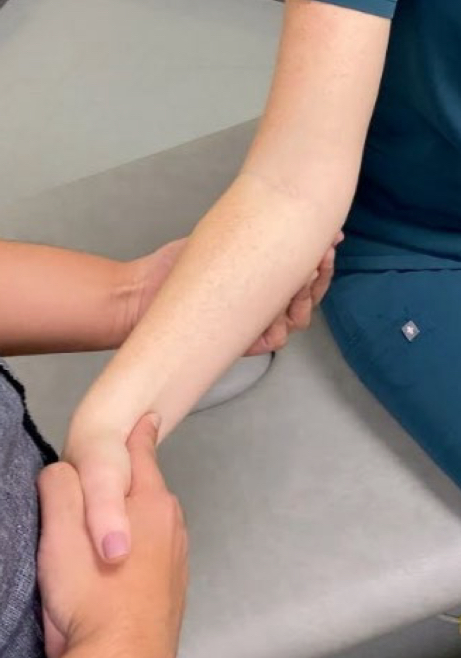
<ol><li><p>tell pt to do active forearm pronation and supination</p></li><li><p>ballerina pose (arms go overhead)</p></li><li><p>is there’s a side that’s bothering you?</p></li><li><p>Feel for both medial and lateral olecranon process.</p></li><li><p>Two-hand hold possible OR place thenar/hypothenar on one end then cup using fingers while other hand grabs wrist rather than hand instead.</p></li><li><p>Naturally elbow should be 5-45°</p></li><li><p>Test for ROM (Abduct, adduct, flex, extend)</p></li><li><p>greater angle with carrying position = prefers aBduction</p></li></ol><ul><li><p>aBduction SD = arm is more angulated = increased carrying angle. </p></li></ul><ul><li><p>aDduction SD = arm appears straighter = decreasing the carrying angle (producing a “gunstock deformity”).</p></li></ul><p></p>
5
New cards

dx radial head / radioulnar joint

Easy posterior glide on pronation = posterior SD

  1. Test active ROM bilateral

  2. Locate medial epicondyle then go to lateral epicondyle then more distal

  3. Divot when arm is extended and go to the BOTTOM of the divot. Feel the bone and PINCH

  4. Pt arm flexed 90

  5. Test for right area using pronation and supination

  6. Dx focused on more proximal area

<p>Easy posterior glide on pronation = posterior SD</p><ol><li><p>Test active ROM bilateral</p></li><li><p>Locate medial epicondyle then go to lateral epicondyle then more distal</p></li><li><p>Divot when arm is extended and go to the BOTTOM of the divot. Feel the bone and PINCH</p></li><li><p>Pt arm flexed 90</p></li><li><p>Test for right area using pronation and supination</p></li><li><p>Dx focused on more proximal area</p></li></ol><p></p>
6
New cards

dx radiocarpal joint (wrist)

  1. test active ROM bilateral

  2. Put thumbs on anterior/palmar surface of proximal carpals. On backside, fingers are monitoring posteriorly.

  3. Compare side to side with wrist flexion and extension

  4. Now do radial and ulnar deviation.

  5. On practical just need to name one of the SD if you find two.
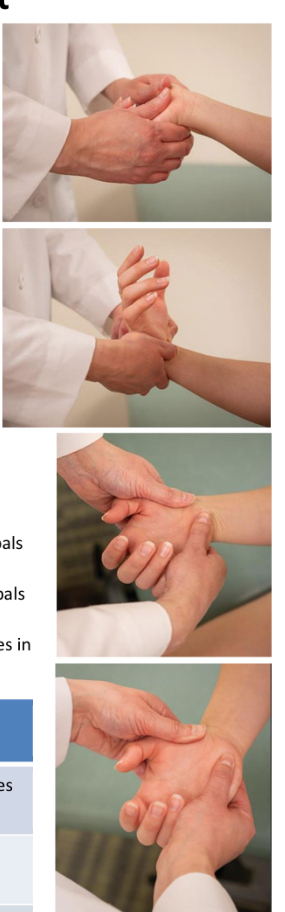
<ol><li><p>test active ROM bilateral</p></li><li><p>Put thumbs on anterior/palmar surface of proximal carpals. On backside, fingers are monitoring posteriorly.</p></li><li><p>Compare side to side with wrist flexion and extension</p></li><li><p>Now do radial and ulnar deviation.</p></li><li><p>On practical just need to name one of the SD if you find two.</p></li></ol><p></p>
7
New cards

dx oa (cervical spine)

OA joint = “opposite always” (deep sulcus = side of rotation so SB will be opposite of that)

  • for examination: translate head from left - right and right to left with head in neutral position

    dx: determine translation (gives S/R) check with slight flexion/extension

    ex: if motion is greater from L to R, freedom is side-bent L and rotated right (restriction in right side-bending), if restriction of lateral translation is MORE signficant in flexion, but goes away in extension, then the segment is extended

8
New cards

dx aa (cervical spine)

AA joint = rotation only

  • you must be standing

    1. ensure pt nods head forward to lock out OA joint

    2. flex pt next to approx 45 degrees until locking occurs below the AA joint in the rest of the cervical spine

    3. slowly rotate head from midline to left and then midline to right

    if head rotates more freely to the right the diagnosis is AA Rr

9
New cards

dx c2-c7

follows type 2-like (rotation & side bending = same)

check for flexion/extension

cervical landmarks:

  • C2 - mandible

  • C3 - hyoid

  • C4 - superior aspect of thyroid

  • C5 - thyroid cartilage

  • C6 - cricoid ring

  • C7 - vertebral prominence

10
New cards

dx t1-t4 or t5-t12

  • screen (TART changes)

  • T1-T3 = TP is same level as SP

  • T4-T6 = TP ½ level up

  • T7-T10 = TP whole step up

  • T11 = TP ½ level up

  • T12 = TP same level

  • thumb rolling superior = flexion, inferior = extension

11
New cards

dx ribs

  • TART changes (i.e. red reflex, skin drag)

  • spring test while pt is prone

    • focus on side with + spring test

  • assess breathing

    • inhalation dysfunction = likes to stay inhaled (will have trouble moving caudad in exhalation)

    • exhalation dysfunction = likes to stay exhaled (will have trouble moving cephalad in inhalation)

  • BITE = inhale (bottom rib = key rib); exhale (top rib = key rib)

  • side w/ less motion = dysfunctional side, name for freedom

  • rib 1-5 = pump handle

  • rib 6-10 = bucket handle

12
New cards

dx lumbar spine

  • dx can be done seated

  • sphinx = testing for extension

  • child’s pose = testing for flexion

  • landmarks = iliac crest btwn L4/L5

  • Type 1 = opposite N S R

  • Type 2 = same side F/E R S

13
New cards

hvla anterior radial head

  1. Pt seated, physician stands facing pt

  2. Thumb on anterior head

  3. Other hand is shaking hands

  4. Rotate forearm into pronation until barrier

  5. Flex into barrier

  6. Thrust is a flex from hand holding wrist
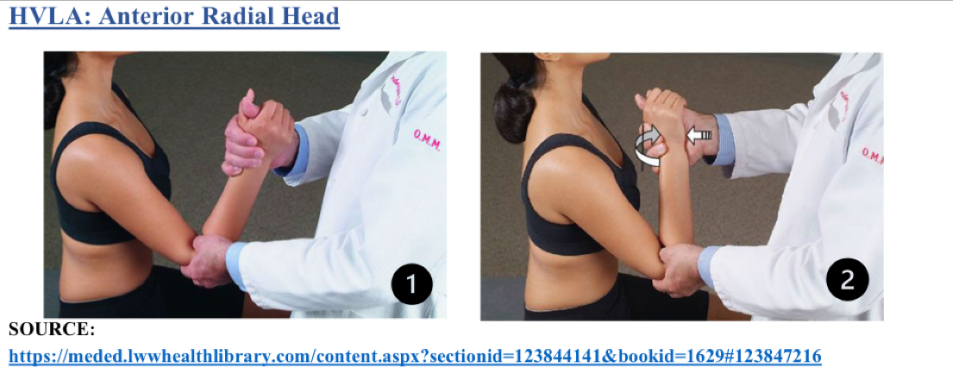
<ol><li><p>Pt seated, physician stands facing pt</p></li><li><p>Thumb on anterior head</p></li><li><p>Other hand is shaking hands</p></li><li><p>Rotate forearm into pronation until barrier</p></li><li><p>Flex into barrier</p></li><li><p>Thrust is a flex from hand holding wrist</p></li></ol><p></p>
14
New cards

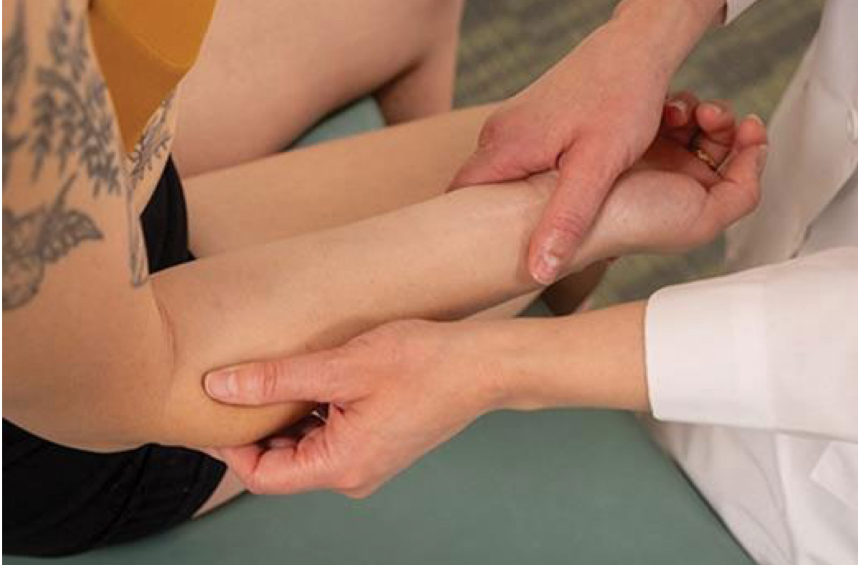
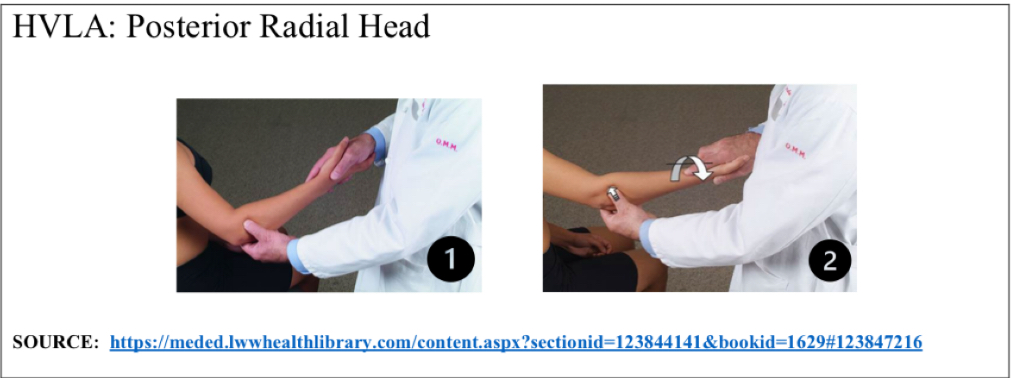
hvla posterior radial head

  1. Pt seated, physician stands facing pt

  2. Thumb on posterior aspect of radial head

  3. Other hand holds pt hand like hand shake

  4. Supinate forearm into barrier

  5. Extend forearm into barrier

  6. Thrust into extension

<ol><li><p>Pt seated, physician stands facing pt</p></li><li><p>Thumb on posterior aspect of radial head</p></li><li><p>Other hand holds pt hand like hand shake</p></li><li><p>Supinate forearm into barrier </p></li><li><p>Extend forearm into barrier</p></li><li><p>Thrust into extension</p></li></ol><p></p>
15
New cards

hvla displaced carpal (standard)

Dorsal displaced = flexed sd

Ventral displaced = extended sd

  1. Pt seated, physician faces pt

  2. Hold wrist like dx

  3. Extend/flex into barrier while maintaining pressure

  4. Thrust is baby whip further into barrier
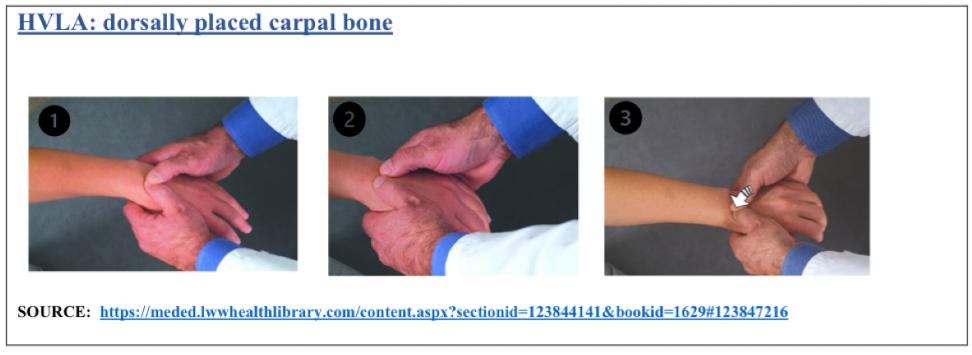
<p>Dorsal displaced = flexed sd</p><p>Ventral displaced = extended sd</p><ol><li><p>Pt seated, physician faces pt</p></li><li><p>Hold wrist like dx</p></li><li><p>Extend/flex into barrier while maintaining pressure</p></li><li><p>Thrust is baby whip further into barrier</p></li></ol><p></p>
16
New cards

hvla seated combined method

  1. Pt seated, physician faces pt

  2. Hold wrist like dx

  3. Extend/flex into barrier while maintaining pressure

  4. pt will lean back for slightly back for traction

  5. Thrust is baby whip into barrier

Flex SD w posterior glide

Extension SD w anterior glide
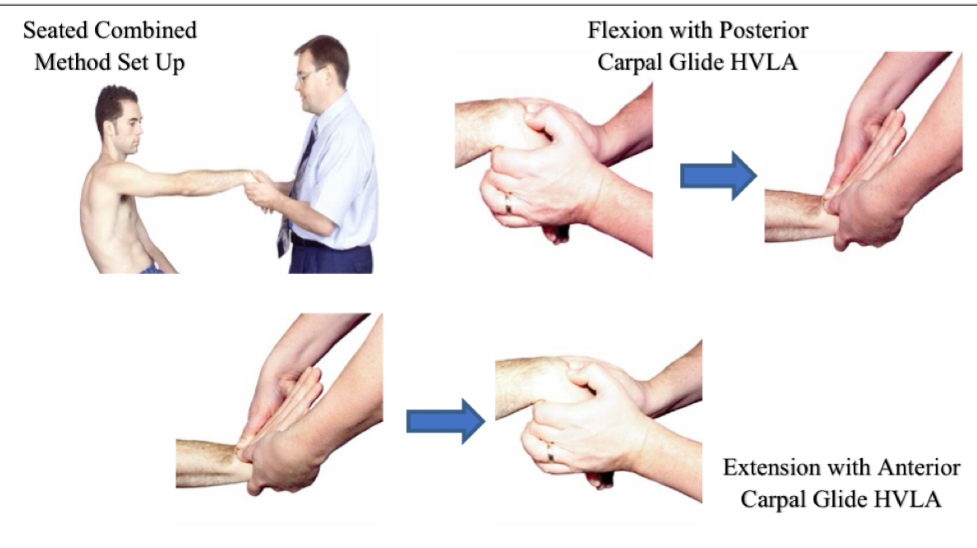
<ol><li><p>Pt seated, physician faces pt</p></li><li><p>Hold wrist like dx</p></li><li><p>Extend/flex into barrier while maintaining pressure</p></li><li><p>pt will lean back for slightly back for traction</p></li><li><p>Thrust is baby whip into barrier</p></li></ol><p></p><p>Flex SD w posterior glide</p><p>Extension SD w anterior glide</p>
17
New cards

hvla ulnohumeral

ABd with medial glide

  1. Pt seated, physician in front of pt

  2. Thumb under medial epicondyle and thenar eminence will act as fulcrum

  3. Other hand holds wrist to ADd and slight extension

  4. Thrust on both hands. Olecranon goes lateral, wrist goes medial

ADd with lateral glide

  1. Pt seated

  2. Thumb on lateral aspect of olecranon and extend elbow slightly

  3. Abduct forearm into barrier

  4. Thrust is olecranon goes medial and wrist lareral.
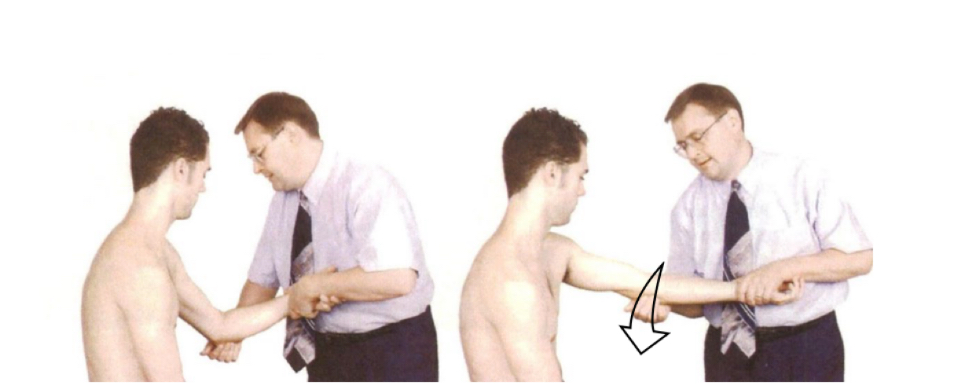
<p>ABd with medial glide </p><ol><li><p>Pt seated, physician in front of pt</p></li><li><p>Thumb under medial epicondyle and thenar eminence will act as fulcrum</p></li><li><p>Other hand holds wrist to ADd and slight extension</p></li><li><p>Thrust on both hands. Olecranon goes lateral, wrist goes medial</p></li></ol><p></p><p>ADd with lateral glide</p><ol><li><p>Pt seated</p></li><li><p>Thumb on lateral aspect of olecranon and extend elbow slightly </p></li><li><p>Abduct forearm into barrier</p></li><li><p>Thrust is olecranon goes medial and wrist lareral.</p></li></ol><p></p>
18
New cards

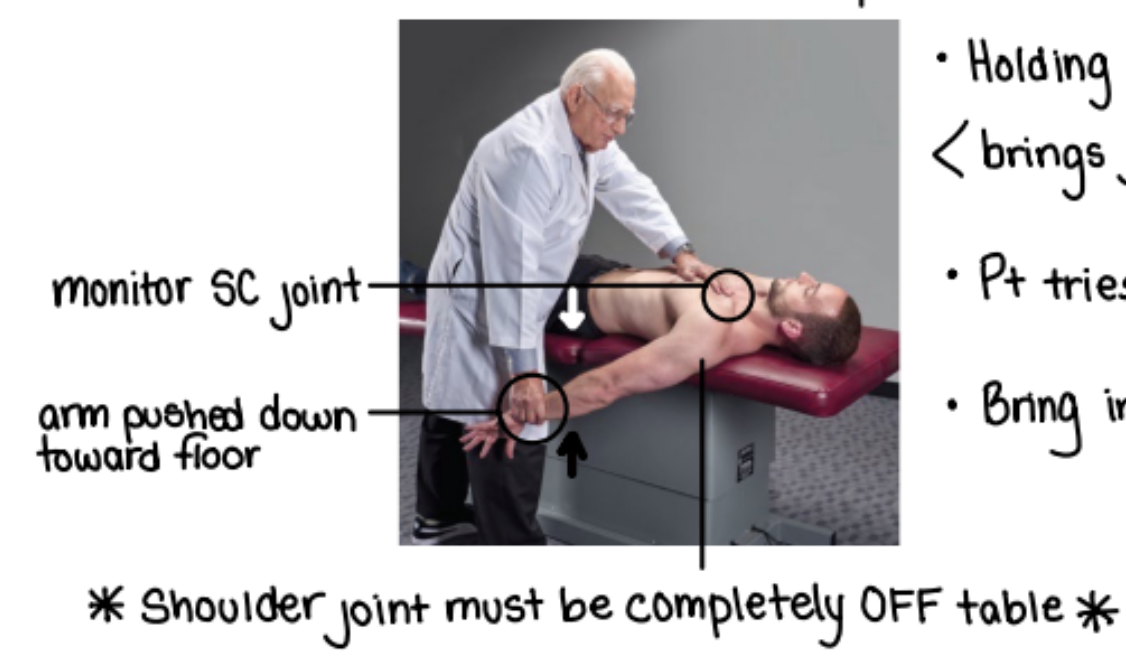
met sc joint - adduction sd (superior glide)

  1. patient is supine

  2. stand on same side of dysfunction

  3. place one hand on proximal clavicle

  4. other hand grabs wrist to extend and internally rotate arm

  5. patient raises arm to ceiling

  6. engage in barrier by moving arm down (no need to further internally rotate)

  7. repeat 3-5 times + passive stretch

<ol><li><p>patient is supine</p></li><li><p>stand on same side of dysfunction</p></li><li><p>place one hand on proximal clavicle</p></li><li><p>other hand grabs wrist to extend and internally rotate arm</p></li><li><p>patient raises arm to ceiling</p></li><li><p>engage in barrier by moving arm down (no need to further internally rotate)</p></li><li><p>repeat 3-5 times + passive stretch</p></li></ol><p></p>
19
New cards

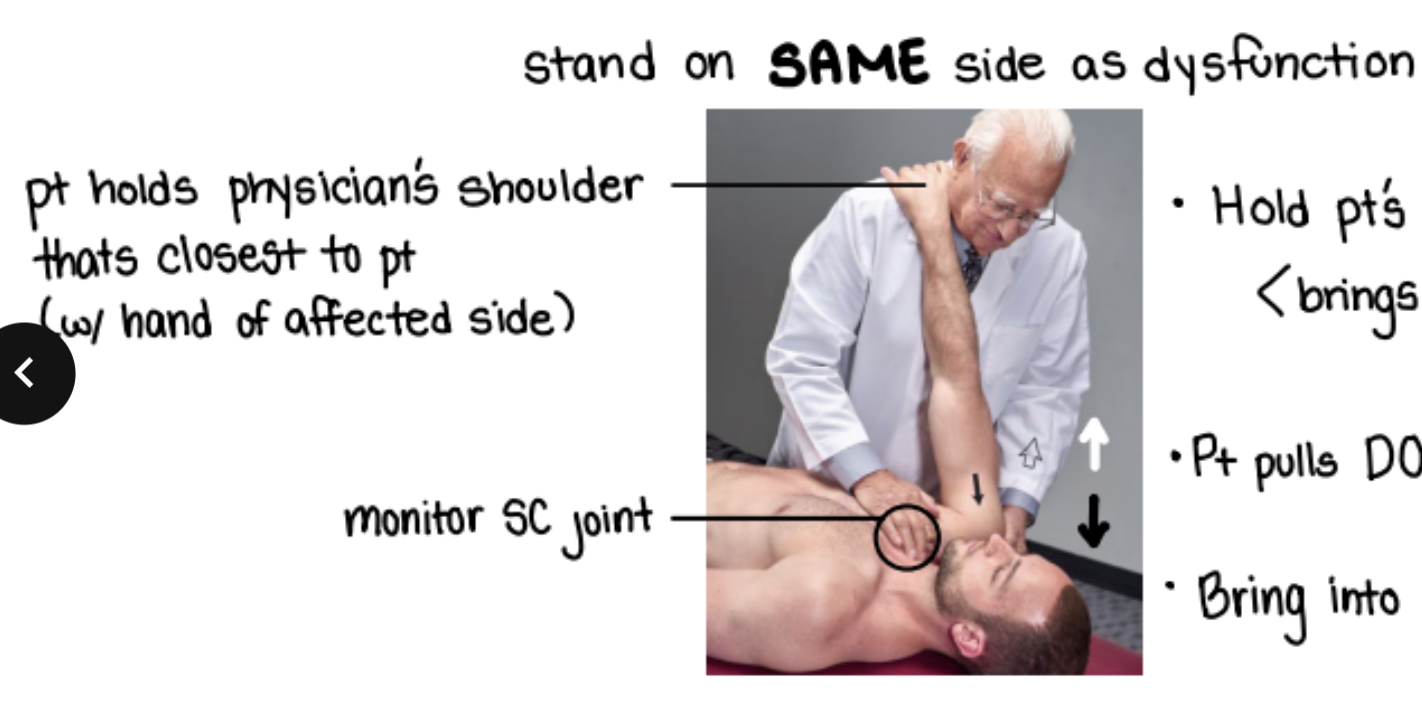
met sc joint - extension sd (anterior glide)

  1. patient is supine

  2. stand on same side of dysfunction

  3. with one hand monitor SC joint

  4. other hand cups scapula

  5. ask patient to hold onto your shoulder with their SD arm

  6. pull scapula up which moves distal clavical anterior (kind of balances the dysfunction out since SC joint is anterior)

  7. patient pulls shoulder back

  8. engage in barrier by pulling scapula further up

  9. repeat 3-5 times + passive stretch

<ol><li><p>patient is supine</p></li><li><p>stand on same side of dysfunction</p></li><li><p>with one hand monitor SC joint</p></li><li><p>other hand cups scapula</p></li><li><p>ask patient to hold onto your shoulder with their SD arm</p></li><li><p>pull scapula up which moves distal clavical anterior (kind of balances the dysfunction out since SC joint is anterior)</p></li><li><p>patient pulls shoulder back</p></li><li><p>engage in barrier by pulling scapula further up</p></li><li><p>repeat 3-5 times + passive stretch</p></li></ol><p></p>
20
New cards

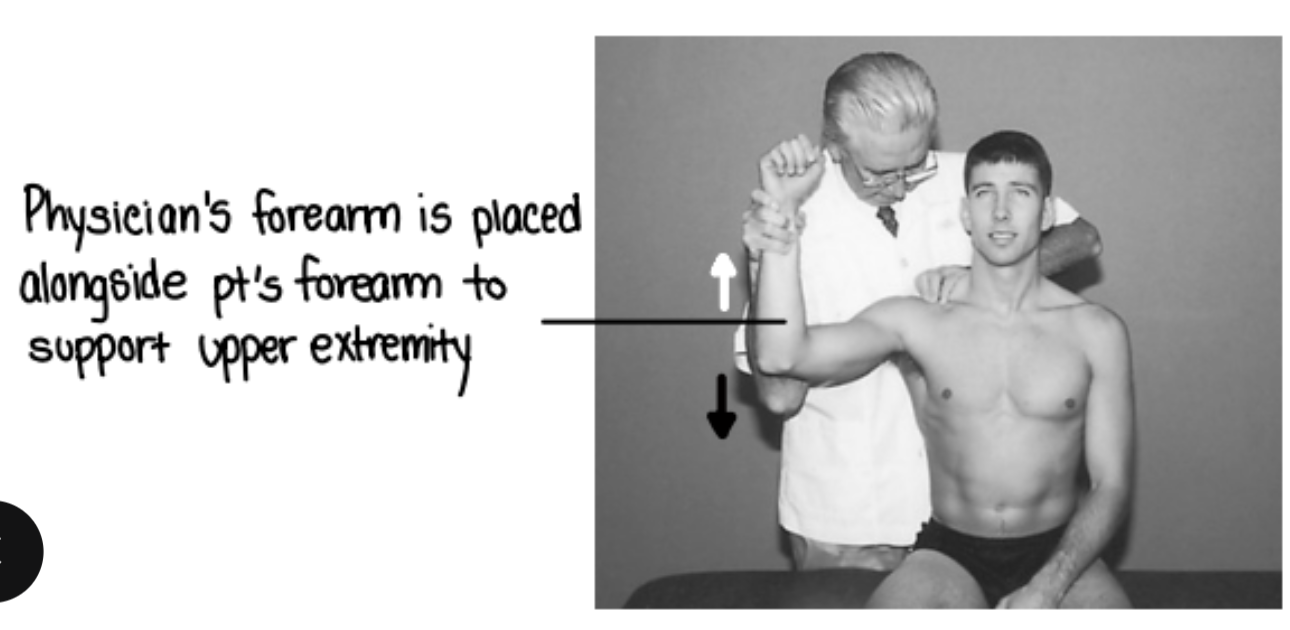
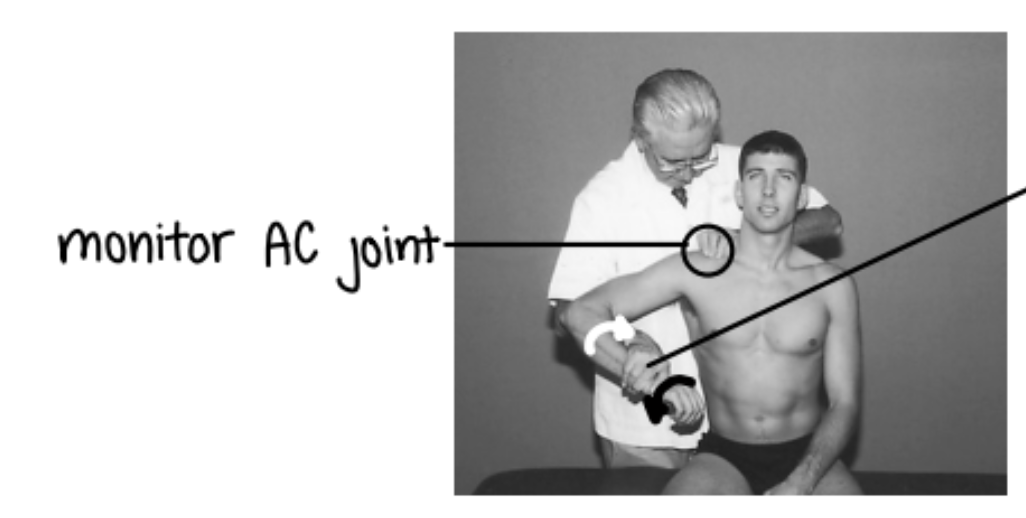
met ac joint - internal rotation sd

  1. patient is seated + you stand behind them

  2. stabilize lateral end of clavicle

  3. monitor AC joint

  4. flex 30, abduct 90

  5. hold distal forearm

  6. EXTERNALLY rotate

  7. pt will internally rotate

<ol><li><p>patient is seated + you stand behind them</p></li><li><p>stabilize lateral end of clavicle</p></li><li><p>monitor AC joint</p></li><li><p>flex 30, abduct 90</p></li><li><p>hold distal forearm</p></li><li><p>EXTERNALLY rotate</p></li><li><p>pt will internally rotate</p></li></ol><p></p>
21
New cards

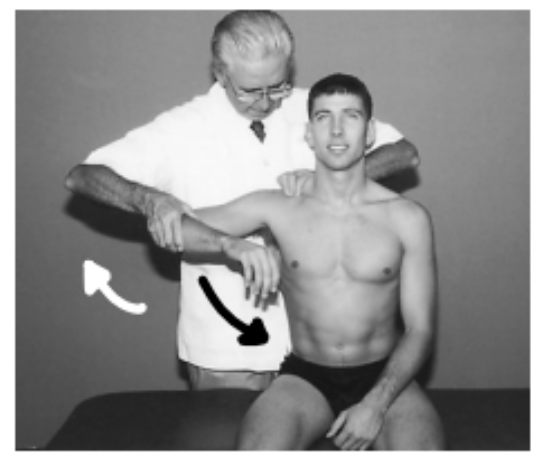
met ac joint - external rotation sd

  1. patient is seated + you stand behind them

  2. stabilize lateral end of clavicle

  3. monitor AC joint

  4. flex 30, abduct 90

  5. weave through to hold distal forearm

  6. INTERNALLY rotate

  7. pt will externally rotate

<ol><li><p>patient is seated + you stand behind them</p></li><li><p>stabilize lateral end of clavicle</p></li><li><p>monitor AC joint</p></li><li><p>flex 30, abduct 90</p></li><li><p>weave through to hold distal forearm</p></li><li><p>INTERNALLY rotate</p></li><li><p>pt will externally rotate</p></li></ol><p></p>
22
New cards

met ac joint - adduction sd

  1. patient is seated + you stand behind them

  2. compress distal clavical towards AC joint

  3. flex 30 + abduct into barrier

  4. patient adducts/moves to freedom

<ol><li><p>patient is seated + you stand behind them</p></li><li><p>compress distal clavical towards AC joint</p></li><li><p>flex 30 + abduct into barrier</p></li><li><p>patient adducts/moves to freedom</p></li></ol><p></p>
23
New cards

met gh joint (spencer position based on dx)

spencer positions:

  • extension → flexion sd

  • flexion → extension sd

  • circumduction (compression/traction) → idk wot the sd would be sorry

  • abduction → adduction sd

  • adduct → abduction sd

  • internal rotation → external rotation sd

  • pumping → idk wot this would be either LOL

24
New cards

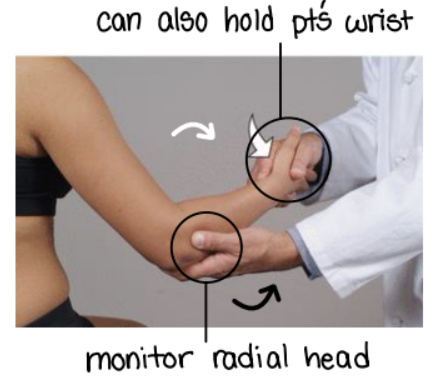
met elbow (radial head)

pronation sd = posterior radial head

  • monitor radial head with one hand

  • other hand holds pt’s wrist

  • supinate pt forearm to engage in barrier

  • pt tries to pronate forearm against resistance

  • bring into new barrier by adding supination

  • repeat 3-5 times + passive stretch

supination sd = anterior radial head

  • same set up just opposite movement

  • pronate pt’s forearm

  • pt tries to supinate

<p>pronation sd = posterior radial head</p><ul><li><p>monitor radial head with one hand</p></li><li><p>other hand holds pt’s wrist</p></li><li><p>supinate pt forearm to engage in barrier</p></li><li><p>pt tries to pronate forearm against resistance</p></li><li><p>bring into new barrier by adding supination</p></li><li><p>repeat 3-5 times + passive stretch</p></li></ul><p></p><p>supination sd = anterior radial head</p><ul><li><p>same set up just opposite movement</p></li><li><p>pronate pt’s forearm</p></li><li><p>pt tries to supinate</p></li></ul><p></p>
25
New cards

met wrist

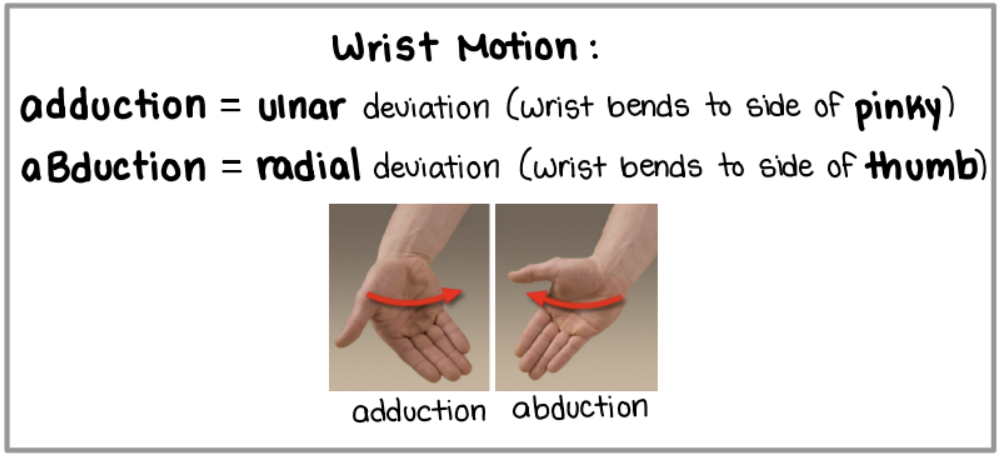
monitor radiocarpal joints!

abduction sd = pt prefers deviation to thumb

  • physician moves pt wrist into adduction (to pinky)

  • pt tries to move wrist into abduction (to thumb)

  • bring into new barrier by moving wrist more towards pinky

adduction sd = pt prefers deviation to pinky

  • same set up as above just opposite movements
extension sd

  • physician oves pt wrist into flexion

  • pt tries to move wrist into extension

  • bring into barrier by moving wrist further into flexion

flexion sd

  • same set up as above just opposite movements

<p>monitor radiocarpal joints!</p><p>abduction sd = pt prefers deviation to thumb</p><ul><li><p>physician moves pt wrist into adduction (to pinky)</p></li><li><p>pt tries to move wrist into abduction (to thumb)</p></li><li><p>bring into new barrier by moving wrist more towards pinky</p></li></ul><p></p><p>adduction sd = pt prefers deviation to pinky</p><ul><li><p>same set up as above just opposite movements</p></li></ul><p></p><p>extension sd</p><ul><li><p>physician oves pt wrist into flexion</p></li><li><p>pt tries to move wrist into extension</p></li><li><p>bring into barrier by moving wrist further into flexion</p></li></ul><p></p><p>flexion sd</p><ul><li><p>same set up as above just opposite movements</p></li></ul><p></p>
26
New cards

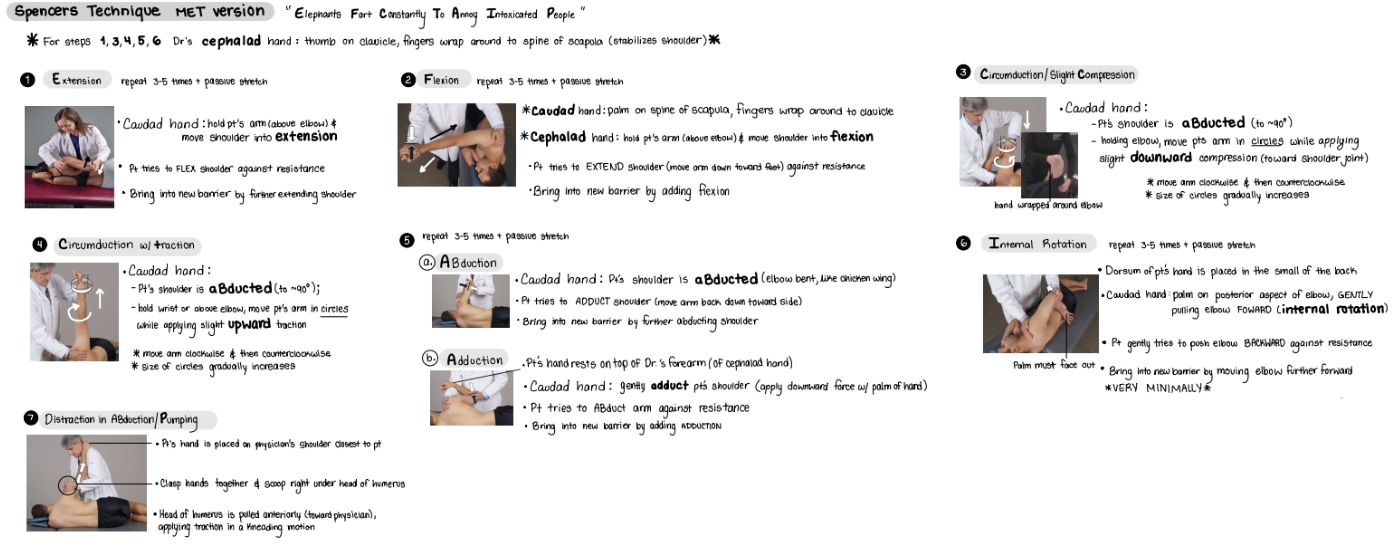
full spencer (7 steps) articulatory technique without met

elephants fart constantly to annoy intoxicated people

note that the techniques are where you position the patient

  • extension

  • flexion

  • compression (circumduction)

  • traction (circumduction)

  • abduction/adduct

  • internal rotation

  • pumping

<p>elephants fart constantly to annoy intoxicated people</p><p><em><mark data-color="yellow" style="background-color: yellow; color: inherit;">note that the techniques are where you position the patient</mark></em></p><ul><li><p>extension</p></li><li><p>flexion</p></li><li><p>compression (circumduction)</p></li><li><p>traction (circumduction)</p></li><li><p>abduction/adduct</p></li><li><p>internal rotation</p></li><li><p>pumping</p></li></ul><p></p>
27
New cards

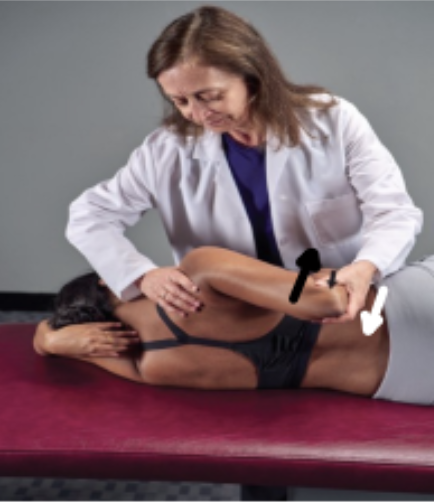
spencer technique - extension

  1. patient on lateral recumbent (on their side)

  2. cephalad hand grabs patient’s shoulder to lock AC and SC joint

  3. caudad hand holds patient’s arm above elbow and moves shoulder into extension

  4. patient resists by flexing shoulder

  5. repeat 3-5 times + passive stretch

  6. if articulatory (not MET), then just pulse
<ol><li><p>patient on lateral recumbent (on their side)</p></li><li><p>cephalad hand grabs patient’s shoulder to lock AC and SC joint</p></li><li><p>caudad hand holds patient’s arm above elbow and moves shoulder into extension</p></li><li><p>patient resists by flexing shoulder</p></li><li><p>repeat 3-5 times + passive stretch</p></li><li><p>if articulatory (not MET), then just pulse</p></li></ol><p></p>
28
New cards

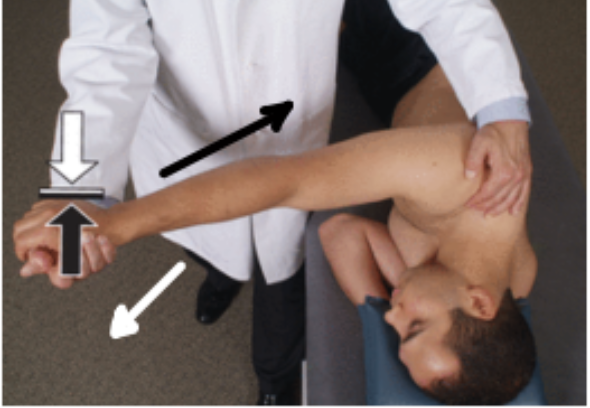
spencer technique - flexion

  1. patient on lateral recumbent (on their side)

  2. caudad hand’s palm on spine of scapula + fingers wrap around clavicle

  3. cephalad hand holds patient’s forearm and moves shoulder into flexion

  4. patient resists by extending (moving arm toward the feet)

  5. repeat 3-5 times + passive stretch

  6. if articulatory (not MET), then just pulse
<ol><li><p>patient on lateral recumbent (on their side)</p></li><li><p>caudad hand’s palm on spine of scapula + fingers wrap around clavicle</p></li><li><p>cephalad hand holds patient’s forearm and moves shoulder into flexion</p></li><li><p>patient resists by extending (moving arm toward the feet)</p></li><li><p>repeat 3-5 times + passive stretch</p></li><li><p>if articulatory (not MET), then just pulse</p></li></ol><p></p>
29
New cards

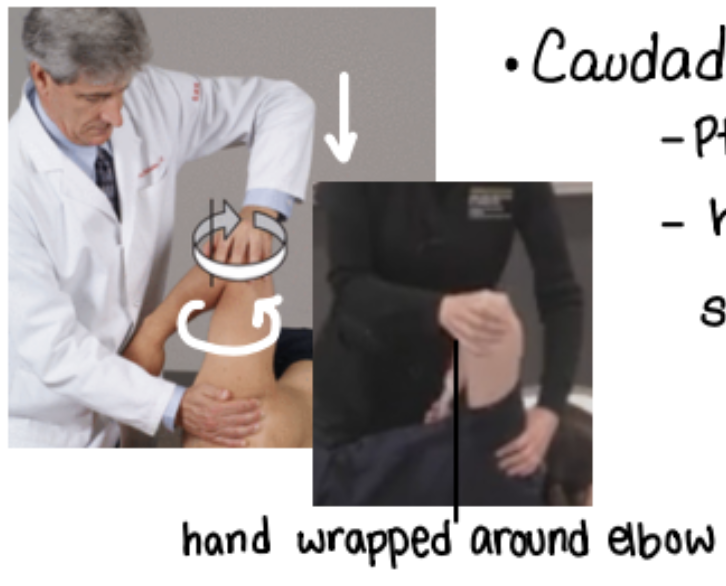
spencer technique - compression w/ circumduction

  1. patient on lateral recumbent (on their side)

  2. abduct patient’s shoulder to 90

  3. cephalad hand holds shoulder

  4. caudad hand on elbow, applying downward pressure, circumducting
<ol><li><p>patient on lateral recumbent (on their side)</p></li><li><p>abduct patient’s shoulder to 90</p></li><li><p>cephalad hand holds shoulder</p></li><li><p>caudad hand on elbow, applying downward pressure, circumducting</p></li></ol><p></p>
30
New cards

spencer technique - traction w/ circumduction

  1. patient on lateral recumbent (on their side)

  2. abduct patient’s shoulder to 90

  3. cephalad hand holds shoulder

  4. caudad hand on wrist, applying traction (upward tension), circumducting
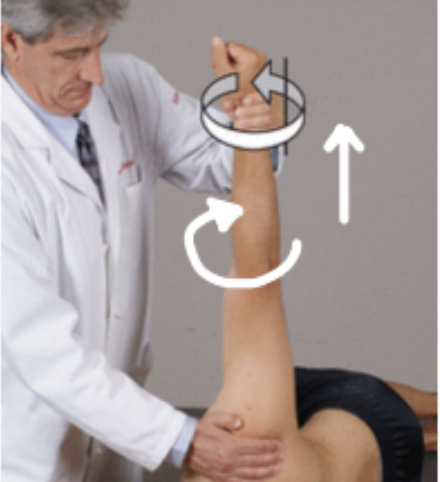
<ol><li><p>patient on lateral recumbent (on their side)</p></li><li><p>abduct patient’s shoulder to 90</p></li><li><p>cephalad hand holds shoulder</p></li><li><p>caudad hand on wrist, applying traction (upward tension), circumducting</p></li></ol><p></p>
31
New cards

spencer technique - abduct

  1. patient on lateral recumbent (on their side)

  2. patient shoulders abduct (chicken wing) to restrictive barrier

  3. cephalad hand is placed on shoulder

  4. patient grabs physician’s arm (same one that’s holding shoulder)

  5. patient resists by adducting

  6. repeat 3-5 times + passive stretch

  7. if articulatory (not MET), then just pulse
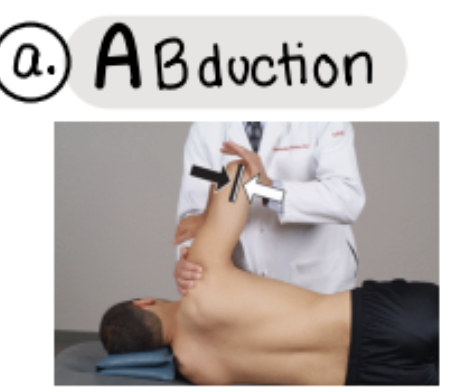
<ol><li><p>patient on lateral recumbent (on their side)</p></li><li><p>patient shoulders abduct (chicken wing) to restrictive barrier</p></li><li><p>cephalad hand is placed on shoulder</p></li><li><p>patient grabs physician’s arm (same one that’s holding shoulder)</p></li><li><p>patient resists by adducting</p></li><li><p>repeat 3-5 times + passive stretch</p></li><li><p>if articulatory (not MET), then just pulse</p></li></ol><p></p>
32
New cards

spencer technique - adduct

  1. patient on lateral recumbent (on their side)

  2. patient shoulders adduct (chicken wing) to restrictive barrier

  3. cephalad hand is placed on shoulder

  4. patient grabs physician’s arm (same one that’s holding shoulder)

  5. patient resists by abducting

  6. repeat 3-5 times + passive stretch

  7. if articulatory (not MET), then just pulse
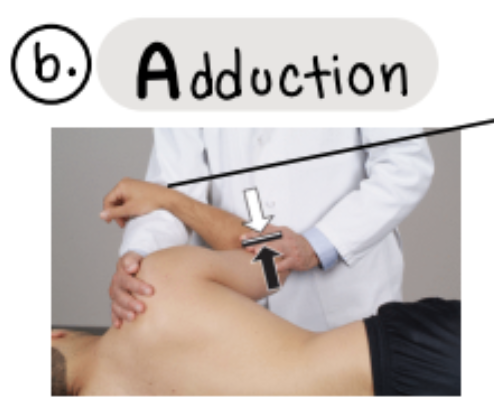
<ol><li><p>patient on lateral recumbent (on their side)</p></li><li><p>patient shoulders adduct (chicken wing) to restrictive barrier</p></li><li><p>cephalad hand is placed on shoulder</p></li><li><p>patient grabs physician’s arm (same one that’s holding shoulder)</p></li><li><p>patient resists by abducting</p></li><li><p>repeat 3-5 times + passive stretch</p></li><li><p>if articulatory (not MET), then just pulse</p></li></ol><p></p>
33
New cards

spencer technique - internal rotation

  1. patient on lateral recumbent (on their side)

  2. internally rotate patient’s arm + palms face out + hand placed on back

  3. cephalad hand holds patient’s shoulder

  4. caudal hand is behind patient’s elbow to induce internal rotation

  5. patient resists by externally rotation (pushing elbow backwards)

  6. new barrier is engaged by moving elbow forward

  7. repeat 3-5 times + passive stretch

  8. if articulatory (not MET), then just pulse
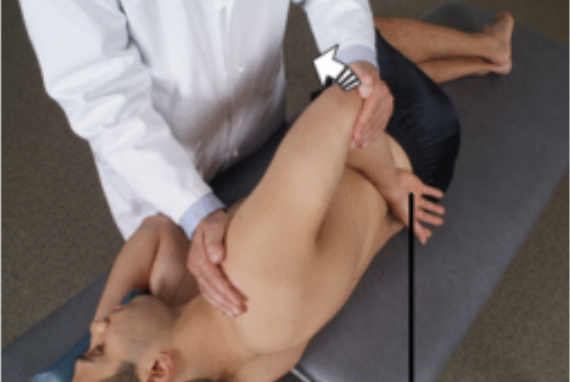
<ol><li><p>patient on lateral recumbent (on their side)</p></li><li><p>internally rotate patient’s arm + palms face out + hand placed on back</p></li><li><p>cephalad hand holds patient’s shoulder</p></li><li><p>caudal hand is behind patient’s elbow to induce internal rotation</p></li><li><p>patient resists by externally rotation (pushing elbow backwards)</p></li><li><p>new barrier is engaged by moving elbow forward</p></li><li><p>repeat 3-5 times + passive stretch</p></li><li><p>if articulatory (not MET), then just pulse</p></li></ol><p></p>
34
New cards

spencer technique - pumping

  1. patient on lateral recumbent (on their side)

  2. patient’s hand on physician’s shoulder

  3. both of your hands clasp and “scoop” under head of humerus

  4. pull head of humerus anteriorly (towards you)
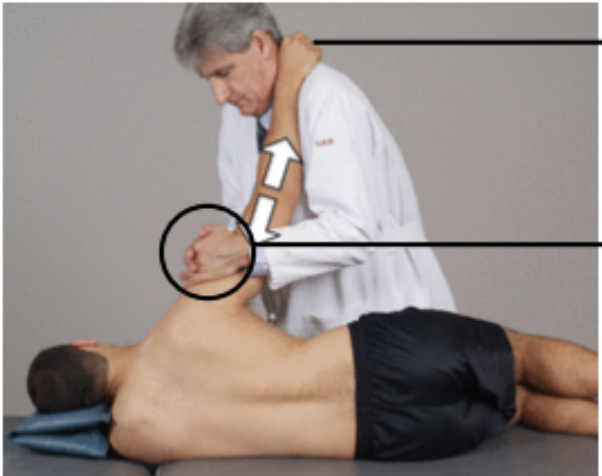
<ol><li><p>patient on lateral recumbent (on their side)</p></li><li><p>patient’s hand on physician’s shoulder</p></li><li><p>both of your hands clasp and “scoop” under head of humerus</p></li><li><p>pull head of humerus anteriorly (towards you)</p></li></ol><p></p>
35
New cards

hvla lumbar

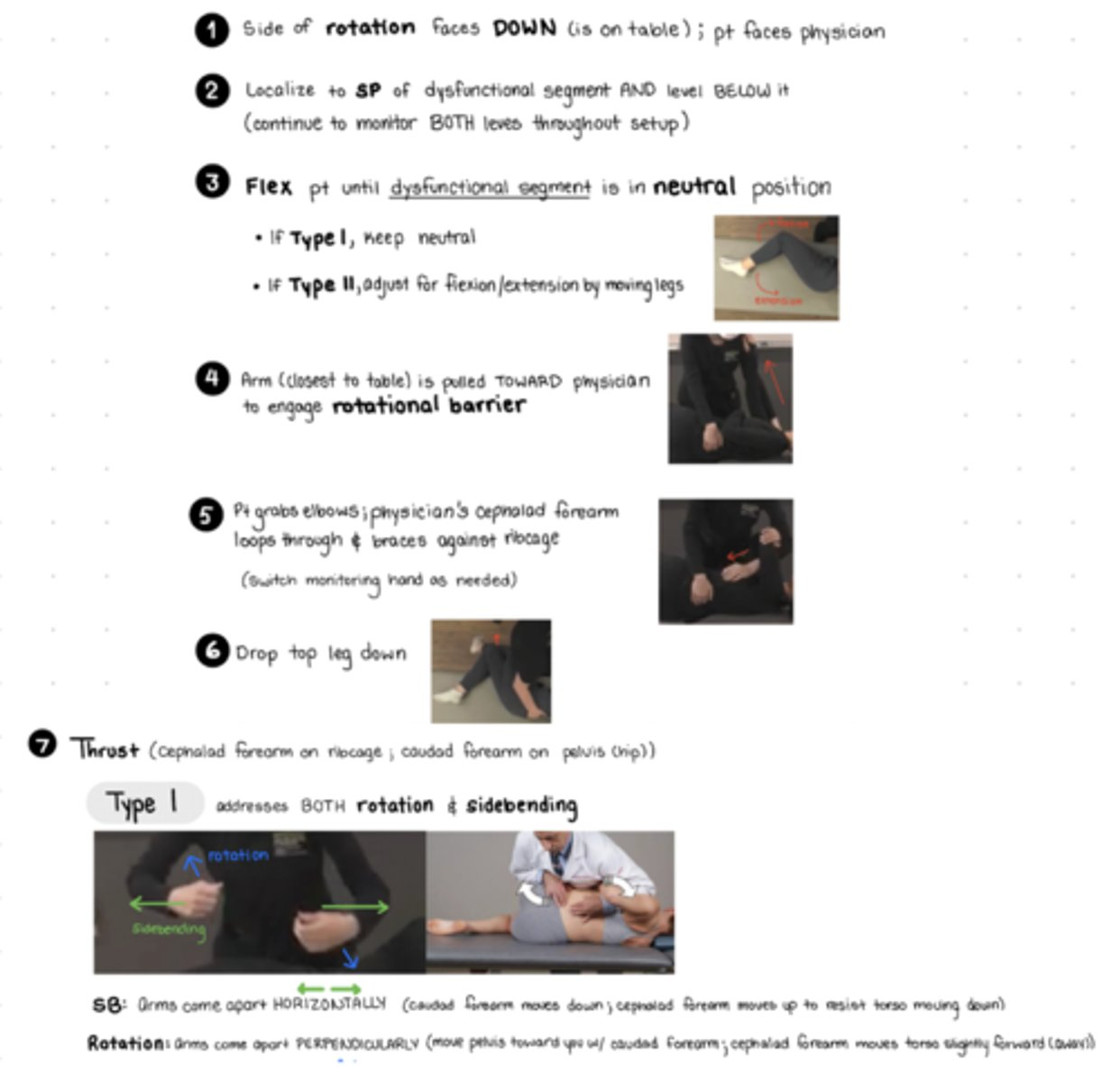
  • side of rotation faces DOWN (on table); pt faces physician

  • localize SP of dysfunction AND level below (monitor throughout setup)

  • flex pt until dysfunctional segment is in neutral

    • if type I = keep neutral

    • if type 2 = adjust for F/E by moving legs

  • arm closest to table is pulled TOWARD physician to engage rotation

  • pt grabs their own elbows; physician’s cephalad forearm loops through and braces ribcage (switch monitoring hand prn)

  • caudad arm placed on greater trochanter

  • if type I → keep neutral (no need to adjust)

  • if type II extension SD → flex legs further until felt at level of dysfunction

  • if type II flexion SD → tell pt to straighten bottom leg

  • drop top leg down

  • THRUST

    • type 1

      • arms come APART horizontally (caudad arm moves down; cephalad arm moves up to resist torso moving down)

      • arms come apart perpendicularly (caudad arm moves pelvis towards you; cephalad arm moves slighly forward/kind of away from you)

    • type 2

      • arms come TOGETHER horizontally

      • arms come apart perpendicularly

      • like ur punching yourself

<ul><li><p>side of rotation faces DOWN (on table); pt faces physician</p></li><li><p>localize SP of dysfunction AND level below (monitor throughout setup)</p></li><li><p>flex pt until dysfunctional segment is in neutral</p><ul><li><p>if type I = keep neutral</p></li><li><p>if type 2 = adjust for F/E by moving legs</p></li></ul></li><li><p>arm closest to table is pulled TOWARD physician to engage rotation</p></li><li><p>pt grabs their own elbows; physician’s cephalad forearm loops through and braces ribcage (switch monitoring hand prn)</p></li><li><p>caudad arm placed on greater trochanter</p></li><li><p>if type I → keep neutral (no need to adjust)</p></li><li><p>if type II extension SD → flex legs further until felt at level of dysfunction</p></li><li><p>if type II flexion SD → tell pt to straighten bottom leg</p></li><li><p>drop top leg down</p></li><li><p>THRUST</p><ul><li><p>type 1</p><ul><li><p>arms come APART horizontally (caudad arm moves down; cephalad arm moves up to resist torso moving down)</p></li><li><p>arms come apart perpendicularly (caudad arm moves pelvis towards you; cephalad arm moves slighly forward/kind of away from you)</p></li></ul></li><li><p>type 2</p><ul><li><p>arms come TOGETHER horizontally</p></li><li><p>arms come apart perpendicularly</p></li><li><p>like ur punching yourself</p></li></ul></li></ul></li></ul><p></p>
36
New cards

hvla thoracic

  • type 1 SD = neutral, elbow down

  • type 2 SD = f/e, elbow up

  • stand on opposite side of rotation

  • arms opposite over adjacent

  • thenar eminence on TP, inhale, thrust on exhale

37
New cards

hvla ribs 1, 2 exhalation sd

RaSt

  • pt seated

  • physcian leg opposite of SD to stabilize

  • one hand on pt head, forearm against head to stabilize

  • mcp of index finger on posterior aspect of dysfunctional rib

  • thrust directed down and slightly diagonally (as if you were aiming at ur opposite knee)

38
New cards

hvla ribs 3-10

pt supine, arms opposite over adjacent

stand on OPPOSITE side of dysfunctional rib

thenar eminence on ___ angle of rib angle to push rib back

  • inferior aspect of rib angle for exhalation sd → ribs stuck down

  • superior aspect of rib angle for inhalation sd → ribs stuck up

(basically thoracic HVLA other than hand placement)
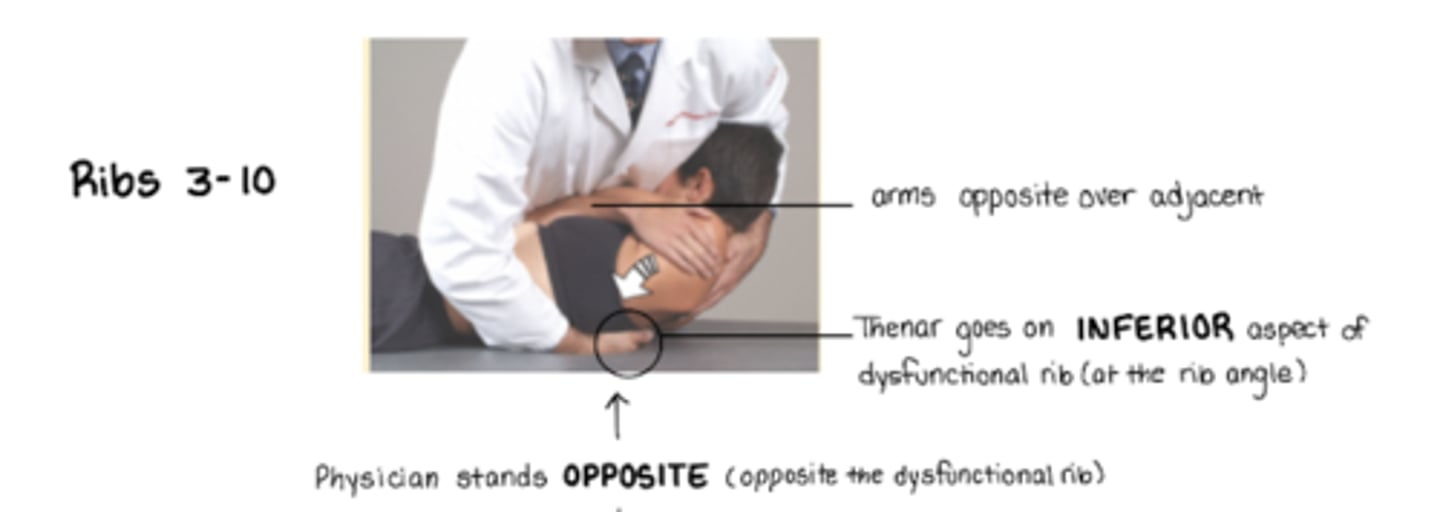
<p>pt supine, arms opposite over adjacent</p><p>stand on OPPOSITE side of dysfunctional rib</p><p>thenar eminence on ___ angle of rib angle to push rib back</p><ul><li><p><strong><u>inferior</u></strong> aspect of rib angle for <u>exhalation sd</u> → ribs stuck down</p></li><li><p><strong><u>superior</u></strong> aspect of rib angle for <u>inhalation sd</u> → ribs stuck up</p></li></ul><p>(basically thoracic HVLA other than hand placement)</p>
39
New cards

hvla ribs 11, 12 exhalation sd

exhalation sd

Sa = legs away from dysfunctional rib

stand OPPOSITE of dysfunctional rib

active hand: hand pulls UP on ASIS to push rib back down

other hand: hypothenar eminence on inferior aspect of rib ABOVE dysfunctional rib to stabilize rib

ribs stuck UP
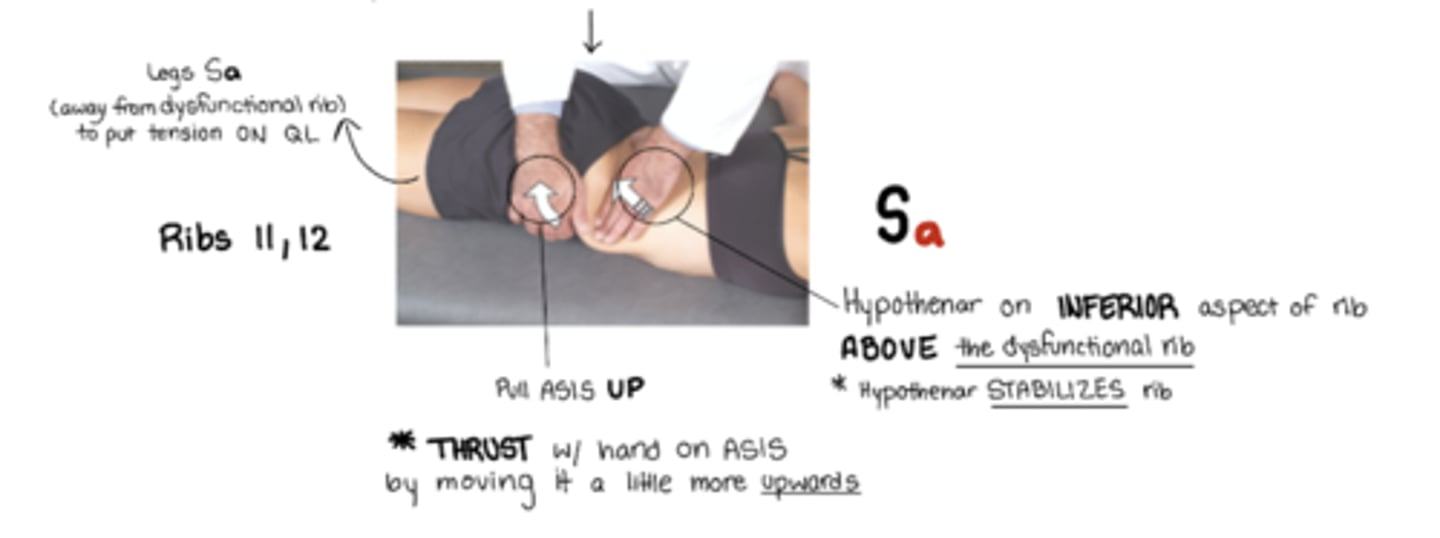
<p>exhalation sd</p><p>Sa = legs away from dysfunctional rib</p><p>stand OPPOSITE of dysfunctional rib</p><p>active hand: hand pulls UP on ASIS to push rib back down</p><p>other hand: hypothenar eminence on inferior aspect of rib ABOVE dysfunctional rib to stabilize rib</p><p>ribs stuck UP</p>
40
New cards

hvla ribs 11, 12 inhalation sd

inhalation sd

St = legs away from me

standing OPPOSITE side of dysfunctional rib

hypothenar eminence on inferior aspect of dysfunctional rib - to push rib back UP

(other hand stabilizes on ASIS)

ribs stuck DOWN
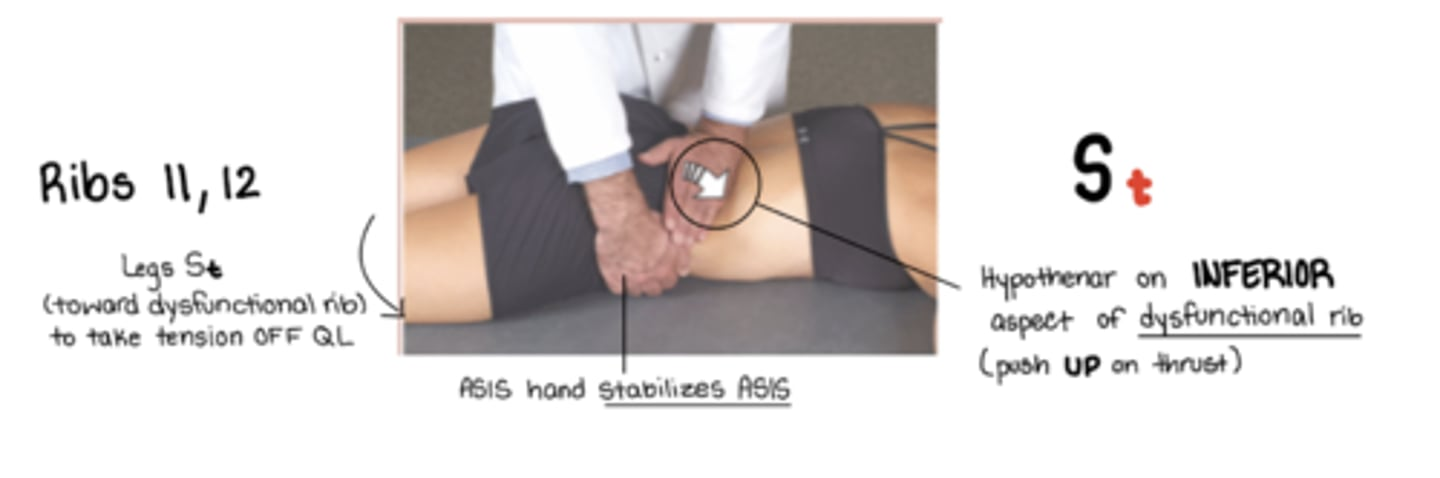
<p>inhalation sd</p><p>St = legs away from me</p><p>standing OPPOSITE side of dysfunctional rib</p><p>hypothenar eminence on inferior aspect of dysfunctional rib - to push rib back UP</p><p>(other hand stabilizes on ASIS)</p><p>ribs stuck DOWN</p>
41
New cards

hvla cervical (c2-c7)

stand on SAME side of dysfunctional rotation component

MCP of index finger POSTERIOR to articular pillar of dysfunctional segment

**must lock out

can slightly flex to point and also side bend towards to initiate lockout
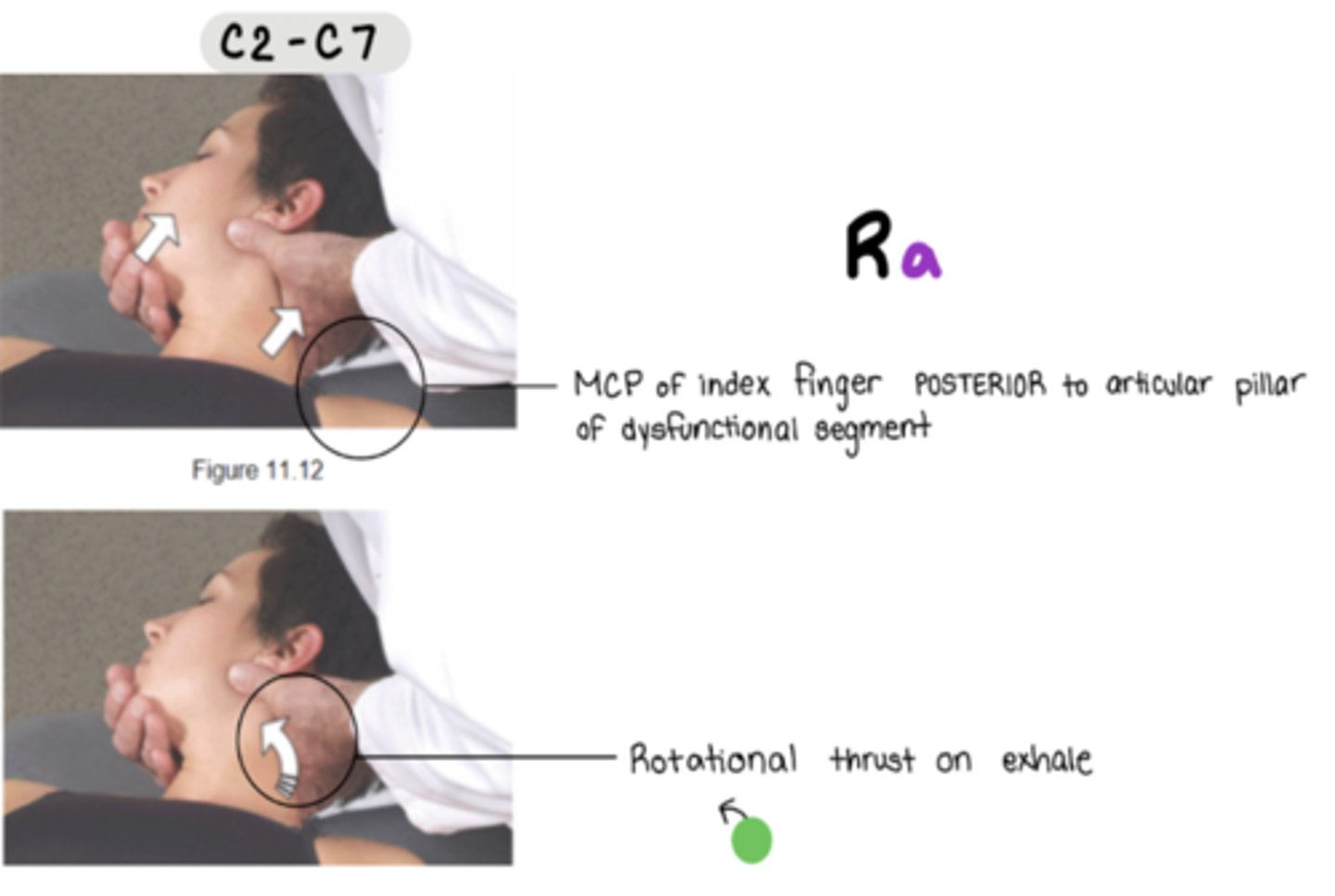
<p>stand on SAME side of dysfunctional rotation component</p><p>MCP of index finger POSTERIOR to articular pillar of dysfunctional segment</p><p>**must lock out</p><p>can slightly flex to point and also side bend towards to initiate lockout</p>
42
New cards

cs shoulder - supraspinatus

F Abd ER

Location is in belly of supraspinatus muscle

  1. Pt supine

  2. Physician sits by pt at level of shoulder girdle

  3. Palpate tender point and use other hand to move arm

  4. Flex arm 45 degrees, abduct 45 degrees, externally rotate (like a parade wave or Statue of Liberty)
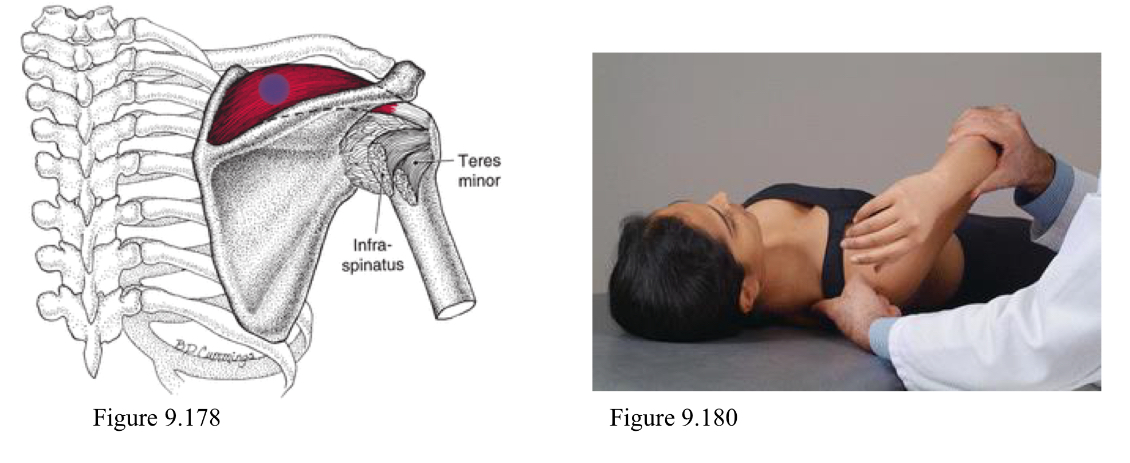
<p>F Abd ER</p><p>Location is in belly of supraspinatus muscle</p><ol><li><p>Pt supine</p></li><li><p>Physician sits by pt at level of shoulder girdle</p></li><li><p>Palpate tender point and use other hand to move arm</p></li><li><p>Flex arm 45 degrees, abduct 45 degrees, externally rotate (like a parade wave or Statue of Liberty)</p></li></ol><p></p>
43
New cards

cs shoulder - biceps brachii (long head)

F Abd IR

Location is over the tendon of the biceps muscle in the bicipital groove

  1. Pt supine

  2. Physician sits or stands same side of point

  3. Point is found at the bicipital groove (flex to feel for tendon)

  4. Flex, abduct, and internally rotate (like you’re scratching head)
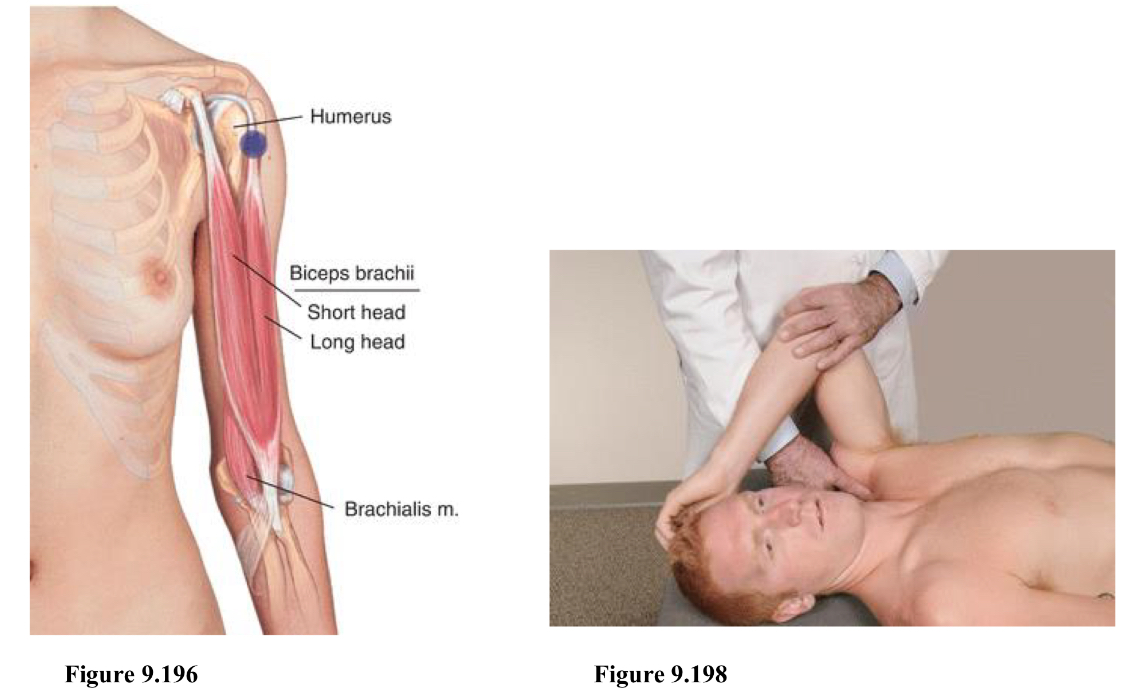
<p>F Abd IR</p><p>Location is over the tendon of the biceps muscle in the bicipital groove</p><ol><li><p>Pt supine</p></li><li><p>Physician sits or stands same side of point</p></li><li><p>Point is found at the bicipital groove (flex to feel for tendon)</p></li><li><p>Flex, abduct, and internally rotate (like you’re scratching head)</p></li></ol><p></p>
44
New cards

cs shoulder - biceps brachii (short head) / coracobrachialis

F Add IR

Location is at the inferolateral aspect of the coracoid process

  1. Pt supine

  2. Physician can stand from either side

  3. Start at AC joint and follow down until you feel a bony prominence (will need to move through muscle). Then go inferior and lateral of coracoid process to locate point.

  4. Tip - feel for humeral head and point will be slightly medial to that. Or just cup and thumb should feel it.

  5. Shoulder stays on table!!!!

  6. elbow and shoulder are flexed, shoulder minimally adducted and internally rotate (same side arm crosses to grab onto opposite shoulder)
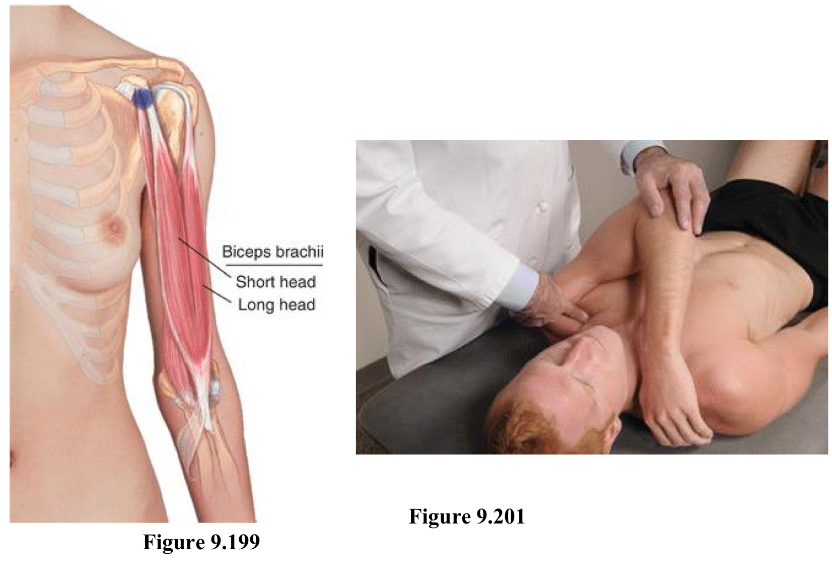
<p>F Add IR</p><p>Location is at the inferolateral aspect of the coracoid process</p><ol><li><p>Pt supine</p></li><li><p>Physician can stand from either side</p></li><li><p>Start at AC joint and follow down until you feel a bony prominence (will need to move through muscle). Then go inferior and lateral of coracoid process to locate point.</p></li><li><p>Tip - feel for humeral head and point will be slightly medial to that. Or just cup and thumb should feel it.</p></li><li><p>Shoulder stays on table!!!!</p></li><li><p>elbow and shoulder are flexed, shoulder minimally adducted and internally rotate (same side arm crosses to grab onto opposite shoulder)</p></li></ol><p></p>
45
New cards

cs shoulder - pec minor

F Add

Location is inferior and medial to the coracoid process

  1. Pt supine

  2. Physician stands opposite of tender point

  3. Point is inferior and medial to coracoid process

  4. Arm is adducted across chest, shoulder/scapula is pulled anterior, inferior, and medial

  5. Shoulder should be OFF table

  6. Can stabilize by holding arm or forearm
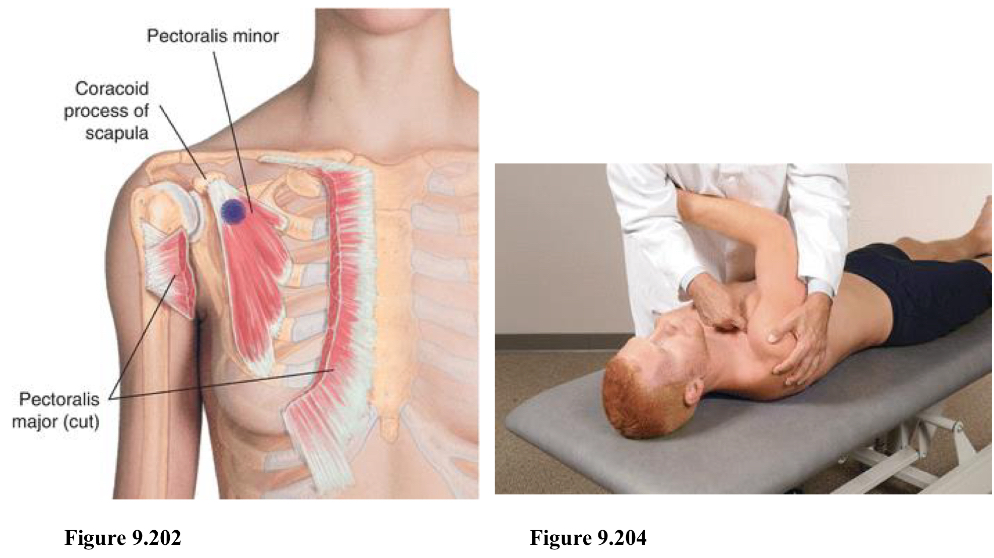
<p>F Add</p><p>Location is inferior and medial to the coracoid process</p><ol><li><p>Pt supine</p></li><li><p>Physician stands opposite of tender point</p></li><li><p>Point is inferior and medial to coracoid process</p></li><li><p>Arm is adducted across chest, shoulder/scapula is pulled anterior, inferior, and medial</p></li><li><p>Shoulder should be OFF table</p></li><li><p>Can stabilize by holding arm or forearm</p></li></ol><p></p>
46
New cards

cs shoulder - subscapularis

E IR

Location is at the anterolateral border of the scapula on the subscapularis muscle pressing from an anterior lateral to posteromedial direction

  1. Pt supine

  2. Physician sits or stands on same side

  3. Locate Scapula, follow the lateral border, press deeper as your go superior (must go through muscle layers)

  4. Tender point is on anterior surface of scapula, palpating in a posterior and medial direction. (Deep enough as you should not be able to see your finger tip)

  5. Shoulder is extended and internally rotated
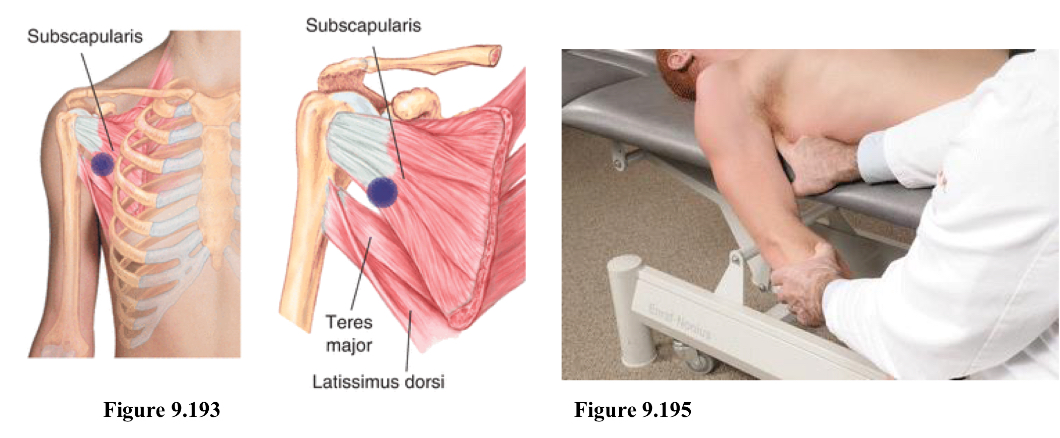
<p>E IR</p><p>Location is at the anterolateral border of the scapula on the subscapularis muscle pressing from an anterior lateral to posteromedial direction</p><ol><li><p>Pt supine</p></li><li><p>Physician sits or stands on same side</p></li><li><p>Locate Scapula, follow the lateral border, press deeper as your go superior (must go through muscle layers)</p></li><li><p>Tender point is on anterior surface of scapula, palpating in a posterior and medial direction. (Deep enough as you should not be able to see your finger tip)</p></li><li><p>Shoulder is extended and internally rotated</p></li></ol><p></p>
47
New cards

cs shoulder - levator scapulae

IR Abd traction

Location is on the superior medial border of the scapula at the attachment of the levator scapula

  1. Pt prone with head looking away from point and arms at the sides

  2. Physician sits on same side

  3. Find spine of scapula, follow border up, point is superior and medial of the border

  4. Physician caudad hand grabs pt wrist while other hand holds point.

  5. Internally rotate pt shoulder and add mild to moderate traction and minimal abduction
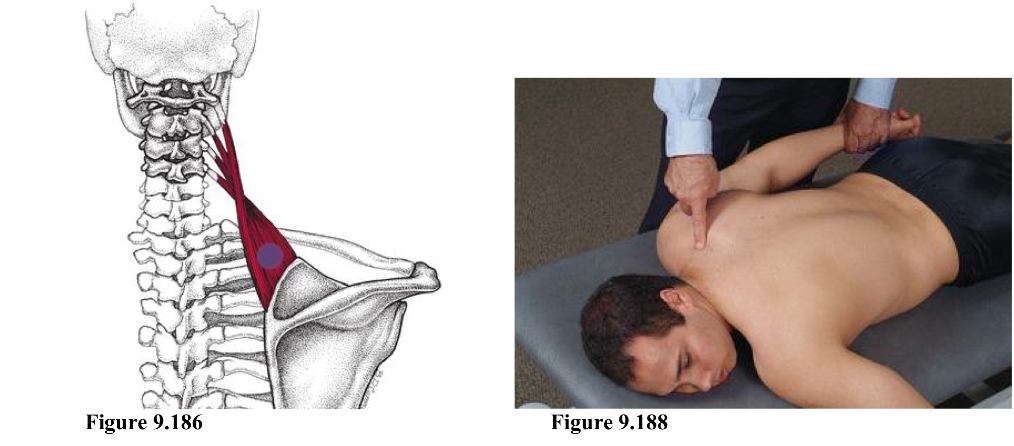
<p>IR Abd traction</p><p>Location is on the superior medial border of the scapula at the attachment of the levator scapula</p><ol><li><p>Pt prone with head looking away from point and arms at the sides</p></li><li><p>Physician sits on same side</p></li><li><p>Find spine of scapula, follow border up, point is superior and medial of the border</p></li><li><p>Physician caudad hand grabs pt wrist while other hand holds point.</p></li><li><p>Internally rotate pt shoulder and add mild to moderate traction and minimal abduction</p></li></ol><p></p>
48
New cards

cs shoulder - rhomboid minor/major

E Add

Location is along the medial border of the scapula at the attachment of the rhomboid muscles

  1. Pt prone

  2. Physician stands on either side (Cornick stood on opposite side)

  3. Point is along medial border of scapula. Press medial to lateral. Shoulder be between spine of scapula and angle of scapula.

  4. One hand on point, other hand holds elbow to set into position.

  5. Shoulder is extended and adducted by pulling arm/elbow posterior and medial

  6. Try to have pt hand stay on side and not on their back.
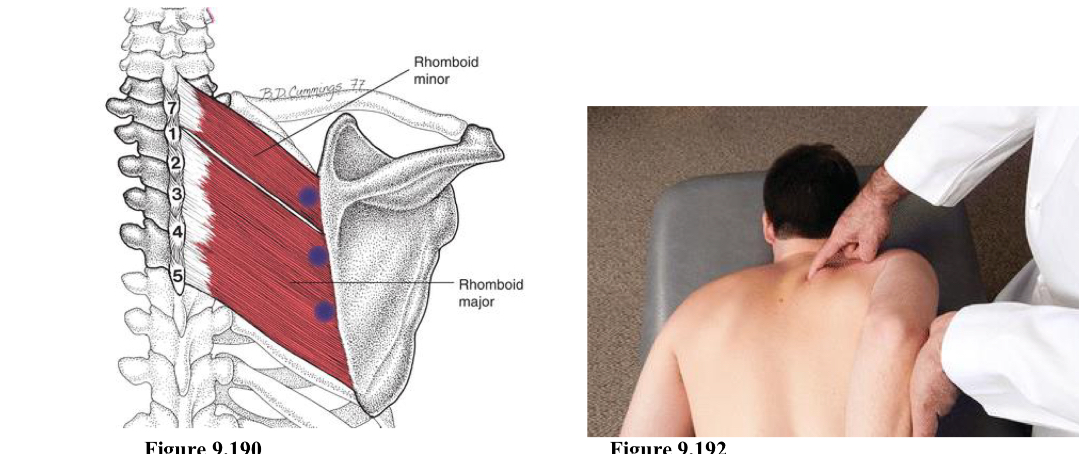
<p>E Add</p><p>Location is along the medial border of the scapula at the attachment of the rhomboid muscles</p><ol><li><p>Pt prone</p></li><li><p>Physician stands on either side (Cornick stood on opposite side)</p></li><li><p>Point is along medial border of scapula. Press medial to lateral. Shoulder be between spine of scapula and angle of scapula.</p></li><li><p>One hand on point, other hand holds elbow to set into position.</p></li><li><p>Shoulder is extended and adducted by pulling arm/elbow posterior and medial</p></li><li><p>Try to have pt hand stay on side and not on their back.</p></li></ol><p></p>
49
New cards

cs radial head

E Sup Val

Point is anterolateral aspect of radial head at attachment of supinator

  1. pt supine, physician same side as point

  2. pt elbow in full extension, forearm supinated

  3. fine tune w/ supination and valgus force
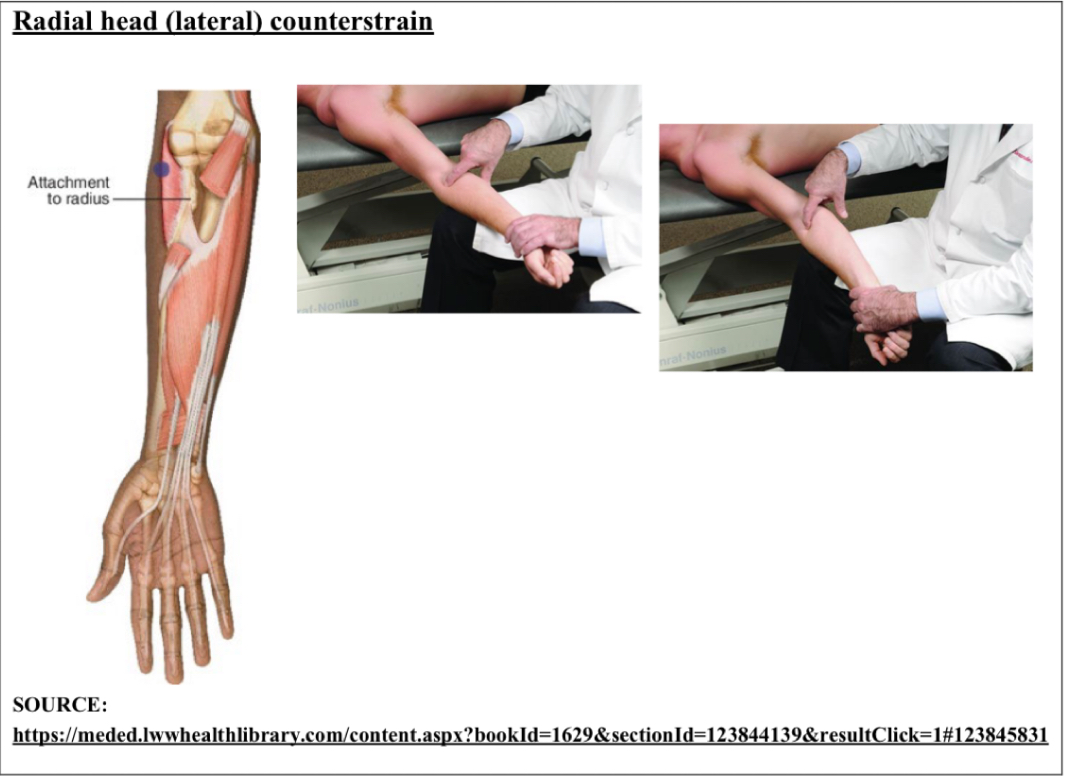
<p>E Sup Val</p><p>Point is anterolateral aspect of radial head at attachment of supinator</p><ol><li><p>pt supine, physician same side as point</p></li><li><p>pt elbow in full extension, forearm supinated</p></li><li><p>fine tune w/ supination and valgus force</p></li></ol><p></p>
50
New cards

cs lateral epicondyle

E Sup Abd

Point is lateral epicondyle of humerus

  1. pt supine, physician on same side of point

  2. pt elbow fully extended. Use table as fulcrum to put arm into position

  3. arm supinated and abducted with varying amounts of force
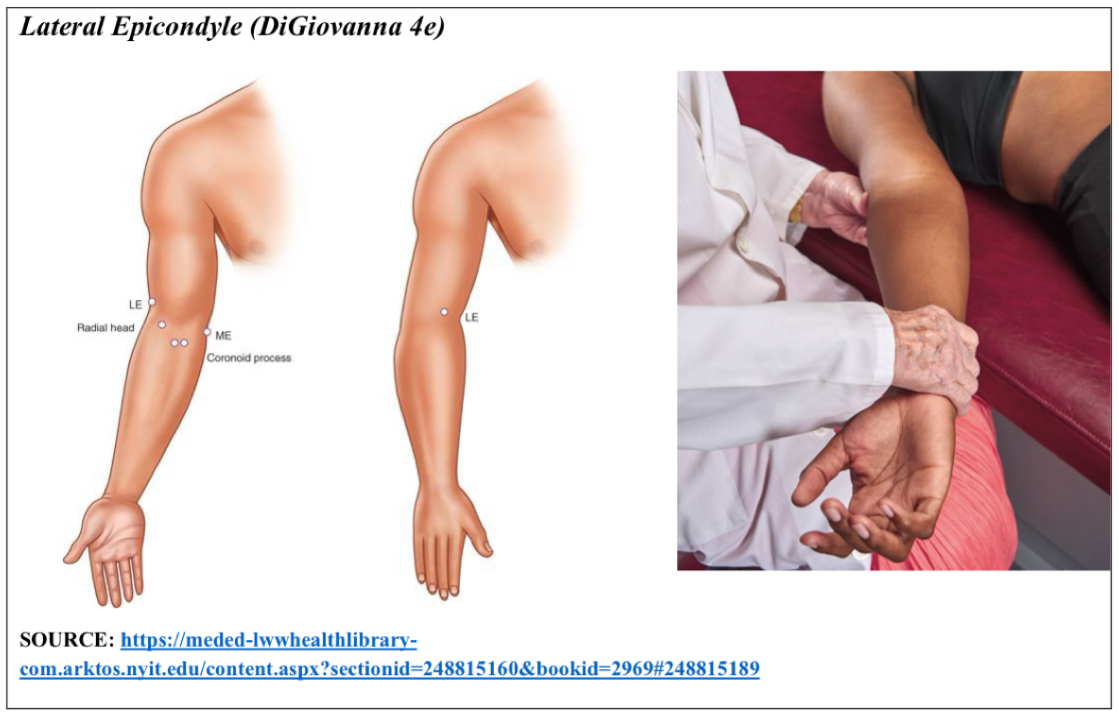
<p>E Sup Abd</p><p>Point is lateral epicondyle of humerus</p><p></p><ol><li><p>pt supine, physician on same side of point</p></li><li><p>pt elbow fully extended. Use table as fulcrum to put arm into position</p></li><li><p>arm supinated and abducted with varying amounts of force</p></li></ol><p></p>
51
New cards

cs medial epicondyle

F Pro ADd with slight flexion of wrist

Point is medial epicondyle of humerus at common flexor tendon and attachment of pronator teres

  1. pt supine, physician on same side of point

  2. pt elbow flexed, wrist pronated, forearm slightly adducted, wrist slightly flexed

  3. fine tune with elbow flex, wrist pronation, forearm adduction
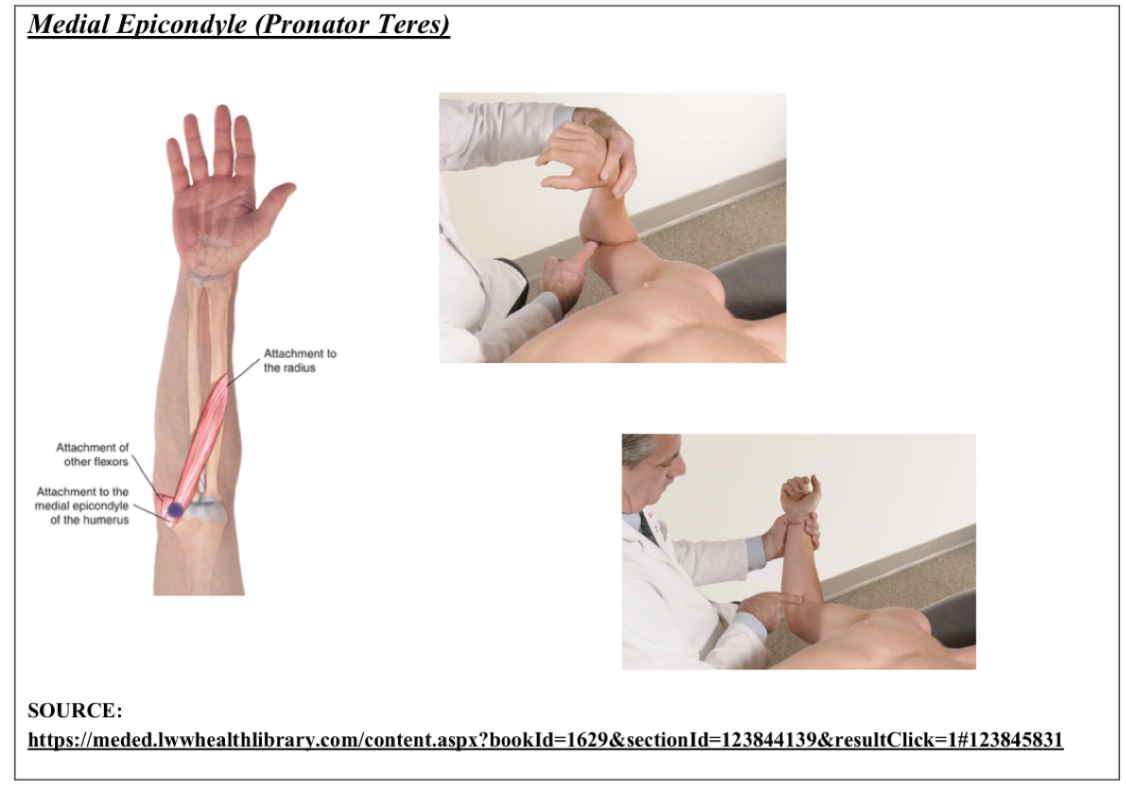
<p>F Pro ADd with slight flexion of wrist</p><p>Point is medial epicondyle of humerus at common flexor tendon and attachment of pronator teres</p><ol><li><p>pt supine, physician on same side of point</p></li><li><p>pt elbow flexed, wrist pronated, forearm slightly adducted, wrist slightly flexed</p></li><li><p>fine tune with elbow flex, wrist pronation, forearm adduction</p></li></ol><p></p>
52
New cards

cs extensor carpi radialis (dorsal)

Wrist extension, slight abduction (radial side)

Distal end and Dorsal surface of 2nd metacarpal in extensor carpi radialis

Like if you palpate 2nd MC joint then go down to tendon

  1. pt either seated or supine, physician faces pt

  2. pt wrist extended and abducted (radial deviation)
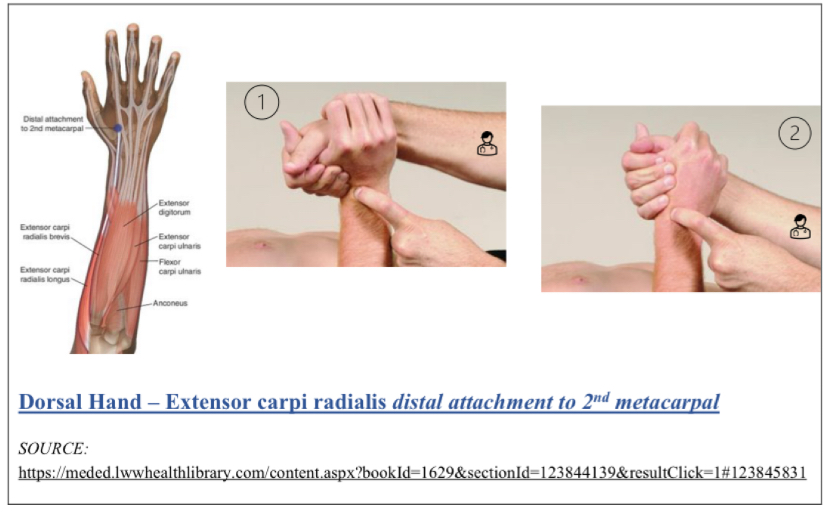
<p>Wrist extension, slight abduction (radial side)</p><p>Distal end and Dorsal surface of 2nd metacarpal in extensor carpi radialis</p><p>Like if you palpate 2nd MC joint then go down to tendon</p><ol><li><p>pt either seated or supine, physician faces pt</p></li><li><p>pt wrist extended and abducted (radial deviation)</p></li></ol><p></p>
53
New cards

cs extensor carpi ulnaris distal attachment to 5th metacarpal

Wrist extension, slight Add

dorsal surface of 5th MC joint in extensor carpi ulnaris muscle

  1. pt either seated or supine, physician faces pt

  2. pt wrist extended and adducted (ulnar deviation)
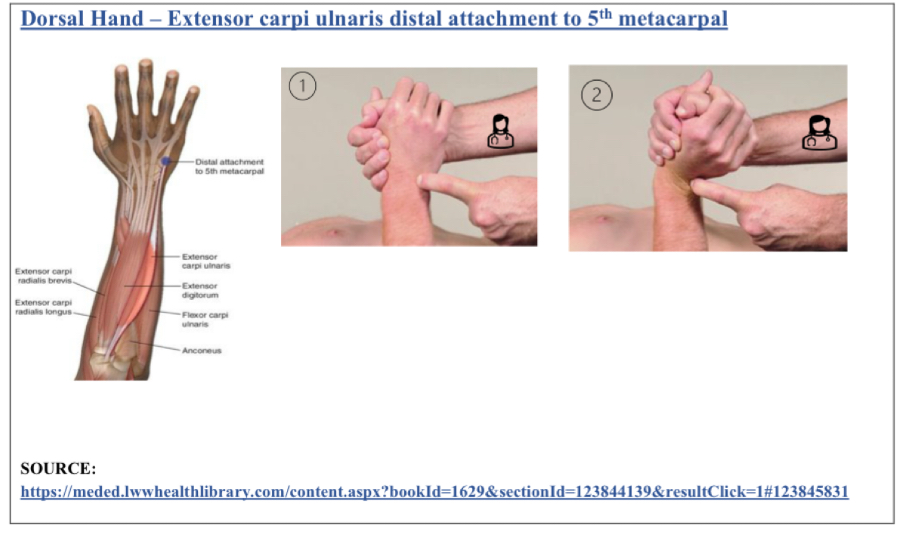
<p>Wrist extension, slight Add</p><p>dorsal surface of 5th MC joint in extensor carpi ulnaris muscle</p><ol><li><p>pt either seated or supine, physician faces pt</p></li><li><p>pt wrist extended and adducted (ulnar deviation)</p></li></ol><p></p>
54
New cards

cs abductor pollicis brevis

F wrist, ABd thumb

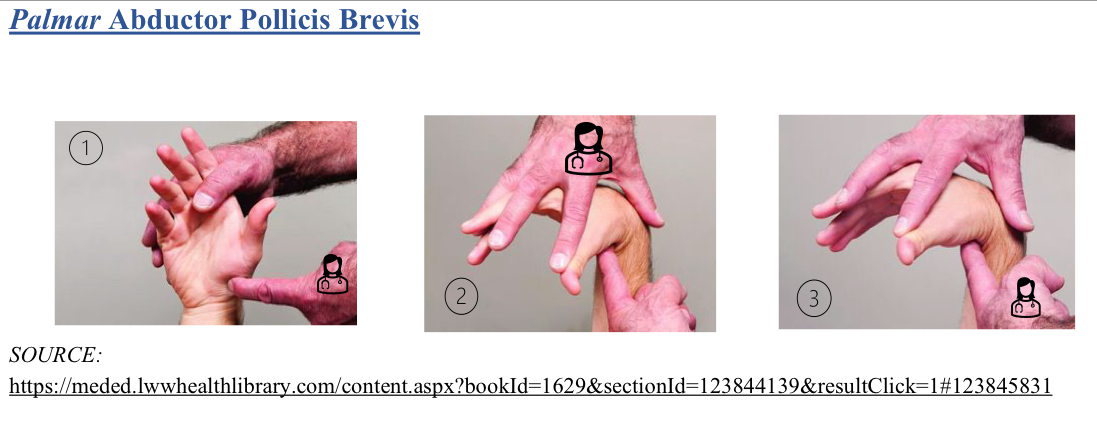
Radial aspect of palmar base at 1 MC joint (abductor pollicis brevis)

  1. pt seated or supine

  2. locate point w/ index finger

  3. pt wrist flexed, thumb abducted

<p>F wrist, ABd thumb</p><p>Radial aspect of palmar base at 1 MC joint (abductor pollicis brevis)</p><ol><li><p>pt seated or supine</p></li><li><p>locate point w/ index finger</p></li><li><p>pt wrist flexed, thumb abducted</p></li></ol><p></p>
55
New cards

cs flexor carpi radialis

F ABd(radial)

distal attachment to 2nd and 3rd MC joint

  1. pt seated or supine, physician faces pt

  2. pt wrist flexed and abducted (radial deviation)
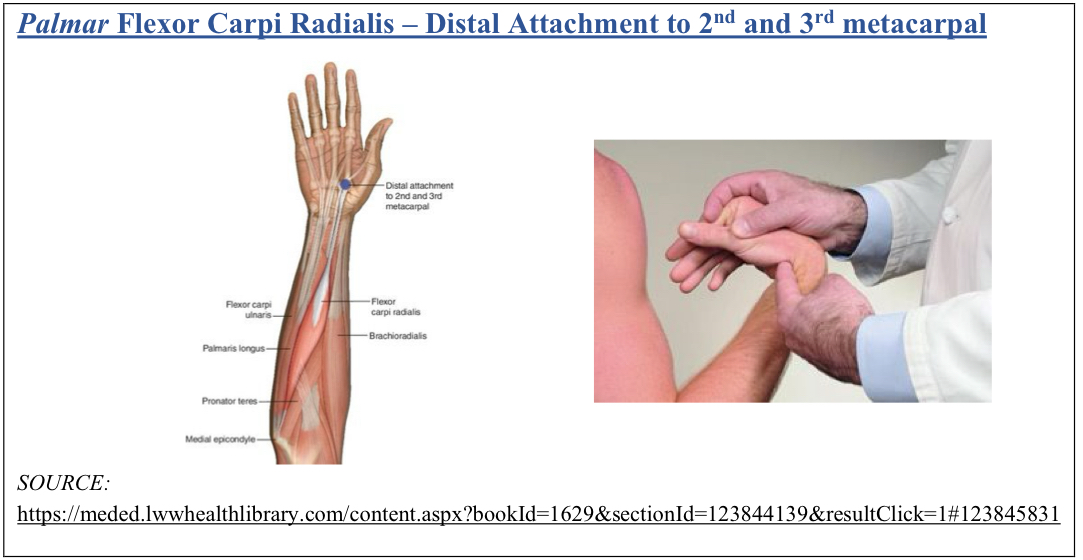
<p>F ABd(radial)</p><p>distal attachment to 2nd and 3rd MC joint</p><ol><li><p>pt seated or supine, physician faces pt</p></li><li><p>pt wrist flexed and abducted (radial deviation)</p></li></ol><p></p>
56
New cards

cs flexor carpi ulnaris

F aDd (ulnar)

Located t palmar base of 5th MC in flexor carpi ulnaris

  1. pt seated or supine, physician faces pt

  2. pt wrist flexed and adducted (ulnar deviation)
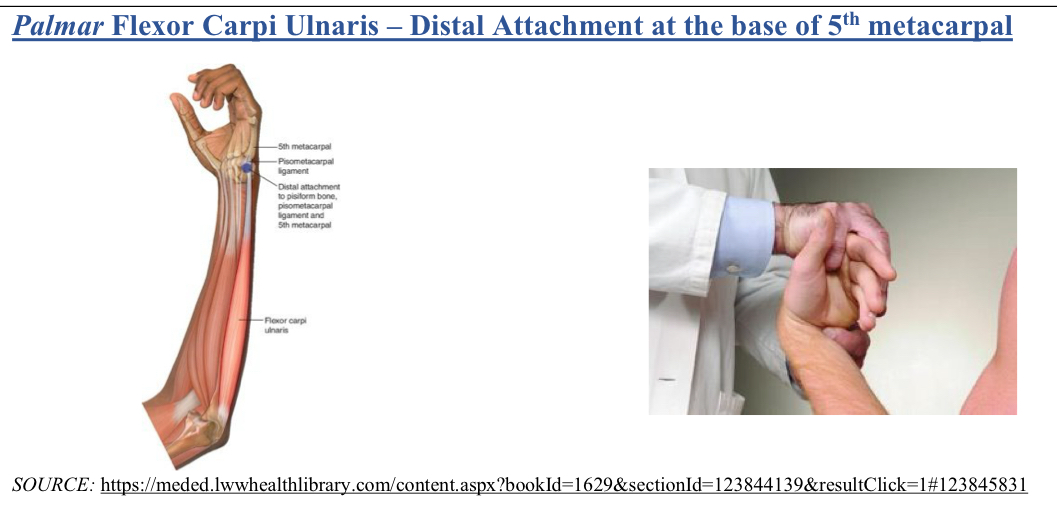
<p>F aDd (ulnar)</p><p>Located t palmar base of 5th MC in flexor carpi ulnaris</p><ol><li><p>pt seated or supine, physician faces pt</p></li><li><p>pt wrist flexed and adducted (ulnar deviation)</p></li></ol><p></p>
57
New cards

cs anterior cervical

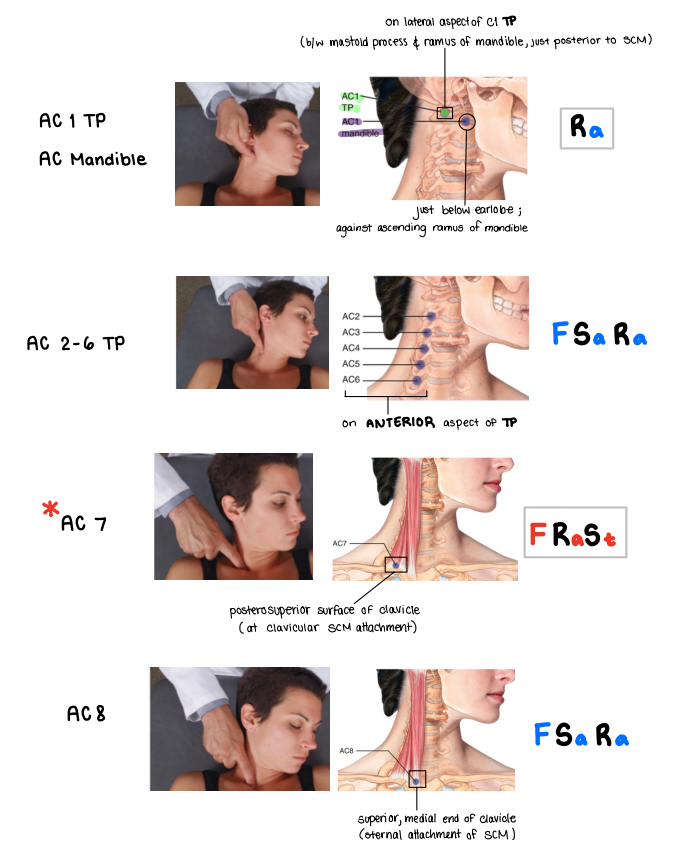
Patient will be supine!

  • AC1 = Ra (TP or mandible)

  • AC2-C6 TP = FSaRa (posterior to SCM)

  • AC7 = FStRa (posterior/superior surface of clavicle)

  • AC8 = FSara (medial end of clavicle)

<p>Patient will be supine!</p><ul><li><p>AC1 = Ra (TP or mandible)</p></li><li><p>AC2-C6 TP = FSaRa (posterior to SCM)</p></li><li><p>AC7 = FStRa (posterior/superior surface of clavicle)</p></li><li><p>AC8 = FSara (medial end of clavicle)</p></li></ul><p></p>
58
New cards

cs posterior cervical

Patient will be supine!

  • PC1 Inion = FStRa (on inferior nuchal line, lateral to inion)

  • PC1 Occiput = ESaRa (on inferior nuchal line btwn inion and mastoid)

  • PC2 Occiput = ESaRa (inferior nuchal line within semispinalis capitis m.)

  • PC2 SP = ESaRa (superior aspect)

  • PC3 SP = FSaRa (inferior aspect of one above)

  • PC4-8 SP = ESaRa (inferior aspect of one above)

  • c3-7 articular = ESaRa (posterolateral aspect)

<p>Patient will be supine!</p><ul><li><p>PC1 Inion = FStRa (on inferior nuchal line, lateral to inion)</p></li><li><p>PC1 Occiput = ESaRa (on inferior nuchal line btwn inion and mastoid)</p></li><li><p>PC2 Occiput = ESaRa (inferior nuchal line within semispinalis capitis m.)</p></li><li><p>PC2 SP = ESaRa (superior aspect)</p></li><li><p>PC3 SP = FSaRa (inferior aspect of one above)</p></li><li><p>PC4-8 SP = ESaRa (inferior aspect of one above)</p></li><li><p>c3-7 articular = ESaRa (posterolateral aspect)</p></li></ul><p></p>
59
New cards

cs anterior thoracic

Patient is supine for T1-6

  • T1 = F (episternal notch)

  • T2 = F (angle of louis)

  • T3-6 = F to dysfunctional level

Patient is seated for T7-9

  • FStRa (slouch to F, move leg out to SB pt, pt wraps arms around leg to R)

  • use the OPPOSITE leg on table

    • T7 = ¼ from xiphoid process

    • T8 = halfway xiphoid and umbilicus

    • T9 = ¼ from umbilicus

Patient is supine for T10-12

  • FStRa (stand on same side, flex legs, knees and ankles to me)

    • T10 = ¼ from umbilicus to pubic symphysis

    • T11 = halfway umbilicus and pubic symphysis

    • T12 = anterior superior aspect of iliac crest
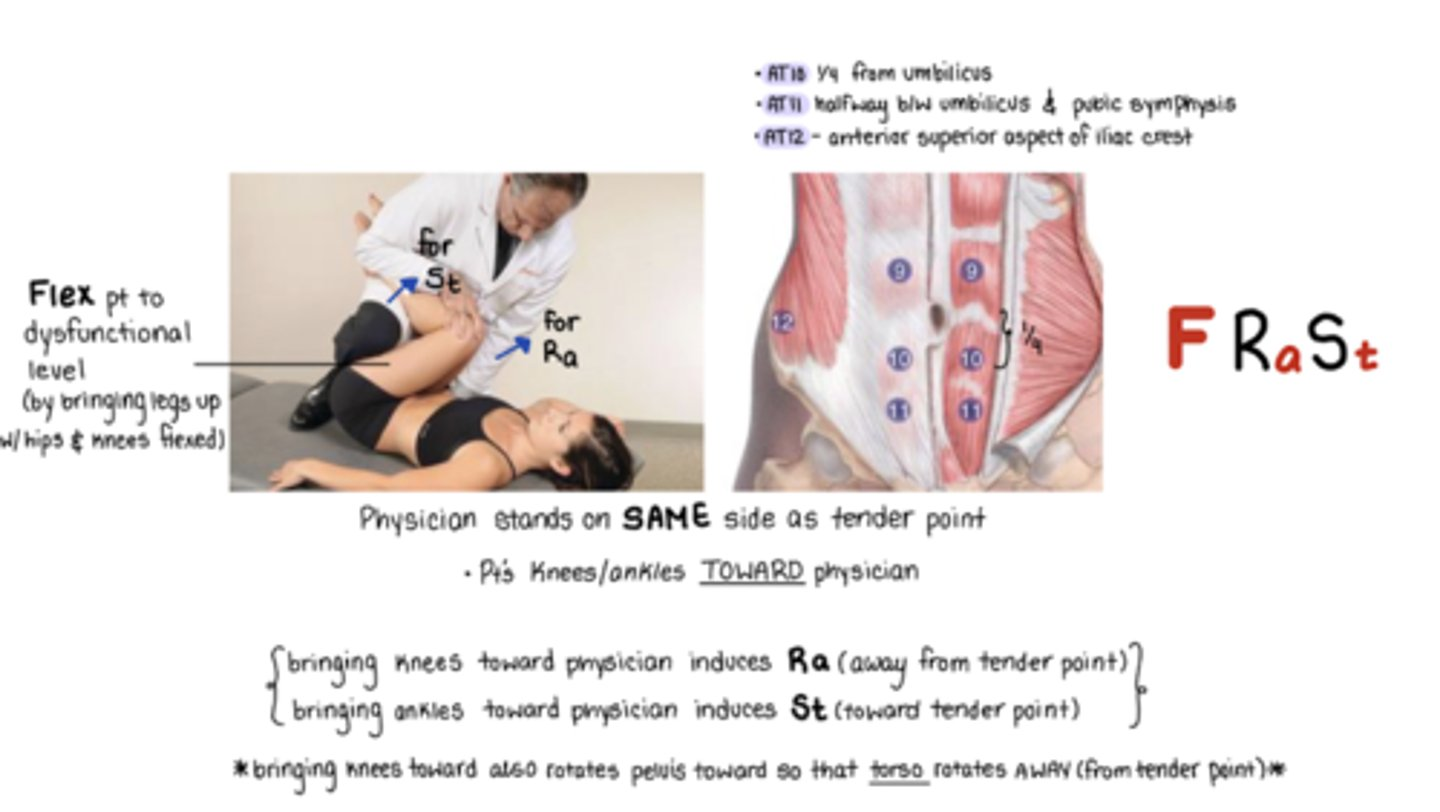
<p>Patient is supine for T1-6</p><ul><li><p>T1 = F (episternal notch)</p></li><li><p>T2 = F (angle of louis)</p></li><li><p>T3-6 = F to dysfunctional level</p></li></ul><p></p><p>Patient is seated for T7-9</p><ul><li><p>FStRa (slouch to F, move leg out to SB pt, pt wraps arms around leg to R)</p></li><li><p>use the OPPOSITE leg on table</p><ul><li><p>T7 = ¼ from xiphoid process</p></li><li><p>T8 = halfway xiphoid and umbilicus</p></li><li><p>T9 = ¼ from umbilicus</p></li></ul></li></ul><p></p><p>Patient is supine for T10-12</p><ul><li><p>FStRa (stand on same side, flex legs, knees and ankles to me)</p><ul><li><p>T10 = ¼ from umbilicus to pubic symphysis</p></li><li><p>T11 = halfway umbilicus and pubic symphysis</p></li><li><p>T12 = anterior superior aspect of iliac crest</p></li></ul></li></ul><p></p>
60
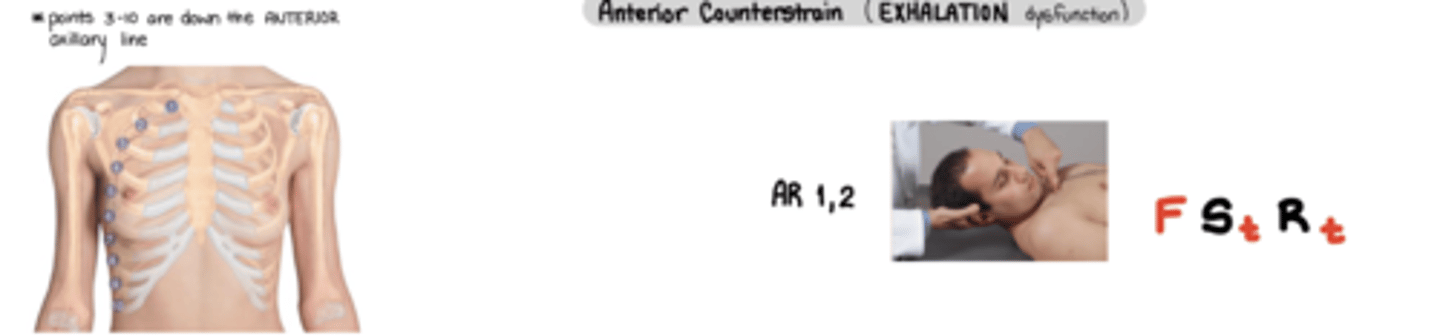
New cards

cs anterior rib

anterior = exhalation sd

AR 1,2 = FStRt

AR 3-10 = FStRt

  • ASS! - anterior same side -> pt mermaid legs same side as TP

  • Arm back = Rt

  • Physician moves leg out = St

  • physician leg on opposite side

<p>anterior = exhalation sd</p><p>AR 1,2 = FStRt</p><p>AR 3-10 = FStRt</p><ul><li><p>ASS! - anterior same side -&gt; pt mermaid legs same side as TP</p></li><li><p>Arm back = Rt</p></li><li><p>Physician moves leg out = St</p></li><li><p>physician leg on opposite side</p></li></ul><p></p>
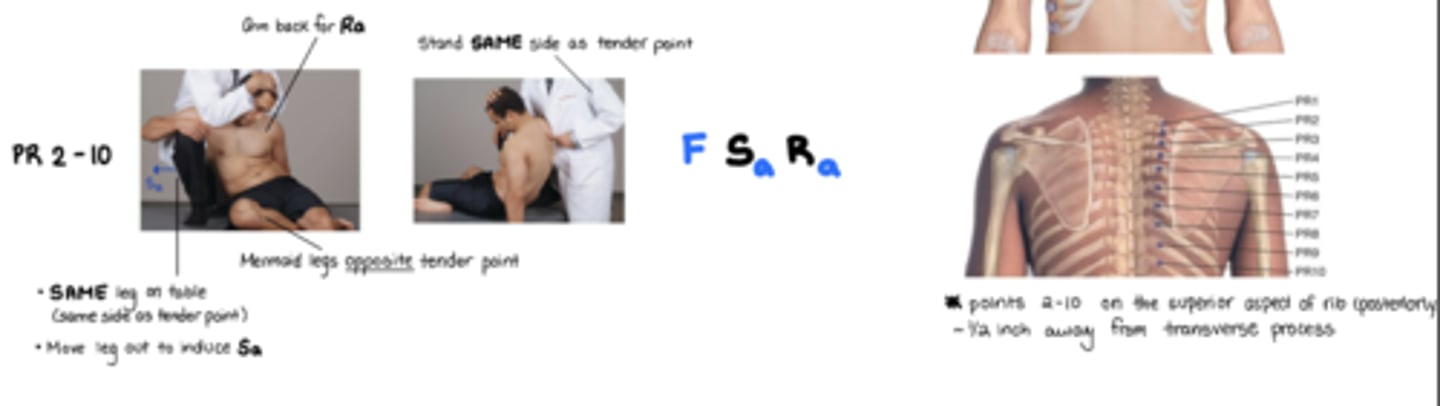
61
New cards

cs posterior rib

posterior = inhalation sd

PR 1 = ESaRt

  • PIE is OP

    • posterior

    • I = 1

    • E = ESaRt

    • OP = use opposite leg for stabilizing

PR 2-10 = FSaRa

  • pt mermaid legs opposite of TP

  • use same side leg

  • Arm back = Ra

  • Physician moves leg out = Sa

<p>posterior = inhalation sd</p><p>PR 1 = ESaRt</p><ul><li><p>PIE is OP</p><ul><li><p>posterior</p></li><li><p>I = 1</p></li><li><p>E = ESaRt</p></li><li><p>OP = use opposite leg for stabilizing</p></li></ul></li></ul><p>PR 2-10 = FSaRa</p><ul><li><p>pt mermaid legs opposite of TP</p></li><li><p>use same side leg</p></li><li><p>Arm back = Ra</p></li><li><p>Physician moves leg out = Sa</p></li></ul><p></p>
62
New cards

cs anterior lumbar

  • 1, 5 same side

  • 2, 3, 4 across the floor (opposite side)

AL 1 = FRaSt (medial to ASIS) → knees and ankles to me

AL 2-4 = FSaRt (my little igloo) → knees and ankles to me

  • AL 2 = medial to AIIS

  • AL 3 = lateral to AIIS

  • AL 4 = inferior to AIIS

AL 5 = FSaRa (lateral to pubic symphysis) → knees to me, ankles AWAY
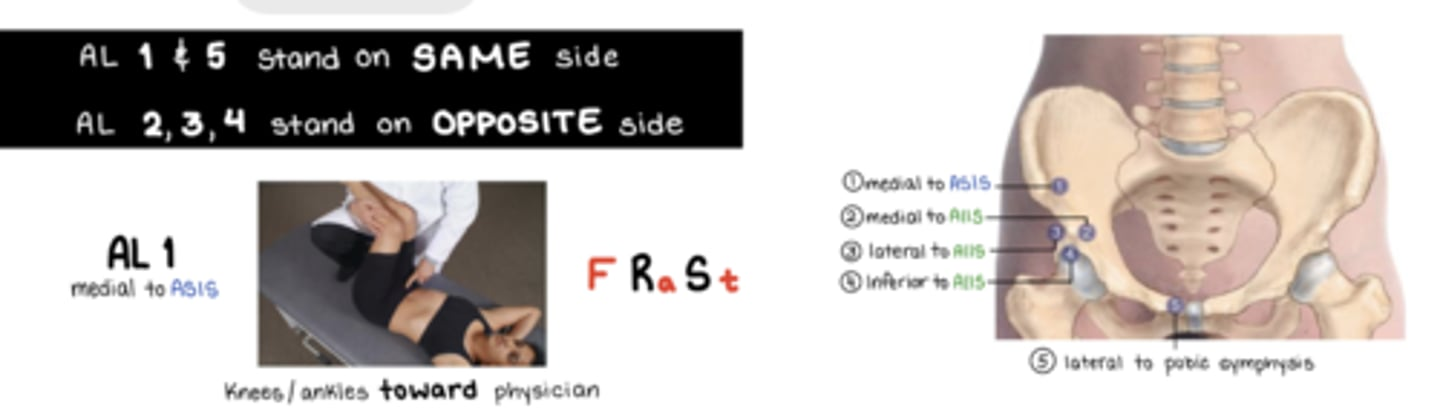
<ul><li><p>1, 5 same side</p></li><li><p>2, 3, 4 across the floor (opposite side)</p></li></ul><p></p><p>AL 1 = FRaSt (medial to ASIS) → knees and ankles to me</p><p>AL 2-4 = FSaRt (my little igloo) → knees and ankles to me</p><ul><li><p>AL 2 = medial to AIIS</p></li><li><p>AL 3 = lateral to AIIS</p></li><li><p>AL 4 = inferior to AIIS</p></li></ul><p>AL 5 = FSaRa (lateral to pubic symphysis) → knees to me, ankles AWAY</p><p></p>
63
New cards

cs posterior lumbar

PL 1-5 SP = ESaRa → EXTEND, ADDUCT, EXTERNALLY ROTATE

  • stand opposite of TP

    • IF standing on SAME side → use your knee to help lift leg

  • hold leg ABOVE knee

QL = EXTEND, ABDUCT, EXTERNALLY ROTATE HIP

  • stand on same side of TP

  • attachments = inferior aspect of 12th rib, lateral aspect of lumbar TPs, superior aspect of iliac crest
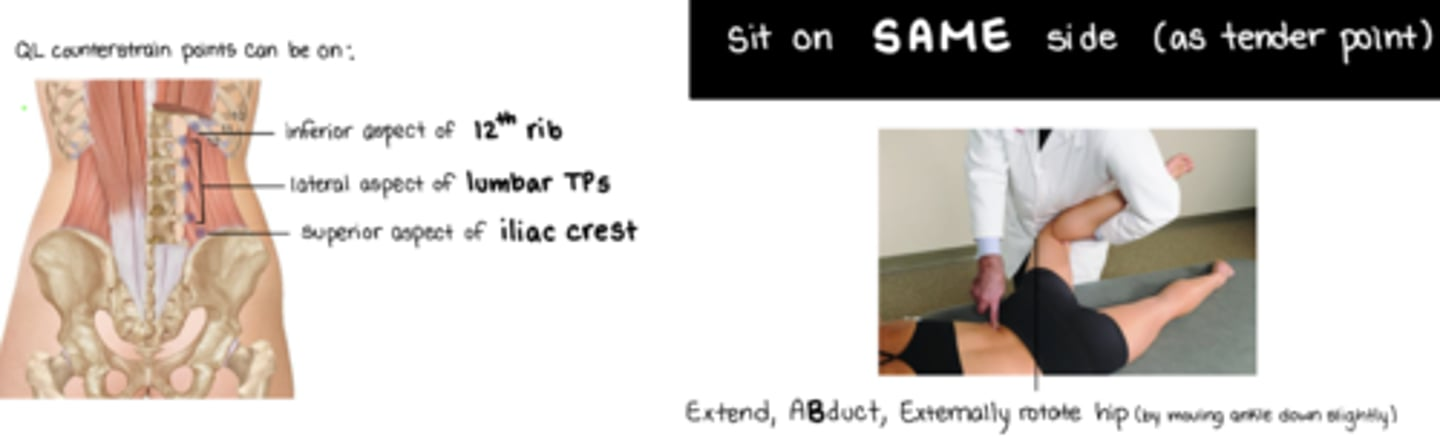
<p>PL 1-5 SP = ESaRa → EXTEND, ADDUCT, EXTERNALLY ROTATE</p><ul><li><p>stand opposite of TP</p><ul><li><p>IF standing on SAME side → use your knee to help lift leg</p></li></ul></li><li><p>hold leg ABOVE knee</p></li></ul><p></p><p>QL = EXTEND, ABDUCT, EXTERNALLY ROTATE HIP</p><ul><li><p>stand on same side of TP</p></li><li><p>attachments = <em><u>inferior aspect of 12th rib</u></em>, lateral aspect of lumbar TPs, superior aspect of iliac crest</p></li></ul><p></p>