Human physiology exam 4
 Call Kai
 Learn
Learn Practice Test
 Spaced Repetition
 Match
Match Flashcards
 Knowt Play
1/25

Earn XP
Description and Tags
urinary system
Name | Mastery | Learn | Test | Matching | Spaced | Call with Kai |
|---|
No analytics yet
Send a link to your students to track their progress
26 Terms
functions of kidneys
regulation of extracellular fluid volume and blood pressure (volume effects pressure; partner CU)
regulation of osmolarity (ex. thirst; reflex)
maintenance of ion balance (ex. Na+)
homeostasis regulation of pH (exchange of H+ and bicarb; bigger influence-lungs)
excretion of wastes (color, clarity, smell, taste)
production of hormones (EPO-make rbc, renin-blood pressure low;kidney, convert vit D-affects calcium uptake)
Most important function of the kidney
salt and water balance
not waste removal (myth)
kidneys located
retroperitoneally at the level of the lower ribs
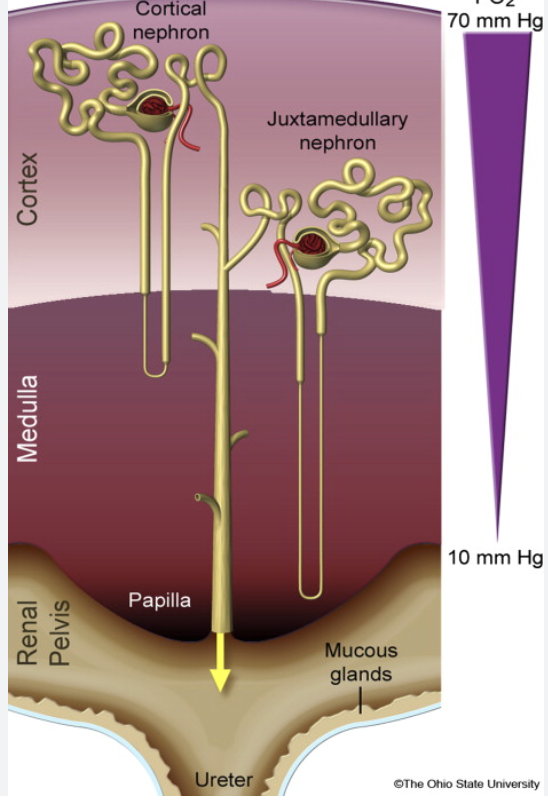
Nephrons
modify fluid composition functional inot of the kidney
80% in cortex (cortical nephron)
20% in extend into medulla (juxtamendullary nephron)
some dip deep into the medulla
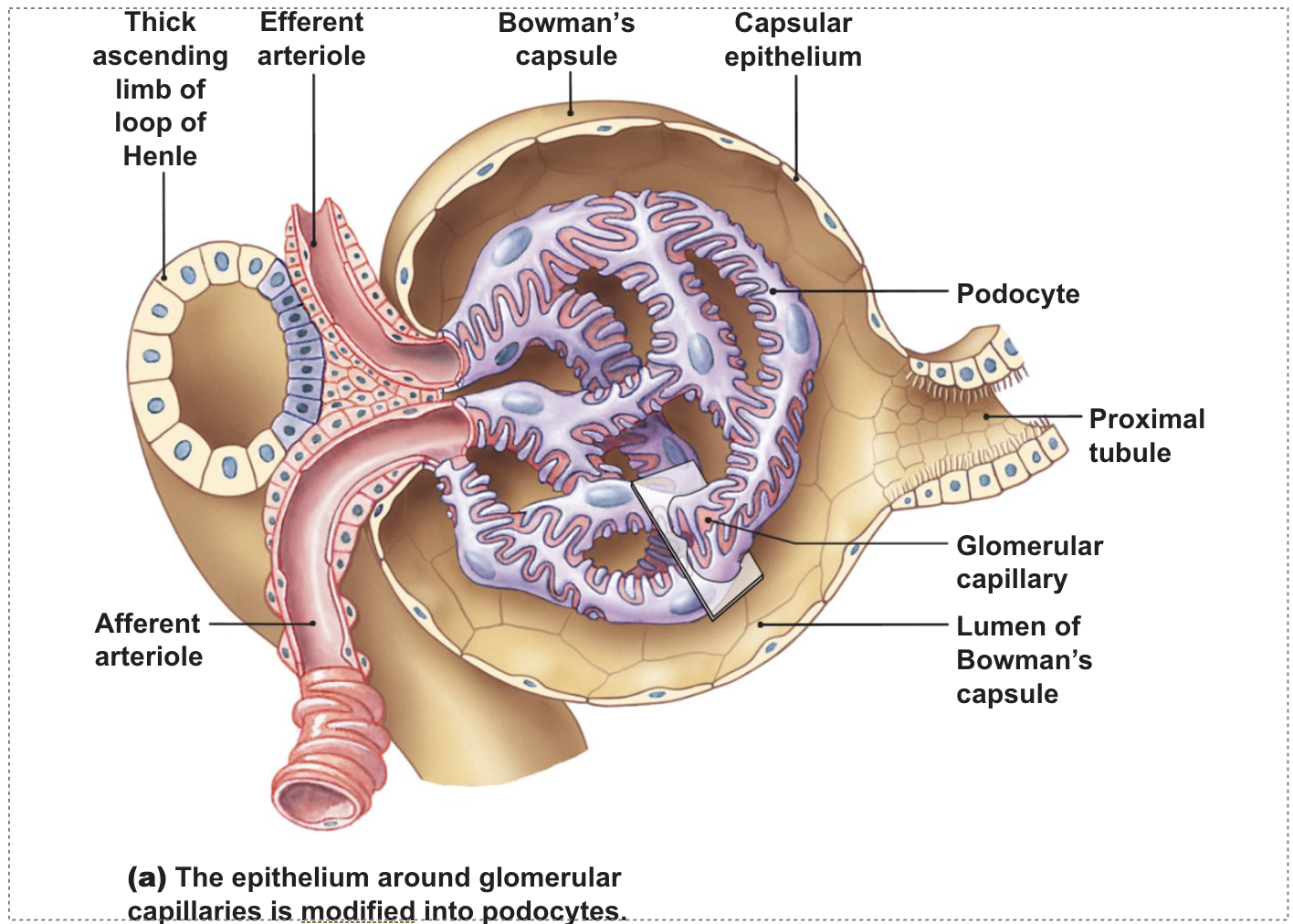
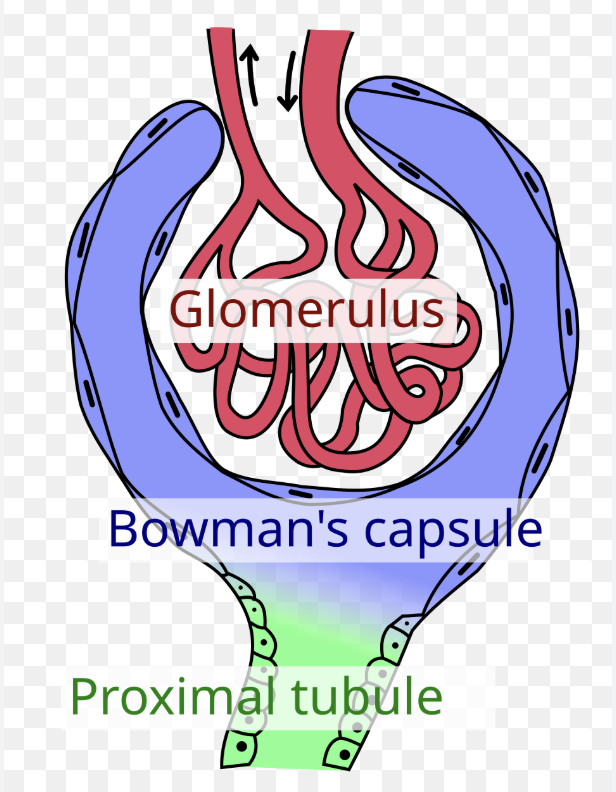
renal corpuscle
glomerulus (capillaries) + bowman’s capsule
the epithelium around glomerular capillaries is modified into podocytes.
alter blood flow by contraction
secrete cytokines
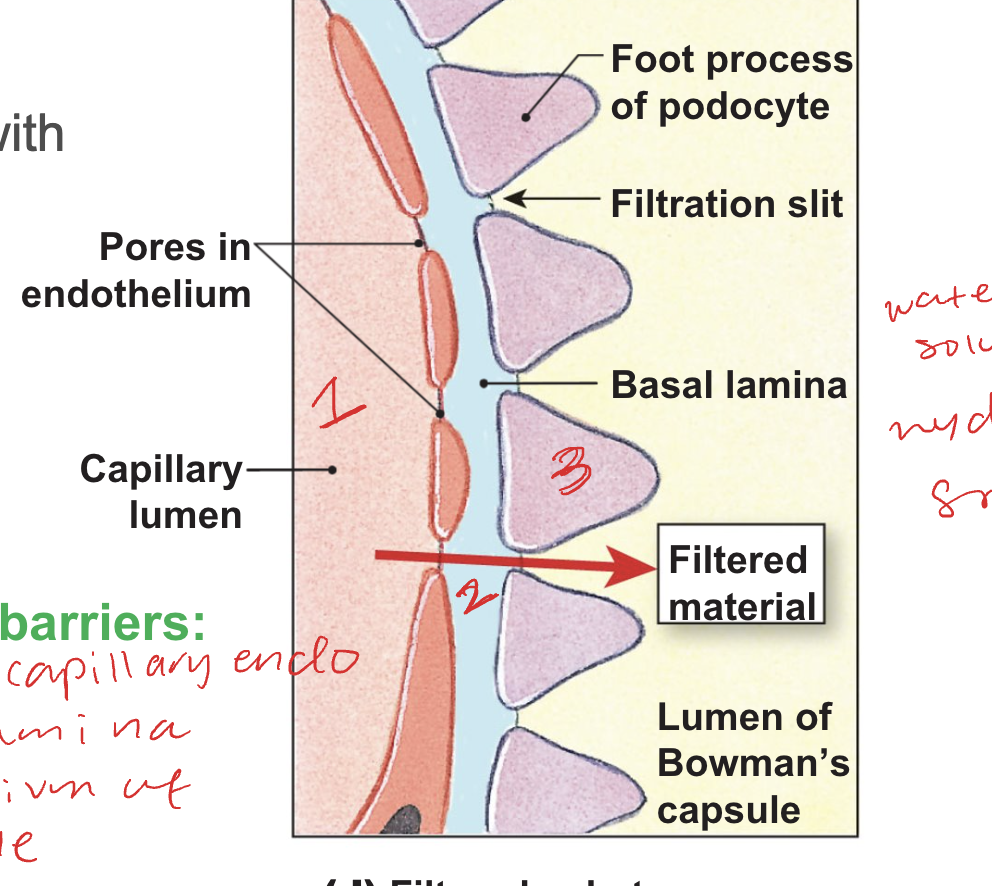
podocyte foot processes surround each capillary, leaving slits through which filtration takes place.
one nephron
has two arterioles ( afferent and efferent)
two sets of capillaries (high-pressure glomerulus for filtration and peritubular capillaries (vasa recta) for reabsorption)
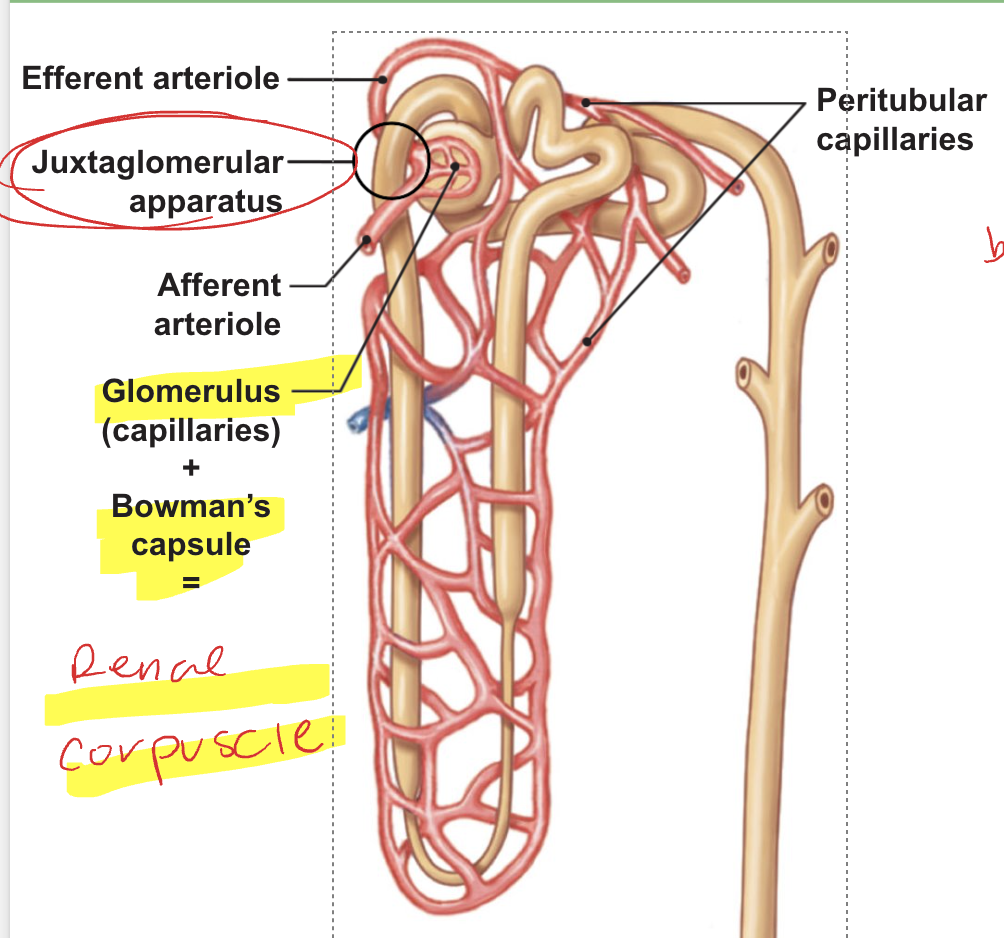
juxtamedullary nephron with vasa recta
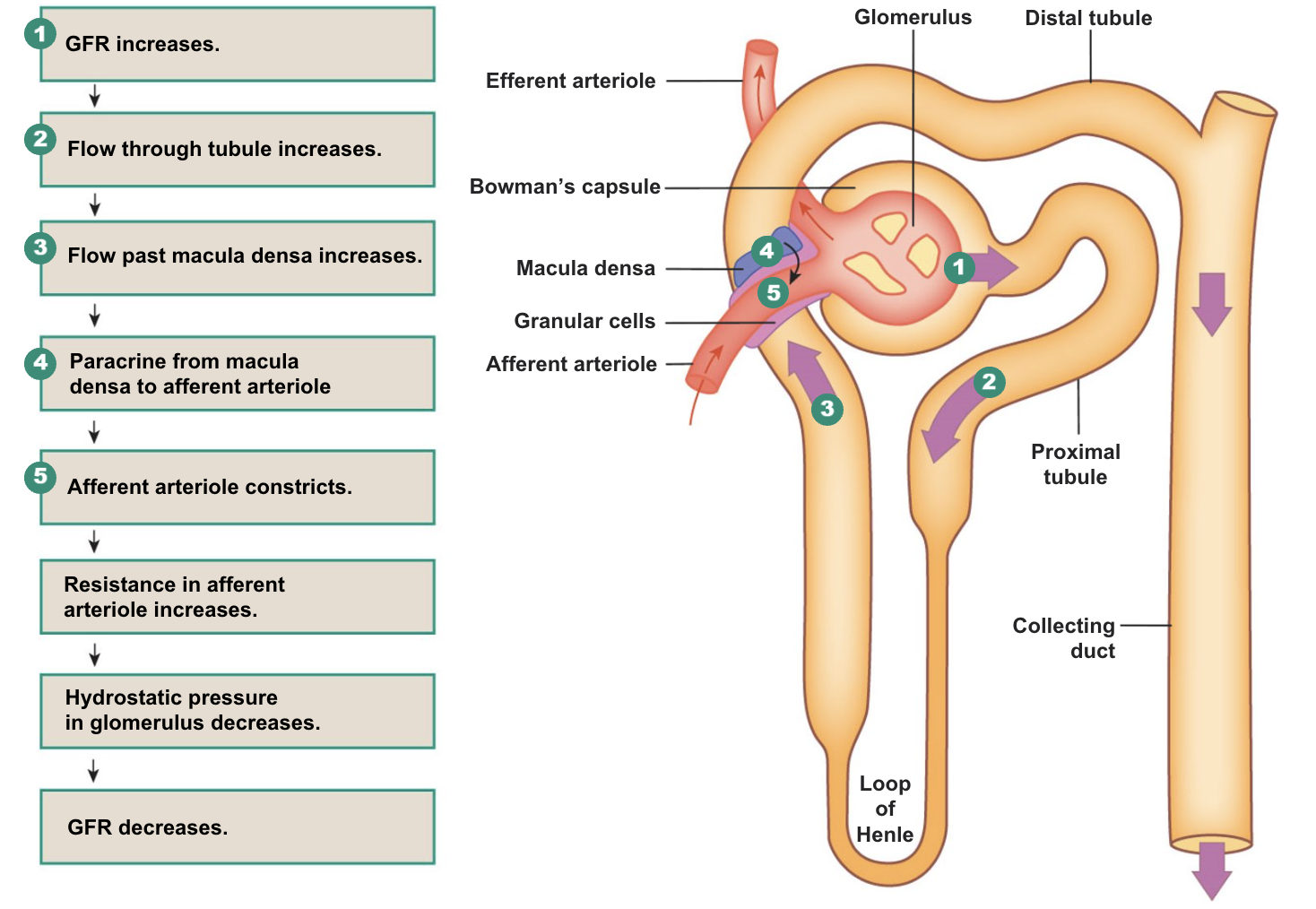
increase flow GFR → renin secretion → aff constriction decrease GFR
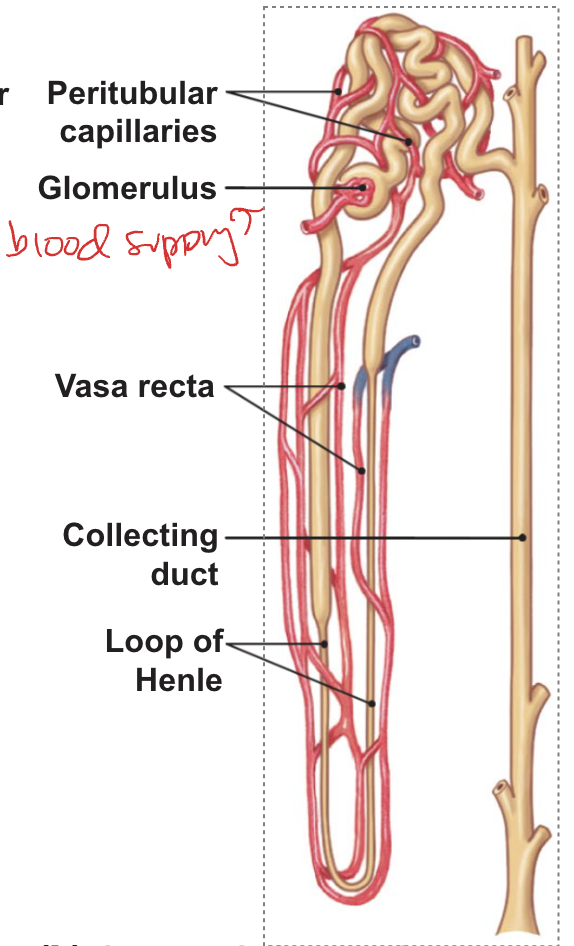
kidney function
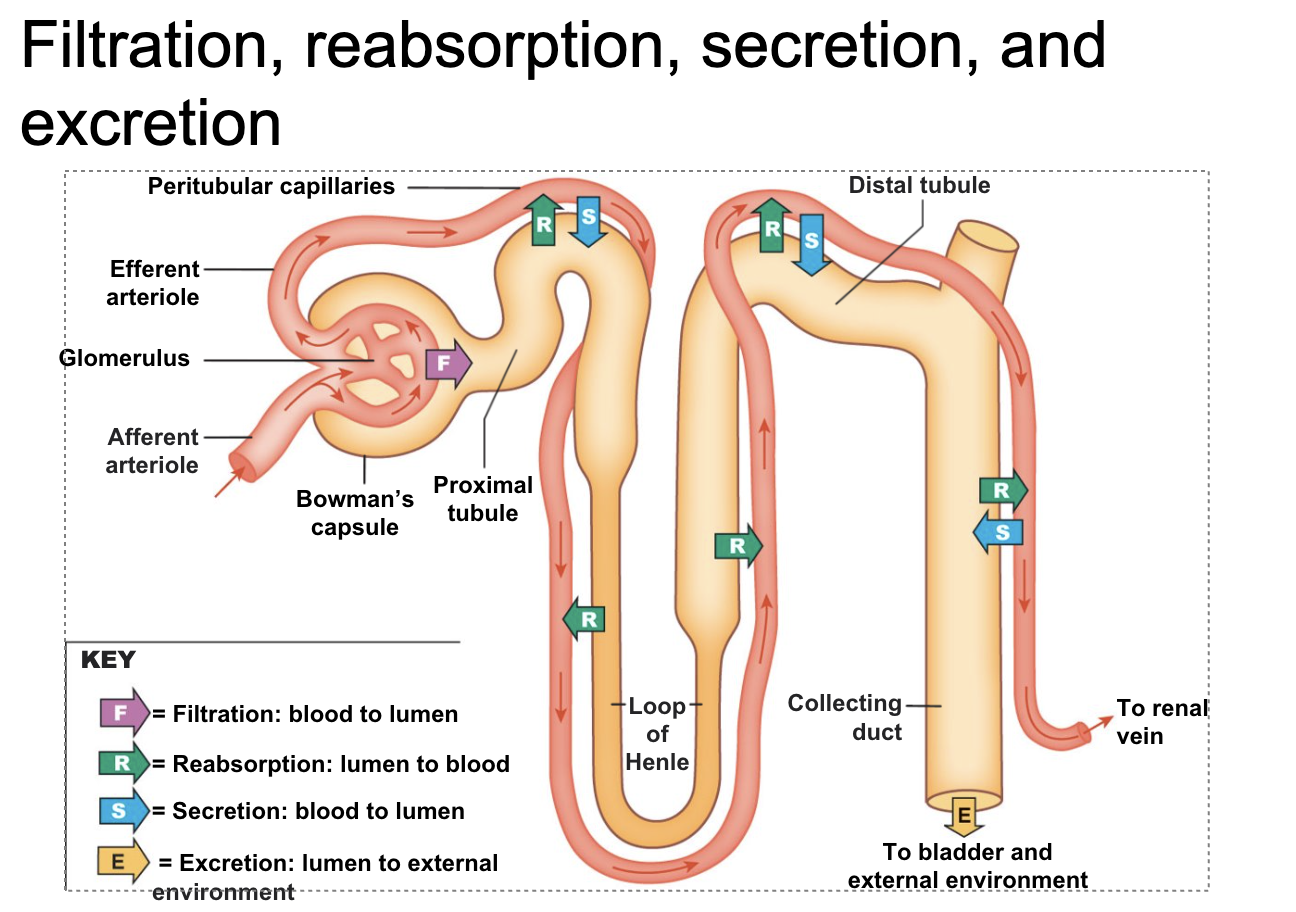
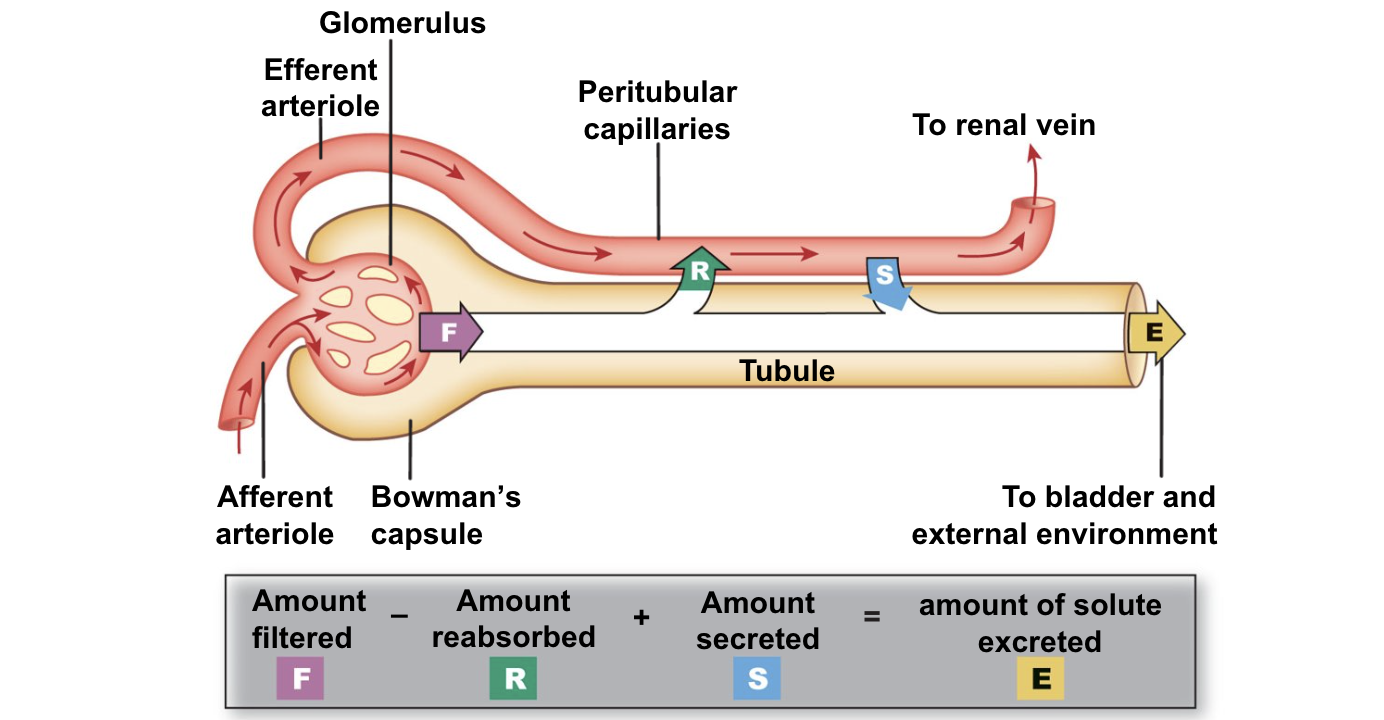
kidney filatration
blood to lumen
pass hydrophilic/ small
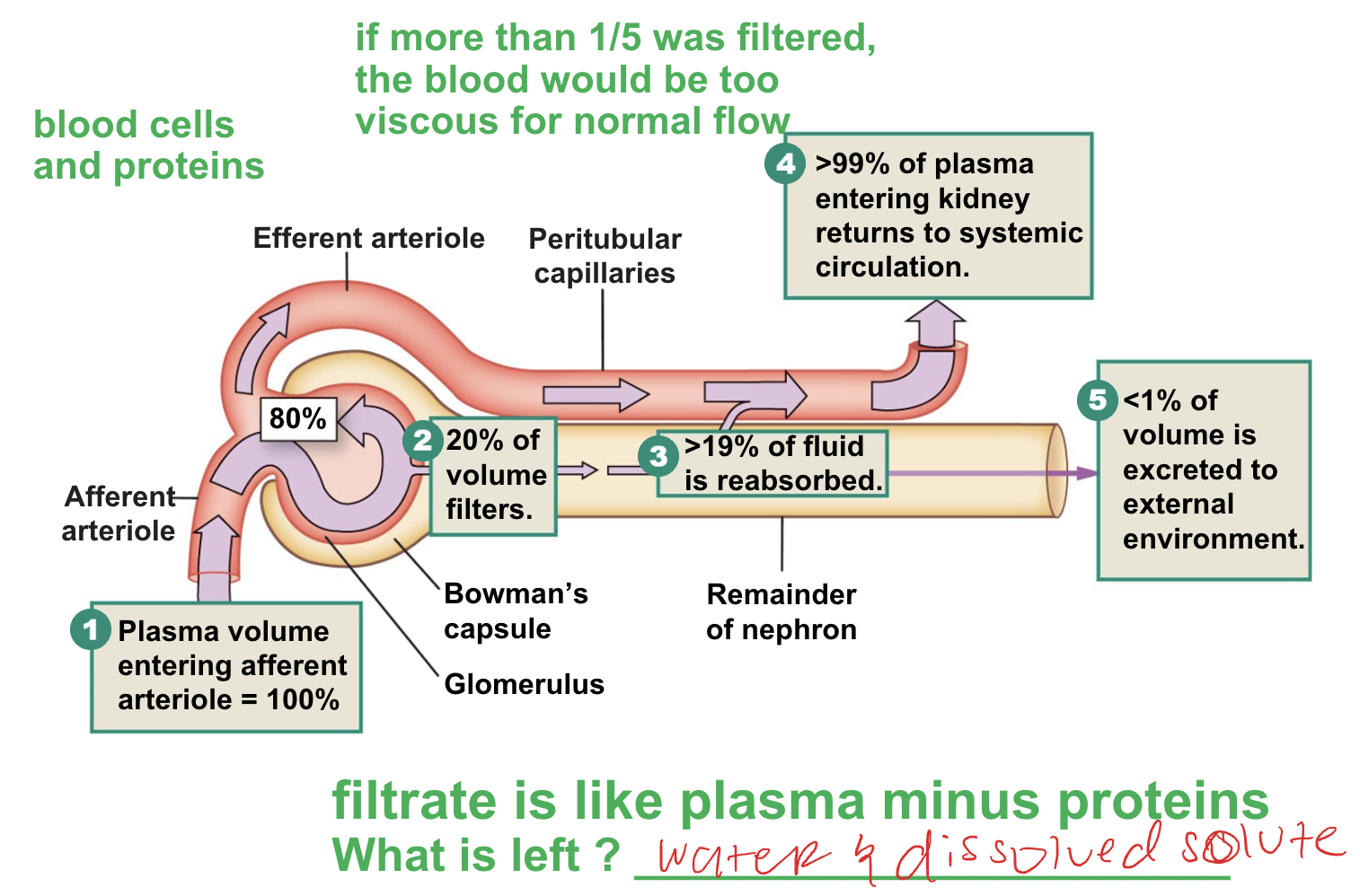
90% of fluid is filtered → filtrate (not including bigger particles) → eliminated
Hypo
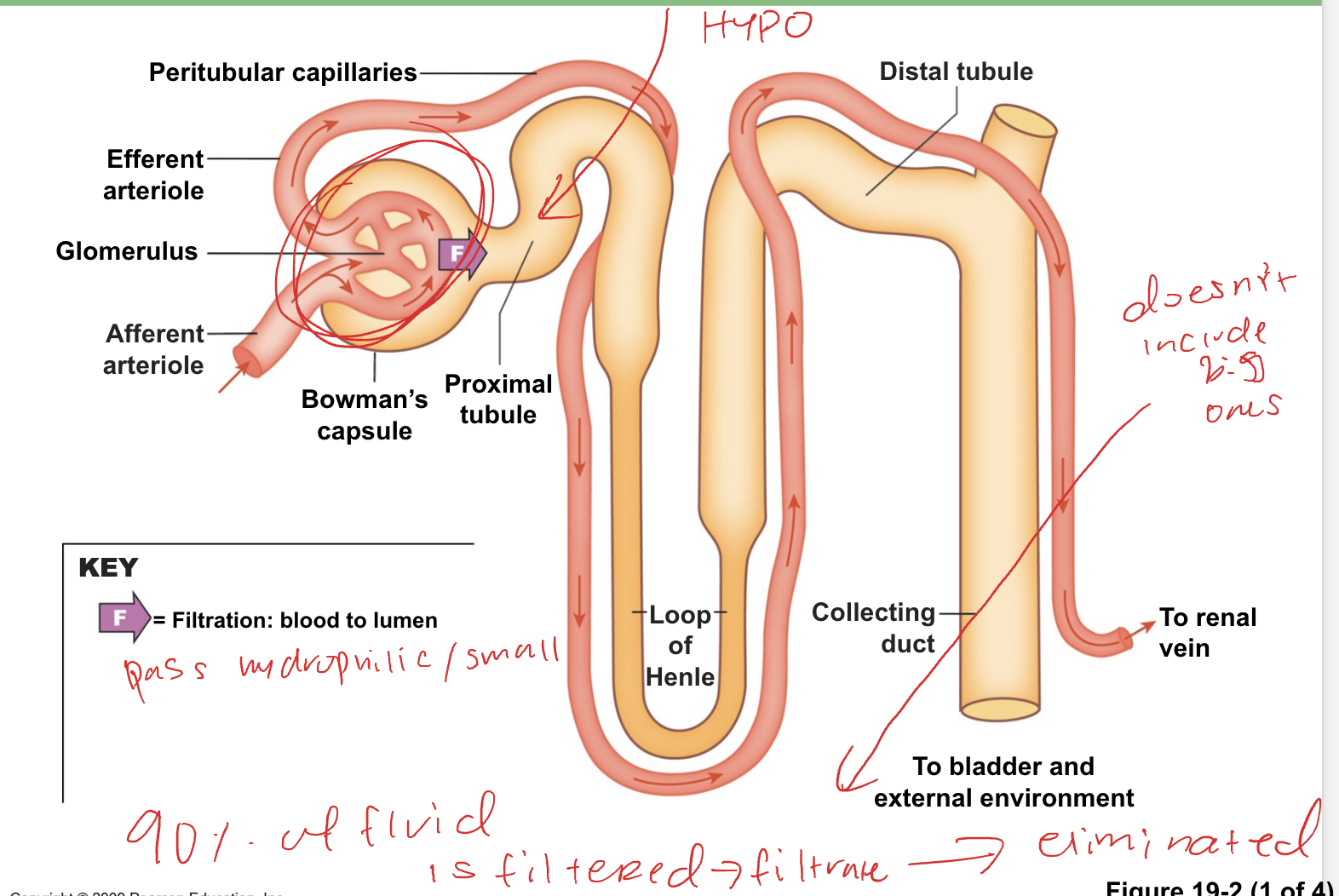
kidney reabsorption
move substances from lumen → blood
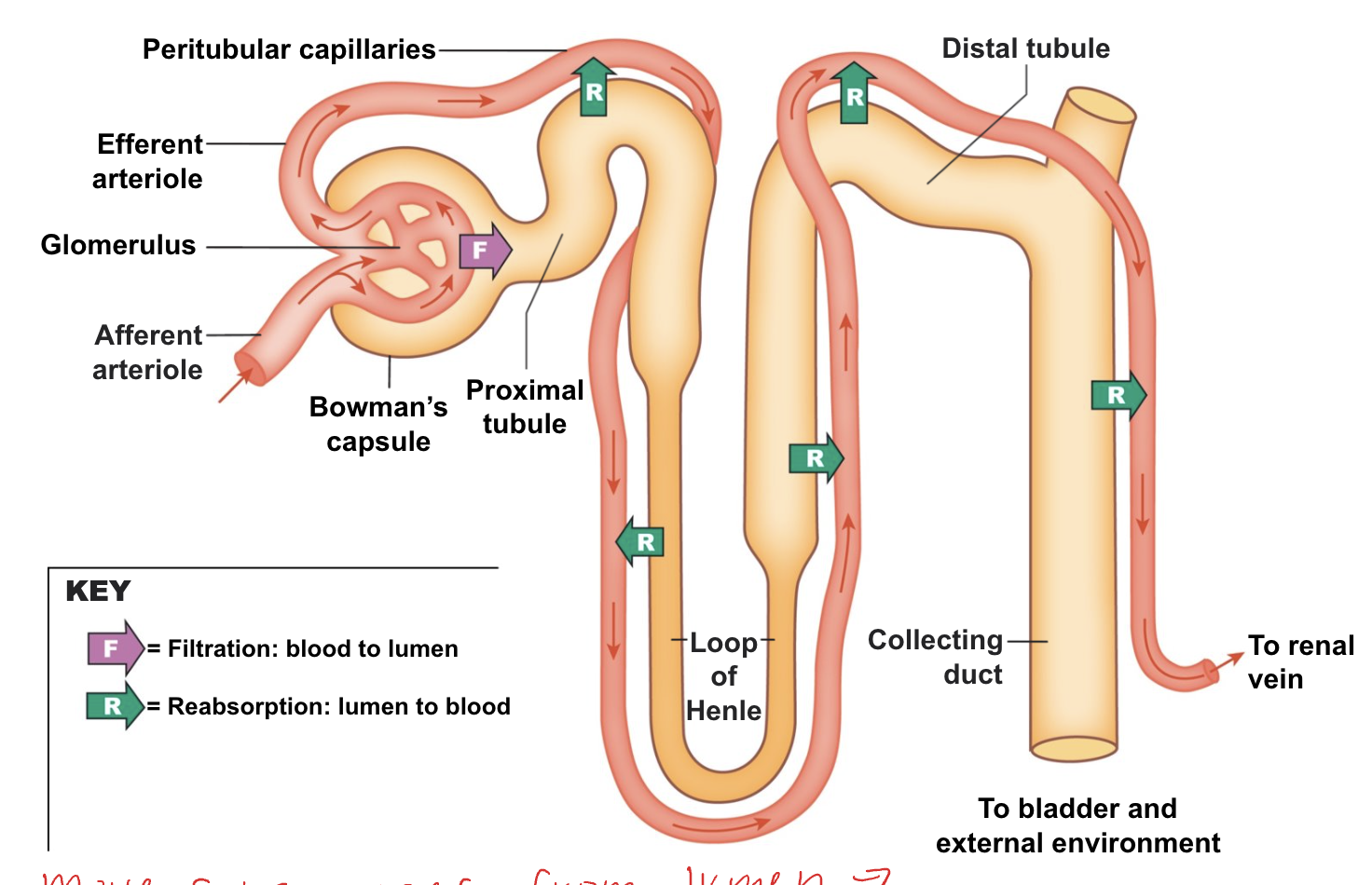
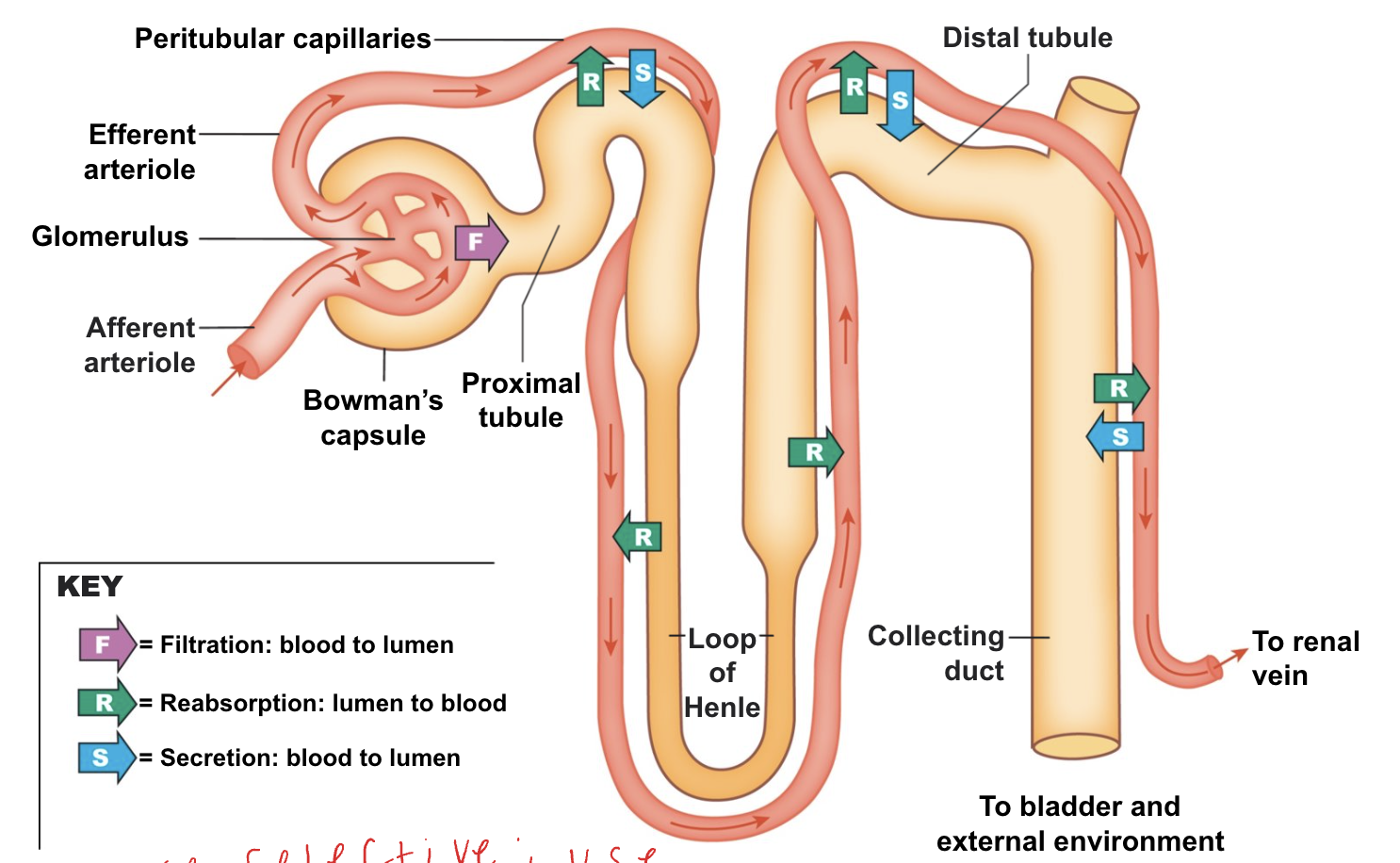
kidney secretion
blood to lumen
same direction as filtration
more selective; use membrane proteins
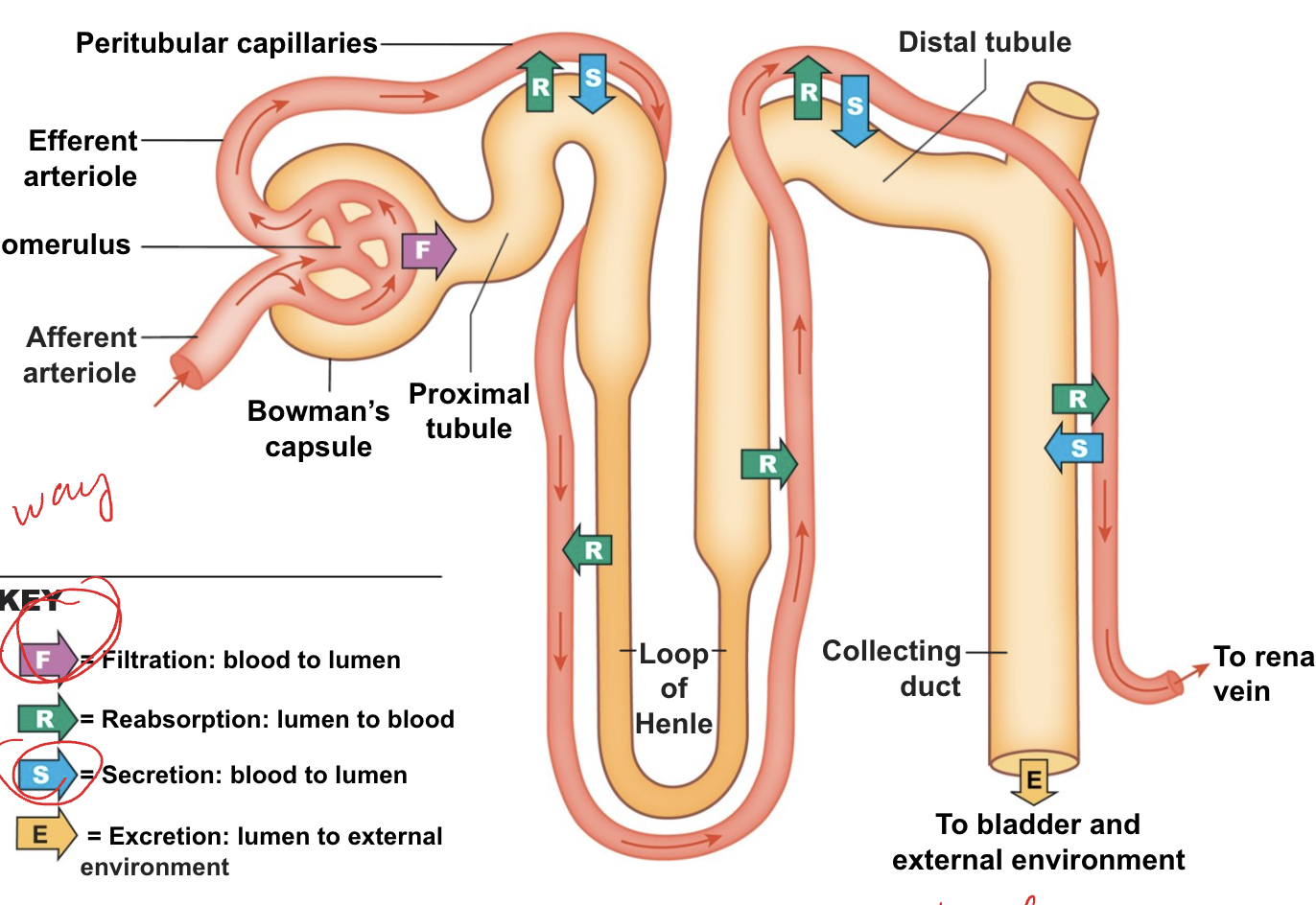
kidney excretion
lumen to external environment
excretion leaves the body as urine
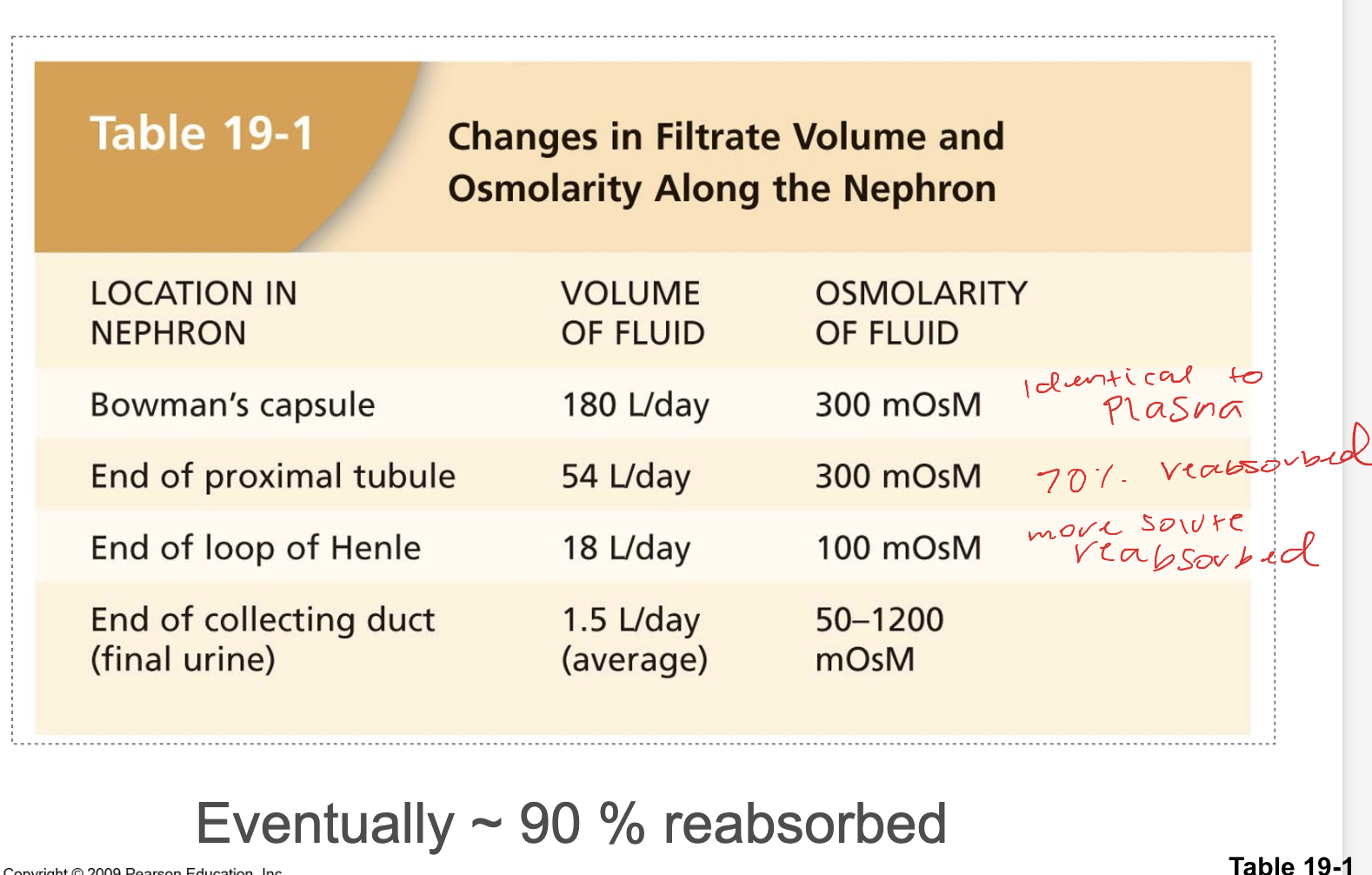
changes in filtrate volume and osmolarity along the nephron
eventually ~ 90% reabsorbed
Urinary excretion of substance
amount filtered- positive
amount absorbed- negative
amount secreted- positive
= amount of solute excreted
The filtration fraction
if more than 1/5 was filtered, the blood would be too viscous for normal flow
filtrate is like plasma minus proteins what is left? water and dissolved solute
Three filtration barrier
glomerulus capillary endo
basal lamina
epithelium of capsule
fenestrated capillaries with large pores
filtered substances pass through endothelial pores and filtration slits.
water soluble, hydrophobic, small
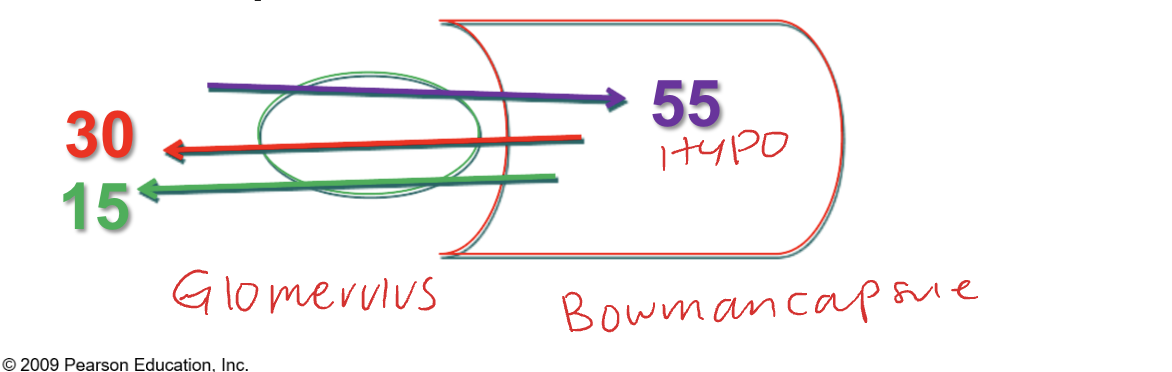
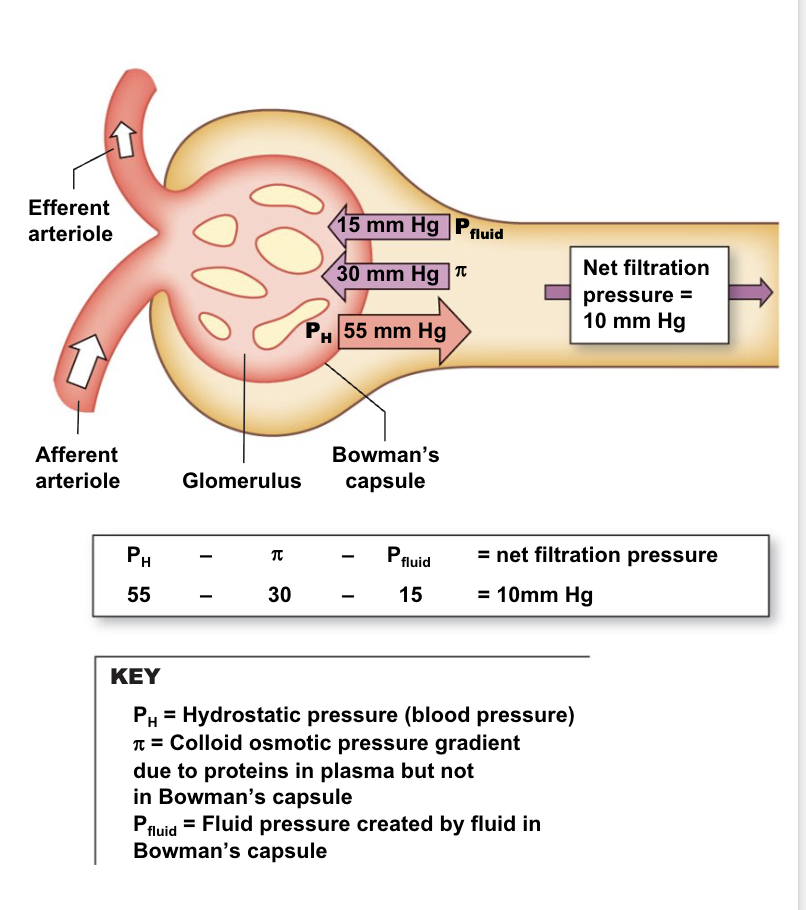
forces that influence filtration
hydrostatic pressure(blood pressure); forces fluid through endothelium
colloid osmotic pressure; higher in capillaries vs bowman
fluid pressure created by fluid in bowman’s capsule; opposes fluid movement into capsule
glumerular filtration
filration pressure in the renal corpuscle depends on hydrostatic pressure, and is opposed by colloid osmotic pressure and capsule fluid pressure.
if blood pressure is high GFR will increase temporarily
GFR
a test that measures how well your kidneys filter waste and excess water from your blood
filtration autoregulation
autoregulation of glomerular filtration rate takes place over a wide range of blood pressues.
autoregulation maintains a nearly constant GFR when mean arterial blood pressure is between 80 and 180 mm Hg.
if not reabsorbed no plasma in 24 mins
filtration influenced by
net filtration
filtration coefficient
surface area
permeability
not influenced as much by pressure change
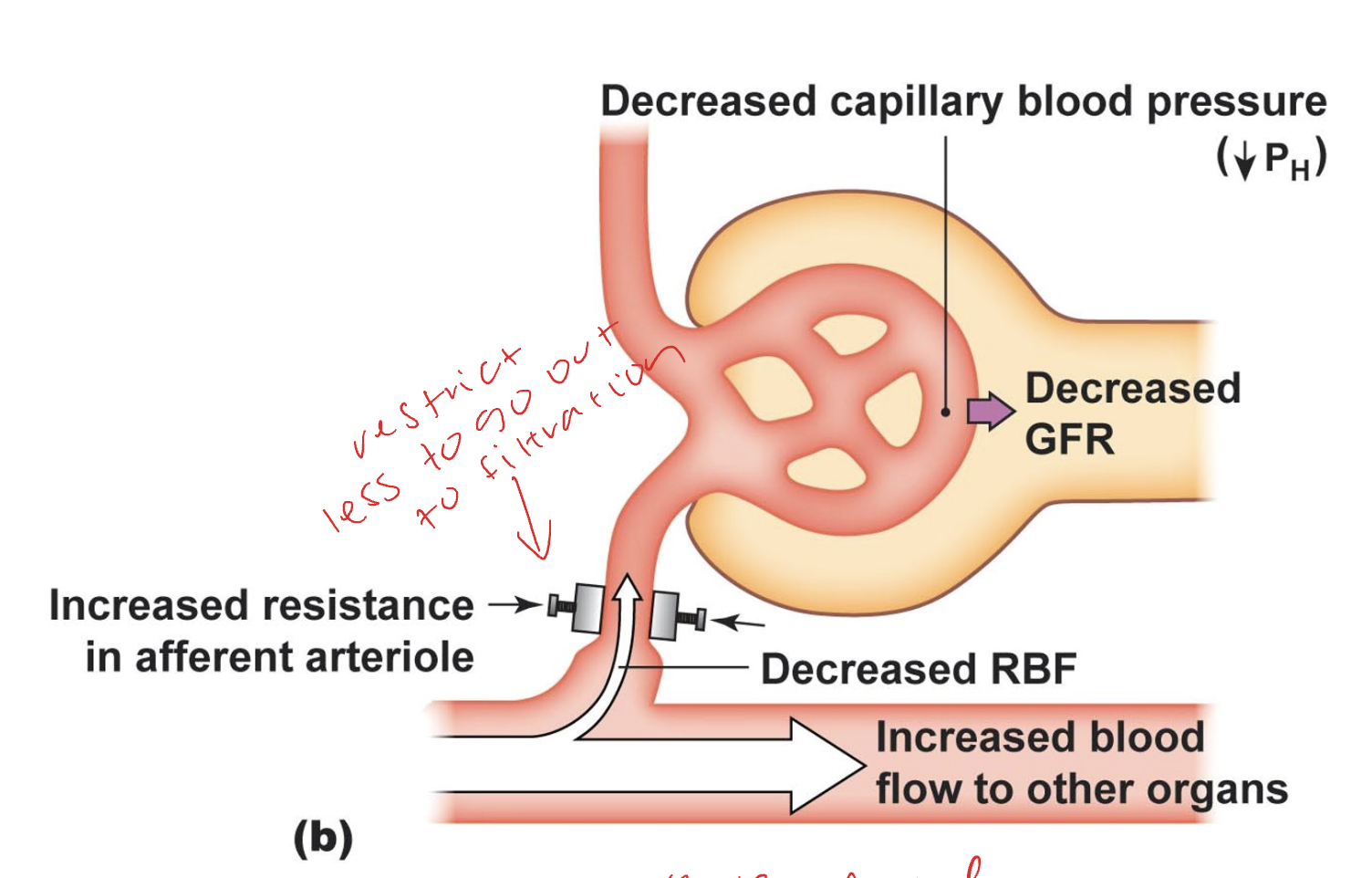
increased resistance in afferent arteriole
restrict less to go out to filtration
caused by losing too much fluid, dehydrated, or low BP
decreased RBF
increase blood flow to other organs
Decreased GFR
Decreased capillary blood pressure
increased resistance in efferent arteriole
caused by high BP
decreased RBF
increased Ph
increased GFR
GFR regulation
myogenic response (due top Bp) (ex. release fluid, vasoconstrict/ dialate)
similar to auto-regulation in other systemic arterioles (stretch/ pressure sensitive)
Tubuloglomerular feedback
paracrine control (macula densa)- changes in fluid flow through loop of Henle
Hormones and autonomic neurons (ex. angiontension)
by changing resistance in arterioles (afferent/ efferent)
by altering the filtration coefficient
chronic high bp can be damage filtration barrier
tubuloglomerular feedback
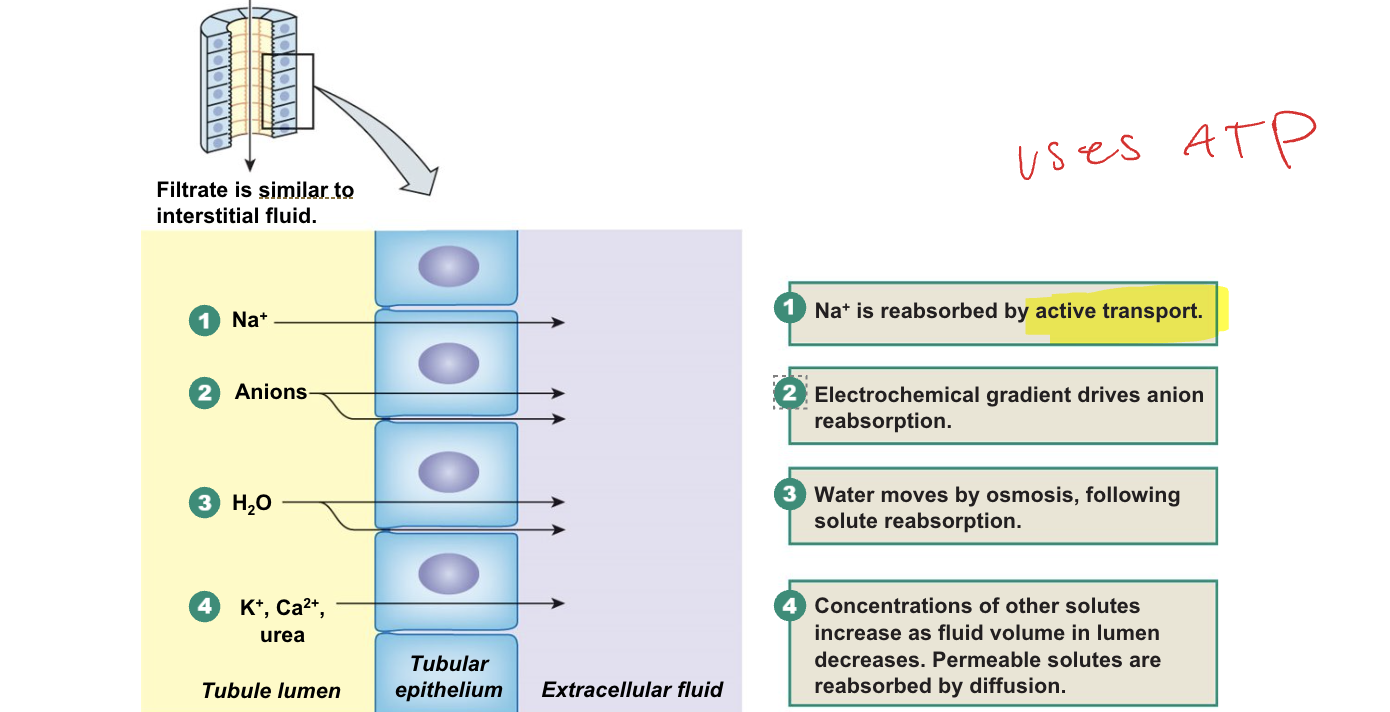
reabsorption
principle governing the tubular reabsorption of solutes and water