6: language and communication
 Call Kai
 Learn
Learn Practice Test
 Spaced Repetition
 Match
Match Flashcards
 Knowt Play
1/27

There's no tags or description
Looks like no tags are added yet.
Name | Mastery | Learn | Test | Matching | Spaced | Call with Kai |
|---|
No analytics yet
Send a link to your students to track their progress
28 Terms
diagnostic manual’s “typical” behaviours that people either adhere to or not
Understanding & use of language in social contexts
Integrating spoken language with non-verbal cues (gaze, gestures, facial expressions,
body language)
Understanding & responding to verbal/non-verbal communication
Imagining & responding to feelings, emotional states & attitudes
Initiating & sustaining reciprocal conversations
Modulating communication style to social situations
Sharing mutual ideas & interests
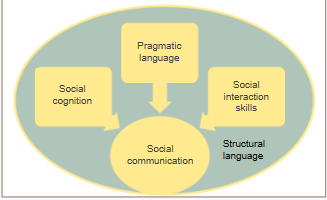
what is social communication
complex interaction between self, others, language, immediate environment and learnt experiences
phonemes
speech sounds
morphemes
smallest units of meaning (run + er = runner)
vocabulary
word knowledge
syntax
structure to create sentences
estimate of additional structural language needs in autistic individuals
63%
social cognition
ability to imagine and respond to the internal states of others
emotions
thoughts
motivation
social interaction skills mediate our
level of politeness
waiting before talking (interrupting) behaviours
use of humour
pragmatic language
how language is used in a social context; the study of native speaker’s understanding of words and conversational behaviours, not correctness
pragmatic theory
interested in how we understand under-specific or ambiguous language
communicative partner expectations
give as much information as required (not more or less)
be truthful or not lacking in evidence
give orderly information that others can follow
be relevant to listener needs
pragmatic theory reframing deficit
different neuro-types might have different ideas about relevance leading to pragmatic miscalculations and mutual misunderstandings— shifts fault for any communication breakdowns away from any one commincation partner
social communication
relies on both parties presenting mutually recognised relevant information
impact on peer relationships
social communication important for establishing strong peer-relationships— even children rate good conversation skills as “highly aspirational” amongst peers
impact on emotional wellbeing
causes stress and frustration
Social communication varies according to:
Language & intellectual ability
Environmental factors, e.g., exposure & practice
Individual differences
ND-affirming stages of communication support
quality holsitic assessment and co-written report
environmental adaptions
targeted works (balancing learning new skills with maintaining authentic self)
compensatory strategies (growing awareness and means for getting support)
functional goals and self-evaluation
ND affriming— co-produced report
individual must feel completely represented by their report
neurodiversity affirming language (e.g. differences with…)
must have ownership of the report so they will sue it to access support in education and future employment
co-produce it or get feedback before finalising
personal-centred target setting
all communication targets (environmental adaptations and direct work) should:
be important and acceptable for the autistic individual
maintain the autistic person’s sense o “self”
aim to mitigate mental health difficulties
should not aim to make the child appear “less autisitc”
informed by child’s own goals
environmental adaptations— conversations
Place to feel accepted
Positive sensory spaces: quieter, smaller, fewer distractions
Familiar session format
Focus on topics of group interest (around a shared activity)
offer— low pressure opportunities to communicate without demands; no fail environment for developing connections and confidence organically
environmental adaptations— learning
provide written/visual information on tasks
create better listening environments
train conversation partners (teachers, TAs, pupils)
alternative augmentative communication
should be used to increase independence and self-advocacy, not compliance
can be used to improve understanding of spoken information
can be used to mediate social engagement
training for communication partners
creating optimal language environment includes improbing the knowledge and skills of people in the child’s environment
Increase knowledge of & change attitudes towards autism
Advise on length & complexity of language used with the child
Advise on child’s compensation strategies
Explain conversational preferences
Make resources & encourage use, e.g., AAC
Train team in approaches used in clinical settings
compensatory strategies
can enable a child and build on the child’s strengths, e.g.:
asking for clarifications
checking for meaning
asking for help
social skill development
must be identified as important and relevant by the autistic person
effects of “masking” autism must be considered by also learning about and maintaining a sense of authentic self
exploring personal accounts of social preferences described by other autistic people may be helpful
Reflecting on effort & fatigue during social situations & developing relaxation methods will also be important
key principles of communication support
Make the individual centre of any support package
Provide an appropriate assessment of needs
Collaborate with the individual in report & recommendation writing, target setting & outcome evaluation
Create better-fit communication environments
Mitigate the negative emotional effects of communication barriers
Developing self-confidence as a communicator
Foster a positive sense of self & reduce effects of masking
Develop self-advocacy methods
Support expressing emotions
impacts on autistic identity
participants reported that social skills training (sst) had both positive and negative consequeces for their identity and sense of self
communicatin skills and social environment provided by SST enabled them to interact with others
SST alsoseen as increasing stigma associated with autstism, creatiing negative associations