Greek Religion: Term 1 Week 8: Greek Sanctuaries: Sacred space:
 Call Kai
 Learn
Learn Practice Test
 Spaced Repetition
 Match
Match Flashcards
 Knowt Play
1/82

There's no tags or description
Looks like no tags are added yet.
Name | Mastery | Learn | Test | Matching | Spaced | Call with Kai |
|---|
No analytics yet
Send a link to your students to track their progress
83 Terms
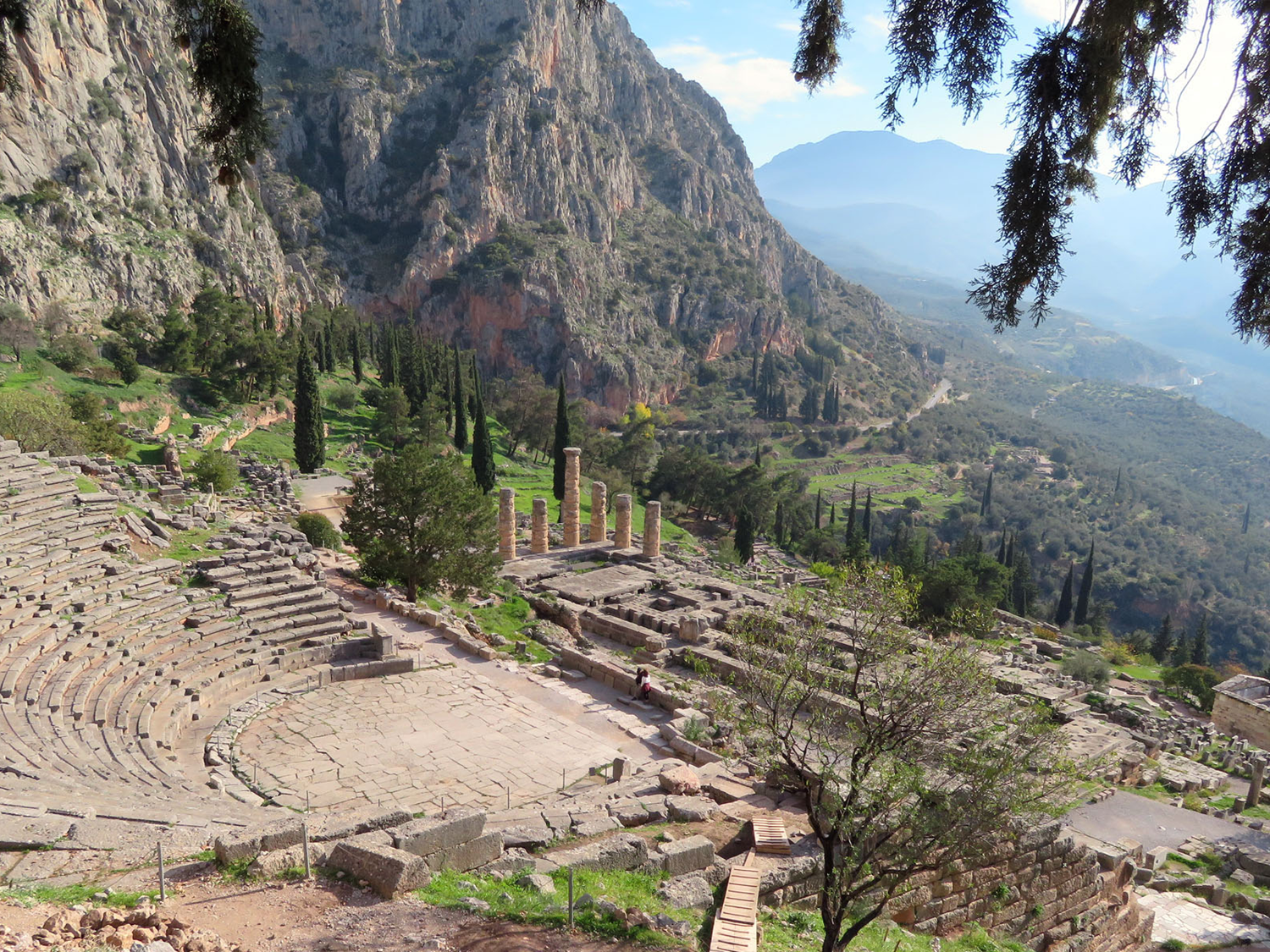
Identify this area
Delphi
List what is in Delphi
The theatre of Dionysus (he is in Delphi in the winter)
Sanctuary of Apollo in front of the theatre
Sacred way past treasuries
Treasury of Athenians
Stadium (running track)
Temple for Athena proneia (slightly further away)
What does Snodgrass list as the types of locations for sacred spaces?
Snodgrass says: urban, rural, Pan-hellenic (Panhellenic sanctuaries tend not to be in a town)
What does Pedley list as the types of locations for sacred spaces?
Pedley: natural (could be a cave), rural, urban, extra-urban (just on the outskirts of the town), sub-urban (one in the suburbs), inter-urban
What must be taken into account when considering sacred spaces/sanctuaries?
Also must take into account the community served – e..g. Olympia is an extra-urban and inter-urban sanctuary
Identify this space:
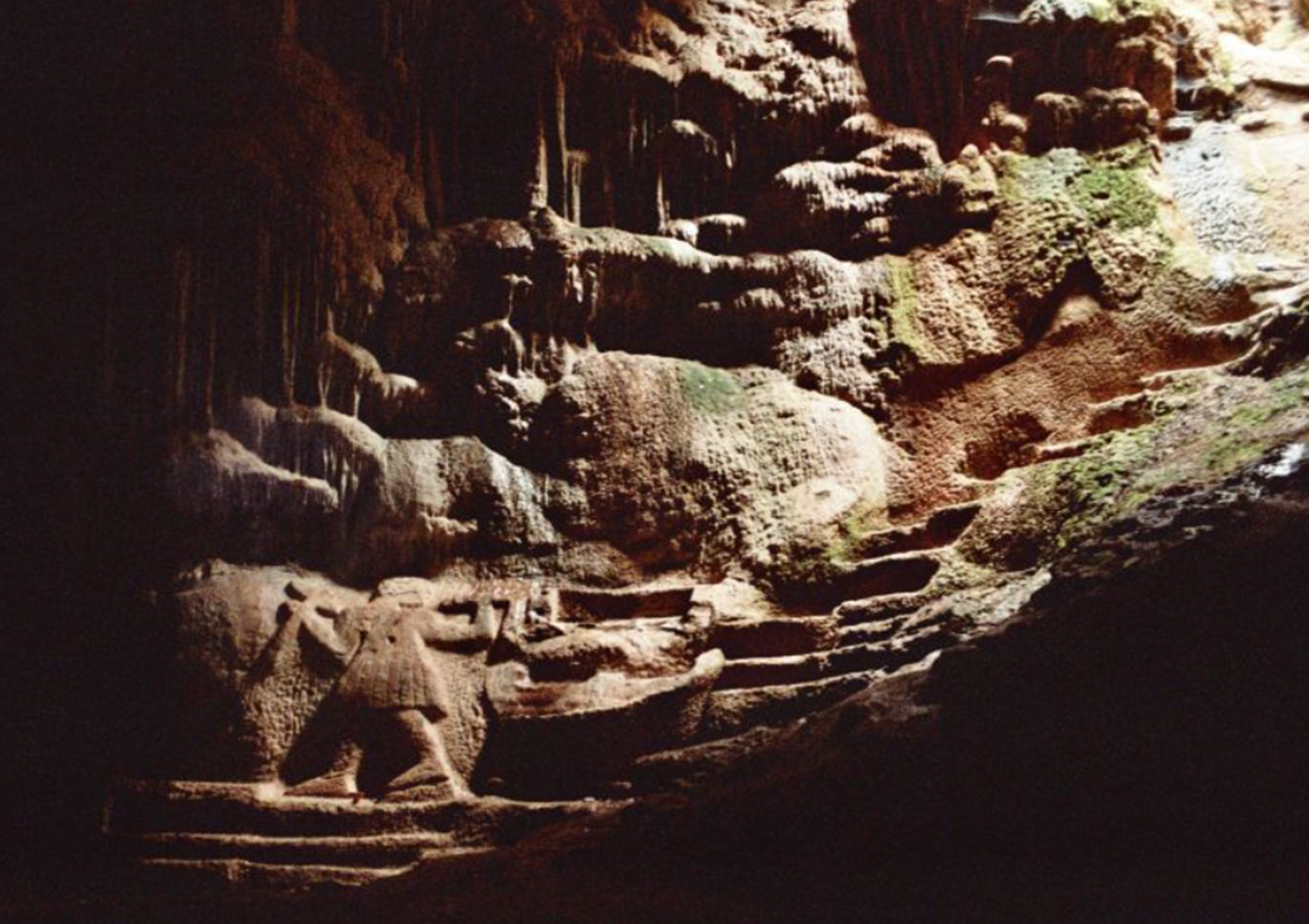
Vari cave, Attica – Nympholeptos cave – self portrait of Archedemos ca. 400BC
Vari Cave of Pan, Attica (maintained by city but originally ‘built’ by Archedemos)
What are sacred spaces and where are they?
Natural places that feel special, how many sanctuaries have been developed- spiritual places
What does Sophocles write in his play about sacred spaces?
Sophocles Oedipus at Colonus 16-18:
“this place is sacred, as I can easily guess: it bursts with laurel, olive, vine and fluttering around are many sweet voiced nightingales”
Were gods and goddesses associated with particular natural spaces?
Yes
Where was Hera associated with?
Hera for example often has her sanctuaries on the edges of plains, she was associated with Argos- there are lots of plains in Argos
Where was Zeus associated with?
Zeus for example, Olympia, Mt Lychaeon- he is associated with peaks (even though Olympia is generally quite flat)
Where was Athena associated with?
Athena, associated with the centre of towns, possibly because she is wise- civilising goddess and a protector
Where was Artemis associated with?
Artemis- boggy places by rivers (liminality)
Where was Apollo associated with?
Apollo- mountainous regions
What is located where this image is?
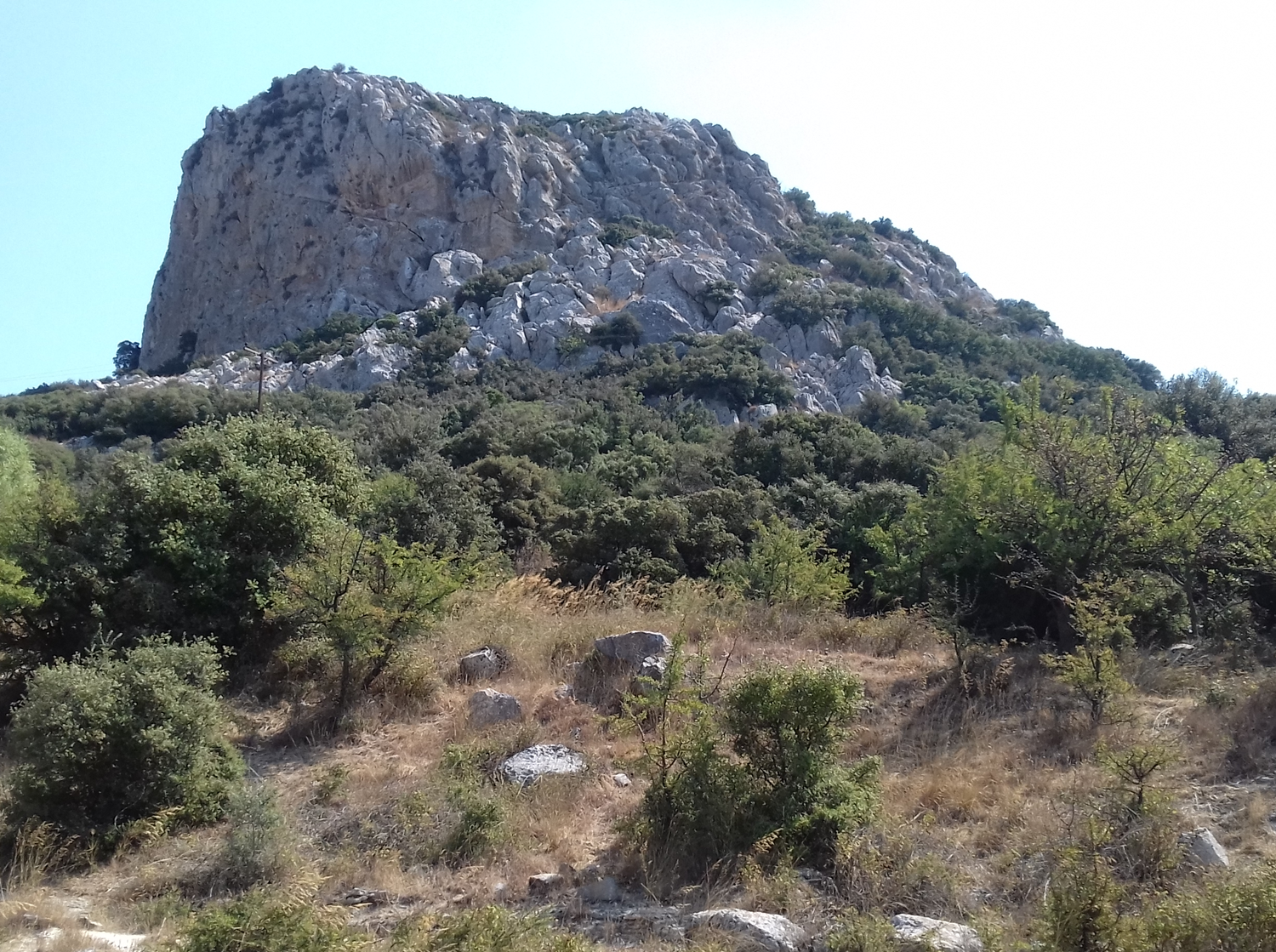
Apollo Potion sanctuary- kouros statues, temple and oracle, stream running down throughout (where the image is located)
What are often reasons for the placement of sanctuaries?
Mythical attachments to particular places
Need for particular things: particularly water
Continuity with Minoan and Mycenean worlds
Give examples of the mythical attachments to particular places
Apollo and Artemis said to have been born on Delos; Hera linked to Samos
Explain the need for water
Need for particular things: particularly water (for purification)- location of sanctuaries near streams/rivers, this is why sanctuaries on mountains tend to be at the base of the hill because there is a running water source
Explain continuity with Minoan and Mycenaean worlds
Continuity with Minoan and Mycenean worlds e.g. Artemis at Kalapodi, Phokis- continual used from C12-7BC (this is very rare though most sanctuaries arent built on Mycenaean ruins)
Are most sanctuaries new creations?
But vast majority of sanctuaries are new creations from 10th century onwards (or show significant break in activity) e.g. Isthmia – Bronze Age activity but then nothing till C10BC. Had to organise themselves in a new way of thinking and being Greek, so they created their own sanctuaries from 10 century BC onwards
What was their an emphasis on in sanctuaries after C10th?
Emphasis on providing for communal activities e.g. isthma from C10th showing evidence of communal dining. Not yet in a fit space to be creating communal buildings.
What was their a shifting preference away from and towards?
Shifting preference from locations away from palatial power centres towards routes of communication and trade
What are the possible reasons for the development of sanctuaries C10-8BC?
Snodgrass in 1980 stated how there was an increase in numbers of sanctuaries in this period tied to colonization,
De Plignac views this as being an explosion due to the development of the Polis: : favours an ‘explosion’ of sanctuaries in C8BC linked to ‘birth’ of the polis at this time. Sanctuaries are fundamentally expression of polis identity.
Now looks much more like a steady increase from C10BC alongside the slow emergence and development of the polis through dark ages.
How did Homer influence the increase in sanctuaries in C8 BC?
Influence of Homer in C8-7BC: crystallization of these epics leads to development of Hero cult and foundation/ increasing interest in hero shrines – such as Pelopion at Olympia; new offerings at Mycenaean tombs; cults of Agamemnon at Mycenae and Menelaus and Helen at Sparta.
State a cult in Mycenaean
In Mycenena, people start a cult to Agamemnon and Cassandra but otherwise people werent living in that area (in the Acropolis where a big palace/sanctuary was)
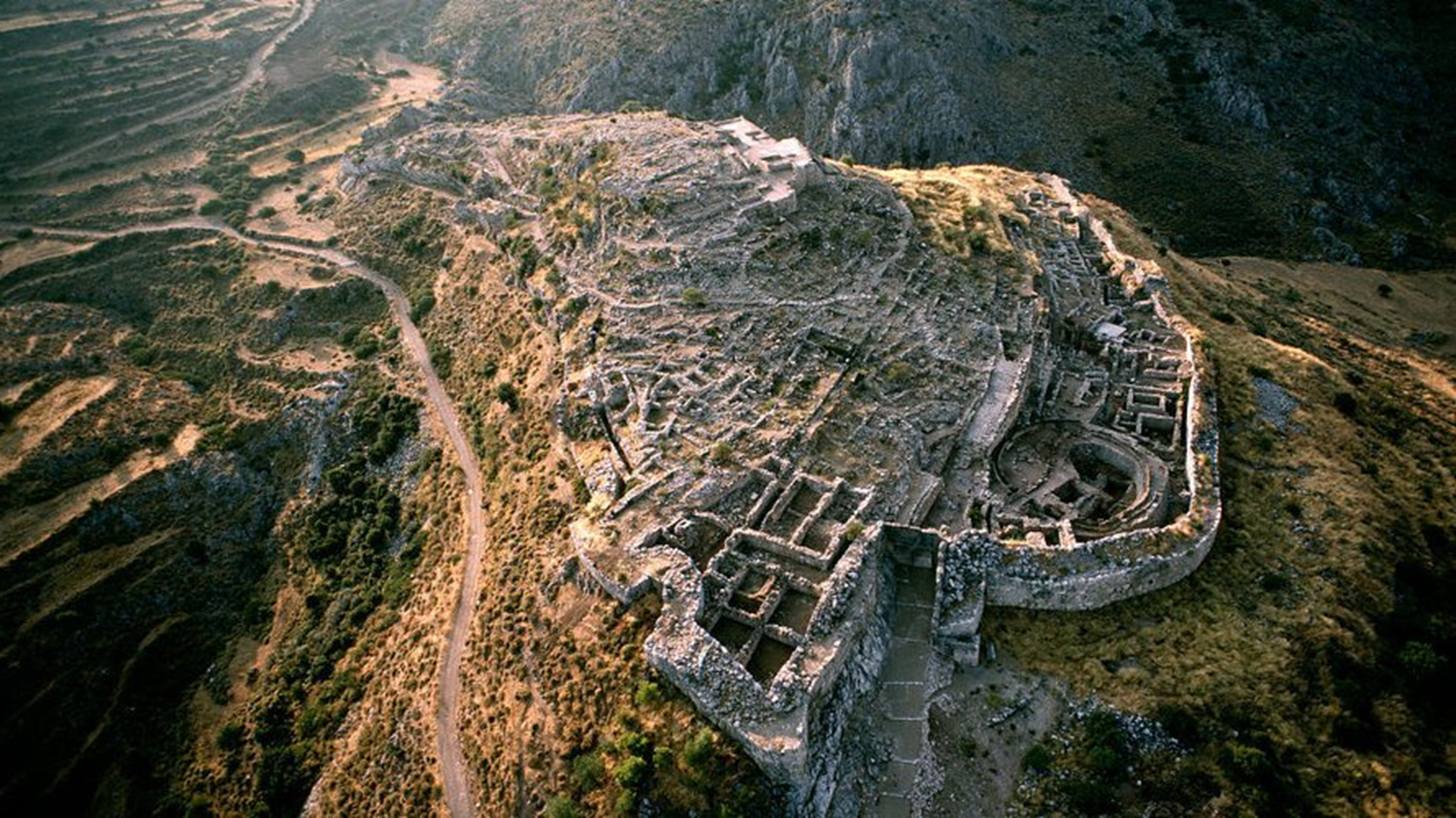
identify this area:
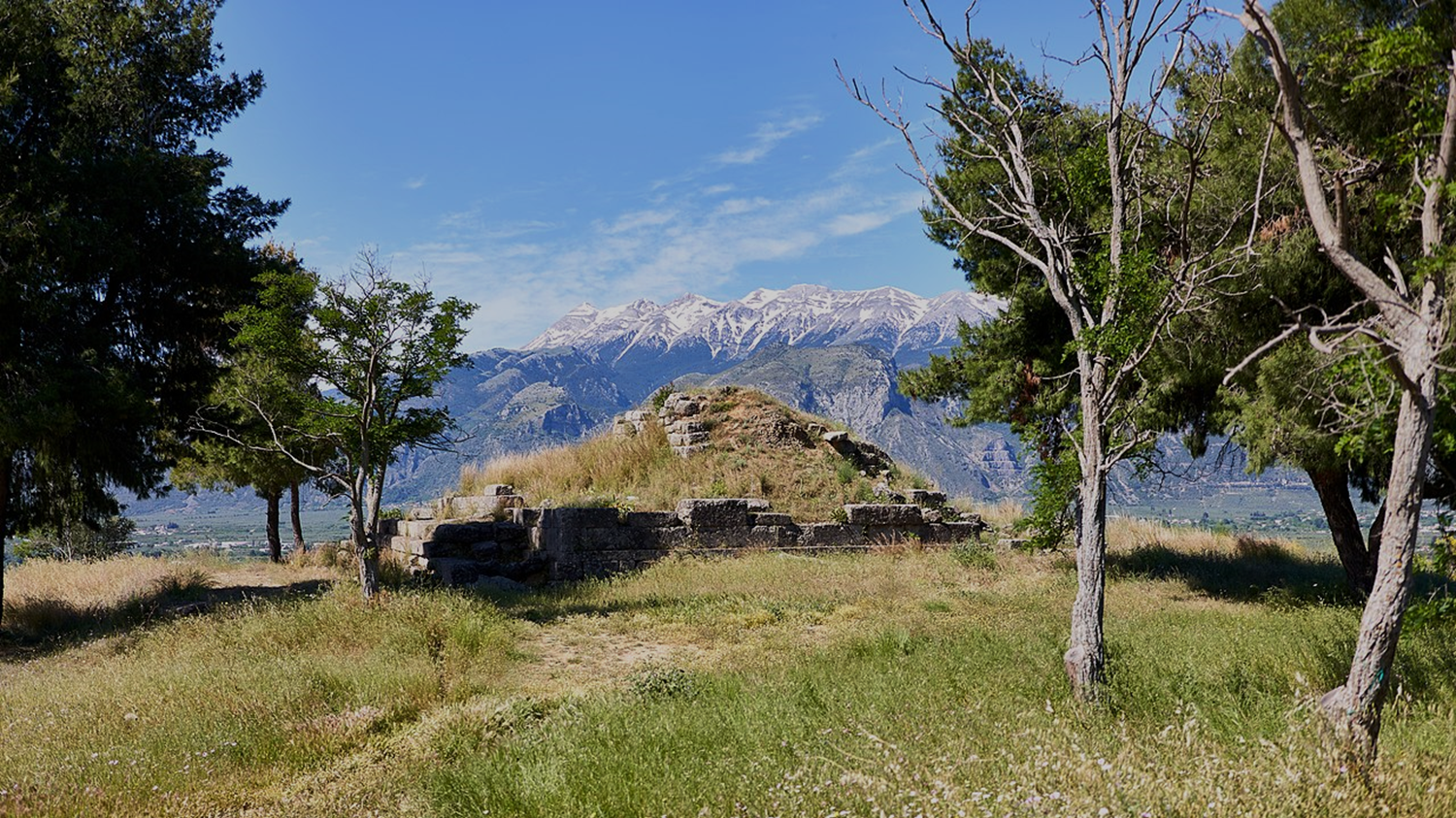
Menelaion dedicated to Menelaus and Helen at Therapne near Sparta (8th Century BC)
What did sanctuaries fulfil the need to do?
Sanctuaries fulfilled the need to re-organise religious worship after collapse of Mycenean palatial system (and the intense need for religious expression during a period of turmoil and change).
What were these sanctuaries influenced by?
Influenced by landscape of the past, and increasingly focalisation of epic tradition.
Also importance of development of polis communities (cf the inter-urban ‘Pan-Hellenic’ sanctuaries develop later e.g. Olympia – nothing before early C7BC).
By the end of the 8th century how many sites were there with ‘ritual activity’?
By end of 8th century, something like 100 sites with demonstrable ‘ritual activity’ and ‘a sacred complex’- the difficulty is up until this point the buildings may not have been made out of stone e.g. wood- these things don’t leave a big mark. There is bound to be many more spaces that were sanctuaries that we no longer have.
What does Dinsmoor believe about the development of the temple?
the temple is direct extension of Mycenaean megaron palace (Palace of Erechtheus on Acropolis replaced by Temple of Athena Polias)
What does Tomlinson believe about the development of the temple?
impossible, given break of ‘Dark Ages’- the idea of any continuation is not possible, but you don’t need continuation to be influenced by something
What does Mazarakis-Anian believe about the development of the temple?
Mazarakis-Anian: temple is an extension of Geometric chieftain house (Lefkandi) the best example of this is Lefkandi in Ubea
Where was the temple of Apollo Daphnephoros, Eretria built on top of?
The temple of Apollo was built almost exactly on top of an ancient house of ‘the chief’
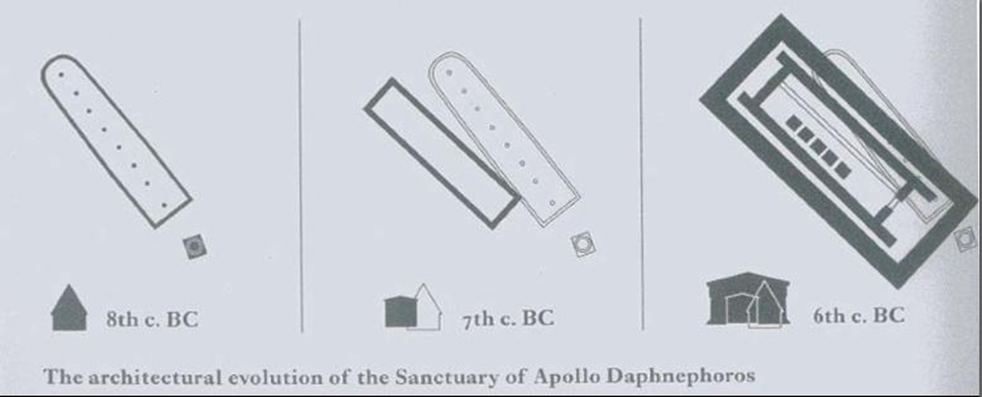
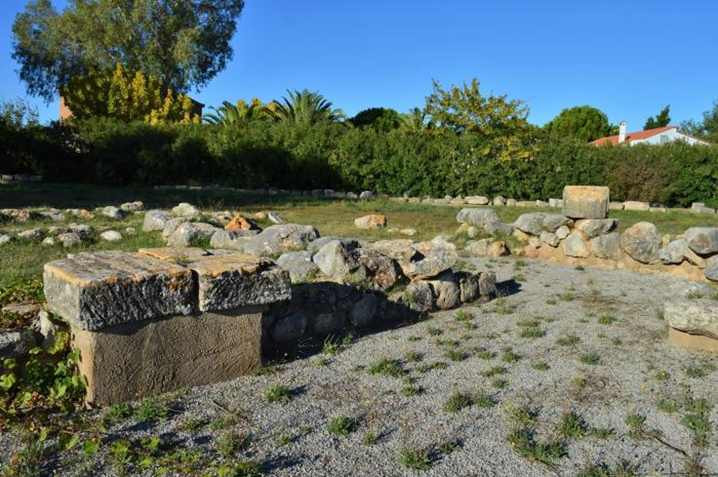
8th century temple of Apollo Daphnephoros, Eretria
Draw and label a typical temple
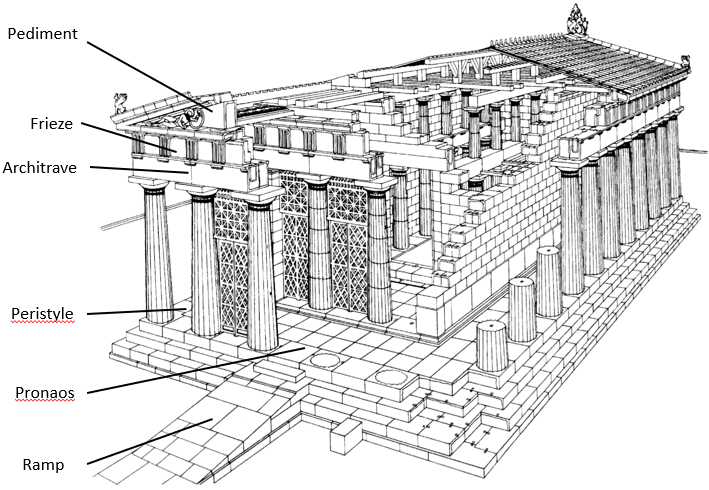
What were the practicalities of building a temple?
Thatched roof needs pitch for water to run off leading to creation of pedimental space- a pitched roof to make sure that water runs down
Change from brick to stone (thanks to Egyptian builders?) occasioned also by invention of roof tile (need or walls to take greater weight).
A roof tiled most easily when rectangular in shape- hard to tile corners, this leads to rectangular buildings
Once there is a big heavy roof it is better to have an exterior colonnade, also acts as protection for interior walls
Did triglyphs develop from the end of wooden beams used in early roof construction and were metopes the spaces inbetween beams?
Were triglyphs the replication of tripod dedications? (Wilson-Jones)
Or geometric vase patterns? (Tomlinson)
What orientation were most temples on?
Most were east to west oriented (the Acropolis is a very good example for this), sme face the complete opposite direction
Give an example of a temple not on this orientation?
Delphi is not on an east west orientation
What is the common assumption for the orientation of temples?
It is commonly assumed that most Greek temples face east and the rising sun (dinsmoors 1930s analysis of 110 temple orientations)
Has this orientation been questioned?
More recent scholarship is starting to question this such as The Cosmos in Ancient Greek Religious Experience - Sacred Space, Memory, and Cognition, Efrosyni Boutsikas (2020) they analysed 237 temples all over the ancient Greek world- 132 of the 237 temples face east. The night sky would have been very important for the ancient Greeks- was very dark and the sky would have been completely visible
Apollo as god of the sun you would expect his temples to be facing the rising sun, but only 4 of the 31 analyses are exactly in an east to west rotation
What is a temenos?
Temenos- boundary (cut off point between sacred and non-sacred space, purified before you would enter)
Where would worship of cult statues take place?
Worship of cult statue (within a temple, or on its own)
Did Myceneans have cult centres?
Mycenaean’s had cult centres but no evidence of a singular cult statue (only groups maybe of dedications?)
What were original cult objects made of and what did Pausanias call them?
Original cult objects were natural, wood, stone, ‘fallen from heaven’ was the belief
Pauanias calls these small wooded statues Daedala, primitive xoana-
Xoana (singular: xoanon) are ancient Greek wooden cult images, typically dating to the Archaic period, used in temples to represent deities
What was the Panathenaia centred on?
Panathenaea – was centred on xoana of Athene Polias in Erechtheion, not the giant sculpture in the Parthenon
Where could gods dwell?
Gods could dwell in the temple, the naos, but did not inhabit the cult statue as such (though it was the visible focus of prayer and the reason for visiting the temple).They didn’t believe that the gods constantly lived there
What would you need if you started a new sanctuary?
If you started a new sanctuary you needed a cult statue/objects
E.g. a 4, tall statue of Nemesis at Rhamnose made out of stone brought by Persian King to near-by Marathon in order to carve his own victory sculpture
List three things that were needed/found at sanctuaries
Sacrifice- need for an altar
Altars were sometimes huge 196m long, 11m wide (Hieron II at Syracuse)
Sometimes made of the ash of previous offerings (altar of Zeus at Olympia 7m high in Pausanias time)
Dedications
Dedications are what snodgrass talks of as ‘peer polity interaction’, you interact with your peers (a way to show off to others as well as give thanks)
Territorial markers
Polis ownership- sanctuaries could act as ‘territorial markers’, with processions linking polis and extra-polis sanctuaries
What did Pausanias write about xoana?
Pausanias 9.3.2
To commemorate this reconciliation they celebrate a festival called Daedala, because the men of old time gave the name of daedala to xoana. My own view is that this name was given to xoana before Daedalus, the son of Palamaon, was born at Athens, and that he did not receive this name at birth, but that it was a surname afterwards given him from the daedala.
When did the ‘crown games’ emerge and list the competitions
From 6th century, emergence of a ‘crown games’ ‘peridos’ circuit of Nemea, isthmia, Olympia, Delphi
Was this competitive nature common in Greece?
This competitive nature was very common in Greece
Explain how the games would begin
Theoroi sent out 6 months prior to games around the Greek world to announce and invite competitors (traveling onpre-defined routes)
Athletes turn up at sanctuary a month before the games
Declaration of Olympic truce
How were these games a massive occasion?
Games as massive occasion: economic impact, impact on sanctuary architecture, use of sanctuaries during games for rhetoric, philosophy, history (Herodotus on steps of Temple of Zeus at Olympia, politics (Isocrates handing out political pamphlets) – sacred space as central space
What were these games as well as athletic?
These games were artistic as well as athletic especially the phitian games, as Apollo was the god of many artistic aspects
What did the Olympic truce give people?
The Olympic truce gave asylum to people
What does it mean to be asylos?
To be asylos is to have freedom from threat of persecution for previous wrong-doings
E.g. sanctuary of Poseidon at Tainaron severed as refuge for helots fleeing from Sparta
Temple of Theseus in Athens was place where ill-treated slaves could flee and demand sale to another master (Plutarch Life of Theseus 36)
What were sanctuaries supposed to be?
Sanctuaries supposed to be places of safety even in military occupation of city (Boeotians complain that Athenians subvert all normal practice when they don’t do this at Delion during the Peloponnesian war: Thuc. 4.97-8)
Was this asylum always respected?
Not always respected: Demosthenes took refuge in Temple of Poseidon at Calauria, forced out by Macedonian soldiers. Pausanias of Sparta starved out in the Temple of Athena at Sparta
What would sanctuaries ask for in the Hellenistic world?
In Hellenistic world, sanctuaries asked for formalised grants and recognition of their asylia, especially for their festivals – Boeotia at the forefront (trendsetters)
What does manumission mean?
Freeing slaves
What else did certain sanctuaries play host to?
From 200 BC till 2nd century AD certain sanctuaries also played host tot he manumission of slaves
What was the temple terrace wall in sanctuary of Apollo covered in?
Temple terrace wall in sanctuary of Apollo covered in over 1400 manumission documents. Slave is sold ‘to the god’ in order to grant freedom. Slave had to pay, with small fee going to the temple. Popular: foreingers were coming from abroad to perform this function here at Delphi: Thrace, Syria, Colchas, Africa, Italy
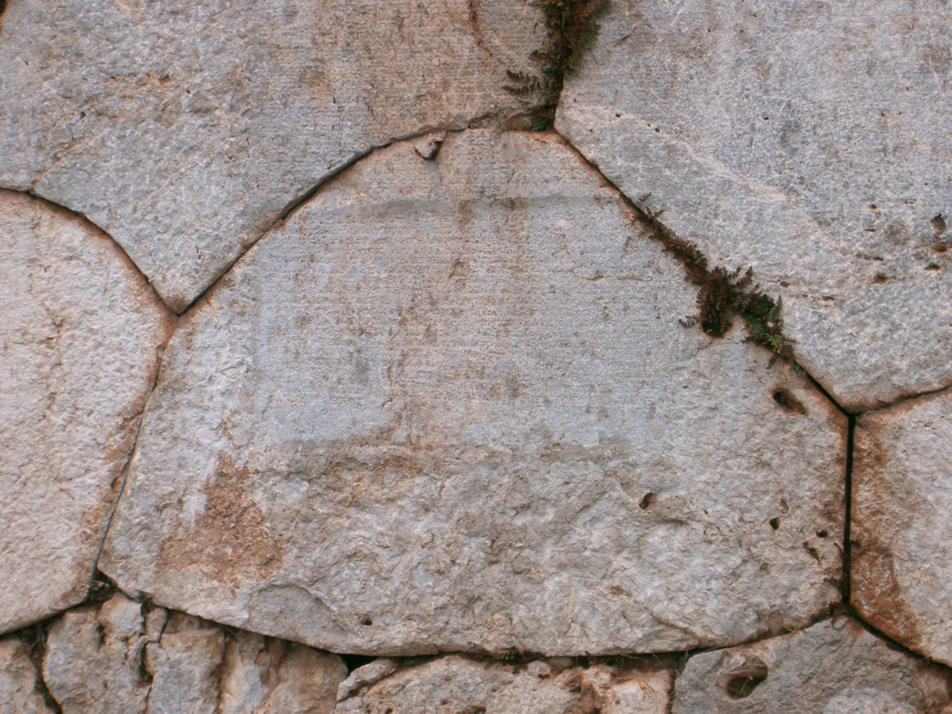
Manumission inscription, Delphi
How would a sanctuary also act as a bank?
Use of gold and ivory statue of Athena Parthenos in Parthenon as bank – melting down gold on to statue, and using in times of crisis. Same applies for golden dedications within the temple (cf. inventory lists of what was in Parthenon – Scott 2011).
Deposition
Inventory lists from numerous sanctuaries show clutter of material in temples. Parthenon: full of boxes of rotting Persian arrows, Melian couches etc (Scott 2011)
How were sanctuaries repositories of information?
People from all over the Greek world came to sanctuaries, information could be perceived because of the dedications people left and the inscriptions on them
Sanctuaries used as publication place for all sorts of document: sometimes to do with inteods, sometimes much more civic in nature
How did sanctuaries and sacred spaces act as a good means of keeping memory of the past?
Because of dedications, deposition, publications and because most things had to stay in the sanctuary, sacred spaces act as marked of cultural memory and history.
How did sanctuaries act as a place of cultural transition?
Sanctuaries became critical spaces in which Roman take-over of Greece was articulated (through celebrations of military victory, erection of honorific statues, inscription of imperial correspondence, important mass declarations, and the restoration or construction of sacred architecture)
Who most often financed the building of sanctuaries?
Building a temple was probably the largest single engineering project a community engaged in – massive expense in money, time. Requiring huge community interaction.
Often paid for by the polis (and even at Olympia: temple of Zeus built by polis of Elis from war booty)
What were other ways for temples to be funded and give examples
But some temples also funded by larger groups (e.g. at Delphi – Amasis of Egypt gave money to 6th century temple, 4th century temple paid for by thousands of individual offerings (some as little as a couple of obols). Lists of givers erected (CID II 1-30 – shows us that Athens did not contribute….)
Some temples paid for by individuals: Temple of Artemis Aristoboule in Athens (Themistocles)
Do we have remnants of temples that were never finished being built?
Yes- Many scattered ruins all over Greece of temples that were never finished because they ran out of money
Explain the financing of the temple Livadeia Zeus Basileus
Livadeia Zeus Basileus
Beginning of construction of the temple of Zeus Basileus at Lebadeia during the 220s.
Oracular response of Trophonius given to one Kalliklidas of Opuntian Lokris, almost certainly asking questions as an agent of the Boeotian koinon (IG VII 4136):
Kalliklidas of Opuntian Lokris, having gone down to Trophonius, proclaimed that Lebadeia is to be dedicated to Zeus Basileus and Trophonius, and Akraiphia to Apollo Ptoios, and no one is to wrong these (peoples). They are both to collect sacred funds, for the common good, in every land, and proclaim the holy contest. Whoever repairs the temple of Zeus Basileus will wear the crown 536
Perhaps the crown was rather an incentive for work on the temple to recommence.
Pausanias tells us that the temple of Zeus Basileus was left unfinished, either because of its size or through the disruption of war (9.39.4).
Identify this area:
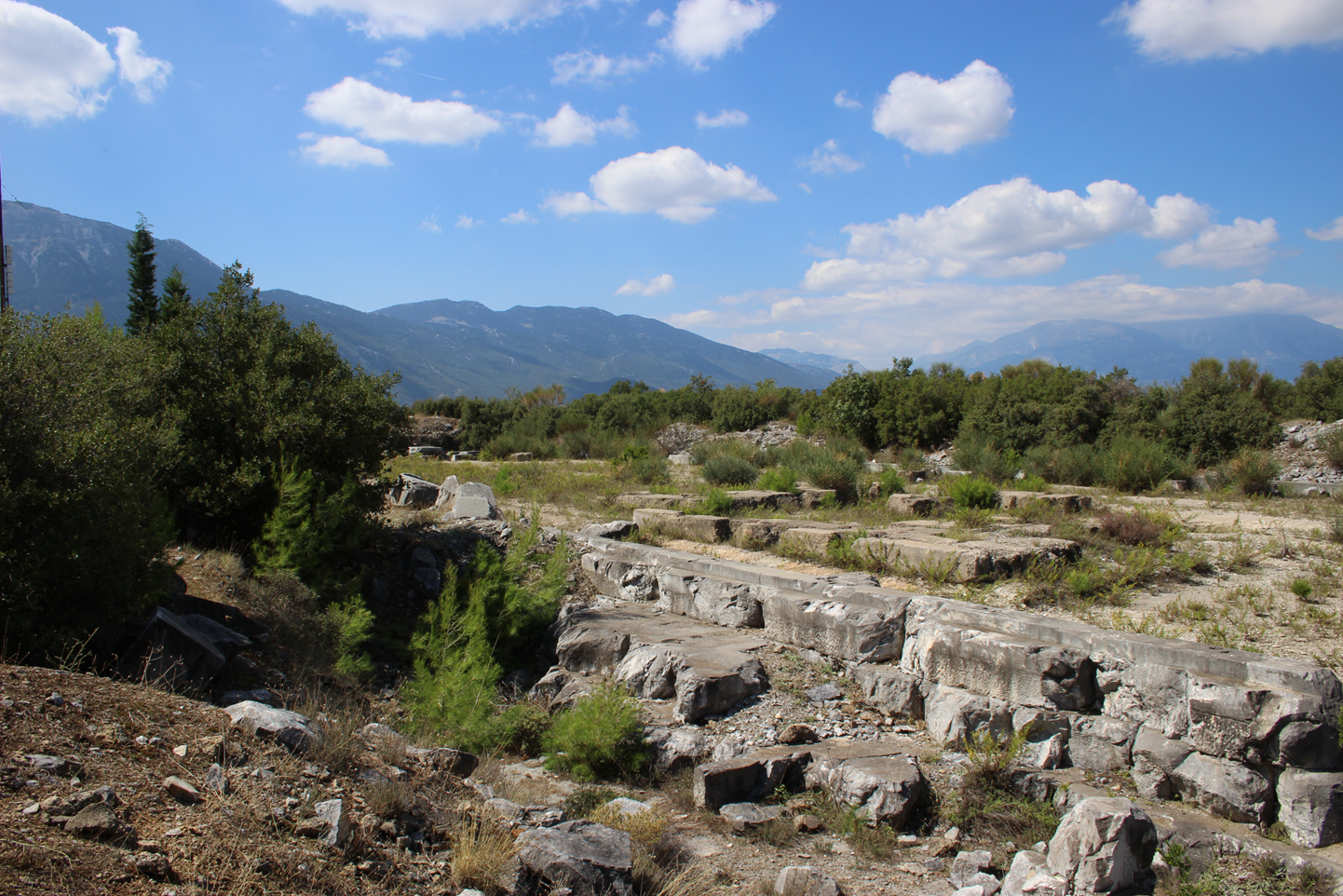
Unfinished temple of Zeus Basileus, Livadeia
What can we learn about the building of the Delphian Naopoioi sanctuary based on surviving documentation?
Payment for building documented in huge detail: RO 66 (169) Accounts of the Delphian Naopoioi, 345/4–343/2 BC - handout
Negotiation with all contractors recorded on stele: down to prices of ropes for carts which was used to pull the stone from harbour to sanctuary (Delphi). Similar documents exist for the temple of Zeus at Lebadeia, and Sanctuary of Asclepios at Epidauros, as well as snag list for Erechtheion, Athens.
Describe how Athens, Delphi and Epidaurus liked to do their business?
And we can get a feel for how they liked to do their business: Athens pretty much only employed Athenians, Delphi like to sub-contract in large chunks, Epidauros liked to micro-manage and give out individual tasks (Feyel 2006)
How were sacrifices paid for?
Sacrifices: sacrificial animals paid for ‘demoteles’ – at public expense. But at deme level individuals could also club together cf deme calendars showing citizens raising 120 drachmas for sacrifices.
What was expensive about having to prepare for festivals and games?
Preparation for festivals and games: not just repairing/tidying up in sanctuaries, preparing stadiums, but also repairing roads and bridges on access ways to the sanctuary.
What would outsiders do when urban sanctuaries were run by the polis?
Urban sanctuaries run by the polis (outsiders having to ask permission of the polis to erect dedications/ not having control over whether their offerings are placed – asking for “epiphanestaton topon” – the most visible location)
Who ran the Isthmia sanctuaries?
Isthmia – run by Corinth
Who ran the Nemean sanctuaries?
Nemea – run and over-run by Argos (fades out of use entirely for much of 4th century)
Who ran the Delos sanctuaries?
Delos – run by Naxos, by Athens, by Delos, by Athens
Who ran the Olympia sanctuaries?
Olympia - run by Pisa, then Elis (with a black ash layer inbetween)
Who ran the Delphi sanctuaries?
Delphi – run by religious association of Amphictyony, and also city of Delphi
How did Marinates describe sanctuaries?
Sanctuaries as “multi-dimensional institutions which served the needs of their communities and the needs of the Greek city-state as a whole” Marinatos 1993.233.
What questions should we ask about temples?
Which god?
When was it built?
Whats the orientation?
Which polis is it linked to?
Any peculiarties/specialities of use?