Microbiology - Chapter 3: Bacteria and Archaea (simplify)
 Call Kai
 Learn
Learn Practice Test
 Spaced Repetition
 Match
Match Flashcards
 Knowt Play
1/40

There's no tags or description
Looks like no tags are added yet.
Name | Mastery | Learn | Test | Matching | Spaced | Call with Kai | Chat |
|---|
No analytics yet
Send a link to your students to track their progress
41 Terms
Prokaryotes with rod-shaped or cylindrical shape
Bacilli
Spherical or ball-shaped bacteria cell
Can be perfect spheres, ovals, bean- shaped, or pointed variants
Coccus
Spiral-shaped bacteria that can appear as vibrios, spirilla, and spirochete
Spiral
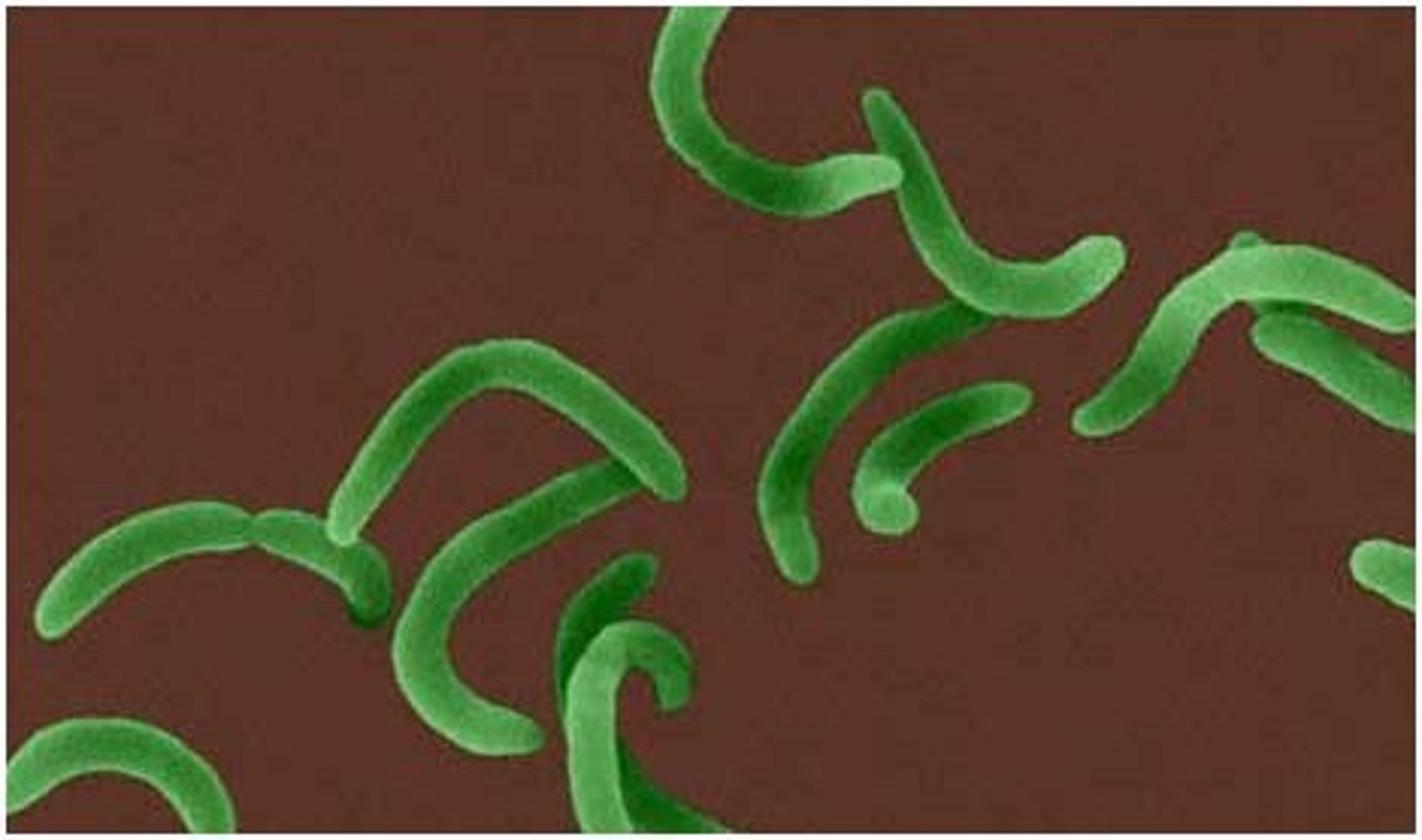
A comma-shaped spiral bacteria
Vibrios
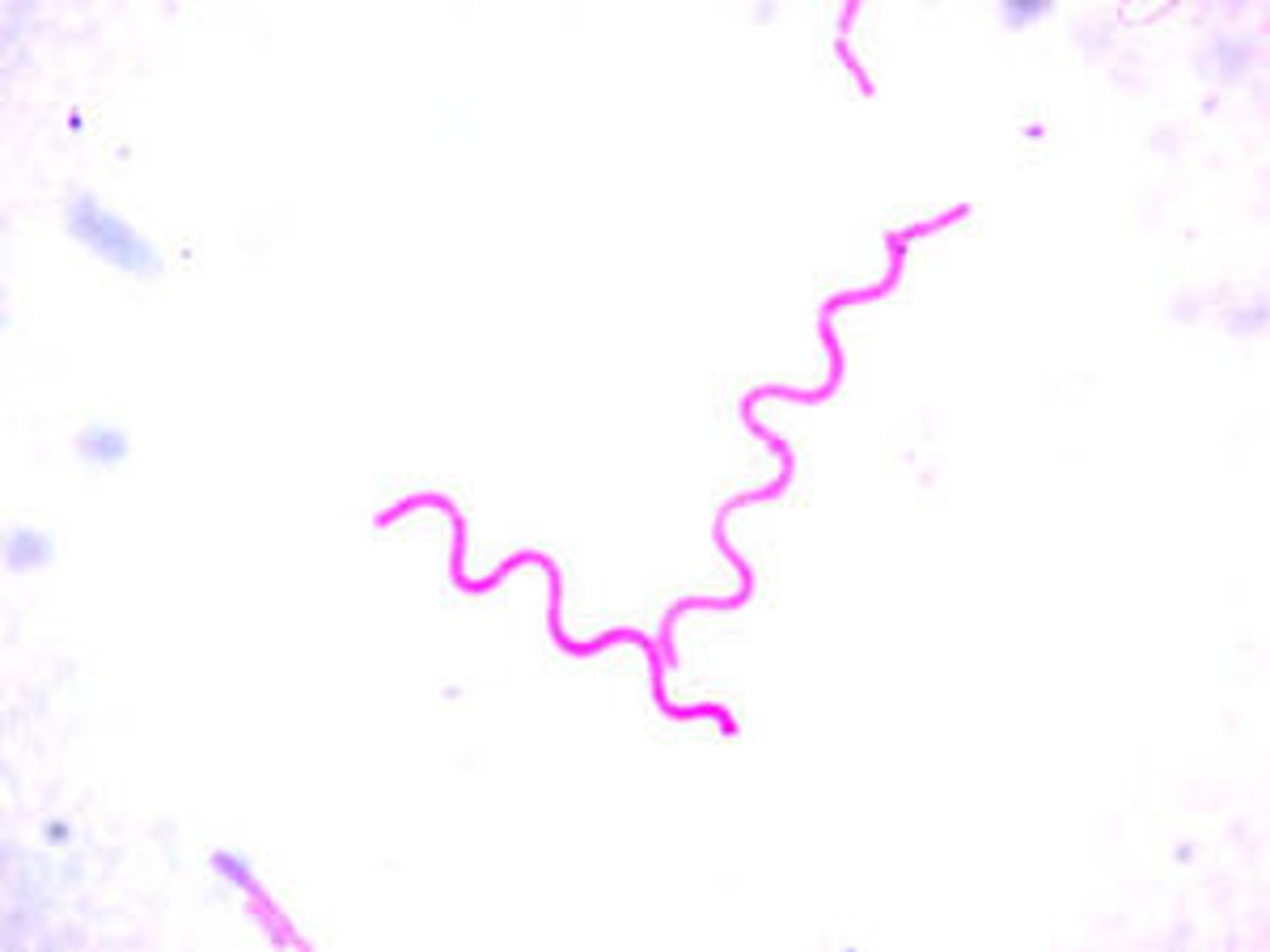
A helical shaped spiral bacteria
Spirilla
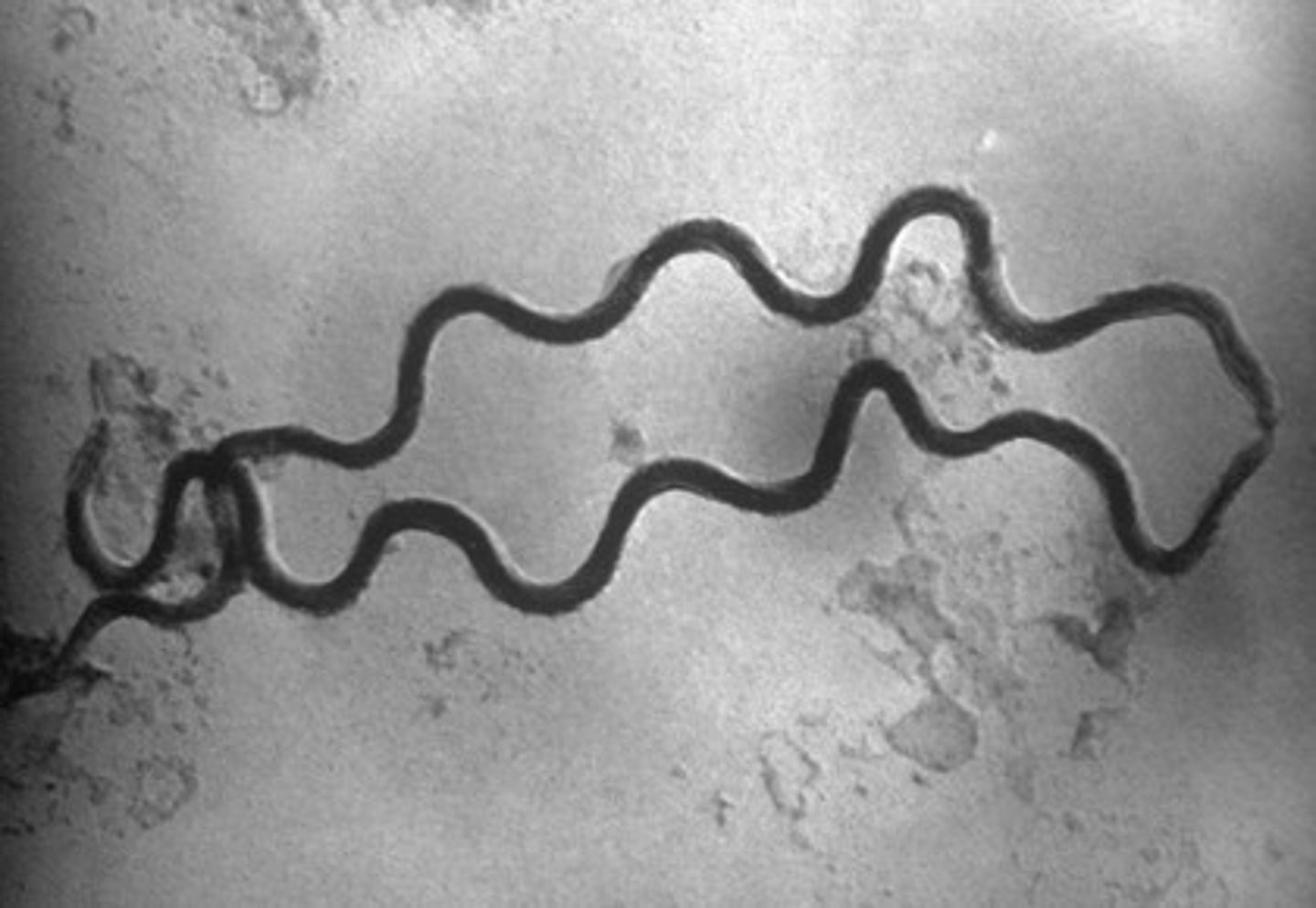
Flexible spring shaped spiral bacteria
Spirochete
What are the three bacterial arrangements?
Pairs
Clusters
Chains
Bacterial arrangement known as "diplo"
e.g. diplobacilli or diplococcus
Pairs
Bacterial arrangement known as "staphylo"
e.g. Staphylococci
Clusters
Bacterial arrangement known as "Strepto"
e.g. streptococci or streptobacilli
Chains
Appendage on the outside bacteria cell wall that is use for movement of the cell
Attached to a protein hook and anchored to the membrane by a basal body
Flagella
Surface appendage of a bacterial cell that allows for attachment
Small, bristle-like fibers that protrude off of the surface of the cell
Fimbriae
A long, rigid tubular bacterial surface appendage that provides adhesion and facilitates the transfer of DNA from one bacterial cell to another
"mating bridge"
Pili
What are the four arrangements of bacterial flagella?
Monotrichous
Lophotrichous
Amphitrichous
Peritrichous
Single flagellum
Monotrichous
Small bunches or tufts of flagella
Lophotrichous
Flagella at both ends of the cell
Amphitrichous
Flagella are dispersed randomly over the surface of the cell
Peritrichous
Endoflagella in spirochetes that are anchored to one end of a cell
Rotation causes the cell to move
Axial Filaments
A surface coating of repeating polysaccharide or glycoprotein units that is sticky and protects the cell
Can be a slime layer or a capsule
Glycocalyx
A loose glycocalyx shield that protects from loss of water and nutrients
Slime Layer
A tightly bound glycocalyx layer that is denser and thicker and prevents phagocytosis
Capsule
Single protein linked layer produced by bacteria in hostile environments
Do not grow in nonthreatening conditions
"armor" of the bacteria cell
S-Layer
A mesh-like layer outside the plasma membrane of bacteria that form the cell wall
Provides strength to resist rupturing due to osmotic pressure (lysis)
Peptidoglycan
Structure that lies outside of the cell and is composed of a cell wall, cell membrane, and an outer membrane in some bacteria
Cell Envelope
Fluid mosaic model with a lipid bilayer with embedded proteins
Regulates the passage of nutrients into or out of the cell
Plasma Membrane
The site of cellular respiration and ATP synthesis in bacteria cells
Plasma Membrane
Structure that is the site of nearly all chemical reactions
70-80% water
Contains DNA in the nucleoid
Cytoplasm
Bacteria that exists in the form of a single, circular chromosome
Aggregated in the nucleoid
Contain plasmids
Bacterial DNA
A molecule made of lipids and polysaccharides
Polysaccharides function as signaling molecules and receptors
Lipids are an endotoxin that stimulate fever and shock reactions in gram negative infections
Lipopolysaccharide
Microbial structure that protects bacteria cel against hostile conditions
Exists internally inside the cell, but are on their own when the cell disintegrates
Protect against radiation and chemicals
Endospore
Name for the process of endospore formation
Sporulation
The passive transport of molecules from areas of high concentration to areas of low concentration
Diffusion
Diffusion of water molecules across a membrane
Osmosis
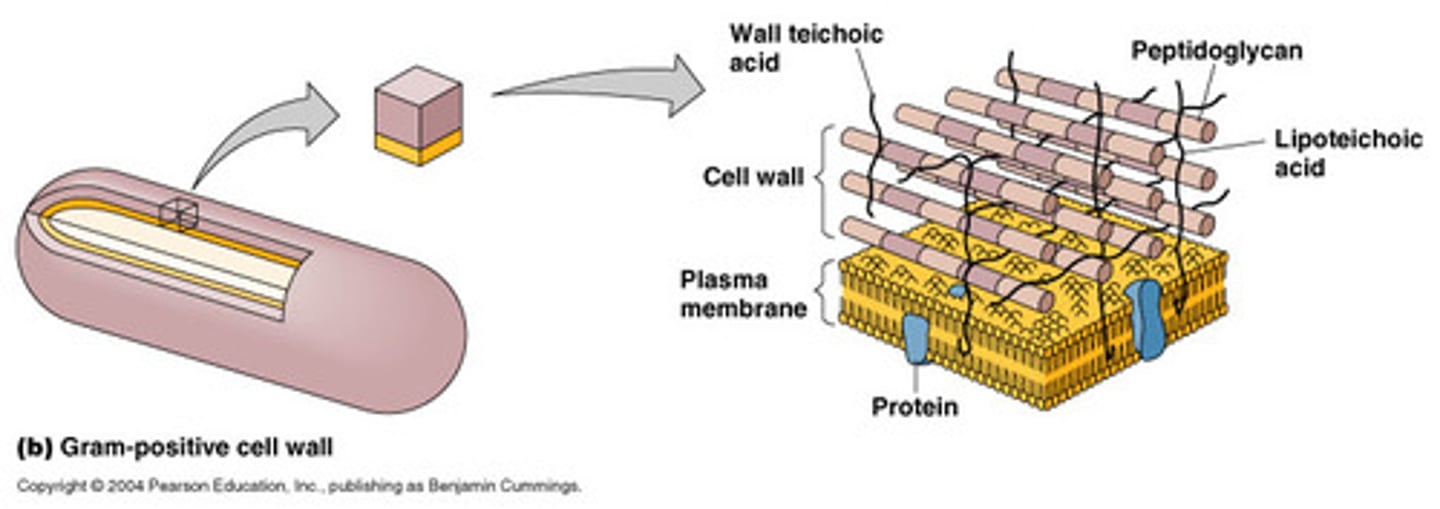
Cell walls with thick sheets of peptidoglycan (20-80 nm thick)
Contain teichoic and lipoteichoic acids which function in cell maintenance and enlargement
Gram Positive Cell Walls
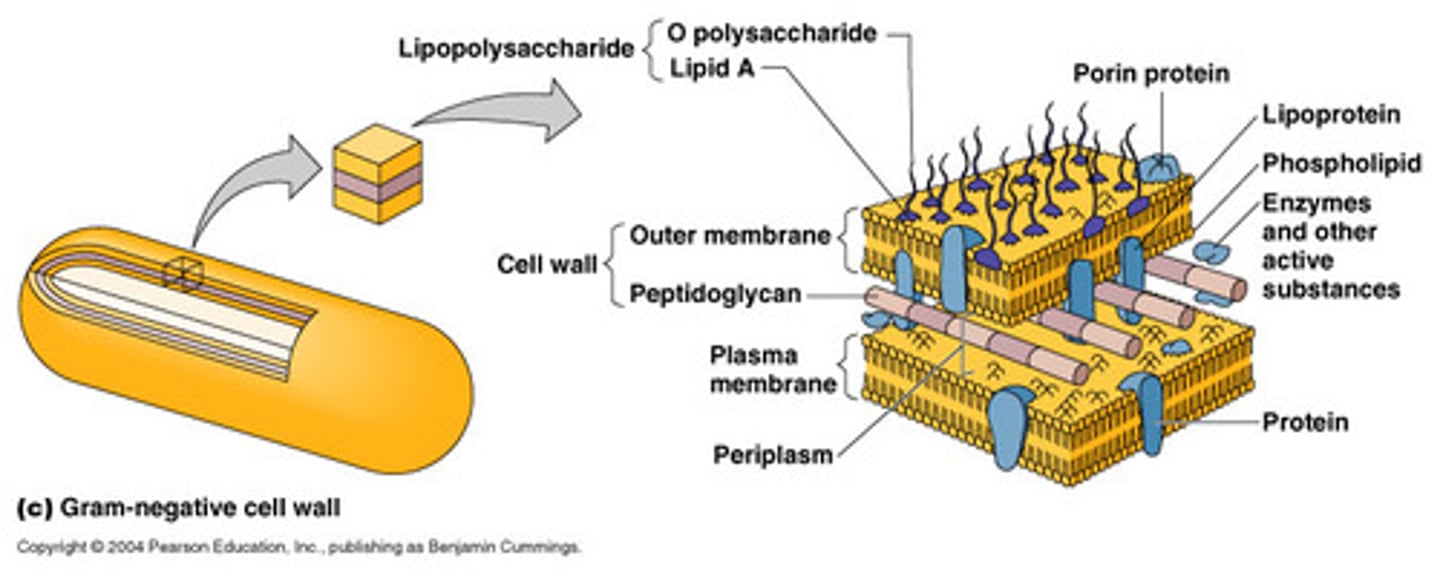
Cell wall with thin sheets of peptidoglycan (1-3 nm thick)
Has an outer membrane and a periplasmic space
Stimulates antibody response (antigen production)
Gram Negative Cell Wall
The space between the cytoplasmic membrane and the outer membrane
Periplasmic Space
Circular pieces of DNA
Plasmids
What are the steps in producing a Gram Stain?
1.) Crystal violet added to smear; all cells purple
2.) Add mordant (Iodine) > stabilizer
3.) Apply alcohol to dissolve lipids and remove dye
4.) Add safranin to the colorless gram negative cells to turn them pink
What does the Gram stain tell you about bacteria?
If the bacteria is positive or negative
Tell us about the cell wall structure of a sample
What does a simple stain tell you about an organism?
The organism's size, shape, and arrangement